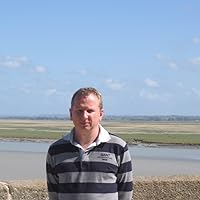
Witty, acerbic, insightful musings from Robert Dessaix, one of Australia's finest writers. One Sunday night in Sydney, Robert Dessaix collapses in a gutter in Darlinghurst, and is helped to his hotel by a kind young man wearing a T-shirt that says F**K YOU. What follows are weeks in hospital, tubes and cannulae puncturing his body, as he recovers from the heart attack threatening daily to kill him. While lying in the hospital bed, Robert chances upon Philip Larkin's poem 'Days'. What, he muses, have his days been for? What and who has he loved - and why? This is vintage Robert Dessaix. His often surprisingly funny recollections range over topics as eclectic as intimacy, travel, spirituality, enchantment, language and childhood, all woven through with a heightened sense of mortality
Robert Dessaix (born 1944), also known as Robert Jones, is an Australian novelist, essayist and journalist. Dessaix is best-known as a writer of literary non-fiction (memoirs, essays, biography and autobiography), but has also published two novels, several short stories and one play. Born in Sydney in 1944, he was adopted by Tom and Jean Jones, went to Lane Cove Public School, Artarmon Opportunity School (remembered warmly in What Days Are For) and North Sydney Boys High School (1956–60). After a year at Sydney University, he moved to Canberra to major in Russian language and literature, which he had studied privately for the Leaving Certificate while at high school, at the Australian National University. He spent the next 23 years of his life, on and off, in Canberra, studying for his M.A. and Ph.D. both at the ANU and at Moscow University, teaching, writing about Russian literature and also marrying. Eventually he moved to Sydney to teach at the University of NSW. His love of Russian literature informs all his work.
I've spent the last 14 lunch hours with this book. It received quite a bit of criticism from some literary friends but I have stuck with it to the end. It is essentially a book about intimacy and it is an intimate book about intimacy (which is why some of my "in the world" friends found it hard to handle (they would have cringed at the first sign of exaggerated (gay) infatuation. But it starts off in his hospital room after a heart attack and I thought to stand up and leave would have been rude ~ you see how the aesthetics of a book can infect me ~ I do enter the world of a book ! And in this book Robert Dessaix takes us on an intimate journey through his infatuations, loves and obsessions (Russia, Turgenev) and the books which served as maps along the way: through childhood (The Famous five) and adolescence, "adulthood" (yes Freud, I think there is more than one) and into a reflective older age. I went with it; it gave back; I do ask for any book, many very different books, to inform and enrich my life, and eccentric as it is, this did.
After collapsing in the street late one night in Sydney, Robert finds himself hospitalized attached to all manner of life-saving machinery. Between drifting in and out of consciousness, he ruminates on all sorts of things, but the nub of the book (as the title suggests) is how do we best live out our days. "A well-shaped day....is not hopeless. But what is a well-shaped day?" he rhetorically asks. This meditation on the subject is prompted by coming across the Philip Larkin poem 'What are days for', and it stimulates Robert's imagination to ponder on spirituality, infatuations, love, and of course, death. His answer to the question is layers: "Layers, that's the key, as I putter - indeed, sputter - towards death, I think to myself." "....delighting in the luxury of asking nothing more than to be happy in each intricately layered day." "Happiness is learning to desire only what you can have." Australian readers will have an additional bonus of reading the memoir though Robert's distinctive voice from his many years on radio.
Robert Dessaix's writing is such a marvellous mix of intellect and rich emotional insight. Although I recognise from reading this and other books a familiar bored feeling when reading sections about his passions for Russian language, literature and even some of his travel exploits, I'm utterly smitten by his musings about "what days are for", love, attachment, recognising kindred spirits, religion, learning to be idle, and the changing experience of his place in the world as he grows older. All of this inspired by his enforced idleness as he lays in his hospital bed after almost dying on a Darlinghurst street. Such a treasure.
This had such potential. The author tells of his near death collapse on a Sydney street and long recovery afterwards musing on life, death and the meaning of it all. Could have been brilliant. However....it ends up with him just waffling along eloquently for page after page after page. Writing whose main goal is to showcase the author's extensive vocabulary doesn't seem very meaningful to me and the whole thing just talks itself up its own arse eventually...but with exquisite prose of course. I know this guy is a somebody in the Australian literary scene and loved by many but i struggled to finish this. Having exquisite prose that doesn't actually say that much is a bit like trying to live on a diet of meringue, you're much better off with meat and potatoes.
In 2011, Robert Dessaix spent two weeks in a Darlinghurst hospital after a severe cardiac episode. Rescued by an angel in a profane t-shirt, and vouchsafed by a cautious receptionist, he was shipped off to hospital and saved, though not without a certain amount of bleeding and partner-summoning concern.
The writer's drift in and out of memory on the wings of pharmacy's finest is recorded in What Days Are For. The title is cribbed from a Philip Larkin poem, though Dessaix ascribes more levity to the poet's work than most.
A key concern is happiness. While in the ambulance, the author is asked how his day has been; there's no thoughts of grand doings, of the achievements of life, but instead the almost-end is faced with mundanity. So it spurs a journey. We're taken on a pilgrimage, of sorts, through Dessaix's life - as a young, adopted Lane Cove kid who pursued touch-typing and the vision of love in a summer soundtracked by the Beatles; as a bowl-smashing theatre-bod; as a gay man in the generation before Grindr; as a Russian fanatic, a lover of Turgenev and of the vodka tongue, inspired by stamps; as a relentless traveller and searcher, a mover through sacred spaces in pursuit of something incompatible with belief. Each aspect of his life, and its bystanders and participants is lovingly drawn.
There's not a huge amount of structure outside of the names of days. Thematically we jump around, idea leading to idea, in the way of the medically-befuddled mind. What days are for here is for marking the passing of time, rather than the application of rigour. This back-and-forth is a little unsatisfying, but it does seem to gel rather well with my own experience of hospital delirium.
I know this review isn't hugely long, but it would seem to me that to dig overly through the organs of the work would mean that there was less for a future reader to discover. I don't rate this as my favourite Dessaix, not at all, but it is perhaps one of his more directly personal works. He's deeply fragile here - slipping out of his body as he abuses racist roommates in a public ward, experiencing the small joys of the smell of food, the attentions of a Russian nurse. It's touching, and conveys the feeling of something that had to be written, rather than something planned. The fact that its author is alive at all is down to strangers and synchronicity, and I feel the book is a stab at making sense of that - and of one's stumblings towards happiness.
This is worth reading if you're familiar with Dessaix's other work. I wouldn't start with it, but if you know his deeply emotional, human writing, this is a brief memento mori which should interest.
Saw Robert at the Adelaide Writers' week. I allow myself to buy one book each year at the festival. This was it! Finished the Robert Dessaix memoir ‘What days are for’.
I bought the book after hearing him read, especially his excerpts of hospital life.
On reading he can be acidly funny and sour in the same sentence. He seems to have an active disdain for any belief system.
Yet despite not acknowledging he is on any pilgrimage, has spent large slabs of his life exploring the very sacred places of the world.
He says that he hasn’t felt any love in these places. Perhaps he is waiting for the earth to move?!
In Sydney for the rehearsals of the one play he's written, A Mad Affair, Robert Dessaix collapses with a major heart attack and spends the next few weeks fighting for life in St Vincent's Hospital. As he's recovering, he reads Philip Larkin’s poem, ‘Days’ and he muses what his days have been for.
What Days are For - A Memoir is a stream of consciousness account as Dessaix muses over his life and loves, his adventures with travel and religion, his thoughts about identity, sexuality and meaning. The beginning, as Dessaix is gazing at the paramedic’s forearm, pulled me right into the story, in fact, the book starts and ends well; yet, for whole swathes I found it hard to keep reading as Dessaix's thoughts and musings meander with as many loops and curves as the Brisbane River. So many bald statements, so much certainty - though of course, using the narrative device of stream of consciousness of a man teetering on the brink of mortality contributes to this (it becomes an opinion piece rather than an essay or even a more nuanced memoir). Still, just when I'd wonder whether I could really keep going, he'd capture my interest with some lyrical prose or interesting adventure or experience or thought. While his values, spirituality and beliefs often differ from mine, his prose is fluid and beautiful, his knowledge and experience extensive, the questions he raises are thoughtful - and there is no doubt that he has lived an interesting and full life.
I found the adoption thread particularly interesting - both for what was and what wasn't said - experiences and themes that may be more thoroughly explored in his A Mother’s Disgrace.
I need to preface this review with a bit of context. I recently sat among the greying crowd of Adelaide Writers’ Week enthralled, amused and occasionally titillated (in that delightful way heterosexual women can be when gay men tease them with sexual innuendo). Robert Dessaix was being interviewed, and he was in fine form. He had just turned seventy one and the span of years was deeply etched across his expressive face, and obvious in the careful tread that took him from chair to lectern when asked to read from his book. But age has not wearied him, and when he read he was magnificent. A raconteur of the most theatrical kind, he would pause mid-sentence, look us over to ensure we were paying attention (as if it were possible not to) then deliver the final words as if each were a precious stone. And they shone, those words, as they rolled off his tongue, so when the performance was over I went straight to the book tent and bought his book. What days are for is a memoir, ostensibly written during Dessaix’s time in hospital after having a heart attack. Amid the comings and goings of visitors, nurses and doctors, and in the company of three other patients and the constant drone of channel 7, Robert Dessaix found himself asking, what are days for? It isn’t an original question; Philip Larkin asked it in his poem, Days, where he wrote, What are days for? Days are where we live. They come, they wake us time and time over. They are to be happy in: where can we live but days? Robert Dessaix has dedicated a whole book to the pursuit of an answer. So what are days for? In this beautiful memoir Dessaix suggests it is the kind of question a child would ask, and as he lies in his bed on the 10th floor of St Vincent’s Hospital it strikes him as a more sophisticated question than the clichéd adult version, ‘What is the meaning of life?’ Well, it would wouldn’t it, when your heart has just failed and your hold on existence is via various plastic tubes connecting your body to bags of elixir and machines with a simulated pulse. Days come into their own when their numbers are threatened. I have read a lot of Robert Dessaix, his personal essays are my favourite morning tea company. He is conversational in his writing, he challenges received wisdom and he is funny. I sometimes imagine being his neighbour and popping in on a dull Wednesday morning (Because nothing very interesting ever seems to happen on a Wednesday). He’d invite me to stay for earl grey tea and biscuits, and I’d ask about his latest travels, then sit back and listen. That is what this book is like; it is the recollection of days by someone who has lived them so well - childhood days, travelling days, days of infatuation, and days of love. None of us recall our lives in a continuous narrative, and so these days are scattered randomly through time. But their meaning is not random and their relationship to each other, or to the day Dessaix is experiencing on the 10th floor of St Vincent’s, is clear. I finished What days are for, knowing a lot more about an Australian writer I have long admired. But perhaps the greatest gift of this book was an appreciation of days. As Robert Dessaix says, ‘Within the framework of a day, I can hope.’ And that is what we do, every time we open our eyes in the morning, we acknowledge the day’s potential and hope for something good to come from it. What days are for will be pleasant company for any reader, and it will be a gentle joy for those who are interested in contemplating life. If you are a fan of Robert Dessaix, reading this book will be like meeting up with an old friend just back from a grand adventure. Whichever category you may fall into, your experience of this book will be a little more sublime if you have Dessaix’s voice in your head as you read. So find a recording online - the Wheeler Centre website is a good place to start - and listen to the way the words roll off his tongue. If nothing else, it will be a pleasant way to spend your day.
Unfortunately I messed my dates up and missed Ramona Koval interviewing Robert Dessaix last year, but because I'm spoilt I was given 'What Days Are For' as a present and I've been looking forward to reading it since Christmas.
Last weekend I stayed in a small timber cottage in Mansfield, part of Victoria's High Country, and though we'd taken heavy jackets, beanies and boots I sat out on the back deck in sunshine and shortsleeves and read this cover-to-cover. The words, the wombats, the mountains and gum trees... my whole experience of reading this was glorious.
It's been a long time since I've read Dessaix, but we quickly resumed my author-reader love. Telling us that he's "always been very taken with forearms, and this is a singularly lustrous, sinewy example," as he's in the hands of paramedics on page 1 is a great way to get me in.
Each chapter of the book charts a day in hospital and measures miles of travel, thoughts and experiences. Tangents? Yes, this is wandering knowledge, eloquent intelligence, infatuations and religions, this is open conversation at its best.
Late in the book Dessaix says: "Perhaps this shamelessness is what makes me 'interesting' to interview: I will look you straight in the eye and tell you almost anything you want to know, so long as I sense no malice."
I missed the interview but have had a great one-on-one time with Dessiax for these 231 pages. And you can stream the Ramona Koval interview here: http://www.wheelercentre.com/broadcas...
Elegant, passionate, compassionate and witty. I gobbled this up and will have to go back and re-read to suck the goodness from the bones of this wonderful memoir.
Admittedly, reading this genre is not the easiest for me as I prefer fiction and a reasonably straight forward plot. However, there have been memoirs that I have enjoyed, ones that provide an insight into the author's life and thoughts on a particular topic. This did not give that to me and it may be because the stream of consciousness method is not a favourite. So on that note, I have to say that I did not enjoy this book overall. There were parts where the author's humour and frankness was enlightening but his tangents on life were oft times confusing and without the back-up of prior knowledge of what he was referring to, I became lost and drifted off. He is obviously well versed in the literary field and has had many worldly experiences and I did appreciate this aspect but it tended to be too far into the academia world overall for me to really get a good grip on what he was trying to divulge to the reader. His final decision that he is now free to 'wheel and swoop about inside the spiritual city that is my mind, going absolutely nowhere, having the time of my life' did male an impact though. Maybe I need to read it a second time!
"Anyway, who wants to save the world these days? The world is a lost cause. What at least some of us want to do in the twenty-first century is express our many-sided selves, even if we turn out to be the only audience for the performance." (p. 202)
Robert Dessaix you have done it again! I love your writing style. I enjoy the tumble and jumble of your thoughts and I’m so glad two Good Samaritans were close by on that night of nights!
In the manner of the best memoirs, this feels like a rather nice chat, albeit one that goes off at tangents. Amusing and thought-provoking, much of it accorded with my own thoughts but I particularly enjoyed his question about darshan in society, and the idea of love being present (or not) in religious settings. I've previously judged Dessaix too harshly, thinking him a touch pretentitious, but I'm glad I've seen my error through reading this. A book to savour.
I saw this book when browsing in a bookstore in the past year or so - the cover caught my eye and I read the inside jacket and author bio. When I came to fill out my Summer Reading Bingo card, I returned to my notes of books to read and chose this one for the category: "I've been meaning to read". With 9 categories on the card I realised I lean toward fiction (albeit a wide range of it!) and thought a memoir would disrupt the pattern. I didn't immediately connect with the book feeling somewhat removed from many of the author's 'meditations' though finding the wry asides ('I'd have liked to frisk') amusing. Then I read the chapter on trying to leave India after a holiday, followed by references to the staging and style of the novels of Jane Austen, musings on foyers and infatuation and finding we shared an enjoyment of miniaturised airline meals, though I don't extend that as far as hospital fare. There is a line, Robert, but obviously we share some "strangeness". The author's self-awareness of his 'slightly pompous' way endeared his experience to me all the more so I could absorb the need to make my days 'exquisite layers of experience' which may now well be punctuated by more experiences of noticing 'sturdy forearms'.
This is a memoir and musings from author Robert Dessaix who reminisces about his life as a young boy and now an older man, as he lays in a Sydney hospital recovering from a heart attack.
When Robert comes across Philip Larkin's poem "Days" he begins thinking about what his days have been for, what and how has he loved and why. This memoir is told from Robert's view of the world which come in flashbacks from his young school days to tales of travelling the world and his inner thoughts and feelings about his friends and family.
I often had to read the sentences in this book again as it's very thought provoking and your mind needs to be present or you won't take it in. It's the kind of book you need to think about as you read it, it's not an easy reading novel, but it is witty and insightful.
I haven't read any of Robert's previous books, perhaps if I had I would have understood and enjoyed his writing style more. I found it hard to get into and difficult to follow, and for that reason I didn't really enjoy this book.
I recommend this book to intellects and Robert Dessaix fans.
I received an ebook copy of this book from NetGalley for review.
I heard Robert Dessaix read from and talk about this memoir at Adelaide Writers Week in March. I have been reading sections of it over the past month, savouring the Dessaix prose, wit and incisive observations.
The framework for the memoir is the twelve days and nights he spent in a Sydney hospital after a severe heart attack. The title (taken from a Larkin poem) provides another frame - that of time, mortality and the need to make our days meaningful as we age and become physically limited.
Dessaix has a wonderful way of letting his ideas flow and make unexpected connections. I recently spent a night in hospital and I think he captures very well how your mind drifts freely when you are disconnected from the everyday sequence of things. He has views to express on so many subjects - childhood and family, infatuation and intimacy, popular culture, travel, religion and sport but he always returns to his bedrock of literature, love and friendship. He has strong views, many of which I disagree with, but I am in awe of his ability to choose the right word, the right phrase - to make me laugh, to make me think.
This book is a very readable delight. Conversational and derisory, this memoir is both playful and reflective. The title of the book is from a Larkin’s poem ‘Days’ and tracks his recovery after a heart attack. It covers a period of time in St Vincent's Hospital and ignites ideas of the spiritual, travel and various authors.
He muses in his easy to read manor on the big questions like what have his days been for? What and who has he loved – and why? Occasionally, we are yanked from Dessaix’s travels and dumped back, unceremoniously, to his hospital ward where the inmates smell ‘strongly of takeaway’ and are glued nightly to Channel 7.
Along his journey he quotes from works by Jane Austen, Francis Bacon, Dario Fo, Alan Bennett, Samuel Johnson, Hilary Mantel, Voltaire and Turgenev, which convey a point and add yet another layer to his embroidered text.
I havn't done the book justice but it is a lovely, easy thoughtful read.
I look forward to reading anything by Robert Dessaix and this book was again a remarkable experience. I felt his pain, confusion, weakness, fear and helplessness after he collapses on a Darlinghurst footpath. You suffer with him in the weeks of slow recovery.At times the writing seems as random as his thoughts must have been as he slowly recovered yet there is a wonderful intimacy that develops between him and you as the reader. You really " get into his head" The last pages( 230 to 231) were exquisitely expressed and deeply moving. " I feel time's fingers ease their grip on my throat and I smile. At last-at last- I can wheel and swoop about inside the spiritual city that is my mind, going absolutely nowhere, having the time of my life." What a book!
I feel like 3 stars is generous, maybe 2.5 is closer. Maybe I misinterpreted the blurb... This memoir - and I use the term fairly loosely - is more of a brain dump of flashbacks of one or two of his favourite life experiences, and stream of consciousness opinion, rather than his story as such. Not really my cup of tea.
As always, Robert Dessaix's writing gives us a lot to think about. This memoir of his first 10 days in St Vincent's Hospital after a near fatal heart attack travels through literature, religion, love and much more. Finally he decides he is now free to 'wheel and swoop about inside the spiritual city that is my mind, going absolutely nowhere, having the time of my life'.
Honest, titillating, stimulating and raw action from the beginning. Intriguing being inside his mind and aware of his thoughts and feelings. He gives a very descriptive comparison of religions with first hand experience.