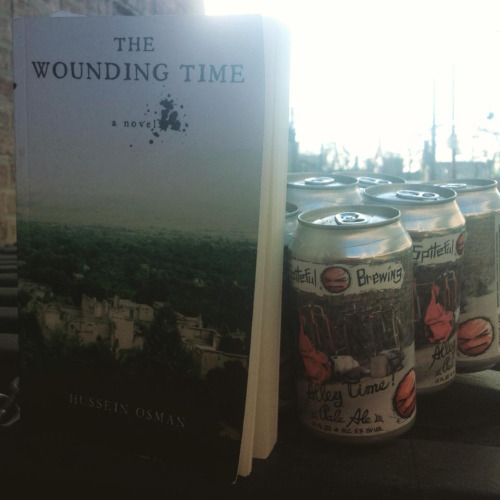
Jamie has lost his brother Matt to the war in Afghanistan. What he finds harder to deal with is that he soon starts to lose a sense of Matt. Hurt and confused, Jamie decides he must travel to the place where Matt was killed—he must go to Kabul. There he finds a surreal landscape of mercenaries and soldiers, violent teenage terrorists, diaspora-trained lawyers in a land currently without law, and where he strikes up a friendship with a beautiful, headstrong local woman. As Jamie's life descends into a series of unwelcome encounters, and Afghanistan descends further into chaos, things reach a climactic head for the British blue-collar slacker antihero, and it soon becomes clear that his rash trip to a land he doesn't understand may end up holding deadly consequences. A major new literary achievement, and one of the most metaphorically astute looks yet at the Millennial "War on Terror," The Wounding Time is a darkly poetic contemporary masterpiece, and marks the brilliant literary debut of London author Hussein Osman. Download it for free, or order a paperback copy, at [cclapcenter.com/thewoundingtime].
[DISCLOSURE: I am the owner of the publishing company that published this book.]
This is the latest by my publishing company, a deep character study about a British blue-collar slacker and the terrible messes he gets himself into while visiting Afghanistan in the middle of the "War on Terror." Dark and dense, like a Graham Greene novel, and I hope you'll have a chance to check it out at [cclapcenter.com/thewoundingtime], especially given that the ebook version is completely free if you choose. Would love to see your comments about it here at Goodreads!
The Wounding Time, written by Hussein Osman and published by CCLaP, is a first-person, literary fiction written from the point-of-view of Jamie, whose brother, Matt, left their home in Britain to fight the war in Afghanistan and never returned. When Matt died from a roadside improvised explosive device during the war in Afghanistan, Jamie’s family was shattered—his father, an already distant man, disappears into himself and his mother starts developing symptoms of Alzheimer’s. But Jamie suffers differently—he develops a depression, both in envy of the worship that his older brother received and the loss of that brother, who wasn’t particularly nice to him to begin with. With no recovery from his complex emotional pain in sight, Jamie flies to Afghanistan in order to learn his own truths from the land that took his brother.
Jamie’s depression teaches him some bad habits, including a cold, callous attitude toward Middle Easterners. At one point, Jamie even lashes out violently with a few of Matt’s friends against a group of what he describes as “Asians,” in order to vent the frustrations he felt upon losing his brother. Even before September 11th, there was always that kind of racism in the states though. And being half-Iranian, I’ve got all too much experience with it. It wasn’t particularly sharp at first—Iranians born into my generation knew to call themselves Persians, instead of associating themselves with Iran, because of the hostage crisis in the late 70s and early 80s that painted our people as Columbophobes, including those of us that already migrated here. As a child, the racism wasn’t too harsh—kids picked on me because of my name. Teachers hesitated to pronounce it. Peers frequently asked, “Where are you from?” even though we were in the same school district. In my childhood home, we celebrated Nowruz, the Iranian new year, and my friends who wanted to come over and play basketball or Street Fighter couldn’t grasp its cultural significance. Even as I became a teenager, it became easier saying I was “Asian” than explaining what Persian meant or where Iran was. And though the racism took on an anti-Asian flair, with the size of my penis coming into question too frequently, it seemed easier than letting them know who I really was so they could make ammunition of my heritage. It didn’t hurt that I was a anime nerd too—but many of us were still in hiding back then, still too different to adapt to American culture. Ultimately, it was just easier to pretend that I was something that I wasn’t, in order to assimilate with the white majority around me.
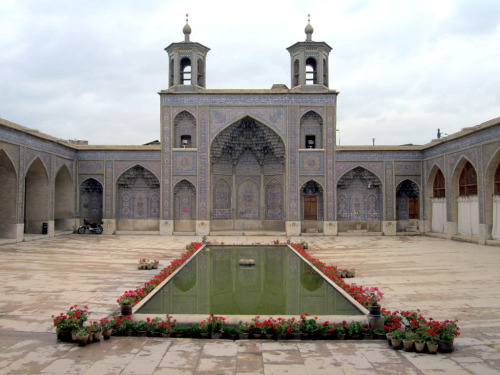
(Shiraz, the city of kings and birth place of my father. Photo credit: David Stanley.)
Jamie’s use of the word Asians to describe Middle Easterners isn’t the only tongue-and-cheek remark he makes. Even in his British lexicon, he tosses a lot of slang and idioms around. From the very moment you start reading, you know he’s not an American, and not in that abrasive Irvine Welsh style either. It’s just through word choices, spellings, and attention to certain details that we Americans tend to ignore. However, you could hardly call what Jamie speaks as the Queen’s English. He curses, uses modern grammar to shorten phrases, and regularly throws around slang. He addresses the audience like they’re his friend, sitting next to him at the pub, drinking the day away as he gives the before and after of his brother’s life. Osman doesn’t just invite the reader into the story, he invites the reader into Jamie’s whole life and personality, and I found it easy to get attached to the character in spite of the racial slurs and allusions to barbarism he makes throughout the story—lucky for me, that racism fades into a dull ache of what was taken from him as the story unfolds, so I found the character growth especially rewarding as a Middle Easterner. For those of anyone afraid to read a book that might be a racist, you’ll discover how things change when Jamie meets Asifa, an Afghani woman who he becomes enamored over. Or when he feels a distinct need to be close with Amir, the hotel concierge at his residence in Afghanistan, because he considers Amir his only friend at that point. There’s something significant about watching a bigot transform into someone with an open mind, and begin to see himself in the lives that he touches through his adventure. The combination of voice and character evolution made this novel remarkable, in spite of Jamie’s otherwise asshole language, behavior, and choices.
Amir was actually my father’s name. I don’t like to talk about him much, even more than 15 years after he passed away, but I’m glad he wasn’t alive to see how the world changed during 9/11. I don’t think he would’ve been able to fathom how first world, educated people became so Islamaphobic overnight. But they did. Suddenly, it became impossible to hide by calling myself “Asian.” I remember 9/11 like it happened yesterday—they paused classes to announce that an attack had been made on the twin towers in New York City, but that didn’t seem really significant to me at the time. I’d never heard of the twin towers before, or the World Trade Center, and in my point-of-view, I’d already grown up in a world of terror: the Oklahoma City Bombing, the Uni-bomber, the Columbine High School Massacre. It seemed that there was no end to the death that appeared in the media, and the World Trade Center didn’t seem any different. But it was. On 9/11, people asked me what my ethnicity was more than I’ve ever been asked before. Asian, I said. Persian, I said when it felt like I exhausted Asian. I just wanted to be anything but the center of attention that day, since I was the school’s only Middle Eastern student. Nonetheless, on my way out after classes, one of my friends stopped me in the stairwell and said, “You better watch out, or I’ll kick your ass. Your people did this.” I thought he was was my friend though. Shaken up already, when my mom picked me up, she asked me, “Do you want to change your name?” I said, “Why? What gives?” And she answered, “From now on, there will be a lot of people who won’t treat you equally anymore because of your name. It’s okay to change it.” She didn’t even know the half of it—but I couldn’t change my name. My father who had died almost exactly two years prior (in fact, we held his memorial on September 11th, 1999) left me with two things that he carried throughout his whole life—the family name, Riahi, and my middle name, Reza. I intended to keep both of them.
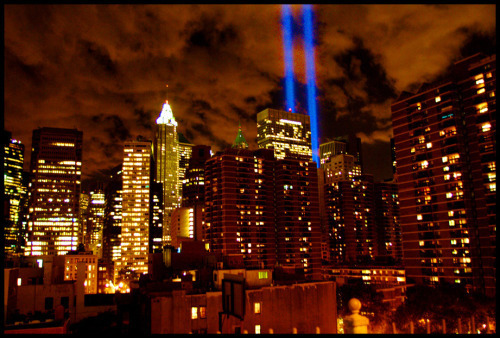
(It’s impact is still felt, on us most of all. Photo credit: David Robert Bliwas.)
It’s a lot easier looking back and commenting on those events, and it’s easier for Jamie too. This novel isn’t just one story about how he goes to Afghanistan—it’s his life story. Though his six months in Afghanistan became the novel’s main plot, Jamie talks about life before and after Matt too. I’ve taken issue with this duel narrative in the past, like with novels such as Drive, but Osman manages to use one narrative to compliment the other. After all, Jamie’s trip to Afghanistan is fueled by his longing to develop a relationship with his dead brother that, in some ways, only superficially existed when Matt was alive. He carries us to moments in his childhood, when Jamie had to grow up with everyone in school fearing him because of the mark that his brother left throughout the neighborhood, a wrath like no other. He shows us moments when Matt, the miserable pain in the ass, would torture Jamie, bullying him and pushing him around like it was his right as an older brother. He even takes us back to the first beers he shared with Matt, following his brother out to pubs and to the commons to smoke his first cigarettes and acquire his first kisses. So as Jamie romps about Kabul, he becomes entangled by Matt’s ghost and finds himself peering back, drawing connections with the ethereal entity that follows him, even if he’s only imagining his brother’s ghost in order to find closure for his loss. In addition to making peace with the Afghani people that he initially blamed for taking his brother, he develops a fuller understanding of why his brother lived the way he lived and why he died the way he did. He even begins to blame America more than Afghanistan for taking his brother, but it’s the story of how he comes to terms with the path that his brother took to the end, how he his brother died the way he lived, how it only seemed fit that he went out in a blaze glory. But it’s not just about Jamie’s brother either—it’s also about his mother, who acted as Jamie’s and Matt’s best friend when they were children, who fixated on her boys, Matt especially, until Matt passed, when she lost her way, lost track of the past and the present in the wake of Matt’s demise. These qualities become even more poignant as Jamie builds his relationship with Asifa, and sees Matt and himself in her two brothers that she takes care of, allowing Jamie to come full circle, being raised with Matt and seeing himself in Asifa’s youngest brother, Hussein, as the Middle Eastern turmoil finds Jamie and their family.
Whether it’s the in the past or the present, racism is an ongoing issue for me. It never really quite ended, as negative as it is for me to say. After 9/11, my life became strife. I constantly got into fights in high school, and though those fights were fueled by racism against me, questions rose of whether I was the one who should be expelled or not. The racism I experienced in high school was just one of many factors for why my grades slipped, and no one at school was willing to go to bat for me when I told them how important it was for me to go to college. They made me attend sessions with the school counselor, who listened to me at first, but made no effective resolutions—no one was punished for calling me a “sand nigger” or a “dune coon,” and it seemed like she didn’t care. And why would she? She’s just a shitty high school counselor. At home, my mother and my half-brother denied that me and my younger brother were a different ethnicity. They tried to convince us that we were white as much as they convinced themselves, because even they found themselves all too quickly joining the anti-terrorist bandwagon. As I became an adult, trying to find my way back into school but needing money, racism took on a different form—a passive hate, you could say. For the first two years of my job hunt, I was constantly denied interviews because of my name. I almost thought it was impossible to get a job at, say, McDonald’s, because even places that claimed they were hiring made no effort to reach out to me. Even after I accumulated experience, I was still passed over for people with no experience, who hadn’t even completed any level of education, because my name sounded funny and I might be one of “them terrorists.” But more active forms of hate would return—sometimes, strangers approached me with that very invasive question of, “Where are you from?” “I’m from Aurora, a suburb of Chicago,” I’d say, but it soon became clear that they were more interested in my nationality as a point of judgement as a opposed to where I was actually raised. Today, the passive racism is still ongoing in ways that I may not even necessarily see, but it isn’t always so hidden. Racism has transformed into this apologetic plea for my attention instead. Now when people ask what my nationality is, they say, “Oh, I knew this kid from Iran once. His name was Mohammad, do you know him?” Like he’s my fucking cousin? These ass-backward attempts at trying to contrive some sense of cultural understanding by objectifying me are a much easier issue to live with than the fights and contempt, but they’re not that much better. All in all, this isn’t a post-racial society—and for the rest of my life, people will always wonder what my nationality is before they ask anything about who I really am.
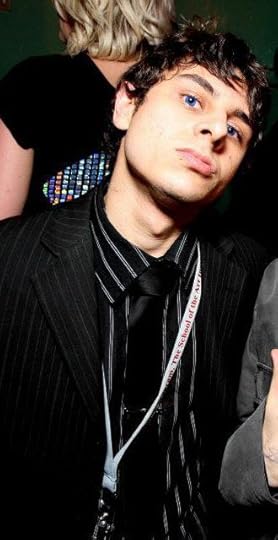
(Maybe it’s in the eyes?)
Like racism, there’s a lot of uncertainty about where this novel really ends. Obviously, the book goes no further than the last page, but the actions that lead up to it make me wonder if there isn’t more that I’m missing from its pages. Even after I finished the book, I reread the last five chapters again in search for a stronger resolution. The climactic moment comes with the suspense of a gunshot, but it’s never quite clear where the bullet lands. However, Osman gives us a few possibilities in honor of that climax, without negotiating the intent of his ending. In the book’s title, we may ascertain the mark it found, although one could also establish that it isn’t the title that determines the mark, but the analogy that Asifa’s family represents to Jamie. Both cases present totally different endings, but ultimately, the characters who managed to live through the situation are unaffected by the shot. So perhaps it’s the character we don’t get to see in the ending? In any case, there is no clear truth to this book’s end, and while that might be a weakness, I found it to be a very genuine, honest strength. Not because it allows the reader to come to their own conclusions, but because it permits the book to simply end, with a few chapters of aftermath that expatiate on the end of Matt’s life and the relationships built throughout the story. It isn’t a novel about an fresh wound, but a novel about the healing of old wounds. And in a place like Afghanistan, a nation razed by war, someone needs to get shot by the end. You can’t show a gun in the first act, after all, without someone getting shot by the third act. Without spoiling the novel, the bullet determines the moment the story has to end and the fate of its characters, whether the bullet came at all or not. This ambiguity created and the answers within the story itself make this a book enjoyable through multiple reads, especially because of the voice and character growth, in addition to bridging the past and the present in the audience’s mind by tracing each moment throughout Jamie and Matt’s life.
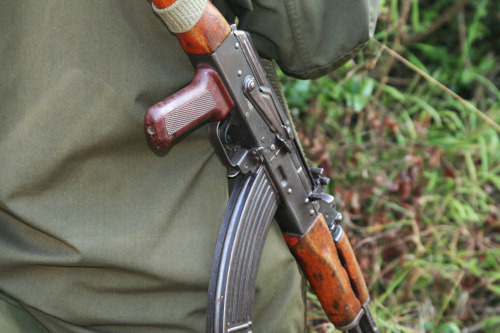
(The Kalashnikov. The symbol of war torn revolution.)
The Wounding Time is both a healthy dose of information and a very emotional, heart-wrenching piece that should be considered canon to post-9/11 literature, for the perceptions made in the media on the horrors of war and the narrator’s confrontation with those horrors. Without being blunt and taking a political stance, it allows the reader to draw their own conclusions about these conflicts from the points-of-view of those who withstood it. And there’s little more satisfying than watching a man overcome his ignorance in the face of that conflict—a conflict which already fueled so much ignorance.