

What do you think?
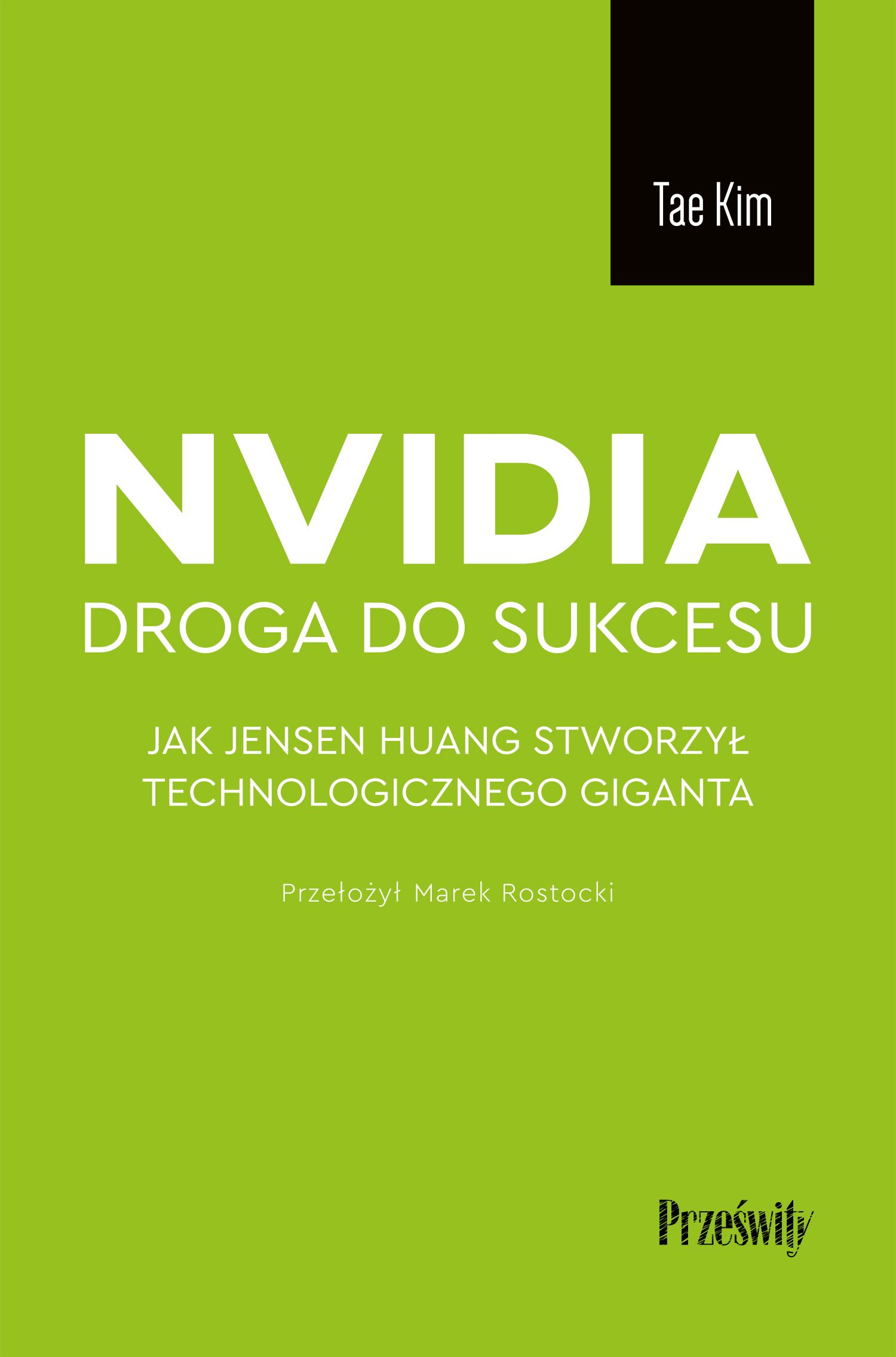
Nvidia. Droga do sukcesu. Jak Jensen Huang stworzył technologicznego gigant
Założona w 1993 roku Nvidia jest obecnie jedną z najwyżej wycenianych korporacji na świecie. Ta książka pokazuje, jak działania jej prezesa Jensena Huanga pozwoliły firmie osiągnąć niewiarygodny sukces.
Chipy produkowane przez Nvidię napędzają rewolucję generatywnej sztucznej inteligencji, a popyt na nie jest nienasycony. Firmapowstała ponad trzydzieści lat temu i długo była znana głównie w wówczas niszowym świecie gier komputerowych. Oznacza to, że Jensen Huang pozostaje na stanowisku prezesa dłużej niż ktokolwiek inny w sektorze biznesu słynącym z nieustannego chaosu i fiaska.
Tae Kim, uznany dziennikarz zajmujący się branżą technologiczną, wykorzystał w książce ponad sto wywiadów, które przeprowadził m.in. z Jensenem, pozostałymi współzałożycielami firmy oraz dwoma inwestorami VC, którzy pierwsi zainwestowali w Nvidię. Opisał, jak firma wielokrotnie tworzyła nowe rynki i przechytrzyła konkurentów, w tym giganta branży półprzewodnikowej, firmę Intel.
W książce znajdziesz wiele fascynujących szczegółów z historii Nvidii:
obalający mity opis założenia firmy w 1993 roku tajniki uporania się ze skutkami początkowych błędów, które zniszczyłyby większość start-upów informacje dotyczące obsesji Jensena na punkcie rozwiązania „dylematu innowatora” – sytuacji, gdy lider rynku przegrywa z mniejszymi, zwinnymi firmami kulisy wyjątkowo wczesnego dostrzeżenia przez Nvidię nadchodzącej fali AI i przyczyny postawienia swojej przyszłości na technologię, której jeszcze nie było. Ta książka pozwala przyjrzeć się wyjątkowej kulturze organizacyjnej Nvidii oraz zasadom zarządzania stosowanym przez Jensena, prezentując ponadczasowe nauki dla przedsiębiorców i menedżerów.
Chipy produkowane przez Nvidię napędzają rewolucję generatywnej sztucznej inteligencji, a popyt na nie jest nienasycony. Firmapowstała ponad trzydzieści lat temu i długo była znana głównie w wówczas niszowym świecie gier komputerowych. Oznacza to, że Jensen Huang pozostaje na stanowisku prezesa dłużej niż ktokolwiek inny w sektorze biznesu słynącym z nieustannego chaosu i fiaska.
Tae Kim, uznany dziennikarz zajmujący się branżą technologiczną, wykorzystał w książce ponad sto wywiadów, które przeprowadził m.in. z Jensenem, pozostałymi współzałożycielami firmy oraz dwoma inwestorami VC, którzy pierwsi zainwestowali w Nvidię. Opisał, jak firma wielokrotnie tworzyła nowe rynki i przechytrzyła konkurentów, w tym giganta branży półprzewodnikowej, firmę Intel.
W książce znajdziesz wiele fascynujących szczegółów z historii Nvidii:
obalający mity opis założenia firmy w 1993 roku tajniki uporania się ze skutkami początkowych błędów, które zniszczyłyby większość start-upów informacje dotyczące obsesji Jensena na punkcie rozwiązania „dylematu innowatora” – sytuacji, gdy lider rynku przegrywa z mniejszymi, zwinnymi firmami kulisy wyjątkowo wczesnego dostrzeżenia przez Nvidię nadchodzącej fali AI i przyczyny postawienia swojej przyszłości na technologię, której jeszcze nie było. Ta książka pozwala przyjrzeć się wyjątkowej kulturze organizacyjnej Nvidii oraz zasadom zarządzania stosowanym przez Jensena, prezentując ponadczasowe nauki dla przedsiębiorców i menedżerów.
368 pages, Paperback
Published May 27, 2025
Ratings & Reviews
Friends & Following
Create a free account to discover what your friends think of this book!
Community Reviews
Displaying 1 - 30 of 507 reviews

December 19, 2024
Very enjoyable. TNW contains far more "meaty" details about Nvidia's history than any other book on the market "so far".
1. Is it a book about Nvidia or Jensen Huang? Well, both. As there'd be no Nvidia without Jensen and his major influence on the organization's culture & everyday execution is essential.
2. Is there anything I've missed here? In fact, yes. There's a lot about the early days and competition against 3dfx, and there's a bit about the rise of ATI & its Radeon, even more about CUDA and industrialization of ML (& all sorts of what we know as "AI"), but ... there's very little on the role of GPUs in the early stage of blockchain (& node mining) - that has surprised me most.
3. Does TNW do well enough when it comes to capturing the essence of Nvidia's success (what's behind it)? Hmm, I think it does. And it is not that surprising - extremely hard work & dedication, agency, ownership, technical expertise, highly highly-self-critical awareness of one's own limitations & ..., and even more hard work & dedication. Well, maybe just a bit of luck as well.
4. My favorite part? Hmm, hard to say. I've definitely enjoyed the story of the early days, but I've seen it in other sources already, so I didn't learn that much from that part. The excerpt that struck me most (because it has resonated so hard with me) is JH's impatience & his famous (?) LUA - I found it so close to my way of thinking that it was almost disturbing.
Should you read this book? Yes, why not - I had fun & you'll probably have some too. Just don't treat it as a venture-building textbook (you're not Jensen) and don't try copying it literally (it will end badly ...).
1. Is it a book about Nvidia or Jensen Huang? Well, both. As there'd be no Nvidia without Jensen and his major influence on the organization's culture & everyday execution is essential.
2. Is there anything I've missed here? In fact, yes. There's a lot about the early days and competition against 3dfx, and there's a bit about the rise of ATI & its Radeon, even more about CUDA and industrialization of ML (& all sorts of what we know as "AI"), but ... there's very little on the role of GPUs in the early stage of blockchain (& node mining) - that has surprised me most.
3. Does TNW do well enough when it comes to capturing the essence of Nvidia's success (what's behind it)? Hmm, I think it does. And it is not that surprising - extremely hard work & dedication, agency, ownership, technical expertise, highly highly-self-critical awareness of one's own limitations & ..., and even more hard work & dedication. Well, maybe just a bit of luck as well.
4. My favorite part? Hmm, hard to say. I've definitely enjoyed the story of the early days, but I've seen it in other sources already, so I didn't learn that much from that part. The excerpt that struck me most (because it has resonated so hard with me) is JH's impatience & his famous (?) LUA - I found it so close to my way of thinking that it was almost disturbing.
Should you read this book? Yes, why not - I had fun & you'll probably have some too. Just don't treat it as a venture-building textbook (you're not Jensen) and don't try copying it literally (it will end badly ...).

Read
December 27, 2025As an ex-employee of NVIDIA, I've long had a fascination with the company and its leadership, so I was very excited about this book. Its coverage of NVIDIA's core DNA matches what I know:
- the flat structure (as a recent grad joining a 10k person company, I was shocked to find out there were only 2 levels between me and the CEO).
- Jensen's communal communication style. He never holds 1:1s and gives feedback very publicly. Someone told me: if you've never received a harsh word from Jensen, you haven't done anything meaningful.
- T5T (top 5 thing) emails. You can always tell when a founder has passed through NVIDIA when they bring this practice to their startup.
- The whiteboard culture.
- SoL (speed of light) everything.
The book also sheds lights on many aspects of the company I didn't know: the early history of the company, the GPU branding, the original Pixar demo.
However, every coin has 2 sides, and this book seems to focus entirely on the positive side. The author made a few hyperbole statements that made me pause, such as when he said that NVIDIA has solved the innovator's dilemma entirely.
While I enjoyed the book, I found it hard to follow because it reads more like a collection of facts without a coherent narrative.
- the flat structure (as a recent grad joining a 10k person company, I was shocked to find out there were only 2 levels between me and the CEO).
- Jensen's communal communication style. He never holds 1:1s and gives feedback very publicly. Someone told me: if you've never received a harsh word from Jensen, you haven't done anything meaningful.
- T5T (top 5 thing) emails. You can always tell when a founder has passed through NVIDIA when they bring this practice to their startup.
- The whiteboard culture.
- SoL (speed of light) everything.
The book also sheds lights on many aspects of the company I didn't know: the early history of the company, the GPU branding, the original Pixar demo.
However, every coin has 2 sides, and this book seems to focus entirely on the positive side. The author made a few hyperbole statements that made me pause, such as when he said that NVIDIA has solved the innovator's dilemma entirely.
While I enjoyed the book, I found it hard to follow because it reads more like a collection of facts without a coherent narrative.

December 26, 2024
For those in business, including but not limited to tech.
A great insight into the "30-year overnight success" that is Jensen Huang's Nvidia, including not just product changes, but failure, process changes, 24/7 "speed of light" demanding work culture, and innovation (including a very flat management structure that allows any employee to email the CEO and get a quick answer) to find and serve new markets. Fascinating study, albeit highly technical of Nvidia's move from making graphics chips to GPUs to parallel-processing GPUs that have become THE AI data center go-to chip.
A great insight into the "30-year overnight success" that is Jensen Huang's Nvidia, including not just product changes, but failure, process changes, 24/7 "speed of light" demanding work culture, and innovation (including a very flat management structure that allows any employee to email the CEO and get a quick answer) to find and serve new markets. Fascinating study, albeit highly technical of Nvidia's move from making graphics chips to GPUs to parallel-processing GPUs that have become THE AI data center go-to chip.

December 20, 2024
Certainly the most thorough and comprehensive history of the company so far. However, the storytelling felt flat, the narrative lacked analysis, and I finished the book feeling like I’ve just spent 5 hours reading a super long wikipedia article. Honestly not worth the time to read — you can probably get the same effect from listening to Acquired’s three-part podcast

July 1, 2025
Insightful book on a company that has shown a CAGR of 33% in value since 1999: $1.000 dollar of shares bought then would have been worth $113m in 2024
The mission is the boss
The rise of NVIDIA to the most valuable company in the world has been nothing short of meteoric, and the competitive moat build by the firm goes beyond engineering prowess and software tailored to AI. The NVIDIA way shows the influence of CEO and founder Jensen Huang on the culture of the company, which steered the business away from internal politics, bureaucracy and complacency, while taking large bets that weren’t always appreciated by the market initially.
More thoughts to follow!
The mission is the boss
The rise of NVIDIA to the most valuable company in the world has been nothing short of meteoric, and the competitive moat build by the firm goes beyond engineering prowess and software tailored to AI. The NVIDIA way shows the influence of CEO and founder Jensen Huang on the culture of the company, which steered the business away from internal politics, bureaucracy and complacency, while taking large bets that weren’t always appreciated by the market initially.
More thoughts to follow!
November 13, 2024
The definitive history and overview of Nvidia.
I probably am as qualified as anyone to write this review, given that I write a semiconductor focused newsletter.
Great history / anecdotes / philosophy about Nvidia, and I think it will be an instant classic.
I probably am as qualified as anyone to write this review, given that I write a semiconductor focused newsletter.
Great history / anecdotes / philosophy about Nvidia, and I think it will be an instant classic.

December 29, 2024
Wow. Just finished reading “The Nvidia Way” by Tae Kim. Of the 200+ non-fiction business books I’ve read, this probably ranks in the top 3. A must-read for startup founders to F500 executive. Some key lessons 📖:
📈 Scaling from 0 to 10:
- Work “at the speed of light” – Your pace should be constrained only by the law of physics – not by historical norms, your competitor's speed, or internal politics. “Speed of light” is the theoretical maximum that work can be done, unconstrained by any other factors. For early-stage startups where speed is often the only real advantage over incumbents, this mindset is essential.
- Don’t spread yourself too thin – Nvidia’s early failures with the NV1 card taught them a vital lesson: overdesign and feature creep dilute focus. Doing fewer things exceptionally well beats doing many things poorly.
- Deliver feedback openly and widely – Jensen is a firm believer of constant feedback, often delivered in group settings so everyone can learn from mistakes. His philosophy: “We’re not optimizing to avoid embarrassing someone. We’re optimizing for the company to learn from our mistakes.”
- Invest in marketing – Even in a highly technical market like semiconductor, Jensen understood specs alone don’t sell. Marketing and branding mattered almost as much. One of the best moves Nvidia did was coining the term “GPU”. At the time, graphic cards were priced significantly lower than CPUs, despite being just as complex. Branding them as “GPUs” not only differentiated Nvidia’s products but also helped narrow the pricing gap.
- Culture is enduring - Building a sustainable business means investing as much effort in aligning internal culture as in external metrics like revenue or product launches. Markets and products will evolve, but a strong culture is the bedrock for long-term success.
📈 Scaling from 10 to 100:
- Keep teams lean - Aim for a team that’s large enough to do the job well but small enough to avoid unnecessary bureaucracy. Overmanagement kills agility and innovation.
- Adopt a flat organizational structure – Unlike most F500 CEOs with a handful of direct reports, Jensen has over 60. This flat hierarchy empowers employees, ensures information flows quickly, and speeds up decision-making.
- Assign a Pilot in Command (“PIC”) - Every project at Nvidia has a designated "PIC" who reports directly to Jensen and is fully accountable for its success. Functional teams like sales, engineering, and ops serve as a shared talent pool for these projects.
- Catch weak signals early - Jensen’s “5-email initiative” is a great example of how he stays connected to all levels of the company in order to catch signals early. He asks all employees to send their top 5 priorities/observations, then reads 100 of these emails to detect emerging trends early. While strong signals are easy to spot, it’s the weak ones that make the difference.
Needless to say, Nvidia's status as the world's most valuable company wasn't by pure luck...
📈 Scaling from 0 to 10:
- Work “at the speed of light” – Your pace should be constrained only by the law of physics – not by historical norms, your competitor's speed, or internal politics. “Speed of light” is the theoretical maximum that work can be done, unconstrained by any other factors. For early-stage startups where speed is often the only real advantage over incumbents, this mindset is essential.
- Don’t spread yourself too thin – Nvidia’s early failures with the NV1 card taught them a vital lesson: overdesign and feature creep dilute focus. Doing fewer things exceptionally well beats doing many things poorly.
- Deliver feedback openly and widely – Jensen is a firm believer of constant feedback, often delivered in group settings so everyone can learn from mistakes. His philosophy: “We’re not optimizing to avoid embarrassing someone. We’re optimizing for the company to learn from our mistakes.”
- Invest in marketing – Even in a highly technical market like semiconductor, Jensen understood specs alone don’t sell. Marketing and branding mattered almost as much. One of the best moves Nvidia did was coining the term “GPU”. At the time, graphic cards were priced significantly lower than CPUs, despite being just as complex. Branding them as “GPUs” not only differentiated Nvidia’s products but also helped narrow the pricing gap.
- Culture is enduring - Building a sustainable business means investing as much effort in aligning internal culture as in external metrics like revenue or product launches. Markets and products will evolve, but a strong culture is the bedrock for long-term success.
📈 Scaling from 10 to 100:
- Keep teams lean - Aim for a team that’s large enough to do the job well but small enough to avoid unnecessary bureaucracy. Overmanagement kills agility and innovation.
- Adopt a flat organizational structure – Unlike most F500 CEOs with a handful of direct reports, Jensen has over 60. This flat hierarchy empowers employees, ensures information flows quickly, and speeds up decision-making.
- Assign a Pilot in Command (“PIC”) - Every project at Nvidia has a designated "PIC" who reports directly to Jensen and is fully accountable for its success. Functional teams like sales, engineering, and ops serve as a shared talent pool for these projects.
- Catch weak signals early - Jensen’s “5-email initiative” is a great example of how he stays connected to all levels of the company in order to catch signals early. He asks all employees to send their top 5 priorities/observations, then reads 100 of these emails to detect emerging trends early. While strong signals are easy to spot, it’s the weak ones that make the difference.
Needless to say, Nvidia's status as the world's most valuable company wasn't by pure luck...
September 16, 2025
Apparently there’s no substitute for hard work. Bummer…..

February 8, 2025
Tae Kim’s The Nvidia Way explores Nvidia’s evolution from a struggling startup to a dominant force in computing. The book covers both the technical and business challenges the company faced without oversimplification, making it valuable for both engineers and business professionals.
In its early years, Nvidia went through multiple near-collapse moments. CEO Jensen Huang is portrayed as hypercompetitive and, at times, petty. These struggles forced the company to rethink its approach, leading to a more structured release cycle aligned with the PC industry. One key advantage was Nvidia’s software strategy—backward-compatible drivers and software emulation of hardware, which gave them flexibility and a competitive edge.
CUDA’s rise as a general-purpose GPU computing (GPGPU) platform played a pivotal role in Nvidia’s success. Initially, the company was not focused on advancing parallel computing, but CUDA allowed them to build an ecosystem that strengthened their position in AI, high-performance computing, and beyond. The book explains how this transition helped Nvidia move beyond gaming into new industries.
One of Nvidia’s key strengths is its ability to identify, hire, and reward talented individuals. The company is known for maintaining strong internal alignment with its vision, avoiding the internal politics that often plague large organizations. Teams are structured fluidly around projects rather than rigid hierarchies, reducing managerial territorialism and keeping innovation at the forefront. The emphasis on whiteboarding over formal presentations encourages open discussions and problem-solving.
While the book highlights the technical brilliance and relentless drive of Nvidia’s founders and team, it also acknowledges the role of luck in their success. Nvidia capitalized on multiple industry shifts, including gaming, computational science, and AI. Surprising cryptocurrency mining and Web3, is not mentioned at all in the book.
The Nvidia Way provides a detailed look at the company’s technology, business strategy, and internal culture, offering insights into how Nvidia continues to stay ahead in a fast-moving industry.
In its early years, Nvidia went through multiple near-collapse moments. CEO Jensen Huang is portrayed as hypercompetitive and, at times, petty. These struggles forced the company to rethink its approach, leading to a more structured release cycle aligned with the PC industry. One key advantage was Nvidia’s software strategy—backward-compatible drivers and software emulation of hardware, which gave them flexibility and a competitive edge.
CUDA’s rise as a general-purpose GPU computing (GPGPU) platform played a pivotal role in Nvidia’s success. Initially, the company was not focused on advancing parallel computing, but CUDA allowed them to build an ecosystem that strengthened their position in AI, high-performance computing, and beyond. The book explains how this transition helped Nvidia move beyond gaming into new industries.
One of Nvidia’s key strengths is its ability to identify, hire, and reward talented individuals. The company is known for maintaining strong internal alignment with its vision, avoiding the internal politics that often plague large organizations. Teams are structured fluidly around projects rather than rigid hierarchies, reducing managerial territorialism and keeping innovation at the forefront. The emphasis on whiteboarding over formal presentations encourages open discussions and problem-solving.
While the book highlights the technical brilliance and relentless drive of Nvidia’s founders and team, it also acknowledges the role of luck in their success. Nvidia capitalized on multiple industry shifts, including gaming, computational science, and AI. Surprising cryptocurrency mining and Web3, is not mentioned at all in the book.
The Nvidia Way provides a detailed look at the company’s technology, business strategy, and internal culture, offering insights into how Nvidia continues to stay ahead in a fast-moving industry.

December 13, 2024
A well-written and definitive account on why and how Nvidia succeeded and is one of the most valuable companies in the world today.
Jensen Huang is one of today's rare breeds in understanding both technology and business needs. He has been the CEO for Nvidia since the beginning. I have worked in many "tech" companies and to put it mildly, most of my former work colleagues would never stand a chance or even survive working for a culture like in Nvidia. Excellence is expected at every level and 70 hour work weeks are considered the norm. In return you will be doing revolutionary and exceptional work and be well rewarded. In fact how Nvidia works is what is considered I consider the antithesis of most companies. There are no powerpoint slides used whatsoever, and white boards are used everywhere instead. Exceptional talent is recognised (and poached) and well compensated to retain them. Smart people want to work with smart people, and not average people. Industry turnover in Nvida is only 3% compared to 13% in the tech industry. Jensen also won't hesitate to call you out and humiliate you in front of everyone if you did a terrible or lacklustre job. Mediocrity or coasting does not happen in Nvidia. There is tremendous transparency and he knows everyone by name even though it's now a very big company. Everything is expected to adopt "the speed of light" mindset.
Reading this book highlights why Nvidia will be *the* leader in the GPU space for years to come. They have come a long way to where they are today, stumbling and nearly becoming bankrupt in the early days but overcame all hurdles through sheer will and some luck.
I can highly recommend this book if you're interested in the inner workings of the Jensen way because Jensen IS Nvidia.
Jensen Huang is one of today's rare breeds in understanding both technology and business needs. He has been the CEO for Nvidia since the beginning. I have worked in many "tech" companies and to put it mildly, most of my former work colleagues would never stand a chance or even survive working for a culture like in Nvidia. Excellence is expected at every level and 70 hour work weeks are considered the norm. In return you will be doing revolutionary and exceptional work and be well rewarded. In fact how Nvidia works is what is considered I consider the antithesis of most companies. There are no powerpoint slides used whatsoever, and white boards are used everywhere instead. Exceptional talent is recognised (and poached) and well compensated to retain them. Smart people want to work with smart people, and not average people. Industry turnover in Nvida is only 3% compared to 13% in the tech industry. Jensen also won't hesitate to call you out and humiliate you in front of everyone if you did a terrible or lacklustre job. Mediocrity or coasting does not happen in Nvidia. There is tremendous transparency and he knows everyone by name even though it's now a very big company. Everything is expected to adopt "the speed of light" mindset.
Reading this book highlights why Nvidia will be *the* leader in the GPU space for years to come. They have come a long way to where they are today, stumbling and nearly becoming bankrupt in the early days but overcame all hurdles through sheer will and some luck.
I can highly recommend this book if you're interested in the inner workings of the Jensen way because Jensen IS Nvidia.

January 22, 2025
Over the past year, I’ve read books about Netflix, Tesla, Uber, Apple - and now Nvidia. I’ve realized that these company biographies are some of my favorite reads. It’s fascinating to learn how companies are founded, how they grow, struggle, and manage their internal politics and processes. The Nvidia Way is no exception. What makes it even more enjoyable is the nostalgia of the company’s early days and their first video cards, paired with the excitement of their recent advancements in AI. A great read for anyone curious about the journey of innovative companies.

July 17, 2026
I have to admit, I was pleasantly surprised by how much I enjoyed learning about Nvidia and the team behind this monster of a company. It is fascinating to see how great companies and their leaders operate- the incredible discipline, the power of a clear vision, the importance of a strong team, and the strategies that drive success. Of course, some aspects were far less admirable, including the lack of work-life balance and a culture where screaming at or reprimanding employees was not uncommon. BUT throughout the book, I kept thinking about the cost of pursuing such an ambitious vision. It is a fine balance. You might work 12/14hour days (or on weekends too), have almost no work-life balance, and even bring your children to the office just to spend time with them. Yet that relentless hard work can eventually lead to extraordinary success. Just look at where Nvidia is today.
As the only book about Nvidia’s story, it really gave me (and the readers) the rare opportunity to step into the shoes of Malachowsky, Priem, and Huang. That felt like a privilege. Tae Kim does a wonderful job of showing readers the people, decisions, sacrifices, and strategies that helped Nvidia become the company it is today.
(4.5/5)
As the only book about Nvidia’s story, it really gave me (and the readers) the rare opportunity to step into the shoes of Malachowsky, Priem, and Huang. That felt like a privilege. Tae Kim does a wonderful job of showing readers the people, decisions, sacrifices, and strategies that helped Nvidia become the company it is today.
(4.5/5)

February 2, 2025
A great overview of both Nvidia's history and Jensen Huang's leadership style.

January 28, 2025
Really inspiring how they got there! Don't believe in the work minimal 60 hours a week attitude. But Jensen had some really good principles worth reading about!

September 6, 2025
If you enjoy Isaacson's biographies, you'll probably enjoy this one. Personally, I detest his uncritical look at recent historical figures and don't enjoy Isaacson's writing at all. Tae Kim is perhaps worse. His fawning adoration for his idol, Jensen Huang transpires on every single page. I got fed up with the gushing love and dropped the book about halfway though. I mean I know how it ends right? Trillionnaire sells tech to terrorist countries in Middle East, what could go wrong? Anyway, not my cuppa.

December 28, 2024
American technology company Nvidia (founded 1993) is one of the latest Silicon Valley companies to rise to massive prominence in the mid-2020s through its dominance in supplying the hardware and software powering generative artificial intelligence. In The Nvidia Way, tech journalist Tae Kim explores the history of the company, particularly its co-founder, president, and long-time hard-charging CEO Jensen Huang. This is an interesting read for those interested in business and/or technology, as like practically all companies, there have been many ups and downs and key decision points that could have easily changed everything. Kim conducted extensive interviews with Nvidia personnel over the years, and this book comes off as largely pro-Jensen Huang (basically, the SteveJobsification of Huang).
Further reading: technology and business
The Worlds I See: Curiosity, Exploration, and Discovery at the Dawn of AI by Fei-Fei Li (more of a memoir, but an interesting parallel trajectory re: Li's founding of ImageNet; Li features briefly toward the end of this book)
Only the Paranoid Survive: How to Exploit the Crisis Points that Challenge Every Company and Career by Andy Grove
Tim Cook: The Genius Who Took Apple to the Next Level by Leander Kahney
The Signals Are Talking: Why Today’s Fringe Is Tomorrow’s Mainstream by Amy Webb
The Future Is Faster Than You Think: How Converging Technologies Are Transforming Business, Industries, and Our Lives by Peter Diamandis and Steven Kotler
My statistics:
Book 316 for 2024
Book 1919 cumulatively
Further reading: technology and business
The Worlds I See: Curiosity, Exploration, and Discovery at the Dawn of AI by Fei-Fei Li (more of a memoir, but an interesting parallel trajectory re: Li's founding of ImageNet; Li features briefly toward the end of this book)
Only the Paranoid Survive: How to Exploit the Crisis Points that Challenge Every Company and Career by Andy Grove
Tim Cook: The Genius Who Took Apple to the Next Level by Leander Kahney
The Signals Are Talking: Why Today’s Fringe Is Tomorrow’s Mainstream by Amy Webb
The Future Is Faster Than You Think: How Converging Technologies Are Transforming Business, Industries, and Our Lives by Peter Diamandis and Steven Kotler
My statistics:
Book 316 for 2024
Book 1919 cumulatively

February 19, 2025
This book took me back to my early computer days, when I was thrilled by 3Dfx ads in the magazine CD-Action...
What I liked about the story the most is the realization that Nvidia employees often worked late and on weekends. I admire their dedication to work around the clock. There were personal sacrifices of course, but in the end these factors might have been the ones that helped Nvidia get where they are right now!
Another cool story was about the difference between technical CEOs like Jensen Huang, and other CEOs in big companies, engineering FTW!:)
Overall, it was a very interesting history to grab, both from nostalgia and learning perspectives!
What I liked about the story the most is the realization that Nvidia employees often worked late and on weekends. I admire their dedication to work around the clock. There were personal sacrifices of course, but in the end these factors might have been the ones that helped Nvidia get where they are right now!
Another cool story was about the difference between technical CEOs like Jensen Huang, and other CEOs in big companies, engineering FTW!:)
Overall, it was a very interesting history to grab, both from nostalgia and learning perspectives!

March 4, 2025
This book is a ballad for Jensen Huang.
Everything that he is doing is great. Pushing employees for 60+ hour weeks - great. Being blunt with everyone - great. Working on holidays while his kids are playing - great.
While I am not here to judge - everyone has their own preferences, but for me, European, this sounds like an attempt to "make america great again" type of book in line with Sergey Brin's urge to "spend at least workdays and 60 hours in office". Perverted view of the world and incentives.
I did learn a bit of Nvidia's history from this book, so I glad I read it, but it's not a balanced take.
Everything that he is doing is great. Pushing employees for 60+ hour weeks - great. Being blunt with everyone - great. Working on holidays while his kids are playing - great.
While I am not here to judge - everyone has their own preferences, but for me, European, this sounds like an attempt to "make america great again" type of book in line with Sergey Brin's urge to "spend at least workdays and 60 hours in office". Perverted view of the world and incentives.
I did learn a bit of Nvidia's history from this book, so I glad I read it, but it's not a balanced take.

January 28, 2025
Jensen's my second favorite billionaire. What a king we love our boy.

January 18, 2026
This is the kind of business book that lands differently depending on what you’re looking for. If you want a glossy “AI miracle” story, this probably isn't it. Instead (and what I found more interesting) is a study in how an “overnight success” is actually a decades-long commitment to the unsexy work: platform building, technical excellence, and leadership that avoids complacency.
The book is about how Nvidia became Nvidia —not just a GPU company, but the default computing platform powering modern AI by consistently thinking in systems: hardware + software + developer ecosystem + long-term strategy. The recurring message is that Nvidia didn’t merely ride waves; it invested early and relentlessly enough to help create the waves.
Key takeaways for me -
Platforms beat products. The book makes the case that Nvidia’s biggest advantage wasn’t making faster chips—it was in building an ecosystem that made those chips the easiest and most attractive choice for developers and researchers.
It’s a leadership book disguised as a company story. Jensen Huang comes across as demanding, deeply technical, and unusually long-range in his thinking. The portrait here is less “visionary genius” and more “high-standards operator who refuses to let the organization drift into mediocrity.”
Reinvention isn’t occasional—it’s cultural. One of the more compelling threads is how Nvidia repeatedly reoriented itself (gaming → compute → AI) and treated reinvention as a normal operating process.
Leadership lessons include:
* invest ahead of obvious ROI
* insist on clarity (even when it’s uncomfortable)
* keep standards high without drowning in bureaucracy
* build capabilities that compound over time
Obviously, the book is very pro-Nvidia and pro-Huang, which makes for a good story but it does feel like there was more that could have been said to counter the very "all good here" feeling.
That said, it is a good read for those in tech, particularly tech leadership, or those interested in Nvidia's history and business approach. It’s not perfect—there’s some obvious hero story and a few areas that could have benefited from a critical eye —but it’s still a worthwhile read, especially if you’re interested in leadership and execution at scale.
The book is about how Nvidia became Nvidia —not just a GPU company, but the default computing platform powering modern AI by consistently thinking in systems: hardware + software + developer ecosystem + long-term strategy. The recurring message is that Nvidia didn’t merely ride waves; it invested early and relentlessly enough to help create the waves.
Key takeaways for me -
Platforms beat products. The book makes the case that Nvidia’s biggest advantage wasn’t making faster chips—it was in building an ecosystem that made those chips the easiest and most attractive choice for developers and researchers.
It’s a leadership book disguised as a company story. Jensen Huang comes across as demanding, deeply technical, and unusually long-range in his thinking. The portrait here is less “visionary genius” and more “high-standards operator who refuses to let the organization drift into mediocrity.”
Reinvention isn’t occasional—it’s cultural. One of the more compelling threads is how Nvidia repeatedly reoriented itself (gaming → compute → AI) and treated reinvention as a normal operating process.
Leadership lessons include:
* invest ahead of obvious ROI
* insist on clarity (even when it’s uncomfortable)
* keep standards high without drowning in bureaucracy
* build capabilities that compound over time
Obviously, the book is very pro-Nvidia and pro-Huang, which makes for a good story but it does feel like there was more that could have been said to counter the very "all good here" feeling.
That said, it is a good read for those in tech, particularly tech leadership, or those interested in Nvidia's history and business approach. It’s not perfect—there’s some obvious hero story and a few areas that could have benefited from a critical eye —but it’s still a worthwhile read, especially if you’re interested in leadership and execution at scale.

March 7, 2025
A fascinating case study on Jensen Huang. He really does seem to be an extraordinarily hard working person.
I had a lecturer who was an employee at Nvidia and he would occasionally do some things that felt a little off putting. (If he called on someone and they gave the wrong answer and tried laughing off the mistake, he'd ask "why are you laughing? What's funny about this?") Definitely asshole behavior but he really is a decent guy. He genuinely wanted to teach us well and make us the best students we could be. After reading this book, it now all makes complete sense to me. My lecturer was just really integrated in the culture at Nvidia, or rather, the Nvidia Way. Looking back it feels like I personally got to experience a bit of that culture, which I think was a good experience.
I would love to feel the same intense feeling of purpose and drive towards a goal like jenson does, but I think I would immediately suffer from burnout from lack of work-life balance. Big respect for this guy's work ethic.
I had a lecturer who was an employee at Nvidia and he would occasionally do some things that felt a little off putting. (If he called on someone and they gave the wrong answer and tried laughing off the mistake, he'd ask "why are you laughing? What's funny about this?") Definitely asshole behavior but he really is a decent guy. He genuinely wanted to teach us well and make us the best students we could be. After reading this book, it now all makes complete sense to me. My lecturer was just really integrated in the culture at Nvidia, or rather, the Nvidia Way. Looking back it feels like I personally got to experience a bit of that culture, which I think was a good experience.
I would love to feel the same intense feeling of purpose and drive towards a goal like jenson does, but I think I would immediately suffer from burnout from lack of work-life balance. Big respect for this guy's work ethic.

January 10, 2026
(Audiobook)
Solid overview of NVIDIA’s history and keys to success.
I thought the most insightful part was to see how NVIDIA succeeded first by delivering the best version of exactly what the customer wanted. Over time, they started to anticipate and even create new markets - their dominance in computing hardware for the AI rush was not an accident but the result of decades of “speed of light” execution and vision.
Much of this book was the typical CEO myth-making around founder Jensen Huang (80-hour work-weeks and answering emails at the playground). Jensen is outrageously competitive like most of the business people and athletes we idolize.
Solid overview of NVIDIA’s history and keys to success.
I thought the most insightful part was to see how NVIDIA succeeded first by delivering the best version of exactly what the customer wanted. Over time, they started to anticipate and even create new markets - their dominance in computing hardware for the AI rush was not an accident but the result of decades of “speed of light” execution and vision.
Much of this book was the typical CEO myth-making around founder Jensen Huang (80-hour work-weeks and answering emails at the playground). Jensen is outrageously competitive like most of the business people and athletes we idolize.

October 17, 2025
A great technical and business narrative wrapped into one. Essentially, there is no substitute for hard work, and really truly believing in your vision. Either really motivated me, or really demotivated me. Can't tell yet.

July 29, 2025
A love letter to Jensen. Recommend to anyone that wants to know more about the mindset behind one of the biggest companies nowadays
July 12, 2025
There many books about the companies, but this is by far the best one. Very unconventional, going against some beliefs like that flat structure could not work in big companies or positive feedback only, while re-enforcing idea like a true care about a company and its employees. A must-read for any person in management in my opinion.

December 16, 2024
Exactly what a business biography should be.

December 11, 2024
Gripping read, insightful about how Nvidia's culture and hard work of the employees has enabled their success.

July 9, 2025
3 sao thôi. Chả hiểu kiểu gì mà Nhã Nam mất 8 tháng để cho ra lò, trong khi chất lượng dịch không mê, hơi kém.
Cuốn này yếu về nhiều mặt. Nói chung thì nó là 1 cuốn sách mang phong cách kể chuyện tốt, có pacing ok, nhưng hết rồi.
Nếu so với cuốn Nvidia the thinking machine thì kém rất nhiều. Đặc biệt là chuyện CUDA và tiến vào AI, câu chuyện mà độc giả (là mình) quan tâm và cũng là thứ thời sự hơn thì viết quá kém.
Những phần về tương lai với khi AI lên ngôi, cũng chẳng nói gì. Cái này tệ, rất tệ.
Rồi mình cho rằng sách có nhiều phân tích dở tệ. Ví như nói về cuốn Innovator's dilemma, mà lại đi phân tích về cách dùng cho những phân khúc card cấp thấp, trong khi tiến vào AI mới là cái rõ nhất tinh thần thì không nhắc gì (btw đọc thì có vẻ tác giả ko hiểu cuốn kia lắm?)
Nói chung cũng mua vui được vài trống canh. Nhưng đọc Nvidia the thinking machine hay và bổ ích hơn.
Cuốn này yếu về nhiều mặt. Nói chung thì nó là 1 cuốn sách mang phong cách kể chuyện tốt, có pacing ok, nhưng hết rồi.
Nếu so với cuốn Nvidia the thinking machine thì kém rất nhiều. Đặc biệt là chuyện CUDA và tiến vào AI, câu chuyện mà độc giả (là mình) quan tâm và cũng là thứ thời sự hơn thì viết quá kém.
Những phần về tương lai với khi AI lên ngôi, cũng chẳng nói gì. Cái này tệ, rất tệ.
Rồi mình cho rằng sách có nhiều phân tích dở tệ. Ví như nói về cuốn Innovator's dilemma, mà lại đi phân tích về cách dùng cho những phân khúc card cấp thấp, trong khi tiến vào AI mới là cái rõ nhất tinh thần thì không nhắc gì (btw đọc thì có vẻ tác giả ko hiểu cuốn kia lắm?)
Nói chung cũng mua vui được vài trống canh. Nhưng đọc Nvidia the thinking machine hay và bổ ích hơn.

May 29, 2026
There are books that explain companies, and then there are books that explain why certain companies feel almost mythological. The Nvidia Way belongs firmly in the second category.
At one level, the book is a corporate history of NVIDIA and its transformation from a graphics-chip company into perhaps the defining infrastructure company of the AI era. But what makes the book compelling is not just the technology story — it is the operating philosophy of Jensen Huang, arguably the tech industry’s longest-serving founder-CEO, who has led the company through its entire three-decade history.
The defining image of the book is not a chip or a data center. It is the whiteboard.
Again and again, the book returns to the importance of whiteboarding inside NVIDIA — ideas debated in real time, problems decomposed collaboratively, strategy evolving in public rather than through polished presentations. In an era where many companies are drowning in decks, dashboards, and meetings, the whiteboard becomes symbolic of a culture obsessed with first-principles thinking and speed.
And speed is perhaps the single biggest theme running through the book.
NVIDIA’s culture comes across as ultra-competitive to the point of extremity. “Second place is the first loser” is not just rhetoric here; it appears deeply embedded into how the company operates. The stories around public criticism, relentless standards, and the absence of praise create an uncomfortable but fascinating portrait of a company “tortured into greatness.” There are no attaboys, no resting on past accomplishments, and little tolerance for complacency.
Personally, this was also where I found myself conflicted with the book.
While it is impossible not to admire NVIDIA’s execution and ambition, the culture described often feels unforgiving. The normalization of 12–16 hour workdays and the expectation of sacrificing personal life for professional excellence may inspire some readers, but it also raises important questions about sustainability and balance. The book occasionally treats this intensity as the inevitable price of greatness; I came away less convinced that such trade-offs should be idealized.
What makes this tension especially interesting is that the harshness coexists with unusually high employee retention. NVIDIA reportedly has turnover far below industry averages, helped partly by out-of-turn stock grants that reward performance aggressively and give employees a reason to stay for the long haul. The message is clear: expectations are extraordinary, but so are the rewards.
Some of the most memorable sections are about resilience. One standout episode is NVIDIA losing the Xbox graphics partnership to Gigapixel — something that could easily have broken a younger company. Instead, the book frames it as a moment that reinforced NVIDIA’s refusal to quit. That refusal to surrender becomes a recurring pattern throughout the company’s history.
The operational innovations described in the book are equally fascinating. “Ship the whole cow” is one of the best examples — NVIDIA’s practice of selling partially defective chips that could still function at lower speeds for lower-end markets. It is a brutally pragmatic strategy: maximize yield, expand into every price segment, and deny oxygen to competitors simultaneously. Similarly, branding the graphics processor as a “GPU” — intentionally echoing the familiarity and importance of the CPU — shows how much NVIDIA understood narrative and positioning, not just engineering.
Another underrated insight from the book is how seriously NVIDIA approached ecosystem creation. The company did not simply build GPUs and hope developers would come. It actively designed courses, trained researchers, and educated industries on how to use GPU computing. Many companies innovate technologically; far fewer invest this heavily in teaching the market how to adopt the innovation. In hindsight, this looks foundational to NVIDIA’s later dominance in AI.
The management philosophy described throughout the book is deeply unconventional. Jensen Huang reportedly has a direct span of around 60 people, an almost absurd number by traditional management standards. Yet it fits NVIDIA’s broader philosophy of radical transparency and overcommunication. Executives are expected to operate with the same shared context and understanding. There are no rigid annual planning cycles or “planning season” bursts; strategy appears to evolve continuously through constant information flow. The famous “Top 5 emails” culture reinforces this — leaders regularly share the five most important things on their minds, creating organizational alignment at scale.
The book is also surprisingly thoughtful about corporate survival. One of its most interesting ideas is what it calls a kind of “anti-Darwinian” theory of succession — that companies often fail not because they are weak, but because success makes them optimized for the wrong era. NVIDIA’s survival came from repeatedly betting against its own comfort zone: from gaming to parallel computing to AI, and later to ray tracing and DLSS. The company repeatedly invested in technologies before the market consensus fully existed.
That willingness to see around corners may ultimately be Jensen Huang’s defining trait. Long before AI became fashionable, NVIDIA had already committed to the idea that GPUs would power the future of artificial intelligence. Today, that conviction looks prophetic. But the book does a good job reminding readers that conviction always looks irrational before it looks visionary.
One aspect readers should be aware of, however, is that the book can get quite technical at times. Sections diving into graphics architecture, GPU evolution, ray tracing, or AI infrastructure may be deeply rewarding for readers interested in semiconductor technology, but they can also slow down the narrative for general business readers. Depending on one’s familiarity with the space, these sections can feel either intellectually enriching or occasionally overwhelming.
What makes The Nvidia Way especially valuable is that it does not read like a sanitized corporate celebration. It leaves room for discomfort. The culture described is not universally admirable, nor obviously replicable. Many readers will finish the book impressed by NVIDIA’s execution while simultaneously questioning whether they would ever want to work there.
And perhaps that tension is the point.
This is ultimately a book about what sustained excellence actually looks like behind the scenes: relentless standards, obsessive communication, refusal to become comfortable, and the willingness to endure enormous internal pressure in pursuit of long-term technological advantage.
Whether one sees NVIDIA as inspirational or intimidating, The Nvidia Way makes one thing undeniable: great companies are rarely accidental, and enduring greatness is almost never gentle.
At one level, the book is a corporate history of NVIDIA and its transformation from a graphics-chip company into perhaps the defining infrastructure company of the AI era. But what makes the book compelling is not just the technology story — it is the operating philosophy of Jensen Huang, arguably the tech industry’s longest-serving founder-CEO, who has led the company through its entire three-decade history.
The defining image of the book is not a chip or a data center. It is the whiteboard.
Again and again, the book returns to the importance of whiteboarding inside NVIDIA — ideas debated in real time, problems decomposed collaboratively, strategy evolving in public rather than through polished presentations. In an era where many companies are drowning in decks, dashboards, and meetings, the whiteboard becomes symbolic of a culture obsessed with first-principles thinking and speed.
And speed is perhaps the single biggest theme running through the book.
NVIDIA’s culture comes across as ultra-competitive to the point of extremity. “Second place is the first loser” is not just rhetoric here; it appears deeply embedded into how the company operates. The stories around public criticism, relentless standards, and the absence of praise create an uncomfortable but fascinating portrait of a company “tortured into greatness.” There are no attaboys, no resting on past accomplishments, and little tolerance for complacency.
Personally, this was also where I found myself conflicted with the book.
While it is impossible not to admire NVIDIA’s execution and ambition, the culture described often feels unforgiving. The normalization of 12–16 hour workdays and the expectation of sacrificing personal life for professional excellence may inspire some readers, but it also raises important questions about sustainability and balance. The book occasionally treats this intensity as the inevitable price of greatness; I came away less convinced that such trade-offs should be idealized.
What makes this tension especially interesting is that the harshness coexists with unusually high employee retention. NVIDIA reportedly has turnover far below industry averages, helped partly by out-of-turn stock grants that reward performance aggressively and give employees a reason to stay for the long haul. The message is clear: expectations are extraordinary, but so are the rewards.
Some of the most memorable sections are about resilience. One standout episode is NVIDIA losing the Xbox graphics partnership to Gigapixel — something that could easily have broken a younger company. Instead, the book frames it as a moment that reinforced NVIDIA’s refusal to quit. That refusal to surrender becomes a recurring pattern throughout the company’s history.
The operational innovations described in the book are equally fascinating. “Ship the whole cow” is one of the best examples — NVIDIA’s practice of selling partially defective chips that could still function at lower speeds for lower-end markets. It is a brutally pragmatic strategy: maximize yield, expand into every price segment, and deny oxygen to competitors simultaneously. Similarly, branding the graphics processor as a “GPU” — intentionally echoing the familiarity and importance of the CPU — shows how much NVIDIA understood narrative and positioning, not just engineering.
Another underrated insight from the book is how seriously NVIDIA approached ecosystem creation. The company did not simply build GPUs and hope developers would come. It actively designed courses, trained researchers, and educated industries on how to use GPU computing. Many companies innovate technologically; far fewer invest this heavily in teaching the market how to adopt the innovation. In hindsight, this looks foundational to NVIDIA’s later dominance in AI.
The management philosophy described throughout the book is deeply unconventional. Jensen Huang reportedly has a direct span of around 60 people, an almost absurd number by traditional management standards. Yet it fits NVIDIA’s broader philosophy of radical transparency and overcommunication. Executives are expected to operate with the same shared context and understanding. There are no rigid annual planning cycles or “planning season” bursts; strategy appears to evolve continuously through constant information flow. The famous “Top 5 emails” culture reinforces this — leaders regularly share the five most important things on their minds, creating organizational alignment at scale.
The book is also surprisingly thoughtful about corporate survival. One of its most interesting ideas is what it calls a kind of “anti-Darwinian” theory of succession — that companies often fail not because they are weak, but because success makes them optimized for the wrong era. NVIDIA’s survival came from repeatedly betting against its own comfort zone: from gaming to parallel computing to AI, and later to ray tracing and DLSS. The company repeatedly invested in technologies before the market consensus fully existed.
That willingness to see around corners may ultimately be Jensen Huang’s defining trait. Long before AI became fashionable, NVIDIA had already committed to the idea that GPUs would power the future of artificial intelligence. Today, that conviction looks prophetic. But the book does a good job reminding readers that conviction always looks irrational before it looks visionary.
One aspect readers should be aware of, however, is that the book can get quite technical at times. Sections diving into graphics architecture, GPU evolution, ray tracing, or AI infrastructure may be deeply rewarding for readers interested in semiconductor technology, but they can also slow down the narrative for general business readers. Depending on one’s familiarity with the space, these sections can feel either intellectually enriching or occasionally overwhelming.
What makes The Nvidia Way especially valuable is that it does not read like a sanitized corporate celebration. It leaves room for discomfort. The culture described is not universally admirable, nor obviously replicable. Many readers will finish the book impressed by NVIDIA’s execution while simultaneously questioning whether they would ever want to work there.
And perhaps that tension is the point.
This is ultimately a book about what sustained excellence actually looks like behind the scenes: relentless standards, obsessive communication, refusal to become comfortable, and the willingness to endure enormous internal pressure in pursuit of long-term technological advantage.
Whether one sees NVIDIA as inspirational or intimidating, The Nvidia Way makes one thing undeniable: great companies are rarely accidental, and enduring greatness is almost never gentle.
April 18, 2026
Z jednej strony wielokrotnie w trakcie czytania tej książki czułem obrzydzenie związane z tym NVIDIA wymaga od swoich pracowników zaangażowania i czasu 1,5-2 krotnie większego niż zwykle. Z drugiej strony szanuję, że sam prezes (chyba trochę za mocno gloryfikowany) sobą reprezentuje super wysoki standard, dba o pracowników (poza chorymi godzinami ofc), naprawdę stworzył prężnie działającą strukturę organizacyjną (a wiem że nie jest to łatwe w korporacji) i jest wystarczająco technicznie doświadczony, żeby móc rozmawiać z inżynierami na każdym szczeblu. Robi wrażenie, ale poza początkowymi "porażkami" firmy (które oczywiście były koniecznymi wnuczkami w drodze do sukcesu xD) za mało czasu zostało moim zdaniem poświęcone na analizę kompromisów (biznesowych/technicznych) na które firma się zdecydowała i jakie projekty zostały poświęcone, żeby zmienić kierunek. Przez to wydaje się jakby historia tej firmy była właściwie tylko pasmem sukcesów. Podsumowując narracja autora o nieomylności prezesa działała mi na nerwy, ale jednak na tyle dużo ciekawych i wyjątkowych rzeczy jest w polityce i zarządzaniu tej firmy, że budzi to podziw.
Displaying 1 - 30 of 507 reviews