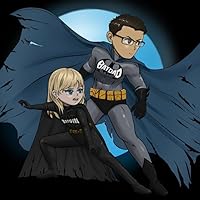
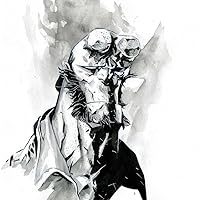
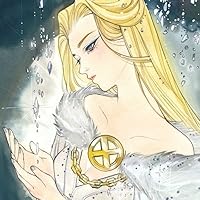
Written by JAMIE DELANO Art by RICHARD PIERS RAYNER, BRYAN TALBOT, DAVID LLOYD and others Cover by JOHN CASSADAY In these tales from issue #10-13, THE HORRORIST #1-2 and ANNUAL #1, Constantine wins his first victory in the war with Nergal and encounters a woman who is the embodiment of the world's horrors.
Jamie Delano aka A. William James began writing comics professionally in the early 1980s. Latterly he has been writing prose fiction with "BOOK THIRTEEN" published by his own LEPUS BOOKS imprint (http://www.lepusbooks.co.uk) in 2012, "Leepus | DIZZY" in April 2014, and "Leepus | THE RIVER" in 2017.
Jamie lives in semi-rural Northamptonshire with his partner, Sue. They have three adult children and a considerable distraction of grandchildren.
The first 3 issues really belong in volume 1, finishing up the Resurrection Crusade and Nergal storylines. The Newcastle issue is where we get our first look in Hellblazer at the event that set Constantine on his course for the rest of his life. It's dark, sick, twisted, and engrossing.
Delano gets lost too many times in this collection in astral plain / dream sequences. They are mind numbing at best and had me tempted to skip past them. The annual, The Bloody Saint, is awful. It's a weird take at John's ancestor replacing King Arthur in Arthurian legend.
Thankfully, we close with The Horrorist. David Lloyd's bleak, stark and muted art makes this story of a Typhoid Mary who physically affects the people she meets causing them to suffer starvation or kill their family.
The DC Vertigo series “John Constantine: Hellblazer”, which was first published in 1987, was a dark-fantasy/horror graphic novel series written by Jamie Delano and a bevy of talented artists.
I’ve been trying to come up with an explanation for why the series was such a popular one, other than great writing and artwork, of course. Because many graphic novel series with great writing and artwork have succumbed to low sales and dwindling popularity. “Hellblazer” stuck around for nearly 30 years. It spawned a motion picture, a short-lived TV series, and is still currently extant (in a slightly different manifestation) in the new DC universe. Something about it resonates, clearly.
The closest I can come to an explanation is that cynicism and fatalistic world-views tend to resonate better with audiences than cheeriness and upbeat. At least, for a lot of people.
You can’t get more cynical than Constantine. The guy is a poster-boy for clinical depressive anti-establishment self-destructive assholes everywhere. But he is, after all, merely a product of his times.
I grew up in the ‘80s. I remember the Reagan Era, the unspoken fears of the Evil Communist Empire, nuclear proliferation, the constant threat of nuclear armageddon, AIDS, Satanic cults kidnapping children and doing unspeakable things, pedophiles driving around in white vans waiting to snatch you up as you walked to school.
I remember the disconnect between people outwardly saying that they trust their government and privately believing that their government is out to get them. I remember seeing homeless people and being told that they were a blight, that their homelessness was their own damn fault. I remember being told that AIDS was God’s punishment for homosexuality. I remember being told that it was okay to be greedy, that “greed was good”. I remember being told that morality was fungible, never mind what the major world religions were saying. I remember believing a lot of this bullshit.
Granted, I was fifteen at the time “Hellblazer” arrived on newsstand shelves and pharmacy comic book racks. I was still playing with G.I.Joe and reading comic books involving guys wearing tights. I believed everything my parents told me, and I believed everything I saw on the evening news (on the rare times I watched the evening news), because why wouldn’t I?
I was years away from my long, dark 20s. I was decades away from clinical depression, panic attacks, constant anxiety. I was a world away from being married, having a kid, learning about real adult fears like not having enough to pay monthly bills, mortgages, putting food on the table.
Constantine didn’t resonate with me as a kid because I was still drinking the Kool-Aid that my parents, teachers, and the media were feeding me. It took me 47 years to understand what real horror is.
“Hellblazer” is, I daresay, my new favorite comic book for the ages. Besides being cool as hell, it also speaks to my cynicism and mistrust and depression and overall disgust for nearly everything outside of my small circle of loved ones. I’ve found my new favorite anti-hero.
“The Devil You Know”, the second compilation volume, compiles issues #10-13, Annual #1, and a stand-alone spin-off series called “The Horrorist”, which featured Constantine and is the best fucking comic book I have ever read.
I'd planned on reading the rest of this CE but due to a deadline (I created for myself), I have skipped Hellblazer Annual #1 and The Horrorist #1-2.
All three issues were very different from each other.
The first was an epilogue of sorts to the crossover with Swamp Thing. Although, it was actually set during the time Swamp Thing had possession of John's body. The end sees a lead into issue #11.
Issue #11 contained the only story of Constantine I knew about. And it was nothing like how I thought it would be. I was thinking (maybe hoping, more like) we'd get some vagueness, some sharp bites of what really happened. I did not expect to see every gruesome, traumatising detail.
It's a lot. Just about as much horror as I can take. Honestly, I'm still not over it and it's been a while since I read it.
Then the final issue I've read so far was a continuation of the Newcastle plot as well as the Nergal plot. I think I was just grateful this issue wasn't so traumatic for me. And I loved that we saw Constantine's cleverness and trickery. That’s who I picture when I think of this character.
Also, it had a hopeful ending! Not something that's common for these Hellblazer comics.
Trippy would be too nice of a word. Too many astral plane issues, too many vague plotlines that hardly connect, qwful political peddling here, and the 2nd half of this book almost feels like it doesn't belong at all.
A few interesting moments but it can't save this one. A 1.5 out of 5.
Way better than the first volume, which was so bad it made me hold off on continuing for months! Now this Volume actually gets good after an average beginning while ending with a banger drawn up by David Lloyd (wow what an amazing artist), his work in here easily trades punches with the best.
Finally I have a reason to get going with this series. 4.0 out of 5.0 stars
The Devil You Know is way darker than Original Sins and I am not sure if that's a good or a bad thing here. A huge part of this volume is spent floating through other dimensions, the pacing wasn't even. In the first part of this volume (Sex and Death, Newcastle and The Devil You Know) Constantine finally faces Nergal and concludes that storyline. The Newcastle evens are revealed and they are horrible and brutal. This first part of the volume is good The middle of this volume, though, is not. On The Beach moves on to his musings on what humanity does to this world. There is a lot of late '80s British politics. The Bloody Saint is about previous Constantine's life. It even features Merlin, a dragon and whatever you expect of an Arthurian story. The art is kind of crowded there. The volume ends with Constantine following a girl who causes people face their worst sins (The Horrorist. It is beautifully illustrated. Overall, if it weren't for the middle of the volume that dragged it down, it would be better.
Unlike the first collected edition which was composed of nine issues, this second volume has only five (issues #10-13 and Annual #1). The Devil You Know didn't have the same atmosphere as its predecessor volume did but that's most probably due to the length of the collection itself which was shorter and did not have that much action-oriented content.
As I write this overall review, I look back at my individual analysis of each issue starting from #10 and I realized that the only two issues that stood out for me were #11 where the game-changing events of Newcastle were revealed and the dream-sequence narrative of #13 (which got an impressive perfect scoring for me due to my personal bias towards dream-sequence narratives in general here in comics (which I don't normally come across) and in film. I did have a soft spot for the Annual issue which had fifty-three pages of interesting backstory and exposition about John Constantine's lineage that is strongly linked to mysticism and magic. Other than that, this second volume was serviceable, supposedly collecting issues that have the thematic resonance of what the volume's title implies. I would like to point out, however, why issues #14-16 could not be included. Their content could still fit with The Devil You Know. I just finished reading them and they were not at all included in any volume of the Hellblazer trade paperbacks.
Weirdly enough, the next volume of the series Rare Cuts is composed of issues that are not in chronological order at all (reprint of #11 and then #25-26, #35, #56, #84). What is up with that? This worries me. I suppose this only means that I won't be reviewing any collected editions after this and strictly do individual reviews then. Somehow, I'm just puzzled as to why the trade paperbacks for Hellblazer did not collect the issues chronologically, which meant that if I ever want to buy hard copies, I'm going to have to look for old individual issues that were excluded (and where the hell would I find those these days?). But fuck it, I digress. Back to the review.
This was a rather short volume with limited stories but the content (particularly #11, #13 and the Annual) are fascinating and thrilling, providing us yet again with searing characterizations and disturbing imagery and epiphanies about the life and times of our anti-hero John Constantine and his paranormal misadventures. At this point you don't need to force yourself to like John as a character or even as a person of complex desires and selfish motivations. It would not at all deter from your overall enjoyment of Hellblazer stories.
Personally, I love him and dislike him in several occasions but nothing that truly makes me outright hate him. I maintain that he's still my favorite thing about the series (that and because I'm beginning to feel certain feelings of affection and attachment towards him, but that's my issue. Y'all should know by now that I dig the damaged ones!)
This is a re-read from me. Re-visiting John Constantine from way back in the early 90's. I originally read the comics, not the TPB, but they were borrowed from a friend so, except for the Horrorist (which I own), I no longer have copies.
The 4 stars would be how I felt about the stories back in the day. Now, I might be inclined to give these stories a 3 star rating, but I'm not sure that's entirely fair. I was hooked on Hellblazer, and it had to be pretty good for me to keep reading.
Constantine is great; the stories, not always up to the level of Constantine himself.
It was good to re-visit Newcastle, what with all the mentions of it in the TV show. I'm trying to explain it to my husband and what happens on TV didn't always happen in the original storyline. I'm not sure that's a bad thing, though. I liked some of the stories better than others. The artwork varies. It's great on the Horrorist. That's David Lloyd and I believe that story line was written quite a while after the other stories in this TPB.
I'll try to continue on my journey of old school Hellblazer, but that will depend on the availability of the old comics and TPBs and my budget (if I find I have to purchase copies).
Another volume of gritty, haunting stories. The art as usual is fantastically done. At least one of the stories in this volume gave some heavy bizarro vibes. And I think the most chilling was the story of Angel.
Another great volume that I took too long to read! By this point I've seen more media with John Constantine and needless to say, he's easily become one of my favorite characters, and I can't wait to continue on with this series!
Nergal & Newcastle (10-12). These three issues really form the conclusion of the major arc from volume 1, and so should have gone there, especially the Swamp Thing related issue. Ah well. 10 and 12 focus on the Resurrection Crusade and Nergal and are nice issues. There's a bit too much philosophical wankery in issue #10, of the sort that sometimes spoils Delano's writing. However in the end it offers some nice closure, and #12 does so even moreso. They're good plot-heavy issues [7/10]. On the other hand Newcastle is superb, not just for its revelation of Constantine's past, but also for the way that it shows the past of Constantine's crew, carefully lifted from both Swamp Thing and Delano's own initial issues. The story has a great kick to it and remains one of the landmark Constantine tales. Comparing it to the tales of Constatine's past in the New 52, and it's obvious how much the newer Constantine pales before his older self [9/10].
On the Beach (13). This is Delano's first full-length story that puts imagery and philosophy ahead of any type of story. To my surprise I like it (and always have). It's beautiful and scary and freaky and memorable, even if it doesn't contribute to the overall Hellblazer story [8/10].
The Bloody Saint (Annual #1). This is a slow story, but it's an intriguing (first) look at the Constantine legacy, and also a nice translation of Constantine's own desires and goals into a different milieu. Overall, an in interesting look at the character and also a great preview of the some of the themes that show up in The Fear Machine [7/10].
The Horrorist. This story is all evocation. It's got beautiful artwork and beautiful text, and if the story is a bit simple, you don't really notice, for all the beauty that's going by [7/10]. On the downside, it's badly placed in this volume of Hellblazer as it's clearly about an older, more world-weary Constantine. it should have been placed in a collection following Ennis' run, which is when it was written.
Overall, this is another very good volume of Delano's Hellblazer -- though I find his monthly issues better than his longer form work, which tends to get a bit slow and talky ... and the contents of this volume are poorly integrated (with the previous volume, with the next volume, and with their place in Constantine's chronology). Pity that DC couldn't have gotten this all arranged better when they redid the Hellblazer collections.
I think that I like the idea of Hellblazer more than I actually like Hellblazer. Somewhere between the 80s-tastic artwork and the meandering storylines that don't accomplish anything, reading this became more work than fun, which is a huge no-no for comics. The weird sequencing didn't help either; this volume collects Hellblazer 10-13, which wraps up the story from the previous volume, but it had been so long since I read that that I had no memory of what was going on. The resolution was pretty good, using the thing that makes Hellblazer work; Constantine defeats the demon Nergal through his own cleverness and sheer treachery. However this victory is marred by the weird 80s-ness of his method; he somehow traps the Demon's soul in the internet. The volume also includes "The Bloody Saint," which is apparently the first annual of the series. Its an okay story with fairly atrocious art. "The Horrorist" is a miniseries written 10 years after everything else in the book, with pretty good artwork and a meh story. In both cases the decision to include them in this volume is completely inexplicable as they are obviously out of sequence and thematically unconnected. I'm going to keep reading the new volumes in the hopes that it gets better, however. After all, I read "Dangerous Habits" once upon a time, and that was very good.
This second volume of the original Hellblazer stories starts strong, with John tackling Nergal and wrapping up the overarching plot from the first nine issues of the series.
Then it begins to lose its way a bit, with a surreal issue about nuclear holocaust, and an annual that makes no sense whatsoever.
However, the final third is strong once again as the two-part "The Horrorist" mini-series wraps the trade up with a maniacal storyline that redeems the collection after it meanders in the middle.
Jamie Delano brings sick and twisted ideas to Constantine's world, but this trade shows that when he is good, he is very good, but when he is off his game, nothing makes sense.
Fscking turrible slog. Could not Wade through to the end. On the advice of good friends on Goodreads, I’m skipping the rest of the Delano run and going straight to Dangerous Habits for my re-reading pleasure.
Jamie Delano writing Hellblazer has always been hit or miss for me, and this 2nd collection was a prime example. The 1st half rocked, with the Newcastle backstory and the Nergal stuff, but the Souls arc and The Horrorist just didn’t work for me.
And so on to the next collected edition of the John Constantine Hellblazer series and as you would expect it pulls no punches. If anything it feels like it has settled in to its stride (which is rather surprising since the first book contained quite a long run of the comics in one).
The social commentary which is such a strong theme through the book is still there and yes as a result does date it (The Falklands war...) but if anything it sets the gritty and over cast atmosphere - it taps in to a state of fear and unease I think is made all the more tangible as (people of an age I guess) can relate to living in those times without the supernatural threats added in.
The artwork too also evolves - considering the book starts with stories collected from the late 80s you can see how things more away from the psychedelic and more to the visceral - I guess though like all long running comic stories the art along with the characters and even the storyline evolve and I have to say I am intrigued as to where it is all going after all this is the late 80s and there are still over 20 more volumes to go
I'll be honest, I just didn't like this one much. Delano is a talented enough writer, true. But it's simply not to my taste. It's far too unrelentingly dark and visceral, with characters that dance on the line between merely unlikeable and entirely obnoxious. Yes, even Constantine. I wonder if I like the idea of him better than I like the actual character? I was also surprised to discover how deeply rooted the book is in late 80s British politics, about which I have limited knowledge and interest. The most memorable story was the surreal and grotesque nuclear meltdown nightmare sequence. I won't forget that anytime soon, but it was too strange and detached to work for me. It took me a long time to get through this book, because I had to keep forcing myself back to it.
I was in two minds on how to rate this because it's a mixed bag, 'Sex and Death' was good but really should have been included in the first collection, the others were good enough although 'the bloody saints' felt a bit confusing and out of place (maybe I'm missing something from not being a scholar of Arthurian legend). But what brought this up to give stars for me was 'The Horrorist' which is just so beautifully disturbing, with gorgeous artwork. That one is going to stick with me for a while.
This rating is mostly due to how cool the art style is. I loved the psychedelic aesthetic of issue 12. Plot-wise, it seemed all over the place. It’s clear the will to approach political matters along with introspective subjects but, in my opinion, Delano didn’t manage to mix them interestingly. On top of that, sometimes, John Constantine is a boring character to follow. Regardless of this two installments didn’t work for me as I expected, my mind is still open for Garth Ennis’ run
got really fucked-up, deep, and interesting in the second half which i loved (plus phenomenal art - i’m a slut for watercolour-esque comic art). the first half was so ass though and there was some random two or one issue story in the middle that was beyond horrid.
It was great to finally find out what happened in Newcastle. Some highlights of this graphic novel were the Newcastle Story (+ the follow-up with Nergal), Music Video and the artwork from the Horrorist because WOW!
I usually write my reviews in Goodreads in Portuguese, my native tongue, in order to more effectively reach out to the goodreads users in my country. However, since the "Hellblazer" series seems to be largely untranslated into Portuguese and is somewhat unknown by the portuguese public, I will write my two cents on these Hellblazer tradepaperbacks in the english language. "Hellblazer, Vol. 2: The Devil You Know" collects the individual "Hellblazer" Issues #10 to #13, as well as a two part Hellblazer Annual titled "The Bloody Saint" and the mini-series "The Horrorist", all of which are written by Jamie Delano. Issues #10 to #12 (individually titled "Sex and Death", "Newcastle" and "The Devil You Know")conclude the storyline that ran all through "Hellblazer, Vol. 1: Original Sins" and it's as great as one would expect. It expertly finalizes the conflicts between John Constantine, Nergal and his Damnation Army and The Ressurection Crusaders. It also finally relates the events that haunt John Constantine since issue one and that had remained only marginally explained: the Newcastle debacle in which the botched attempt of exorcising a demon resulted in the eternal damnation to Hell of a little girl's soul. It's as brutal as one would expect and even more disturbing than I had antecipated. Delano pulls no punches in this story and the Newcastle episode alone screamingly justifies the Mature rating the Hellblazer comic boasts. These issuesd are as great as anything in Volume One and are some of Delano's finest works. Sadly, after such a strong start, Volume 2 takes a turn for the mediocre in it's middle section. Issue #13 titled "On The Beach" relates a nuclear holocast in a trippy and surreal fashion. It's not an awfull issue but it's mediocre at best. The penciller work on all three is done by Richarfd Pyers Rayner, who expertly replaces John Ridgeway who had previously drawn the Hellblazer issues. This issue is followed by the Hellblazer Annual titled "The Bloody Saint". As far as I am concerned, this is the low point in this collection and almost wholly justifies the 3 stars rating I opted for. It relates a previous incarnation of Constantine, namely Kon-Stan-Tyne (or something like that) from the Arthurian times and it's as silly as it sounds. It boasts Constantine in armour, a giant dragon, bloodthirsty priests and Merlin and it still manages to be dull beyond imagination. The artwork doesn' help, as it's as mediocre as the story. After the bumps in the road that are issue #13 and the Hellblazer Annual, the collection regains the high quality it opens with with "The Horrorist",a two-part miniseries written by Jamie Delano and with artwork by the excellent David Lloyd. It's a later work by Delano and it clearly doesn't belong to the collection chronologically, but I don't mind that at all, as it's a stand-alone story. Delano explores the mystic and supernatural consequences that ensue following a well meaning relocation to suburbia by a missionary couple of a woman of african origin who has been subjected to third world violence and starvation. The deep seeded anger that she carries in her heart is so intense and powerfull that it manifestates physically and psychologically in the lives of everyone she comes across. The story is strong, as is the artwork. It's a great close to the collection. I hesitated between three and four stars, but ultimately decided on 4 stars because altough the middle section in the collection is pretty mediocre and a bit of a chore to get through the early issues and the final mini-serie are gold and essential reading for any Hellblazer fan. So the rating is more like a 3.5.
A lot more introspective, high concept, but what happens with there's just too much?
I like John as a character, his internal dialog is distinct and vivid and creative, he literally goes through hell and back, he is a very relatable character, so why do I feel a bit disoriented and disconnected from him this arc?
World: The art is still very 80s art, I liked it when I was younger but now, I can barely stomach it. The line work is fine and the paneling is creative in parts, but it's the art style that is pulling me away from the story. The world building here this time around is sporadic, there is the wonderful Newcastle, and the Horrorist world building sections and then there are the wildly creative but disorienting dreams sequences, I say dreams cause there are so many of them. Yeah this arc we spend a lot of time in John's head.
Story: Well, you can say that a lot happened while at the same time not a lot happened this arc. Certain stories moved the narrative forward a great deal (Newcastle and Horrorist comes to mind) and some stories were there to deal with John's mindset post Newcastle and Nerghal. I did enjoy the story overall, but I found that the large, huge, gigantic chunks of dream sequences and introspection, as cool as creative and deep as they are were just too overwhelming in it's focus. It is great character development and study, but man it leaves the story on the floor. I had to slog through this read.
Character: As I've said above, I like John as a character and the plight he goes through is interesting, his voice is distinct and his internal dialog is deep and revealing. However, the issue with this arc is that there was just way too much of it, he broods, he fucking loves to brood and that's pretty much all he does in this arc. It's good as I said if you want just character development, but at some point, it would have been better to balance it out with other stories.
Not as good as the first arc due to the huge focus inward for John and the insane vision dream sequences that were littered quite liberally throughout. I am ready for John to step out of his mind and get cracking.
I originally gave this 3 stars but after thinking about it overnight I'm lowering it to 2. I think part of the problem is that this volume is all over the place. First you've got issues 10-13, and while 10-12 are a coherent storyline [which I do have some issues with, mostly Anne-Marie's entire character and also the pedophilia for shock value edgy crap all these style comics seem to love] but I have NO IDEA what is supposed to be going on with issue 13 and John's dream about his weird two-headed seal baby [seriously. what?]. Then you've got the Bloody Saints from Annual #1 and while it's an interesting enough story I guess, it's also giving me flashbacks to all those filler issues of Sandman that I hated so much. Probably the best thing about this entire volume is the 6 page illustrated version of Venus of the Hardsell that comes next [so make of that what you will]. Then we finish up with The Horrorist which 1] is glaringly out of style/tone with the rest of the volume and 2] I absolutely H A T E D so there's that [I feel like John was 10 times more douchey than normal and also that ending, are you KIDDING me?].
I think I kind of shot myself in the foot here when I decided to watch the TV show first. I figured 'well the other Vertigo shows [Preacher and Lucifer] are fairly bad and downright unwatchable [respectively] and Constantine got cancelled so it's probably worse. I'd better just get it out of the way.' Yet I forgot how NBC LOVES to cancel good shows and I ended up absolutely adoring it and now here I am going 'wow I really liked how the show handled that better' every 5 pages [blasphemy I know, but still true].
I think I'm going to start reading a few volumes of the newer reboot stuff then coming back to this. Also I am both excited for and dreading coming up on Ennis' run [I firmly believe that he only manages to write good storylines despite himself so he's very hit or miss for me] but whatever Delano is doing is obviously not working for me so I guess at least it would be something familiar. Unfortunately this early stuff just seems like something I have to slog through to get to the good bits later on.
Jaime Delano's arcs are visceral and depressing and steeped in the 1980s. Yet the battles with Nergal are far too much in the astral plane and while some key figures for the Vertigo line are established and explored here (many of the denizens of hell are here that also show up in Sandman), but it's a little hard to follow and the trippy, 80s pastel coloring is distracting here. "On The Beach" has all the 1980s paranoia of Thatcher/Reagan area in the overt nuclear metaphors: about as subtle as Roger Waters' album from the same period. "The Bloody Saint" hints at the past life of Constantine. The backstory for Constantine given here is just a little dull: the almost obligatory Arthurian references made edgier are slightly distracting. The Horrorist is artistically stunning although some of the paintings do make hard to follow the characters and the plot is bleak, but one must admire the artistic acumen involved. The premise, Constantine following a girl who causes people to face their worst sins, leads to something about as amusing as it sounds like it would. Delano does a lot of character building for Constantine here, but actual plots are just not consistent enough to hold it together.
This volume is much more of a mixed bag of stories than the other collections I've read ( which are Volumes 1, 4, 5), but still worth the effort. It contains the conclusion of the Swamp Thing arc, a massively dull backstory about Constantine's heritage, and a beautifully illustrated and highly depressing two-parter called "The Horrorist." Much time here is spent on John's internal musings and floating about in other realms or dream states. Not too exciting but I'm so fascinated by Constantine himself, I will continue to read more.
As usual, great John Constantine fare. His character progresses nicely along the series, and this is probably the perfect sophomore volume. The best story in this one is definitely the one illustrated by David Lloyd. It is some of Lloyd's best work, his hauntingly beautiful artwork leaving a definite impression on the reader.