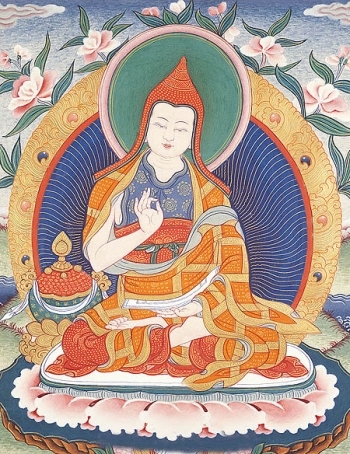
Bodhi: enlightenment/awakening
Sattva: Buddhist - being/person. Hindu - goodness, positivity, truth, wholesomeness, serenity, wholeness, creativity, constructiveness, balance, confidence, peacefulness, and virtuousness
Chitta: attitude/mind/consciousness
Having encountered the idea of the Bodhisattva in college, I finally got around to reading one of the greatest works on the concept. The current Dalai Lama has said of the Shantideva, “If I have any understanding of compassion and the practice of the bodhisattva path, it is entirely on the basis of this text that I possess it” (30). That’s a pretty strong recommendation, eh?
The chapters of the work are:
1. The Excellence of Bodhichitta
2. Confession
3. Commitment
4. Awareness
5. Vigilance
6. Patience
7. Heroic Perseverance
8. Meditation
9. Wisdom
10. Dedication
In general, chapters 1-3 describe the arising or dawn of Bodhichitta (enlightened or awakened mind or attitude). Chapters 4-6 concern the maintenance of Bodhichitta, chapters 7-9 discuss ways to intensify it (with chapter 9, the “Wisdom” chapter, arguing for the interconnectedness and mystery of all things, including identity). Chapter 10 is a closing dedication.
In college I loved the idea of someone achieving enlightenment but “staying in the trenches” to help others. After reading this, I’m not sure that’s exactly what being a Bodhisattva is about. I think the goal is to develop one’s own virtue and thereby alleviate the suffering of others through the mystery of interconnectedness. It’s very difficult to work toward your own enlightenment and remain humble about your ability to help others, but you must take ego out of the equation. You aren’t helping others because you’re better than them or more “woke,” you’re fundamentally working on yourself and hoping that this allows your presence to heal others. I think it’s something along the lines of a favorite quote of mine by Maya Angelou:
*”I've learned that people will forget what you said, people will forget what you did, but people will never forget how you made them feel.”
The keystone verse of the work is:
*All the joy the world contains
Has come through wishing happiness for others.
All the misery the world contains
Has come through wanting pleasure for oneself. (8.129)
There are also teachings on anger and sin. James 1:19-20 (NLT) says, “Understand this, my dear brothers and sisters: You must all be quick to listen, slow to speak, and slow to get angry. Human anger does not produce the righteousness God desires.” Shantideva agrees. According to the translators’ introduction, “Aside from a purely external and as it were artificial indignation, put on for educational purposes - which has compassion as its motive and is acted out by one whose mind is under control - anger has absolutely no place in the scheme of spiritual development. It is totally inimical to mental training and will ruin and annihilate in an instant all the progress and merit gained” (13). Romans 6:23 (NLT) says that “the wages of sin is death” and in the movie “The Shack” we are told that sin is its own punishment. Shantideva seems to agree:
“But if, in search of happiness, my works are evil,
Then no matter where I turn my steps,
The knives of misery will cut me down -
The wage and retribution of a sinful life. (7.43)
Potent Quotables:
For all anxiety and fear,
All sufferings in boundless measure,
Their source and wellspring is the mind itself. (5.6)
The hostile multitudes are vast as space -
What chance is there that all should be subdued?
Let but this angry mind be overthrown
And every foe is then and there destroyed. (5.12)
*To cover all the earth with sheets of hide -
Where could such amounts of skin be found?
But simply wrap some leather round your feet,
And it’s as if the whole earth had been covered! (5.13)
We can never take
And turn aside the outer course of things.
But only seize and discipline the mind itself,
And what is there remaining to be curbed? (5.14)
This mind of mine, a wild and rampant elephant,
I’ll tether to that sturdy post: reflection on the Teaching.
And I shall narrowly stand guard
That is might never slip its bonds and flee. (5.40)
And when you yearn for wealth, attention, fame,
A circle of admirers serving you,
And when you look for honors, recognition -
It’s then that like a log you should remain. (5.51)
When useful admonitions come unasked
To those with skill in counseling their fellows,
Let them welcome them with humble gratitude,
And always strive to learn from everyone. (5.74)
When enemies or friends
Are seen to act improperly,
Be calm and call to mind
That everything arises from conditions. (6.33)
If those like wanton children
Are by nature prone to injure others,
What point is there in being angry -
Like resenting fire for its heat? (6.39)
Come what may,
I’ll hold fast to the virtuous path
And foster in the hearts of all
An attitude of mutual love. (6.69)
The satisfaction that is mine
From thinking “I am being praised,”
Is unacceptable to common sense,
And nothing but the silly ways of children.
All enemies are helpers in my bodhisattva work
And therefore they should be a joy to me.
The fruits of patience are for them and me,
For both of us have brought it into being.
And yet to them they must be offered first,
For of my patience they have been the cause. (6.107-108)
*The wise man does not crave,
For from such craving fear and anguish come.
And fix this firmly in your understanding:
All that may be wished for will by nature fade to nothing. (8.19)
They indeed, possessed of many wants,
Will suffer many troubles, all for very little:
Mouthfuls of the hay the oxen get
As recompense for having pulled the cart! (8.80)
*If this “I” is not relinquished wholly,
Sorrow likewise cannot be avoided.
For if he does not keep away from fire,
A man cannot escape from being burned. (8.135)
If objects show that consciousness exists,
What, in turn, upholds the truth of objects?
If both subsist through mutual dependence,
Both thereby will lose their true existence. (9.112)
May every being ailing with disease
Be freed at once from every malady.
May all the sickness that afflicts the living
Be instantly and permanently healed.
May those who go in dread have no more fear.
May captives be unchained and now set free.
And may the weak receive their strength.
May living beings help each other in kindness. (10.21-22)
*And now as long as space endures,
As long as there are beings to be found,
May I continue likewise to remain
To drive away the sorrows of the world. (10.55)