

What do you think?

Roger Brook #4
The Man who Killed the King
Jun 1792 - Aug 1794
The Man who Killed the King tells the story of Roger Brook�Prime Minister Pitt's most resourceful secret agent�during the Great Terror when more than a million people perished and the Terrorists found that the guillotine did not work quickly enough. This, the second phase of the French Revolution, opened with the storming of the Tuileries in June, 1792, and in the months that followed, the Liberals were mown down by cannon fire, drowned by the thousand, and flung back into the flames of villages burnt to the ground.
And amidst all this brutality and bloodshed, Roger Brook, a Commissar in Revolutionary Paris, faced terrifying hazards trying desperately to rescue Queen Marie Antoinette and other members of the Royal Family from a mob thirsting for revenge.
The Man who Killed the King tells the story of Roger Brook�Prime Minister Pitt's most resourceful secret agent�during the Great Terror when more than a million people perished and the Terrorists found that the guillotine did not work quickly enough. This, the second phase of the French Revolution, opened with the storming of the Tuileries in June, 1792, and in the months that followed, the Liberals were mown down by cannon fire, drowned by the thousand, and flung back into the flames of villages burnt to the ground.
And amidst all this brutality and bloodshed, Roger Brook, a Commissar in Revolutionary Paris, faced terrifying hazards trying desperately to rescue Queen Marie Antoinette and other members of the Royal Family from a mob thirsting for revenge.
735 pages, Kindle Edition
First published January 1, 1951
About the author
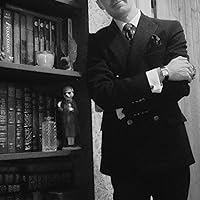
Dennis Wheatley
383 books264 followersDennis Yates Wheatley was an English author. His prolific output of stylish thrillers and occult novels made him one of the world's best-selling authors in the 1950s and 1960s.
His first book, Three Inquisitive People, was not immediately published; but his first published novel, The Forbidden Territory, was an immediate success when published in 1933, being reprinted seven times in seven weeks.
He wrote adventure stories, with many books in a series of linked works. His plots covered the French Revolution (Roger Brook Series), Satanism (Duc de Richleau), World War II (Gregory Sallust) and espionage (Julian Day).
In the thirties, he conceived a series of whodunit mysteries, presented as case files, with testimonies, letters, pieces of evidence such as hairs or pills. The reader had to go through the evidence to solve the mystery before unsealing the last pages of the file, which gave the answer. Four of these 'Crime Dossiers' were published: Murder Off Miami, Who Killed Robert Prentice, The Malinsay Massacre, and Herewith The Clues.
In the 1960s his publishers were selling a million copies of his books per year. A small number of his books were made into films by Hammer, of which the best known is The Devil Rides Out (book 1934, film 1968). His writing is very descriptive and in many works he manages to introduce his characters into real events while meeting real people. For example, in the Roger Brook series the main character involves himself with Napoleon, and Joséphine whilst being a spy for the Prime Minister William Pitt. Similarly, in the Gregory Sallust series, Sallust shares an evening meal with Hermann Göring.
He also wrote non-fiction works, including accounts of the Russian Revolution and King Charles II, and his autobiography. He was considered an authority on the supernatural, satanism, the practice of exorcism, and black magic, to all of which he was hostile. During his study of the paranormal, though, he joined the Ghost Club.
From 1974 through 1977 he edited a series of 45 paperback reprints for the British publisher Sphere under the heading "The Dennis Wheatley Library of the Occult", selecting the titles and writing short introductions for each book. This series included both occult-themed novels by the likes of Bram Stoker and Aleister Crowley and non-fiction works on magic, occultism, and divination by authors such as the Theosophist H. P. Blavatsky, the historian Maurice Magre, the magician Isaac Bonewits, and the palm-reader Cheiro.
Two weeks before his death in November 1977, Wheatley received conditional absolution from his old friend Cyril ‘Bobby’ Eastaugh, the Bishop of Peterborough.
His estate library was sold in a catalogue sale by Basil Blackwell's in the 1970s, indicating a thoroughly well-read individual with wide-ranging interests particularly in historical fiction and Europe. His influence has declined, partly due to difficulties in reprinting his works owing to copyright problems.
Fifty-two of Wheatley's novels were published posthumously in a set by Heron Books UK. More recently, in April 2008 Dennis Wheatley's literary estate was acquired by media company Chorion.
He invented a number of board games including Invasion.
-Wikipedia
His first book, Three Inquisitive People, was not immediately published; but his first published novel, The Forbidden Territory, was an immediate success when published in 1933, being reprinted seven times in seven weeks.
He wrote adventure stories, with many books in a series of linked works. His plots covered the French Revolution (Roger Brook Series), Satanism (Duc de Richleau), World War II (Gregory Sallust) and espionage (Julian Day).
In the thirties, he conceived a series of whodunit mysteries, presented as case files, with testimonies, letters, pieces of evidence such as hairs or pills. The reader had to go through the evidence to solve the mystery before unsealing the last pages of the file, which gave the answer. Four of these 'Crime Dossiers' were published: Murder Off Miami, Who Killed Robert Prentice, The Malinsay Massacre, and Herewith The Clues.
In the 1960s his publishers were selling a million copies of his books per year. A small number of his books were made into films by Hammer, of which the best known is The Devil Rides Out (book 1934, film 1968). His writing is very descriptive and in many works he manages to introduce his characters into real events while meeting real people. For example, in the Roger Brook series the main character involves himself with Napoleon, and Joséphine whilst being a spy for the Prime Minister William Pitt. Similarly, in the Gregory Sallust series, Sallust shares an evening meal with Hermann Göring.
He also wrote non-fiction works, including accounts of the Russian Revolution and King Charles II, and his autobiography. He was considered an authority on the supernatural, satanism, the practice of exorcism, and black magic, to all of which he was hostile. During his study of the paranormal, though, he joined the Ghost Club.
From 1974 through 1977 he edited a series of 45 paperback reprints for the British publisher Sphere under the heading "The Dennis Wheatley Library of the Occult", selecting the titles and writing short introductions for each book. This series included both occult-themed novels by the likes of Bram Stoker and Aleister Crowley and non-fiction works on magic, occultism, and divination by authors such as the Theosophist H. P. Blavatsky, the historian Maurice Magre, the magician Isaac Bonewits, and the palm-reader Cheiro.
Two weeks before his death in November 1977, Wheatley received conditional absolution from his old friend Cyril ‘Bobby’ Eastaugh, the Bishop of Peterborough.
His estate library was sold in a catalogue sale by Basil Blackwell's in the 1970s, indicating a thoroughly well-read individual with wide-ranging interests particularly in historical fiction and Europe. His influence has declined, partly due to difficulties in reprinting his works owing to copyright problems.
Fifty-two of Wheatley's novels were published posthumously in a set by Heron Books UK. More recently, in April 2008 Dennis Wheatley's literary estate was acquired by media company Chorion.
He invented a number of board games including Invasion.
-Wikipedia
Ratings & Reviews
Friends & Following
Create a free account to discover what your friends think of this book!
Community Reviews
Displaying 1 - 5 of 5 reviews

September 30, 2012
The theme of the book is interesting, set during the days of Terror in France during the French Revolution, and giving day by day detailed descriptions of the events leading to the death of Louis XVI and Marie Antoinette. The main protagonist, Roger Brook, an Englishman, adventurer and secret agent of the Prime Minister of England, Mr Pitt, is entertaining. Many of the details of the events which occurred and how the revolution shaped itself, how personal elements and sometimes sheer bad luck lead to the murder of the King and Queen in spite of the many attempts to rescue them, are not readily found in any other book of historical fiction I have read, including the Scarlet Pimpernel series.
However there is too much of detail including every thought in the mind of every character in the book, and, as you can imagine, there is no dearth of characters!
The font in which the book is printed is very small (this is an Arrow Paperback publication).
So it is slow going. At one stage I put the book aside and now Im back, wanting to know what happened to the Dauphin and whether Roger Brooks gets back safely to England, hoping to finish it soon -130 pages more to go out of 568
However there is too much of detail including every thought in the mind of every character in the book, and, as you can imagine, there is no dearth of characters!
The font in which the book is printed is very small (this is an Arrow Paperback publication).
So it is slow going. At one stage I put the book aside and now Im back, wanting to know what happened to the Dauphin and whether Roger Brooks gets back safely to England, hoping to finish it soon -130 pages more to go out of 568
July 7, 2022
Omg I just put it down after spending day and night for several days reading it..this book has almost every type of theme.. its a non stop horrifying romantic crime ridden spy story with loads of other stuff going for it.
A British spy is sent to France to interfere with the great terror of the revolution. He meets many famous characters and involves himself in lots of different scenarios as he rises among ranks in his false personality.
The writer brings the late 1700s to life with such vivid detail
This is one of the best books I've ever read and atm I can't think of anything I can compare it to
A British spy is sent to France to interfere with the great terror of the revolution. He meets many famous characters and involves himself in lots of different scenarios as he rises among ranks in his false personality.
The writer brings the late 1700s to life with such vivid detail
This is one of the best books I've ever read and atm I can't think of anything I can compare it to
Read
February 10, 2022The best of Mr. Wheatley's Roger Brook series.
Read
February 2, 2024The Fourth of the Roger Brook series.

January 3, 2014
I read the Roger Brook series as a teenager, and rereading this didn't disappoint. Yes, Wheatley is dated in his writing [racism & mysogeny], but the sheer joy of an adventure series set during the French Revolution is pure escapism.
Displaying 1 - 5 of 5 reviews