

What do you think?

Storie naturali
In questo volume, pubblicato in una preziosa edizione numerata per l'anniversario dei sessanta anni della BUR e ora riproposto in versione "economica", Luigi Serafini ha voluto rendere un omaggio a quelle "Storie naturali" di Jules Renard che lo accompagnano da decenni come punto di riferimento per il suo lavoro. Per illustrare la sorridente natura umanizzata del maestro francese ha così concepito un'intera botanica fantastica le cui foglie formano un bosco incantato fatto di alberi animati e piante mutanti, una celebrazione dell'eterna vitalità della storia naturale.
262 pages, Hardcover
First published January 1, 1894
About the author
Jules Renard
445 books125 followersPierre-Jules Renard or Jules Renard (February 22, 1864- May 22, 1910) was a French author and member of the Académie Goncourt, most famous for the works Poil de Carotte (Carrot hair) (1894) and Les Histoires Naturelles (Natural Histories) (1896). Among his other works are Le Plaisir de rompre (The Pleasure of Breaking) (1898) and Huit jours à la campagne (Eight Days in the Countryside) (1906).
Ratings & Reviews
Friends & Following
Create a free account to discover what your friends think of this book!
Community Reviews
Displaying 1 - 30 of 63 reviews

September 22, 2022
THE MOUSE
I’m writing by candelight the page I write every day when I hear a slight sound. When I stop, it stops, too; as soon as I start again, it follows suit.
It’s a mouse waking up. (…)
THE HEDGEHOG
You’ll have to take me as I come, don’t guh me too tightly.
THE LIZARD
The wall: ‘I can feel a shiver running along my back.’
The lizard: ‘That’s me.’
Ovi šarmantni i dragi zapisi plene kućnom i okućničkom neposrednošću. Renar briljantno lovi trenutak i u ne-dešavanju pronalazi mravinjak dragocenosti. Njegove basnolike crtice su sjajan primer dnevničke, neusiljene literature, gde deskripcija vlada nad naracijom, a veselost se ukršta sa nostalgijom i osetljivošću za životno okruženje. Prirodopisi su srećan brak radosti (u) usamljenosti i domaćinstva – otvoren ka svetom dvorištu sveta. Sjajne autorove ilustracije dodatno upotpunjuju ovaj utisak.
I’m writing by candelight the page I write every day when I hear a slight sound. When I stop, it stops, too; as soon as I start again, it follows suit.
It’s a mouse waking up. (…)
THE HEDGEHOG
You’ll have to take me as I come, don’t guh me too tightly.
THE LIZARD
The wall: ‘I can feel a shiver running along my back.’
The lizard: ‘That’s me.’
Ovi šarmantni i dragi zapisi plene kućnom i okućničkom neposrednošću. Renar briljantno lovi trenutak i u ne-dešavanju pronalazi mravinjak dragocenosti. Njegove basnolike crtice su sjajan primer dnevničke, neusiljene literature, gde deskripcija vlada nad naracijom, a veselost se ukršta sa nostalgijom i osetljivošću za životno okruženje. Prirodopisi su srećan brak radosti (u) usamljenosti i domaćinstva – otvoren ka svetom dvorištu sveta. Sjajne autorove ilustracije dodatno upotpunjuju ovaj utisak.

August 16, 2020
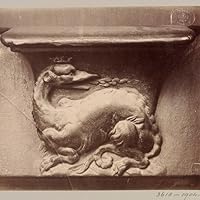
The stuff of a thoughtful person’s private journal. The kind of book one would do well to keep by the bedside. The kind of book that reminds us that we have eyes. Part Aesop, part Thoreau, part Ponge, part Knausgård. I enjoyed reading about swallows and toads, about rabbits sitting up on their hind legs, “like candlesticks,” more than the pages dedicated to farm animals. There is a lovely extended section about partridges and the hunting of them. The Bonnard illustrations are wonderful, if odd, and odd only because they are black and white, as I’d been familiar only with the canvases of his in which everything is bright, sometimes orgiastic color.
January 14, 2011
Yes, I liked it. It has the Renard charm, but what I really, really want (are you listening, NYRB?) is a larger English-language edition of Renard’s Journal.

September 7, 2018
El problema de que te guste tantísimo la primera obra que lees de un autor es que te lanzas a las demás, aunque no quieras, con demasiadas expectativas. Como me encantó Pelo de zanahoria, he ido leyendo estas Historias naturales con una disposición no demasiado adecuada para su disfrute, porque son obras muy distintas. La primera, basada en la poco feliz infancia de Renard; la segunda, escrita desde la perspectiva del autor ya adulto, en apariencia algo más conforme con la vida, en sus paseos por la campiña borgoñona. Renard ve cerdos, vaquitas, perdices, conejos, y les dedica unos breves apuntes que en ocasiones rozan el aforismo. No he podido evitar pensar, porque mi mente funciona así, qué le vamos a hacer, en Juan Ramón Jiménez y su Platero, aunque sólo sea para buscar la diferencias. Renard en lugar de un burrillo tenía un caballo, al que dedicó uno de estos apuntes. No nos dice su nombre. No le dedica epítetos tiernos ni alaba su belleza, nos cuenta más bien que es feo, un poco mal hecho. En Juan Ramón Jiménez es evidente el sofoco cuando ha de describir cómo de repente a Platero le pende de la barriga "una cosa larga y negra como la trompa de un elefante". Jules Renard nos informa por triplicado de que su caballo "se pee, se pee y se pee" (en la edición que he leído pone más bien "se pea", no sé de dónde se habrán sacado esa conjugación). Y sin embargo, intuimos que Renard siente afecto por su caballo, aunque sea un afecto socarrón y un poco triste. Así es la mirada que Jules Renard extiende sobre todo. Se nota que no es un poeta, como Juan Ramón, y no porque le falte sensibilidad, que no le falta, sino porque a los poetas las palabras les fluyen de otra manera. Por decirlo de algún modo, Platero y yo fluye como el agua, e Historias naturales cae como pequeños guijarros. Quizás es que de tanto leer que Jules Renard no tiene imaginación me lo he acabado creyendo, pero me parece que cuando más brilla es cuando tiene una acción que narrar, y si tiene un punto de malicia, mejor. ¿Qué es exactamente lo que no me convence de estas Historias naturales? ¿Le voy a reprochar a Renard que no sea más como Juan Ramón Jiménez? ¡Pero si a mí me gusta mucho cómo escribe Renard! Ay, de verdad, yo no sé para qué me pongo a escribir estas cosas.

August 21, 2015
Writing about the animals you've seen and drawing pictures of them is very chill

February 24, 2020
An interesting little book of small vignettes of the French countryside in the late 19th century. The author observes, anthropomorphizes and describes the local flora and fauna. He is a hunter and fisherman, but there are essays about the terror that such activities must cause the animals. He also understands that birds should not be kept in cages so the ideas expressed are quite modern. This book is simple, clean and sweet. And the brush illustrations by Pierre Bonnard are delightful.


June 19, 2018
A needed moment of gentle fresh air to stir up the miasma of corruption and indecency my country is presently steeped in. It's good and heartening to remember as Renard does that birds don't belong in cages--much less children.
About 80 anthropomorphized but perceptive portraits from nature, often minimalist, often reading like prose poems:
Highly recommended for self-care, then getting back to work.
About 80 anthropomorphized but perceptive portraits from nature, often minimalist, often reading like prose poems:
THE BUTTERFLY
This love letter, folded in two, is looking for a flowery address.
Highly recommended for self-care, then getting back to work.

February 7, 2025
A collection of prose poetry vignettes that are often senseless, sometime touching, but almost always a joy to read.

March 10, 2025
Historias naturales nos presenta una crónica de la vida campestre del autor. Sería bucólica y entrañable si no fuera por la brutalidad de las escenas contadas, los delirios absurdos que conforman sus tramas y las "conversaciones" grotescas que los animales mantienen entre sí, a través de la retorcida imaginación de su autor.
Jules Renard es quien ha osado firmar la autoría de este libro. Y me parece muy valiente de su parte dado que reconocer que has escrito semejante bodrio es meritorio. Renard, individuo complicado y extravagante, según la persona que firma el prólogo, resulta un pésimo escritor con ínfulas de grandeza, que posee un estilo de escritura rebuscado, pedante y con una ejecución francamente lamentable. Con una prosa lenta, tediosa, confusa, con un desarrollo mejorable y una estructura que entorpece más que agilizar la lectura, un lenguaje, muy bien estudiado pero que no ayuda a mejorar la impresión general del libro, y unas descripciones, inexistentes la mayor parte del tiempo y cuando hacen acto de presencia... mejor que vuelvan a desaparecer.
Historias naturales, libro que gozó de un enorme éxito en la época en que fue publicado, es un compendio de escritos que tienen en común la descripción de escenas "cotidianas" de la vida rural de aquel entonces, y los relatos llenos de comparaciones delirantes, diálogos sin sentido y unas ilustraciones de la mano del mismo autor, que puede que sean lo único destacable de todo el libro. Así que, a través de las páginas descubrimos a todas las aves habidas y por haber dentro del área campestre, la flora natural, la vida de señorito ignorante y condescendiente con el que el autor se describe, además de un par de relatos sobre la muerte de mascotas y/o animales domésticos varios, siempre retratados de manera brutal, cínica y dolorosa para el lector amante de los animales.
En suma, Historias naturales no es una lectura apta para todos los públicos. Aquellos que sean sensibles con el tema de la vida animal deben evitar su lectura. Comprendo que el objetivo era presentarnos unas escenas de la vida campestre. Lástima que bajo la mirada llena de pedantería del autor, todo se transforme en un amasijo de tramas tontas que te quitan las ganas de seguir leyendo a cada rato. No recomiendo su lectura, a no ser que este tipo de libros os gusten mucho, o que queráis torturaros un poco con una lectura de esas características. Y es que estas historias tienen poco de naturales y mucho de aburridas.
Jules Renard es quien ha osado firmar la autoría de este libro. Y me parece muy valiente de su parte dado que reconocer que has escrito semejante bodrio es meritorio. Renard, individuo complicado y extravagante, según la persona que firma el prólogo, resulta un pésimo escritor con ínfulas de grandeza, que posee un estilo de escritura rebuscado, pedante y con una ejecución francamente lamentable. Con una prosa lenta, tediosa, confusa, con un desarrollo mejorable y una estructura que entorpece más que agilizar la lectura, un lenguaje, muy bien estudiado pero que no ayuda a mejorar la impresión general del libro, y unas descripciones, inexistentes la mayor parte del tiempo y cuando hacen acto de presencia... mejor que vuelvan a desaparecer.
Historias naturales, libro que gozó de un enorme éxito en la época en que fue publicado, es un compendio de escritos que tienen en común la descripción de escenas "cotidianas" de la vida rural de aquel entonces, y los relatos llenos de comparaciones delirantes, diálogos sin sentido y unas ilustraciones de la mano del mismo autor, que puede que sean lo único destacable de todo el libro. Así que, a través de las páginas descubrimos a todas las aves habidas y por haber dentro del área campestre, la flora natural, la vida de señorito ignorante y condescendiente con el que el autor se describe, además de un par de relatos sobre la muerte de mascotas y/o animales domésticos varios, siempre retratados de manera brutal, cínica y dolorosa para el lector amante de los animales.
En suma, Historias naturales no es una lectura apta para todos los públicos. Aquellos que sean sensibles con el tema de la vida animal deben evitar su lectura. Comprendo que el objetivo era presentarnos unas escenas de la vida campestre. Lástima que bajo la mirada llena de pedantería del autor, todo se transforme en un amasijo de tramas tontas que te quitan las ganas de seguir leyendo a cada rato. No recomiendo su lectura, a no ser que este tipo de libros os gusten mucho, o que queráis torturaros un poco con una lectura de esas características. Y es que estas historias tienen poco de naturales y mucho de aburridas.

February 22, 2012
Before knowing anything about Jules Renard I tried to imagine how these short vignettes would have been published. As filler in newspapers? Perhaps simply as entries in a commonplace book. Some are no longer than a sentence or two. The shortest need only a few beautiful words that read like haiku. [return][return]Renard seems to have lived a charmed life. He grew up in Chitry-les-Mines, a humble village in the Nièvre region of Burgundy. His father sent him to Nievres, the nearest town with a proper school and eventually he moved to Paris to complete his studies. He married a young woman with a large dowry, became a shareholder in the prestigious Mercure de France and a member, late in life, of the Académie Goncourt and was able to move between the literary life of Paris and the more bucolic country life of a home in Chaumot, deep in the country.[return][return]Renard was extremely active in the Parisian literary circles and counted Edmund de Goncourt, Anatole France, Sarah Bernhardt and Andre Gide among his friends and acquaintances. He died of arteriosclerosis in Paris in 1910 at the age of 49.[return][return]Several editions of Nature Stories were published at the end of the 19th century — one illustrated by Toulouse Lautrec and a later edition by Pierre Bonnard, whose wonderful ink drawings grace this English translation by Douglas Parmee published by New York Review Books.[return][return]The stories reflect his love of the countryside where he spent his young life and are full of humor and a sardonic wit that seems to imagine the foibles of humankind reflected in the short vignettes of the animals he describes. [return][return]This short book can be read quickly but, to better effect should be savored, slowly, like those things in life that are meant to be enjoyed at a calmer, more leisurely pace.

June 4, 2013
Absolutely charming and rewarding read. I plucked it from a shop that always has a nice collection of NYRB titles that move fast and there were about 12 copies on the shelf - why? What's not to love here? It reads like a Kanjur for compassionate agnostics. If Walser walked with his head focused on the trees the results would compare to Renard's effort. Written from the view of an observant and increasingly mortal man - Renard negotiates various elements of nature such as snails and trees in brilliant and succinct meditations on reality. And while his view is focused on the world outside there is a consistent personification of natural elements that reveals the thoughts of a man considering his place in it all. A hall of mirrors in the woods - nature observed refreshes and informs the reader with brilliant insight, honest compassion and a specific resonance with the melifluous sounds of a world on fire. Like many great writers, Renard encourages us to stop talking and be observant: "As long as you don't think about it, it doesn't matter - but when you do!" He did, I did, and I hope you do too. Easy to read, very rewarding and reinvigorating. If you're looking for a book to give to those who might not be willing to tackle large literary tasks - this is it. Buy it in bulk - give it to everyone you love or hate. The Bonnard drawings are delightful as well. A perfect book.

February 12, 2012
petite lecture classique et relaxante. ce court opus a du être assez novateur à l'époque de sa sortie : pensez vous un auteur tentait de nous intéresser à ses vaches ses poules et ses parties de chasse avec son chien.
Je le conseille à tous ceux qui sont coincé dans un bureau en ville.
Je le conseille à tous ceux qui sont coincé dans un bureau en ville.

April 17, 2015
Recently I received this book in the post. The words were written by an author I’d never heard of and it was translated into a language I can’t understand… So why would I spend my money on a book like this? Two words. Luigi Serafini.
Many may be familiar with Serafini’s name for his most famous piece, the iconic Codex Seraphinianus, a compendium filled with bizarre and surreal illustrations of an imaginary world, annotated with text written in an indecipherable imaginary language. The Codex, originally published in 1981, has been boggling the minds of readers ever since the day it was released [See here for more pictures]. However, Serafini has also worked on a small selection of other projects throughout the last 30 years, many of which are extremely rare, expensive, and difficult to get hold of. So when I stumbled across a copy of Storie Naturali, I jumped at the chance to get my hands on some of Serafini’s work.

Storie Naturali was originally written by French author Jules Renard under the name Histoires Naturelles, a book which contains a series ‘direct psychological observations’ of the natural world. The book also shares a name with Pliny’s encyclopedia Naturalis Historia (Natural Histories) which was one of the key influences for Serafini’s Codex. Serafini’s illustrated edition was first published to commemorate the 100th anniversary of Renard’s death (1864-1910) and contains a Latin translation of the French writer’s epigrams accompanied by an autumn of wonderfully illustrated leaves. Now this might not sound particularly odd to anyone unfamiliar with the Italian artist's work but natural objects created by the mind of Luigi Sarafini are perhaps some of the most unnatural natural objects you could imagine. (As anyone who’s seen pictures of the Codex can attest to!)

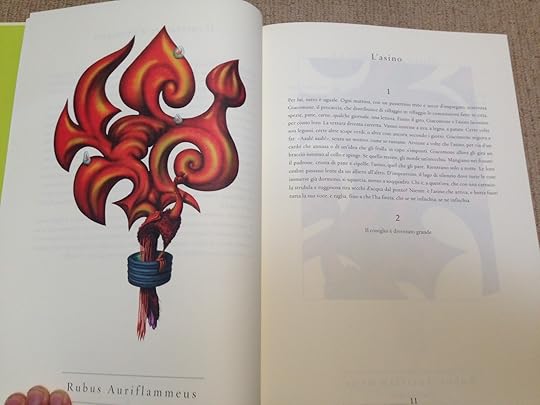
Although the text inside the book is Renard’s, the world Serafini creates is very much his own. The illustrations themselves aren’t as much illustrations of the original as they are gateways into the mind of Serafini, a mind that runs according to its own logic and follows its own rules. The world he creates is in some respects a mirror of our own, the leaves are based off the standard biological blueprint of leaves found in our world, yet they contain a variety of progressively bizarre characteristics. One leaf might feature a microscopic tennis game being played on its surface, another is adorned with a collection creatures from the Codex, and another may be rectangular ladybird eating rectangular holes out of a rectangular leaf (see below).
As might be expected from Serafini, this isn’t your average illustration job.

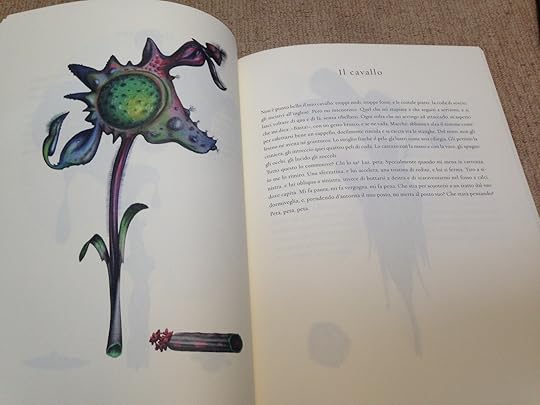
The great thing about Serafini’s work is that invites the reader (or viewer) to interpret all of the little minute details that he puts into objects that would ordinarily seem mundane. And as with any good surrealist artwork you are constantly second guessing what each picture means and trying to figure out what exactly the artist was trying to get across, however, with Serafini these meanings are often as playful as they are bizarre, and as amusing as they are surreal. As the Rare Books Digest states:
If Sarafini’s drawings were any less enigmatic it would be quite possible that his books would also be less popular. The peculiarity factor has definitely contributed to the astounding success of the Codex Seraphinianus, and the rest of his work in general. Making Storie Naturali any more clear to understand could quite possibly result in the work losing some of its appeal.
So in conclusion, although this book was written by an author I’d never heard in a language I can’t speak, it's been one of the best book purchases I've made in long while! Serafini seems to create artwork that can keep you captivated for hours, and although I can't read the text in here —something that seems to be a standard feature of Serafini's work!— it's still a great joy flicking through the pages and trying to get a deeper insight into Serafini's world.
For more information on this book and Luigi Serafini see here.
 The final page written in Serafinian, the imaginary language of the Codex, and contains Serafini's signature, also in Serafinian. (Some have suggested that the signature is the key to unlocking the labyrinthine language!)
October 12, 2020
Een boekje dat menige lezer, ondanks enkele 'episodes' over de vogeljacht, zal vertederen, en dat wie graag het Franse platteland bezoekt ook nu nog veel herkenbaars biedt. "Natuurlijke historietjes" is gebaseerd op een verbluffend observatievermogen en een opmerkzaamheid om jaloers op te worden, en wat Jules Renard daaraan overhoudt weet hij ook nog eens in prachtige bewoordingen te beschrijven. Tevens verdient vertaler C. Buddingh' een pluim.
Minpunt(je): in de onderhavige uitgave van Meulenhoff Biblio ontbreken titel en jaar van de oorspronkelijke publicatie ("Histoires Naturelles", 1894).
Pluspunt: de illustraties van Peter Vos.
Minpunt(je): in de onderhavige uitgave van Meulenhoff Biblio ontbreken titel en jaar van de oorspronkelijke publicatie ("Histoires Naturelles", 1894).
Pluspunt: de illustraties van Peter Vos.
March 16, 2022
Read this while reading Renard's journal. The stories here vary from small, poetic observations on animal life on a 19th century French farm. Flora and fauna make appearances too. Some are humorously succinct like The Snake: too long and the observations also seem contemporary (like caging animals or having them suffer from hunting). Also the many chapters on the various varieties of birds were charming and the seasons were moving, especially the passage on Autumn Leaves. Bonnard's illustrations were nice. Nice to read in tandem with Renard's more serious journal.

December 28, 2019
« Il saute du lit de bon matin, et ne part que si son esprit est net, son cœur pur, son cœur léger comme un vêtement d’été. Il n’emporte point de provisions. Il boira l’air frais en route et reniflera les odeurs salubres. Il laisse ses armes à la maison et se contente d’ouvrir les yeux. Les yeux servent de filets où les images s’emprisonnement d’elles-même. » — Jules Renard, Histoires Naturelles
3.5 🌟
3.5 🌟
August 1, 2024
Some of the discriptions of the animals nearby are perfect. The right word to create a vivd picture. It was lovely and some of it was funny as hell. At the end, there were several sketches about hunting and this was missing some of t he spark the other pieces had. It does not ruin the book, but it certainly took some of the steam out of it.
January 25, 2021
A charming little book made for nature lovers!
Hey, that's me :)
Things you can find in this book :
- animals and bugs
- plants
- trees
- people who has something to do with animals
It's just a beautiful experience to see the life of animals, big or small from a closer look.
Hey, that's me :)
Things you can find in this book :
- animals and bugs
- plants
- trees
- people who has something to do with animals
It's just a beautiful experience to see the life of animals, big or small from a closer look.

September 12, 2021
A really great read when you're sitting out in nature. Poetry isn't for everybody but this is relatively easy to pick up and is truely a fun read. Each poem has its own little story to keep you entertained.

September 6, 2022
Charming vignettes that present the author’s observations on and of plants, animals and humans. They are accompanied by delightful illustrations.
A few of the commentaries are misses. Therefore, the book rates 4.5 stars.
A few of the commentaries are misses. Therefore, the book rates 4.5 stars.

November 1, 2022
2.5
J'ai des sentiments partagés avec ce livre. L'aspect chasseur était trop présent pour moi, ça n'a pas du tout accroché en ce point là. J'ai beaucoup aimé les histoire où la chasse et la pêche n'étaient pas là cependant (celle de la nouvelle lune était géniale).
J'ai des sentiments partagés avec ce livre. L'aspect chasseur était trop présent pour moi, ça n'a pas du tout accroché en ce point là. J'ai beaucoup aimé les histoire où la chasse et la pêche n'étaient pas là cependant (celle de la nouvelle lune était géniale).

January 15, 2024
Wonderful little looks into a life of watching nature. Short chapters, some just a line, longest a few pages. I found myself thinking a lot, the words had a connection. A book to pick up and put down whenever.

December 14, 2024
Muy buen libro. Selección de imágenes de la naturaleza en prosa, verso, diálogo e ilustración. Bestiario, recorrido por el campo. Cuentos inesperados y bellísimas postales. Excelente recomendación de Bolaño.
November 8, 2018
This is only a taste, a tease.

November 27, 2019
The author has delightful anecdotes about the beauty of nature and of animals. Then he discusses his enjoyment of hunting.

Read
February 18, 2021working on my French listening comprehension

March 3, 2021
Una delícia de llibre. Un recull de descripcions increïblement enginyoses d'animals antropomorfitzats. Cal llegir-lo poc a poc i no desperdigolar ni un mot. Meravellós

August 12, 2021
Imaginación técnica.

October 13, 2021
Good book.
Displaying 1 - 30 of 63 reviews