What do you think?
Rate this book


349 pages, Kindle Edition
First published July 1, 2011
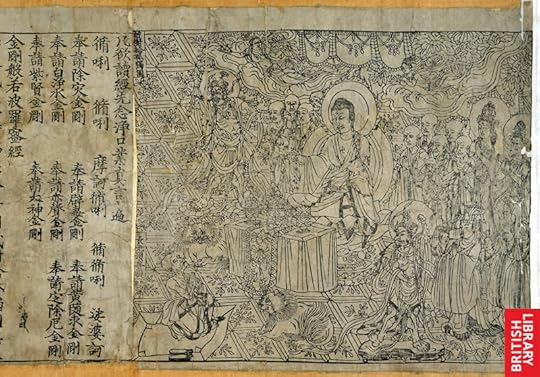
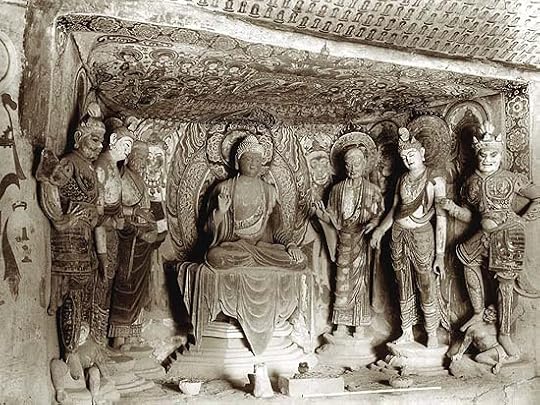
Indestructible as Stein appeared in life, in death his name has not been so enduring. He has sunk from memory as quietly and almost as thoroughly as one of his sand-buried cities.A wide-sweeping quote, and no doubt accurate, but one of the scrolls Stein recovered (of several thousand he convinced the caretaker to part with, in exchange for silver with which to refurbish the caves) was the Diamond Sutra, a Buddhist religious text - not especially important for the sutra, but because it was block-printed and is thought to be the oldest surviving example of a printed book, dated at 868. As such this is one of the most valued of the scrolls in possession of the British Museum.
Many factors have contributed to this. At the time of his death, the world's attention was focused elsewhere, convulsed by the Second World War. His death was hardly dramatic, untimely explorer's demise, even if he was poised to embark on a journey few octogenarians would contemplate today. He was not murdered on a Hawaiian beach like Captain James Cook or frozen in the Antarctic like Robert Scott. He remained a reserved, conservative, scholarly man and his writings reflect that. Even his 'popular' accounts are largely devoid of the colorful adventures and anecdotes of Albert von Le Coq or Sven Hedin... the public was far more dazzled by the discoveries of others than by what Stein found.
Agamemnon's mask has immortalised Heinrich Schliemann's name, Tutankhamen's tomb Howard Carter. Stein did not return with gold, jewels or richly decorated sarcophagi. His greatest finds were scrolls. He dies just as the sun set on colonialism, imperialism and the British Empire, which left their own troublesome legacy. The Great Game ended, India became independent, China and Russia locked their doors and Central Asia was off-limits to the West.
 You can read the Diamond Sutra online here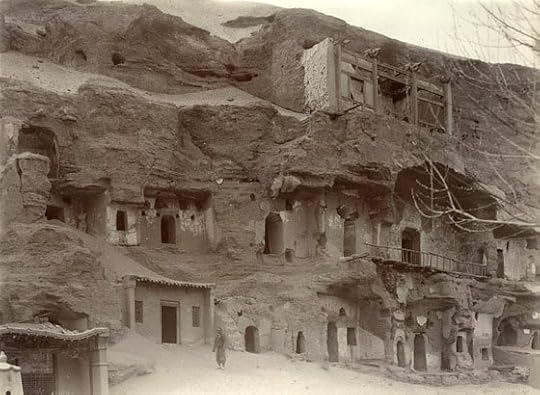
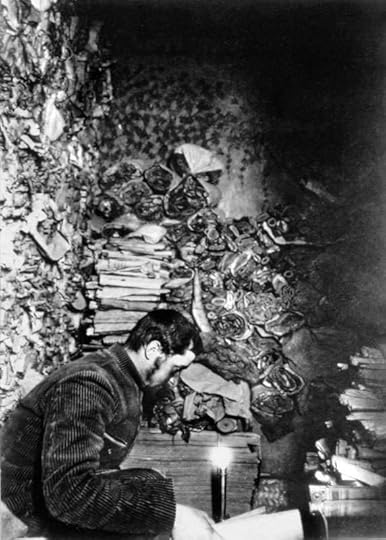 Paul Pelliot (1878-1945), a French Sinologist translating.