Jump to ratings and reviews
Rate this book

Diaries #1-3

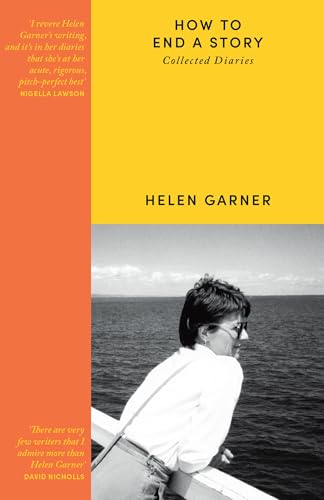
How to End a Story: Collected Diaries

Rate this book
Helen Garner has kept a diary for almost all her life. 'A stream of fragments', she says, 'of the world as it struck me on my way through.'

Strewn with devastating honesty, sparkling humour and steel-sharp wit, these expertly arranged volumes offer a window into the life and work of one of Australia's greatest living writers.

Helen Garner's Collected Diaries span twenty years, with the first volume beginning in the late 1970s just after the publication of her debut novel Monkey Grip. The second volume begins in 1987 as she embarks on an affair that she knows will be all-consuming, and the final volume in 1995, as she fights to hold on to a marriage that is disintegrating around her.

Shockingly relatable and forensically observed, these diaries reveal the inner life of a woman in love and a great writer at work. In doing so, they uncover the messy, painful, dark side of love, the sheer force of a woman's anger, the immutable ties of motherhood and the regenerative power of a room of one's own.

832 pages, Paperback

First published January 1, 2025

160 people are currently reading
2833 people want to read

About the author

Helen Garner

51 books1,355 followers
Helen Garner was born in Geelong in 1942. She has published many works of fiction including Monkey Grip, Cosmo Cosmolino and The Children's Bach. Her fiction has won numerous awards. She is also one of Australia's most respected non-fiction writers, and received a Walkley Award for journalism in 1993.

Her most recent books are The First Stone, True Stories, My Hard Heart, The Feel of Stone and Joe Cinque's Consolation. In 2006 she won the Melbourne Prize for Literature. She lives in Melbourne.

Praise for Helen Garner's work

'Helen Garner is an extraordinarily good writer. There is not a paragraph, let alone a page, where she does not compel your attention.'
Bulletin

'She is outstanding in the accuracy of her observations, the intensity of passion...her radar-sure humour.'
Washington Post

'Garner has always had a mimic's ear for dialogue and an eye for unconscious symbolism, the clothes and gestures with which we give ourselves away.'
Peter Craven, Australian

'Helen Garner writes the best sentences in Australia.'
Ed Campion, Bulletin

Ratings & Reviews

What do you think?
Rate this book

Friends & Following

Create a free account to discover what your friends think of this book!

Community Reviews

5 stars
69 (78%)
4 stars
15 (17%)
3 stars
3 (3%)
2 stars
0 (0%)
1 star
1 (1%)
Displaying 1 - 23 of 23 reviews
Profile Image for Celine Nguyen.
53 reviews467 followers
July 3, 2025
Everyone I've spoken to in the last month has heard about how amazing this book is. I haven't read Garner's fiction yet—only her interview in the Paris Review, where she said:

I write my diary last thing before I go to sleep or first thing in the morning, sitting up in bed. I’ll write down an interesting dream, or what happened that day, or something that one of my grandkids said to me. I don’t think of the diaries as work. That’s why I like them. I like the way I write them, because it’s not anxious. I might be describing something I’m anxious about, but the actual writing process isn’t anxious, because there’s no one breathing down my neck. I don’t have to finish it by a particular time or show it to anyone or get anyone’s approval or permission. I’m trying to write as well as I can—­it’s not sloppy, I’m not just dashing it off—­but I’m free and not constrained by anything else. I found that when I was editing my diaries for publication, I didn’t need to revise or polish them that much. That made me see that the diaries are how I turned myself into a writer—there’s my ten thousand hours.


The sheer quantity of good writing in her diaries is almost unbelievable. They're full of psychological insights, amazing (funny/charming/sad/endearing) character portraits, amazing dialogue, some of the most poetic and lovely nature descriptions I've come across in prose…extremely visceral descriptions of music…I couldn't recommend this more. Here's just one, exceptionally beautiful passage:


A handyman’s here, putting up curtain rod brackets for me, when two young blokes from [the furniture store] stagger in, lugging the sofa wrapped in thick white plastic. They heave it across the spartan living room and dump it with its back to the big window. I’ve only ever seen it in dim artificial light. They strip off the first sheet of wrapping, and the second. Somebody gasps, somebody sighs. It’s a dusty, silvery, ethereal blue-grey, shading into pale lavender. The spring morning pours into the room, bathing it in purity, a light in which the sofa levitates, as insubstantial as a cloudbank. The three men and I stand in a line, breathing together, in wordless rapture.
Profile Image for Abby.
1,639 reviews173 followers
November 10, 2025
“At dinner the surgeon asked me why I write with a pen rather than using a dictaphone or a word processor. ‘Why would I?’ ‘Because it’s faster and more efficient.’ ‘But it’s my life’s work. I’m not in a hurry.’ I was surprised to hear myself make that answer.”


A writer’s diary, written to be read, and with beautiful insight and sharp wit and emotion. Helen Garner seems to possess that rare quality in an artist: the ability to see oneself very clearly. It is long and elegantly accomplished: a personal history of the writing life.
Profile Image for Cindy.
983 reviews
August 21, 2025
I'm going to have trouble explaining why I liked this so much. But let me give it a try.
I've read Helen Garner's fiction before and I love her writing, so that's a big part of it. This is a long collection of her diaries for several years. Much of the time her personal life is a train wreck. She goes thru a couple of bad marriages and is BRUTALLY honest about the declines and falls. There was a strange voyeuristic pleasure at reading about her relationships, I'll admit. At times her work goes well, but she also has periods of despair. She starts therapy and writes about those sessions.
But what I really loved what just what she considers a "diary." Many, many entries are short - often just a sentence. She recounts her dreams, writes quotes from books she's reading, gives interesting reports on the news or the weather, tells us the subject of the sermon in Church - much of this written in unapologetic, beautiful sentence fragments. And just the way she uses language! She describes the word "cup" - "fat, short and stumpy, and optimistic." When she's depressed she describes herself as "a sack of different sadnesses being hauled around by a skeleton." (Just the fact that it's "different sadnesses" instead of "sadness"!)
I was surprised to find she's still alive, because I can't imagine anyone letting people read this while she is still on earth. In the diaries she even worries about them being read after her death. The honesty is stunning.
It took me awhile to read this - it is long - but I absolutely reveled in every page of it.
Profile Image for Demetri.
146 reviews1 follower
September 20, 2025
The book opened with an ordinary sentence, and I felt the tug. Not dramatic, not showy. A record. A record of something that otherwise might have gone unrecorded. The rhythm of it, the plain surface, the way an entry doesn’t explain itself but waits for the reader to lean in and make the connection. I knew then what I was in for: not a narrative in the strict sense, not an argument, but a life broken into shards, and each shard glinting when the light shifted.

One of the earliest fragments: a dream. Thirty-five typewriters buried in a garden. I paused there. To dream of tools of writing hidden in the soil, like relics or corpses. To dream of words silenced, waiting for excavation. This dream sits beside a family crisis, a sister’s loss, an ordinary shopping trip. The juxtaposition is what compels me. There is no smoothing, no authorial hand guiding us toward “theme.” And yet the themes rise anyway: the tension between domestic clutter and intellectual urgency, between the writer’s compulsion and the silence imposed by fear or shame.

The book is a chronicle of selves colliding. The self with the partner, V, combative, withholding, sharp. The self with friends, colleagues, sisters. The self with critics and strangers who write letters, unkind or admiring. The self with the past—teaching days, controversies, the question of who one was, what one dared to say in public. Each self leaves its mark, a bruise, a flare of joy, a shadow of doubt.

Moments return again and again to the body. Colds, bruises, drunken collapses, burns, illnesses, the fragility of skin and lip and bone. I read these passages with a wince, but also with recognition. To chronicle a life is not just to chart ideas, but to write down the state of one’s body on a Tuesday afternoon in autumn, in Murray Bridge or New York or Vienna. The way the bruise looks in the mirror, the taste of antibiotics, the weight of a swollen lip. These notes are brutal and honest. They anchor the work, keeping it from drifting into abstraction.

There is always an eye for others. The Down-syndrome boy lifting his foot to the window, laughing with the author’s ladle game. The old woman in the supermarket line. The cab driver vomiting lining from his stomach, convinced it was cherries. These people live in single paragraphs, but they stay with me longer than characters in a well-plotted novel. A passing stranger in a train can say more about a life than pages of dialogue in fiction.

The tension with V. Always there. He resents, provokes, undermines, mocks, resists. And yet sometimes he cooks lamb, or massages, or buys chicken soup packets, and there is tenderness. The book refuses to tell me how to interpret him. It doesn’t resolve into villain or companion. He is present as an argument, a burden, a sharp stimulus. Their conversations spiral, stall, restart. He lectures, she defends, they collapse into silence. And I, as reader, sit in the silence too.

Across the years the book covers, the writer is always teaching herself how to write again. She wonders if she has anything left, despairs at her blank cupboard, questions whether she has the right to invent. She reads Borges, Proust, Tournier, Austen, Paglia, Janet Malcolm. She copies lines into the diary, not always commenting. These quotations shine like lanterns along the path. To read them inside her book is to feel the strange intimacy of a mind storing what it needs, like water.

Some of the most piercing moments are about family. The father’s cancer. The mother’s strange mixture of ignorance and subtle discrimination, the knife sharpened across the book cover. The sister’s grief after her husband dies in the surf—how the scene at the airport collapses into keening. The letter left on the pillow: pride, love, simple recognition. I felt these pages enter me slowly, like breath, like the delayed return of tears.

I was surprised by the comedy. It is easy to think of diaries as solemn records, but here, in the line about the Walkman and Lenny Kravitz, in the operatic trills with the boy outside the kitchen window, in the sly glance from the Italian grandmother on the train—laughter bursts out. It relieves, and it deepens. To laugh is to acknowledge life’s absurdity, its refusal to line up with what we want.

Reading across the book, I began to sense a structure, though it hides under disorder. The fragments accumulate, echo each other. A letter in 1993 about estrangement is answered in 1996 with a note of reconciliation. A complaint about lack of solitude resurfaces after three years, in another city, in another flat, but with the same weight. These repetitions show me what a life feels like: not progress in a straight line, but circling, revisiting, revising.

What to say of the style? At first glance, spare. Short entries, sometimes no more than a line. But the spareness is deceptive. Within each vignette is compression: a tone, a gesture, an entire relationship distilled into ten words. “I must slow down and remember him more.” That line could be the thesis of a marriage. The book teaches me to notice the pause, the silence after the dash, the breath that separates one observation from the next.

In New York: the puffy shirt Seinfeld episode. At MoMA: the Cézanne bather. At the 92nd Street Y: Shostakovich played with forearms of power. These are not travelogue entries. They are records of astonishment, sudden comprehension. They remind me that art enters life in bursts, not as continuous education but as shocks that rearrange how one sees.

I cannot avoid speaking of the therapy. The sessions recounted are uneasy, fumbling, suspicious. The desire to lie on the couch. The scarf turned into a comforter. The foetal positions, the silences, the dread before an appointment. Here is the real crux: the book becomes not just a record of what happened, but of the attempt to narrate the self to another. That attempt falters, twists, eludes. And yet, in the act of recording the faltering, something is revealed.

By the time I reached the final pages, I was overwhelmed not by climax, but by the sheer accumulation of living. Meals, quarrels, funerals, shelves, sewing, grapefruit juice, music, arguments about Hopper. Nothing grand, nothing conclusive. And yet the effect is grandeur. Life, as recorded, is grandeur.

What do I carry away? A sense of courage. The courage to record what is embarrassing, petty, unresolved. The courage to resist polishing the self into a consistent figure. The courage to admit to jealousy, to envy, to fury, to despair. The courage to keep writing even when the mind insists it has nothing to say.

I close the book and think of the fragments that will stay with me: the soup ladle lifted to the window, the sound of gulls folding wings only at the last second, the letter left on the pillow, the scarf soaking up tears, the laughter at a puffy shirt, the fear in the night that everywhere was nothing. Each of these fragments lives on as if it were my own memory now.

My reception of the book: 91 out of 100.

And I realise the rating does not measure flawlessness. It measures something else: the power to make a reader live beside another life, not in fiction, but in the raw debris of days. It measures the ability to write one’s way into honesty, with all its costs. It measures the rare pleasure of recognising yourself in someone else’s record, and being grateful they kept the diary open long enough for you to read it.
Profile Image for Tony.
134 reviews5 followers
January 7, 2025
Helen Helen Helen. I guess I'm a Helen Garner fan, after all.             Normally, I am not a diary reader. It feels intrusive, I guess? Generally, because they are released after the writer is no longer with us. This is not the case with How to End a Story.

   Not only is this extremely intimate and vulnerable, but reading about the ups and downs of relationships, the torturous slow demise of one, it is also celebratory and revealing. We are along with Garner on ups and downs in her career and awards. The doubts that lingered even after successful milestones. Revealing in the aspect of the social attitudes of the times. When I say the times, it spans many years. It's a time capsule, from mentioning the disaster at Chernobyl to the drowning of Jeff Buckley. 

   Honestly, this was a pleasure to read, and I think you could even start with this book if you've not experienced Garners magic before.
Profile Image for Avery.
41 reviews
April 2, 2025
truly excellent. I don’t think I’ve ever highlighted a book more.
Profile Image for Holly.
1 review
May 27, 2025
Exactly what I needed. A book that feels like a guidepost for how to be a person and an artist.
Profile Image for Faith.
972 reviews7 followers
December 13, 2025
I have never read one of Helen Garner’s books before. Why would I jump into her diaries, totaling over 800 pages, that might expect me to have a certain familiarity with her work? Word of mouth. I had a passing familiarity with THE CHILDREN’S BACH, and somehow or another heard excellent things about her diaries, particularly her final one. When I saw they were being published for the first time together, I didn’t hesitate to request a copy.

As expected, contained are ordinary entries of work progress, arguments, stresses, parenting, friendships. There are also some lovely insights perfectly written. A commonplace book, where she includes excerpts from others. Perhaps the greatest pleasure is just the depth of material.

The entries are organized by years. Outside of that, though, it can be tough to tell if breaks are sometimes communicating light redactions having taken place within an entry, as there could be some continuity from one excerpt to the next, or whether they always signified a new entry. Names are typically initials, which could sometimes be confusing for me, but not enough to detract from the experience.

No surprise that over these pages, we witness changes in relationships and the consequences of actions over time. My investment grew the farther I read, perhaps because I felt more of a depth and attachment, but also likely that the tone and the vulnerability changed over the years. When her rage is detailed in depth, I was riveted and had such empathy for her (while also being a little shocked and entertained at her actions).

All in all, this is a treasure trove, detailing decades of private thoughts and experiences, if you are drawn to that sort of access.

(Thank you to Knopf, Pantheon, Vintage, and Anchor for providing this book for review consideration via NetGalley. All opinions are my own.)
9 reviews
November 27, 2025
Nothing much to say here that hasn't already been said. But don't people find it faintly hilarious that even by the last instalment of the diaries (late 90s) two well known writers in their 50s (HG now very famous in particular due to The First Stone) travel by bus to places around Sydney (sometimes taxi if it's a special occasion) and not own a car. Don't they worry about negative experiences of other passengers, lack of privacy. I mean, these are well-known people with middle class sensibilities (go to theatre, dinner parties with refined people/other well known people etc) waiting on the street at bus stops, train platforms? I get that HG came through that bohemian tradition, walking, cycling when she was younger in her Monkey Grip days and the public transport system in Sydney is good, but I can't fail to get a giggle out of this. Of course it opens up all sorts of possibilities for HG to have phone conversations with taxi drivers, interactions with other public transport commuters which then get into the diary, but trust me in Australia this use of public transport for this demographic is not normal!
1 review1 follower
November 23, 2025
The best book I’ve read all year. Captivating, propulsive, reflective and personal. Gorgeous language, turn of phrase and humour. Endlessly quotable and engrossing.
Profile Image for Catherine.
11 reviews
December 12, 2025
Helen Garner writes beautifully. I absolutely loved her diaries, they are well worth reading or listening to on audible.
Profile Image for Text Publishing.
710 reviews288 followers
Currently reading
December 16, 2025
The following book reviews have been shared by Text Publishing, publisher of How to End a Story: Collected Diaries.

‘Raw, incisive and, as she puts it, “bareknuckle”. I can’t wait to pore over them with a fellow reader.’
Dua Lipa

‘A masterpiece...an intensely rich and complex sensibility at work.’
Colm Tóibín

‘An intimate set of reflections on writing, love, friendship, ethics, landscape and the torments of a failing marriage.’
Blake Morrison, New Statesman

‘Compulsive reading’ 
Colm Tóibín, Irish Times

‘Have any writer’s journals since Virginia Woolf’s felt so vital?’ 
Ben Brooker, Australian Book Review

‘Garner is unsurpassed in her ability to sift through the muck of existence and transform it into poetry.’ 
Jonathan Ricketson, Australian Book Review

‘An extraordinary work.’ 
Lucy Caldwell, Irish Times

‘…if you’ve yet to convince anyone in your life of Garner’s unique genius, here’s their Christmas present sorted.’ 
Guardian

‘…a privilege to read.’ 
Readings

‘A vital, warts-and-all portrait of a truly great writer at work and one of the most engaging, heartfelt depictions of marital collapse ever committed to print.’ 
Daunt Books

‘Flinty brilliance.’ 
John Mullan, New Statesman
Profile Image for Denice Langley.
4,792 reviews45 followers
April 24, 2025
I don't usually read memoirs, but this is not your usual memoir. HOW TO END A STORY is a compilation of twenty years of Helen Garner's private diaries. Every secret she shared with herself, never meaning to have them read by anyone else, is revealed as if they happened today. Garner is a well known, well loved author who found her inspirations in her life's journeys. Readers will now see the challenges and the celebrations as they happened and recognize them from their favorite Garner book. I would find it very hard to reveal 20 years of my life, warts and all, with anyone willing to pay the price of a book.....I really appreciate the courage Garner displays here.
This does not read like a fiction or even an edited nonfiction. We read it as she wrote it. I enjoyed every page.
Profile Image for Brandi.
388 reviews18 followers
December 11, 2024
I loved this collection! I saw that Jamison had done the forward and was intrigued. I laughed, felt the raw emotions through silly thoughts and journaling bad times. The journal entries are pretty short but very insightful to what is going on at the time in Gartner’s life. It kind of reads like a twitter at times. I wish I took more time instead of inhaling it.

Thank you Net Galley & Pantheon Books for an advanced copy of this book.
Profile Image for Phil Sanderson.
36 reviews
September 29, 2025
This book is as close to perfection as anything so warm, natural and human can possibly be.
If you want to write, read it.
If you don't want to write, let this book be the one book you give the chance to change your mind.
1 review
April 20, 2025
a beautifully written exploration

I loved reading this. Aspects resonated; it was like a companion with the author’s navigations helping me in mine. I lingered in it and was sorry to finish it.
1 review
September 11, 2025
A searingly honest account of a life. Captivating. A must read.
664 reviews4 followers
March 28, 2025
An incredibly open, honest and often painful charting of a marriage breaking apart. Not exactly uplifting, but hugely courageous.
1,231 reviews22 followers
June 12, 2025
Just amazing. I've highlighted sentences on almost every page. Helen Garner's voice rings true.

I've been reading this in bits over the last 6 weeks.
Displaying 1 - 23 of 23 reviews

Can't find what you're looking for?

Get help and learn more about the design.