Guillaume Apollinaire (1880-1918) Fransa’nın en büyük modern yazar ve şairleri arasındadır. Resim eleştiri yazılarıyla kübizm akımının, tiyatroda da sürrealizm akımının isim babası olmuştur. Yazarın 1916’da kaleme aldığı Katledilen Şair’de, hikâyenin başkahramanı Croniamantal’in doğumundan büyük bir şair olarak ün kazanmasına ve çıldırmış bir kalabalığın ellerinde son nefesini vermesine kadar geçen ömrü anlatılır. Apollinaire öykü alanında bir devrim başlatan bu büyük anlatıyı uzun yıllar içinde parça parça yazıp derlemiştir. Katledilen Şair ve Diğer Hikâyeler, yazarın seçtiği on beş hikâyenin yanı sıra çeşitli dillerde yayımlanan kitaplarındaki beş hikâyeyi daha içeriyor. Yer yer Rabelais'nin üslubunu andıran eserinin otobiyografik özellikler taşıdığı bilinir. Hikâyede yer yer Pablo Picasso, Max Jacob, Marie Laurencin ve dönemin başka ünlü sanatçıları da sahne almaktadır.
Apollinaire’in şiirlerini okuyanlar onun edebi gücü hakkında pek az fikir sahibi olmuşlardır, Katledilen Şair ve Diğer Hikâyeler, bu büyük sanatçının Türkçeye kazandırılan en kapsamlı edebi eseri.
Italian-French poet Guillaume Apollinaire, originally Wilhelm Apollinaris de Kostrowitzky, led figures in avant-garde literary and artistic circles.
A Polish mother bore Wilhelm Albert Włodzimierz Apolinary Kostrowicki, this known writer and critic.
People credit him among the foremost of the early 20th century with coining the word surrealism and with writing Les Mamelles de Tirésias (1917), the play of the earliest works, so described and later used as the basis for an opera in 1947.
Guillaume Apollinaire (1880-1918), poet par excellence of the early 20th century Parisian literary world, inventor of the word "surrealism," champion of cubism and other innovative forms of modern art, wrote The Poet Assassinated in a hospital bed recovering from shrapnel wounds inflicted during World War One.
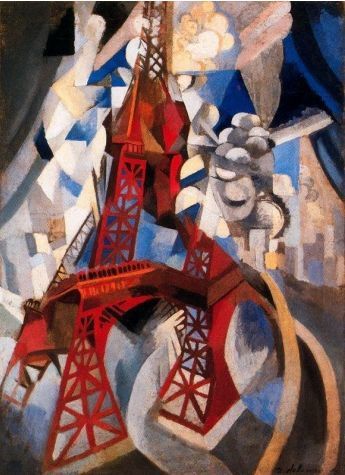
Reading this novella is like entering a dream world of a De Chirico cityscape or the montage of Max Ernst – and every couple of paragraphs the surreal panorama shifts – one of the most unique reading experiences one can encounter. With Apollinaire we have truly transitioned from the naturalism of Zola and the decadence of Huysmans into the Eiffel Tower world of modernity. Hello Picasso, hello Cubism, hello Dali Surrealism.
Apollinaire’s novella is comprised of 18 micro-chapters, all with one-word titles, such as Name, Nobility, Pedagogy, Poetry, Love, Fashion – like 18 pieces of torn paper, dropped randomly but not too randomly, fluttering down on a blank mat. In order to have a more intimate feel for the tone of this bizarre, whimsical work, please view Entr’acte, a short French 1924 black-and-white film by René Clair (easily located on YouTube) and featuring three well-known surrealist artists: Francis Picabia, Man Ray and Marcel Duchamp.
How powerful is your imagination? The author provides the mythic outline of the life of our main character, the god-like, world conquering poet Croniamanta, a man born in a year where his birth was saluted with an erection – the Eiffel Tower (sexual image directly from the text) but Apollinaire invites us to fill in the blanks and create our own version of Croniamanta. After all, even the place of his birth is claimed by no less than 127 towns and 7 countries!
Respecting that mythic outline we are given the following: Croniamanta’s mother died in childbirth and his father put a gun to his head after losing a fortune in a Monaco casino. He was raised by a well-learned man urging him to love all of nature and schooling him in Greek and Latin, the French of Racine, the English of Shakespeare and the Italian of Petrarch. Also, he was introduced to fencing and horsemanship, so by age 15 Croniamanta imagined himself as both knight and lover. At 21, poems in hand and filled with a love of literature, Croniamanta sets off for Paris where his eyes devoured everything and he eventually smashed eternity to pieces.
The great poet proclaims he will never write a poem again that is not free of all shackles, even the shackles of language. Croniamanta then becomes famous but enemies of poetry are on the rise. At one point a prophet tells him the earth can no longer stand its contact with poets. This is born out with the discovery that the United States has started electrocuting people who claim poetry as a profession. To add to this horror, Germany forbids all poets from going outdoors and four countries -- France, Italy, Spain, Portugal -- put all poets in jail. In Paris mobs are reported to have strangled poets in public.
Standing tall before an angry crowd, Croniamanta denounces all haters of poets as swine and murderers. But an angry crowd is an angry crowd; they turn on Croniamanta and kill him. In the aftermath a sculptor creates a monument to the great poet – a hole with reinforced concrete, the void in the ground has the shape of Croniamanta; the hole is filled but filled in a unique way: the hole is filled with Croniamanta’s phantom.
This brief sketch is like describing Salvador Dali’s Persistence of Memory as a number of flaccid watches out in the desert. This is surrealism; this is the realm of dreams; this is where the umbrella meets the sewing machine on the operating table; this is a novella by Guillaume Apollinaire. One is obliged to enter the work itself with fresh, open imagination.
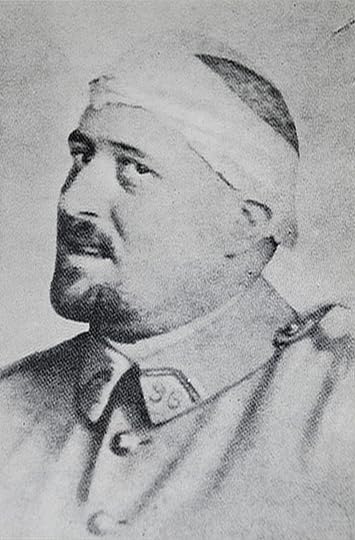
Written with such knowing innocence and off-the-cuff verve, these stories could be nothing less than infectiously charming. There's nothing else like them. While riding the various ripples and waves of early Modernism like a cubist surf jockey with a top hat, Apollinaire infuses his writing with a refined Medievel primitivism and a fairy tale spontaneity; but within the jauntiness are embedded wounds, emotional depths, and wisdom - all qualities you'd expect from the man in this photograph, where the headwrap hides a serious schrapnel wound suffered in WWI.
Le Poète assassiné I. Renommée II. Procréation III. Gestation IV. Noblesse V. Papauté VI. Gambrinus VII. Accouchement VIII. Mammon IX. Pédagogie X. Poésie XI. Dramaturgie XII. Amour XIII. Mode XIV. Rencontres XV. Voyage XVI. Persécution XVII. Assassinat XVIII. Apothéose Le Roi-Lune Giovanni Moroni La Favorite Le Départ de l’Ombre La Fiancée posthume L’Œil bleu L’Infirme divinisé Sainte Adorata Les Souvenirs bavards La Rencontre au Cercle mixte Petites Recettes de Magie moderne La Chasse à l’Aigle Arthur Roi passé Roi futur L’Ami Méritarte Cas du Brigadier masqué, c’est-à-dire, le Poète ressuscité
This book at times is gregarious and bawdy while spinning into tangents of abstractions. It dips in and out of reality as much or more than Marquez or Fellini (at his wildest). It is sentimental and heartfelt while still allowing for absurdist deconstruction (as opposed to say Artaud). This book is delivered with a love of life, despite several shocking or bleak moments.
Guillaume Apollinaire was a visionary. He defined Cubism, he helped found the surrealist movement, and he was a huge influence on Dadaism. With this book he projected himself into what I can only image himself seeing as a cubist story of a poet. Most of which is him or parallel to his life but also a fictionally adjacent version of himself, Croniamantal. I think it might be too bold to say that it is autobiographical because he clearly isn’t interested in maintaining much reality.
I found it to be a light fast read with lots of ideas and expressions well ahead of its time. I found it more accessible that someone like Alfred Jarry who was an obvious influence on him. I recommend it for people that want weird old french stuff.
I will say that his occasional references to Black people felt awkward (not offensive). It didn’t feel like it was done with malicious internet, but it did feel fetishized by today’s standard.
That said, his fascination with tokening mysticism was really bizarre when it came to interacting with Jewish people. There is a brief chapter that projects some ideas onto Jewish people that feel like it came from weird social conditioning.
geçen seneki sözlü yüzünden dolayı yıldızımın hiç barışmadığı Apolliaire, bu hafta üzerine konuşacağımız yazar. bu yüzden eserlerinden birkaçına bakmak istedim ve her seferinde daha da bayıldım. kısacık hayatına döneme damga vuran, aykırı öyle eserler sığdırmış ki insan hayran kalmadan edemiyor. öykülerinin yer aldığı bu derlemede alışılagelen öyküler beklemeyin, tad alamazsınız. ayrıca yazarın hayatını ayrıntılı olarak okumadan da eserlerini okumanızı tavsiye etmem, asla içine giremezsiniz. Tiresias'ın Memeleri ''Sürrealist Dram'' kitabındaki giriş kısımlarında ayrıntılı bilgiye ulaşabilirsiniz.
I made the proofing of this book for Free Literature and it will be published by Project Gutenberg.
CONTENTS BIOGRAPHICAL NOTICE I. RENOWN II. PROCREATION III. GESTATION IV. NOBILITY V. PAPACY VI. GAMBRINUS VII. CONFINEMENT VIII. MAMMON IX. PEDAGOGY X. POETRY XI. DRAMATURGY XII. LOVE XIII. MODES XIV. ENCOUNTERS XV. VOYAGE XVI. PERSECUTION XVII. ASSASSINATION XVIII. APOTHEOSIS NOTES
Karakter komedisi: Isabelle uzunbacak kocasına, ona sadık kalacağına dair söz verir. Sonra aynı sözü, dükkânda çalışan Jules adlı oğlana da verdiğini hatırlar. İnancıyla aşkını uzlaştıramamanın acısını çeker.
The godfather of Dadaism writes a Rabelesian retelling of his birth and life, simultaneously satirizing the pre-war state of French letters. At 150 pages I can enjoy this form of surreal absurdity, though your tolerance for it may differ.
Saw this on that one essential surrealist literature chart and was immediately drawn to the cover. The main story concerns Croniamantal; master poet of quasi-mythical birth who gets in many adventures including falling in love, creating poetry free from the confines of language, and even fighting for his life when rampant class jealousy over the privileged and impeccably handsome poets makes them the target of a global massacre.
My favorite part was a chapter where Croniamantal writes a play and goes to a local theatre to see how his compares. What ensues is sort of like the James O. Incadenza filmography but is instead a montage of the hilariously awful state of French theatre as Apollinaire sees it.
Books on Exact Change, while never lacking in quality, can be a little dense on occasion. That's probably why this one languished on my shelf for a bit. It was actually extremely easygoing and remarkably funny. While it's an important historical document, it definitely lacks the level of pretense that the title would seem to indicate.
In parts amazing. I loved "The Deified Invalid". Spotty, rambling, infectiously buoyant, profound and puerile. About what I expected from the man who coined the term, "surrealist". I seem to remember that he was trepanned (had part of his brain removed) after an injury in WWI. I wonder if that was before or after he wrote this.
"I'm Dutch," the man was saying, "but I live in Provence and I'd like to rent a room for a few days; I've come here to make some mathematical observations."
At this moment the Baron des Ygrées blew a kiss to Mia with his left hand and with a revolver in his right he blew out his brains and crashed into the dust.
"We have only one room," said Mia, "but it's free now." --------------------- Bam! Ha. Wild. What a surrealist. What a guy.
Doing things like reading books and going to work feel surreal when living in a country given over to fascism. But at least eggs are cheaper. Oh shit. Oh fuck. Oh shit fuck. Lol.
Surreal is the word, I guess. Appollinaire took shrapnel to the head in the Great War and then died during the worldwide flu outbreak in 1918. The world should have ended after World War I. Mustard gas? Trench warfare? End that shit. Alas. No go.
The regime is planning on using the Alien Enemies Act to persecute migrants. Fucking wild. There are always through lines.
I love these stories from over a hundred years ago. They have a completely unique, dreamlike style, an unreal charm, which is, however, original and completely different from the stereotypical today's magical realism. Apollinaire, who coined the word (concept) "surrealism" (in 1917), but died (in 1918) before surrealism was actually born in literature, wrote stories in his own style and did not have time to popularize this style before his death. No one ever made a continuation - maybe it's a pity, but maybe it's better than if it had become an everyday occurrence in the literary industry, some unbearable mannerism present everywhere, like the commercialized magical realism that is now forced into almost every romance and even into crime story.
I futuristi non fanno per me, ma come sempre i futuristi francesi sono meglio di quelli italiani. È tutto molto caotico e dadaista e quello che ti rimane una volta finita questa raccolta di racconti sono un po' di risate, un po' di confusione, un po' di malinconia e ben poco altro. Mi sento in parte insoddisfatta. Forse non l'ho capito bene, anche se mi sono informata su Apollinaire prima di iniziarlo. È evidente a mio parere che il futurismo ha fatto il suo corso e forse proprio secondo il loro intento è stata una fiammata improvvisa che ha lasciato solo un pugno di cenere: da questo pugno di cenere, tuttavia, salvo il primo racconto, curioso e simpatico.
Tinha este livro num dos meus separadores da internet, certamente porque vi uma referência ao mesmo algures e fui pesquisar. Decidi então requisitá-lo da biblioteca, o que terá sido uma desilusão, porque não é de todo uma escrita que me encante ou que sequer consiga sequer tolerar o suficiente para continuar os outros contos do livro, para além d'O Poeta Assassinado, apesar do mesmo ter sido minimamente interessante.
Sıfır yıldız vermek mümkün olsaydı kesinlikle bu kitap için kullanırdım bu hakkımı. Yani eski zamanlarda yazar kıtlığı mı varmış anlayamadım ama eser hiç iyi değil. Günümüzde de klasiklerden olduğu söyleniyor ama ben boşuna zaman kaybetmeyin derim. Kopuk kopuk anlamsız hikayeler ve dizelerden oluşuyor kitap. Keşke İş Bankası Yayınları hiç basmasaydı da karşılaşmasaydım bu kitapla. (resmen kitabı katlettim ama kesinlikle hak ediyor.)
I can definitely see the Cubist inspiration that affected this work. This is an interesting step into the surrealist literature world for me as this is also a translated work. At first, everything felt like a fever dream, confusing and unparsable. And then, as the plot began to develop, it clicked. Ultimately, The Poet Assassinated is a look at the age old struggle between science and art, exploring the way nature and life are interwoven with a satirical bluntness.
I can’t pretend that this is the high watermark of the short story genre - some of them simply say too much, others are too short and many sentimental. I enjoyed it nonetheless, with it being rather advanced stylistically for pre War writing and providing a lively cross section of Apollinaire’s esoteric interests (time travel, poets amongst painters, artistic form). The final story is an excellent conclusion to the volume, with A’s menagerie of fictional creations now grimly at war
"Si las repúblicas y los reyes, si las naciones no toman una determinación, la raza de los poetas, demasiado privilegiada, aumentará en tales proporciones y tan rápidamente, que dentro de poco nadie querrá ya trabajar, inventar, aprender, razonar, hacer cosas peligrosas, remediar los males de los hombres y mejorar su suerte ".
Novelilla atípica en la que incurcionamos en la gida de un fulano futuro poeta. No hay mucho que decir, la obra no aborda mucho salvándos el final, el resto tiende a lo intrascendental, supongo que para más disfrute, como otras obras suyas, estará en leerlo en francés.
Pretty good.... surrealism avant la lettre (well he did coin the term). I think it was some weird Biblical allegory? There's a narrative but it's smothered in the absurd.
Ah, los modernistas. Una novela como solo podría haber sido escrita en el París anterior a la Primera Guerra Mundial. Qué cosa maravillosa puede llegar a ofrecer el surrealismo literario.
This book conains a novella, The Poet Assassinated, and a number of other short stories by Guillame Apollinoire. Originally written in French, the work has been translated by Ron Padgett. Apollinaire, both a poet and an art critic, is noteworthy because of his association with Cubism and Surrealism. It's apparent that associastion makes translation problematic. The stories, particularly The Poet Assassinated, obviously resist translation. I found it rather inacessible. The other short stories were much, much easier sledding and some were rather poigniant. Were I more ambitious I would have attacked the work in its original French and used Padgett's translation as a companion piece. My French being quite rusty would have made the read rather a project Still, they are short works, and if you are unfamiliar with Apollinaire, this book seems a good place to start.