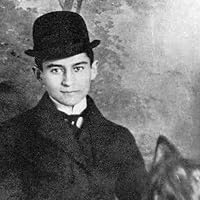
Baaisveen Sadi, literally twenty second century, is a science fiction of sorts where Rahul Sankrityayan talks about a world as he hoped it to be in the twenty second century, 200 years after he wrote the book.
राहुल सांकृत्यायन जिन्हें महापंडित की उपाधि दी जाती है हिन्दी के एक प्रमुख साहित्यकार थे। वे एक प्रतिष्ठित बहुभाषाविद् थे और बीसवीं सदी के पूर्वार्ध में उन्होंने यात्रा वृतांत/यात्रा साहित्य तथा विश्व-दर्शन के क्षेत्र में साहित्यिक योगदान किए। वह हिंदी यात्रासहित्य के पितामह कहे जाते हैं। बौद्ध धर्म पर उनका शोध हिन्दी साहित्य में युगान्तरकारी माना जाता है, जिसके लिए उन्होंने तिब्बत से लेकर श्रीलंका तक भ्रमण किया था। इसके अलावा उन्होंने मध्य-एशिया तथा कॉकेशस भ्रमण पर भी यात्रा वृतांत लिखे जो साहित्यिक दृष्टि से बहुत महत्वपूर्ण हैं।
२१वीं सदी के इस दौर में जब संचार-क्रान्ति के साधनों ने समग्र विश्व को एक ‘ग्लोबल विलेज’ में परिवर्तित कर दिया हो एवं इण्टरनेट द्वारा ज्ञान का समूचा संसार क्षण भर में एक क्लिक पर सामने उपलब्ध हो, ऐसे में यह अनुमान लगाना कि कोई व्यक्ति दुर्लभ ग्रन्थों की खोज में हजारों मील दूर पहाड़ों व नदियों के बीच भटकने के बाद, उन ग्रन्थों को खच्चरों पर लादकर अपने देश में लाए, रोमांचक लगता है। पर ऐसे ही थे भारतीय मनीषा के अग्रणी विचारक, साम्यवादी चिन्तक, सामाजिक क्रान्ति के अग्रदूत, सार्वदेशिक दृष्टि एवं घुमक्कड़ी प्रवृत्ति के महान पुरूष राहुल सांकृत्यायन।
Sankrityayan was a multilingual linguist, well versed in several languages and dialects, including Hindi, Sanskrit, Pali, Bhojpuri, Urdu, Persian, Arabic, Tamil, Kannada, Tibetan, Sinhalese, French and Russian. He was also an Indologist, a Marxist theoretician, and a creative writer. He started writing during his twenties and his works, totalling well over 100, covered a variety of subjects, including sociology, history, philosophy, Buddhism, Tibetology, lexicography, grammar, textual editing, folklore, science, drama, and politics. Many of these were unpublished.He translated Majjhima Nikaya from Prakrit into Hindi.
One of his most famous books in Hindi is Volga Se Ganga (A journey from the Volga to the Ganges) — a work of historical fiction concerning the migration of Aryans from the steppes of the Eurasia to regions around the Volga river; then their movements across the Hindukush and the Himalayas and the sub-Himalayan regions; and their spread to the Indo-Gangetic plains of the subcontinent of India. The book begins in 6000 BC and ends in 1942, the year when Mahatma Gandhi, the Indian nationalist leader called for the quit India movement.
This book was translated by K.N. Muthiya-Tamilputhakalayam in Tamil as Valgavil irundu gangai varai and is still considered a bestseller. The Kannada translation done by B.N Sharma as "Volga Ganga" . The Telugu translation inspired many readers. Volga muthal Ganga vare, the Malayalam translation, became immensely popular among the young intellectuals of Kerala and it continues to be one of the most influential books of its times. The Bengali version is Volga Theke Ganaga [ভোল্গা থেকে গঙ্গা], which is still acclaimed by the critics.
More than ten of his books have been translated and published in Bengali. Mahapandit was awarded the Padmabhushan in 1963 and he received the Sahitya Akademi Award in 1958 for his book Madhya Asia ka Itihaas.
He maintained daily diaries in Sanskrit which were used fully while writing his autobiography. In spite of profound scholarship, he wrote in very simple Hindi that a common person could follow. He wrote books of varied interest. He was aware of limitations of Hindi literature and singularly made up the loss in no small measure.
The historian Kashiprasad Jaisawal compared Rahul Sankrityayan with Buddha. Rahul's personality was as impressive and memorable as are his achievements. He traveled widely and wrote in five languages — Hindi, Sanskrit, Bhojpuri, Pāli and Tibetan. His published works span a range of genres, which include autobiography, biography, travelogue, sociology, history, philosophy, Buddhism, Tibetology, lexicography, grammar, text editing, folklore, science, fiction, drama, essays, politics, and pamphleteering.
His travels took him to different parts of India, including Ladakh, Kinnaur, and Kashmir. He also travelled to several other countries includi
Rahul Sankrityayan’s Baiesvi Sadi was an astonishing and thought-provoking read. For a book that was written in 1924, it is certainly way ahead of its time in terms of several socially progressive values. Baiesvi Sadi was also the first Hindi science fiction novel that I read. It imagines a world where global Communism has been established by the year 2124; a lacto-vegan democratic society that is devoid of caste, religion, patriarchy, racism, colonialism, and capitalism. Sankritayayan’s academic prowess is reflected throughout the text as his book takes ample advantage of his knowledge of various cultures, languages, geographies, historiographies, political ideologies, and geographies of several places around the world. A sufficient understanding of Marxism on the part of the reader will make the text an even more enriching experience, for Sankritayayan cleverly elucidates Marxist ideation of society through his world-building in the text. He has given a greater emphasis on the organisation of society than on individual characters, which exist primarily for purposes of exposition. The book is written in a colloquial Hindi, so most people will not have to reach out for a dictionary while reading.
There are, though very few, qualms that a modern reader would point out, such as the absence of trans identities or those across the gender spectrum, except the male/female binary, in the posited future of the year 2124. He also assumes a heteronormative worldview, and thus the institution of marriage is built solely around the romantic association between a male and female. Bioethical problems arise around the adopted anthropocentrism at the cost of other animals’ lives. The treatment of the issue of population control adds to the litany of complaints; all of which will be adamantly censured by any modern Marxists (modern as in those contemporary in the year 2020). I may redeem Sankritayayan here by stating that these problems arise only maximally once, sparsely across the text and do not form the underlying philosophy of the government of the world of the twenty-second century.
Sankritayayan has left a fascinating legacy for us to discover and rediscover, for his book doesn’t stop giving till the last page. Highly recommended. 4/5 stars.
The kind of social sci-fi it is, with a lot of socialism in it, it's surprising how the author expected a few things to be, and at the same time I can surely see that some objectives that he hoped for will not be achieved. Not in 100 more years, when he's talking about, not probably in triple that time. However, an interesting read in some parts.