Jump to ratings and reviews
Rate this book

Dylan Goes Electric!: Newport, Seeger, Dylan, and the Night That Split the Sixties

Rate this book
One of the music world’s pre-eminent critics takes a fresh and much-needed look at the day Dylan “went electric” at the Newport Folk Festival, timed to coincide with the event’s fiftieth anniversary. On the evening of July 25, 1965, Bob Dylan took the stage at Newport Folk Festival, backed by an electric band, and roared into his new rock hit, Like a Rolling Stone . The audience of committed folk purists and political activists who had hailed him as their acoustic prophet reacted with a mix of shock, booing, and scattered cheers. It was the shot heard round the world—Dylan’s declaration of musical independence, the end of the folk revival, and the birth of rock as the voice of a generation—and one of the defining moments in twentieth-century music. In Dylan Goes Electric!, Elijah Wald explores the cultural, political and historical context of this seminal event that embodies the transformative decade that was the sixties. Wald delves deep into the folk revival, the rise of rock, and the tensions between traditional and groundbreaking music to provide new insights into Dylan’s artistic evolution, his special affinity to blues, his complex relationship to the folk establishment and his sometime mentor Pete Seeger, and the ways he reshaped popular music forever. Breaking new ground on a story we think we know, Dylan Goes Electric! is a thoughtful, sharp appraisal of the controversial event at Newport and a nuanced, provocative, analysis of why it matters.

368 pages, Hardcover

First published July 14, 2015

888 people are currently reading
5550 people want to read

About the author

Elijah Wald

32 books70 followers
Elijah Wald is a musician and writer, with nine published books. Most are about music (blues, folk, world, and Mexican drug ballads), with one about hitchhiking.
His new book is a revisionist history of popular music, throwing out the usual critical conventions and instead looking at what mainstream pop fans were actually listening and dancing to over the years.
At readings, he also plays guitar and sings...why not?"

Ratings & Reviews

What do you think?
Rate this book

Friends & Following

Create a free account to discover what your friends think of this book!

Community Reviews

5 stars
745 (27%)
4 stars
1,279 (46%)
3 stars
584 (21%)
2 stars
101 (3%)
1 star
20 (<1%)
Displaying 1 - 30 of 436 reviews
Profile Image for Justin Hairston.
188 reviews12 followers
February 9, 2025
Hate to be harsh, especially because I loved the movie so much and there is certainly enough here to inspire such a film. Wald is a terrific writer, too, and the bits where he allows himself a little poetic license to analyze the musical and cultural forces of the sixties through the avatars of Dylan and Seeger really sing. Unfortunately, those bits are largely confined to the bigger-picture intro and outro, with the rest consisting largely of exhaustively researched and exhaustingly relayed lists of musicians and songs—who played what, when, where, with whom, and why. It’d be interesting if it were interesting, but unfortunately I can only read the names “Peter, Paul, and Mary” a maximum of 100 times per book before I go crazy. I would’ve loved to just read about the theory! But maybe someone else will be thrilled to find out who the third performer was on the second afternoon of the 1964 Newport Folk Festival.
Profile Image for Ian "Marvin" Graye.
948 reviews2,782 followers
March 28, 2025
CRITIQUE:

Introduction

I bought this book in 2019, but have only read it now, after seeing the film inspired by it ("A Complete Unknown").

At the time, I googled the Newport Folk Festival in 1965, and thought I discovered an article by Thomas Pynchon (that I can no longer find online).

However, having re-read the article a few times since I read the book, I thought it expressed opinions with which I agreed. So here it is.

"Notes on Bob Dylan's Performance at the Newport Folk Festival in 1965" by Thomas Pynchon (A Pastiche)

In a dim way, I had been aware of Bob Dylan before I actually met him.

It must have been in 1963, sometime after Richard and Mimi Farina got married (I had known Dick at Cornell and was the best man at his second wedding.)

Dick often mentioned Bob in his occasional letters, so I recognised his name when I heard his first four albums, and then, finally, the single of "Like a Rolling Stone" (which was released on July 20, 1965).

Dick and Mimi invited me to join them at the Newport Folk Festival, which was scheduled for the weekend, a few days later.

Apart from them, the performance I was most enthusiastic about was the Paul Butterfield Blues Band. They turned me on to Chicago Blues, even though most of the band was white.

I knew that Dylan's single featured electric instrumentation, but I didn't know until the Festival that Mike Bloomfield (Butterfield's guitarist) played electric guitar on the track.

I didn't meet Bob, until after his performance on the last night, when Dick introduced me to him in the living room of the festival living quarters.

He was sitting in a corner of the room, a little deflated, but he sparked up when Dick and I walked up to him and started a conversation.

"I just want to play my music the way I want to, the way it sounds in my head. I don't want to be boxed in by other people's expectations. It's my music, not theirs," he said.

I identified with Bob's plight. I felt the same way about my writing. I had just published "V" at the time, and was still working on "The Crying of Lot 49" and "Gravity's Rainbow" (the latter of which I dedicated to Dick). I would be nothing, if I'd written these novels the way people encouraged me to, even though they were well-intentioned and, in some cases, seasoned professionals.

Even though the accounts of booing at Dylan's electric performance were exaggerated, you have to learn how to tolerate boos, when you step onto any kind of stage. You can't have a thin skin, if you seek public approval or acclaim. Bob should already have known that they'll stone you when you're playing your guitar.

description
Dylan's green polka dot shirt

I don't think Bob wanted to be bound up in Pete Seeger's preppie straightjacket (he preferred a green polka dot shirt and a black leather jacket). To the extent that social activism and protest songs appealed to him, he wanted to do it in his own idiosyncratic way. His music was an art form, not a vehicle for a political platform or a manifesto. He didn't want to work on Maggie's farm no more.

By the same token, he wanted the freedom to be counter-cultural rather than be hamstrung by cultural conformity, dogma and somebody else's definition of ideological soundness. He asserted the right to be personal, not just political. He was one of the first to recognise that folk music had become a broken collectivity, at the same time that it tried to circumscribe personality and individuality.

Rock 'n' roll electricity didn't mean that Dylan's art and music were being diluted or re-moulded by and for populism. It was just another tool Bob used to communicate and build communal relationships. It was intended to add another personal and collective dimension.

All of the musicians who played on the last night of the festival (a Sunday) were restricted to 12 minute sets. Dylan could really only play three songs in this time. I think a lot of people had attended the festival for the sole reason that they wanted to see and hear Bob. To travel all that way just to witness three songs must have pissed them off. No wonder some of them booed, but who were they booing? Dylan or the festival management? Then there was the poor sound, which wasn't really set up for electric guitars. Bob shouldn't have taken it so personal.


description
From right to left: Paul A. Rothchild (record producer), Richard Farina, Maria Muldaur, Mimi Farina, Thomas Pynchon (Credit: David Gahr (?), Newport Festivals Foundation, Inc., Getty Images)


SOUNDTRACK:
Profile Image for Alan (on December semi-hiatus) Teder.
2,705 reviews251 followers
February 8, 2025
Sorting the Facts from the Legend
A review of the Dey Street Books eBook edition (July 14, 2015) released simultaneously with the Dey Street Books hardcover and followed by the Tantor Audio audiobook (May 16, 2017).
Pete would quote his father, Charles Seeger: “The truth is a rabbit in a bramble patch. One can rarely put one’s hand upon it. One can only circle around and point, saying, ‘It’s somewhere in there.’”
As pointed out in the current marketing, this was the book that was the basis for the recent Bob Dylan biopic A Complete Unknown (2024). As somewhat of a Dylanophile I was so impressed with the movie that I even reviewed a bootleg copy of the screenplay.
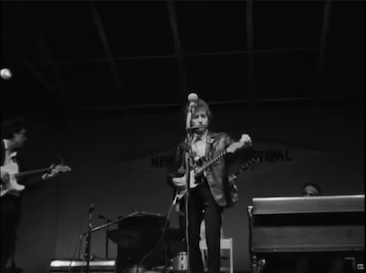

Bob Dylan at the Newport Folk Festival 1965. Image sourced from Wikipedia.

There has been a lot of hyperbole about the 1965 Dylan performance at the Newport Folk Festival where he supposedly outraged the audience of folkies who had expected acoustic Dylan and instead were confronted by an amplified rock'n'roll / blues band. The various first hand accounts by people who attended also differ as to whether the band was applauded or was booed off the stage.

Elijah Wald attempts to dissect it all by providing all the different points of view in this excellent overview of the 1950's/1960's folk music revival which led up to the event. The book contains extensive background about both Woody Guthrie and Pete Seeger and their influence on the folk revival. This is probably all too much for the casual reader but you can definitely see how the film screenwriters attempted to squeeze in all the different viewpoints in the A Complete Unknown film. The book was a 5 star for me, but you should know that it is about much more than Dylan alone.

Soundtrack
You can listen to the entire Highway 61 Revisited (released August 30, 1965) album on YouTube here or on Spotify here.

For further songs recorded during the Highway 61 Revisited sessions but not included on the final album you can listen to Sitting on a Barbed Wire Fence, Positively 4th Street and Can You Please Crawl Out Your Window?.

For bonus alternate tracks and false starts released as The Cutting Edge 1965-1966 (released November 6, 2015) collection (note that this includes tracks from the Bringing It All Back Home and Blonde on Blonde sessions) you can listen to the highlights via a playlist on YouTube which starts here or the entire album on Spotify here.

Videotrack
The Newport 1965 performance of Like a Rolling Stone was filmed and can be seen in the documentary The Other Side of the Mirror (2007) by director Murray Lerner. It is available to view on YouTube here. The film otherwise includes Lerner's footage from the Bob Dylan Newport performances from 1963, 1964 and 1965.

Lerner's earlier documentary Festival! (1967) includes only snippets of Newport performances but does include clips from Dylan's 1965 Maggie's Farm and Mr. Tambourine Man performances.

Trivia and Links
I've read several related books about early Bob Dylan of which Suze Rotolo's A Freewheelin' Time: A Memoir of Greenwich Village in the Sixties (2008) and David Hajdu's Positively 4th Street: The Lives and Times of Joan Baez, Bob Dylan, Mimi Baez Farina and Richard Farina (2001) were favourites.
Profile Image for Nick.
29 reviews1 follower
August 25, 2024
A lot denser than I thought it'd be, but a pretty indispensable history of the folk through lines that shape (or don't shape) Dylan's career. I am so curious how they're going to adapt this for "A Complete Unknown" and convey anything more than "wow Dylan went electric, lots of people didn't like that!"
Profile Image for Nooilforpacifists.
987 reviews64 followers
August 15, 2015
Wald's focus is the night Dylan took the stage at the 1965 Newport Jazz/Folk festival, backed by most of the Paul Butterfield Blues band, and "electrified one half his audience and electrocuted the other." Newport principally had been acoustic (and, if not, featured only electrified ethnic folk music, e.g., Cajun). But Dylan cranked the volume up to "11". It is true, as described in Alex Ross's book on 20th Century music, and the surviving film (turned into a brilliant documentary by Scorsese) that Pete Seeger charged up to the mixing board demanding the noise be reduced--but was told there were enough other Newport Festival Board members to overrule him.

More interesting is the tale of the axe--that Pete Seeger wanted to take down the power to the electric instruments. Seeger himself admitted, in an autobiography, saying, "Damn, if I had an axe I'd cut the cable right now." But this may be a post-hoc invention: Wald closely listens to the film soundtrack, and hears "Leave that one alone, Pete [Seeger]," at almost the same time Peter Yarrow says, referring to Dylan, not Seeger, and using a jazz musician's metaphor for guitar, "He's gonna get his axe."

There's no question that some, maybe as much as half, of the Newport audience booed the Dylan/Butterfield electric set. But why? Two reasons: the impromptu group played badly, having rehearsed only once (the night before); and the sound mix was awful--those in front could hear only the amplified instruments, not Dylan's voice: you had to be in the back half of the lawn to know Dylan existed at all. So at least some of those booing may have been frustrated about missing their idol entirely (at least until he was persuaded to return for two solo acoustic numbers).


Still, Newport '65 became a time to take sides:


"[T]he audience had to make a clear-cut choice and they made it…They were choosing suffocation over invention and adventure, backwards over forwards, a dead hand over a live one."


Theodore Bikel put it in a nutshell:


"'You don't whistle in church--you don't play rock and roll at a folk festival.' For that analogy to hold, Newport has to be the church: the quiet, respectable place where people knew how to act. Pete Seeger was the parson. The troubled fans were the decent, upstanding members of the community. And Dylan was the rebellious young man who whistled."


"Or, to personify that era, it was not Dylan who was transformed; it was Seeger. [The audience] could chose the past or the future, and they chose Seeger. It was not news that Dylan was the future; the news was that Seeger was the past."


On the other side, a young audience member -- clearly unfamiliar with Seeger's persistent Communist connections (Seeger apologized for Stalin only in the 1990s) -- said:

"All the martyrdom blather about blacklisting and guitars killing fascists and trailing Woody Guthrie around like a puppy faded to zero for me when Seeger took the stage to try to enforce his hootenanny, Sing Out version of what music should be."


Or, to simplify it still further, it must have driven Seeger mad that although "[i]t was not impossible to sing along with a rock band, but it was irrelevant."


So, Wald concludes -- anticipating, wrongly I think with respect to the break between New and Old Left, Altimont by a few years -- "the confrontation at Newport marked the end of the folk boom and the arrival of rock as a mature art form, the break of the New Left from the old, and the triumph of the counterculture."


Dylan made it clear he didn't care: "You go your way/I'll go mine." Seeger seems to have simultaneously admired and despised that attitude.
Profile Image for Andrew.
761 reviews18 followers
February 11, 2025
Having just seen 'A Complete Unknown' and noted numerous obvious historical errors, it seemed appropriate to read the book that was the wellspring for this recent Dylan biopic, Elijah Wald's Dylan Goes Electric!: Newport, Seeger, Dylan, and the Night that Split the Sixties, and I am most pleased with having done so for many reasons. A fascinating narrative told well, Wald's book is a masterful examination of the complex interplay between the social, political, artistic and personal elements as they combined through the prism of a specific form of music, reflecting and constructing a moment of significant change in American popular history. The tensions and conflicts that reached their apogee that night at the 1965 Newport Folk Festival, when Dylan and his band played electric guitars during a highly controversial set, supposedly 'destroying' the folk boom and upending and knocking over the conservative tall poppies of the older generation, are documented and discussed by Wald to great effect. In the vast library of Dylan related books surely this title will stand out as one of the most definitive.

Wald positions Dylan going electric as the climax of a series of conflicting narratives, focused on configurations of artistic and political philosophies that were extremely potent to all involved. In his introduction to Dylan Goes Electric! he states:

"In most tellings Dylan represents youth and the future, and the people who booed him were stuck in the dying past. But there is another version, in which the audience represented youth and hope, and Dylan was shutting himself off behind a wall of electric noise, locking himself into a citadel of wealth and power, abandoning idealism and hope and selling out to the star machine. In this version the Newport festivals were idealistic, communal gatherings, nurturing the growing countercultre, rehearsals for Woodstock and the Summer of Love, and the booing pilgrims were not rejecting the future, they were trying to protect it."


This is an eloquent summary of the binary thinking and ideals that underpin certain aspects of the history Wald examines in this book, and for the most part that is what the reader encounters over the coning chapters. In the complex and fragmented world of popular folk music in the United States from the late 1930s to the events of 1965 constructs such as idealism, social justice, authenticity and populism are integral to what is important to those involved, and as to be expected there is no simple or single point of view presented by the author that becomes the established 'truth'. It could be said that this book's most central position is that the shifting sands of Dylan and the folk movement are inextricably linked to the raoidly changing nature of the US itself, and that all the efforts made by the likes of Guthrie, Seeger, Dylan, Baez etc to harness and direct these changes either for altruistic or selfish reasons were, in the words of Bob, "...beyond their control...'.

That Wald maps the intricate and diverse strands of history that run through the lives of the key players in this narrative, and develops a cohesive, if complex, representation of what trasnpired, is one of this book's most significant acheivements. If one comes to his text with some or no knowledge of the folk music movement in mid 20th Century US culture, Dylan Goes Electric! will offer a huge amount of information and explanation. For example, Pete Seeger's career and the principles that he developed underpinning his conceptualisation of folk music are given plenty of attention, allowing one to see that his elder statesman position at Newport 1965 doesn't define him in toto. A panoply of important and less significant identities are spoken of, ranging from Johnny Cash and Donovan, folkies such as Dave Van Ronk, Phil Ochs, Joan Baez and Mimi and Richard Farina, music industry identites such as CBS producer John Hammond and manager Albert Grossman, and a dizzying array of other people. Wald ensures that the reader is given plenty of scope as to who was who and what they meant both to each other and as cogs within the machinery of the history he docments.

Dylan Goes Electric! also establishes the importance of how the folk music scene was inevitably fractured because by its very nature, its supposed rebirth in the early 1960s, various camps attenpted to co-opt the musical genre into their own aesethetic and ideological constructs. Wald makes much of the conflicts between those who were adapting or adopting traditional folk music, those who held themselves as guardians of a more 'truthful' version of folk (the 'neo-ethnics'), those who were the real deal (e.g. Muddy Waters), callow college commercial acts (e.g. The Kingston Trio) and purveyors of rock and folk. The musical environment within which Dylan emerged from in the first few years of his success is shown to be balkanised to such an extent that it is no wonder he rejected the constraints and became more or less his own individual creation.

Wald pulls all of these myriad strands together into a highly readable text that will make many a reader happy. The Bob Dylan of this book may not be 100% historical, however that is the man himself; he is shown to be an amalgam of his own contradictory statements, his work and what people think of him. That the author accentuates this mythic quality of Dylan's persona is embodied in how he recounts the events of that night, with no one being able to put their finger on the event and say exactly what happened. And herein lies one of the key ideas of Dylan Goes Electric!; just as folk music is a popular artistic form where stories and personalities can develop alternating interpretations of a shared experience, so is the history of Dylan at Newport 1965. There is a communal legendary quality to what happened, and in some respects the reality doesn't matter. Wald allows the reader to see that its the mythos, and how it represents broader issues and ideas, that makes Dylan going electric so fascinating.

If you go and see 'A Complete Unknown' then you should read Dylan Goes Electric!: Newport, Seeger, Dylan, and the Night that Split the Sixties, as you should if you are a Dylan fan or addict, a fan of popular post-war music, or intrigued by American history. That Wald has produced such a comprehesive and engaging text is a remarkable achievement, and I am grateful for having read his work.
Profile Image for Tarregafan.
4 reviews
July 14, 2015
He had such promise—Pete Seeger on Bob Dylan

He was “gooder” than the others—description of Pete Seeger


Dylan Goes Electric!: Newport, Seeger, Dylan, and the Night that Split the Sixties, by Elijah Wald, is a stool on three legs. It's the story of early Bob Dylan, his art and commerce, it's the story of the Newport Folk Festival during the period when it gave the imprimatur to politically conscious sixties pop music, and it's also the story of Pete Seeger, who was as much the founder of the Newport festival as anyone, and who was accepted as the conscience of the festival by both those who agreed with him and those who didn't.

Besides this tripod of Dylan-Newport-Seeger, there are other stories running through this book, for instance the start of the so-called British Invasion, which brought American folk and blues music back home, performed by British performers. Ironically, this wave of British musicians inspired by traditional American artists had the effect of smothering the folk music renaissance of the early 1960s.

There's a tension running through this history—between folk music vs. pop, amateur vs. professional,
singer-songwriters who performed their own work vs. traditionalists who kept the “people's music” alive, and supposedly “honest” folk singers like Leadbelly vs. what Dave van Ronk called the “Babbitt balladeers.”

Wald looks at Dylan's early career as a songwriter and examines the changing ideology of his work. It's not anything as superficial as going from Left to Right. Just as he did in his earlier books, Escaping the Delta: Robert Johnson and the Invention of the Blues, and How the Beatles Destroyed Rock 'n' Roll: An Alternative History of American Popular Music, Wald uses sales figures to see what songs were actually popular when.

Wald details the origin of the Newport Folk Festival and describes how it was organized (or disorganized). We learn who played and what they performed and why they picked what they did. Some decisions were motivated by art and some by popularity. And some decisions were motivated by greed.

The battles weren't only between the old-timers and the new pop royalty.

Some traditionalists, like the ethnomusicologist Alan Lomax, wanted to bring the audience up to a level that would appreciate the perfection of musicians who had been playing this music their whole lives. Some others like Pete Seeger (also traditionalists) were more interested in the political effect of getting a country full of amateurs strumming their guitars and banjos to resist the evils of society.

But Seeger himself saw this problem—making a connection between the people and artists—a generation before, when he was trying to bring political music to labor unions: music doesn't have a lot to do with pork chops.

While there are still probably contradictory memories of what happened the night Bob Dylan fronted the Paul Butterfield Blues Band and played Stratocaster, I think Elijah Wald has investigated and answered the meaningful questions.

It wasn't just Dylan who went electric. It was the whole world of popular music.

If there hadn't been musicians and songwriters who were inspired by both traditional folksingers and the sound of electric guitars and amps, there would have been no Crosby, Stills, Nash and Young, no Laura Nyro, no Simon and Garfunkel, no John Prine, no Janis Ian, no Cat Stevens, no Dan Fogelberg, no Judy Collins, no Jackson Browne.

First we needed the Byrds singing Dylan's “Mr. Tambourine Man.”

More interesting than the rock history gossip is Wald's analysis of what it all meant. He sees it not as a struggle between old and new dreams, between Seeger and Dylan, between the Old Left and the New, but rather a struggle between two old dreams, between ideals of community and the individual, a conflict that's inherent in this country and that's still being fought.

(Thanks to Edelweiss and HarperCollins for a digital review copy.)

Profile Image for leila.
61 reviews
October 23, 2025
This took me a really long time to get through. Definitely more focused on Newport and Seeger than Dylan himself, but I anticipated that to a certain extent. A great read for contextualizing Folk music in the 60s.
Profile Image for Adrienne.
93 reviews5 followers
January 22, 2025
I’m a new Bob Dylan fan. I knew of him and his popular songs and that was the extent of my knowledge of him. I didn’t become a fan of him until after I read a book about Jim Morrison early last year. It mentioned Jim Morrison thinking Bob Dylan being great which I found absolutely intriguing because I find Jim Morrison to be one of the greatest songwriters/poets of all time. And after some researching and listening to his lesser known songs, I can see why Jim thought that. The guy truly is incredible.

All right now for the book-
After seeing Bob Dylan recommend this book, I had to get my hands on it. And I’m so glad I did. This was such a fascinating and informative read. I had a fun time reading and listening to musicians I wasn’t familiar with prior to reading this book. Yes, this book is about Dylan but it's also very much not about him either.
Elijah Wald gives a great amount of context of other musicians from the folk revival scene and the years prior to the infamous night Dylan went electric that gives you a better understanding why it was so controversial and why it was a pivotal move for rock music.

A 4.5 star rounded to a 5. I found the last few pages to be a bit repetitive but Elijah Wald made up for it with his very last line. I love when an author can spark emotion with just a few words. Highly recommend!
Profile Image for Margaret Galbraith.
453 reviews10 followers
August 11, 2025
Truly an awesome account of Bob Dylan which gave “the inspiration for the major motion picture ‘A Complete Unknown’”.

Love him or hate him he did write some great lyrics and music. Many think he copied others but the truth is he gave his songs away to many artists so most people thought it was their songs as they recorded them first! He never liked his voice, which is unique to him, and he was self conscious… he was only 18 when he stepped onto the stage. He thought he could play guitar but he also played harmonica and piano. I saw him in Adelaide 11th August 2018. He wasn’t his best that night but it was BOB DYLAN so nobody cared they just came to see the man. He wandered off stage a couple of times and I’m sure his band hadn’t a clue which song came next as they seemed to come in once he began playing. He never had his guitar that night just his piano but I really enjoyed the show.

This book is the life of Dylan up until that fateful night he dared to play an electric guitar at the Newport Folk Festival. 25th July 1965. I began playing guitar 1968 and was influenced with folk music especially Dylan, Joan Baez and many others. It was a great time going around folk clubs in Scotland and the music was second to none. Robert Allen Zimmerman became the man we know as Bob Dylan and despite his audacity to bring electrical guitar to a folk festival, half the crowd cheered and others booed. He did go back on that night with a borrowed acoustic guitar and sing “Mr Tambourine Man” and a few others but the damage was done. It caused a riot.

This book mentions many other folk singers we know or have heard of. Woodie Guthrie was a great influence in his life and a true friend to him even though when they met Woodie was already hospitalised with Huntington’s disease but he knew Dylan was going to be big. Pete Seeger was the organiser, also a songwriter and singer, for the Newport Folk Festivals. To say he blew his top off on the night Bob Dylan plated electric is an understatement! Elijah Wald should be proud of this book and the length of research he did has to be commended. There’s an extensive list of notes at the end of the book if you are interested in further reading.
Profile Image for fay.
148 reviews
May 31, 2025
I am a slightly-more-than-casual Dylan fan and loved A Complete Unknown so wanted to check this out but it just wasn't for me. I usually love non-fiction but this felt slow. The author dives into the ENTIRE folk scene of the time and the history of the movement and while very interesting a lot of it went straight over my head. I definitely think this is a book for someone who loves folk music/ overall music history and not a book for someone like me whose foray into folk music stops at Dylan.
Profile Image for Shane.
49 reviews1 follower
January 12, 2025
A great history of Bob Dylan and the history of American music. Of course I knew a lot about the Dylan aspects already, but this had great new insight into folk, the blues, and people like Pete Seeger and Paul Butterfield. The intersection between all this music and the political climate of the time was also very interesting.
Profile Image for Graham Catt.
564 reviews6 followers
March 4, 2025
A fascinating account of the early 60s - Pete Seeger, Dylan and the Newport Folk Festival - leading up to Dylan's notorious appearance at Newport in 1965.

Profile Image for Matthew Arnold.
47 reviews
March 24, 2025
A great book I picked up after seeing A Complete Unknown. I learnt a lot.
Profile Image for Andy.
Author 2 books74 followers
February 11, 2025
My gosh, this was good... If you've only seen the new movie A Complete Unknown, you must read this to understand why Newport was such a monumental event. Wald takes readers through several odysseys, all converging at one pivotal moment at the 1965 Newport Folk Festival, but that one moment is one we’re still affected by today. All the players here were on a certain course: Pete Seeger, Joan Baez, the festival itself, rock, pop, the blues, and folk. When they all met, something had to give. Wald expertly delves into each story and why they mattered then and now. I’ll be seeking out more books by Elijah Wald.
Profile Image for Bob Wake.
Author 4 books18 followers
December 30, 2024
A solid, possibly essential, work of rock journalism and cultural history. Elijah Wald deconstructs Dylan’s raucous July 25, 1965 electrified set at the Newport Folk Festival backed by members of Chicago’s Paul Butterfield Blues Band. It’s like a frame-by-frame analysis of the Zapruder film. Legends surrounding Dylan and the Newport Folk Festival have grown exponentially with the years. Wald traces the multiplying myths, the errant rumors, the conspiracy theories. Did Dylan weep? Maybe. Maybe he was just sweating. Many, many pages devoted to unravelling the tall tale of an enraged Pete Seeger supposedly taking an axe to the sound system cables. Basis, of course, for James Mangold’s surprisingly effective biopic, A Complete Unknown. Kudos also to the Criterion Channel for currently showing two classic documentaries of the era, D. A. Pennebaker’s Dont Look Back (1967), and Murray Lerner’s Festival (1967).
Profile Image for Tony Cinque.
66 reviews
July 13, 2025
So, you’re an aficionado, and after reading 80 or 90 books about Dylan, his songs, his life, his influences, you know all there is to know. From Scaduto to Williams, you know it all; including memorising all the lyrics to some 400 songs. And you already know that any new Dylan book will be a waste of time.

Then along comes Wald’s book, and you only find out about it because of the movie ‘A Complete Unknown’ and almost feel obligated to explore the source from where the current fuss is coming. You discover that rather than another so-called exposé on the life of the man, this book exposes the life of the times, in intricate detail.

You read this book and realise there is more to Dylan than just being Dylan. On how he had already been “electric” as a 17-year old. Of how he realised that his acoustic songs were a chance to perform alone as and when he wanted; and the discovery that writing his own songs would help him accumulate significant wealth. You learn and refresh your scant knowledge about how Dylan was a single part of everything musically that was going on around him, and before him and after him. The book evolves as an historical recounting of the musical context and development in the first half of the sixties decade; of the overarching period and musical influences we’d forgotten about or, more likely, didn’t know to begin with. Like putting on a brand new pair of shoes to cap off that nice suit you’ve been wearing for years. Now, you finally have the complete look.

And when he eventually goes electric (officially?), does that signal the end or the beginning of something bigger than anyone may have imagined at the time?

So, forget the music, forget the ante years, forget the songs, forget the performances, forget the people standing on the sidelines and in the wings, and look at the humanity of the person (persona?) of the principal protagonist. Your answer to what happened on the 25th July 1965 may be undeniably there, staring right back at you.

Do you think you get it now, Mr Jones?
Profile Image for Ralphz.
411 reviews5 followers
March 1, 2019
A terrific and fascinating look at Folk Music and the event that almost singlehandedly brought it down.

Folk was the music of the people, popular (to the chagrin of some of its practitioners) and important. Pete Seeger, a disciple of Woody Guthrie, was its gatekeeper. And Bob Dylan was seen as the next standard-bearer.

But Dylan is nobody's hero. The iconoclastic singer/songwriter showed up at Newport and plugged in. The rest is legend (and some of the legend is wrong), but that moment marked the end of the folk phase of protest music and the beginning of rock as the voice of the new generation.

This book looks at the history of the music and personalities leading up to 1965, and touches briefly on the aftermath.

A great read for anyone who likes Dylan, pop music, folk music, the Sixties or just a good yarn.

I received a free review copy of this book.

More reviews at my WordPress site, Ralphsbooks.
Profile Image for Mike.
1,553 reviews27 followers
August 21, 2015
A truly superb rendering of the intersection of the folk music scene of the 1960s and rock and roll music, and a terrific look at the music and career of Bob Dylan at that time. This book is an essential for fans of rock music history and roots music.
Profile Image for Victor The Reader.
1,845 reviews25 followers
February 6, 2025
Wald gives us a very packed and immersive look back at the 1960s folk era as we learn about how it impacted music both culturally and politically and the names that hugely contributed to the genre, mainly on the legendary Bob Dylan’s early years and on his infamous performance at the 1965 Newport Folk Festival that would change folk music and his career.

There’s so much that told about this era as we learn a bit about many artists, their stories and how folk slowly would become large and make a different impact beyond. The story on the ‘65 festival is definitely the most gripping part of novel as it has a lot of tension and emotion, especially on Seeger’s axe moment.

An amazing and immensely detailed novel about folk music, its impact and Dylan’s independence from it. A (100%/Outstanding)
Profile Image for tropie.
125 reviews
December 18, 2025
there's a moment late in this where another performer at the 65 festival asks, possibly rhetorically, if electric guitar is what the people are into, why isn't that folk music? and there are many fascinating things that could be written about that idea, which is imo the crux of this particular fight. unfortunately this book is none of them but is instead in no small part a lovingly detailed look at the specific rosters of the 64 and 65 festivals.

nominally there are examinations of the pete vs dylan side of things but for the purposes of the narrative of the story it doesn't really matter, because wald is already on dylan's side. dylan was right to play electric, and it was an act of protest, and that was important. protesting what? the established folk traditions, or established protest movement, or anything established. this is individualism as nihilism and most of boomer culture in a nutshell, which is why i mostly find it exhausting.
624 reviews11 followers
January 30, 2025
For those who have seen A Complete Unknown, here is the primer on the circumstances that led to Bob Dylan playing his music with an electric band at the Newport Folk Festival in July 1965. The movie is a colorful overview of the chaos that erupted, but many, many aspects of that event were glossed over. This book provides an overview of what led to the festival and what resulted. Along the way, there are descriptions of personalities like Joan Baez, but the primary focus is on two people: Bob Dylan and Pete Seeger, who come across as wonderfully complex, and sometimes bullheaded, people. The movie is great. The book is just as good.
Profile Image for Lindsey Reid.
135 reviews2 followers
January 20, 2025
I think the author did a thorough job researching what happened at Newport. However, they wasted their time writing about Dylan. I don’t think this book intended to paint him in any specific light but was meant to tell the story of what happened. What I can gather from this book is that Bob Dylan was a boring and rude person. He didn’t care about his fans and only wanted to rebel against anyone and anything. That being said, I can agree that he was an incredible poet, but maybe he should have left it at that.
Profile Image for Martin Durazo.
73 reviews
April 26, 2025
La historia del comienza de la carrera de Bob Dylan, desde que salió de su pueblo natal, Hibbing, hasta el festival de folk de Newport en 1965. Explora un poco sobre sus comienzos al conocer a Woody Guthrie y Pete Seeger y como se fue moldeando su carrera como músico folk o de protesta. No solo habla de Bob Dylan sino también de otros artistas presentes en la escena de ese momento como Joan Baez, Harry Belafonte, Rolling Stones, The Beatles, etc y como fue el acercamiento de Dylan con ellos.

Fue una lectura muy interesante sobre todo lo que estaba ocurriendo en ese momento que estaba de trasfondo, como la guerra de Vietnam y el movimiento de los derechos civiles en Estados Unidos. Pienso que es una lectura obligatoria para fans de toda la vida de la música de Bob Dylan o para los fans más recientes como uno.
Profile Image for Freddie Sudell.
71 reviews1 follower
June 3, 2025
Sometimes, one must go the distance and do the research in order to do a good Bob Dylan impression.
Profile Image for Marc.
443 reviews12 followers
January 19, 2025
Elijah Wald’s incredible research and interviews create a compelling narrative in Dylan Goes Electric!: Newport, Seeger, Dylan, and the Night That Split the Sixties. Wald manages to weave together the arrival of Bob Dylan to New York’s booming Village folk music scene with overviews of the contributions and careers of Pete Seeger, Woody Guthrie, Joan Baez, Albert Grossman, and more.

Wald uses the Newport Folk Festival as both the confluence and nexus of all these various artists, musical trends, commercial interests, and cultural tastes. The Newport Festival is a useful construct, but the documented facts (and even the more obvious mythmaking) undermine some of the myths of Dylan going electric.

As an audiobook, there are many names to try and keep straight. For music fans of folk, Blues, Americana, and early American, the print/eBook version of Dylan Goes Electric!: Newport, Seeger, Dylan, and the Night That Split the Sixties provides an enriching list of musicians with context and identified relationships.

Recommended reading for anyone interested in Dylan, Pete Seeger, or the folk scene in the 1960s.
Profile Image for James Nixon.
68 reviews1 follower
April 6, 2025
Above anything else he’s just a very funny man
Profile Image for Frances.
561 reviews6 followers
February 4, 2025
A deeply researched and heavily footnoted account of Dylan’s appearance at the 1965 Newport Folk Festival. It was very interesting to read about all the other artists such as Pete Seeger, Peter Paul & Mary, the Kingston Trio, Paul Butterfield, and so many others. Very, very good.
Profile Image for Glenn.
Author 13 books118 followers
December 22, 2024
Skip the meh movie, read this informed and illuminating book instead.
Displaying 1 - 30 of 436 reviews

Can't find what you're looking for?

Get help and learn more about the design.