The evolution of a set of fields--including operations research and systems analysis--intended to improve policymaking and explore the nature of rational decision-making.
During World War II, the Allied military forces faced severe problems integrating equipment, tactics, and logistics into successful combat operations. To help confront these problems, scientists and engineers developed new means of studying which equipment designs would best meet the military's requirements and how the military could best use the equipment it had on hand. By 1941 they had also begun to gather and analyze data from combat operations to improve military leaders' ordinary planning activities. In Rational Action, William Thomas details these developments, and how they gave rise during the 1950s to a constellation of influential new fields--which he terms the "sciences of policy"--that included operations research, management science, systems analysis, and decision theory.
Proponents of these new sciences embraced a variety of agendas. Some aimed to improve policymaking directly, while others theorized about how one decision could be considered more rational than another. Their work spanned systems engineering, applied mathematics, nuclear strategy, and the philosophy of science, and it found new niches in universities, in businesses, and at think tanks such as the RAND Corporation. The sciences of policy also took a prominent place in epic narratives told about the relationships among science, state, and society in an intellectual culture preoccupied with how technology and reason would shape the future. Thomas follows all these threads to illuminate and make new sense of the intricate relationships among scientific analysis, policymaking procedure, and institutional legitimacy at a crucial moment in British and American history.
Rational Action is an often fascinating, frequently frustrating, close history of operations research from 1940 to 1960. Operations research is a fascinating branch of applied interdisciplinary mathematics, using clever and often counterintuitive logic and statistics to reveal useful facts. This history traces many applications of operations research, and attempts to formalize it as a field of knowledge bridging science, policy, and strategy. However, the micro-narratives, approximately 30 very short chapters, are only belated brought into conversation with the larger issues in science and technology studies.
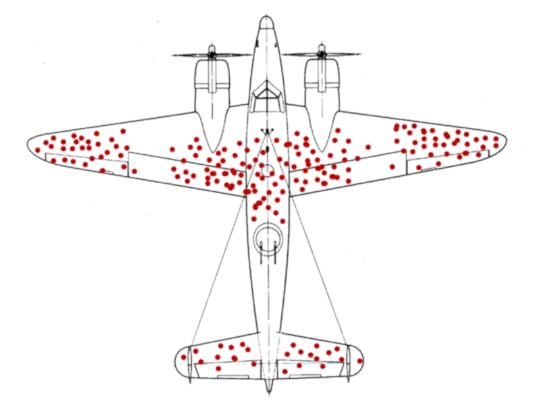
This picture seems to get a lot of positive attention whenever it's posted.
Operations research has its origins in attempts to figure out the new form of technologically mediated warfare in the opening exchanges of World War 2. British policy-makers, reeling from the defeat of the Battle of France, realized that this war of radar intercepts and submarine hunts worked differently from traditional military virtues. While heroism still mattered, efficient application of a system of military technologies was the surest path to victory. In a bright spot in British policy-making, a rather ad hoc scientific advisory structure managed to extract useful lessons from operations and transmit new best practices to units in the field. American operations research had a different bureaucratic structure, with particular embeddings in bomber wings, but managed similar feats of efficient mission planning.
With victory in 1945, operations researchers faced the challenges of peace. British Marxists J.D. Bernal and J.B.S. Haldane saw their work as prelude to scientific management of the economy. Their less ideological American counterparts saw operations research as a way to rationalize an unruly consumer economy and inter-service debates over strategy.
In the years following the war, RAND would become the center of gravity of operations research, using Air Force funding to develop a style of systems analysis and game-theoretic approaches to nuclear war that proved publically influential. 1960 is as good of end as any, but in some respects the story is cut short before it gets really interesting, with the triple whammy of Eisenhower's Farewell Address warning of capture by a scientific-military elite, the installation of McNamara's Whiz Kids in the Pentagon, and the absurdist failure of operations research in the political warfare of Vietnam.
The coda links back to the social studies of science movement, Shapin, Latour, and Jasanoff, which is in many way a reaction to the perceived universal objectivity of the operations researchers, and the collapse of the High Modernist project in the 1960s. Thomas avoids the simple oppositional narrative by showing the successes of operations research as contingent, based on personal connections with decision-makers and presenting reasonable options in a wartime environment of great uncertainty, rather than a synoptic mathematical authority. But I think this project gets too lost in the weeds, chasing the complex mathematical theories of operations research without making enough connection to their project of rationalizing policy via mathematical models.
This is an interesting book, and thanks to chapters 20-24 (Section V: Rationality and Theory) and the final, Conclusions chapter, I think it merits a 5 star rating. The book is 30 rather short chapters that chronicles the history of the "science of policy" (basically operations research or OR) from WWI to the 1960s. It primarily focuses on WWII and the post-WWII era. In this, it is not always the most exciting (though it is written well with a more historical-academic tone), it is interesting if you're curious about how policy was influenced by "science" (indeed, what "science" means is something the book elaborates on by seeing what the people doing OR at the time thought they were actually doing and its limits).
I think the concluding chapter does pack a better punch having read the previous 29 chapters, and brings up interesting historiography points. Thomas gives a bit more of the history surrounding CP Snow's The Two Cultures and Science and Government which I found interesting and helpful (though Thomas is a bit harder on them than I might be, even given the small historical controversy around their treatment of Lindemann). I'd say the main thrust of the final chapter is that the story of science and policy was less one of scientists showing up and telling policymakers they had objective ways of making better decisions, and more a story of scientists working with policymakers as advisers, trying to give useful advice with caveats. The people in OR were often quite aware of the limitations of their methods and tried to make this clear, and the idea (which Thomas says is often prevalent in history of science literature) that there was conflict between scientists and decision makers or blind trust in scientists is not well-supported.
I also think the author's closing words are an excellent ending to a book of this type (p. 299): "At least some of the paths that people working on this project traveled [attempting to act more rationally], such as the more abstruse arms of decision theory and economics, may seem very foreign to us. We may not agree with the actions that some of them recommended or furthered, particularly where military policies were concerned. We might find comfort in supposing that such work derived from some altogether different rationality form the one by which we suppose we ourselves abide. I hope that this book has shown that, in fact, we share many of our ideas with those who pursued this project; that for all the extraordinary changes that the sciences of policy wrought on the landscape of expertise, the basic idea of what it means to act rationally has remained essentially constant through them. Any impulse we might have to find the missing element in their ideas about rationality, rendering them fatally flawed or archaic, is the same impulse that produced many of their most successful accomplishments. If we hope to surpass or supplant their ideas, we must first honestly come to terms with those ideas' diversity and reach, and then, in one way or another, continue the project on which they worked."