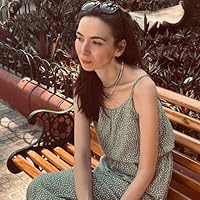
A dazzling debut novel about a young woman's vexed coming of age in a traditional Azerbaijani community in Russia, grappling under the weight of Muslim patriarchal norms and a debilitating neurological condition. The mysterious affliction leaves her unable to control her muscles, plagued by pain and speech disorders, defying diagnosis. Addressing each body part with the scrupulousness of a medical researcher, the narrator explores memories, traditions, and taboos related to her physical self. In the process, a woman once destined for the role of a beautiful marriageable daughter comes to be perceived as damaged goods. With verbal elegance and poetic power, Egana Djabbarova unveils a hidden world in which illness unexpectedly facilitates her liberation.
“The primary event in the life of any young Azerbaijani woman, after all, is her wedding,” the narrator of My Dreadful Body declares on the first page of this gripping, vivid novel. What follows is both a lament and a celebration of how her body both binds her to Azerbaijani tradition, and frees her from it. Djabbarova’s novel is in turn devastating and hopeful; plainspoken and elegiac. It effortlessly soars from the most intimate and minute observations of what the narrator feels and observes, as one woman trapped in a body with a mysterious and painful illness, to broad historical and social critique. Lisa Hayden's translation is so smooth, so wonderful. Even the word "dreadful" in the title has a certain perfection in it. Such a feminine word when compared with the English alternatives. From the title onward, it's really something. Every word matters. Every word felt perfect.
This was an amazing, striking read. It's difficult for me, as the rather uncultured reader, to recognize what must be a fine line between novel and autobiography - one feels that Djabbarova has injected herself into her narrator's life, but to what depth does that injection reach?
Our narrator is a young woman from an Azerbaijani family within the 'motherland' of Russia - already at a disadvantage by attending school with the Russian 'white' kids where she is mocked for her dark skin, dark hair, and stumbling journey of learning the Russian language, but back in the Azeri community, she is mocked for her curious Russian accent. Her looks and her language, at such a young age, have seemingly betrayed her. As puberty draws near, then strikes, other parts of her body also enter into their own acts of betrayal. The ultimate cruelty arrives when she is struck with a neuromuscular affliction, equally painful, debilitating, and embarrassing.
Djabbarova allows her narrator to break down each body part into separate chapters, and reflects on how each (hair, tongue, legs, etc.) impacts her narrator physically and emotionally, as well as culturally - coming from a traditional Muslim family, her parents' efforts to foster the impression of a marriageable young woman of value came to a grinding halt with the onset of her neurological challenges. One cannot help but sympathize as we are brought closer to her body and deeper in her thoughts.
An excellent added bonus was the brief translator's notes following the novel itself. Lisa C. Hayden has been one of my favorite Russian-English literary translators for some time, and in this book, she breaks down the challenges for her. The standout for me was that the original contained a number of Azeri and Turkish words and phrases are left intact, like shiny but awkward bits of driftwood bobbing down the river of Russian text. Additionally, Hayden discusses some of the trickier parts of the text that required not just linguistic, but cultural dexterity to render the most correct phrasing for the English-language reader - as a translator myself, I can only offer that none of this is easy going. To have an ongoing dialogue with the author for additional context beyond the contents of the book is every translator's dream, and it certainly appears to have paid off here.
I really enjoyed this book, and hope that Jabbarova has already been hard at work producing more, and that Hayden is able to tackle those as well.
I wasn't sure what to expect from this book, having only heard about the title, but not about the story in detail. I found myself deeply engrossed in this multilevel story of culture, family, and disease. Excellent translation by Lisa Hayden.