What do you think?
Rate this book


198 pages, ebook
First published April 20, 2014

















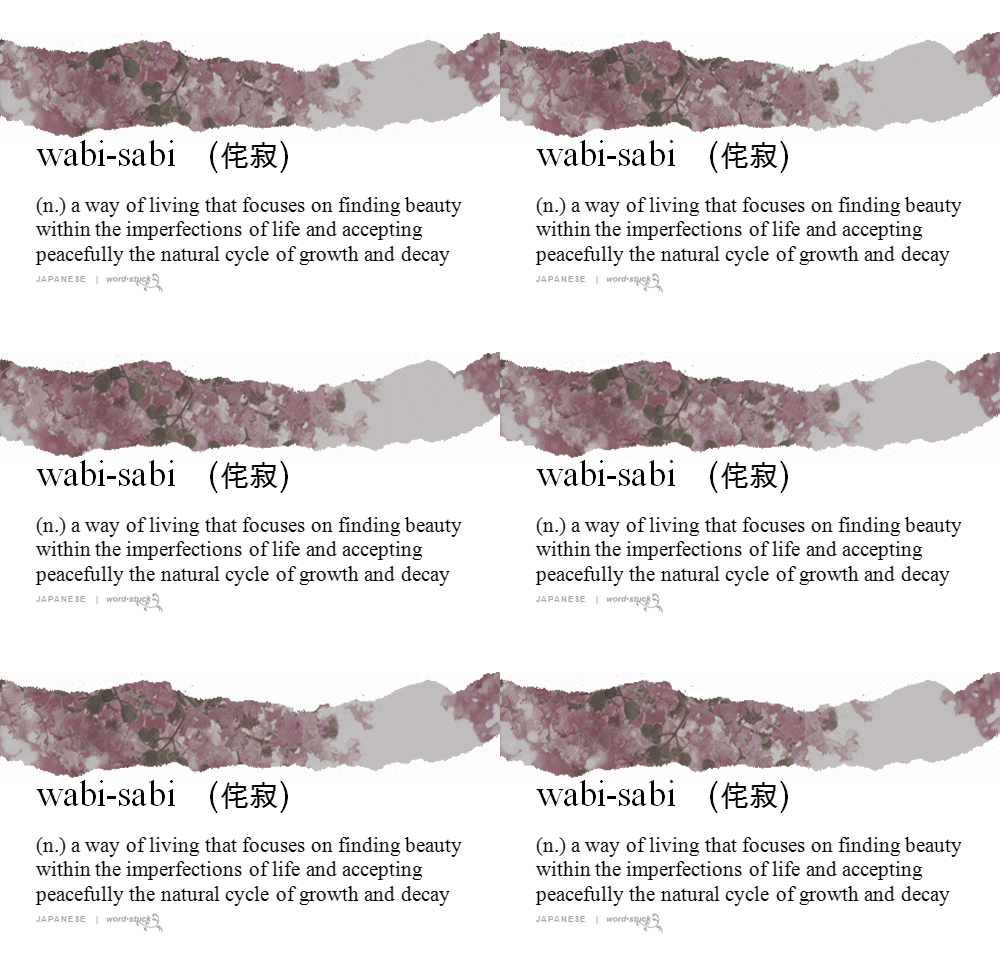
Wabi-sabi is a Japanese principle that embodies the idea of transience and imperfection. Like the life cycle. We are born, we get old and we eventually die. Objects are the same, they get old and weathered, but it’s not necessarily a bad thing. It’s all a part of the cycle of nature. Wabi-sabi is about appreciating the beauty in our naturally imperfect world.
"There are many theories that attempt to explain why humans cry in response to heightened emotions. One states that weeping serves as a signaling function, letting other humans know the emotional condition being experienced with the hopes of contriving an altruistic response in the viewer. Another theory is that crying serves a biochemical function, releasing toxins from the body and reducing stress. Some scientists have found that tears may contain a chemosignal, and when men sniff women’s tears, they display reduced levels of testosterone and sexual arousal."

"Well, there’s a difference between finding someone attractive and actually liking someone and wanting to be with them for more than just the carnal part."
"Explain."
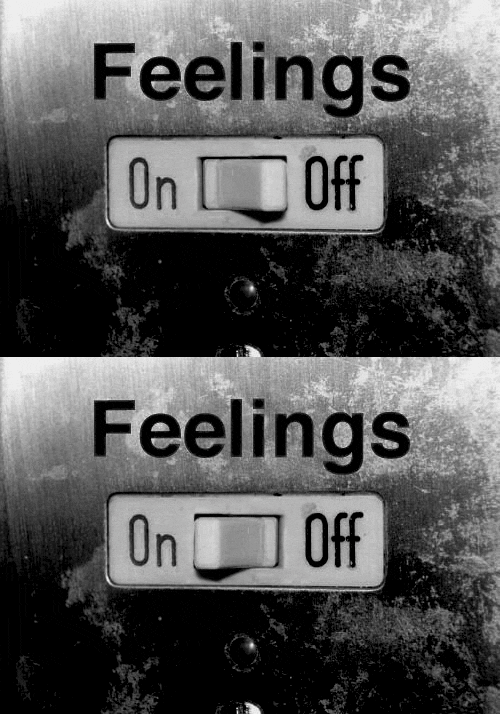
"When emotions are involved, everything is just...more."
"More what?"
"More exciting. More nerve-wracking. More intense when it’s good, and more painful when it’s bad."
"I think I might have difficulty going to sleep while half my body is touching someone else. For a few minutes, all I can think about is his heartbeat, the feeling of his chest rising and falling next to me, and the sound of his breathing as he falls asleep.
But miraculously, somehow, when I least expect it, I fall."

"If you care about someone, it’s okay for them to affect you, as long as you are aware, and they aren’t willfully trying to hurt you. The more you open up to people, the more emotions you will experience because you’re going to care about them and about how they perceive you."