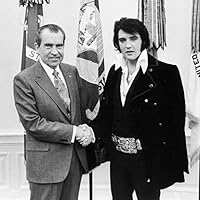
Almost the only indisputable fact about Colonel Tom Parker is that he was the manager of the greatest performer in popular music: Elvis Presley. His real name wasn’t Tom Parker – indeed, he wasn’t an American at all, but a Dutch immigrant called Andreas van Kujik. And he certainly wasn’t a proper military colonel: he purchased his title from a man in Louisiana. But while the Colonel has long been acknowledged as something of a charlatan, this book is the first to reveal the extraordinary extent of the secrets he concealed, and the consequences for the career, and ultimately the life, of the star he managed. As Alanna Nash’ prodigious research has discovered, the Colonel left Holland most probably because, at the age of twenty, he bludgeoned a woman to death. Entering the US illegally, he then enlisted in the army as ‘Tom Parker’. But, with supreme irony for someone later styling himself as Colonel, Parker’s military career ended in desertion, and discharge after a psychiatrist had certified him as a psychopath. He then became a fairground barker, working sideshows with a zeal for small-scale huckstering and the casual scam that never left him. And by the height of Elvis’s success, Parker had become a pathological gambler who, at the same time as he was taking, amazingly, a full 50% of Presley’s earnings, frittered away all his wealth in the casinos of Las Vegas. As Nash shows, therefore, the often baffling trajectory of Elvis Presley’s career makes perfect sense once the secret imperatives of the Colonel’s life are known. Parker never booked Presley for a tour of Europe because of the dark secret that ensured he himself could never return there. Even at his most famous, Elvis was still being booked to play out-of-the-way towns in North Carolina – because the former fairground barker (who shamelessly negotiated as such even with top record company and film executives) knew them from his days on the circus circuit. And Elvis was trapped playing years of arduous seasons in Las Vegas – two shows nightly, seven days a week, until boredom and despair brought on the excessive drug use that killed him – because for Parker he was “an open chit” whose huge earnings prevented his manager’s losses at the gambling tables being called in. Alanna Nash knew Parker towards the end of his life, and has now uncovered the whole story, improbable, shocking, and never less than compelling, of how this larger-than-life man made, and then unmade, popular music’s first and greatest superstar.
This was a really heartbreaking read and left me feeling even more disgusted with the Colonel for what he did to Elvis Presley. I already had a preconceived view of Tom Parker before reading this and was hoping that perhaps it would actually dispell some of those negative things I knew and believed about the Colonel. Sadly it did the complete opposite. This man's use and abuse of Elvis was beyond even what I knew it to be. The man was abhorrent in the way he treated people in general and Elvis especially. There are no redeeming qualities to this man and if I thought that perhaps Elvis's death, would show that the Colonel was empathetic and compassionate, I was very disappointed. He was a self serving, money hungry con-artist and charlatan. He twisted things and fabricated stories in order to cast himself in a better light and anyone that thought that perhaps age and nostalgia for the past would mellow him, would be wrong. Although this book also revealed some uncomfortable things about Elvis it very much highlighted the inner workings of a master manipulator and narcissist. In fact I would go as far as to say that Colonel Tom Parker was a sociopath. The author did a great job in exposing some of the more hidden facts about this "partnership." Every Elvis fan needs to read this.
Alanna Nash has done her homework. Each paragraph is packed with info on this extraordinary man and his “work”. While there are some parts that could be improved, taken as a whole, this is a landmark presentation of “the Colonel” and his most important relationship.
The beginning is riveting. You learn of the lonely, abused, animal loving Andreas Cornelis van Kuijk who abruptly left Holland to begin a life in America. Nash describes his hand to mouth carnival career and how his huckster tricks informed his approach to the promotion of Elvis. He began using the name Col. Tom Parker during his stint in the US Army where he had an unusual honorable discharge. Parts on his pre-Elvis life also included detail on his work for the Tampa Animal Shelter and the start of his “marriage”.
The parts on how Parker changed from the carnival life to promoting country acts, how he obtained Elvis’ contract (i.e. how did rumoring that the Elvis contract was for sale make it so?) and the early years of managing Elvis are weak sections. Some paragraphs seem to stand on their own with no connection to each other. Some areas need more attention, such as Parker’s relationship with Gladys Presley, the entrance of Priscilla into Elvis’ life and Parker's relationship with the Carter family which seems to be important (Mother Maybelle plays poker with Mrs. Parker and the quote from June on p. 337-8 implies a close friendship.)
Nash does a good job of showing how Parker’s self dealing hindered Elvis’ earnings and his artistic development. Parker required that Elvis sing the songs he had the rights to and that Elvis movies had to support the marketing of the songs. Working with Barbra Streisand or other artists who offered partnerships was out of the question, as was international travel. Parker saw that Vernon Presley was sufficiently conned and schemed to keep Elvis dependent and docile.
The ending is strong as she shows the impact of this unorthodox relationship on Elvis. The Presley heirs were sufficiently confident in Parker’s management that it was a Probate Court staffer who uncovered the issues for which the fast-talking Parker had ready defenses.
Throughout the book you see the how the “establishment” managers saw Elvis as a fad. Parker is right in that he made Elvis his priority as no one else had. The reader is left to determine whether or not there would be an Elvis if there were no Colonel.
There are some good black and white photos, the most interesting ones being of the Parker's early life. I used the index a lot since many easily forgotten minor characters re-appear, and it always worked.
کتاب آزاردهنده یعنی این: وصف نابود شدن استعداد و هنر بهخاطر مدیریت بد. کلنل، مهاجر غیرقانونی هلندی که تو کشورش مظنون به قتل بوده، فرار میکنه میآد آمریکا بعد واسه ارتش آمریکا میجنگه که شهروندی هلند رو از دست بده اما هرگز به تابعیت آمریکا درنمیاد، فقط زن آمریکایی میگیره که مقیم باشه. با یه اسم جنریک فراموششدنی که معلوم نیست از کی دزدیده، تو کارناوالها قاتی بقیهی آدمهای روندهشده کار میکرده تا اینکه برمیخوره به مرغ تخم طلا، الویس.
الویس اجراهای کمی بیرون از آمریکا داشته و من هیچوقت نمیدونستم چرا. اینجا میگه جناب کلنل پیشنهاد شبی یک الی دو و نیم میلیون دلار برای اجرای الویس رو در کشورهای مختلف رد میکرده چون پاسپورت آمریکایی نداشته و نمیتونسته خودش بره. (بعد از مرگ الویس این رو بهش میگن، میگه دروغه، خودش نمیخواست وگرنه من زیردستهام رو باهاش میفرستادم. البته همه معتقدن دروغ میگه.) عوضش الویس رو تو هالیوود پاگیر فیلمهای دوزاری میکنه، آخر عمرش هم با اون حال و روز میفرستدش لاسوگاس اجرا کنه. بهش میگن الویس داره از شدت اعتیاد جون میده، میگه تا وقتی میتونه بره وایسته رو صحنه و بلیت بفروشه، مهم نیست؛ حتی اونقدری از بیزنس سر درنمیآورده که بدونه وقتی الویس واسه کسی آهنگ مینویسه الی الابد باید رویالتی بگیره و مسائل بسیار دیگری از این دست. الویس فقط از اجرا و آلبوم خودش درآمد داشته که تو این دوران درآمد اجراهاش از بیتلز و حتی التون جان (🤢) هم کمتر بوده چون کلنل اولاً عقلش نمیرسیده که هر رقمی بخواد واسه الویس میدن، دوما نصف همون مقدار اندک رو پیشپیش میگرفته خرج اعتیاد خودش به شرطبندی میکرده، الویس ورشکسته و مضحکه میشه. مردنش هم که گفتن نداره، تا همین الانش جوک خاص و عامه.
کلنل پنجاه درصد درآمد الویس رو طبق قراردادی مشکوک میگرفته؛ تو دوران ورشکستگی با منت سی درصد. (برای مقایسه: کریس جنر ده درصد از درآمد مرغ تخمطلای خودش، کیم رو میگیره، تازه کلنل الویس رو نزاییده بوده.) و بعد از مرگ هم همین قرارداد رو با بابای الویس میبنده، اون که میمیره پرسیلا قرارداد رو میفرسته دادگاه که تاییدیه بگیره اما قاضی از این وضع تعجب میکنه، یکی رو از دادستانی مسئول رسیدگی به قراردادها و حفظ میراث الویس واسه لیزا مری میکنه. قاضی تو دادگاه به کلنل میگه تو پنجاه درصد درآمد الویس رو میگرفتی و چنین کاری بیسابقه و غیراخلاقیه. کلنل جواب میده آره، موافقم که اخلاقی نبود الویس پنجاه درصد از درآمد من رو بگیره. از بخش مربوط به ازدواج و پرسیلا هم بسیار بدم اومد که دیگه ولش کن. تنها بخشی که لذت بردم آتیشی بود که اوایلش از قر و قمیش اومدن الویس به جون کلیساییها افتاده بوده و هی بیاینه میدادن و محکوم و ممنوع میکردن.
Look, I have never really been fascinated with Elvis at all. My Mom was. She got some kind of Elvis paraphernalia every holiday that required a gift. Sometimes she still does. In my vague knowledge I knew that Elvis had some kind of mastermind handler and that was about all.
When this book came across, I thought it would be a great way to see Elvis, and the Colonel. I really wasnt so interested in the Colonel. So, the pre-story with his childhood and the ongoing interludes with his family werent very captivating.
The mystery of his citizenship was interesting.
(As I write this I am watching the June 19th '77 Elvis concert in Omaha. Pretty amazing.)
I found this in my local library after watching the 2022 movie Elvis starring Tom Hanks in the Colonel Tom Parker role. While I knew Parker was the life-long manager of Elvis's career I didn't know much about the story and how much of a role Parker played in creating Elvis so the movie peeked my curiosity. I thought the movie was well done, showing in sometimes almost fantasy fashion how Black blues and gospel music fed Elvis's talents for singing and moving and his early Sun recordings captured them. Colonel Parker, the rank an unofficial honorary title, with his background as a carnival barker and promoter saw the magic and the potential for money if he could create it. The movie is narrated by Hanks as Parker, addressing the audience in sometimes accusatory and sometimes exculpatory challenges, as he acknowledges he is often the villain in the camera's eye, and Elvis alternately (surprisingly) heroic, sympathetic, and of course deeply flawed.
And if Nash's biography is believable, which it appears to be with its extensive footnoting and bibliography, the movie has captured the story both factually and emotionally. As the movie hints and Nash documents in some detail in the first 45 pages of the book, Parker was born in Holland, came to America never to return, possibly under a cloud of criminal suspicion in a never-solved murder case, yet never became a US citizen despite serving in the US Army. He was also addicted to gambling and ran up casino debts somewhere into the millions of dollars; one of the more poignant scenes in the movie shows Parker agreeing to extend Elvis's Las Vegas engagement for five years in exchange for wiping out his accumulated debt while on stage Elvis sings "I'm caught in a trap, I can't get out." Frustration, exhaustion, and boredom from the long-running commitment to two shows a night, seven days a week were heavy contributors to Elvis's stunning levels of drug consumption which lead to his death in August 1977.
Did Parker mismanage Elvis to his death, to keep raking in profit by taking 50 percent (or more) of the gross from his star's records, movies, and tours? Maybe. When Elvis's estate sued Parker claiming he took excessive profits, Parker snapped to a reporter who asked about it "No, that's not true at all. He takes fifty percent of everything I earn." (p. 321). Writes Nash, to Parker "Elvis's success was not only his livelihood. It was his life." (p. 246), to the extent that Parker could honestly justify in his mind that 100 percent of the creation of Elvis was his right. On learning of his star's death, Parker said "Elvis didn't die. The body did." (p. 312), in justifying his seemingly cold and unemotional response to the news as he moved to secure ongoing marketing rights to what he correctly foresaw to be a huge postmortem demand for his movies, music, and memorabilia (Parker would outlive his star by 20 years)
Yet throughout his relationship with Presley, while Parker saw the strong and sexual attraction that Elvis aroused in his fans, he neither understood nor cared about the music or movies that delivered the satisfaction of the attraction. From his earliest appearances and records, movie insiders saw his instinctual playing to the audience and thought he had great potential as a movie star, and indeed both the movie and this biography show Elvis's desire to be a serious actor, the next Brando. A 1956 screen test had them making that comparison and Elvis told producer Hal Wallis "My ambition has always been to become a motion picture actor--a good one, sir." (p. 137). But Parker saw his movie career as "a vehicle for selling concert tickets and records", so steered him into the string of mostly mediocre westerns and novelty movies that allowed Elvis to essentially play himself and produce singles and soundtrack records to sell.
To most fans and music critics, the movie phase of his career were wasted years lasting most of the decade of the 60s, ending in the justly famous comeback in the 1968 special which is the deserving climax of the movie, this biography, and indeed of Elvis's life; while still just a young man of 33 then, he would be a dead and bloated shell of himself less than a decade later. In the movie, the music and the performance by Austin Butler as Elvis punch off the screen and through the speakers to give a powerful sense of the attraction of Elvis at his best. In a somewhat different take, Nash quotes some critics who think that in fact by moving Elvis away from the turbulent and rapidly changing music scene of the 60s, Parker actually preserved him from the rejection faced by other music stars of the previous decade so that "he was fresh and ready to pounce on the opportunity. Inadvertently, Parker's decisions in the early and mid-'60s gave us the great Elvis music of the very late '60s and early '70s." (p. 211). That opportunity came with the 1968 special with the smoldering Elvis in black leather and the athletic Elvis in the Vegas appearances in 1969 before the trap sprung by the Colonel left his body dead and his market living on.
As I mentioned Nash documents her sources, but her writing sometimes reads like a celebrity biography in the style of a People magazine special edition, and indeed her cover biography notes she has written for Entertainment Weekly and USA Weekend. It isn't too purple or tell-all style to ruin the reading, but it does knock a star off my Goodreads rating. And in searching for a written history to followup the new movie, I learned that there have been several accounts in the last 20 years covering this field so readers have options to go beyond this useful place to start.
I am sorry that the GR very short summation of this fascinating study pronounces Col. Parker as a "certified psychopath." His background was fascinating, his talents undeniable and he comes across as a very flawed person who became more and more greedy. But you will find people in the book who admired him and even loved him. His undeniable gifts and his willingness to work himself to the bone to promote Elvis are very striking. It is a shame that his father was of the sort that expects all children to be silent and behave like everyone else. He was an individual from the start who had a fierce determination to get to America and improve himself. The book is about Col. Parker before Elvis and after Elvis. I listened to this on Audible and it was fascinating. It's a solid piece of research.
If you really want to understand the business side of Elvis, and why he never toured overseas etc Read this! It's a sad yet very informative life of the Notorious Colonel Parker.
The tagline of this book suggests it's about the Colonel and Elvis but in honesty ...it's more about the Colonel. Being not wholly sold on the Elvis phenomenon I possibly enjoyed this more as Elvis came across as a supporting character in the story of the life of a manager who as an ex carny knew how to sell himself as much as his act. Manipulative?...for sure..the stories of the Colonel playing on his dodgy heart to elicit support from his act almost cast Parker and Elvis as a proto Steptoe and Son. The Colonel (the book) was never boring and it appears neither was the man I don't think he comes across wholly as a Demon or Angel in this book..like most of us he was a mix of both and different things to different people. Elvis himself does come across as pretty tolerant and I probably have more respect for Elvis the man now even if Elvis the entertainer or artist generally passes me by. A fascinating book for fans and apathetic outsiders like myself too.
I read this book shortly after reading Peter Guralnik’s two part Presley biography. I felt it would be interesting to get more background on The Colonel.
This book is not especially interested in being even handed, and it even leans heavily on some (quiet out there) theories that seem to have very scant evidence.
But this book covers much that Guralnik doesn’t, either because they don’t fit his timeline or they’re too Colonel centric. Nash gets some interesting anecdotes and stories, and she keeps the pace up and doesn’t pad anything out or get caught up in anything dull.
It’s an interesting read. The Colonel, unsurprisingly, remains a bit of an enigma, but slightly less than if you only read Guralnik’s books.
I picked this up (from my public library via Hoopla) to settle some questions I had about the recent Baz Luhrmann _Elvis_ movie, and it certainly delivered. Chock full of interview quotes from those who knew Elvis and the Colonel, including the Colonel’s Dutch family (interviews by Nash herself and copious interviews by other journalists), this attempts to pin down a man whose life was shaped by a devotion to the con, a man who expected people to know they were all playing a game he intended to win, a man accustomed to manipulating and abusing others, a man who wanted to shape perception of himself almost as much as he wanted to make money off the cash cow he felt he had created.
I had read several reviews of the Luhrmann film that talked about the truth and falsehood of the events portrayed. Since Luhrmann’s best films are less about fact or reality and more about emotional truth, I expected that much of the showmanship was in service to a greater point. Despite the insistence of the critics that Luhrmann was overstating history and that the portrayal of Elvis as manipulated and abused by the Colonel, one critic even stating that Elvis could have gotten out at any time, that he was a grown man and not such a great guy himself, this biography suggests Luhrmann had the right tone and portrayal of abuse if not the exact facts (again, facts aren’t Luhrmann’s deal, admittedly problematic in a biopic.) Elvis and many of those around him leaned heavily on the Colonel and trusted him to their detriment, and the relationships the Colonel had were nearly all abusive. He was manipulative. He was mean “in fun.” He mourned his lost past and forced others to recreate it. He kept Elvis under his thumb and this emotional and financial abuse of Elvis seems like it might have contributed to Elvis’s drug abuse and thus his death. The truth is that victims of abuse fight back against that abuse in maladaptive ways, and they don’t have to be saints themselves to be recognized as abused. So A++ for Luhrmann for getting the Colonel’s abusiveness across even if he oversanctified Elvis to do it.
This book is really remarkably researched. You get a bit more Elvis than is strictly necessary, to fill in the parts of the Colonel’s story that get dull - so many business deals, so many cons, such a confusing and contradictory character.
The only overreach is the biographer’s suggestion that there must be some reason beyond the Colonel’s own mind (and possible mental illnesses) that he left Holland and refused to interact much with his family after one brief youthful return. It is indeed mysterious that upon his second departure, he left his trunk of belongings and money and didn’t say goodbye. One might think this was spontaneity, a weird practical joke, or an indicator of mental illness. The author, however, chooses to imply that Parker may have murdered a young married woman he knew, who was killed the night he disappeared from Holland forever. After spending chapters suggesting Parker was perhaps asexual, the only motive she can suggest is jealousy since the woman had married, or perhaps an accidental killing involving money. She also suggests that his OCD tendencies were a symptom of bipolar disorder, and that people with these conditions tend towards violence in adolescence. I’m not sure that’s accurate. But she’s also established that he came from an abusive family with a lot of reasons why Parker would have ended up with some awful behaviors. It’s a weird misstep, and it makes her big reveal less trustworthy. She reveals, based on sketchy records, that the Colonel served in the US military, going AWOL and ending up incarcerated for mental illness and then discharged. But it’s not entirely clear that one can be certain the records she’s found are those of the Colonel since he did not enlist in his birth name or his chosen one - or if he did, those records are gone. The evidence of photographs seems compelling that he served, but the whole edifice is gossamer. It would be more believable had she not pushed the also filmy tale of the murder (which remains unsolved.) Far more prosaic would be that the Colonel, mentally ill perhaps from childhood abuse or something genetic, refused to let Elvis tour overseas because he knew himself to not be a US citizen and wanted to keep his meal ticket within his influence. His refusal to take amnesty and obtain citizenship seems part and parcel with his other narcissistic traits of just refusing to believe the things he didn’t want to believe - he couldn’t admit to himself that he was an illegal immigrant, so he couldn’t apply for citizenship during the amnesty. Later in life after the story got out and he was in legal trouble, he _could_ admit it because it was to his benefit. It’s possible that the biographer has more convincing information that shores up her belief that Colonel Tom Parker murdered someone, and that meant he never wanted to return to Holland or talk to his family, but without whatever that might be, without it it’s more believable to me that he was just a garden variety sociopath, with coldness, manipulativeness, and attention to appearances that this entails. Not to mention that he might be convinced his relatives would use him for money (which it seems obvious they would not have done, but to him it might seem obvious they would, because he would have!)
I knocked off a star for this frustrating “murder!” attempt at a bombshell, a testimony to how unfamiliar people are with the bizarre illogical behavior of people like the Colonel. Oh, and I was not down with the (TW for sexual assault)
————————
sentence that stated that “Elvis, humiliated and enraged, forced her to have sex in an episode that, according to Priscilla, bordered on rape.” Because there’s no parsing this: forcing someone to have sex is rape, no matter how it is characterized. Priscilla might have not recognized it as such in 1972, but in 2013 Nash should have been able to negotiate the legal ramifications better than to imply that it was not in fact rape. “Bordered on” my foot.
___________
But really the book is quite interesting. The parts where the Colonel is working for the Humane Society and taking advantage a young man with special needs are not pleasant but they are so illustrative of Parker’s character that it is spellbinding to watch the varied reactions of people who know him later. You can totally see his abusiveness - and no “oh he was always kind to ME” or “he innovated merchandizing!” could make me forget as he went along on his destructive way.
Most readers are going to come to this book for Elvis tales, but Presley only seems really interesting when he's interacting with the Colonel, this lunatic asexual carny with a million schemes (who maybe murdered a woman, although the book's claims are admittedly very speculative). Nash spotlights Parker's sins, but also adds testimony from people who loved him, and the whole bio comes off as very balanced. It does taper off towards the end, mostly because "he just got fat and gambled some more" can't match the excitement of young Colonel burying a horse half in dirt and then selling tickets to see "the world's smallest pony". Wild and entertaining.
A thoroughly researched and well- written account of Colonel Tom Parker, his life, and his (mid)handling of Elvis Presley's career.
I believe the story of Elvis is truly one of the most tragic in entertainment history. After reading this account, he was nothing more than a naive country boy who placed his trust in a former carny with a shady past. Sure, Parker put Elvis on the map, but subsequent dealings left Elvis virtually broke at the time of his death.
I've read many books about The King, and it saddens me that no one seemed to have his best interest at heart, including Elvis himself.
Ms. Nash's offering is a must-read, and a cautionary tale about the downfalls of fame, and what can occur when one places his career (and his life) in the hands of the wrong people.
Very much worth the time on a second read, Alanna writes with an honesty, sometimes it's hard to like Colonel, others it's hard to not love him, but let's be frank, he helped Elvis achieve greatness but should have been thanked and sent on his way after 1973, who knows what may have come next?
If you read any of Alannas books on Elvis, you are in for a treat, harsh truths, awesome recollections and essential insight into Elvis world, highly recommended.
An interesting look at the life of perhaps one of the oddest figures in the history of rock and roll. It should also be commended for mostly focusing information on the colonel I haven't seen in other Elvis related books yet and largely glossing over Elvis' life when it could have so easily felt bloated in the middle due to him.
Parker was a despicable human being. While he can be credited for initial promotion, once Elvis got traction, Parker was in over his head on career management. He continued to take advantage of uneducated country people. Book better than the movie. Never was a true fan of Elvis before his death, but living in Memphis, you could not ignore his impact.
Certainly a peculiar and intriguing tale, but it seemed surface level throughout due to Parker's lack of a paper trail. I did enjoy learning more about Elvis and the Vegas concert scene, which I know little about.
Some people think that Elvis Presley would've not made it as big as he did without Tom Parker. Most likely it is true. However, Tom Parker would've also not been anyone as important without managing Elvis Presley. One goes with the other.
The tragedy of this story is the cost of fame Elvis Presley paid for signing up a "blank slate" contract with Parker giving him ample reign to do anything to bring the money in, without nourishing or supporting creativity. As thrilling as Elvis' rise to fame was in 1956, Parker made sure to slowly destroy his "attraction" upon his return from the Army in 1960 to fulfill his own dreams of Hollywood fame disguised as Elvis' desire to be a serious actor.
Parker is quoted in this book stating "I didn't take 50% of what he made. He took 50% of what I made." That is how he saw his arrangement. According to this book, towards the end of Elvis' life, Parker was focused on Elvis the brand, and he did not mind if the brand came at expense of the death of his own client. It is easier to manage a brand and image than to manipulate a person who is obviously in free fall and desperate for help. Another painful quote in this book comes when Parker was asked about grief shortly after Elvis' funeral. "Elvis didn't die. The boy did." A quote that broke my heart. Elvis' funeral had not yet been arranged and Parker was already contacting providers and RCA to make sure not one penny was lost in marketing his death.
Had the court's appointee to protect Lisa Marie's interests not questioned the disparity in income between Parker and his methods in comparison to what Presley was paid, this man would've successfully continued to milk the golden cow until his passing day. Not even Elvis' family understood how much he was taken advantage of.
Of course, Elvis is not without fault in this mess. He was a creative person (until his soul was basically crushed) and he kept thinking that he would be nothing with Parker's deals. He referred to Parker as "his talisman" without realizing the one with the talent as himself. He did not question what was happening, he was not involved in his own business. He never stood up to Parker in a serious way or hired a lawyer to get him out of the contract. He did not become involved in the dealings of his music often wondering why he did not have access to better songs in the 70s, failing to realize the unfair deals Parker kept using to avoid crediting the songwriters and profit from royalties that should have been shared. Not making a decision, is also a decision, and Elvis failed to advocate for himself.
All and all, the tragedy of the downfall of Elvis's career continues to fascinate me. The different layers and perspectives only amplify the magnitude of it all.
I will never understand people who defend the actions of Tom Parker after 1960 but refer to themselves as Presley's fans. Parker indeed launched Elvis to instant stardom. That is unquestionable. He then serves as the catalyst of Presley's untimely early death by suffocating him with dreadful movies, and forgettable soundtracks of such movies, overworking him in endless concerts in Vegas, preventing Elvis to travel abroad, and clipping his creative wings by only allowing cheap and meaningless songs to be available for recording. He isolated Elvis from interacting with anyone who could provide a different creative perspective or challenge his manipulative and self-serving management. After all, the Col. had gambling debts to pay!
This is the third book i have read about Elvis and i enjoyed it. When i finished i found myself asking the question 'Was The Colonel good for Elvis or not?' To be honest the jury is still out. People say that he screwed Elvis out of a considerable cut of income but after reading the book Parker seemed to work extremely hard in 'snowing' every music and movie executive he deals with out of unprecedented extortionate amounts of cash, landing contracts that defy belief. He got a kick out of it, it was his passion. I don't think another manager had this kind of gall. Parker believed that because of how hard he worked he looked more upon himself as a partner rather than a manager, hence the large cut. I think Elvis kept him around so long because he realized Parker was a bloodhound at business. It is said that Elvis prescription medication addiction worsened because of a hectic Vegas schedule but I kind of get the impression Elvis would have the pill addiction regardless. He was a very stubborn man with addictive personality and would fire friends if they bought up the subject of getting clean. We will never know what would have happened if Elvis would have broken away from Parker when he had a chance but one thing we can say for sure is that they were the most successful partnership in entertainment history, probably never to be beat from a financial and legacy point of view.
In The Colonel, Alanna Nash, the author of Golden Girl: The Story of Jessica Savitch, explores in depth the amazing story of Colonel Tom Parker, the man behind the legend and the myth of Elvis Presley. The result is a book that reads like the most riveting of real-life detective stories -- one that will completely change your view of Presley's life, success, and death. While scores of books have been written about Elvis Presley, this is the first meticulously researched biography of Tom Parker written by someone who knew him personally. And for anyone truly interested in the performer many consider the greatest and most influential of the twentieth century, it is impossible to understand how Elvis came to be such a phenomenon without examining the life and mind of Parker, the man who virtually controlled Elvis's every move. [amazon synopsis]
The man was a crook - a conniving, money grubbing piece of crap. How no one saw this or chose to ignore it is beyond me. No wonder Elvis died of an overdose. Too bad Tom Parker didn't.
Of course I picked this up because it’s what the movie is based on. Beyond that, I’m surprised I hadn’t paid attention to this earlier: a story about the manager and all the details behind the star are the sorts of things that I love.
What did I learn? Elvis was a moron. An idiot. There have been a ton of moron idiot performers in the history of the music business, so I suppose what makes this case all the more fascinating is that the colonel was at the same time so good at what he did that Elvis became a legend.
We all sort of recognize the industry of mass promotion as it is today, and I think what I love about this book is to see it unfold, the creation and evolution of it, in the moment. Parker was an incredibly brilliant hype man who knew the industry so well that he could manipulate it to his pleasing, at a time when it seems everyone else was just riding along, doing the same ol’ thing.
Fascinating too are the links between Parker and the stars unrelated to the Colonel/Elvis myth, like Eddy Arnold, Hank Snow.
This entire review has been hidden because of spoilers.
Fascinating read. As an Elvis fan I am torn about the Colonel. He was essential to taking Elvis from a regional act to a worldwide phenomenon. But after that, it seemed to be all about him. The author intimates that he may have orchestrated Elvis going into the army to soften a rebellious image. The movie deals were atrocious as were the subsequent Vegas deals.
Having said all of that, Elvis could have and should have been more proactive in belief in himself and his career. The big blow up between the two happened in '74 with Elvis (and his daddy) blinking at the Colonel's demands for a few million that, in my opinion, any other rep would have paid for the chance to manage the career of Elvis. Elvis should have chosen himself then as well as during the 60s when he wanted more dramatic roles in Hollywood.
The author details the Colonel taking more than his share of the gravy train but also Elvis's nonsensical capitulation to choices he disagreed with in private.
Andreas Cornelis van Kuijk, aka, Colonel Tom Parker, had almost as interesting of a life as the man he managed, Elvis Presley. He was the black sheep son of a poor family in Holland who illegally immigrated to America (possibly to escape a botched robbery turned murder charge), joined the Army, went AWOL, and was discharged following a psychotic break he suffered during a 60 day stint in solitary confinement. He joined the carnival and road the rails for years, but somehow or another, became the manager of the hottest rock ‘n’ roll star in America. He took that star, Elvis Presley, to a pinnacle of fame and fortune no man’s ever known, but was also responsible, in part, for that star burning up by exploiting him like any other carnival freak show attraction and by stunting his personal growth for profit. All in all, there’d be an Elvis Presley without Colonel Parker, but there wouldn’t be an Elvis.
This entire review has been hidden because of spoilers.
The Colonel: The Extraordinary Story of Col. Tom Parker is the third Elvis book I’ve read, following The Last Train to Memphis and Careless Love, but this one feels uniquely fun and fascinating, as Colonel Tom Parker himself emerges as the most intriguing character of them all. It’s incredible to see how Parker shaped Elvis into a global icon with his unorthodox yet effective philosophy—like his strict “no free tickets” rule and his masterful understanding of the business side of showmanship. While Parker’s methods ultimately contributed to Elvis’s tragic downfall, the book captures the profound, almost Faustian pact between the two men who both “caught lightning in a bottle” and reshaped the cultural landscape forever. This compelling read offers a complex, sometimes unsettling portrait of the man behind the King, revealing both his brilliance and the cost of his ambitions.