

What do you think?

Alternative for the Masses: The '90s Alt-Rock Revolution - An Oral History
No period in the history of rock music offered such an abrupt shift in prevailing tastes as the 1990s. While just a short while before, radio and MTV were clamoring for hair metal bands, suddenly alt-rockers such as Jane’s Addiction, Nine Inch Nails, Faith No More, Primus, Smashing Pumpkins, and of course, Nirvana, brought a sea change not just in what the most popular bands sounded like, but also in fashion, politics, and seemingly all aspects of pop culture.
In 'Alternative for the The Oral History of the ’90s Alt-Rock Revolution,' veteran music critic Greg Prato presents more than 60 new interviews conducted exclusively for the book—with an emphasis on the 1990–1995 peak period—including insights from renowned names like Ian MacKaye (Fugazi, Dischord Records), Moby (solo artist/DJ), Al Jourgensen (Ministry), Les Claypool (Primus), Kennedy (host of MTV’s 'Alternative Nation'), Matt Pinfield (host of MTV’s '120 Minutes'), Tanya Donnelly (Belly, Breeders), Fred Armisen (‘Portlandia,' 'Saturday Night Live’), Lou Barlow (Dinosaur Jr., Sebadoh), Corey Glover (Living Colour), Johnette Napolitano (Concrete Blonde), Dave Markey (director of '1991: The Year Punk Broke'), Bill Gould (Faith No More), Gerald Casale (Devo), and many others.
Prato also includes excerpts from one of the last interviews with Steve Albini, arguably the period’s most influential recording engineer and producer, responsible for influential albums by the likes of Nirvana and PJ Harvey, among many others. Do you long for the days when it seemed rock artists were all about daring to be different, speaking their minds, and shaking up the music industry? The last decade before the internet, downloads, and streaming took over music? 'Alternative for the Masses' will take you back to that time when alt-rock truly promised something different.
In 'Alternative for the The Oral History of the ’90s Alt-Rock Revolution,' veteran music critic Greg Prato presents more than 60 new interviews conducted exclusively for the book—with an emphasis on the 1990–1995 peak period—including insights from renowned names like Ian MacKaye (Fugazi, Dischord Records), Moby (solo artist/DJ), Al Jourgensen (Ministry), Les Claypool (Primus), Kennedy (host of MTV’s 'Alternative Nation'), Matt Pinfield (host of MTV’s '120 Minutes'), Tanya Donnelly (Belly, Breeders), Fred Armisen (‘Portlandia,' 'Saturday Night Live’), Lou Barlow (Dinosaur Jr., Sebadoh), Corey Glover (Living Colour), Johnette Napolitano (Concrete Blonde), Dave Markey (director of '1991: The Year Punk Broke'), Bill Gould (Faith No More), Gerald Casale (Devo), and many others.
Prato also includes excerpts from one of the last interviews with Steve Albini, arguably the period’s most influential recording engineer and producer, responsible for influential albums by the likes of Nirvana and PJ Harvey, among many others. Do you long for the days when it seemed rock artists were all about daring to be different, speaking their minds, and shaking up the music industry? The last decade before the internet, downloads, and streaming took over music? 'Alternative for the Masses' will take you back to that time when alt-rock truly promised something different.
- GenresMusicNonfictionHistory
Audible Audio
First published October 28, 2025
About the author
Greg Prato
73 books85 followersGreg Prato is a Long Island, New York-based journalist, whose writing has appeared in such renowned publications as Rolling Stone. He is the author of several popular books, 'A Devil on One Shoulder and an Angel on the Other: The Story of Shannon Hoon and Blind Melon,' 'Touched by Magic: The Tommy Bolin Story,' 'Grunge Is Dead: The Oral History of Seattle Rock Music, 'No Schlock . . . Just Rock!,' 'The Eric Carr Story,' 'MTV Ruled the World: The Early Years of Music Video,' 'Sack Exchange: The Definitive Oral History of the 1980s New York Jets,' 'Too High to Die: Meet the Meat Puppets,' 'Dynasty: The Oral History of the New York Islanders, 1972-1984,' and 'The Faith No More & Mr. Bungle Companion.'
Ratings & Reviews
Friends & Following
Create a free account to discover what your friends think of this book!
Community Reviews
Displaying 1 - 16 of 16 reviews

July 24, 2026
Ah the good old days. I was a college DJ from 1988-1991 so I have lots of music memories from the period covered in this book. I thought the last quarter of this book was unnecessary. Narration was not great but not awful. It’s always dicey listening to an oral history—if one is interested in this book I recommend the print version.

May 24, 2026
It appears third time was a charm! Or, at least, greatly improved. My other two Greg Prato reads were disappointing and mid but this one wasn't too bad.
This is a book that, in some ways, is a parallel to Grunge Is Dead: The Oral History of Seattle Rock Music, highlighting the other rock bands that populated the nineties music scene despite there being a lot of crossover. Probably one of the biggest gripes is that Prato has set himself a scope that is just too broad but the book manages to be a good overview of the rock revival. It contains a little music snobbery, which I've gotten used to in these books, someone always has an opinion that degenerates someone else. Eddie was actually copying Scott Weiland's singing style. Such n Such ripped a riff off someone else and just slowed it down. Billy Corgan is a whiner. You know, the same same. But it doesn't dominate the narrative and most of what is included is complimentary.
It's also a condemnation, in weirdly nostalgic wistful way, of how the music business operated in the 90s. The money was insane. Early nineties was peak MTV, the amount of dough that labels were willing to sprinkle on music videos was INSANE. But then... I just we did get some of the most iconic visuals of the time. Beastie Boys "Sabotage" is cited quite often.
The layout and general design of the book is quite good. Mostly easy to read, though it does drag in some places. There's a wide range of people who are cited within the book, from Fat Mike, Butch Big and Ian MacKaye to Moby, Al Jourgensen and MTV VJ Kennedy. It has a lot of content. And is entertaining for the most part.
A solid three and a half star.
This is a book that, in some ways, is a parallel to Grunge Is Dead: The Oral History of Seattle Rock Music, highlighting the other rock bands that populated the nineties music scene despite there being a lot of crossover. Probably one of the biggest gripes is that Prato has set himself a scope that is just too broad but the book manages to be a good overview of the rock revival. It contains a little music snobbery, which I've gotten used to in these books, someone always has an opinion that degenerates someone else. Eddie was actually copying Scott Weiland's singing style. Such n Such ripped a riff off someone else and just slowed it down. Billy Corgan is a whiner. You know, the same same. But it doesn't dominate the narrative and most of what is included is complimentary.
It's also a condemnation, in weirdly nostalgic wistful way, of how the music business operated in the 90s. The money was insane. Early nineties was peak MTV, the amount of dough that labels were willing to sprinkle on music videos was INSANE. But then... I just we did get some of the most iconic visuals of the time. Beastie Boys "Sabotage" is cited quite often.
The layout and general design of the book is quite good. Mostly easy to read, though it does drag in some places. There's a wide range of people who are cited within the book, from Fat Mike, Butch Big and Ian MacKaye to Moby, Al Jourgensen and MTV VJ Kennedy. It has a lot of content. And is entertaining for the most part.
A solid three and a half star.

October 4, 2025
As the spiritual successor to his earlier work, Greg Prato's Alternative For The Masses seek to tell the story of the alternative rock scene of the '90s, as told by those who were there. While an insightful use of primary perspectives, particularly that of Ian MacKaye, Les Claypool, and Fat Mike, among others, the book struggles to fully separate itself from the parallel grunge movement of the time, despite Prato's best attempts to set the two as distinctive scenes. This, of course, is an impossible task, however, much of Alternative For The Masses feels like a retelling of Prato's Grunge Is Dead. Still, for those seeking to gain a broader understanding of the countercultural shift of the 1990's and the influence it would have, Alternative For The Masses is an important book that provides a wider scope to the music of the decade.
July 19, 2026
definitely a strong deep dive into the history of the alt rock movement and taught me so much about an era I love so dearly <3 i also picked up plenty of new bands to listen to during my read!
May 26, 2026
Greg Prato gives ’90s alternative rock the oral history it deserves
https://popculturelunchbox.substack.c...
Alternative for the Masses: The ‘90s Alt-Rock Revolution: An Oral History, by Greg Prato, is a really interesting oral history of a decade that changed rock music in big ways. The era didn’t just feature a wave of hit bands, but rather, it was a deeply varied, messy, and unusually creative time that helped redefine what rock would become.
Prato has already earned a high place in my estimation as a rock journalist, and this book adds to a growing body of work that includes deep dives on the Meat Puppets and grunge. Here, he turns his attention to the wider alt-rock universe, making the case that ‘90s alternative rock was “rock’s last truly great movement.” I don’t entirely agree with that, since so much excellent rock music is still being made, but he is certainly right that it is hard to identify a comparable movement in today’s music.
As Curt Kirkwood of the Meat Puppets describes where ‘90s alternative rock came from, he notes that underground rock at the end of the 1980s could hit one night and miss the next. Nowadays, with social media, you can usually guess what kind of crowd will show up for a concert. Back then, I might catch Guided by Voices in Cicero’s basement bar in St. Louis with 25 people, or the Afghan Whigs in the same venue so packed that I had to hold the band’s guitarist Rick McCollum onstage for a song because he had no room to operate.
Jane’s Addiction was a bridge between hair metal and the alternative explosion that became Nirvana-led grunge. Lou Barlow of Dinosaur Jr. and Sebadoh thought they sounded like a kind of glam version of the Butthole Surfers, and former MTV VJ Kennedy makes a sharp comparison when she says Jane’s Addiction was like Beyoncé being replaced by Taylor Swift, who was the Nirvana of that moment. That kind of hindsight is part of what makes the book work so well.
Sebadoh is one of my favorite ‘90s bands, and I never knew where Barlow came up with that peculiar name. He said it looked sort of like the word “Play-Doh” and that he wanted to combine “Sesame Street” with something kind of gross. That perfectly captures both the silliness and the rough-edged charm that ran through a lot of the scene.
A lot of the musicians in the book also make a persuasive case for how much they loved the music that came before them. Some ‘90s rockers saw the 1970s as music for old fogies, but many others clearly respected it. Dinosaur Jr. embraced classic rock, and even the band’s name sounds like it could have belonged to a 1960s psychedelic hard rock or prog group. J Mascis and company also covered Peter Frampton’s “Show Me the Way” and liked to have stacks of gear behind them so, as Barlow said, they could “have stacks behind us like we were at fuckin’ Woodstock.” Evan Dando of the Lemonheads has long played Eagles covers at his shows and speaks admiringly of Joe Walsh and Cheap Trick. As he puts it, “for me, Pearl Jam sounds like Lynyrd Skynyrd. Pearl Jam weren’t afraid to embrace the ‘70s completely.”
Craig Wedren of Shudder to Think raises a good question when he wonders why Nirvana, when he first heard them, would have been any bigger with the public than Dinosaur Jr. It is not a knock on Nirvana so much as a reminder that several other bands in the scene could have broken through in similar ways. Dando says that when he heard Nirvana’s Incesticide, he knew there were people who understood him out there, with those hard guitars and melodies.
Hüsker Dü, the Replacements, and Sonic Youth all came close to the mainstream, but nobody in the scene really anticipated that a band would come along and knock Michael Jackson out of the top spot on the charts, as Nirvana did. Eddie “King” Roeser makes a strong point about how, on October 9, 1991, his band Urge Overkill was opening for Nirvana and it still felt like a regular rock show. Three weeks later, Nevermind was released and absolute insanity ensued. I was at a show on October 16, 1991, in St. Louis at Mississippi Nights that was already wild, and then Nirvana inspired so much chaos that Cobain had as many people as could fit on the stage from the crowd, which brought the cops into the mix.
Some people have said Nirvana ripped off the Pixies’ sound, but Frank Black is refreshingly laid-back about it. He says success just happens however it happens, and that they were all just a bunch of music geeks who wanted to take their listening a little further and actually make music.
Fred Armisen makes a funny point about the title of the Nirvana/ Sonic Youth tour film 1991: The Year That Punk Broke, noting that the real break came in 1981 when the Go-Go’s released Beauty and the Beat, the first punk album to reach the top 10. That detail is a reminder of how random music history can be in terms of who gets remembered.
One of the book’s strongest arguments is that the 1990s were such a great decade because of originality. The bands were wildly varied, and nobody really sounded like anybody else. Listeners were exposed to a huge range of music across the pop and rap spectrum, from the piano-driven Ben Folds Five to hip-hop acts like Arrested Development, from the rockabilly of Reverend Horton Heat to grunge bands that did not really sound alike either. As Al Jourgensen of Ministry says, there was “very little technology” then, but “nowadays there’s all this technology, and oddly enough, everyone sounds the fuckin’ same.” That is worth remembering when people start thinking AI can or should replace musicians.
Part of this was cyclical. After the synthesizers, drum machines, and samplers of the 1980s, producers in the 1990s, like Steve Albini, Paul Q. Kolderie, Ric Ocasek, John Agnello, Don Fleming, and Butch Vig, looked back toward capturing the raw sound of bands playing live in the studio. Vig also notes that Kurt Cobain had no patience for doing anything more than a couple of times. Agnello adds that by the time recording moved from the 1980s through the 1990s and into the 2000s, people partied less in the studio and got the work done in days or weeks rather than months.
Rock music also returned in a big way through movie soundtracks. Urge Overkill was invited by Quentin Tarantino to see a draft of Pulp Fiction because he wanted to use the band’s cover of Neil Diamond’s “Girl, You’ll Be a Woman Soon.” Diamond did not want his version associated with the drug use in the scene, but UO granted permission because they thought it was an awesome movie and never imagined it would become such a monumental classic. Roeser says, “Tarantino used songs to elevate the scenes. That kind of started with Tarantino.”
https://popculturelunchbox.substack.c...
Alternative for the Masses: The ‘90s Alt-Rock Revolution: An Oral History, by Greg Prato, is a really interesting oral history of a decade that changed rock music in big ways. The era didn’t just feature a wave of hit bands, but rather, it was a deeply varied, messy, and unusually creative time that helped redefine what rock would become.
Prato has already earned a high place in my estimation as a rock journalist, and this book adds to a growing body of work that includes deep dives on the Meat Puppets and grunge. Here, he turns his attention to the wider alt-rock universe, making the case that ‘90s alternative rock was “rock’s last truly great movement.” I don’t entirely agree with that, since so much excellent rock music is still being made, but he is certainly right that it is hard to identify a comparable movement in today’s music.
As Curt Kirkwood of the Meat Puppets describes where ‘90s alternative rock came from, he notes that underground rock at the end of the 1980s could hit one night and miss the next. Nowadays, with social media, you can usually guess what kind of crowd will show up for a concert. Back then, I might catch Guided by Voices in Cicero’s basement bar in St. Louis with 25 people, or the Afghan Whigs in the same venue so packed that I had to hold the band’s guitarist Rick McCollum onstage for a song because he had no room to operate.
Jane’s Addiction was a bridge between hair metal and the alternative explosion that became Nirvana-led grunge. Lou Barlow of Dinosaur Jr. and Sebadoh thought they sounded like a kind of glam version of the Butthole Surfers, and former MTV VJ Kennedy makes a sharp comparison when she says Jane’s Addiction was like Beyoncé being replaced by Taylor Swift, who was the Nirvana of that moment. That kind of hindsight is part of what makes the book work so well.
Sebadoh is one of my favorite ‘90s bands, and I never knew where Barlow came up with that peculiar name. He said it looked sort of like the word “Play-Doh” and that he wanted to combine “Sesame Street” with something kind of gross. That perfectly captures both the silliness and the rough-edged charm that ran through a lot of the scene.
A lot of the musicians in the book also make a persuasive case for how much they loved the music that came before them. Some ‘90s rockers saw the 1970s as music for old fogies, but many others clearly respected it. Dinosaur Jr. embraced classic rock, and even the band’s name sounds like it could have belonged to a 1960s psychedelic hard rock or prog group. J Mascis and company also covered Peter Frampton’s “Show Me the Way” and liked to have stacks of gear behind them so, as Barlow said, they could “have stacks behind us like we were at fuckin’ Woodstock.” Evan Dando of the Lemonheads has long played Eagles covers at his shows and speaks admiringly of Joe Walsh and Cheap Trick. As he puts it, “for me, Pearl Jam sounds like Lynyrd Skynyrd. Pearl Jam weren’t afraid to embrace the ‘70s completely.”
Craig Wedren of Shudder to Think raises a good question when he wonders why Nirvana, when he first heard them, would have been any bigger with the public than Dinosaur Jr. It is not a knock on Nirvana so much as a reminder that several other bands in the scene could have broken through in similar ways. Dando says that when he heard Nirvana’s Incesticide, he knew there were people who understood him out there, with those hard guitars and melodies.
Hüsker Dü, the Replacements, and Sonic Youth all came close to the mainstream, but nobody in the scene really anticipated that a band would come along and knock Michael Jackson out of the top spot on the charts, as Nirvana did. Eddie “King” Roeser makes a strong point about how, on October 9, 1991, his band Urge Overkill was opening for Nirvana and it still felt like a regular rock show. Three weeks later, Nevermind was released and absolute insanity ensued. I was at a show on October 16, 1991, in St. Louis at Mississippi Nights that was already wild, and then Nirvana inspired so much chaos that Cobain had as many people as could fit on the stage from the crowd, which brought the cops into the mix.
Some people have said Nirvana ripped off the Pixies’ sound, but Frank Black is refreshingly laid-back about it. He says success just happens however it happens, and that they were all just a bunch of music geeks who wanted to take their listening a little further and actually make music.
Fred Armisen makes a funny point about the title of the Nirvana/ Sonic Youth tour film 1991: The Year That Punk Broke, noting that the real break came in 1981 when the Go-Go’s released Beauty and the Beat, the first punk album to reach the top 10. That detail is a reminder of how random music history can be in terms of who gets remembered.
One of the book’s strongest arguments is that the 1990s were such a great decade because of originality. The bands were wildly varied, and nobody really sounded like anybody else. Listeners were exposed to a huge range of music across the pop and rap spectrum, from the piano-driven Ben Folds Five to hip-hop acts like Arrested Development, from the rockabilly of Reverend Horton Heat to grunge bands that did not really sound alike either. As Al Jourgensen of Ministry says, there was “very little technology” then, but “nowadays there’s all this technology, and oddly enough, everyone sounds the fuckin’ same.” That is worth remembering when people start thinking AI can or should replace musicians.
Part of this was cyclical. After the synthesizers, drum machines, and samplers of the 1980s, producers in the 1990s, like Steve Albini, Paul Q. Kolderie, Ric Ocasek, John Agnello, Don Fleming, and Butch Vig, looked back toward capturing the raw sound of bands playing live in the studio. Vig also notes that Kurt Cobain had no patience for doing anything more than a couple of times. Agnello adds that by the time recording moved from the 1980s through the 1990s and into the 2000s, people partied less in the studio and got the work done in days or weeks rather than months.
Rock music also returned in a big way through movie soundtracks. Urge Overkill was invited by Quentin Tarantino to see a draft of Pulp Fiction because he wanted to use the band’s cover of Neil Diamond’s “Girl, You’ll Be a Woman Soon.” Diamond did not want his version associated with the drug use in the scene, but UO granted permission because they thought it was an awesome movie and never imagined it would become such a monumental classic. Roeser says, “Tarantino used songs to elevate the scenes. That kind of started with Tarantino.”

December 9, 2025
Rating: 4.75* of five
The Publisher Says: Alternative for the Masses: The Oral History of the ’90s Alt-Rock Revolution offers insights, opinions, and memories from an incredible cast of musicians and producers who created the music. Get the definitive story of the ’90s alt-rock movement straight from the musicians and figures who lived it.
No period in the history of rock music offered such an abrupt shift in prevailing tastes as the 1990s. While just a short while before, radio and MTV were clamoring for hair metal bands, suddenly alt-rockers such as Jane’s Addiction, Nine Inch Nails, Faith No More, Primus, Smashing Pumpkins, and of course, Nirvana, brought a sea change not just in what the most popular bands sounded like, but also in fashion, politics, and seemingly all aspects of pop culture.
In Alternative for the Masses: The Oral History of the ’90s Alt-Rock Revolution, veteran music critic Greg Prato presents more than 60 new interviews conducted exclusively for the book—with an emphasis on the 1990–1995 peak period—including insights from renowned names like:
Ian MacKaye (Fugazi, Dischord Records)
Frank Black (Pixies)
Corey Glover (Living Colour)
Moby (solo artist/DJ)
Al Jourgensen (Ministry)
Les Claypool (Primus)
Kennedy (host of MTV’s Alternative Nation)
Matt Pinfield (host of MTV’s 120 Minutes)
Butch Vig (producer of Nirvana’s Nevermind)
Tanya Donnelly (Belly, Breeders)
Fred Armisen (Portlandia, Saturday Night Live)
Prato also includes excerpts from one of the last interviews with Steve Albini, arguably the period’s most influential recording engineer and producer, responsible for influential albums by the likes of Nirvana and PJ Harvey producer, among many others.
Prato sets out his book in thematic chapters covering topics such as:
The Lollapalooza music festival
The impact of Nirvana
Alt-rock’s many subgenres
Notable producers of the period
The impact of women rockers
MTV’s influence
Drugs and addiction
and much more!
Do you long for the days when it seemed rock artists were all about daring to be different, speaking their minds, and shaking up the music industry? The last decade before the internet, downloads, and streaming took over music? Alternative for the Masses will take you back to that time when alt-rock truly promised something different.
I RECEIVED A DRC FROM THE PUBLISHER VIA EDELWEISS+. THANK YOU.
My Review: I'm unhappily aware that it's been more than thirty years since Kurt Cobain died.
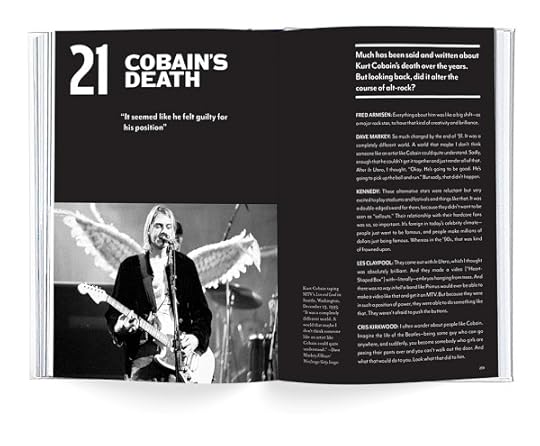
It's saddening to think "what might have been" about anyone's life; his was no more important than any other, yet some people take on larger-than-life importance to the culture at large. He was one of them. His early overdose death was A Moment, not merely a tragedy for his wife and his family, including the daughter he never really knew.
This book is filled with the stories of the survivors, and the fallen, from their own mouths. The author's been a music journalist and author forever. Many books to his credit, including the lushly titled The Yacht Rock Book: The Oral History of the Soft, Smooth Sounds of the 70s and 80s, which ZOMG might's well have been titled "I'm Aiming For Mudge's Wallet." In this case I'm bycarch, but still very much into reading the stories. The book's design is really of a piece with its era and subject.
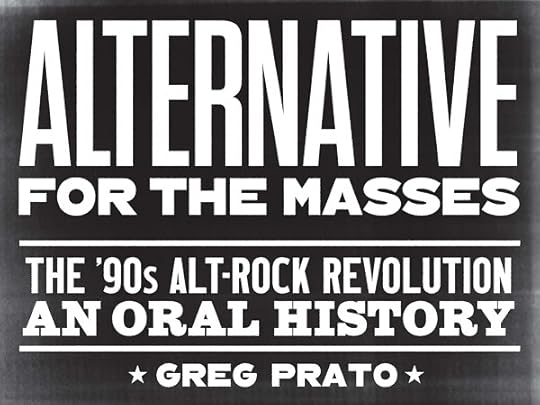
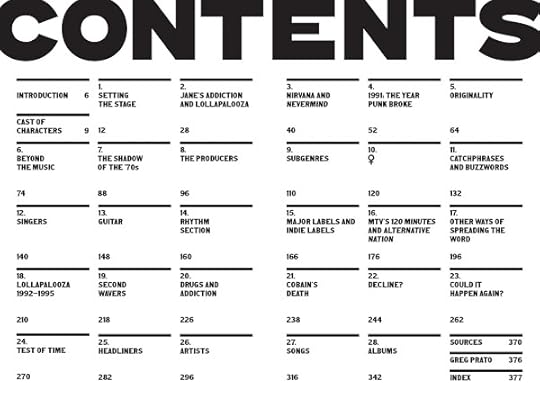
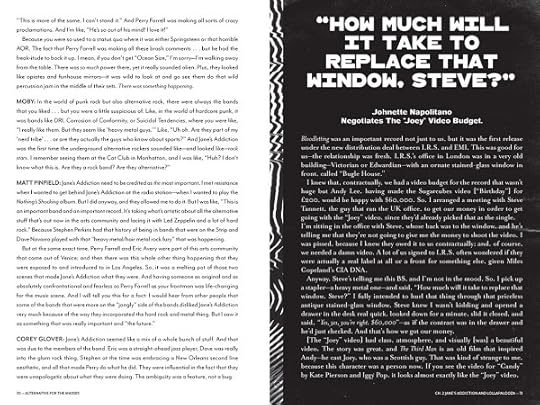
half-title;contents; text spread
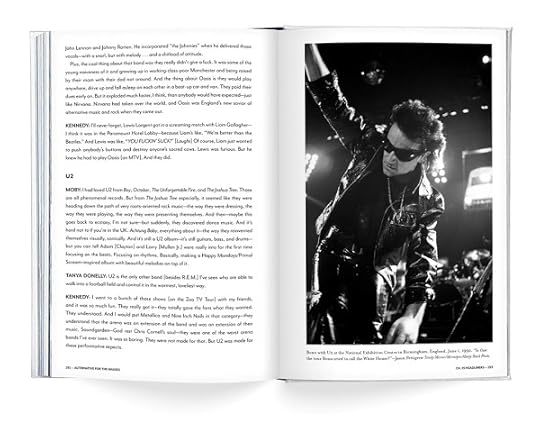
Of course, the real appeal is the interesting people who were there:

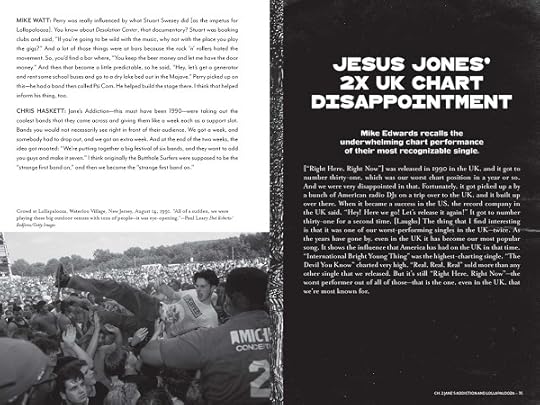
And there are lots of fun sidebars of trivia, too:
I don't see this as a very expensive book for what it is and has inside it. Music defines generations. We're all walking to the beats the speakers are pumpin' out. You'll already have someone in mind for this delight of nostalgia, either who was there or who wished they were. At this price, even a casual friend can look forward to one of these. I will say, though, the tree-book will flow better than the ebook; though it's by no means *bad* it just lacks the overall view that a tree-book has.
Lucky us who lived through it!
The Publisher Says: Alternative for the Masses: The Oral History of the ’90s Alt-Rock Revolution offers insights, opinions, and memories from an incredible cast of musicians and producers who created the music. Get the definitive story of the ’90s alt-rock movement straight from the musicians and figures who lived it.
No period in the history of rock music offered such an abrupt shift in prevailing tastes as the 1990s. While just a short while before, radio and MTV were clamoring for hair metal bands, suddenly alt-rockers such as Jane’s Addiction, Nine Inch Nails, Faith No More, Primus, Smashing Pumpkins, and of course, Nirvana, brought a sea change not just in what the most popular bands sounded like, but also in fashion, politics, and seemingly all aspects of pop culture.
In Alternative for the Masses: The Oral History of the ’90s Alt-Rock Revolution, veteran music critic Greg Prato presents more than 60 new interviews conducted exclusively for the book—with an emphasis on the 1990–1995 peak period—including insights from renowned names like:
Ian MacKaye (Fugazi, Dischord Records)
Frank Black (Pixies)
Corey Glover (Living Colour)
Moby (solo artist/DJ)
Al Jourgensen (Ministry)
Les Claypool (Primus)
Kennedy (host of MTV’s Alternative Nation)
Matt Pinfield (host of MTV’s 120 Minutes)
Butch Vig (producer of Nirvana’s Nevermind)
Tanya Donnelly (Belly, Breeders)
Fred Armisen (Portlandia, Saturday Night Live)
Prato also includes excerpts from one of the last interviews with Steve Albini, arguably the period’s most influential recording engineer and producer, responsible for influential albums by the likes of Nirvana and PJ Harvey producer, among many others.
Prato sets out his book in thematic chapters covering topics such as:
The Lollapalooza music festival
The impact of Nirvana
Alt-rock’s many subgenres
Notable producers of the period
The impact of women rockers
MTV’s influence
Drugs and addiction
and much more!
Do you long for the days when it seemed rock artists were all about daring to be different, speaking their minds, and shaking up the music industry? The last decade before the internet, downloads, and streaming took over music? Alternative for the Masses will take you back to that time when alt-rock truly promised something different.
I RECEIVED A DRC FROM THE PUBLISHER VIA EDELWEISS+. THANK YOU.
My Review: I'm unhappily aware that it's been more than thirty years since Kurt Cobain died.
It's saddening to think "what might have been" about anyone's life; his was no more important than any other, yet some people take on larger-than-life importance to the culture at large. He was one of them. His early overdose death was A Moment, not merely a tragedy for his wife and his family, including the daughter he never really knew.
This book is filled with the stories of the survivors, and the fallen, from their own mouths. The author's been a music journalist and author forever. Many books to his credit, including the lushly titled The Yacht Rock Book: The Oral History of the Soft, Smooth Sounds of the 70s and 80s, which ZOMG might's well have been titled "I'm Aiming For Mudge's Wallet." In this case I'm bycarch, but still very much into reading the stories. The book's design is really of a piece with its era and subject.
half-title;contents; text spread
Of course, the real appeal is the interesting people who were there:
And there are lots of fun sidebars of trivia, too:
I don't see this as a very expensive book for what it is and has inside it. Music defines generations. We're all walking to the beats the speakers are pumpin' out. You'll already have someone in mind for this delight of nostalgia, either who was there or who wished they were. At this price, even a casual friend can look forward to one of these. I will say, though, the tree-book will flow better than the ebook; though it's by no means *bad* it just lacks the overall view that a tree-book has.
Lucky us who lived through it!
December 27, 2025
Very fun read. I was 9 years old when Nevermind came out, so I didn't have much context at all about music. I only knew what the radio and MTV played, and I knew what I liked. Over the years I've gone back to unearth some of the 90s alternative gems that I missed, but I still never understood the full story of what was happening. This book helps you understand what other bands were popular in the late 80s and early 90s. You get to hear directly from the musicians about who influenced who (for instance, the Meat Puppets contend that Eddie Vender sounded like Scott Weiland, and not the other way around). It was cool to hear about some bands that I never would have stumbled across myself, like Slint, fIREHOSE, and Sugar.
I think the publicity for this book did it a disservice. When I read reviews or listened to interviews with Greg Prato the big highlights I heard were "it has commentary from Moby and Fred Armisen and there is a story about how a Goo Goo Dolls song is named after MTV VJ Kennedy". Yeah, not the best way to sell this book. I wish the publicity would have mentioned all the other cool people that provided commentary. People like Mike Watt or Ian MacKaye had fantastic insights, and there are more exciting prominent commentators like Matt Pinfield and Frank Black. Moby was fine...I'm still scratching my head about why Fred Armisen was included.
What I love about this book is how my playlist has expanded. I'm discovering so much great music that I missed previously and am loving it. Read this book and get an instant hit playlist for your time investment.
I think the publicity for this book did it a disservice. When I read reviews or listened to interviews with Greg Prato the big highlights I heard were "it has commentary from Moby and Fred Armisen and there is a story about how a Goo Goo Dolls song is named after MTV VJ Kennedy". Yeah, not the best way to sell this book. I wish the publicity would have mentioned all the other cool people that provided commentary. People like Mike Watt or Ian MacKaye had fantastic insights, and there are more exciting prominent commentators like Matt Pinfield and Frank Black. Moby was fine...I'm still scratching my head about why Fred Armisen was included.
What I love about this book is how my playlist has expanded. I'm discovering so much great music that I missed previously and am loving it. Read this book and get an instant hit playlist for your time investment.

May 30, 2026
3.5*
Couldn’t decide if the mix of interviewees was weird or comprehensive. I like an oral history, but this one wasn’t super interesting. All topics sort of inevitably orbited Nirvana and Kurt’s death. There are a few women among the interviewees but it’s mostly dudes from bands I didn’t care about back in the day. I liked Prato’s GRUNGE IS DEAD oral history, but I didn’t like it as much as Mark Yarm’s EVERYBODY LOVES OUR TOWN about the same time/place/people. I’d love to read another oral history about music in the 90s but from the perspectives of people whose bands I actually liked. This has the potential to make certain readers very happy—people who care about Primus or Faith No More or Urge Overkill. The book is put together competently but just wasn’t what I hoped for.
Couldn’t decide if the mix of interviewees was weird or comprehensive. I like an oral history, but this one wasn’t super interesting. All topics sort of inevitably orbited Nirvana and Kurt’s death. There are a few women among the interviewees but it’s mostly dudes from bands I didn’t care about back in the day. I liked Prato’s GRUNGE IS DEAD oral history, but I didn’t like it as much as Mark Yarm’s EVERYBODY LOVES OUR TOWN about the same time/place/people. I’d love to read another oral history about music in the 90s but from the perspectives of people whose bands I actually liked. This has the potential to make certain readers very happy—people who care about Primus or Faith No More or Urge Overkill. The book is put together competently but just wasn’t what I hoped for.
February 9, 2026
This is a much faster read than my read dates show - I had a long pause during the busy holiday season. I really enjoyed reading the insights from musicians & producers who clearly love music. I especially appreciated how they would compliment other artists’ music, too. It helps that this was the music from my teens & 20s, too.
Thank you Goodreads for the ARC - I really enjoyed it!
Thank you Goodreads for the ARC - I really enjoyed it!

January 15, 2026
Broad background of 90s alternative
I loved reading Prato’s books about Shannon and Blind Melon - 2 books total. I was hoping this book talked more or mostly about early- to mid 90s alternative, and was disappointed that more was not written about Alice In Chains.
I loved reading Prato’s books about Shannon and Blind Melon - 2 books total. I was hoping this book talked more or mostly about early- to mid 90s alternative, and was disappointed that more was not written about Alice In Chains.
September 26, 2025
My husband really enjoyed reliving the 90's by reading this book. He even discovered a few new bands, and refreshed his playlists!

January 13, 2026
Excellent idea, a lot of great stuff in here, just wish more people had participated.
March 12, 2026
ian mackaye's here-
but also kennedy and
the singer of sponge?
but also kennedy and
the singer of sponge?

May 27, 2026
It was a glorious time to be alive. And dang, truly great music.
July 25, 2026
Solid oral history of the rise and fall of “alt rock” with an interesting cast of unexpected voices, including members of Jellyfish, Morphine, Urban Dance Squad, and more.
August 11, 2026
A fun oral history of alternative/90s rock. Sometimes the history is a bit too 'inside baseball' but it does capture a time and place in popular music.
Displaying 1 - 16 of 16 reviews