

What do you think?

Win a free print copy of this book!
18 days and 18:45:11
10 copies available
U.S. only
The Book of Dust #3
The Rose Field
Win a free print copy of this book!
18 days and 18:45:11
10 copies available
U.S. only
‘Lyra, what will you do when you find this place in the desert, the opening to the world of the roses?’
‘Defend it,’ Lyra said. ‘Die defending it.’
When readers left Lyra in The Secret Commonwealth, she was alone in the ruins of a deserted city. Pantalaimon had run from her — part of herself — in search of her imagination, which he believed she had lost. Lyra travelled across the world from her Oxford home in search of her dæmon. And Malcolm, loyal Malcolm, journeyed far from home too, towards the Silk Roads in search of Lyra...
In The Rose Field, their quests converge in the most dangerous, breathtaking, and world-changing ways. They must seek help from spies and thieves, gryphons and witches, old friends and new, learning all the while the deep and surprising truths of the alethiometer. All around them, the world is aflame — made terrifying by fear, power, and greed.
As they move East, towards the red building that will reunite them and give them answers — on Dust, on the special roses, on imagination — so too does the Magisterium, at war against all that Lyra holds dear.
Marking thirty years since the world was first introduced to Pullman’s remarkable heroine Lyra Belacqua in Northern Lights, The Rose Field is the culmination of the cultural phenomenon of The Book of Dust and His Dark Materials.
‘Defend it,’ Lyra said. ‘Die defending it.’
When readers left Lyra in The Secret Commonwealth, she was alone in the ruins of a deserted city. Pantalaimon had run from her — part of herself — in search of her imagination, which he believed she had lost. Lyra travelled across the world from her Oxford home in search of her dæmon. And Malcolm, loyal Malcolm, journeyed far from home too, towards the Silk Roads in search of Lyra...
In The Rose Field, their quests converge in the most dangerous, breathtaking, and world-changing ways. They must seek help from spies and thieves, gryphons and witches, old friends and new, learning all the while the deep and surprising truths of the alethiometer. All around them, the world is aflame — made terrifying by fear, power, and greed.
As they move East, towards the red building that will reunite them and give them answers — on Dust, on the special roses, on imagination — so too does the Magisterium, at war against all that Lyra holds dear.
Marking thirty years since the world was first introduced to Pullman’s remarkable heroine Lyra Belacqua in Northern Lights, The Rose Field is the culmination of the cultural phenomenon of The Book of Dust and His Dark Materials.
621 pages, Paperback
First published October 23, 2025
About the author
Philip Pullman
283 books26.2k followersSir Philip Nicholas Outram Pullman is an English writer. His books include the fantasy trilogy His Dark Materials and The Good Man Jesus and the Scoundrel Christ, a fictionalised biography of Jesus. In 2008, The Times named Pullman one of the "50 greatest British writers since 1945". In a 2004 BBC poll, he was named the eleventh most influential person in British culture. He was knighted in the 2019 New Year Honours for services to literature.
Northern Lights, the first volume in His Dark Materials, won the 1995 Carnegie Medal of the Library Association as the year's outstanding English-language children's book. For the Carnegie's 70th anniversary, it was named in the top ten by a panel tasked with compiling a shortlist for a public vote for an all-time favourite. It won that public vote and was named all-time "Carnegie of Carnegies" in June 2007. It was filmed under the book's US title, The Golden Compass. In 2003, His Dark Materials trilogy ranked third in the BBC's The Big Read, a poll of 200 top novels voted by the British public.
Northern Lights, the first volume in His Dark Materials, won the 1995 Carnegie Medal of the Library Association as the year's outstanding English-language children's book. For the Carnegie's 70th anniversary, it was named in the top ten by a panel tasked with compiling a shortlist for a public vote for an all-time favourite. It won that public vote and was named all-time "Carnegie of Carnegies" in June 2007. It was filmed under the book's US title, The Golden Compass. In 2003, His Dark Materials trilogy ranked third in the BBC's The Big Read, a poll of 200 top novels voted by the British public.
Ratings & Reviews
Friends & Following
Create a free account to discover what your friends think of this book!
Community Reviews
Displaying 1 - 30 of 2,406 reviews

October 24, 2025
Overall (for both this book and the entire Book of Dust Trilogy): some fun beats and good ideas, carried by Pullman's lovely prose, but there are too many loose threads at the end and an incomplete realization of the philosophical core. Perhaps simply too many ideas, period.
I'd say the Book of Dust trilogy is worth reading if you can accept it as a sort of fanfiction of the original trilogy: it's self-indulgently episodic with a whole lot of retconning. The individual sentences are polished, but the plot meanders and many character arcs are left dangling.
I'll go into depth on some of the things I thought worked well and the things that didn't. SPOILERS from here on out.
First, a spoiler that may set your mind at ease if you were concerned about the direction one character in particular seems to take in book 2: no, Malcolm and Lyra DO NOT end up together--thank god. There is a lot of uncomfortable exploration of the idea though.
However, no, Will also does not make an appearance. More on that later.
For now, let's talk big picture.
In many ways, The Book of Dust feels more world-weary than His Dark Materials, which I appreciated. Lyra has saved the world, but it cost her something that's hard to name or even notice until a decade of unexamined PTSD has gone by. (She could've really, really benefitted from therapy!) As a former "gifted child" facing a dark political moment in adulthood, I related to her feeling disconnected from her old spark, her vulnerability and fatigue. I especially believed she'd find herself in this place during her college years, when many of us face for the first time the gap between our ideals and the way the world really is. This version of Lyra--and many key characters--gets hurt and has to find a way to carry on despite it. She's broken and becomes more broken. In that regard, I think she's sometimes more courageous here than she was in HDM; it's easier to be brave when you know less and the world seems simpler.
The final reunion with Pan ... probably could've happened in fewer pages, but it was very emotional. I cried a tiny bit. This was probably the biggest success of the entire book.
I also enjoyed seeing her sacrifice the alethiometer's old role in her life to get a brand new use from it. Using the needle as a cutting tool felt like a natural extension of ideas from HDM while still being totally surprising. In fact, I wish we'd explored its limits even more fully. I also liked the image of chipping away at a problem with a tiny, fragile needle. It felt like a good representation of what Lyra (and all of us) are up against: the systems are so big we can hardly understand them, and all we can do is keep chipping away anyway.
The core thread of Book of Dust is much more personal in scale. Throughout the grand adventure, what's really at stake is Lyra's sense of self and sense of connection to the world, not the state of the world itself. However, I wish Pullman would've committed to that harder. There were many places where he seemed distracted by a fun twist in the plot or a new character, and the wider world often felt only loosely of consequence to Lyra.
The moment it began to truly fall apart for me was the final 10% when it became clear there wasn't going to be enough room to satisfactorily resolve all the elements put into play. Not only did the ending feel abrupt, but the unfinished arc of several characters undermined much of the previous two books as well--and in some places, the original trilogy.
First and most obviously is Lyra. By the end of the book, she seems to have rediscovered the importance of being connected with the world around her, not just intellectually but emotionally. That made her reunion with Pan feel earned, if protracted, but left other questions unaddressed.
Around the 50% mark, she has a conversation with an angel that subverts the entire ending of The Amber Spyglass: JK, Xaphania was wrong when she said the windows had to be closed! In fact, Lyra wants to open more of them! It's really, really unfortunate that a critical piece of the previous trilogy is reduced to a sort of he-said-she-said from a character we don't have much attachment to and haven't seen since. So Lyra just wins that debate, I guess. It's more unfortunate that Pullman shoehorns these questions into Lyra's spiritual quest about imagination (which lands somewhere between a new perspective and a belief that all of life is sacred and interconnected), dismissing some of the established mechanisms of the magic system. JK, don't worry about specters. Don't worry about dust leaking away. Actually, what if it's good and natural for dust to circulate between universes? Ultimately, Pullman is arguing that the emotional, irrational world has just as much value and realness as the rational, measurable world, which is all very well and good until it erodes the rules of his fantasy world-building and leaves us standing on nothing.
Despite all that, there was a moment where I felt willing to roll with it and accept that Lyra could go right ahead reopening windows ... except that she has almost no reaction to it all. I despaired and wondered what the point of The Amber Spyglass ending had been, but she doesn't seem to. She declares she wants to open more windows, but we we end without seeing what her actual plans, hopes, or ambitions are about it. Does she want to try to reconnect with Will? Does she want to keep the connection to the Rose world or close them out? Does she want to explore freely and just see what there is to see? (Is she not worried about the specters at all anymore???) We don't know because the story cuts off before we can see her reflect on any of these important questions. I don't need to see the entire rest of her life play out in full color, but I did need to see at least what she might want or hope for next.
The next character whose arc felt unfinished was, of course, Malcom. It also wasn't clear to me what he was aiming for next, though we do know that Lyra and Pan want to set him up with Alice, which ... The idea feels childish to me, very The Parent Trap. Very unearned. Neither Malcom nor Alice think much of each other throughout The Secret Commonwealth or The Rose Field except to wonder if the other is safe. When they reflect on each other's love lives it's ... very unsexy!
Malcom tells Lyra about a period when he and Alice were sleeping together and makes it clear that she was just looking for companionship, not a romance, and that he was fine with that. Not much of a basis for shoving them back together just because they were kind of together once almost a decade ago. (Also, awkward: I'm pretty sure this just-sex-no-romance relationship happened when Alice was 18 and he was 16. Don't love that.) Worse, when Alice contemplates his love life, it's because a member of the church police (? even the characters in-universe are confused about what, exactly, this organization is) tries to "frame" him for having an inappropriate relationship with Lyra. She rejects the idea as impossible, but like ,,,,,,,,, Malcom spends a lot of both 600-page books thinking about how in love with Lyra he is.
Honestly, it felt to me like Pullman had wholly planned for Malcom and Lyra to end up together—then pulled back, clumsily, because of either reader pushback on book 2 or a request from his editor. Like, perhaps a few pages of kissing and fade-to-black were cut, replaced with a half-hearted decision for Pan and Lyra to parent trap him with Alice, but all of the foreshadowing was left in.
I'm glad we didn't actually go there, especially since the imbalance of power and life experience between them is doubly f*cked considering how vulnerable and fragile Lyra is for most of the books, but it leaves Malcom feeling incomplete. Especially in book 3, hoping to find and protect Lyra is the main reason he stays in the mix. It's not clear what else he wants, which makes his epic feats of heroism and cleverness land flat if they don't get together; he had no emotional connection to those events otherwise.
The more I think about it, the more I wish Malcom hadn't been part of Lyra's self-discovery journey at all, not just for his arc but for the structure of the entire trilogy. Book 1 feels very detached from books 2 and 3 except to introduce Malcom and Alice (and maybe the idea of unhealthy relationships between human and daemon, which could've happened elsewhere because it takes a very long time for that to pay off anyway). It doesn't feel like part of the same story as the next two books: it's a prequel and a duology. His adventures in book 3 in particular were a fun folktale-flavored romp but felt very separate from Lyra's soul-searching. These portions would've worked better as a shorter stand-alone adventure set in the same world but unrelated to Lyra.
Speaking of being related to Lyra ... the next character I felt was under-developed was Olivier Bonneville. Even in book 2, he felt like an underwhelming continuation of the villain from La Belle Sauvage more than a new threat or a character of his own right.
His absence in the first trilogy also felt more noteworthy, less smoothly integrated. I could buy that Miss Coulter had hooked up with Gerard Bonneville in pursuit of power--unhinged physicists are kind of her thing--but I struggle to accept that she'd birth two separate children she didn't want, leave them somewhere, and walk away. Once, okay fine, she sucks. Twice becomes hard to believe, like a cartoon of what abstinence-only sex ed believes women to be.
I also didn't buy Olivier's sudden heel turn away from Delamare and toward Lyra. Delamare is not kind to him, but he represented Olivier's path to power and revenge. And even after he knows he and Lyra share blood ... what about it? I struggle to believe that would be enough to turn her into an ally in his mind, let alone someone he'd want to seek connection to. She beat him up in a humiliating way and broke his toys! In the end, all we get between them to sort out allllll of that is one stilted little scene (and I guess a half where Pan confronts him?), which doesn't feel like enough to resolve what's set up to be a big emotional upheaval for both of them. It felt like Pullman wanted us to care about him but couldn't figure out how to do that without stapling him to a character we already like--and it didn't work.
Most of the remaining cast fall into the camp of ... I'm glad we confirmed they're alive, I guess, but why did we spend so much time talking about them? Glenys Godwin and Hannah Relf, Alice, Leila Pervani, the griffons, the new witches, Strauss ... The unexplained "good numbers" and assorted unaffiliated magical entities we never see again like the fairy, the giant, the burning man and the water sprite ... All of them feel like decoration at best and distraction at worst. Then there's Ionides, who plays more of a role but drops off abruptly only to reappear decoratively in the end—again, without clear direction. What happened to the treasure he wanted that only Lyra could get??? He got into the rose world all by himself.
All of these characters took up a lot of page time that could've been better spent unpacking the core philosophical ideas more carefully.
Throughout all three books, what kept me going were the enticing peeks into a new, darker view on daemons and their implications. We see Gerard Bonneville beat his daemon, who seems much more animal than any other daemon we've encountered. We learn about a variety of humans who've become separated from their daemons under circumstances very different from what Lyra and Pan experienced. We learn about a black market trade in placeholder/replacement daemons. It all feels unfocused until, suddenly, in the final quarter of The Rose Field, we start to get some answers. Or start asking a new set of questions. It turns out daemons can die while still attached to a living human if their person ignores them to pursue financial advancement in a way that leads to being disconnected from others. This was an interesting idea with a few revelatory beats, but it didn't feel complete.
While I'm on board with the idea that developing an agricultural center into a highway with a mall is soulless, I wasn't totally sold on Pullman's depiction of how it affects the individual. First, it was a little cartoonish and silly that this only seemed to happen to economists. He asserts that money is the thing that dissolves all spiritual bonds, but we see in Mustafa Bey that that's not always the case. He was incredibly financially successful but did it in a way that fostered relationships. So money isn't actually the problem. It's the inability to be satisfied.
Another thing: I agree that capitalism creates death spirals in social systems and ecosystems ... but I'm not convinced that it always has to wreak irrevocable ruin for individuals. Like, must a soul always die without any hope of redemption? I can think of plenty of greedy people who stay the course (that's how we get billionaires), but I've also heard stories of people abandoning the corporate world to go live on a farm or in the woods. In other words, it’s never too late for real humans to reconnect to the world around them. The metaphor of daemon death feels too final to me. I think you have to believe that people can change and become better or there's no point.
These ideas needed a lot more breathing room, not just because they're closely related to Lyra's crisis of imagination but also because I wasn't totally convinced by his examination of them.
Ultimately, I think this trilogy should've instead been packaged as a set of short stories or standalone novels. Together, they're a bit of a jumble, though I did enjoy many of the individual pieces. I'm sad that I may never again get the experience of reading a Philip Pullman book for the first time, because I think the author's age is showing; I don't think he has another book of this size left in him. When it comes to character arc and world cohesion, Pullman's insistence that the world needs unsolvable mysteries and blanks feels like a narrative cop-out. However, I'll definitely continue thinking about his ideas, maybe precisely because I found them frustrating.
I'd say the Book of Dust trilogy is worth reading if you can accept it as a sort of fanfiction of the original trilogy: it's self-indulgently episodic with a whole lot of retconning. The individual sentences are polished, but the plot meanders and many character arcs are left dangling.
I'll go into depth on some of the things I thought worked well and the things that didn't. SPOILERS from here on out.
First, a spoiler that may set your mind at ease if you were concerned about the direction one character in particular seems to take in book 2: no, Malcolm and Lyra DO NOT end up together--thank god. There is a lot of uncomfortable exploration of the idea though.
However, no, Will also does not make an appearance. More on that later.
For now, let's talk big picture.
In many ways, The Book of Dust feels more world-weary than His Dark Materials, which I appreciated. Lyra has saved the world, but it cost her something that's hard to name or even notice until a decade of unexamined PTSD has gone by. (She could've really, really benefitted from therapy!) As a former "gifted child" facing a dark political moment in adulthood, I related to her feeling disconnected from her old spark, her vulnerability and fatigue. I especially believed she'd find herself in this place during her college years, when many of us face for the first time the gap between our ideals and the way the world really is. This version of Lyra--and many key characters--gets hurt and has to find a way to carry on despite it. She's broken and becomes more broken. In that regard, I think she's sometimes more courageous here than she was in HDM; it's easier to be brave when you know less and the world seems simpler.
The final reunion with Pan ... probably could've happened in fewer pages, but it was very emotional. I cried a tiny bit. This was probably the biggest success of the entire book.
I also enjoyed seeing her sacrifice the alethiometer's old role in her life to get a brand new use from it. Using the needle as a cutting tool felt like a natural extension of ideas from HDM while still being totally surprising. In fact, I wish we'd explored its limits even more fully. I also liked the image of chipping away at a problem with a tiny, fragile needle. It felt like a good representation of what Lyra (and all of us) are up against: the systems are so big we can hardly understand them, and all we can do is keep chipping away anyway.
The core thread of Book of Dust is much more personal in scale. Throughout the grand adventure, what's really at stake is Lyra's sense of self and sense of connection to the world, not the state of the world itself. However, I wish Pullman would've committed to that harder. There were many places where he seemed distracted by a fun twist in the plot or a new character, and the wider world often felt only loosely of consequence to Lyra.
The moment it began to truly fall apart for me was the final 10% when it became clear there wasn't going to be enough room to satisfactorily resolve all the elements put into play. Not only did the ending feel abrupt, but the unfinished arc of several characters undermined much of the previous two books as well--and in some places, the original trilogy.
First and most obviously is Lyra. By the end of the book, she seems to have rediscovered the importance of being connected with the world around her, not just intellectually but emotionally. That made her reunion with Pan feel earned, if protracted, but left other questions unaddressed.
Around the 50% mark, she has a conversation with an angel that subverts the entire ending of The Amber Spyglass: JK, Xaphania was wrong when she said the windows had to be closed! In fact, Lyra wants to open more of them! It's really, really unfortunate that a critical piece of the previous trilogy is reduced to a sort of he-said-she-said from a character we don't have much attachment to and haven't seen since. So Lyra just wins that debate, I guess. It's more unfortunate that Pullman shoehorns these questions into Lyra's spiritual quest about imagination (which lands somewhere between a new perspective and a belief that all of life is sacred and interconnected), dismissing some of the established mechanisms of the magic system. JK, don't worry about specters. Don't worry about dust leaking away. Actually, what if it's good and natural for dust to circulate between universes? Ultimately, Pullman is arguing that the emotional, irrational world has just as much value and realness as the rational, measurable world, which is all very well and good until it erodes the rules of his fantasy world-building and leaves us standing on nothing.
Despite all that, there was a moment where I felt willing to roll with it and accept that Lyra could go right ahead reopening windows ... except that she has almost no reaction to it all. I despaired and wondered what the point of The Amber Spyglass ending had been, but she doesn't seem to. She declares she wants to open more windows, but we we end without seeing what her actual plans, hopes, or ambitions are about it. Does she want to try to reconnect with Will? Does she want to keep the connection to the Rose world or close them out? Does she want to explore freely and just see what there is to see? (Is she not worried about the specters at all anymore???) We don't know because the story cuts off before we can see her reflect on any of these important questions. I don't need to see the entire rest of her life play out in full color, but I did need to see at least what she might want or hope for next.
The next character whose arc felt unfinished was, of course, Malcom. It also wasn't clear to me what he was aiming for next, though we do know that Lyra and Pan want to set him up with Alice, which ... The idea feels childish to me, very The Parent Trap. Very unearned. Neither Malcom nor Alice think much of each other throughout The Secret Commonwealth or The Rose Field except to wonder if the other is safe. When they reflect on each other's love lives it's ... very unsexy!
Malcom tells Lyra about a period when he and Alice were sleeping together and makes it clear that she was just looking for companionship, not a romance, and that he was fine with that. Not much of a basis for shoving them back together just because they were kind of together once almost a decade ago. (Also, awkward: I'm pretty sure this just-sex-no-romance relationship happened when Alice was 18 and he was 16. Don't love that.) Worse, when Alice contemplates his love life, it's because a member of the church police (? even the characters in-universe are confused about what, exactly, this organization is) tries to "frame" him for having an inappropriate relationship with Lyra. She rejects the idea as impossible, but like ,,,,,,,,, Malcom spends a lot of both 600-page books thinking about how in love with Lyra he is.
Honestly, it felt to me like Pullman had wholly planned for Malcom and Lyra to end up together—then pulled back, clumsily, because of either reader pushback on book 2 or a request from his editor. Like, perhaps a few pages of kissing and fade-to-black were cut, replaced with a half-hearted decision for Pan and Lyra to parent trap him with Alice, but all of the foreshadowing was left in.
I'm glad we didn't actually go there, especially since the imbalance of power and life experience between them is doubly f*cked considering how vulnerable and fragile Lyra is for most of the books, but it leaves Malcom feeling incomplete. Especially in book 3, hoping to find and protect Lyra is the main reason he stays in the mix. It's not clear what else he wants, which makes his epic feats of heroism and cleverness land flat if they don't get together; he had no emotional connection to those events otherwise.
The more I think about it, the more I wish Malcom hadn't been part of Lyra's self-discovery journey at all, not just for his arc but for the structure of the entire trilogy. Book 1 feels very detached from books 2 and 3 except to introduce Malcom and Alice (and maybe the idea of unhealthy relationships between human and daemon, which could've happened elsewhere because it takes a very long time for that to pay off anyway). It doesn't feel like part of the same story as the next two books: it's a prequel and a duology. His adventures in book 3 in particular were a fun folktale-flavored romp but felt very separate from Lyra's soul-searching. These portions would've worked better as a shorter stand-alone adventure set in the same world but unrelated to Lyra.
Speaking of being related to Lyra ... the next character I felt was under-developed was Olivier Bonneville. Even in book 2, he felt like an underwhelming continuation of the villain from La Belle Sauvage more than a new threat or a character of his own right.
His absence in the first trilogy also felt more noteworthy, less smoothly integrated. I could buy that Miss Coulter had hooked up with Gerard Bonneville in pursuit of power--unhinged physicists are kind of her thing--but I struggle to accept that she'd birth two separate children she didn't want, leave them somewhere, and walk away. Once, okay fine, she sucks. Twice becomes hard to believe, like a cartoon of what abstinence-only sex ed believes women to be.
I also didn't buy Olivier's sudden heel turn away from Delamare and toward Lyra. Delamare is not kind to him, but he represented Olivier's path to power and revenge. And even after he knows he and Lyra share blood ... what about it? I struggle to believe that would be enough to turn her into an ally in his mind, let alone someone he'd want to seek connection to. She beat him up in a humiliating way and broke his toys! In the end, all we get between them to sort out allllll of that is one stilted little scene (and I guess a half where Pan confronts him?), which doesn't feel like enough to resolve what's set up to be a big emotional upheaval for both of them. It felt like Pullman wanted us to care about him but couldn't figure out how to do that without stapling him to a character we already like--and it didn't work.
Most of the remaining cast fall into the camp of ... I'm glad we confirmed they're alive, I guess, but why did we spend so much time talking about them? Glenys Godwin and Hannah Relf, Alice, Leila Pervani, the griffons, the new witches, Strauss ... The unexplained "good numbers" and assorted unaffiliated magical entities we never see again like the fairy, the giant, the burning man and the water sprite ... All of them feel like decoration at best and distraction at worst. Then there's Ionides, who plays more of a role but drops off abruptly only to reappear decoratively in the end—again, without clear direction. What happened to the treasure he wanted that only Lyra could get??? He got into the rose world all by himself.
All of these characters took up a lot of page time that could've been better spent unpacking the core philosophical ideas more carefully.
Throughout all three books, what kept me going were the enticing peeks into a new, darker view on daemons and their implications. We see Gerard Bonneville beat his daemon, who seems much more animal than any other daemon we've encountered. We learn about a variety of humans who've become separated from their daemons under circumstances very different from what Lyra and Pan experienced. We learn about a black market trade in placeholder/replacement daemons. It all feels unfocused until, suddenly, in the final quarter of The Rose Field, we start to get some answers. Or start asking a new set of questions. It turns out daemons can die while still attached to a living human if their person ignores them to pursue financial advancement in a way that leads to being disconnected from others. This was an interesting idea with a few revelatory beats, but it didn't feel complete.
While I'm on board with the idea that developing an agricultural center into a highway with a mall is soulless, I wasn't totally sold on Pullman's depiction of how it affects the individual. First, it was a little cartoonish and silly that this only seemed to happen to economists. He asserts that money is the thing that dissolves all spiritual bonds, but we see in Mustafa Bey that that's not always the case. He was incredibly financially successful but did it in a way that fostered relationships. So money isn't actually the problem. It's the inability to be satisfied.
Another thing: I agree that capitalism creates death spirals in social systems and ecosystems ... but I'm not convinced that it always has to wreak irrevocable ruin for individuals. Like, must a soul always die without any hope of redemption? I can think of plenty of greedy people who stay the course (that's how we get billionaires), but I've also heard stories of people abandoning the corporate world to go live on a farm or in the woods. In other words, it’s never too late for real humans to reconnect to the world around them. The metaphor of daemon death feels too final to me. I think you have to believe that people can change and become better or there's no point.
These ideas needed a lot more breathing room, not just because they're closely related to Lyra's crisis of imagination but also because I wasn't totally convinced by his examination of them.
Ultimately, I think this trilogy should've instead been packaged as a set of short stories or standalone novels. Together, they're a bit of a jumble, though I did enjoy many of the individual pieces. I'm sad that I may never again get the experience of reading a Philip Pullman book for the first time, because I think the author's age is showing; I don't think he has another book of this size left in him. When it comes to character arc and world cohesion, Pullman's insistence that the world needs unsolvable mysteries and blanks feels like a narrative cop-out. However, I'll definitely continue thinking about his ideas, maybe precisely because I found them frustrating.

November 3, 2025
Maybe I will change the review for this when I've calmed down but for now WE RIDE AS WITCHES, perfectly serene and passionate and unbothered by the vagaries of humankind.
What a fantastic reminder that there's a reason why we shouldn't revisit our faves.
His Dark Materials, consisting as it does to this American of The Golden Compass, The Subtle Knife, and The Amber Spyglass, is truly one of my great literary loves. The squabbles that people have over pacing aside--hilarious in light of this 672 page behemoth--they form a tightly paced and plotted trilogy over which we see our main character, the irrepressible Lyra Belaqua, truly grow and evolve as she sets about fulfilling an age old prophecy about the nature of human consciousness and purpose and meaning on this dusty (heh) ball of dirt we all call home. When you finally learn the interlocking nature of Dust (it's created by humans being creative and gaining knowledge and being conscious > it's escaping through the windows that were created wantonly between worlds by both the knife bearer of Cittagazze + existing naturally > all the windows must be closed except for the one that lets the dead escape and become one with the universe > so Will and Lyra must be separated) you realize with a sinking feeling that there is no other answer, no other logical conclusion from all the bits and pieces you've learnt along the way.
And then for some reason we decide to just throw all that way, lock stock and smoking barrel, for a confusing psychology diatribe on par with what you'd expect from a newly minted sophomore socialist who just took Ec 101 and Psych 101 and is accosting you with facts about the rise of capitalism and the tragedy of the commons and reposting bad Instagram stories.
In no particular order, plot points that are never revisited despite there being more than enough pages to address them all:
- refugees?
- spangled ring?
- good numbers?
- mysterious spirit voices?
- fairies?
- plague?
- blue hotel?
- what is the Rose Field?
- is separation normal? not normal?
- does anyone at all remember anything that happened in the last war?
- does dust go out of windows or not?
- Lyra and Pan's need to talk through their issues
- where are the bears?
- why didn't Lyra continue to chat with Serafina if she loved her so much
- the magical heron that blew up the zepplin, was that Lyra?
- where was oakley street during HDM?
- did no one notice the many windows in their world being closed up starting ~10 years ago?
- did no one else ever come across windows?
- why did the angels miss those windows?
- are the angels lying? telling the truth? are they no longer part of the magisterium?
- where are all the supernatural forces aligned both with and without the magisterium?
- what about all the slander around Malcolm being a pedophile? is that just going away?
AND THEN MORE things I'm just angry about:
- why do we need roses when there's already dust to serve as a plot metaphor for consciousness/imagination/goodness
- why is this book SO LONG and we still get random characters introduced for five pages just to do a plot detail dump and then disappear?
- these resonant lodestones are such lazy storytelling as a device, but so is not using them to let Lyra and Pan talk to one another whilst separated
- WHY so many justifications of how Malcolm x Lyra isn't a creepy romance subplot given that Malcolm rescued Lyra as a baby and then was her teacher and caught a whiff of her hair and fell in love and then so bravely turned it off (like a liiiiiight switch)? methinks many people told Pullman that no one cared for the subplot and he was like WATCH ME
- where were these deus ex machina gryphons last time?
- why invent new types of carrion-y birds when cliff ghasts are already a thing?
- Serafina Pekkala had a daughter with Farder Coram and never told him? what a weirdly sociopathic thing to do?
- Is there really a Cho Chang-esque Chinese character named Chen who speaks broken English and is basically a sketch who attempts to surreptitiously take over a research station and then sell it to the highest bidder without having the right of ownership (yes)
- is it really important to have everyone speak different languages if someone in our main group of characters always speaks some language that's close enough?
AND OF COURSE: if the windows can be left open/opened then what was the point of TAS???
UGH I just can't with this book, hard pass, if you can just skip this entire second series and leave your memories of the OG untainted.
What a fantastic reminder that there's a reason why we shouldn't revisit our faves.
His Dark Materials, consisting as it does to this American of The Golden Compass, The Subtle Knife, and The Amber Spyglass, is truly one of my great literary loves. The squabbles that people have over pacing aside--hilarious in light of this 672 page behemoth--they form a tightly paced and plotted trilogy over which we see our main character, the irrepressible Lyra Belaqua, truly grow and evolve as she sets about fulfilling an age old prophecy about the nature of human consciousness and purpose and meaning on this dusty (heh) ball of dirt we all call home. When you finally learn the interlocking nature of Dust (it's created by humans being creative and gaining knowledge and being conscious > it's escaping through the windows that were created wantonly between worlds by both the knife bearer of Cittagazze + existing naturally > all the windows must be closed except for the one that lets the dead escape and become one with the universe > so Will and Lyra must be separated) you realize with a sinking feeling that there is no other answer, no other logical conclusion from all the bits and pieces you've learnt along the way.
And then for some reason we decide to just throw all that way, lock stock and smoking barrel, for a confusing psychology diatribe on par with what you'd expect from a newly minted sophomore socialist who just took Ec 101 and Psych 101 and is accosting you with facts about the rise of capitalism and the tragedy of the commons and reposting bad Instagram stories.
In no particular order, plot points that are never revisited despite there being more than enough pages to address them all:
- refugees?
- spangled ring?
- good numbers?
- mysterious spirit voices?
- fairies?
- plague?
- blue hotel?
- what is the Rose Field?
- is separation normal? not normal?
- does anyone at all remember anything that happened in the last war?
- does dust go out of windows or not?
- Lyra and Pan's need to talk through their issues
- where are the bears?
- why didn't Lyra continue to chat with Serafina if she loved her so much
- the magical heron that blew up the zepplin, was that Lyra?
- where was oakley street during HDM?
- did no one notice the many windows in their world being closed up starting ~10 years ago?
- did no one else ever come across windows?
- why did the angels miss those windows?
- are the angels lying? telling the truth? are they no longer part of the magisterium?
- where are all the supernatural forces aligned both with and without the magisterium?
- what about all the slander around Malcolm being a pedophile? is that just going away?
AND THEN MORE things I'm just angry about:
- why do we need roses when there's already dust to serve as a plot metaphor for consciousness/imagination/goodness
- why is this book SO LONG and we still get random characters introduced for five pages just to do a plot detail dump and then disappear?
- these resonant lodestones are such lazy storytelling as a device, but so is not using them to let Lyra and Pan talk to one another whilst separated
- WHY so many justifications of how Malcolm x Lyra isn't a creepy romance subplot given that Malcolm rescued Lyra as a baby and then was her teacher and caught a whiff of her hair and fell in love and then so bravely turned it off (like a liiiiiight switch)? methinks many people told Pullman that no one cared for the subplot and he was like WATCH ME
- where were these deus ex machina gryphons last time?
- why invent new types of carrion-y birds when cliff ghasts are already a thing?
- Serafina Pekkala had a daughter with Farder Coram and never told him? what a weirdly sociopathic thing to do?
- Is there really a Cho Chang-esque Chinese character named Chen who speaks broken English and is basically a sketch who attempts to surreptitiously take over a research station and then sell it to the highest bidder without having the right of ownership (yes)
- is it really important to have everyone speak different languages if someone in our main group of characters always speaks some language that's close enough?
AND OF COURSE: if the windows can be left open/opened then what was the point of TAS???
UGH I just can't with this book, hard pass, if you can just skip this entire second series and leave your memories of the OG untainted.
November 20, 2025
A book and ending so poor it has goaded me into making this account and writing my first ever review for GoodReads because I feel the public deserves a warning. This book is not only badly written, it is a moral failing. Is that a subjective opinion? I believe I can argue my case - bear with me.
As a resident of Oxford and frequenter of Blackwells where this book was launched, I headed for the Sheldonian to listen to Sir Philip introduce it and then over to the shop to buy myself a copy. The initial feeling was nervous - I had deeply disliked the previous book, The Secret Commonwealth, but had held off passing judgement with the hope that not all was yet lost, and Pullman would manage to salvage it in his conclusion. I had a nice long conversation with the children's section sales clerk about the books we love and the value of children's literature. We agreed that The Rose Field would decide us on the value of the whole Book of Dust trilogy. I have seen similar sentiments echoed in reviews below. I opened the first page in wary anticipation...
In many of his talks, and in the launch event for this book, Philip discusses what story telling is and what the imagination is: it is not "making things up" but the ability to perceive where the story is going, a way of seeing something that exists already outside oneself. He has likened it to the ability to read the alethiometer, child-Lyra's nimble stepping from meaning to meaning intuitively seeing what comes next. When she abruptly loses this power at the end of TAS I found that sudden "loss" unbelievable, but bizarrely Philip Pullman has shown me that this can actually happen: it has happened to him and his ability to perceive and imagine, to tell stories. Worst of all, I think he knows it, and we, the readers, can feel his unease in this writing.
Reading TSC and TRF together there are so many threads picked up unnecessarily and then completely abandoned (not because leaving a gap for the audience's imagination is important, but because he simply forgot about it). Lyra has this heart-wrenching dream about Will's Kirjava "suffused with love" so powerful she wakes up weeping. But then, no, it's actually Asta, and then woops we've forgotten that's happened. Never re-visited.
Olivier discovers the new method can only follow daemons, that's very interesting, but then oops he uses it to spy on Lyra and that bit of insight abandoned as well.
Plot of TSC hinges on Lyra finding Pan in the Blue Hotel which is where all daemons go? He teams up with a poor refugee whose lost her daemon (her character and journey horribly tokenised along the way) to search for their second halves there? Psych - he gets there and then decides to keep going and not wait for Lyra. Why, may you ask, given the heart deep pain they are both clearly undergoing? Unclear. Clear that Philip has moved on and may have forgotten the unnecessary build-up of getting them to that place (which, by the way, involved a completely unnecessary gang-rape scene, when Lyra was not "dowdy enough to avoid getting assaulted" another reason an editor should have stepped in sooner). What happens to the refugee character? Why she is re-united with her daemon on page 3, and wanders happily into the desert (which is only accessible by camel and dreadfully full of those rapist soldiers, and men from the mountains, and the Magesterial guards etc.) singing songs to her daemon and we never see her again! The message: she and her name (a victim from Grenfell tower - so this is truly awful) were never more than a cheap prop to move the inert storyline along.
Alison the brave and practical refugee worker who Lyra promises to visit in Aleppo? Nah! We forgot her too ages ago.
Alice Longsdale who bravely defends Lyra and is taken by the secret police? Her character is abandoned working in an anonymous London hotel after escaping from prison. Although we are given this wonderful patronising slice of wisdom: for a working class uneducated person, she is really quite clever. Oakley street can use her to memorise nonsense code to pass on messages that will also never be revisited. Ouch.
What about Oakley street then? It is driven underground and England (or Anglia - the names are used interchangeably) is becoming increasingly authoritarian with crack downs on protest and freedom of assembly. Oakley street Glenys Godwin escapes and then... has a glass of whiskey with Hannah Relf. The end.
Malcolm and Lyra have been following, up until now, the narrative arc of an epic middle eastern poem, including the names and places, the sorcerer Sorush, the uncle intent on revenge, etc. etc. this has been clunkily shown to be important. Malcolm even carries a copy, lest we forget. Yes they will be lovers in the rose garden... (YUCK - but better pens have critiqued the whole Paedophile thing in the TSC, he fell for her when she was his 15 year old student, but, says her old and wise mentor "it's fine now because you're both legal adults"... Can I insert vomit emoji here?
But even that questionable thread is lost when they do enter the Rose Garden. I understand an editor must have intervened at this point because everything building to a romantic interest between the 2 of them drops off suddenly, mid-sentence. Lyra throws the metaphoric "gold-ring" away with some random poor people she meets, and that's it. We never re-visit the Poem of Johan and Roxanna again.
There are secret beings whispering random things in the ruins.... they live in between "the good numbers" - this is some mathy thing, says the introduced mathematician character... then we never hear about that again. Not in a mysterious way, mind you. He just forgot.
Daemons are being traficked in this new adult world we learn. It is treacherous and appalling. There is a refugee crisis and a caste system. There are "men from the mountains." There is a crusading army mustering to attack the middle east, led by BIG pharma and BIG Oil and BIG Church. Except, psych! no there isn't because Lyra and Malcolm have a moon festival to go to and all that is never resolved. The army can die in the desert, and the men in the mountains evaporate. And what about the army of mystical creatures mustering to oppose the forces of evil? Well we never hear about them again either so it's like they never existed.
Do you start to see what I am driving at? It is not that the choice of themes are poor, or even the writing is inconsistent. It is that the treatment of those themes is poor and therefore the moral effect of the book - inexcusable. Pullman tells us we are to care about "those half-seen things" called the Secret Commonwealth. We are to care for our irreparable souls, for story telling and for imagination. But what he SHOWS is carelessness. If we are told that poetry is important - this epic poem Malcom's carrying - it has real meaning, but then we are shown it is disposable because Pullman didn't bother writing something more about it when his editor told him audiences wouldn't stomach a sexy love scene between a professor and his child-student.
Caring for refugees is important, but then we are shown a heartless and out-of-sight-out-of-mind treatment of all refugee characters, they have no depth or character other than "victim" and Lyra says "she saw there was nothing she could do for her" so she moves on.
Scholarship, learning and hard work are important... but after a decade of studying the alethiometer Lyra has made no progress, has forgotten her goal (which was finding her way back to Will "the centre of her life") and decides to take the thing apart because it might work as a knife to save the non-character we have just forgotten about.
Craft and metaphor are important, yet when Malcolm "the artificer from the land of gold" crafts her a circlet from the old alethiometer, which is both sentimental and metaphorically poignant, she ditches it t the first opportunity because some other non-characters are poor and have no money.
Daemons are important. How could they not be. The connection between human and daemon catalyses the plots of all of these books and Pullman has said that the idea of the daemon was his one best idea of a lifetime. The moral horror of separation was so powerful in HDM. I still cry if I re-read the discovery of the little boy clutching the fish, because 'he had no daemon at all.' That, we are told, is like seeing a person without a head. This is first diluted in TSC - daemonless Lyra is treated with a disgust known to victims of low-key racism "you have no business sitting with us!" Then further diluted when we learn buying daemons is a booming business, and a famous philosopher's got a fake daemon, and no one really notices until he drops dead. In the Rose Field the connection is further eroded by the constant touching of other peoples' daemons for convenience (Lyra touching Asta because she needs to transport her, Pan licking Malcolm because he has a bullet removed and is hurting... again ICK!) Finally we have a scene where Pantalaimon goes and sleeps in the embrace of an absolutely random witch because "nothing mattered anymore." But that's exactly it. Emblematic of the whole book: Nothing mattered. You cannot chip away at the meaningfulness of the soul-body connection, of what these relationships mean, and then expect us, the reader, to care about it any longer. And not caring about souls is a problem. Not just in the book but in real life. Isn't that supposed to be the message of the whole Book of Dust? Pullman has effectively eroded it to the extent that the message is meaningless. By the time we arrive in the red building and meet some "dead daemons" because their people are just soulless capitalists who let their souls die in the passenger seat (yes this is the big finale, I couldn't have made it up!!!!) I just could not summon any moral outrage. You stop caring. When the narrative structure and the poor writing reduce daemons to deadened talking squirrels it's hard to care when they are actually dead.
Love is important. Love drives resistance. Will and Lyra's love actually healed the universe in TAS. But when we learn that Lyra gave up the love of her life for.... nothing????? We get a shrug. Lyra, fiery Lyra, who has been tricked by the angels (very unclear why, since they didn't bother closing those openings) finds out she has been conned out of happiness and does pretty much nothing. In 10 years she does not learn to read the alethiometer or bother to look for openings to find the love of her life. A geographer was paid by Delamare and found 17... but Lyra never bothered. Malcolm who claims to love Lyra so much he pursues her through the Middle East wild-goose-chase is suddenly set up with Alice "because that would work" -thinks Lyra. What this meta-narrative here concludes about love is shallow. Any attempts to dress this up as an "adult" book so its lack of romanticism is just realism is a cowardly attempt to excuse its pointlessness. If love was driving all these characters, it is because readers still believe in its force and are willing to come along and trust the journey. To dismiss its significance is to slap those readers in the face or to patronise them. Absolutely unacceptable.
FINALLY, we are told again and again "STORIES ARE IMPORTANT" - Stories are all we have left to share with the harpies at the end of the day. Stories are what Lyra's art is. Without them, she, and Pullman himself, are lost. But as story after story gets dropped (the furnace man in TSC and Agrippa's prophecies + magical engine, the other daemonless people picked up and abandoned, Alice and Hannah, and Gladys, and Bud+Anita, Nur-Huda, Leila, Ionides, etc. etc.) we care less and less about each side plot that leads nowhere, each character that adds nothing - storytelling (and reading) becomes tedious, lifeless, careless even. We are told, near the end "Oh! Seraphina Pekkala died!" But "Oh she also had a secret daughter", and now we are meant to care about her. That's just not how storytelling works, buddy. And I know Philip knows that... and that is what makes it so sad.
The story ends as lifeless and floppy as the daemons in the Rose World.
The mystery of the Red Building we'd hoped would redeem the long schlepp? It's capitalism. (In Bill Clinton's words "It's the economy, stupid!" At this point the storytelling becomes so patently silly I almost put the book down with a chapter to go, which has never happened before.
Griffons, Magesterium, Good Numbers, Imagination... let it all be damned! We have a new theme here, and that, is that the old rose traders (who were somehow traders but not capitalists) have been replaced with new traders, who don't care about the holy war or imagination, or Dust, or the magic of the roses (predictably recycled from the seed-trees of the Mulefa, so nothing new to see here). They just want to build shopping malls and THAT IS WHY THE WORLD IS BAD, KIDS!
With all the nuance of a teenager discovering the military-industrial complex for the first time, Pullman asks us to accompany him into a new world where toll-booth collectors are grieving about "new capitalism" and the universal solvent, that mysterious alkahest we have been pondering for 600 pages - that's just money! But not the good money - gold, or pounds, but "Bad Money" - roubles. Oh those nasty roubles dissolving all connections and meanings. I'm sorry mister Pullman I cannot follow you there. This book has done the magic your alkahest failed to do: it's severed all connections with your reader, dissolved the relevance of human-daemon relationship, mocked spirituality and religion (intentionally, that one), and systematically dismantled the world you had meticulously built including, most criminally, the ending of TAS and its implications about the values of love and sacrifice. There is nothing left to care about here. Some fundamental relationships have been violated to the extent that they are irreparable.
The villians get killed and I find myself not caring. Mrs. Coulter had another secret baby? I pass on like I would a celebrity scandal in The Sun. My own lack of care grows heavy and weary. THIS is not what reading a book should lead to - a wish (which I have never had before) that I had just watched some telly instead.
I promised I would argue this book was a moral failing, a massive disillusionment for your readers about the power of poetry, stories and love. The beautiful enigmatic piece from La Jeune Parque by Paul Valery? There is no need to riddle out what it means now, or what it could mean, because the book has shown us it all means nothing. How very sad indeed.
When asked at the book launch "What do you want readers to feel when they read your book?" Pullman answered with a wry "I want them to feel like buying more of my books!" It was a joke and I laughed, but seen in the context of this horrible piece of literature it is all the more unnerving.
We are told that capitalism is at fault... for everything from destroying imagination, to killing the soul, to destroying lively trade cultures. Thus presented - I don't buy it.
However, that a big name writer can capitalise on the beauty of a past story to pass off this 600 page doorstop to his fans without editorial interference, (because it will sell anyway, whatever it says) - that is a travesty of capitalism, plain and simply put. Show not tell, Mr. Pullman. Here you have shown us what can happen when we give up on "perceiving" and start making shit up for money.
To quote another favourite fantasy writer "The good writers touch life often. The mediocre ones run a quick hand over her. The bad ones rape her and leave her for the flies.” (Bradbury).
I believe I had my warning in The Secret Commonwealth when this is literally what happened. I should have stopped reading then, but persevered out of loyalty. That loyalty has been betrayed, and I am sure the sales are booming.
Nothing salvaged. Nothing tied up. I will give The books of Dust to Oxfam and look forward to enjoying His Dark Materials again with my daughter when she is old enough. This terrible fan-fiction should never have happened and should never be read by young people who still want to come away with a love of reading, or any hope for our difficult world.
Cheerio!
As a resident of Oxford and frequenter of Blackwells where this book was launched, I headed for the Sheldonian to listen to Sir Philip introduce it and then over to the shop to buy myself a copy. The initial feeling was nervous - I had deeply disliked the previous book, The Secret Commonwealth, but had held off passing judgement with the hope that not all was yet lost, and Pullman would manage to salvage it in his conclusion. I had a nice long conversation with the children's section sales clerk about the books we love and the value of children's literature. We agreed that The Rose Field would decide us on the value of the whole Book of Dust trilogy. I have seen similar sentiments echoed in reviews below. I opened the first page in wary anticipation...
In many of his talks, and in the launch event for this book, Philip discusses what story telling is and what the imagination is: it is not "making things up" but the ability to perceive where the story is going, a way of seeing something that exists already outside oneself. He has likened it to the ability to read the alethiometer, child-Lyra's nimble stepping from meaning to meaning intuitively seeing what comes next. When she abruptly loses this power at the end of TAS I found that sudden "loss" unbelievable, but bizarrely Philip Pullman has shown me that this can actually happen: it has happened to him and his ability to perceive and imagine, to tell stories. Worst of all, I think he knows it, and we, the readers, can feel his unease in this writing.
Reading TSC and TRF together there are so many threads picked up unnecessarily and then completely abandoned (not because leaving a gap for the audience's imagination is important, but because he simply forgot about it). Lyra has this heart-wrenching dream about Will's Kirjava "suffused with love" so powerful she wakes up weeping. But then, no, it's actually Asta, and then woops we've forgotten that's happened. Never re-visited.
Olivier discovers the new method can only follow daemons, that's very interesting, but then oops he uses it to spy on Lyra and that bit of insight abandoned as well.
Plot of TSC hinges on Lyra finding Pan in the Blue Hotel which is where all daemons go? He teams up with a poor refugee whose lost her daemon (her character and journey horribly tokenised along the way) to search for their second halves there? Psych - he gets there and then decides to keep going and not wait for Lyra. Why, may you ask, given the heart deep pain they are both clearly undergoing? Unclear. Clear that Philip has moved on and may have forgotten the unnecessary build-up of getting them to that place (which, by the way, involved a completely unnecessary gang-rape scene, when Lyra was not "dowdy enough to avoid getting assaulted" another reason an editor should have stepped in sooner). What happens to the refugee character? Why she is re-united with her daemon on page 3, and wanders happily into the desert (which is only accessible by camel and dreadfully full of those rapist soldiers, and men from the mountains, and the Magesterial guards etc.) singing songs to her daemon and we never see her again! The message: she and her name (a victim from Grenfell tower - so this is truly awful) were never more than a cheap prop to move the inert storyline along.
Alison the brave and practical refugee worker who Lyra promises to visit in Aleppo? Nah! We forgot her too ages ago.
Alice Longsdale who bravely defends Lyra and is taken by the secret police? Her character is abandoned working in an anonymous London hotel after escaping from prison. Although we are given this wonderful patronising slice of wisdom: for a working class uneducated person, she is really quite clever. Oakley street can use her to memorise nonsense code to pass on messages that will also never be revisited. Ouch.
What about Oakley street then? It is driven underground and England (or Anglia - the names are used interchangeably) is becoming increasingly authoritarian with crack downs on protest and freedom of assembly. Oakley street Glenys Godwin escapes and then... has a glass of whiskey with Hannah Relf. The end.
Malcolm and Lyra have been following, up until now, the narrative arc of an epic middle eastern poem, including the names and places, the sorcerer Sorush, the uncle intent on revenge, etc. etc. this has been clunkily shown to be important. Malcolm even carries a copy, lest we forget. Yes they will be lovers in the rose garden... (YUCK - but better pens have critiqued the whole Paedophile thing in the TSC, he fell for her when she was his 15 year old student, but, says her old and wise mentor "it's fine now because you're both legal adults"... Can I insert vomit emoji here?
But even that questionable thread is lost when they do enter the Rose Garden. I understand an editor must have intervened at this point because everything building to a romantic interest between the 2 of them drops off suddenly, mid-sentence. Lyra throws the metaphoric "gold-ring" away with some random poor people she meets, and that's it. We never re-visit the Poem of Johan and Roxanna again.
There are secret beings whispering random things in the ruins.... they live in between "the good numbers" - this is some mathy thing, says the introduced mathematician character... then we never hear about that again. Not in a mysterious way, mind you. He just forgot.
Daemons are being traficked in this new adult world we learn. It is treacherous and appalling. There is a refugee crisis and a caste system. There are "men from the mountains." There is a crusading army mustering to attack the middle east, led by BIG pharma and BIG Oil and BIG Church. Except, psych! no there isn't because Lyra and Malcolm have a moon festival to go to and all that is never resolved. The army can die in the desert, and the men in the mountains evaporate. And what about the army of mystical creatures mustering to oppose the forces of evil? Well we never hear about them again either so it's like they never existed.
Do you start to see what I am driving at? It is not that the choice of themes are poor, or even the writing is inconsistent. It is that the treatment of those themes is poor and therefore the moral effect of the book - inexcusable. Pullman tells us we are to care about "those half-seen things" called the Secret Commonwealth. We are to care for our irreparable souls, for story telling and for imagination. But what he SHOWS is carelessness. If we are told that poetry is important - this epic poem Malcom's carrying - it has real meaning, but then we are shown it is disposable because Pullman didn't bother writing something more about it when his editor told him audiences wouldn't stomach a sexy love scene between a professor and his child-student.
Caring for refugees is important, but then we are shown a heartless and out-of-sight-out-of-mind treatment of all refugee characters, they have no depth or character other than "victim" and Lyra says "she saw there was nothing she could do for her" so she moves on.
Scholarship, learning and hard work are important... but after a decade of studying the alethiometer Lyra has made no progress, has forgotten her goal (which was finding her way back to Will "the centre of her life") and decides to take the thing apart because it might work as a knife to save the non-character we have just forgotten about.
Craft and metaphor are important, yet when Malcolm "the artificer from the land of gold" crafts her a circlet from the old alethiometer, which is both sentimental and metaphorically poignant, she ditches it t the first opportunity because some other non-characters are poor and have no money.
Daemons are important. How could they not be. The connection between human and daemon catalyses the plots of all of these books and Pullman has said that the idea of the daemon was his one best idea of a lifetime. The moral horror of separation was so powerful in HDM. I still cry if I re-read the discovery of the little boy clutching the fish, because 'he had no daemon at all.' That, we are told, is like seeing a person without a head. This is first diluted in TSC - daemonless Lyra is treated with a disgust known to victims of low-key racism "you have no business sitting with us!" Then further diluted when we learn buying daemons is a booming business, and a famous philosopher's got a fake daemon, and no one really notices until he drops dead. In the Rose Field the connection is further eroded by the constant touching of other peoples' daemons for convenience (Lyra touching Asta because she needs to transport her, Pan licking Malcolm because he has a bullet removed and is hurting... again ICK!) Finally we have a scene where Pantalaimon goes and sleeps in the embrace of an absolutely random witch because "nothing mattered anymore." But that's exactly it. Emblematic of the whole book: Nothing mattered. You cannot chip away at the meaningfulness of the soul-body connection, of what these relationships mean, and then expect us, the reader, to care about it any longer. And not caring about souls is a problem. Not just in the book but in real life. Isn't that supposed to be the message of the whole Book of Dust? Pullman has effectively eroded it to the extent that the message is meaningless. By the time we arrive in the red building and meet some "dead daemons" because their people are just soulless capitalists who let their souls die in the passenger seat (yes this is the big finale, I couldn't have made it up!!!!) I just could not summon any moral outrage. You stop caring. When the narrative structure and the poor writing reduce daemons to deadened talking squirrels it's hard to care when they are actually dead.
Love is important. Love drives resistance. Will and Lyra's love actually healed the universe in TAS. But when we learn that Lyra gave up the love of her life for.... nothing????? We get a shrug. Lyra, fiery Lyra, who has been tricked by the angels (very unclear why, since they didn't bother closing those openings) finds out she has been conned out of happiness and does pretty much nothing. In 10 years she does not learn to read the alethiometer or bother to look for openings to find the love of her life. A geographer was paid by Delamare and found 17... but Lyra never bothered. Malcolm who claims to love Lyra so much he pursues her through the Middle East wild-goose-chase is suddenly set up with Alice "because that would work" -thinks Lyra. What this meta-narrative here concludes about love is shallow. Any attempts to dress this up as an "adult" book so its lack of romanticism is just realism is a cowardly attempt to excuse its pointlessness. If love was driving all these characters, it is because readers still believe in its force and are willing to come along and trust the journey. To dismiss its significance is to slap those readers in the face or to patronise them. Absolutely unacceptable.
FINALLY, we are told again and again "STORIES ARE IMPORTANT" - Stories are all we have left to share with the harpies at the end of the day. Stories are what Lyra's art is. Without them, she, and Pullman himself, are lost. But as story after story gets dropped (the furnace man in TSC and Agrippa's prophecies + magical engine, the other daemonless people picked up and abandoned, Alice and Hannah, and Gladys, and Bud+Anita, Nur-Huda, Leila, Ionides, etc. etc.) we care less and less about each side plot that leads nowhere, each character that adds nothing - storytelling (and reading) becomes tedious, lifeless, careless even. We are told, near the end "Oh! Seraphina Pekkala died!" But "Oh she also had a secret daughter", and now we are meant to care about her. That's just not how storytelling works, buddy. And I know Philip knows that... and that is what makes it so sad.
The story ends as lifeless and floppy as the daemons in the Rose World.
The mystery of the Red Building we'd hoped would redeem the long schlepp? It's capitalism. (In Bill Clinton's words "It's the economy, stupid!" At this point the storytelling becomes so patently silly I almost put the book down with a chapter to go, which has never happened before.
Griffons, Magesterium, Good Numbers, Imagination... let it all be damned! We have a new theme here, and that, is that the old rose traders (who were somehow traders but not capitalists) have been replaced with new traders, who don't care about the holy war or imagination, or Dust, or the magic of the roses (predictably recycled from the seed-trees of the Mulefa, so nothing new to see here). They just want to build shopping malls and THAT IS WHY THE WORLD IS BAD, KIDS!
With all the nuance of a teenager discovering the military-industrial complex for the first time, Pullman asks us to accompany him into a new world where toll-booth collectors are grieving about "new capitalism" and the universal solvent, that mysterious alkahest we have been pondering for 600 pages - that's just money! But not the good money - gold, or pounds, but "Bad Money" - roubles. Oh those nasty roubles dissolving all connections and meanings. I'm sorry mister Pullman I cannot follow you there. This book has done the magic your alkahest failed to do: it's severed all connections with your reader, dissolved the relevance of human-daemon relationship, mocked spirituality and religion (intentionally, that one), and systematically dismantled the world you had meticulously built including, most criminally, the ending of TAS and its implications about the values of love and sacrifice. There is nothing left to care about here. Some fundamental relationships have been violated to the extent that they are irreparable.
The villians get killed and I find myself not caring. Mrs. Coulter had another secret baby? I pass on like I would a celebrity scandal in The Sun. My own lack of care grows heavy and weary. THIS is not what reading a book should lead to - a wish (which I have never had before) that I had just watched some telly instead.
I promised I would argue this book was a moral failing, a massive disillusionment for your readers about the power of poetry, stories and love. The beautiful enigmatic piece from La Jeune Parque by Paul Valery? There is no need to riddle out what it means now, or what it could mean, because the book has shown us it all means nothing. How very sad indeed.
When asked at the book launch "What do you want readers to feel when they read your book?" Pullman answered with a wry "I want them to feel like buying more of my books!" It was a joke and I laughed, but seen in the context of this horrible piece of literature it is all the more unnerving.
We are told that capitalism is at fault... for everything from destroying imagination, to killing the soul, to destroying lively trade cultures. Thus presented - I don't buy it.
However, that a big name writer can capitalise on the beauty of a past story to pass off this 600 page doorstop to his fans without editorial interference, (because it will sell anyway, whatever it says) - that is a travesty of capitalism, plain and simply put. Show not tell, Mr. Pullman. Here you have shown us what can happen when we give up on "perceiving" and start making shit up for money.
To quote another favourite fantasy writer "The good writers touch life often. The mediocre ones run a quick hand over her. The bad ones rape her and leave her for the flies.” (Bradbury).
I believe I had my warning in The Secret Commonwealth when this is literally what happened. I should have stopped reading then, but persevered out of loyalty. That loyalty has been betrayed, and I am sure the sales are booming.
Nothing salvaged. Nothing tied up. I will give The books of Dust to Oxfam and look forward to enjoying His Dark Materials again with my daughter when she is old enough. This terrible fan-fiction should never have happened and should never be read by young people who still want to come away with a love of reading, or any hope for our difficult world.
Cheerio!

January 20, 2026
Colossally Disappointed
I have a confession to make.
The first time I read Philip Pullman, I DNFed the book. I didn’t get it.
But the BBC had His Dark Materials trilogy on its 100 Books To Read list so I naturally I had to give it another go.
After pushing past the first 100 pages, I felt that this book was ripped from my heart. The idea of a daemon, an animal who was an extension of oneself, resonated deeply within me. It moved me.
The ending of The Golden Compass/Northern Lights is one of the best in literary history.
In La Belle Sauvage, I felt like I was in the canoe with Malcolm.
Then, here comes The Rose Field, the last book in the trilogy.
There are three main characters—Lyra, Will, and Malcolm—in this story. Naturally, one would expect to see all three in the last book. Prepare to be disappointed.
In The Rose Field, there were a bunch of seemingly random characters, but none of them are built up. Around the page 500 mark, the book awkwardly shifts to Farder Coram for one page. Also, Delamare gives a long, boring speech. Usually, party leaders are rather persuasive speakers, not boring at all, and the speech is designed to be rousing—that’s what makes them dangerous. But this speech was just boring.
There were also random side quests that I just was not invested in. But don’t worry. They will be over in a chapter, and Pullman will be exploring another experience that isn’t all that interesting.
If I was Pullman’s editor, I would have written, “Pace. Pace. Pace.” repeatedly starting at about the halfway point.
There are also occurrences which are just too convenient. Lyra at the Post Office. I mean….come on!
The ending is astonishingly bad, completely unmemorable. It wasn’t satisfying at all.
Pullman is someone I look up to. I admire. Holding this book aghast, I question how he couldn’t nail some of the basics like character development and how someone who wrote one of the best literary endings of all time would allow this to go to print.
The Green Light at the End of the Dock (How much I spent):
Hardcover Text – $35.64 from Blackwell’s (the UK version) $29.99 from Flyleaf (the US version)
Audiobook – Audible – 1 credit (Audible Premium Plus Annual – 24 Credits Membership Plan $229.50 or roughly $9.56 per credit)
Connect With Me!
Instagram/Threads: @lisa_of_troy
Blog: lisaoftroy.com
I have a confession to make.
The first time I read Philip Pullman, I DNFed the book. I didn’t get it.
But the BBC had His Dark Materials trilogy on its 100 Books To Read list so I naturally I had to give it another go.
After pushing past the first 100 pages, I felt that this book was ripped from my heart. The idea of a daemon, an animal who was an extension of oneself, resonated deeply within me. It moved me.
The ending of The Golden Compass/Northern Lights is one of the best in literary history.
In La Belle Sauvage, I felt like I was in the canoe with Malcolm.
Then, here comes The Rose Field, the last book in the trilogy.
There are three main characters—Lyra, Will, and Malcolm—in this story. Naturally, one would expect to see all three in the last book. Prepare to be disappointed.
In The Rose Field, there were a bunch of seemingly random characters, but none of them are built up. Around the page 500 mark, the book awkwardly shifts to Farder Coram for one page. Also, Delamare gives a long, boring speech. Usually, party leaders are rather persuasive speakers, not boring at all, and the speech is designed to be rousing—that’s what makes them dangerous. But this speech was just boring.
There were also random side quests that I just was not invested in. But don’t worry. They will be over in a chapter, and Pullman will be exploring another experience that isn’t all that interesting.
If I was Pullman’s editor, I would have written, “Pace. Pace. Pace.” repeatedly starting at about the halfway point.
There are also occurrences which are just too convenient. Lyra at the Post Office. I mean….come on!
The ending is astonishingly bad, completely unmemorable. It wasn’t satisfying at all.
Pullman is someone I look up to. I admire. Holding this book aghast, I question how he couldn’t nail some of the basics like character development and how someone who wrote one of the best literary endings of all time would allow this to go to print.
The Green Light at the End of the Dock (How much I spent):
Hardcover Text – $35.64 from Blackwell’s (the UK version) $29.99 from Flyleaf (the US version)
Audiobook – Audible – 1 credit (Audible Premium Plus Annual – 24 Credits Membership Plan $229.50 or roughly $9.56 per credit)
Connect With Me!
Instagram/Threads: @lisa_of_troy
Blog: lisaoftroy.com
January 18, 2021
There are contradictions in this review because I'm still trying to untangle all of my thoughts, deal with my disappointment, and decide how I feel about this series overall. I'll expand on my thoughts below, but in short I enjoyed the overall darker and more hopeless tone of the series because adulthood is difficult, and this was reflected well. What I enjoyed less was a messy and often nonsensical plot, a lack of resolution to many of the questions the series posed, inconsistent and under-utilised characters, and a complete disregard for the original trilogy.
I started this without rereading The Secret Commonwealth, though I did read the Wikipedia entry because after six years, I did not remember much other than the most obvious of plot points. This did mean that when first starting The Rose Field, I felt a little lost and needed some time to adjust to the story. I'd like to read the entire series in one sitting next time, to see how that changes my relationship with the book.
A lot happens in this final instalment. Unfortunately, I'm not sure that most of it was all that useful to the actual plot of the novel. Although Lyra's story forms the bulk of the novel, we also get to see from the perspective of plenty of other characters. Some of these characters seemed quite interesting, but you end up seeing so little of them, it's not clear how they actually relate to the plot or if they are in there as filler only. I'd have loved to have seen Lyra's relationship with her extended family explored in much more detail. That could have been a genuinely interesting way of driving the plot forward. However, that never really happens and so a few of the side quests fell a bit flat for me.
I have always found it hard to reconcile the world of the Book of Dust with that of His Dark Materials. In TBOD Lyra travels by car, train, and bus. Technology feels relatively advanced in a way that it didn't in HDM. I wonder if this is because Lyra is an adult. As a child, she wandered relatively freely around Oxford. She spent time with her friends, and as children do, they moved around the city mostly on foot. As an adult, Lyra's relationship with the world around her is very different, and so our perspective on it also changes.
This is also reflected in the tone of the series. It is much less hopeful than HDM. We see that authority figures, even the good ones, can be wrong. Their misunderstandings have far reaching consequences, and sometimes decisions that you believe will solve everything make relatively little difference in the end. It's a desperately sad indictment of the kind of world we have built, and the systems most of us are living under. It's not enough to be a good person at an individual level if the entire structure of your society keeps people down. I wish some of this had been a little less heavy handed. Although I agree with the criticisms of capitalism found in this book, I sometimes felt like they were being shouted in my face.
To some extent, I enjoyed the expansion of Lyra's world, particularly the inclusion of new magical beings. Yet the book lacked that magical feeling I loved so much about the original series. It felt like a reflection of Lyra's misery as an adult, and how most of us are so preoccupied with our worries and pain, we cannot see or engage with the more magical or joyful aspects of the world. In Lyra's world this is magic in a literal sense, but I'm sure we can all think of examples in our own world. As children it's so easy to find joy in things. Much less so for most adults. That kind of exhaustion permeated this series. However, I did feel like some of the magical beings were forced into the story, rather than contributing a whole lot to the plot. I didn't really care about them because they were just there, doing their own thing, dragging out the resolution of the plot. This side of things was pretty disappointing.
Spoilers from here on, do not read unless you are ok with this!
I've already mentioned the heavy-handed criticism of capitalism. It was woven throughout the novel and I was honestly ok with that, because it added to the sense of wrongness in Lyra's world and how everything was slipping away from her and becoming less personal. But the fact that the mystery of the red building was just capitalism is evil was so, so disappointing. It made very little sense, and was also incredibly simplistic. There was very little nuance in this novel overall, and the ending highlighted that in the worst possible way.
Malcolm was a nice character in La Belle Sauvage, but I couldn't stand him in these last two books. His weird obsession with Lyra has always put me on edge, and regardless of the resolution to that, I've never been able to like him or really engage with him as a character. Unlikable characters can be fantastic, but mostly he annoyed me. I feel that he was also under utilised. He followed Lyra around, pining after her, and yet he also kept going off on his side quests. He was made out to be this really significant, amazing person but I never really felt that. It was almost like there were two stories with these completely different characters being forced into one novel, and it did not work for me. A side series about Malcolm having his adventures, completely separate to Lyra's quest could have actually worked, rather than trying to combine everything in this book. I am hugely relieved that Malcolm and Lyra didn't end up together, but every moment up until the point where they didn't felt like they would. It's as if Pullman realised (or was told) that many reviewers would be furious about this, so he cut it out at the last minute. It made the book feel sloppy and poorly constructed.
I have to address the idea that the sacrifice made at the end of TAS was pointless. I don't know how I feel. It was such a beautiful book, and Lyra and Will's sacrifice broke my heart. On the one hand, I can get behind the idea that even angels can be wrong. This goes back to the whole point that being good isn't always enough. On the other hand, I feel it reduces the impact of the original trilogy, without giving us as readers an awful lot in return. To add to this, Lyra's realisation felt so rushed and not really based on anything other than she decided the angels were wrong, so they must be. It cheapened the ending of TAS, and left me feeling a bit empty. Living up to the original trilogy was always going to be difficult. But throwing out the ending and saying oops I guess the angels were wrong was not the way to do it. If there had been a reason that made sense, I could have accepted it. While it would have made the ending of TAS even more sad, knowing that it wasn't necessary, I'd have understood. But the fact that it was just Lyra deciding that everyone else was wrong because angels can't make art or play made absolutely no sense. It cheapened everything about this series and HDM. Again this is another example where it felt like Pullman didn't really know where he was going with the plot and why. The magic and the world-building in HDM was so thorough, but here it felt chaotic and like he wasn't sure how to make his ideas work within the system he'd created. Instead of trying, he tore it all down for no reason. Perhaps the worst thing though is that Lyra didn't seem to care or think about it all that much. The loss of Will is supposed to have affected her into adulthood. Yet when she decides the angels were wrong, she carries on with her day as normal. This has changed everything not only about the time since she left Will, but also the rest of her life. This should have been a momentus, emotional realisation. But it isn't.
I found the whole setup frustrating, with Lyra losing her imagination. It felt like such a childish motivation to kick off an extremely adult book. Although this particular thing happened in The Secret Commonwealth, it is still the driving force behind the plot here. It wasn't enough to justify the actions of all of the characters, and I was left wanting a better reason than this.
There were some good ideas in this series that could have been explored further and would have, in my view, made for a much stronger story. Unfortunately it was so bogged down with side quests, the questions I really wanted answers to only received a rushed resolution at best. Maybe the point Philip Pullman was making is that adulthood is utterly disappointing, sucking the joy out of even your own childhood. If that's the case, maybe this was quite a successful book after all. If it was anyone else, I'd have likely rated the book lower. But for all his faults, Pullman knows how to write a story that will keep me reading, even if I am annoyed by it. The writing was excellent and there were some truly good ideas. It's just disappointing that in the end, it all fell a bit flat. I'd have loved more of the dynamic between Lyra, her uncle, and extended family. I actually enjoyed the politics and everyone screwing everyone else around, and some of the minor characters had promise but we didn't see them enough for their promise to be realised. Less mucking around flying around the sky, and more of a tight plot would have been better. We find out that Lyra has a brother! But that's just thrown in there at the end, and very little is done with it. That's such an interesting dynamic that could have made for a very complex, meaningful plot. The whole situation with Lyra, her brother, uncle and grandmother was so interesting. Her family is a complete mess and although we got to see her uncle a lot at least, we didn't see his interactions with her or really even his thoughts about her all that much. One thing that made HDM work so well was the complicated relationships. One of those being between Lyra and her mother. That relationship has surely affected Lyra as an adult, and also her extended family. Although there were glimpses of this, it was all very surface level. Perhaps that's a problem with the novel overall. Everything was right there on the surface. Lyra's thoughts and reactions felt muted, like she was going through the motions but never really cared. Maybe if it was just her I could excuse this as her being depressed. But it was everyone.
Is this the resolution I've spent over twenty years waiting for? No, it isn't. But it's the only one we've got, and even though I'm disappointed I'm desperately trying to convince myself that I'm glad that the series was finished and that we're all able to read it. Maybe if I can bring myself to read the entire series in one sitting I will start to feel a little more warmly towards it. For now though, I can only hope that Lyra was able to find some happiness and build a life in a world that was very dark overall. Maybe I will reread this. I wouldn't be surprised though if I stick to the original trilogy and pretend the Book of Dust was just a nice dream that we might all get to read one day.
I started this without rereading The Secret Commonwealth, though I did read the Wikipedia entry because after six years, I did not remember much other than the most obvious of plot points. This did mean that when first starting The Rose Field, I felt a little lost and needed some time to adjust to the story. I'd like to read the entire series in one sitting next time, to see how that changes my relationship with the book.
A lot happens in this final instalment. Unfortunately, I'm not sure that most of it was all that useful to the actual plot of the novel. Although Lyra's story forms the bulk of the novel, we also get to see from the perspective of plenty of other characters. Some of these characters seemed quite interesting, but you end up seeing so little of them, it's not clear how they actually relate to the plot or if they are in there as filler only. I'd have loved to have seen Lyra's relationship with her extended family explored in much more detail. That could have been a genuinely interesting way of driving the plot forward. However, that never really happens and so a few of the side quests fell a bit flat for me.
I have always found it hard to reconcile the world of the Book of Dust with that of His Dark Materials. In TBOD Lyra travels by car, train, and bus. Technology feels relatively advanced in a way that it didn't in HDM. I wonder if this is because Lyra is an adult. As a child, she wandered relatively freely around Oxford. She spent time with her friends, and as children do, they moved around the city mostly on foot. As an adult, Lyra's relationship with the world around her is very different, and so our perspective on it also changes.
This is also reflected in the tone of the series. It is much less hopeful than HDM. We see that authority figures, even the good ones, can be wrong. Their misunderstandings have far reaching consequences, and sometimes decisions that you believe will solve everything make relatively little difference in the end. It's a desperately sad indictment of the kind of world we have built, and the systems most of us are living under. It's not enough to be a good person at an individual level if the entire structure of your society keeps people down. I wish some of this had been a little less heavy handed. Although I agree with the criticisms of capitalism found in this book, I sometimes felt like they were being shouted in my face.
To some extent, I enjoyed the expansion of Lyra's world, particularly the inclusion of new magical beings. Yet the book lacked that magical feeling I loved so much about the original series. It felt like a reflection of Lyra's misery as an adult, and how most of us are so preoccupied with our worries and pain, we cannot see or engage with the more magical or joyful aspects of the world. In Lyra's world this is magic in a literal sense, but I'm sure we can all think of examples in our own world. As children it's so easy to find joy in things. Much less so for most adults. That kind of exhaustion permeated this series. However, I did feel like some of the magical beings were forced into the story, rather than contributing a whole lot to the plot. I didn't really care about them because they were just there, doing their own thing, dragging out the resolution of the plot. This side of things was pretty disappointing.
Spoilers from here on, do not read unless you are ok with this!
I've already mentioned the heavy-handed criticism of capitalism. It was woven throughout the novel and I was honestly ok with that, because it added to the sense of wrongness in Lyra's world and how everything was slipping away from her and becoming less personal. But the fact that the mystery of the red building was just capitalism is evil was so, so disappointing. It made very little sense, and was also incredibly simplistic. There was very little nuance in this novel overall, and the ending highlighted that in the worst possible way.
Malcolm was a nice character in La Belle Sauvage, but I couldn't stand him in these last two books. His weird obsession with Lyra has always put me on edge, and regardless of the resolution to that, I've never been able to like him or really engage with him as a character. Unlikable characters can be fantastic, but mostly he annoyed me. I feel that he was also under utilised. He followed Lyra around, pining after her, and yet he also kept going off on his side quests. He was made out to be this really significant, amazing person but I never really felt that. It was almost like there were two stories with these completely different characters being forced into one novel, and it did not work for me. A side series about Malcolm having his adventures, completely separate to Lyra's quest could have actually worked, rather than trying to combine everything in this book. I am hugely relieved that Malcolm and Lyra didn't end up together, but every moment up until the point where they didn't felt like they would. It's as if Pullman realised (or was told) that many reviewers would be furious about this, so he cut it out at the last minute. It made the book feel sloppy and poorly constructed.
I have to address the idea that the sacrifice made at the end of TAS was pointless. I don't know how I feel. It was such a beautiful book, and Lyra and Will's sacrifice broke my heart. On the one hand, I can get behind the idea that even angels can be wrong. This goes back to the whole point that being good isn't always enough. On the other hand, I feel it reduces the impact of the original trilogy, without giving us as readers an awful lot in return. To add to this, Lyra's realisation felt so rushed and not really based on anything other than she decided the angels were wrong, so they must be. It cheapened the ending of TAS, and left me feeling a bit empty. Living up to the original trilogy was always going to be difficult. But throwing out the ending and saying oops I guess the angels were wrong was not the way to do it. If there had been a reason that made sense, I could have accepted it. While it would have made the ending of TAS even more sad, knowing that it wasn't necessary, I'd have understood. But the fact that it was just Lyra deciding that everyone else was wrong because angels can't make art or play made absolutely no sense. It cheapened everything about this series and HDM. Again this is another example where it felt like Pullman didn't really know where he was going with the plot and why. The magic and the world-building in HDM was so thorough, but here it felt chaotic and like he wasn't sure how to make his ideas work within the system he'd created. Instead of trying, he tore it all down for no reason. Perhaps the worst thing though is that Lyra didn't seem to care or think about it all that much. The loss of Will is supposed to have affected her into adulthood. Yet when she decides the angels were wrong, she carries on with her day as normal. This has changed everything not only about the time since she left Will, but also the rest of her life. This should have been a momentus, emotional realisation. But it isn't.
I found the whole setup frustrating, with Lyra losing her imagination. It felt like such a childish motivation to kick off an extremely adult book. Although this particular thing happened in The Secret Commonwealth, it is still the driving force behind the plot here. It wasn't enough to justify the actions of all of the characters, and I was left wanting a better reason than this.
There were some good ideas in this series that could have been explored further and would have, in my view, made for a much stronger story. Unfortunately it was so bogged down with side quests, the questions I really wanted answers to only received a rushed resolution at best. Maybe the point Philip Pullman was making is that adulthood is utterly disappointing, sucking the joy out of even your own childhood. If that's the case, maybe this was quite a successful book after all. If it was anyone else, I'd have likely rated the book lower. But for all his faults, Pullman knows how to write a story that will keep me reading, even if I am annoyed by it. The writing was excellent and there were some truly good ideas. It's just disappointing that in the end, it all fell a bit flat. I'd have loved more of the dynamic between Lyra, her uncle, and extended family. I actually enjoyed the politics and everyone screwing everyone else around, and some of the minor characters had promise but we didn't see them enough for their promise to be realised. Less mucking around flying around the sky, and more of a tight plot would have been better. We find out that Lyra has a brother! But that's just thrown in there at the end, and very little is done with it. That's such an interesting dynamic that could have made for a very complex, meaningful plot. The whole situation with Lyra, her brother, uncle and grandmother was so interesting. Her family is a complete mess and although we got to see her uncle a lot at least, we didn't see his interactions with her or really even his thoughts about her all that much. One thing that made HDM work so well was the complicated relationships. One of those being between Lyra and her mother. That relationship has surely affected Lyra as an adult, and also her extended family. Although there were glimpses of this, it was all very surface level. Perhaps that's a problem with the novel overall. Everything was right there on the surface. Lyra's thoughts and reactions felt muted, like she was going through the motions but never really cared. Maybe if it was just her I could excuse this as her being depressed. But it was everyone.
Is this the resolution I've spent over twenty years waiting for? No, it isn't. But it's the only one we've got, and even though I'm disappointed I'm desperately trying to convince myself that I'm glad that the series was finished and that we're all able to read it. Maybe if I can bring myself to read the entire series in one sitting I will start to feel a little more warmly towards it. For now though, I can only hope that Lyra was able to find some happiness and build a life in a world that was very dark overall. Maybe I will reread this. I wouldn't be surprised though if I stick to the original trilogy and pretend the Book of Dust was just a nice dream that we might all get to read one day.

January 10, 2026
An inauspicious start to my reading year. Why oh why did I begin 2026 with this book. Did I just cast a hex on myself?
La Belle Sauvage was great; Pullman should have stopped there. The next two books were a waste of his effort. I have so many complaints I could go on about, but they're all mentioned in the top two reviews, so why bother. I think it's enough to say that Pullman has a lot of critical ideas about the grossly corporatized modern world but he never figured out the best way to handle those ideas, and so he just gave up. All those plot threads left dangling forlornly, all the journeys without resolution, plus he diminishes some of the most interesting things about the underrated Amber Spyglass. I think he's tired of our world right now and that really shows up in the tired way this book ends. And in the thudding obviousness of his various analogies to modern-day ills. I still can't get over how incredibly corny and annoying it was that Pan left Lyra... to search for her imagination. The question 'what IS the imagination?' gets talked about so much and every time it was brought up I felt like I was stoically trying to ignore someone's mid-conversation belch. Or like I had to avert my eyes quickly before they rolled in derision. Speaking of imagination, I never imagined the day would come that I would be rolling my eyes at Philip Pullman or comparing his ideas to a belch.
Anyway, this wasn't a 1-star experience because he's still an enormously talented writer and there were many sequences that were enjoyable. I had a reasonably good time reading much of this, in-between the frustrating parts, until everything deflated in the last 10% of the book. The Rose Field is not a total washout. But such a disappointment.
La Belle Sauvage was great; Pullman should have stopped there. The next two books were a waste of his effort. I have so many complaints I could go on about, but they're all mentioned in the top two reviews, so why bother. I think it's enough to say that Pullman has a lot of critical ideas about the grossly corporatized modern world but he never figured out the best way to handle those ideas, and so he just gave up. All those plot threads left dangling forlornly, all the journeys without resolution, plus he diminishes some of the most interesting things about the underrated Amber Spyglass. I think he's tired of our world right now and that really shows up in the tired way this book ends. And in the thudding obviousness of his various analogies to modern-day ills. I still can't get over how incredibly corny and annoying it was that Pan left Lyra... to search for her imagination. The question 'what IS the imagination?' gets talked about so much and every time it was brought up I felt like I was stoically trying to ignore someone's mid-conversation belch. Or like I had to avert my eyes quickly before they rolled in derision. Speaking of imagination, I never imagined the day would come that I would be rolling my eyes at Philip Pullman or comparing his ideas to a belch.
Anyway, this wasn't a 1-star experience because he's still an enormously talented writer and there were many sequences that were enjoyable. I had a reasonably good time reading much of this, in-between the frustrating parts, until everything deflated in the last 10% of the book. The Rose Field is not a total washout. But such a disappointment.

April 29, 2025
At least we get some action and Lyra is less depressed but a lot of this book feels like a faded copy of the original trilogy. Events follow each other in rapid succession but this makes the construction of the book, with characters moving as pieces over the board, glaringly obvious.
There are times we need consolation more than accuracy
The Rose Field continues the story of Lyra from The Secret Commonwealth, but fortunately there is a bit more forward momentum. At the end of the last book, our main character was sexually assaulted and narrowly escaped attempted gang rape: in this book, picking up a few days later, she never seems to think of these events. Overall the bleakness in this volume feels less one could say, and magical elements that remind one of the original trilogy appear more. The gryphons feel very much like a copy of the first venture of Lyra into Svalbard in The Golden Compass, but more clunky. The birds in the mountain feel recycled from the harpies in the world of the dead from The Amber Spyglass.
I also feel sections of the book are just unnecessary, like the whole storyline featuring Alice, or the dissenting Magisterium members or the mini-gryphon and the wizard. This book is long and winding and events follow each other in a near relentless succession, which in my opinion is exactly a reason to have more tightness. The whole sole angel emerging and retconning a crucial part of the last book of the original trilogy also feels like a highly dubious from a storytelling perspective. Like why?
Events are even at times stitched together so inelegantly that we have sentence like the below:
Lyra, why?
Just a feeling I have
The metaphor of open gates leading to alien invasion and infection is a rather unsubtle commentary on anti-immigration rhetoric, as is the mercenary company as an exponent of corporate greed. I did like how some of the clear cut morality is at times undermined ( It’s a hard problem, there are some people so bad, all you can do is kill them), but overall this world feels much less complex than a growing up Lyra deserves in my view.
The conversation about roses near the end makes me think of The Little Prince while the glimpses of transit camps and modernity, reason and money hurting souls, feels poignant if maybe more appropriate for a younger audience in a way?
Compared to the original trilogy this is quite a letdown even though it is interesting how Bonneville is kind of an inverse to Lyra. Also enjoyed how the Red Building seems to offer an opportunity to live differently, but also containing the worst threat to the world in a sense, quite clever.
Still this is more for nostalgia reasons a rounded up 2.5 stars than anything else.
There are times we need consolation more than accuracy
The Rose Field continues the story of Lyra from The Secret Commonwealth, but fortunately there is a bit more forward momentum. At the end of the last book, our main character was sexually assaulted and narrowly escaped attempted gang rape: in this book, picking up a few days later, she never seems to think of these events. Overall the bleakness in this volume feels less one could say, and magical elements that remind one of the original trilogy appear more. The gryphons feel very much like a copy of the first venture of Lyra into Svalbard in The Golden Compass, but more clunky. The birds in the mountain feel recycled from the harpies in the world of the dead from The Amber Spyglass.
I also feel sections of the book are just unnecessary, like the whole storyline featuring Alice, or the dissenting Magisterium members or the mini-gryphon and the wizard. This book is long and winding and events follow each other in a near relentless succession, which in my opinion is exactly a reason to have more tightness. The whole sole angel emerging and retconning a crucial part of the last book of the original trilogy also feels like a highly dubious from a storytelling perspective. Like why?
Events are even at times stitched together so inelegantly that we have sentence like the below:
Lyra, why?
Just a feeling I have
The metaphor of open gates leading to alien invasion and infection is a rather unsubtle commentary on anti-immigration rhetoric, as is the mercenary company as an exponent of corporate greed. I did like how some of the clear cut morality is at times undermined ( It’s a hard problem, there are some people so bad, all you can do is kill them), but overall this world feels much less complex than a growing up Lyra deserves in my view.
The conversation about roses near the end makes me think of The Little Prince while the glimpses of transit camps and modernity, reason and money hurting souls, feels poignant if maybe more appropriate for a younger audience in a way?
Compared to the original trilogy this is quite a letdown even though it is interesting how Bonneville is kind of an inverse to Lyra. Also enjoyed how the Red Building seems to offer an opportunity to live differently, but also containing the worst threat to the world in a sense, quite clever.
Still this is more for nostalgia reasons a rounded up 2.5 stars than anything else.
October 28, 2025
I'm gonna be honest, I am slightly disappointed about this as an end to the Book of Dust / His Dark Materials books. Not because of the journey of the story, but bc unlike all the past books, in this one I felt like there were plot holes and logic holes where normally Philip Pullman's writing is incredibly watertight. I feel like he is losing his touch a bit (I hope he doesn't read goodreads reviews).
- It's made clear at different points in this book and Book of Dust no. 2 that if you're with a daemon who's not your own, this will be fairly obvious to other people, especially other people's daemons. E.g. when Lyra is disguised as a cleaner to break into the Nuncio's building - two men walk past her and one of their daemons can instantly tell Asta is not Lyra's daemon, and Lyra thinks 'I need to be careful bc if people look at me for long enough they'll know'. But when it comes to Brande's address where he dies and the dog daemon doesn't, no one notices the whole time he's on stage that they're not the same person, and when he dies, everyone's disgusted and confused about how his daemon hasn't died with him. It takes Delamare (norotiously sharp) a while of interviewing the dog to realise it wasn't Brande's daemon. But this goes completely against the existing logic that it's pretty obvious to everyone when a daemon isn't your daemon. (Also, I was really hoping we'd get some more backstory as to what had happened to Brande that he'd lost his original daemon! But we didn't get an explanation for this. I wondered if he'd come from Will's world or perhaps the world through the red building, and had come to Lyra's world to spread the BS and needed a fake daemon. Or could his original daemon just not stand him? I would have loved to have known.)
- In BoD2 we're told that Bonneville's new method of reading the aleithiometer follows people's daemons rather than the person, hence why he ends up tracking Pan not Lyra. But this doesn't seem to apply anymore in BoD3 when he is using the new method to track Lyra (while Pan is elsewhere).
- If i understood correctly, daemons can't go near the red building. It was described in B0D2 as one of those 'zones' like the world of the dead where the daemon must be left behind. When strauss and hassall went, they had to part with their daemons to continue on the journey to the red building, no? But come BoD3 and Asta and Pan both travelled to the red building? I don't understand - it seems inconsistent?
- Strauss reappearing and having made it back through the door in the red building was such a huge deal. They said if you went in you could never come out again! This seemed like a really pivotal thing but there was no explantion at all for how Strauss got back through again, and I really wanted to know!
- Still on Strauss, when he came back he was sick and dying and warning everyone of a plague in that world - it felt very urgent and Pan heard the warning. I get the plague is the alkahest but it was also a literal illness taking Strauss to the brink of death. When it came to Pan going through the door, this was forgotten. You'd think as soon as he saw Lyra he'd be saying 'quick we need to get out of here or we're going to get sick and die!'. Instead they go off to the moon festival to hang out?? The tonal contrast was jarring for me. Are we to assume once they go back to their world, Lyra and Malcolm might both get sick and die? It didn't seem like it.
- There were these hints and warnings about Lyra having to sacrifice something or part with a great treasure in order to go through the red building into the other world. I had this in my mind throughout, waiting for the reveal of what the big sacrifice was gonna be. Especially when Malcolm was described as 'treasure' by the gryphons, and told there were also prophecies about him - I though aha! these are clues. Would Lyra have to never see Malcolm again? Was it the ultimate sacrifice - death? Or leaving Pan behind? It felt like we were building up to a huge thing. However this never seemed to materialise. The only thing I can guess at was giving away the gold of the aleithiometer? But this doesn't seem a big enough deal and it had already happened after they entered. I get that when Ionidies told Bonneville about this prophecy, it might have been made up as a way to stop him shooting Lyra - but I'm sure other people said it at other points in the books. I was disappointed by this plot thread.
- I'm so glad nothing happened between Malcom and Lyra, because as i put in my BoD2 review, i find the forcing together of their two characters CREEPY AS HELL. Malcolm has been a literal CAREGIVER to Lyra as a baby and again as a 16/17 year old - still A CHILD. He also has a sexual relationship to Alice, Lyra's PRIMARY CAREGIVER AND SURROGATE MOTHER. So to try and force a ship between Lyra and Malcolm makes me feel genuinely ill and high key comes off as written by a man. When you've watched someone grow up, when they turn 20, you don't suddenly see someone who is technically an adult. You see the 9/12/15/18 year old you have known. When my little sister turned 20 I didn't suddenly see a grown up, I saw her as my baby sister still. So it felt like a) unrealistic writing and b) PDFile-y to write Malcolm as being in romantic love with Lyra. I felt like Pullman was forcing lines into random character's mouths to try and justify them being together, like the witches saying 'he's younger than you!' or '11 years is barely an age difference!'. I'm sorry but 20 and 31 is a huge age difference and Philip Pullman seemed keen to justify and excuse predatory behaviour. I'm just glad he didn't write a scene of them actually kissing or something.
- In BoD2 and 3, there were just these moments of real tonal jarring-ness for me. One was in BoD2 when Lyra brought the burning man to the sorcerer who destroyed him by reuniting him with his mermaid daemon. The tone as a reader (and from Lyra, to begin with) was 'this is awful, this is evil, we're in danger, fight or flight'. Then there's this sudden change where Lyra is admiring the sorcerer and the tone of danger and adrenaline is suddenly sucked out the scene and replaced with something lighter. But you as a reader are still in fight or flight mode and it feels really jarring. Another of these happened in BoD3, I felt, right at the end. We'd been in this big dangerous scene of the culmination of the book with the door being blown up, Delamare has been stabbed in the neck (I felt robbed by the way that we missed out on a huge chunk of that scene, we basically just saw the before and after of the action), Malcolm and Lyra are merrily wandering around a world which we've been told will make them sick and possibly die, the world & nature is being destroyed by the alkahest / capitalism, it's all very chaotic and frantic, and suddenly there's this tonal gear shift where everything looks pretty & they're going to a festival and Bonneville and Lyra sit down together and have a nice chat. As a reader, my nervious system was in fight or flight for them, and suddenly the tone completely changes and it felt really jarring. The characters weren't suddenly safe, and yet they were all acting like it, which felt really weird.
There were things I liked about this book don't get me wrong. I preordered it and did basically nothing other than read it for 4 days. I really like the allegory for what's happening in our world and how it's interpreted through Lyra's world to reflect it back at us. I really like how he parallels the real-world project of these books with their content - if imagination is the antidote to the alkahest (colonial capitalism) in Lyra's world, then writing and reading these books, flexing our imaginations, is a weapon against colonial capitalism in our world. "I want to defend the imagination and fight its enemies" (Pan - p36) is the work Pullman himself is doing through the HDM and BoD trilogies. (Incidentally I'm reading 'From What If to What Next' by Rob Hopkins at the same time, a nonfiction book about how imagination activism can fix our world, and it's a great accidental pairing.) So there is also lots to like and respect about this book as well. And I will never write anything as epic and creative and amazing as these trilogies so my critism is all couched within that as a given. I would have just loved an extra 50 or 100 pages to tie up some of loose ends that got dropped to make it a realy satisfying end to a major literary work! And a work which has literally accompanied me from the age of 8 and which shaped the course of my life in a major way!
- It's made clear at different points in this book and Book of Dust no. 2 that if you're with a daemon who's not your own, this will be fairly obvious to other people, especially other people's daemons. E.g. when Lyra is disguised as a cleaner to break into the Nuncio's building - two men walk past her and one of their daemons can instantly tell Asta is not Lyra's daemon, and Lyra thinks 'I need to be careful bc if people look at me for long enough they'll know'. But when it comes to Brande's address where he dies and the dog daemon doesn't, no one notices the whole time he's on stage that they're not the same person, and when he dies, everyone's disgusted and confused about how his daemon hasn't died with him. It takes Delamare (norotiously sharp) a while of interviewing the dog to realise it wasn't Brande's daemon. But this goes completely against the existing logic that it's pretty obvious to everyone when a daemon isn't your daemon. (Also, I was really hoping we'd get some more backstory as to what had happened to Brande that he'd lost his original daemon! But we didn't get an explanation for this. I wondered if he'd come from Will's world or perhaps the world through the red building, and had come to Lyra's world to spread the BS and needed a fake daemon. Or could his original daemon just not stand him? I would have loved to have known.)
- In BoD2 we're told that Bonneville's new method of reading the aleithiometer follows people's daemons rather than the person, hence why he ends up tracking Pan not Lyra. But this doesn't seem to apply anymore in BoD3 when he is using the new method to track Lyra (while Pan is elsewhere).
- If i understood correctly, daemons can't go near the red building. It was described in B0D2 as one of those 'zones' like the world of the dead where the daemon must be left behind. When strauss and hassall went, they had to part with their daemons to continue on the journey to the red building, no? But come BoD3 and Asta and Pan both travelled to the red building? I don't understand - it seems inconsistent?
- Strauss reappearing and having made it back through the door in the red building was such a huge deal. They said if you went in you could never come out again! This seemed like a really pivotal thing but there was no explantion at all for how Strauss got back through again, and I really wanted to know!
- Still on Strauss, when he came back he was sick and dying and warning everyone of a plague in that world - it felt very urgent and Pan heard the warning. I get the plague is the alkahest but it was also a literal illness taking Strauss to the brink of death. When it came to Pan going through the door, this was forgotten. You'd think as soon as he saw Lyra he'd be saying 'quick we need to get out of here or we're going to get sick and die!'. Instead they go off to the moon festival to hang out?? The tonal contrast was jarring for me. Are we to assume once they go back to their world, Lyra and Malcolm might both get sick and die? It didn't seem like it.
- There were these hints and warnings about Lyra having to sacrifice something or part with a great treasure in order to go through the red building into the other world. I had this in my mind throughout, waiting for the reveal of what the big sacrifice was gonna be. Especially when Malcolm was described as 'treasure' by the gryphons, and told there were also prophecies about him - I though aha! these are clues. Would Lyra have to never see Malcolm again? Was it the ultimate sacrifice - death? Or leaving Pan behind? It felt like we were building up to a huge thing. However this never seemed to materialise. The only thing I can guess at was giving away the gold of the aleithiometer? But this doesn't seem a big enough deal and it had already happened after they entered. I get that when Ionidies told Bonneville about this prophecy, it might have been made up as a way to stop him shooting Lyra - but I'm sure other people said it at other points in the books. I was disappointed by this plot thread.
- I'm so glad nothing happened between Malcom and Lyra, because as i put in my BoD2 review, i find the forcing together of their two characters CREEPY AS HELL. Malcolm has been a literal CAREGIVER to Lyra as a baby and again as a 16/17 year old - still A CHILD. He also has a sexual relationship to Alice, Lyra's PRIMARY CAREGIVER AND SURROGATE MOTHER. So to try and force a ship between Lyra and Malcolm makes me feel genuinely ill and high key comes off as written by a man. When you've watched someone grow up, when they turn 20, you don't suddenly see someone who is technically an adult. You see the 9/12/15/18 year old you have known. When my little sister turned 20 I didn't suddenly see a grown up, I saw her as my baby sister still. So it felt like a) unrealistic writing and b) PDFile-y to write Malcolm as being in romantic love with Lyra. I felt like Pullman was forcing lines into random character's mouths to try and justify them being together, like the witches saying 'he's younger than you!' or '11 years is barely an age difference!'. I'm sorry but 20 and 31 is a huge age difference and Philip Pullman seemed keen to justify and excuse predatory behaviour. I'm just glad he didn't write a scene of them actually kissing or something.
- In BoD2 and 3, there were just these moments of real tonal jarring-ness for me. One was in BoD2 when Lyra brought the burning man to the sorcerer who destroyed him by reuniting him with his mermaid daemon. The tone as a reader (and from Lyra, to begin with) was 'this is awful, this is evil, we're in danger, fight or flight'. Then there's this sudden change where Lyra is admiring the sorcerer and the tone of danger and adrenaline is suddenly sucked out the scene and replaced with something lighter. But you as a reader are still in fight or flight mode and it feels really jarring. Another of these happened in BoD3, I felt, right at the end. We'd been in this big dangerous scene of the culmination of the book with the door being blown up, Delamare has been stabbed in the neck (I felt robbed by the way that we missed out on a huge chunk of that scene, we basically just saw the before and after of the action), Malcolm and Lyra are merrily wandering around a world which we've been told will make them sick and possibly die, the world & nature is being destroyed by the alkahest / capitalism, it's all very chaotic and frantic, and suddenly there's this tonal gear shift where everything looks pretty & they're going to a festival and Bonneville and Lyra sit down together and have a nice chat. As a reader, my nervious system was in fight or flight for them, and suddenly the tone completely changes and it felt really jarring. The characters weren't suddenly safe, and yet they were all acting like it, which felt really weird.
There were things I liked about this book don't get me wrong. I preordered it and did basically nothing other than read it for 4 days. I really like the allegory for what's happening in our world and how it's interpreted through Lyra's world to reflect it back at us. I really like how he parallels the real-world project of these books with their content - if imagination is the antidote to the alkahest (colonial capitalism) in Lyra's world, then writing and reading these books, flexing our imaginations, is a weapon against colonial capitalism in our world. "I want to defend the imagination and fight its enemies" (Pan - p36) is the work Pullman himself is doing through the HDM and BoD trilogies. (Incidentally I'm reading 'From What If to What Next' by Rob Hopkins at the same time, a nonfiction book about how imagination activism can fix our world, and it's a great accidental pairing.) So there is also lots to like and respect about this book as well. And I will never write anything as epic and creative and amazing as these trilogies so my critism is all couched within that as a given. I would have just loved an extra 50 or 100 pages to tie up some of loose ends that got dropped to make it a realy satisfying end to a major literary work! And a work which has literally accompanied me from the age of 8 and which shaped the course of my life in a major way!
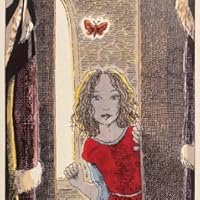
October 26, 2025
I'm afraid I can't review this book properly. Not until I have a day or a week or a year to really sit and think about it and turn it over in my mind and re-read it and generally live with it. For now, I'll make a small list of feelings as they come to me. Not truths, but my emotional reactions.
1. Philip Pullman is an awe-inspiring talent of a writer. The Rose Field is as beautifully written, as thematically complex, as emotionally wounding/stirring as all of the works in this saga. That has never wavered. He can also just weave such a damn fine yarn.
2. This book is as stuffed as The Secret Commonwealth was. Overstuffed? Hmm, not sure. It was all interesting, even the parts that I could feel were diversions or side quests. They all added to the themes and nuance of the story and the richness of the world and people. There are ten million characters and I wish I could have enough time to get to know all of them really well.
3. People I thought would be important in this volume were not. People I didn't really give a second thought to turned out to be essential. Some new faces too, including gryphons.
4. He gets so metaphysical and philosophical in parts that I was sure I wasn't smart enough to understand half of what he was saying. Need to mull over a lot of it.
5. A few of his ideas were as subtle as a sledgehammer but hey that's Pullman! He really goes in on soulless greed for one example.
6. This is not a romance book. Don't go into it looking for or wanting that, between any combination of characters. It is however a book that is very much about love (at least in part).
7. Still love the witches.
8. I think the ending was (a) perfect, and what a last line and (b) not enough! I wanted another denouement chapter. But then I keep circling back around to (a). This is the right ending for the story Pullman is telling.
9. The settings and world building continue to be off the charts. Some of these set pieces will never leave my mind. Stunning imagination.
10. Lyra is still Lyra, simply one of our best literary heroes. Never fear anyone who named their kid after her! But this is certainly an ensemble piece. Love how complex some of these folks are. Pullman is great at that.
11. Wanted more Alice.
12. Like all of these books, the hard truths this book had about our current real world were vivid and honest and made me more determined than ever to stand up for what is right.
13. I have unanswered questions and thoughts from the whole saga, but that's okay. Pullman is nothing if not a realist and real life involves some dangling questions.
14. It's not a perfect book, but it's pretty incredible. Its beauty, ambition, insight and trust in the reader all led me to still give it 5 stars. This entire His Dark Materials/ Book of Dust saga is a gift.
I'm pretty dumbstruck, honestly. I just love that books like this one are still being written and published. Those are my rough first thoughts.
1. Philip Pullman is an awe-inspiring talent of a writer. The Rose Field is as beautifully written, as thematically complex, as emotionally wounding/stirring as all of the works in this saga. That has never wavered. He can also just weave such a damn fine yarn.
2. This book is as stuffed as The Secret Commonwealth was. Overstuffed? Hmm, not sure. It was all interesting, even the parts that I could feel were diversions or side quests. They all added to the themes and nuance of the story and the richness of the world and people. There are ten million characters and I wish I could have enough time to get to know all of them really well.
3. People I thought would be important in this volume were not. People I didn't really give a second thought to turned out to be essential. Some new faces too, including gryphons.
4. He gets so metaphysical and philosophical in parts that I was sure I wasn't smart enough to understand half of what he was saying. Need to mull over a lot of it.
5. A few of his ideas were as subtle as a sledgehammer but hey that's Pullman! He really goes in on soulless greed for one example.
6. This is not a romance book. Don't go into it looking for or wanting that, between any combination of characters. It is however a book that is very much about love (at least in part).
7. Still love the witches.
8. I think the ending was (a) perfect, and what a last line and (b) not enough! I wanted another denouement chapter. But then I keep circling back around to (a). This is the right ending for the story Pullman is telling.
9. The settings and world building continue to be off the charts. Some of these set pieces will never leave my mind. Stunning imagination.
10. Lyra is still Lyra, simply one of our best literary heroes. Never fear anyone who named their kid after her! But this is certainly an ensemble piece. Love how complex some of these folks are. Pullman is great at that.
11. Wanted more Alice.
12. Like all of these books, the hard truths this book had about our current real world were vivid and honest and made me more determined than ever to stand up for what is right.
13. I have unanswered questions and thoughts from the whole saga, but that's okay. Pullman is nothing if not a realist and real life involves some dangling questions.
14. It's not a perfect book, but it's pretty incredible. Its beauty, ambition, insight and trust in the reader all led me to still give it 5 stars. This entire His Dark Materials/ Book of Dust saga is a gift.
I'm pretty dumbstruck, honestly. I just love that books like this one are still being written and published. Those are my rough first thoughts.
October 24, 2025
Spoilers
What a disappointment. None of the setup or major plot points had satisfying payoffs (good numbers, Blue Hotel, Tashbulak, even the red building was a huge disappointment, daemon sickness). There was a heavy-handed critique of capitalism stuffed into the end but only a few pages about Dust. A subplot about gryphons and a sorcerer that did nothing to advance the story. An ending where the villain is finished off by the most annoying side character. Lyra doing hardly anything useful throughout the book, except cutting open a doorway to go home. Character decisions made based on plot contrivance rather than what the characters would’ve really wanted (i.e. Lyra and Pan having so many chances to reunite but deciding not to so the author could save their reunion for the finale). So many pages dedicated to side characters whose stories were 100% unneeded and later abandoned (Dilyara, Chen, Strauss, Alice). Even Delamare’s motivations felt poorly defined (windows let in evil… how?). No meaningful mention of Will. And, worst of all, the realization that the windows should stay open to allow imagination to flow between worlds completely undermines Will’s and Lyra’s sacrifice.
I could go on.
I don’t think I’ve ever been more frustrated with a book.
What a disappointment. None of the setup or major plot points had satisfying payoffs (good numbers, Blue Hotel, Tashbulak, even the red building was a huge disappointment, daemon sickness). There was a heavy-handed critique of capitalism stuffed into the end but only a few pages about Dust. A subplot about gryphons and a sorcerer that did nothing to advance the story. An ending where the villain is finished off by the most annoying side character. Lyra doing hardly anything useful throughout the book, except cutting open a doorway to go home. Character decisions made based on plot contrivance rather than what the characters would’ve really wanted (i.e. Lyra and Pan having so many chances to reunite but deciding not to so the author could save their reunion for the finale). So many pages dedicated to side characters whose stories were 100% unneeded and later abandoned (Dilyara, Chen, Strauss, Alice). Even Delamare’s motivations felt poorly defined (windows let in evil… how?). No meaningful mention of Will. And, worst of all, the realization that the windows should stay open to allow imagination to flow between worlds completely undermines Will’s and Lyra’s sacrifice.
I could go on.
I don’t think I’ve ever been more frustrated with a book.
This entire review has been hidden because of spoilers.

October 29, 2025
This is the saddest 2 stars I've ever given. I'm not exactly sure what happened. Thematically, the first half of the book and the second half of the book were telling two different stories. I was really digging the ideas that the first half was leading to. A deconstruction of the idea of authority at all, how benevolent authority could still be problematic, the complexities of knowing something to be true and the rejection of hyper-rationality. I wanted this to be an exploration of the origins of Dust, maybe the intentionality of the soul. But somewhere around the halfway point, maybe two thirds, Philip decided we were majorly off track from the second "really cool" idea he had for how this book would end. We went off on pointless side quests that ultimately didn't matter. Characters made meaningless observations that were never followed up on. Lyra had these long monologues to tell you, the reader, what you should be thinking about. We got gryphons and sorcerer fights and stinky death bats showing up and having no impact whatsoever on the plot or the thematic development. I can't imagine why he would make these decisions. Maybe Philip got worn out on writing it? Maybe he got push back from his editor for whatever reason? Either way, the result was sub-par and a major disappointment in what was one of my most anticipated books of the year (and a sad way to bring a beloved book series to a close).

July 17, 2020
Pre-publication:
No, No, No, No, No, No, No, NO, NO. NO. NO, NO, NO, NO.
I Need it.
Now.
At this point, I have trouble distinguishing if it's Lyra who's stuck in the middle of a haunted desert somewhere, or if it's me.
Also, what does it even mean to grow up? How can I be a scientist and keep believing in magic? What does it mean to be happy with your own soul? Is there such a thing as objective reality?
I need this book to answer all my questions about life. Thank you.
Post-publication:
Unfortunately not only did this book not answer any of my questions about life. It was also an absolutely slug to get through, with a revolving cast of new characters I didn't care about, and absolutely nothing interesting happening to, or inside of, the characters I did know. I can't remember the last time it took me this much effort to pick up a book and keep reading.
No, No, No, No, No, No, No, NO, NO. NO. NO, NO, NO, NO.
I Need it.
Now.
At this point, I have trouble distinguishing if it's Lyra who's stuck in the middle of a haunted desert somewhere, or if it's me.
Also, what does it even mean to grow up? How can I be a scientist and keep believing in magic? What does it mean to be happy with your own soul? Is there such a thing as objective reality?
I need this book to answer all my questions about life. Thank you.
Post-publication:
Unfortunately not only did this book not answer any of my questions about life. It was also an absolutely slug to get through, with a revolving cast of new characters I didn't care about, and absolutely nothing interesting happening to, or inside of, the characters I did know. I can't remember the last time it took me this much effort to pick up a book and keep reading.
July 21, 2025
I’m disappointed that there were so many brilliant ideas that went nowhere or felt completely forgotten. I especially thought the critique of capitalism was interesting but underdeveloped. I’m not usually the kind of reader that needs everything tied up in a neat little bow at the end of a story, but the ending felt so abrupt that I was desperately wishing for one more chapter of resolution or even an epilogue.
Philip still does prose like no other, and I thought some of the meta bits about story telling and the nature of ideas were really masterful. Even with all the issues, it was a privilege to go on one last adventure with Lyra all these years later.
Edit to add: After sleeping on it, the one thing that I’m finding most difficult to accept is I’m ok with a little retconning, but this one really hurts.
—————————-
Pre-read: I was 12 when I first read the HDM trilogy. Now I’m 32 and ready for Pullman to break my heart all over again.
Philip still does prose like no other, and I thought some of the meta bits about story telling and the nature of ideas were really masterful. Even with all the issues, it was a privilege to go on one last adventure with Lyra all these years later.
Edit to add: After sleeping on it, the one thing that I’m finding most difficult to accept is I’m ok with a little retconning, but this one really hurts.
—————————-
Pre-read: I was 12 when I first read the HDM trilogy. Now I’m 32 and ready for Pullman to break my heart all over again.

January 16, 2026
The sixth and supposedly final chapter in what has mostly been a magnificent saga, especially with Lyra and her daemon Pan. I loved the first trilogy, but have found the first two books in the second to be more wandering, and here is more of the same. As happens to me when I read a follow up book when it's been a while since I read the previous one, I struggle. We get hints throughout from events and people from previous books, but they are not always relevant to this story. This one reminded me a bit of the later Game of Thrones books where new characters seem to materialise out of nowhere, and are often irrelevant to the story.
Anyway it was wonderful to revisit Lyra and Pan and Malcolm and Asta, the witches and so many other great characters, but in the end, I was left feeling a bit empty too. This was the first 'real book' I've read in a couple of years, so that at least was a change. Not going back except to read some pld books I still have or will borrow, as this one was.
Anyway it was wonderful to revisit Lyra and Pan and Malcolm and Asta, the witches and so many other great characters, but in the end, I was left feeling a bit empty too. This was the first 'real book' I've read in a couple of years, so that at least was a change. Not going back except to read some pld books I still have or will borrow, as this one was.
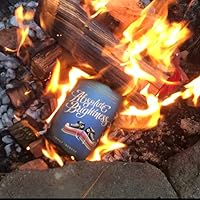
October 29, 2025
While The Secret Commonwealth was more miserable than The Rose Field, it at least held the hope that everything would be tied together in the third book. As I got about halfway through The Rose Field, I realized nothing would be resolved. Lyra's world reflects ours way too much. The story is scattered and SO many plotlines left unresolved. A big reveal related to The Amber Spyglass happens and is just dropped, and Lyra does not get angry like she should. I hated this book by the end. I'm going to pretend The Secret Commonwealth and The Rose Field just don't exist.

October 27, 2025
Because of the HDM legacy, I wanted to love this so badly, and it did start off quite exciting for about 4 chapters. Ultimately, I think all the things I loved so dearly about their original trilogy are things that made them books for children, in a good way while balancing dark and complex concepts, and this, like the Secret Commonwealth before it, is very much a depressing book for adults, but maybe not a good one regardless. It suffers from the same meandering, boring journeys and 12,000 side characters as the previous installment, with a heavy “quantity over quality” issue. It is impossible to care about what happens to almost any of them.
The author is an inspiration to me, and his writing has changed my life, so I feel terrible admitting that I wanted to force myself to feel differently about this book. But I just have no interest to finish the last 20%.
Beyond the pace, plot, tone, and characterization (sounds terribly when you list it out like that) there are multiple choices that were just disappointing — some expected, some not.
Edit: I did force myself to finish it. the more I’ve sat with it and gone through the inconsistencies and the weaknesses of this book, the more upset I’ve gotten. I’m going from 2 stars to 1. I would never presume to be entitled to something from an author, I find that parasocial, and I think this is about so much more than if character x ends up with y. But I’m beyond disappointed. The majority of the new plot points introduced are never resolved — why do they have to go there? What did they get out of it? What did they solve? It all felt radically pointless. The only silver lining is it cannot affect my enjoyment of the original series because it feels almost irrelevant to it.
The author is an inspiration to me, and his writing has changed my life, so I feel terrible admitting that I wanted to force myself to feel differently about this book. But I just have no interest to finish the last 20%.
Beyond the pace, plot, tone, and characterization (sounds terribly when you list it out like that) there are multiple choices that were just disappointing — some expected, some not.
Edit: I did force myself to finish it. the more I’ve sat with it and gone through the inconsistencies and the weaknesses of this book, the more upset I’ve gotten. I’m going from 2 stars to 1. I would never presume to be entitled to something from an author, I find that parasocial, and I think this is about so much more than if character x ends up with y. But I’m beyond disappointed. The majority of the new plot points introduced are never resolved — why do they have to go there? What did they get out of it? What did they solve? It all felt radically pointless. The only silver lining is it cannot affect my enjoyment of the original series because it feels almost irrelevant to it.

December 4, 2025
This was a painful read. I don't even think I can articulate how bad this was. There was too much going on and just outright stupidity in a few places. I really wish we had the Lyra we came to know in His Dark Materials. Heck, even the first book in the "Book of Dust" trilogy was good, but then it went off the rails with book #2 and now this. Also the ending was a let-down. Don't get me started on someone being straight up murderous through three books and going, eh bygones. I don't know what the point of this book even was in the end.
The Rose Field is the final book (thank you book gods) in the Book of Dust trilogy. We follow Lyra as she tries to find Pan and Malcolm being an utter waste of space some more as they try to figure out how a trail of roses will explain the dust.
I do think that probably the only thing I can give credit to this series for is how much we lose ourselves as we get older. And I think that's what Pullman was going for in the end. We lose what made us brave, fall in love, and just believe in things that we can't even see. That said, this book following a bunch of adults depressed the life out of me.
If you thought there be some resolution about Will and Lyra please skip this book. If you thought the whole Malcolm thing would be adequately addressed, skip this book. Honestly, I could not stand that character and resented everytime he popped up defending Lyra or trying to take charge. He's no Will. And btw Pullman even undoes one of the major plot points in the original His Dark Materials and I just don't even get what is happening. Heck, I don't even know if this is fully wrapped up as a trilogy, I imagine Pullman flings a short story at us one of these days in the future because the loose ends were a mess.
Also, I won't lie, I started to skim this book in self defense. Between this and King Sorrow this year, I have had it up to here with 500 plus page books that are giving us nothing. I just wanted to get to the end.
The Rose Field is the final book (thank you book gods) in the Book of Dust trilogy. We follow Lyra as she tries to find Pan and Malcolm being an utter waste of space some more as they try to figure out how a trail of roses will explain the dust.
I do think that probably the only thing I can give credit to this series for is how much we lose ourselves as we get older. And I think that's what Pullman was going for in the end. We lose what made us brave, fall in love, and just believe in things that we can't even see. That said, this book following a bunch of adults depressed the life out of me.
If you thought there be some resolution about Will and Lyra please skip this book. If you thought the whole Malcolm thing would be adequately addressed, skip this book. Honestly, I could not stand that character and resented everytime he popped up defending Lyra or trying to take charge. He's no Will. And btw Pullman even undoes one of the major plot points in the original His Dark Materials and I just don't even get what is happening. Heck, I don't even know if this is fully wrapped up as a trilogy, I imagine Pullman flings a short story at us one of these days in the future because the loose ends were a mess.
Also, I won't lie, I started to skim this book in self defense. Between this and King Sorrow this year, I have had it up to here with 500 plus page books that are giving us nothing. I just wanted to get to the end.
October 24, 2023
are you kidding me?? he dragged out the plot of this book for six hundred pages, constantly adding new perspectives and sending the characters on unnecessary side-quests, just to give the trilogy one of the worst endings in literary history with no closure for a story that he’s been writing since the 1990s! I demand a rewrite, a bonus epilogue, anything, just as long as it isn’t more loose ends and ambiguities that we’ll never know the answers to.
it’s like he spent six years writing it, didn’t bother editing it, and published it like “here’s your damn book now leave me in peace”. it’s incredibly disappointing considering how much I love the first two books in this trilogy. so many loose ends, major aspects of the overall story left unexplained, and a lack of conclusion so jarring it feels like we should be expecting a fourth book (despite the fact he has publicly stated that Lyra’s story is ‘complete’!)
why the fuck did I read 2000 pages of this trilogy just to literally never find out what happens to Lyra and Malcolm? not to mention the entire Greek chorus of side characters with stories now forever left unfinished.
it’s like he spent six years writing it, didn’t bother editing it, and published it like “here’s your damn book now leave me in peace”. it’s incredibly disappointing considering how much I love the first two books in this trilogy. so many loose ends, major aspects of the overall story left unexplained, and a lack of conclusion so jarring it feels like we should be expecting a fourth book (despite the fact he has publicly stated that Lyra’s story is ‘complete’!)
why the fuck did I read 2000 pages of this trilogy just to literally never find out what happens to Lyra and Malcolm? not to mention the entire Greek chorus of side characters with stories now forever left unfinished.

November 3, 2025
I had to think a few days about my feelings on this book. I wavered between 2 and 4 stars.
Two stars because the story has many plot holes and unfinished threads. Also, it contains philosophical contradictions with the first series, his dark materials. And finally because the ending feels rushed and is a bit clunky. Philip Pullman sounds a bit worldweary at the end. The ending is not very magical.
Four stars because his writing is wonderful and the story has given me food for thought. Maybe the plotholes are intentional! Lyra concludes at some point that "if you find a system that seems perfect and complete, where you can prove everything - then you're wrong. You're not looking properly. Because we need the gaps, you see? (...)"
Maybe Pullman wants us to use our imagination to fill in the gaps and to come up with an epilogue, which I really wanted after the abrupt ending. According to Lyra imaginion is perception and connection: "People who think imagination is just making things up, they're just wrong. (...) Imagination is seeing things properly, real things, seeing them fully in all their contexts with all their connections in place, all the things they mean around them....."
So, I should probably read the book again, but I admit I'd love an interview with Pullman where he explains a little bit more! I guess I lack the imagination to fill all the holes and answer the many questions I have.
Two stars because the story has many plot holes and unfinished threads. Also, it contains philosophical contradictions with the first series, his dark materials. And finally because the ending feels rushed and is a bit clunky. Philip Pullman sounds a bit worldweary at the end. The ending is not very magical.
Four stars because his writing is wonderful and the story has given me food for thought. Maybe the plotholes are intentional! Lyra concludes at some point that "if you find a system that seems perfect and complete, where you can prove everything - then you're wrong. You're not looking properly. Because we need the gaps, you see? (...)"
Maybe Pullman wants us to use our imagination to fill in the gaps and to come up with an epilogue, which I really wanted after the abrupt ending. According to Lyra imaginion is perception and connection: "People who think imagination is just making things up, they're just wrong. (...) Imagination is seeing things properly, real things, seeing them fully in all their contexts with all their connections in place, all the things they mean around them....."
So, I should probably read the book again, but I admit I'd love an interview with Pullman where he explains a little bit more! I guess I lack the imagination to fill all the holes and answer the many questions I have.

December 15, 2025
Upon further consideration, lowering my rating to 2 stars. How very "meh."
If you loved the original books in this universe, from approximately 25 years ago, maybe you'll be happy that we're back? Lyra is still a main character. Personal daemons are still a thing. Lyra still has that damn golden compass, even though she goes without it for most of this novel. The "subtle knife" is still referenced early and often, because the plot of this novel deals with the idea that someone left portals to other dimensions unattended, scattered across Lyra's world.
And it's all just so... Pointless.
Unclear what exactly the MacGuffin is. Is it the alethiometer that Lyra had stolen from her? Her ally Malcolm got it back fairly quickly. Is the MacGuffin Lyra's imagination, which her daemon insists she has been missing for years, ever since the bizarre adventure that took place in the original books?
I lost a lot of respect for these books when I met the author 25 years ago. He came to Anderson's Bookstore in Illinois and talked about His Dark Materials. He explained how he first wrote The Golden Compass, just letting his fingers go nuts on screen, and he was as shocked as anyone else when he wrote, "Lyra and her daemon." The way he described coming up with the armored polar bears, and the super tiny people with spurs, and everything else, is basically just stream of consciousness. I'm not sure that the armored bears actually represent anything. It was more that he let his imagination run wild for a bit, and after he wrote several hundred pages, it became evident that certain Christian (and anti-Christian) themes were pervasive.
I know that there were two earlier books in this "reboot" of His Dark Materials, but they were both extremely blah. I had trouble paying attention to them as I was reading them. This book is only a little better.
For some reason there are many, many daemons "separated" from their human counterparts. We were given to understand that this should be extremely rare, unthinkable even, yet almost every single main character in this book spends long stretches separated from their daemon by miles. For most humans, they're supposed to be incapable of going more than 10 feet from their daemon. But here, for some reason there are multiple daemons who are addressed on their own, and someone actually feels the need to ask, "Are you separated?" It should be obvious because there is no human nearby, you blind nitwit. And why is it Lyra and Malcolm keep meeting humans, explaining, "We're separated from our daemons," and the strangers just accept this in stride? Shouldn't they shriek and call Lyra a witch? Shouldn't they faint and go apoplectic at the idea of being separated from a daemon, just like they do at the prospect of a daemon outliving their human?
This comes after I would prefer to have way more detail about what life with daemons must be like. Shouldn't children be highly sought after for most manual labor, given how their daemons are capable of shapeshifting into anything? If a construction company needs to have steel girders moved from one lot to another, they shouldn't need too much expensive equipment; they could just hire a crew of nine year olds to turn their daemons into elephants, tie the girders to their backs, and drag them where they need to go through brute force alone.
Prepubescent children could make for great Uber drivers. They don't need to bother waiting around to get their driver's license-- any child under the age of puberty can immediately turn their daemon into a steed large enough to carry themselves and a passenger. In that regard, the gig economy would be devastated, as every underage child in the world could instantly produce transportation without any overhead costs, licensing requirements, or need to purchase insurance. If you need to get from one part of London to another, just ask a seven-year-old girl to show up with a stallion, or a camel, or an elephant.
Children could be sought out as the ultimate assassins. They could hide outside their target's window, turn their daemon into something small to get through the window screen, like an ant, and then turn the daemon into something venomous once they're inside the target's bedroom. Any child should be capable of killing their target with asp venom, or scorpion stings, or even something convoluted where they have their daemon take a venomous form and then *milk* the venom from their daemon's fangs.
For that matter, children should be able to demolish most anything by themselves. They can have their daemon fly high up in the air in bird form, and then divebomb a wooden shack from above in the form of a whale. Do you have any idea how many people would be crushed to death in this universe?
Don't people realize it would be so much easier to be a biologist in this universe? If you're wondering about whether finches can see in color, you can just ask a finch daemon about what colors they perceive. You can ask an octopus daemon about how they generate locomotion in water, or whether it hurts to lose a tentacle.
Yet, the author doesn't spend time on all the novel ways that life with daemons would be so much more interesting and exciting than our everyday life. Instead, the author spent time focusing on the idea of how impossible and unnatural it should be for a daemon to outlive their human. I have read every book in this universe, and I'm still unclear on what the daemon is supposed to represent. The human's innocence? Imagination? Their true personality made manifest? I dunno.
I know from the original books that sometimes a human is shocked to learn that their daemon is going to take the permanent form of something aquatic. When this happens, the human has no choice but to live on a ship, condemned to a lifetime at sea. I can't help but wonder what it's like for the kid going through puberty when this happens. How much of an advance notice does he get that his daemon is about to turn into a guppy? Do pubescent children walk around with Nalgene bottles full of water just in case their daemon turns into something aquatic while the adolescent is walking down the street? How many pubescent children die each year because their daemon turned into a minnow when their human was nowhere near water, so both adolescent and daemon immediately dropped dead?
Can a prepubescent child turn their daemon into an egg-laying hen, and then eat the eggs? How long must the daemon take hen form before the egg becomes an option? If the daemon lays the egg, and then immediately turns into some other animal form like a kitten or a dragonfly, does the egg remain unaffected? If so, that's yet another superpower that makes prepubescent humans wonderful to have around.
If the daemon has sex with an animal of its own kind, can the daemon get pregnant or cause the other animal to get pregnant? I know that people would probably respond that the daemons have human intelligence so that's sick, they would never have sex with common animals. But, what if a daemon in cat form encountered another daemon in cat form? And they both verbally gave consent before having sex? Would one of those daemons get pregnant?
It was hard to take this sequel series seriously in the first place just because of how mopey and tragic Lyra was. She had lost her ability to use the alethiometer, which was previously the coolest thing about her. Pan, her daemon, had lost his power to shapeshift into any animal. Lyra sighed a lot, thinking of Will as her one true love, even though he was a 14-year-old boy from another dimension she knew for a few months and slept with once. I remember when I first finished "The Golden Compass," I shouted to my mom, "They killed God with underage sex!"
I met the love of my life when I was 15. And even I found myself rolling my eyes at this idea that a grown woman thinks that she will never love again because she lost the love of her life at 14. She turned herself into a sad spinster. And all the more tragic, because this pretty spinster lost almost every superpower, or anything else that was ever cool about her.
In this particular novel, Lyra doesn't sigh and bemoan her loss of Will that much. But, she also doesn't find a new love interest. This book largely serves no purpose whatsoever. It solves the mystery of "Dust" and "Rose Oil." I was not on the edge of my seat about this. In short, this sequel series simply shouldn't exist.
If you loved the original books in this universe, from approximately 25 years ago, maybe you'll be happy that we're back? Lyra is still a main character. Personal daemons are still a thing. Lyra still has that damn golden compass, even though she goes without it for most of this novel. The "subtle knife" is still referenced early and often, because the plot of this novel deals with the idea that someone left portals to other dimensions unattended, scattered across Lyra's world.
And it's all just so... Pointless.
Unclear what exactly the MacGuffin is. Is it the alethiometer that Lyra had stolen from her? Her ally Malcolm got it back fairly quickly. Is the MacGuffin Lyra's imagination, which her daemon insists she has been missing for years, ever since the bizarre adventure that took place in the original books?
I lost a lot of respect for these books when I met the author 25 years ago. He came to Anderson's Bookstore in Illinois and talked about His Dark Materials. He explained how he first wrote The Golden Compass, just letting his fingers go nuts on screen, and he was as shocked as anyone else when he wrote, "Lyra and her daemon." The way he described coming up with the armored polar bears, and the super tiny people with spurs, and everything else, is basically just stream of consciousness. I'm not sure that the armored bears actually represent anything. It was more that he let his imagination run wild for a bit, and after he wrote several hundred pages, it became evident that certain Christian (and anti-Christian) themes were pervasive.
I know that there were two earlier books in this "reboot" of His Dark Materials, but they were both extremely blah. I had trouble paying attention to them as I was reading them. This book is only a little better.
For some reason there are many, many daemons "separated" from their human counterparts. We were given to understand that this should be extremely rare, unthinkable even, yet almost every single main character in this book spends long stretches separated from their daemon by miles. For most humans, they're supposed to be incapable of going more than 10 feet from their daemon. But here, for some reason there are multiple daemons who are addressed on their own, and someone actually feels the need to ask, "Are you separated?" It should be obvious because there is no human nearby, you blind nitwit. And why is it Lyra and Malcolm keep meeting humans, explaining, "We're separated from our daemons," and the strangers just accept this in stride? Shouldn't they shriek and call Lyra a witch? Shouldn't they faint and go apoplectic at the idea of being separated from a daemon, just like they do at the prospect of a daemon outliving their human?
This comes after I would prefer to have way more detail about what life with daemons must be like. Shouldn't children be highly sought after for most manual labor, given how their daemons are capable of shapeshifting into anything? If a construction company needs to have steel girders moved from one lot to another, they shouldn't need too much expensive equipment; they could just hire a crew of nine year olds to turn their daemons into elephants, tie the girders to their backs, and drag them where they need to go through brute force alone.
Prepubescent children could make for great Uber drivers. They don't need to bother waiting around to get their driver's license-- any child under the age of puberty can immediately turn their daemon into a steed large enough to carry themselves and a passenger. In that regard, the gig economy would be devastated, as every underage child in the world could instantly produce transportation without any overhead costs, licensing requirements, or need to purchase insurance. If you need to get from one part of London to another, just ask a seven-year-old girl to show up with a stallion, or a camel, or an elephant.
Children could be sought out as the ultimate assassins. They could hide outside their target's window, turn their daemon into something small to get through the window screen, like an ant, and then turn the daemon into something venomous once they're inside the target's bedroom. Any child should be capable of killing their target with asp venom, or scorpion stings, or even something convoluted where they have their daemon take a venomous form and then *milk* the venom from their daemon's fangs.
For that matter, children should be able to demolish most anything by themselves. They can have their daemon fly high up in the air in bird form, and then divebomb a wooden shack from above in the form of a whale. Do you have any idea how many people would be crushed to death in this universe?
Don't people realize it would be so much easier to be a biologist in this universe? If you're wondering about whether finches can see in color, you can just ask a finch daemon about what colors they perceive. You can ask an octopus daemon about how they generate locomotion in water, or whether it hurts to lose a tentacle.
Yet, the author doesn't spend time on all the novel ways that life with daemons would be so much more interesting and exciting than our everyday life. Instead, the author spent time focusing on the idea of how impossible and unnatural it should be for a daemon to outlive their human. I have read every book in this universe, and I'm still unclear on what the daemon is supposed to represent. The human's innocence? Imagination? Their true personality made manifest? I dunno.
I know from the original books that sometimes a human is shocked to learn that their daemon is going to take the permanent form of something aquatic. When this happens, the human has no choice but to live on a ship, condemned to a lifetime at sea. I can't help but wonder what it's like for the kid going through puberty when this happens. How much of an advance notice does he get that his daemon is about to turn into a guppy? Do pubescent children walk around with Nalgene bottles full of water just in case their daemon turns into something aquatic while the adolescent is walking down the street? How many pubescent children die each year because their daemon turned into a minnow when their human was nowhere near water, so both adolescent and daemon immediately dropped dead?
Can a prepubescent child turn their daemon into an egg-laying hen, and then eat the eggs? How long must the daemon take hen form before the egg becomes an option? If the daemon lays the egg, and then immediately turns into some other animal form like a kitten or a dragonfly, does the egg remain unaffected? If so, that's yet another superpower that makes prepubescent humans wonderful to have around.
If the daemon has sex with an animal of its own kind, can the daemon get pregnant or cause the other animal to get pregnant? I know that people would probably respond that the daemons have human intelligence so that's sick, they would never have sex with common animals. But, what if a daemon in cat form encountered another daemon in cat form? And they both verbally gave consent before having sex? Would one of those daemons get pregnant?
It was hard to take this sequel series seriously in the first place just because of how mopey and tragic Lyra was. She had lost her ability to use the alethiometer, which was previously the coolest thing about her. Pan, her daemon, had lost his power to shapeshift into any animal. Lyra sighed a lot, thinking of Will as her one true love, even though he was a 14-year-old boy from another dimension she knew for a few months and slept with once. I remember when I first finished "The Golden Compass," I shouted to my mom, "They killed God with underage sex!"
I met the love of my life when I was 15. And even I found myself rolling my eyes at this idea that a grown woman thinks that she will never love again because she lost the love of her life at 14. She turned herself into a sad spinster. And all the more tragic, because this pretty spinster lost almost every superpower, or anything else that was ever cool about her.
In this particular novel, Lyra doesn't sigh and bemoan her loss of Will that much. But, she also doesn't find a new love interest. This book largely serves no purpose whatsoever. It solves the mystery of "Dust" and "Rose Oil." I was not on the edge of my seat about this. In short, this sequel series simply shouldn't exist.
October 28, 2025
I've been reading this series ever since The Subtle Knife came out in 1997 and have been a huge fan of the His Dark Materials trilogy ever since. With that said this has been the most disappointing book I have ever read. As Pullman is advancing in age with deteriorating health, he rushed this to publication and lost his own imagination along the way. This is definitely one of those times an author should have left his work alone and not meddle in the story 25 years later,
I think the thing I am struggling with the most is that the story doesn't pull you in, and I'm really not vested in the characters. Which is crazy because this is Lyra we are talking about. The whole last book; The Secret Commonwealth, focused on Lyra's journey, and this book spends way too much time on it as well. I say this because not much is added to the overall story arch during this. The best parts are the retelling of events from HDM from another characters perspective. Then we get to the last few chapters and Pullman tries to pull all the loose threads together. Nothing makes sense and long time fans are left feeling angry and confused. . Oh, and did I mention how boring it was, this was a slog to get through.
There is no good reason to read this book as it is complete rubbish and it will probably be viewed as something only die-hard fans will read, so those who pretend to be intellectually superior to us peons can pontificate how we are wrong as they try to explain away the "hidden" meaning behind all the plot holes.
For me, I will view La Belle Sauvage as a stand alone prequel to the HDM trilogy and pretend TSC & TRF were never written.
I think the thing I am struggling with the most is that the story doesn't pull you in, and I'm really not vested in the characters. Which is crazy because this is Lyra we are talking about. The whole last book; The Secret Commonwealth, focused on Lyra's journey, and this book spends way too much time on it as well. I say this because not much is added to the overall story arch during this. The best parts are the retelling of events from HDM from another characters perspective. Then we get to the last few chapters and Pullman tries to pull all the loose threads together. Nothing makes sense and long time fans are left feeling angry and confused. . Oh, and did I mention how boring it was, this was a slog to get through.
There is no good reason to read this book as it is complete rubbish and it will probably be viewed as something only die-hard fans will read, so those who pretend to be intellectually superior to us peons can pontificate how we are wrong as they try to explain away the "hidden" meaning behind all the plot holes.
For me, I will view La Belle Sauvage as a stand alone prequel to the HDM trilogy and pretend TSC & TRF were never written.

October 31, 2025
Yikes. Holy mother of all ret-conning, Batman. If you at all enjoyed the original His Dark Materials, do not read this. Pullman undoes pretty much all of the beautiful work he did there by literally saying "Nope that wasn't it at all." He starts to make a point about capitalism here--and it's not a point I disagree with--but it enters the story way too late to have any of the impact the original trilogy did with the topic of religious institutions. We also spend a huge portion of time off just doing random shit, like visiting with a bunch of gryphons because...why? What point did that actually serve? They're clearly meant to be the analog to the armored bears in the first trilogy, right down to having a winged nemesis (the weird birds here, the cliffghasts there) but they are not nearly as cool nor as integral to the storyline. Serfina Pekkala deserved better. Why tf are all these people suddenly related? Nonsense.
The ONLY redeeming factor of this book is that and even that can't get us very far in the face of the rest of the mess.
The ONLY redeeming factor of this book is that and even that can't get us very far in the face of the rest of the mess.
October 25, 2025
If this were a random book by a random author, I’d give it a 3 probably, because the prose is gorgeous and the characters are fantastic.
If another BOD were coming, I’d give it a 5 because all the many loose ends would be acceptable and make sense.
As the final book in Lyra’s journey, and possibly the final Pullman book we’ll get — I am so disappointed. Gut wrenching levels of disappointment.
Romantic side stories aside, there were a million threads with so much promise and built up so much tension & excitement, only to completely disappear.
The only spoiler thing I’ll post —
No Will, which would have been fine with me if the book didn’t undo the entire reason we didn’t expect to see him in the first place.
I need like a novella of the two of them meeting in the Land of the Dead again one day. But I think this is the last Pullman work we’ll get, which makes this disappointment cut that much deeper.
If another BOD were coming, I’d give it a 5 because all the many loose ends would be acceptable and make sense.
As the final book in Lyra’s journey, and possibly the final Pullman book we’ll get — I am so disappointed. Gut wrenching levels of disappointment.
Romantic side stories aside, there were a million threads with so much promise and built up so much tension & excitement, only to completely disappear.
The only spoiler thing I’ll post —
No Will, which would have been fine with me if the book didn’t undo the entire reason we didn’t expect to see him in the first place.
I need like a novella of the two of them meeting in the Land of the Dead again one day. But I think this is the last Pullman work we’ll get, which makes this disappointment cut that much deeper.
This entire review has been hidden because of spoilers.
October 27, 2025
I feel sad for leaving a 2-star review. I adore HDM, that trilogy made me who I am no doubt, and I was very glad to find out some years back about La Belle Savage. I really enjoyed it.Then the 2nd book was alright.
But what's with this hot mess of a "closing" of the trilogy? Multiple, and I mean multiple, plotlines left unresolved; and I won't be satisfied with "use your imagination" with the amount of Chekhov's guns scattered through the whole book (and it really is an issue with this 3rd book especially).
Retconning how Dust is affected by the open gateways between worlds might be a good idea; what is absolutely not a good idea is leaving that idea unexplored, inconsequential.
The Amber Spyglass left Lyra and Will, and us readers, absolutely heartbroken, because "all windows must be closed and only the one in the land of the dead might remain open, in order not to upset the flow of Dust", all windows including the one connecting Lyra and Will's worlds, leaving them stranded forever.
But suddenly not only does it not matter (since there are more than a dozen still open windows) but it might even be desirable? How is Lyra not livid and just out of herself? All these years she could have kept living with Will, taking turns in each other's worlds, or whichever way they had figured out. All these years they were living a lie? And opening a window doesn't bring about a Spectre if the alethiometer's needle is used?
So many incongruences and insufficient explanations. So little exploration by the characters of how the consequences of what they've suddenly realized contradict everything they knew. So many interesting characters with so little personality at the very end.
I am sorry but I wish I had just read La Belle Savage and stopped at that.
My appreciation for HDM has done nothing if not increase. My respect for Mr. Pullman's capacity as a builder of stories and worlds, or for his publisher's hand in whichever way he might have been involved, has absolutely plummeted.
The book is wonderfully written, and that certainly works in its favor. But a bland, but very beautiful tomato is still bland.
But what's with this hot mess of a "closing" of the trilogy? Multiple, and I mean multiple, plotlines left unresolved; and I won't be satisfied with "use your imagination" with the amount of Chekhov's guns scattered through the whole book (and it really is an issue with this 3rd book especially).
Retconning how Dust is affected by the open gateways between worlds might be a good idea; what is absolutely not a good idea is leaving that idea unexplored, inconsequential.
The Amber Spyglass left Lyra and Will, and us readers, absolutely heartbroken, because "all windows must be closed and only the one in the land of the dead might remain open, in order not to upset the flow of Dust", all windows including the one connecting Lyra and Will's worlds, leaving them stranded forever.
But suddenly not only does it not matter (since there are more than a dozen still open windows) but it might even be desirable? How is Lyra not livid and just out of herself? All these years she could have kept living with Will, taking turns in each other's worlds, or whichever way they had figured out. All these years they were living a lie? And opening a window doesn't bring about a Spectre if the alethiometer's needle is used?
So many incongruences and insufficient explanations. So little exploration by the characters of how the consequences of what they've suddenly realized contradict everything they knew. So many interesting characters with so little personality at the very end.
I am sorry but I wish I had just read La Belle Savage and stopped at that.
My appreciation for HDM has done nothing if not increase. My respect for Mr. Pullman's capacity as a builder of stories and worlds, or for his publisher's hand in whichever way he might have been involved, has absolutely plummeted.
The book is wonderfully written, and that certainly works in its favor. But a bland, but very beautiful tomato is still bland.
This entire review has been hidden because of spoilers.
Want to Read
February 7, 2022When is this coming? I want it now.

November 16, 2025
I truly regret reading this and wish I could erase it from my mind and pretend that only the original trilogy exists, which I loved so much growing up.
All the otherworldliness, warmth, adventure, optimism, magic, and sense of genuine danger of HDM has gone from these books for me. It feels like Pullman is the one who has lost his imagination for good. If this is how he sees adulthood vs childhood, then I'm sad for him.
I waded through nearly 2,000 meandering pages full of endless new characters and side-quests that led nowhere, and for what?? What on earth was the point in the end?? The major reveal just basically says "SYKE!" to the heart-wrenching conclusion of TAS and we're meant to be like "Oh, ok then!!"?? What an utterly depressing note to end on for the adventures of the most plucky little heroine of my childhood.
Now I just need Tolkien to come back from the dead and write about how Aragorn didn't do a very good job as king in the end, Hobbiton was full of gratuitous sexual violence, Sam toyed with the idea of a grossly age-inappropriate relationship, and the orcs all came back in full force like nothing had happened.
All the otherworldliness, warmth, adventure, optimism, magic, and sense of genuine danger of HDM has gone from these books for me. It feels like Pullman is the one who has lost his imagination for good. If this is how he sees adulthood vs childhood, then I'm sad for him.
I waded through nearly 2,000 meandering pages full of endless new characters and side-quests that led nowhere, and for what?? What on earth was the point in the end?? The major reveal just basically says "SYKE!" to the heart-wrenching conclusion of TAS and we're meant to be like "Oh, ok then!!"?? What an utterly depressing note to end on for the adventures of the most plucky little heroine of my childhood.
Now I just need Tolkien to come back from the dead and write about how Aragorn didn't do a very good job as king in the end, Hobbiton was full of gratuitous sexual violence, Sam toyed with the idea of a grossly age-inappropriate relationship, and the orcs all came back in full force like nothing had happened.

November 16, 2025
Facepalm. Що це було?
Загалом останні дві книги з цього циклу читати не треба.
Загалом останні дві книги з цього циклу читати не треба.

October 30, 2025
Mild spoilers. Audible. Excellent, emotion filled, nuanced narration. There’s a bonus interview/conversation at the end of this book between Philip Pullman and the narrator, Michael Sheen, and in it they talk about the epic nature of this story, the journey Lyra takes with Pan, and the growth they have along the way. This is exactly how I experienced these books. The story is one long continuous tale of exploration, growth, and deep love. I’ve noticed a fair few reviews commenting on the disappearance of the enchanted portrayal of young Lyra and the changing action and nature of the universe in which Lyra lives. It’s supposed to be this way. None of us gets to permanently steep in nostalgia and then hope to experience emotional growth. Lyra faces uncertainty with curiosity rather than hiding in the Magesterium’s dogma, ritual, and authoritarian rigidity. Her story moves on. Religious fundamentalism can’t. By its very nature it never changes its mind about anything. It needs you to stay put and worship.
While reading The Secret Commonwealth, I was so frequently feeling the upset, the pain, the resentment, and the distance between Pan and Lyra, that at times it was hard to read. I desperately wanted Pan and Lyra to reconcile well before they had worked through their differences and their feelings. Please don’t leave each other, I found myself begging, but also, I deeply felt that they needed to part to understand what the barriers between them were made of. In many ways, Pan and Lyra had to be made of sterner stuff than average people, and they had to learn to go it alone in that no one in the world could understand what they’d been through, who they’d lost, how much loss they could endure, and how they’d ever be whole after it all. Lyra and Pan had no map to follow. If The Secret Commonwealth was the parting, the desertion in utter darkness and frustration that neither could overcome the pain they felt, that neither could give over to the other, that neither could forgive the other, that neither could survive the admission that they were hurting each other, and that Lyra couldn’t admit she was distancing herself not just from Pan, but also from the idea of him, then The Rose Field is the drawing together of the two in realization that there will always be pain and suffering in love, in dedication to the other, and in imagining and understanding the ways being apart pulls them so completely together, Lyra and Pan begin to grow stronger.
I’ve always been fascinated, absolutely absorbed by the idea of a daemon, and Pullman so thoroughly explores the concept throughout all of his books in this series, that I could actually see and feel the connection these daemons had or in some cases did not have with their humans. In The Rose Field, Gottfried Brande, who wrote The Hyperchorosmions, the book that Lyra was so influenced by that encouraged readers to think rationally and rejected the idea that daemons were even real, was brilliantly written and portrayed as deeply in denial of his reality. His daemon was an adopted German shepherd named Cosima, who acted as if she didn’t exist fully. She was neglected, emotionally abused by Brande and scarred so badly from being separate and ignored, that the scenes in which she appears are heart breaking. Brande and Cosima’s relationship is every bit as exquisitely deranged as Mrs. Coulter and her Golden Monkey (see Ruth Wilson’s outstanding work as Mrs. Coulter in the tv series His Dark Materials). When Pan seeks out and confronts Brande for hurting and corrupting Lyra’s emotional life and her imagination, it’s very satisfying. Stunningly, when Brande dies, Cosima survives for a short excruciating time during which we’re certain she’s losing her mind and her soul. It’s gut wrenching. Pullman continually shows us the ways humans sever themselves and the ways humans and daemons suffer, and I think Brande’s warped relationship with his daemon is particularly disturbing and tragic and well done.
The entire time I was reading about Lyra and Malcolm’s journey in this book, I was reminded of their harrowing escape during the flood in the first book, La Belle Sauvage, and I couldn’t help but think that Malcolm’s way of “seeing” The Secret Commonwealth has always been keen and penetrating, just like Lyra. Pullman offers up outstanding fantasy details, just like in La Belle Sauvage, only this time with his descriptions of gryphons, witches, a capable and strangely knowledgeable guide, Abdel Ionides, and a very damaged alethiometer, its pieces salvaged for other purposes by Lyra and Malcom, a beautiful metaphor for the tasks Lyra and Malcom must accomplish in their adult relationship. The two started this journey together and now they end it that way, in all the most important ways the same people they were at the start, but with belief in their daemons, in themselves, and The Secret Commonwealth secure.
Pullman sets these last two books in a world rich with Silk Road traders, desert villages, a version of Aleppo in which its grandeur still stands, and characters that are mysteriously intertwined in the Asian landscape where The Magisterium has a hold as tightly as it did in the previous five books. No where is safe from the corruption of The Magisterium. They consume everything. It all feels very relevant and real.
Lastly, I love the way Pullman, can shape characters in unexpected ways. The unfolding of Mrs. Coulter in the HBO series in which she was played by Ruth Wilson, was such a powerful portrayal of complexity, a woman pushed to insane limits, and a mother defying The Magesterium’s most oppressive and dangerous edicts, that I really want more of Pullman’s characters to come alive like this. Olivier Bonneville is more than he appears, and in the final scenes of the book, we come to understand this and begin thinking back about what he’s done previously and why. He’s a character, that if ever brought to life on the screen, would play as complex, needful, and driven. When I listen to the books again, I’ll be focusing on him and his end of story revelation. I’m afraid as I was listening to the books, trying to determine motivation, attempting to figure out what each character was about, I may have seen Olivier as either good or bad, rather than a person at the mercy of.
Both of Pullman’s trilogies are among my favorite fantasy books. His idea that not all humans are aware of their daemons is endlessly interesting. Beyond that, daemons clearly are capable of showing us contradictory parts of ourselves, not only because they’re usually the opposite sex of their human, but because they’re an external representation of us. Pullman dismantles any notion or reliance on the sacred dualism religion runs on; the absolutes are left scattered in the wind. I can’t think of a more compelling narrative to build stories around, embracing the complexity of one’s humanity.
While reading The Secret Commonwealth, I was so frequently feeling the upset, the pain, the resentment, and the distance between Pan and Lyra, that at times it was hard to read. I desperately wanted Pan and Lyra to reconcile well before they had worked through their differences and their feelings. Please don’t leave each other, I found myself begging, but also, I deeply felt that they needed to part to understand what the barriers between them were made of. In many ways, Pan and Lyra had to be made of sterner stuff than average people, and they had to learn to go it alone in that no one in the world could understand what they’d been through, who they’d lost, how much loss they could endure, and how they’d ever be whole after it all. Lyra and Pan had no map to follow. If The Secret Commonwealth was the parting, the desertion in utter darkness and frustration that neither could overcome the pain they felt, that neither could give over to the other, that neither could forgive the other, that neither could survive the admission that they were hurting each other, and that Lyra couldn’t admit she was distancing herself not just from Pan, but also from the idea of him, then The Rose Field is the drawing together of the two in realization that there will always be pain and suffering in love, in dedication to the other, and in imagining and understanding the ways being apart pulls them so completely together, Lyra and Pan begin to grow stronger.
I’ve always been fascinated, absolutely absorbed by the idea of a daemon, and Pullman so thoroughly explores the concept throughout all of his books in this series, that I could actually see and feel the connection these daemons had or in some cases did not have with their humans. In The Rose Field, Gottfried Brande, who wrote The Hyperchorosmions, the book that Lyra was so influenced by that encouraged readers to think rationally and rejected the idea that daemons were even real, was brilliantly written and portrayed as deeply in denial of his reality. His daemon was an adopted German shepherd named Cosima, who acted as if she didn’t exist fully. She was neglected, emotionally abused by Brande and scarred so badly from being separate and ignored, that the scenes in which she appears are heart breaking. Brande and Cosima’s relationship is every bit as exquisitely deranged as Mrs. Coulter and her Golden Monkey (see Ruth Wilson’s outstanding work as Mrs. Coulter in the tv series His Dark Materials). When Pan seeks out and confronts Brande for hurting and corrupting Lyra’s emotional life and her imagination, it’s very satisfying. Stunningly, when Brande dies, Cosima survives for a short excruciating time during which we’re certain she’s losing her mind and her soul. It’s gut wrenching. Pullman continually shows us the ways humans sever themselves and the ways humans and daemons suffer, and I think Brande’s warped relationship with his daemon is particularly disturbing and tragic and well done.
The entire time I was reading about Lyra and Malcolm’s journey in this book, I was reminded of their harrowing escape during the flood in the first book, La Belle Sauvage, and I couldn’t help but think that Malcolm’s way of “seeing” The Secret Commonwealth has always been keen and penetrating, just like Lyra. Pullman offers up outstanding fantasy details, just like in La Belle Sauvage, only this time with his descriptions of gryphons, witches, a capable and strangely knowledgeable guide, Abdel Ionides, and a very damaged alethiometer, its pieces salvaged for other purposes by Lyra and Malcom, a beautiful metaphor for the tasks Lyra and Malcom must accomplish in their adult relationship. The two started this journey together and now they end it that way, in all the most important ways the same people they were at the start, but with belief in their daemons, in themselves, and The Secret Commonwealth secure.
Pullman sets these last two books in a world rich with Silk Road traders, desert villages, a version of Aleppo in which its grandeur still stands, and characters that are mysteriously intertwined in the Asian landscape where The Magisterium has a hold as tightly as it did in the previous five books. No where is safe from the corruption of The Magisterium. They consume everything. It all feels very relevant and real.
Lastly, I love the way Pullman, can shape characters in unexpected ways. The unfolding of Mrs. Coulter in the HBO series in which she was played by Ruth Wilson, was such a powerful portrayal of complexity, a woman pushed to insane limits, and a mother defying The Magesterium’s most oppressive and dangerous edicts, that I really want more of Pullman’s characters to come alive like this. Olivier Bonneville is more than he appears, and in the final scenes of the book, we come to understand this and begin thinking back about what he’s done previously and why. He’s a character, that if ever brought to life on the screen, would play as complex, needful, and driven. When I listen to the books again, I’ll be focusing on him and his end of story revelation. I’m afraid as I was listening to the books, trying to determine motivation, attempting to figure out what each character was about, I may have seen Olivier as either good or bad, rather than a person at the mercy of.
Both of Pullman’s trilogies are among my favorite fantasy books. His idea that not all humans are aware of their daemons is endlessly interesting. Beyond that, daemons clearly are capable of showing us contradictory parts of ourselves, not only because they’re usually the opposite sex of their human, but because they’re an external representation of us. Pullman dismantles any notion or reliance on the sacred dualism religion runs on; the absolutes are left scattered in the wind. I can’t think of a more compelling narrative to build stories around, embracing the complexity of one’s humanity.
October 30, 2025
That was the most disappointing reading experience of my life, from about 60% of the way through when I realised that nothing was going to be resolved without rushed exposition - which is precisely what happened. I still consumed it avidly because Pullman is a great writer, but to paraphrase a perfect line from another review - a bland, but very beautiful tomato is still bland.
**ok I've slept on it and I'm even more mad, and have written a rant. To be clear, His Dark Materials was and is my favourite book series, I real The Amber Spyglass when I was 11 and I'm certain it marked the point where I started feeling adult emotions. So - my views are deeply steeped in that.**
!!spoilers!!
I'm fine with Will not being in it as a PoV character or them meeting again (though I think it could have been done, and done well, and my soft parts desperately wish it had happened) but I'd have loved to see Lyra spending some actual serious time describing the heart-rending separation. I wanted to see the desperation of sitting on the bench in the Botanics, trying to sense him and not sure if she can or not, if she's just "making it up". Where are *those* scenes, that would have torn me up?? It feels like he's mentioned as a little nod every 10 chapters throughout TSC and TRF as like "oh yes, this is the same Lyra remember!". It's simultaneously stated that she still feels she will NEVER love again like that, but also...kinda no big deal. I'd have found it more compelling if the reason she'd lost her "imagination" was some sort of trauma/loss-related depression. That, coupled with being used and exalted by adults who then seemingly have abandoned her to muddling through mundanity of real life alone (either through death or absence), rather than - reading a book by some nihilists and randomly agreeing with them despite her entire personality being the opposite of that. And if she did believe that conspiracy stuff so much that it caused Pan to leave her, it's a bit galling to just watch her basically drop it and try to convince us she's the same graceful bold Lyra Silvertongue again.
Frankly I think the windows being left open is just a plot hole that Pullman tried to patch up with that one Angel scene after an editor pointed it out. The spectres were real and caused by the knife, and it doesn't matter if angels can imagine things or not as to whether that's the case. The part that could very plausibly have been a lie was Xaphania being like "oh you can essentially dream walk together from different worlds" as a comforting thing to tell young teenagers to get them to do this horrible painful but necessary thing - that would actually have been a *great* realization, but it also doesn't even sound from anything in TBoD that Lyra even *tried* to contact Will in that way.
If 30% of the way through TRF, it became apparent that the windows had stayed open anyway, and explained why (why didn't the angels close them up like they said they absolutely must and would? Were they unable to??), and that it was actually GOOD for them to be open, then I would have enjoyed seeing Lyra outraged by that unnecessary loss she endured. Maybe natural windows or ones cut for good reasons (exploration, curiosity) helped the flow of Dust, whereas the one into the great chasm below the world of the dead was formed from windows cut for domination and greed, etc etc. Dust is conscious so it could plausibly tell the difference. She could have built up hope that she might be able to find him again, and even if she can't, come to terms with that directly in front of us rather than sort of not mention it. The reason for her whole life altering separation from Will has apparently been a lie - and it doesn't even seem to matter to her or register.
Pacing in general was a huge issue as well. Most of TRF is just a continuation of the same situation as TSC - I cannot believe we spent the whole second book leading up to hopefully finding Pan in the abandoned city, don't, and then spend the entire third book doing exactly the same thing. She and Pan should have met again much earlier, because their bond is a core part of this whole universe - even if they hadn't fully healed or reconciled, watching that happen between them together as they relearn their wonder/willingness to be vulnerable would have been much more satisfying than just separately realizing "this was a bad idea, I miss her/him" and doing all that growth alone, in the company of new characters we don't care about but they seem to love deeply after knowing for short periods, and in internal monologue. When they do come back together it's just like "yay all fixed!" because it's 5 minutes from the end.
All of that could have been accommodated by removing the Gryphons altogether, who do what exactly? They feel like they're just there to fill the role of "large majestic but strange non-human beings who we have to learn to work with" previously filled by armored bears, witches and the harpies. But there was so much context and time spent on building solid reasons for those alliances in HDM that they felt rich and natural - the Gryphon storyline is irrelevant ("bad air", what? Did that get solved? Their motivation is just gold?) and goes nowhere. Gulya et al literally just go away before the finale, and what was the point of the sorcerer storyline? They seem to just be an excuse to get that tingly "the powerful allies are mobilizing for war" feeling from TSK and TAS - but fails. What war? Against who? What are they going to do about the bad air? They just kill some birds??
And sorry why is Olivier Bonneville given so much time, what does it even matter. And the star wars eque "he's your brother" - so?? And when did Marisa Coulter have time to have another kid? And did her maternal awakening in HDM, so monumental a change that she sacrifices her own life, not extend to even thinking briefly about THE OTHER BABY SHE APPARENTLY HAD?? Making the main enemy Marisa's less scary, less effective younger brother was also a mistake.
Don't even get me started on what Oakley Street is supposed to be doing. I don't mind the secret society resistance plotline, but either do it justice or cut it out. What happened to Alice? Was she ok? What are Cristabel measures? "Kilkenny aflame", ok, something to get Glenys out of prison, but for what purpose? And I presume Alice and Malcolm get together but then why for the love of God put in the little will they/won't they with Malcolm and Lyra? When Alice has already expressed earlier how disgusting and wrong that would be as he was a caregiver for Lyra as a baby and then teacher, and was involved with Alice who was Lyra's surrogate mother, and he'd never do that - but then he apparently would and does consider it??
**ok I've slept on it and I'm even more mad, and have written a rant. To be clear, His Dark Materials was and is my favourite book series, I real The Amber Spyglass when I was 11 and I'm certain it marked the point where I started feeling adult emotions. So - my views are deeply steeped in that.**
!!spoilers!!
I'm fine with Will not being in it as a PoV character or them meeting again (though I think it could have been done, and done well, and my soft parts desperately wish it had happened) but I'd have loved to see Lyra spending some actual serious time describing the heart-rending separation. I wanted to see the desperation of sitting on the bench in the Botanics, trying to sense him and not sure if she can or not, if she's just "making it up". Where are *those* scenes, that would have torn me up?? It feels like he's mentioned as a little nod every 10 chapters throughout TSC and TRF as like "oh yes, this is the same Lyra remember!". It's simultaneously stated that she still feels she will NEVER love again like that, but also...kinda no big deal. I'd have found it more compelling if the reason she'd lost her "imagination" was some sort of trauma/loss-related depression. That, coupled with being used and exalted by adults who then seemingly have abandoned her to muddling through mundanity of real life alone (either through death or absence), rather than - reading a book by some nihilists and randomly agreeing with them despite her entire personality being the opposite of that. And if she did believe that conspiracy stuff so much that it caused Pan to leave her, it's a bit galling to just watch her basically drop it and try to convince us she's the same graceful bold Lyra Silvertongue again.
Frankly I think the windows being left open is just a plot hole that Pullman tried to patch up with that one Angel scene after an editor pointed it out. The spectres were real and caused by the knife, and it doesn't matter if angels can imagine things or not as to whether that's the case. The part that could very plausibly have been a lie was Xaphania being like "oh you can essentially dream walk together from different worlds" as a comforting thing to tell young teenagers to get them to do this horrible painful but necessary thing - that would actually have been a *great* realization, but it also doesn't even sound from anything in TBoD that Lyra even *tried* to contact Will in that way.
If 30% of the way through TRF, it became apparent that the windows had stayed open anyway, and explained why (why didn't the angels close them up like they said they absolutely must and would? Were they unable to??), and that it was actually GOOD for them to be open, then I would have enjoyed seeing Lyra outraged by that unnecessary loss she endured. Maybe natural windows or ones cut for good reasons (exploration, curiosity) helped the flow of Dust, whereas the one into the great chasm below the world of the dead was formed from windows cut for domination and greed, etc etc. Dust is conscious so it could plausibly tell the difference. She could have built up hope that she might be able to find him again, and even if she can't, come to terms with that directly in front of us rather than sort of not mention it. The reason for her whole life altering separation from Will has apparently been a lie - and it doesn't even seem to matter to her or register.
Pacing in general was a huge issue as well. Most of TRF is just a continuation of the same situation as TSC - I cannot believe we spent the whole second book leading up to hopefully finding Pan in the abandoned city, don't, and then spend the entire third book doing exactly the same thing. She and Pan should have met again much earlier, because their bond is a core part of this whole universe - even if they hadn't fully healed or reconciled, watching that happen between them together as they relearn their wonder/willingness to be vulnerable would have been much more satisfying than just separately realizing "this was a bad idea, I miss her/him" and doing all that growth alone, in the company of new characters we don't care about but they seem to love deeply after knowing for short periods, and in internal monologue. When they do come back together it's just like "yay all fixed!" because it's 5 minutes from the end.
All of that could have been accommodated by removing the Gryphons altogether, who do what exactly? They feel like they're just there to fill the role of "large majestic but strange non-human beings who we have to learn to work with" previously filled by armored bears, witches and the harpies. But there was so much context and time spent on building solid reasons for those alliances in HDM that they felt rich and natural - the Gryphon storyline is irrelevant ("bad air", what? Did that get solved? Their motivation is just gold?) and goes nowhere. Gulya et al literally just go away before the finale, and what was the point of the sorcerer storyline? They seem to just be an excuse to get that tingly "the powerful allies are mobilizing for war" feeling from TSK and TAS - but fails. What war? Against who? What are they going to do about the bad air? They just kill some birds??
And sorry why is Olivier Bonneville given so much time, what does it even matter. And the star wars eque "he's your brother" - so?? And when did Marisa Coulter have time to have another kid? And did her maternal awakening in HDM, so monumental a change that she sacrifices her own life, not extend to even thinking briefly about THE OTHER BABY SHE APPARENTLY HAD?? Making the main enemy Marisa's less scary, less effective younger brother was also a mistake.
Don't even get me started on what Oakley Street is supposed to be doing. I don't mind the secret society resistance plotline, but either do it justice or cut it out. What happened to Alice? Was she ok? What are Cristabel measures? "Kilkenny aflame", ok, something to get Glenys out of prison, but for what purpose? And I presume Alice and Malcolm get together but then why for the love of God put in the little will they/won't they with Malcolm and Lyra? When Alice has already expressed earlier how disgusting and wrong that would be as he was a caregiver for Lyra as a baby and then teacher, and was involved with Alice who was Lyra's surrogate mother, and he'd never do that - but then he apparently would and does consider it??
This entire review has been hidden because of spoilers.

November 3, 2025
Nobody talk to me 😪
I didn't love The Secret Commonwealth because I thought it went on too long without really doing much, and had high hopes for the first third/half of this as it felt like we finally had some momentum, but alas. I will get into spoilers in a minute because I need to vent, but how did I read another 600 pages of what is the final in this trilogy and feel like so much is still unresolved? And still so many POVs for what purpose?
I didn't love The Secret Commonwealth because I thought it went on too long without really doing much, and had high hopes for the first third/half of this as it felt like we finally had some momentum, but alas. I will get into spoilers in a minute because I need to vent, but how did I read another 600 pages of what is the final in this trilogy and feel like so much is still unresolved? And still so many POVs for what purpose?
Displaying 1 - 30 of 2,406 reviews