Jump to ratings and reviews
Rate this book

Numéro six

Rate this book
La famille Delbast est catholique. Cinq frères et sœurs précèdent Fanny. A sa naissance son frère aîné a vingt ans. Dans cette fratrie, sa place est illusoire, son enfance est occultée, son identité le plus souvent réduite à un numéro pour éviter la confusion des prénoms. Petite fille solitaire, Fanny adore son père, mais il ne la voit pas. Trop de choses les séparent, trop de vie, de retenue aussi. M. Delbast est médecin. Il est de ceux qui ont fait la guerre, la première, et pour Fanny qui, adulte, récupère ses lettres envoyées du front, c'est encore l'occasion de réinventer ce demi-dieu. A cinquante ans, Fanny parviendra-t-elle à prendre sa revanche, pourra-t-elle exiger le regard de son père ? Après Bord de mer, Véronique Olmi aborde de nouveau le thème de l'amour filial avec une sensibilité remarquable. Mais, à travers la figure du père, c'est aussi de la bourgeoisie catholique qu'il est question ici, et de l'insidieuse violence par laquelle ce monde bien-pensant est capable de verrouiller la vie d'une enfant.

104 pages, Paperback

First published August 13, 2002

2 people are currently reading
36 people want to read

About the author

Véronique Olmi

44 books73 followers
Véronique Olmi is a French playwright and novelist. She won the Prix Alain-Fournier emerging artist award for her 2001 novella Bord de Mer. It has since been translated into several European languages. Olmi has published a dozen plays and half a dozen novels.

(from Wikipedia)

Ratings & Reviews

What do you think?
Rate this book

Friends & Following

Create a free account to discover what your friends think of this book!

Community Reviews

5 stars
25 (24%)
4 stars
36 (34%)
3 stars
29 (27%)
2 stars
12 (11%)
1 star
2 (1%)
Displaying 1 - 9 of 9 reviews
Profile Image for Ilse.
554 reviews4,473 followers
July 21, 2020
Number Six

Parenting is a lifelong appeal to our better nature and an invitation to become a better version of oneself for the sake of a child’s well-being. At times parenthood can require delicate balancing between opposing tendencies of aloofness and smothering love to meet the needs of a child. Can this search for judicious moderation ever be more than just a worthy aim in reality and how will the child later look upon the parental effort?

c490cd4bd6ced9e8bfd60e464957e229

Like in her most acclaimed novel, Beside the Sea, the French playwright and novelist Véronique Olmi also thematises parenthood and family relations in this slender volume , Number six, a story on a father-daughter relationship, told from the perspective of the daughter, reminiscing her childhood, adolescence and life as an adult in function of her troubled relationship with her father.

On ne fait que croiser ses parents. On partage un temps de vie avec eux, on s’en va, puis on se souvient. Et on les rappelle. C’est un privilège de te voir vieillir. Un privilège et une souffrance.

Even if we only share a short time living together with our parents, we could wonder if we are ever done with their influence, for better or for worse, prone to live through our issues with them again when we have the luck to experience both sides of the medal by becoming a parent ourselves. Are we ever able to cut ourselves loose from the want for appreciation and attention of our parents, and from chewing forever on our often complex relation with them? Do we continue to be bottomless barrels desiring their unconditional love?

9c315633de057921520d9eb44b41e528

Number 6 is Fanny Delbast, the Benjamin of 6 siblings, Veronique’s Olmi’s 50 year old narrator. Born as a unexpected and unwanted dessert baby, she is not considered the icing on the cake and she feels condemned to live in the shadow of her family, feeling inferior to the others. 10 years younger than the penultimate one in the row, she is not of importance, not to her siblings, not to her parents – parents who save their tenderness for the couple, not having enough left for their children. At 50, she is still looking for the recognition of her father, now almost 100. In her craving to be finally seen and loved by her father, she cannot compete with the venerated mother, and no man will ever be considered worthy enough to share her life. Unwanted, neglected, in a painful search for closeness, attempting desperately to be seen by the father, to be more than the superfluous and undesired last child, contrasting unfavourably against the more successful and gifted group of siblings, she only bonds with a brother who also trespasses the Catholic standards and gets ostracized from the family. In all her idolatry and idealisation of her father, Fanny will rebel against humiliation and cruel punishment by forsaking the severe grasp of her father’s religion. After youthful desperate acts to get the attention of her father, ignored, repulsed, from faking illness to almost letting herself drown, she persists in her obsession to pursue his love. When the road to her father is cleared by her mother’s death, Fanny tries to fill the place of her mother. The care she bestows on her aging father, taciturn, frail, having lost his will to live on after the death of his wife, is ambivalent and uncanny, she enjoys his despondency on her, fully yielding to her possessiveness, intensely claiming her father to herself as a revenge for what she missed as a child. A menacing tone conveys the reversion of the roles: Je suis arrivée trop tard dans ta vie, mais j'y serai jusqu'au bout.

409f9d0f6a6c0a1f036437ce4e899495

In ultra-brief chapters, by flashbacks and excerpts from the war letters of her father, a hero from WWI who later becomes a well-respected doctor, the daughter peels off layer after layer from her father’s dominant authoritarian personality, analysing the lasting impact of his war trauma’s, evoking family dynamics and relations by directly addressing the man who’s mind is no longer there.

72a99103070371ec6b91689e43d52a07

In her subtle, refined and subliminal prose Olmi deftly evokes the harsh and suffocating bourgeois milieu in France in the fifties, giving impressions of façade, hypocrisy and keeping up appearances in the stifling Catholic and conservative community where attending mass is a theatre performance in showing off one’s perfect family life.

In modern psychology, fatherly love, like motherly love, is seen as critical to a person’s development. The same parts of the brain are activated when people feel rejected as are activated when they experience physical pain. ‘Unlike physical pain, however, people can psychologically re-live the emotional pain of rejection over and over for years’. (Rohner)

Regardless of the thought-provoking and recognizable themes and the real and unarguable pain of the daughter, I found myself unable to bridge the distance to the compulsive and exigent psyche of the narrator, perhaps due to a fairly happy childhood. This tale however piqued my curiosity on the experiences of both my parents as middle children among 5 and 6 siblings. Famille nombreuse, famille heureuse? A never-ending story.

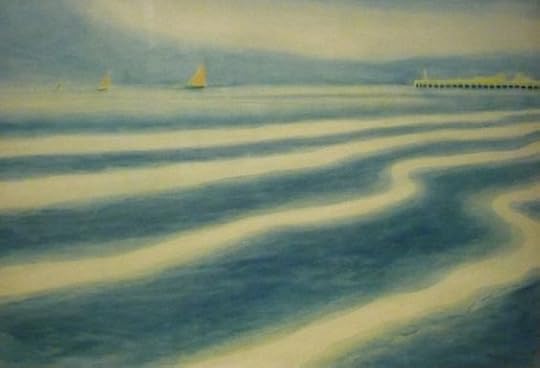
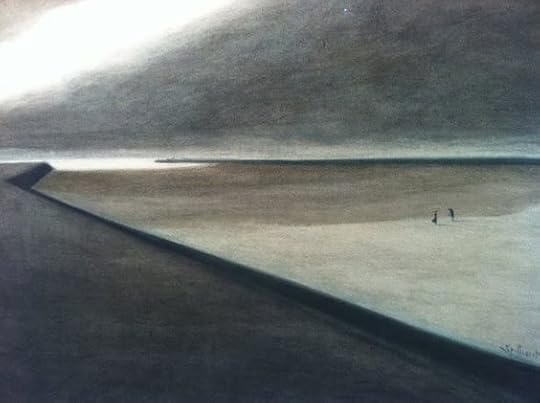
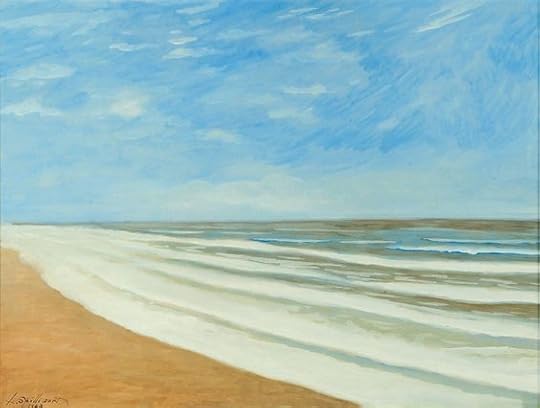
Sea scapes by the Belgian painter and graphic artist Léon Spilliaert (1881-1946)
1,362 reviews
December 31, 2014
Une petite dernière qui récupère son père, centenaire. Très sensible.
Profile Image for Klaus Mattes.
720 reviews10 followers
April 26, 2025
Die in Frankreich ziemlich erfolgreiche Dramatikerin erzählt in diesem kleinen Roman von der wenig erwiderten Liebe eines Mädchens zum Vater. Er war schon 50, als sie geboren wurde. Von seinen Kindern war sie die Nr. 6, ein Nachkömmling. Inzwischen ist sie aber selber 50. Nach Vaters Geburt ist ein ganzes Jahrhundert vergangen. Als junger Mann war der Vater im Ersten Weltkrieg, dann wurde er Arzt.

Och ja, das plätschert ganz nett dahin. Der weibliche Blick auf die Eltern und wie lange man sich ungeliebt und zurückgesetzt fühlen kann. Ich vermisste sowohl Sex wie dessen Verquickung mit Philosophie, was es sonst bei französischen Belletristen doch meistens braucht. Man vergisst das schnell, aber diese Stelle habe ich mir notiert, weil sie französisch ist:

Du hast sehr gern Wein getrunken. Als Kind habe ich dich beobachtet, wenn du im Keller warst. Von oben. Ich beobachtete dich immer von oben. Ich blieb auf der ersten Stufe der so steilen Treppe stehen, du dagegen warst tief unten in diesem Geruch nach feuchtem Staub, Essig und kühlem Stein. Du warst weit weg, die Treppe zwischen uns stellte eine echte Entfernung dar, sie führte zu dieser geheimen, dunklen Welt, in die nur du dich vorwagen konntest.

Profile Image for Luanlou.
55 reviews7 followers
August 2, 2025
Hymne mélancolique à son père, ce récit retrace le parcours d'une femme, sixième enfant d'une fratrie catholique, qui évoque avec intensité la vie de son père et leur relation à travers les années.
C'est bouleversant, parfois dérangeant, et rappelle un peu les écrits d'Annie Ernaux sur son père ou sa mère.
Profile Image for Susan Leigh Connors.
118 reviews4 followers
August 12, 2023
Interesting….. written as she’s speaking directly to her father. But sad. She felt like an outsider in her family, being born much later after 5 siblings. It’s a psychological novel about her standing in her family, how much she wanted to be loved by her father.
Profile Image for Manel reads.
64 reviews22 followers
October 23, 2019
Fanny est la benjamine d'une famille de six enfants. Elle avait du mal à trouver sa place dans cette famille nombreuse, elle se sentait comme une invitée arrivée en retard de 10 ans. A cinquante ans, elle est toujours à la quête de l’amour pour son père centenaire.

Ce roman est très court mais très touchant. J’ai retrouvé la plume talentueuse et raffinée de Vénorique Olmi de « Bord de Mer ». Elle évoque la famille, l’amour filial et critique la bourgeoise catholique française, le récit est sensible mais beaucoup moins poignant que le premier roman.
91 reviews
June 29, 2008
In diesem Buch wird die Geschichte einer Tochter erzählt, die immer auf der Suche nach der Aufmerksamkeit ihres Vaters war. Als Kind hat sie ihn förmlich danach angefleht. Nun ist die Mutter gestorben und der Platz an seiner Seite frei. Doch wie wird sie mit der Vergangenheit, dem Gefühl des Zurückgestoßenseins fertig werden?
Ein einfühlsames, wundervolles Werk.
Profile Image for Juliane.
99 reviews26 followers
April 15, 2009
Veronique Olmi gelingt es, auf wenig Seiten und in einer kurzen knappen Sprache auf höchstem Niveau eine Geschichte zu erzählen, die sehr bewegend ist. Als Kind "Nummer 6" zur Welt zu kommen, ist für Fanny nicht leicht... sie kämpft ihr Leben lang um die Aufmerksamkeit des Vaters...Ein empfehlenswertes Buch!
Displaying 1 - 9 of 9 reviews

Can't find what you're looking for?

Get help and learn more about the design.