

What do you think?

Las aventuras del Capitán Alatriste #8
Misión en París
VUELVE EL CAPITÁN ALATRISTE
La nueva y esperada entrega de la serie de novelas de aventuras que cambió la forma de leer y entender el Siglo de Oro
«Sonaba la medianoche en los relojes de París cuando entraron por la puerta de Saint-Jacques cuatro jinetes tan seguros de sí mismos como el trote firme de sus caballos».
Es medianoche. Íñigo Balboa, que forma parte de los Correos Reales del rey católico, aguarda expectante la llegada del capitán Alatriste, de Francisco de Quevedo y de Sebastián Copons a París, donde se encuentra para entregar unos despachos al conde de Guadalmedina. Hace casi un año que no se reúnen, cuando acabó la arriesgada encomienda que tuvieron que afrontar en Venecia. Son tiempos complejos para desde hace unos meses, los hugonotes de La Rochela, con apoyo inglés, están viviendo un duro asedio por parte de las fuerzas francesas a las órdenes del cardenal Richelieu. Por mediación de Quevedo, Alatriste y sus amigos se ven envueltos en una peligrosa misión secreta ideada por el conde-duque de Olivares. Esta vez el objetivo es de tal magnitud, que la aventura a la que se enfrentan podría cambiar para siempre el curso de los acontecimientos.
La nueva y esperada entrega de la serie de novelas de aventuras que cambió la forma de leer y entender el Siglo de Oro
«Sonaba la medianoche en los relojes de París cuando entraron por la puerta de Saint-Jacques cuatro jinetes tan seguros de sí mismos como el trote firme de sus caballos».
Es medianoche. Íñigo Balboa, que forma parte de los Correos Reales del rey católico, aguarda expectante la llegada del capitán Alatriste, de Francisco de Quevedo y de Sebastián Copons a París, donde se encuentra para entregar unos despachos al conde de Guadalmedina. Hace casi un año que no se reúnen, cuando acabó la arriesgada encomienda que tuvieron que afrontar en Venecia. Son tiempos complejos para desde hace unos meses, los hugonotes de La Rochela, con apoyo inglés, están viviendo un duro asedio por parte de las fuerzas francesas a las órdenes del cardenal Richelieu. Por mediación de Quevedo, Alatriste y sus amigos se ven envueltos en una peligrosa misión secreta ideada por el conde-duque de Olivares. Esta vez el objetivo es de tal magnitud, que la aventura a la que se enfrentan podría cambiar para siempre el curso de los acontecimientos.
324 pages, Kindle Edition
First published September 3, 2025
About the author
Arturo Pérez-Reverte
191 books6,568 followersArturo Pérez-Reverte Gutiérrez, is a Spanish novelist and ex-journalist. He worked as a war reporter for twenty-one years (1973 - 1994). He started his journalistic career writing for the now-defunct newspaper Pueblo. Then, he jumped to news reporter for TVE, Spanish national channel. As a war journalist he traveled to several countries, covering many conflicts. He put this experience into his book 'Territorio Comanche', focusing on the years of Bosnian massacres. That was in 1994, but his debut as a fiction writer started in 1983, with 'El húsar', a historical novella inspired in the Napoleonic era.
Although his debut was not quite successful, in 1988, with 'The Fencing Master', he put his name as a serious writer of historic novels. That was confirmed in 1996, when was published the first book of his Captain Alatriste saga, which has been his trademark. After this book, he could leave definitely journalism for focusing on his career as a fiction writer. This saga, that happens in the years of the Spanish golden age, has seen, for now, seven volumes, where Pérez-Reverte shows, from his particular point of view, historical events from Spanish history in the 16th century.
Apart from these, he also penned another successful works like Dumas Club and Flanders Panel, titles that, among others, made Pérez-Reverte one of the most famous and bestseller authors of Spanish fiction of our era.
Although his debut was not quite successful, in 1988, with 'The Fencing Master', he put his name as a serious writer of historic novels. That was confirmed in 1996, when was published the first book of his Captain Alatriste saga, which has been his trademark. After this book, he could leave definitely journalism for focusing on his career as a fiction writer. This saga, that happens in the years of the Spanish golden age, has seen, for now, seven volumes, where Pérez-Reverte shows, from his particular point of view, historical events from Spanish history in the 16th century.
Apart from these, he also penned another successful works like Dumas Club and Flanders Panel, titles that, among others, made Pérez-Reverte one of the most famous and bestseller authors of Spanish fiction of our era.
Ratings & Reviews
Friends & Following
Create a free account to discover what your friends think of this book!
Community Reviews
Displaying 1 - 30 of 226 reviews

November 2, 2025
Nueva entrega de las aventuras del capitán Alatriste. No defrauda, Alatriste es mucho Alatriste.
Qué destaco del libro:
La prosa y el estilo. Muy bien escrito. El autor es una persona culta y leída cosa que se agradece. Pérez - Reverte es lo que cuenta y cómo lo cuenta. Cuida lo que escribe. Consigue ese difícil equilibrio entre adecuar el vocabulario a la época y resultar comprensible para el lector actual.
El pulso narrativo. El ritmo es ágil, que no frenético ni falta que le hace, pero sí adaptado a cada parte de la novela. La historia nos la cuenta un narrador omnisciente, cuando se trata de Alatriste y un Íñigo Balboa en primera persona. La combinación de ambos tipos de narrador funciona bien. Las escenas de acción bien encajadas y desarrolladas.
La trama, los personajes y el homenaje a Alejandro Dumas. En esta ocasión nuestros protagonistas viajan a París y al sitio de La Rochelle con una misión complicada. Allí se encontrarán con los personajes de la mítica novela de Dumas. El señor de Treville, los tres mosqueteros y D'Artagnan, Luis XIII, Ana de Austria y el cardenal Richelieu. Junto a ellos los habituales de la serie. Me ha gustado mucho esa dosis de cinismo que saca a relucir Alatriste en la comparación entre la esgrima española y la francesa. Una nota patriótica, a la par que muy realista, nunca viene mal.
La ambientación muy buena y como siempre bien adaptada al siglo en que transcurre.
¿Y los peros?
El desenlace me ha resultado un poco precipitado. Es verdad que si eliges una figura histórica real como parte fundamental de la trama, te tienes que ceñir a lo histórico. Ganas por un lado a costa de sacrificar intriga. Conste que el autor lo sabe llevar, no ha sido tanto esto, como que se ha resuelto todo demasiado rápido.
El segundo pero es subjetivo total. Me hubiera gustado más interacción entre los mosqueteros y nuestros personajes. No sé, he tenido la impresión de que se le habría podido poner más chispa o sacarle más partido. Ahora, las novelas las escriben los autores como consideran y no como imaginan los lectores. Por eso digo que es subjetivo total.
En conclusión. Una buena novela de capa y espada con todos los ingredientes del género y el aliciente añadido de los personajes de Dumas. Bien escrita, buen ritmo y trama atractiva. Recomendable.
Qué destaco del libro:
La prosa y el estilo. Muy bien escrito. El autor es una persona culta y leída cosa que se agradece. Pérez - Reverte es lo que cuenta y cómo lo cuenta. Cuida lo que escribe. Consigue ese difícil equilibrio entre adecuar el vocabulario a la época y resultar comprensible para el lector actual.
El pulso narrativo. El ritmo es ágil, que no frenético ni falta que le hace, pero sí adaptado a cada parte de la novela. La historia nos la cuenta un narrador omnisciente, cuando se trata de Alatriste y un Íñigo Balboa en primera persona. La combinación de ambos tipos de narrador funciona bien. Las escenas de acción bien encajadas y desarrolladas.
La trama, los personajes y el homenaje a Alejandro Dumas. En esta ocasión nuestros protagonistas viajan a París y al sitio de La Rochelle con una misión complicada. Allí se encontrarán con los personajes de la mítica novela de Dumas. El señor de Treville, los tres mosqueteros y D'Artagnan, Luis XIII, Ana de Austria y el cardenal Richelieu. Junto a ellos los habituales de la serie. Me ha gustado mucho esa dosis de cinismo que saca a relucir Alatriste en la comparación entre la esgrima española y la francesa. Una nota patriótica, a la par que muy realista, nunca viene mal.
La ambientación muy buena y como siempre bien adaptada al siglo en que transcurre.
¿Y los peros?
El desenlace me ha resultado un poco precipitado. Es verdad que si eliges una figura histórica real como parte fundamental de la trama, te tienes que ceñir a lo histórico. Ganas por un lado a costa de sacrificar intriga. Conste que el autor lo sabe llevar, no ha sido tanto esto, como que se ha resuelto todo demasiado rápido.
El segundo pero es subjetivo total. Me hubiera gustado más interacción entre los mosqueteros y nuestros personajes. No sé, he tenido la impresión de que se le habría podido poner más chispa o sacarle más partido. Ahora, las novelas las escriben los autores como consideran y no como imaginan los lectores. Por eso digo que es subjetivo total.
En conclusión. Una buena novela de capa y espada con todos los ingredientes del género y el aliciente añadido de los personajes de Dumas. Bien escrita, buen ritmo y trama atractiva. Recomendable.
October 12, 2025
[ESP]
"Espadas y dagas tenemos, ¿no?
Lo demás, Dios lo remedie."
No contaba ya con volver a tener una nueva aventura del querido Diego Alatriste y su inseparable Íñigo Balboa, o los conocidos como Sebastián Copons. Pero de la manga el bueno de Pérez Reverte nos ha dado una nueva historia. Y si a esto le sumas que va a mezclar a estos personajes y sus habituales desventuras con otros iconos de la literatura y de la historia (al menos el cuerpo como tal) como son los Mosqueteros, todo pintaba muy bien.
Me alegra que me haya dado lo esperado, tal vez no todo lo que esperaba pero bastante sí. Así que solo por eso ya me doy satisfecho. También digo, si no hay historias que merezcan la pena, esto puede quedar aquí, que no es plan de alargar esto sin sentido. Aunque ojalá nos ofrezca alguna vez el cierre correspondiente, ya sabemos el fin de ciertos personajes y el destino de otros, pero me gustaría una novela donde se cuente todo ello como se debe.
"Decid al señor duque de Enghien que agradecemos su oferta, pero que éste es un tercio español."
A partir de ahora, se puede resumir todo en: "si ya gusta, no hace falta tocarlo", pero lo desarrollaré un poquito.
La ambientación siempre ha sido uno de los platos fuertes de esta serie, y aquí no lo va a cambiar. La forma de expresarse, la descripción de los lugares, las situaciones, todo funciona más que bien. Se me queda un poco corto en el momento en que , pero sin más quejas.
Los personajes, pues lo mismo. Después de 7 aventuras no van a cambiar de forma de ser, sabemos cómo son, tanto para bien como para mal. Y no solo los principales, sino todos los que aparecen. Quizá meter intrigas con personajes históricos da menos juego, puesto que sabes que no les pueden pasar ciertas cosas, pero es normal en esta situación. Mención especial a Don Ambrosio Spínola, que aparece poco pero es un gran personaje.
Los mosqueteros en la pestañita, por no influir a nadie:
"Era plático en eso. Y cómo no iba a serlo. Más de media vida la había pasado acechando y siendo acechado, y reñir a oscuras le era tan familiar como hacerlo a las claras del día."
Si eres fan de esta saga, este libro es más de lo mismo pero de buenas. Hazte un favor y léelo si no lo has hecho ya. Si no lo eres, hazte un favor y vete al primero, que está muy bien. Más historias así, sí.
Pd: No quería cerrar sin mencionar las ilustraciones del interior, realmente bonitas y con un estilo acorde a la época que relata, además de acorde al resto de la saga.
"Espadas y dagas tenemos, ¿no?
Lo demás, Dios lo remedie."
No contaba ya con volver a tener una nueva aventura del querido Diego Alatriste y su inseparable Íñigo Balboa, o los conocidos como Sebastián Copons. Pero de la manga el bueno de Pérez Reverte nos ha dado una nueva historia. Y si a esto le sumas que va a mezclar a estos personajes y sus habituales desventuras con otros iconos de la literatura y de la historia (al menos el cuerpo como tal) como son los Mosqueteros, todo pintaba muy bien.
Me alegra que me haya dado lo esperado, tal vez no todo lo que esperaba pero bastante sí. Así que solo por eso ya me doy satisfecho. También digo, si no hay historias que merezcan la pena, esto puede quedar aquí, que no es plan de alargar esto sin sentido. Aunque ojalá nos ofrezca alguna vez el cierre correspondiente, ya sabemos el fin de ciertos personajes y el destino de otros, pero me gustaría una novela donde se cuente todo ello como se debe.
"Decid al señor duque de Enghien que agradecemos su oferta, pero que éste es un tercio español."
A partir de ahora, se puede resumir todo en: "si ya gusta, no hace falta tocarlo", pero lo desarrollaré un poquito.
La ambientación siempre ha sido uno de los platos fuertes de esta serie, y aquí no lo va a cambiar. La forma de expresarse, la descripción de los lugares, las situaciones, todo funciona más que bien. Se me queda un poco corto en el momento en que , pero sin más quejas.
Los personajes, pues lo mismo. Después de 7 aventuras no van a cambiar de forma de ser, sabemos cómo son, tanto para bien como para mal. Y no solo los principales, sino todos los que aparecen. Quizá meter intrigas con personajes históricos da menos juego, puesto que sabes que no les pueden pasar ciertas cosas, pero es normal en esta situación. Mención especial a Don Ambrosio Spínola, que aparece poco pero es un gran personaje.
Los mosqueteros en la pestañita, por no influir a nadie:
"Era plático en eso. Y cómo no iba a serlo. Más de media vida la había pasado acechando y siendo acechado, y reñir a oscuras le era tan familiar como hacerlo a las claras del día."
Si eres fan de esta saga, este libro es más de lo mismo pero de buenas. Hazte un favor y léelo si no lo has hecho ya. Si no lo eres, hazte un favor y vete al primero, que está muy bien. Más historias así, sí.
Pd: No quería cerrar sin mencionar las ilustraciones del interior, realmente bonitas y con un estilo acorde a la época que relata, además de acorde al resto de la saga.

December 12, 2025
Uno de los mejores Alatriste, para mí sin duda. Me lo he pasado en grande con esta nueva aventura. El enfrentamiento entre Alatriste e Iñigo con Athos y D’Artagnan es divertidísimo. Y la historia en sí, muy buena. Ojalá Don Arturo no nos haga esperar tanto para el próximo.
September 5, 2025
Siempre da alegría reencontrarse con viejos amigos. Cuando empecé este libro ya contaba con que estarían el capitán e Íñigo, contando sus aventuras; lo que no esperaba era que fuesen a aparecer tantos más. Aparte de los que salen en los libros anteriores de la serie, que son bastantes, la sorpresa la dan los personajes de Alejandro Dumas, no solo los tres mosqueteros y D'Artagnan sino también el señor de Treville o Richelieu. Tras la novela clásica que leí en mi infancia y sus dos continuaciones no contaba con volver a verles, me han vuelto a la memoria cosas como la cortesía entre duelistas o que las pistolas también eran una moneda.
El libro es un homenaje a la novela histórica de aventuras, en la que sabes por los conocimientos de historia o por lecturas previas lo que va a pasar, pero no cómo se las va a apañar el autor para arreglarlo todo sin alterar los hechos principales. Por eso se sigue con interés lo que pasa en París y sobre todo en La Rochela, para ver cómo se desenvuelve la novela entre el asedio real y las aventuras del libro de los mosqueteros, creando una nueva trama para sus personajes que sea interesante y creíble.
Me ha parecido uno de los mejores libros de Alatriste, con la mezcla de respeto a los superiores y al mismo tiempo la capacidad de enfrentarse a ellos y decirles lo que piensa que caracteriza al capitán. Sus respuestas breves e irónicas son impagables. Los personajes están perfectamente asentados después de los libros anteriores y los diálogos, austeros, funcionan como un reloj. Y la lección de historia, de las relaciones entre potencias y los tejemanejes que había por debajo y en las que personas o incluso ciudades enteras solo eran peones de una partida mayor.
Por último, el lenguaje, que Pérez Reverte emplea como un maestro y los arcaísmos están tan medidos, tan bien utilizados, que hacen que el habla del siglo XVII no nos resulte extraña.
El libro es un homenaje a la novela histórica de aventuras, en la que sabes por los conocimientos de historia o por lecturas previas lo que va a pasar, pero no cómo se las va a apañar el autor para arreglarlo todo sin alterar los hechos principales. Por eso se sigue con interés lo que pasa en París y sobre todo en La Rochela, para ver cómo se desenvuelve la novela entre el asedio real y las aventuras del libro de los mosqueteros, creando una nueva trama para sus personajes que sea interesante y creíble.
Me ha parecido uno de los mejores libros de Alatriste, con la mezcla de respeto a los superiores y al mismo tiempo la capacidad de enfrentarse a ellos y decirles lo que piensa que caracteriza al capitán. Sus respuestas breves e irónicas son impagables. Los personajes están perfectamente asentados después de los libros anteriores y los diálogos, austeros, funcionan como un reloj. Y la lección de historia, de las relaciones entre potencias y los tejemanejes que había por debajo y en las que personas o incluso ciudades enteras solo eran peones de una partida mayor.
Por último, el lenguaje, que Pérez Reverte emplea como un maestro y los arcaísmos están tan medidos, tan bien utilizados, que hacen que el habla del siglo XVII no nos resulte extraña.

September 5, 2025
La saga de Alatriste tiene mas pasado que futuro. Ya las últimas entregas fueron bastante deficientes.
Esta Misión en París es perezosa en lo narrativo, simple de estructura y un refrito en las interecciones de los personajes. El tan esperado encuentro con los mosqueteros queda previsible y cobarde, cero riesgo y cero emoción. Para flojear, flojea incluso en las descripciones y ambientaciones históricas. Hay un momento que en una ciudad sitiada se ve algo de genio, pero dura dos páginas.
Y luego esta la moralina que desprende, basado en la testosterona y siempre complaciente con el poder. Una invitación constante al conformismo y ha aguantar los golpes que invitan poco a la revolución. Porqué ESPAÑA lo vale todo (aunque lastima de dirigentes): Al final puteados y jodidos, se ha dado la cara, se le ha puesto huevos al busines y algo queda....
Decía el cancelado Neil Gaiman sobre la ficcion: "Creamos monstruos para transmitir que estos pueden ser vencidos". La ficción de Reverte no es así, su mensaje siempre se engloba en un falso realismo donde ganan los de siempre y como mucho queda alguna victoria moral.
pd: Lo de Iñigo y Angélica nunca lo he entendido, pero sospecho que és mas por la descripción, que hace Perezareverte que no porque no pudiera resultar creíble.
Esta Misión en París es perezosa en lo narrativo, simple de estructura y un refrito en las interecciones de los personajes. El tan esperado encuentro con los mosqueteros queda previsible y cobarde, cero riesgo y cero emoción. Para flojear, flojea incluso en las descripciones y ambientaciones históricas. Hay un momento que en una ciudad sitiada se ve algo de genio, pero dura dos páginas.
Y luego esta la moralina que desprende, basado en la testosterona y siempre complaciente con el poder. Una invitación constante al conformismo y ha aguantar los golpes que invitan poco a la revolución. Porqué ESPAÑA lo vale todo (aunque lastima de dirigentes): Al final puteados y jodidos, se ha dado la cara, se le ha puesto huevos al busines y algo queda....
Decía el cancelado Neil Gaiman sobre la ficcion: "Creamos monstruos para transmitir que estos pueden ser vencidos". La ficción de Reverte no es así, su mensaje siempre se engloba en un falso realismo donde ganan los de siempre y como mucho queda alguna victoria moral.
pd: Lo de Iñigo y Angélica nunca lo he entendido, pero sospecho que és mas por la descripción, que hace Perezareverte que no porque no pudiera resultar creíble.

October 8, 2025
Voto a tal que ha sido una gran entrega. Don Arturo, que nunca ha escondido precisamente su devoción por Dumas (basta leer el club ídem), decide unir a los tres mosqueteros y medio con el capitán e Íñigo en una arriesgada misión en Francia. De lo que dan se sí esos mimbres narrativos no voy a hacer adelantos argumentales, pues no quiero batirme con ningún hijodalgo de estos lares, pero la historia es buena, los personajes, fieles a sí mismos (encontraremos viejos conocidos inesperados), con nuevos apuntes biográficos en algunos casos y las aventuras son de las de punta y rasga.
Ya estás tardando en recuperar personajes, tramas y espadas y ponerte a navegar entre sus hojas, como si nada hubiera en el mundo que pudiera impedírtelo. Ya.
Ya estás tardando en recuperar personajes, tramas y espadas y ponerte a navegar entre sus hojas, como si nada hubiera en el mundo que pudiera impedírtelo. Ya.
September 25, 2025
En realidad es 3,5 estrellas. Me encanta Pérez Reverte y siempre he alucinado con la saga del capitán Alatriste, sin embargo esta última no llega a la altura de sus anteriores libros. Confío en que, en caso de haber algún libro más, no continue la decadencia del capitán y que se produzca una remontada

January 27, 2026
dios me lo comí pero ha sido una experiencia fantástica!
un poquito lo de siempre Quevedo dando por culo y el resto sobreviviendo
como hiló con el Buckingham del primer libro me encantó
eché de menos un último encuentro con malatesta porque me pareció espectacular la dupla del anterior libro
no sé si podré sobreponerme al vacío que deja en mí haber llegado al último
no queda sino batirnos
un poquito lo de siempre Quevedo dando por culo y el resto sobreviviendo
como hiló con el Buckingham del primer libro me encantó
eché de menos un último encuentro con malatesta porque me pareció espectacular la dupla del anterior libro
no sé si podré sobreponerme al vacío que deja en mí haber llegado al último
no queda sino batirnos

September 11, 2025
Uno no puede ser absolutamente ecuánime aquí. Es cierto que ha pasado el tiempo y las referencias épicas llenan menos que el paisaje narrativo otoñal, pero afortunadamente sigue capturando el tono preciso, ese que logra que uno quiera vivir en ese mundo, peligroso, injusto, pero en el que aún hay seres dispuestos a pagar el precio de sus decisiones y son arrojados y leales. Quien pudiera haber vivido en aquel mundo que nunca existió...
La trama es mínima, pero no molesta. Importa el contraluz de sus personajes hastiados, libres, rudos y lúcidos. Aquellos que un lector quiere ser para saber consolarse de lo que en realidad es. He agradecido mucho su vuelta y espero que haya más entregas. Me da igual que repita treinta veces que si los españoles tenemos cogido el mundo por los huevos y demás, me lo tomo como una broma nostálgica que ni me enerva ni me inflama. Sólo me envuelvo gratamente en su melancolía. Por el momento me quedo con los buenos compañeros, en silencio, justo, leal y decidido a seguir adelante hasta que se pueda y, si es menester y la providencia lo permite, vender caro el pellejo. No queda sino batirse 😊
La trama es mínima, pero no molesta. Importa el contraluz de sus personajes hastiados, libres, rudos y lúcidos. Aquellos que un lector quiere ser para saber consolarse de lo que en realidad es. He agradecido mucho su vuelta y espero que haya más entregas. Me da igual que repita treinta veces que si los españoles tenemos cogido el mundo por los huevos y demás, me lo tomo como una broma nostálgica que ni me enerva ni me inflama. Sólo me envuelvo gratamente en su melancolía. Por el momento me quedo con los buenos compañeros, en silencio, justo, leal y decidido a seguir adelante hasta que se pueda y, si es menester y la providencia lo permite, vender caro el pellejo. No queda sino batirse 😊

September 8, 2025
Pues otras 5 estrellas para Arturo, no sé si es un 9 o un 10 (la verdad que me da igual, soy feliz). Octavo libro de la saga y el tío no falla. París, los tres mosqueteros y Alatriste... ,en fin, todo lo que le gusta a Arturo.
Ahora a seguir con Cercas, y ver cómo construye en profundidad el personaje principal.
"Ahora puedo morir tranquilamente,
pues sombra soy de tinta de Alatriste;
irá tras él mi brazo, y si desiste,
mi letra insistirá cuando esté ausente.
Porque dora mi nombre y mi honra espuma
refrendar su leyenda con mi pluma."
Ahora a seguir con Cercas, y ver cómo construye en profundidad el personaje principal.
"Ahora puedo morir tranquilamente,
pues sombra soy de tinta de Alatriste;
irá tras él mi brazo, y si desiste,
mi letra insistirá cuando esté ausente.
Porque dora mi nombre y mi honra espuma
refrendar su leyenda con mi pluma."
October 11, 2025
Otra maravillosa aventura del capitán. Qué narrativa, qué diálogo. Me pasaría la vida leyendo novelas en este castellano del siglo de oro de Arturo. En su línea, un libro a la altura de los anteriores siete. Adoro la flema de los personajes de la historia y la manera que tiene el autor de barajar hechos y personajes reales con la ficción. Qué carisma y qué bien caracterizado todo el elenco. Llegas a ponerte nervioso con la miradas inquisitivas del cardenal Richelieu, al que mala Pascua le dé Cristo.

February 8, 2026
Nueva aventura del Capitan Alatriste y compañía. Vuelven a reunirse Copons. Quevedo, el joven Íñigo y el mismísimo Alatriste, junto a personajes nuevos vuelven a vivir una historia al límite. Donde no falta intriga, peligro, y vueltas de tuerca.
Esperando que no sea la última aventura de estos personajes que tan buenos momentos nos hacen pasar desde el primer volumen hasta este por ahora el último .
Esperando que no sea la última aventura de estos personajes que tan buenos momentos nos hacen pasar desde el primer volumen hasta este por ahora el último .

September 26, 2025
Una nueva aventura del Capitán Alatriste (¿y la última, quizás?). En esta ocasión, Pérez Reverte hace lo que ya planteó desde el inicio de la serie: enfrenta a Alatriste y sus compañeros con los Mosqueteros... Aventuras, capa y espada, violencia... y las reflexiones de siempre acerca de la vida de los soldados.
Muy entretenida, como el resto de libros de Alatriste.
Muy entretenida, como el resto de libros de Alatriste.

January 31, 2026
Esta novela es fundamentalmente un remake de El puente de los asesinos y como tal comparte todos sus defectos, pero además resulta completamente previsible. Todos los acontecimientos son inconsecuentes, los duelos están destinados a quedarse inconclusos y el único suspense que arroja la misión del protagonista es saber cual será la causa de su fracaso. Todo en esta novela deja la sensación de que por muchos peligros que pase, Alatriste no pasa de ser un testigo en su propia historia (con Iñigo de notario) El mayor problema de la serie emana de que el destino de sus protagonistas se nos reveló desde el principio y el ceñirse a lo dicho mata el suspense en la mayoría de los argumentos con lo que Las aventuras de Alatriste quedan para poco más que un vehículo para que el autor exhiba su extensa documentación sobre la época.
Hasta ahora, la serie había tenido sus altibajos, pero esta es la primera entrega que me ha parecido aburrida.
Hasta ahora, la serie había tenido sus altibajos, pero esta es la primera entrega que me ha parecido aburrida.
September 4, 2026
«I. LA CASA DEL SEÑOR DE TRÉVILLE»
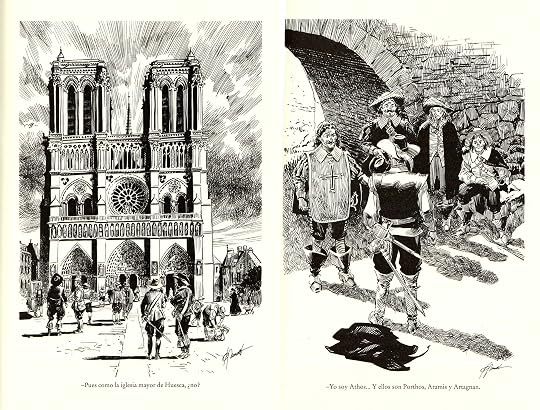
Bueno, sé que no queda bien empezar a comentar un libro con una crítica, pero me veo obligado a corregir al autor: los caballeros envueltos en sus capas que aquella noche en París cruzaban el Sena por el puente de Notre-Dame no eran cuatro, sino CINCO
Sobre su caballo negro, envuelto en su capa y con el rostro cubierto por un viejo sombrero, venía el señor Albus, que en esta aventura luchó con valentía y honor, siempre junto a su eterno amigo, ¡el capitán Alatriste!
«Sonaba la medianoche en los relojes de París cuando entraron por la puerta de Saint-Jacques cuatro jinetes tan seguros de sí mismos como el trote firme de sus caballos».
Bueno, sé que no queda bien empezar a comentar un libro con una crítica, pero me veo obligado a corregir al autor: los caballeros envueltos en sus capas que aquella noche en París cruzaban el Sena por el puente de Notre-Dame no eran cuatro, sino CINCO
Sobre su caballo negro, envuelto en su capa y con el rostro cubierto por un viejo sombrero, venía el señor Albus, que en esta aventura luchó con valentía y honor, siempre junto a su eterno amigo, ¡el capitán Alatriste!
June 16, 2026
Arturo Pérez-Reverte es un maestro de las novelas de capa y espada y en esta octava entrega de las aventuras del Capitán Alatriste lo vuelve a demostrar con creces. Prosa inigualable, rigor histórico, aventuras, amores imposibles, personajes que maduran, profundos, intriga, acero, pólvora.
Todos los ingredientes de una novela enmarcada en el Siglo de Oro, donde España lo ganó y lo perdió todo. Con un guiño espectacular a los mosqueteros de Alejandro Dumas, actores secundarios de la novela, pero fielmente reflejados y descritos con maestría.
Novela corta, que se lee rápido, la intriga se mantiene hasta el final, que deja la puerta abierta a nuevas aventuras de Diego y sus camaradas.
Todos los ingredientes de una novela enmarcada en el Siglo de Oro, donde España lo ganó y lo perdió todo. Con un guiño espectacular a los mosqueteros de Alejandro Dumas, actores secundarios de la novela, pero fielmente reflejados y descritos con maestría.
Novela corta, que se lee rápido, la intriga se mantiene hasta el final, que deja la puerta abierta a nuevas aventuras de Diego y sus camaradas.

September 22, 2025
Hace veinte años leí de una tacada los cinco primeros volúmenes de la saga del capitán Alatriste. Eran novelas vibrantes, llenas de acción, ironía y un aire de aventura que las hacía irresistibles. Incluso aquellas que muchos consideraban flojas, como "El caballero del jubón amarillo", me parecieron estupendas, intrépidas y divertidas. No sé si yo era muy joven o es que los libros simplemente eran muy buenos (lo cierto es que otras novelas del autor me han parecido ramplonas, y siempre he pensado que no me convencía, con la excepción de esta serie). Después llegó una pausa de dos décadas en la que se publicaron dos entregas más, "Corsarios de Levante" y "El puente de los asesinos", que nunca llegué a leer porque las críticas tampoco invitaban demasiado.
Con "Misión en París" las reseñas parecían más entusiastas. Pérez-Reverte volvió a su ritual mediático de septiembre, opinando sobre España y los españoles en cuanto programa de radio o televisión se le pone a tiro (recordándonos, además, que él ha vivido varias guerras y conoce el olor de la carne descomponiéndose), y yo decidí darle otra oportunidad a Alatriste. El resultado..., en fin.
El libro se lee fácil, pero no va mucho más allá de una anécdota que cabría en veinte páginas. Toda la trama gira alrededor de un encuentro forzado con los mosqueteros y con Richelieu. Los duelos que aparecen carecen de justificación y no tienen verdadero peso en la historia. No hay conflicto, más allá de una misión sin enjundia y que sólo se desvela al final de la trama por tratar de darle un sentido a una aventura que no lo tiene. Da la sensación de que el autor ha escrito un fanfiction de sí mismo, un juego de guiños que sustituye la narración por el simple cameo. Como cada nueva serie de Star Wars en la que aparecen Darth Vader o Luke Skywalker ya más por agotar la mitología que por un buen resorte argumental.
La novela está demasiado presa de la historia oficial. En lugar de dar un paso valiente y reescribirla a su manera, como hizo Dumas en su momento, Pérez-Reverte se mantiene conservador. Richelieu aparece tal cual, los mosqueteros igual, y las viejas caras conocidas de la saga, como los Alquézar o Quevedo, entran y salen sin aportar nada más que un recordatorio de que siguen perteneciendo a la franquicia. En este sentido, sólo le reconozco al libro el mérito de rescatar a un personaje del primer libro (por este contexto, poco forzado) que, de algún modo, ayuda a cerrar a un círculo.
El capitán Alatriste se nota apagado, reducido a la sombra y condenado a acumular aventuras y lugares como si se tratara de "Tintín" o "Las aventuras del joven Indiana Jones". La novela es autocomplaciente, más preocupada por rendirse homenaje que por contar una historia que de verdad atrape. Y ese exceso de autoconsciencia pesa: se lee como una pieza nostálgica más que como una aventura en toda regla.
En resumen, "Misión en París" entretiene a ratos, pero carece de ritmo, de riesgo y de verdadera vida. Lo que en los primeros libros fue literatura fresca de capa y espada ahora se convierte en un producto demasiado contenido, donde los guiños pesan más que la trama y el mito de Alatriste se queda en eco de sí mismo.
Con "Misión en París" las reseñas parecían más entusiastas. Pérez-Reverte volvió a su ritual mediático de septiembre, opinando sobre España y los españoles en cuanto programa de radio o televisión se le pone a tiro (recordándonos, además, que él ha vivido varias guerras y conoce el olor de la carne descomponiéndose), y yo decidí darle otra oportunidad a Alatriste. El resultado..., en fin.
El libro se lee fácil, pero no va mucho más allá de una anécdota que cabría en veinte páginas. Toda la trama gira alrededor de un encuentro forzado con los mosqueteros y con Richelieu. Los duelos que aparecen carecen de justificación y no tienen verdadero peso en la historia. No hay conflicto, más allá de una misión sin enjundia y que sólo se desvela al final de la trama por tratar de darle un sentido a una aventura que no lo tiene. Da la sensación de que el autor ha escrito un fanfiction de sí mismo, un juego de guiños que sustituye la narración por el simple cameo. Como cada nueva serie de Star Wars en la que aparecen Darth Vader o Luke Skywalker ya más por agotar la mitología que por un buen resorte argumental.
La novela está demasiado presa de la historia oficial. En lugar de dar un paso valiente y reescribirla a su manera, como hizo Dumas en su momento, Pérez-Reverte se mantiene conservador. Richelieu aparece tal cual, los mosqueteros igual, y las viejas caras conocidas de la saga, como los Alquézar o Quevedo, entran y salen sin aportar nada más que un recordatorio de que siguen perteneciendo a la franquicia. En este sentido, sólo le reconozco al libro el mérito de rescatar a un personaje del primer libro (por este contexto, poco forzado) que, de algún modo, ayuda a cerrar a un círculo.
El capitán Alatriste se nota apagado, reducido a la sombra y condenado a acumular aventuras y lugares como si se tratara de "Tintín" o "Las aventuras del joven Indiana Jones". La novela es autocomplaciente, más preocupada por rendirse homenaje que por contar una historia que de verdad atrape. Y ese exceso de autoconsciencia pesa: se lee como una pieza nostálgica más que como una aventura en toda regla.
En resumen, "Misión en París" entretiene a ratos, pero carece de ritmo, de riesgo y de verdadera vida. Lo que en los primeros libros fue literatura fresca de capa y espada ahora se convierte en un producto demasiado contenido, donde los guiños pesan más que la trama y el mito de Alatriste se queda en eco de sí mismo.
January 27, 2026
Lo he pasado de maravilla visitando a un viejo amigo. Larga vida al Capitán Alatriste.
March 11, 2026
El último libro de la serie de Alatriste, de la que he leído todos, sigue en su línea. Aventura de caballeros al estilo clásico, incluso aparecen los tres mosqueteros y Richelieu, muy bien ambientada tanto en lenguaje como en personajes y reseñas históricas. Se nota que es un académico de la lengua en como emplea el vocabulario, las construcciones y las expresiones propias del siglo XVII haciéndose, sin embargo, accesible y ameno para el lector actual. He disfrutado leyéndolo.

January 24, 2026
Sinopsis y Contexto
En esta octava entrega, abandonamos el Madrid de los Austrias para trasladarnos a la vibrante y peligrosa Francia de 1627. Diego Alatriste y un ya joven adulto Íñigo Balboa se ven envueltos en una misión que es más política que militar: deben infiltrarse en París para desarticular una conspiración que amenaza los intereses de la corona española. En un escenario dominado por la sombra del Cardenal Richelieu, los protagonistas deberán manejarse entre el lujo de las cortes y el fango de los callejones.
Personajes: Lo más fascinante de este libro es observar el paso del tiempo. Alatriste mantiene ese estoicismo cansado que lo hace icónico, pero es en Íñigo donde vemos el mayor crecimiento. Su relación ha evolucionado de mentor-alumno a una camaradería de armas profunda, teñida de una melancolía muy propia de la pluma del autor.
Trama y Ritmo: A diferencia de otras entregas más "guerreras", Misión en París destaca por su intriga diplomática. Es un juego de espejos y espías. Si bien el ritmo es constante, el autor se toma su tiempo para recrear la atmósfera parisina, lo que deleitará a los amantes de la ambientación histórica minuciosa.
Estilo: Pérez-Reverte utiliza un lenguaje que evoca perfectamente el Siglo de Oro, pero con la agilidad de la novela de aventuras moderna. Su capacidad para describir el honor, la derrota y la lealtad sin caer en sentimentalismos sigue siendo impecable.
Es un regreso magistral a una de las sagas más importantes de la literatura contemporánea en español. Me ha gustado mucho cómo el autor expande el universo de la serie fuera de España, manteniendo la esencia de "capa y espada". Le doy 4 estrellas porque, aunque la ejecución es brillante, me hubiera gustado un poco más de peso en ciertos giros de la trama hacia el final. Aun así, es una lectura imprescindible para cualquier seguidor del capitán.
En esta octava entrega, abandonamos el Madrid de los Austrias para trasladarnos a la vibrante y peligrosa Francia de 1627. Diego Alatriste y un ya joven adulto Íñigo Balboa se ven envueltos en una misión que es más política que militar: deben infiltrarse en París para desarticular una conspiración que amenaza los intereses de la corona española. En un escenario dominado por la sombra del Cardenal Richelieu, los protagonistas deberán manejarse entre el lujo de las cortes y el fango de los callejones.
Personajes: Lo más fascinante de este libro es observar el paso del tiempo. Alatriste mantiene ese estoicismo cansado que lo hace icónico, pero es en Íñigo donde vemos el mayor crecimiento. Su relación ha evolucionado de mentor-alumno a una camaradería de armas profunda, teñida de una melancolía muy propia de la pluma del autor.
Trama y Ritmo: A diferencia de otras entregas más "guerreras", Misión en París destaca por su intriga diplomática. Es un juego de espejos y espías. Si bien el ritmo es constante, el autor se toma su tiempo para recrear la atmósfera parisina, lo que deleitará a los amantes de la ambientación histórica minuciosa.
Estilo: Pérez-Reverte utiliza un lenguaje que evoca perfectamente el Siglo de Oro, pero con la agilidad de la novela de aventuras moderna. Su capacidad para describir el honor, la derrota y la lealtad sin caer en sentimentalismos sigue siendo impecable.
Es un regreso magistral a una de las sagas más importantes de la literatura contemporánea en español. Me ha gustado mucho cómo el autor expande el universo de la serie fuera de España, manteniendo la esencia de "capa y espada". Le doy 4 estrellas porque, aunque la ejecución es brillante, me hubiera gustado un poco más de peso en ciertos giros de la trama hacia el final. Aun así, es una lectura imprescindible para cualquier seguidor del capitán.
June 11, 2026
Mantiene el nivel.

October 22, 2025
"Al acercarse los parlamentarios franceses para garantizar nuestras vidas si rendíamos las armas, respondió Diego Alatriste en nombre de los que todavía quedábamos en pie: «Decid al señor duque de Enghien que agradecemos su oferta, pero que éste es un tercio español»"

September 10, 2025
Cuando comencé a leer estas novelas, debía tener mas o menos la misma edad que Iñigo Balboa. Y ahora mismo supero en años al Capitán. Ha sido un largo camino. 14 años desde la ultima novela de la saga. 29 desde que se publicara la primera novela, estando yo en el instituto, y en la que ya se veían en la solapa de los títulos por venir: Limpieza de sangre, El Sol de Breda, El Oro del Rey, Misión en Paris y La Venganza de Alquezar...
Luego nos coló 3 nuevos tras el Oro del Rey, y tanto Misión en Paris como La Venganza de Alquezar parecían condenados a no publicarse jamás. Y en todo este tiempo, preguntándonos si la Misión en Paris nos daría el encuentro que todos esperábamos. ¿Cruzaría espadas Alatriste con los famosos mosqueteros?
Pues nada, al fin la duda resuelta. Y muy a gusto que me he quedado.
Puede que haya gente que no reciba lo que esperaba. Pero servidor lo ha disfrutado como un enano. Las novelas de Alatriste nunca han sido dadas a grandes tramas bizantinas. Son lo que son, novelas de aventuras que buscan mostrar una época y un estilo de historia con un toque mas de aquí, con un cierto sabor agridulce y una mirada admirada a la figura del soldado y de sus penurias, pero novelas de aventuras al fin y al cabo. En esta ocasión la aventura es casi una excusa para mostrarnos un encuentro entre Alatriste y los personajes de Dumas, y hacerlo con el estilo y la forma de Alatriste. Aunque hay conflicto entre los personajes, este no es el eje de la trama. Reverte sabe mostrarnos a todos los personajes y ponerlos en conflicto entre si, pero respetando la naturaleza de todos, y reflejando que aunque enemigos, hay cierto nivel de respeto y honor entre ellos. Son peones en la historia, pero tiene su honor y sus formas.
Salda así su deuda Reverte, y lo hace con buen tino. He leído el libro con una sonrisa en la cara, celebrando los momentos de homenaje, rememorando la melancolía del mundo y de los personajes que lo pueblan. Disfrutando cada pagina.
Se me ha hecho corto, como no. Con suerte la cosa no tardara tanto en continuar, y tendremos pronto la Venganza del Alquezar en mano. O con suerte, se sacara alguno mas de la manga antes de concluir esta historia. Puede que Reverte y servidor tengamos ideas políticas muy diferentes en bastantes cosas, pero es un gran narrador, y sus libros me siguen gustando. Sobre todo si son de Alatriste. Que vengan los que tengan que venir.
Luego nos coló 3 nuevos tras el Oro del Rey, y tanto Misión en Paris como La Venganza de Alquezar parecían condenados a no publicarse jamás. Y en todo este tiempo, preguntándonos si la Misión en Paris nos daría el encuentro que todos esperábamos. ¿Cruzaría espadas Alatriste con los famosos mosqueteros?
Pues nada, al fin la duda resuelta. Y muy a gusto que me he quedado.
Puede que haya gente que no reciba lo que esperaba. Pero servidor lo ha disfrutado como un enano. Las novelas de Alatriste nunca han sido dadas a grandes tramas bizantinas. Son lo que son, novelas de aventuras que buscan mostrar una época y un estilo de historia con un toque mas de aquí, con un cierto sabor agridulce y una mirada admirada a la figura del soldado y de sus penurias, pero novelas de aventuras al fin y al cabo. En esta ocasión la aventura es casi una excusa para mostrarnos un encuentro entre Alatriste y los personajes de Dumas, y hacerlo con el estilo y la forma de Alatriste. Aunque hay conflicto entre los personajes, este no es el eje de la trama. Reverte sabe mostrarnos a todos los personajes y ponerlos en conflicto entre si, pero respetando la naturaleza de todos, y reflejando que aunque enemigos, hay cierto nivel de respeto y honor entre ellos. Son peones en la historia, pero tiene su honor y sus formas.
Salda así su deuda Reverte, y lo hace con buen tino. He leído el libro con una sonrisa en la cara, celebrando los momentos de homenaje, rememorando la melancolía del mundo y de los personajes que lo pueblan. Disfrutando cada pagina.
Se me ha hecho corto, como no. Con suerte la cosa no tardara tanto en continuar, y tendremos pronto la Venganza del Alquezar en mano. O con suerte, se sacara alguno mas de la manga antes de concluir esta historia. Puede que Reverte y servidor tengamos ideas políticas muy diferentes en bastantes cosas, pero es un gran narrador, y sus libros me siguen gustando. Sobre todo si son de Alatriste. Que vengan los que tengan que venir.

September 29, 2025
Esa sensación de caerte de lleno en el siglo en el que se desarrolla la acción y paladear, sentir y ver aquella España con sus miserias y sus virtudes me llega desde la primera página. Por eso y por los giros, las expresiones tan españolas y tan perdidas, por la propia historia y por la valentía resignada y estoica es por lo que siempre vuelvo a Alatriste. Recomendado 100%.

September 11, 2025
Tiene muchísimo mérito lograr que te entretenga un libro donde no pasa nada, donde la acción dura un suspiro y el desenlace se resuelve con una elipsis narrativa y un deus ex machina, lleno de cameos innecesarios y mitómanos, con situaciones repetitivas, personajes sin personalidad y con un personaje femenino (el único personaje femenino) que puedes eliminar sin que pase absolutamente nada. Que conste que lo digo en serio. Si tuviera trama le pondría cuatro estrellas.
September 9, 2025
A pesar de ser una gran seguidora de la saga, no me ha parecido el mejor Alatriste. Sin embargo, la nueva novela de Reverte se deja leer.

April 11, 2026
I am a reader of Arturo Pérez-Reverte’s Captain Alatriste series, currently available in English are books 1-6.
After completing the six translated novels, I was surprised to find that the later books in the series—El puente de los asesinos and Misión en París—have not yet been published in English.
I wanted to express that there is ongoing reader interest in completing this series for the English-language market. The existing titles continue to circulate widely among readers, and the series is frequently recommended in historical fiction circles.
As a reader and collector, I would absolutely purchase English editions of the remaining and future books upon release, and I believe many others would as well. Completing the series would be valuable not only for existing fans but also for introducing new readers to a fully available body of work.
I hope the remaining titles might be considered for future publication. I want to be witness to the continuing story of my Captain Alatriste!
After completing the six translated novels, I was surprised to find that the later books in the series—El puente de los asesinos and Misión en París—have not yet been published in English.
I wanted to express that there is ongoing reader interest in completing this series for the English-language market. The existing titles continue to circulate widely among readers, and the series is frequently recommended in historical fiction circles.
As a reader and collector, I would absolutely purchase English editions of the remaining and future books upon release, and I believe many others would as well. Completing the series would be valuable not only for existing fans but also for introducing new readers to a fully available body of work.
I hope the remaining titles might be considered for future publication. I want to be witness to the continuing story of my Captain Alatriste!

September 9, 2025
4.4. Uno de los muy buenos Alatristes, junto con el Oro del Rey, por debajo del primero y El Puente de los Asesinos y por encima del resto (al menos de botepronto).
Es una alegría volver a leer una aventura del el Capitán después de tantos años y ojalá que La venganza de Alquézar no tarde tanto (y de paso se siga con algunas aventuras adicionales, que nunca sobran novelas de aventuras de esta calidad).
Siento que esta historia en particular el autor la venía preparando por muchos años y se nota su gusto por Dumas...
Vale mucho la pena leerla. Gran entretenimiento.
8 de septiembre de 2025
Es una alegría volver a leer una aventura del el Capitán después de tantos años y ojalá que La venganza de Alquézar no tarde tanto (y de paso se siga con algunas aventuras adicionales, que nunca sobran novelas de aventuras de esta calidad).
Siento que esta historia en particular el autor la venía preparando por muchos años y se nota su gusto por Dumas...
Vale mucho la pena leerla. Gran entretenimiento.
8 de septiembre de 2025

February 20, 2026
Nos encontramos de nuevo ante el dominio de la pluma y las técnicas del autor quien, dejando un destello por aquí y una ocurrencia por allá, termina por enderezar el mal inicio del libreto. La obra se nutre de recuerdos de vivencias previas para rellenar páginas de poca enjundia y, al final, deshacer con maestría el entuerto y dejar un buen sabor de boca.
No deja de ser un producto prefabricado, algo de piloto automático con cuatro estocadas en un ambiente parisino, con las dosis justas del savoir-faire del autor, pero que no pasará a la historia... al igual que el desdichado protagonista.
No deja de ser un producto prefabricado, algo de piloto automático con cuatro estocadas en un ambiente parisino, con las dosis justas del savoir-faire del autor, pero que no pasará a la historia... al igual que el desdichado protagonista.

November 10, 2025
No puedo expresar más alegría por la vuelta del Capitán y de Íñigo. No sé si por la emoción del momento, o por el libro en sí, me ha parecido una novela estupenda (me atrevería a decir que de las mejores de la colección), fácil y rápida de leer, como siempre, donde la trama y giros hacen que la leas en un santiamén. Solo espero que Reverte acabe las memorias de Íñigo, y podamos disfrutar del cierre de las mismas, con la tan esperada y ansiada batalla de Rocroi, para poner un broche de oro a estas aventuras soldadescas españolas.
Displaying 1 - 30 of 226 reviews