

What do you think?

The Scam: from Harshad Mehta to Ketan Parekh
The most thrilling non-fiction business book ever written in India. A fast, colourful narrative, knitting together the life and times of all stock market players involved in two of India's biggest stock market scams.
The Scam, a chronicle of two of the most famous scams in the Indian stock markets, is now back in a digital avatar. The story told by Sucheta Dalal and Debashis Basu, can't find a more credible and informed couple of storytellers for these events. First published in April 1993, the book was an immediate bestseller but had been out of print for a while.
This 8th edition of the scam includes the original Harshad Mehta Scam and the Ketan Parekh Scam, while also delving into the JPC Fiasco and the Global Trust Bank Scam. The basic question that the book deals with is, "what really happened in the two great Indian scams?" The answer to this question, detailed in the book, brings up another important one, "Have we learnt anything since, so that such things don't happen again?"
The Scam, a chronicle of two of the most famous scams in the Indian stock markets, is now back in a digital avatar. The story told by Sucheta Dalal and Debashis Basu, can't find a more credible and informed couple of storytellers for these events. First published in April 1993, the book was an immediate bestseller but had been out of print for a while.
This 8th edition of the scam includes the original Harshad Mehta Scam and the Ketan Parekh Scam, while also delving into the JPC Fiasco and the Global Trust Bank Scam. The basic question that the book deals with is, "what really happened in the two great Indian scams?" The answer to this question, detailed in the book, brings up another important one, "Have we learnt anything since, so that such things don't happen again?"
378 pages, Kindle Edition
First published July 1, 1993
Ratings & Reviews
Friends & Following
Create a free account to discover what your friends think of this book!
Community Reviews
Displaying 1 - 30 of 74 reviews

November 6, 2020
Unlike the web series (Scam 1992) which has Harshad Mehta at the centre, the entire system is at the centre in this book. A must read for anyone who has seen the web series - offers a much broader view of what happened, how Harshad Mehta was one of the MANY crooks, and that eventually, it was a systemic failure with all blame put on select individuals like Harshad as a cover-up.
This was the India of 90s, riddled with irregularities, political bullying and corruption - we have come a long way in under 25 years.
or have we?
This was the India of 90s, riddled with irregularities, political bullying and corruption - we have come a long way in under 25 years.
or have we?

January 3, 2021
Fascinating!
I find it hard to review just the book, as I’m influenced by the series too, which I’d say is rather more than the book owing to multiple factors.
There were two things that instantly gained my attention, Harshad Mehta and Citibank (for the obvious reasons).
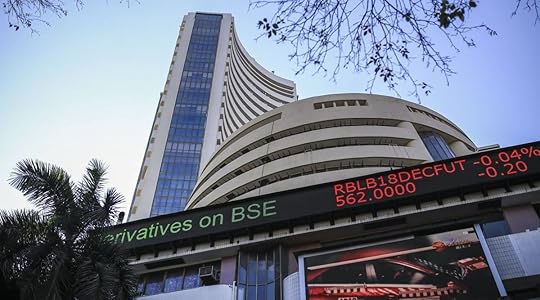
Firstly, the sheer volume of this scam is astounding, let alone the people involved. It is to be noted here that ‘the scam’ does not refer to a single entity’s clever fraudulent activities, but the complete exploitation by the banking sector and brokers of the rot within the system and the regulator’s blind eye to the same.
Harshad Shantilal Mehta, our ‘Big Bull’ is therefore not the only one to be blamed for the mess. I can understand why people looked up (and continue to) to him. His rags-to-riches story is unique on many counts. Harshad entered the market as a nobody. He’d done some random business before and was unsatisfied and restless about the finances of his family. But his passion for the markets, right from when he joined as a jobber at the BSE is clear, it’s even contagious to read/watch that I’d bet people have already started or are thinking about trading after watching the series.
Harshad’s character is intriguing, his ambitions, brashness about the way he handled situations, convincing oratories, risk exposure (“Risk hai toh ishq hai”), taking on the big players, eternal optimism and above all the whole bragging about his successes (which eventually brought him down).
Citibank’s activities were shocking to read. In fact, it was pathetic that most of the local banks didn’t know about the Bond tables. Any simple understanding of the bond prices and yield would’ve told us that Citibank’s deals were outright rip-offs. All its activities with the brokers, making money from the stock market and sharing the profits, while dumping the losses in clients’ PMS accounts were crooked. No surprise that Harshad adapted its own methods and trumped it when even the Bear Cartel was dry on funds.
As a common man, it was shocking to read how much was happening in the banking system without anyone suspecting anything and the regulators turning blind eye. Could understand the evils of over-regulation, how it creates an arbitrage when not done evenly.
The Bulls, Bear Cartel, Banks-Brokers nexus, BRs, diverting banking funds to push the markets, insider trading, PMS, RBI functioning, politics and CBI, it was an interesting read.
(I've skipped the Ketan Parekh 2001 scam. I'll read it some other time when interested.)
I find it hard to review just the book, as I’m influenced by the series too, which I’d say is rather more than the book owing to multiple factors.
There were two things that instantly gained my attention, Harshad Mehta and Citibank (for the obvious reasons).
Firstly, the sheer volume of this scam is astounding, let alone the people involved. It is to be noted here that ‘the scam’ does not refer to a single entity’s clever fraudulent activities, but the complete exploitation by the banking sector and brokers of the rot within the system and the regulator’s blind eye to the same.
Harshad Shantilal Mehta, our ‘Big Bull’ is therefore not the only one to be blamed for the mess. I can understand why people looked up (and continue to) to him. His rags-to-riches story is unique on many counts. Harshad entered the market as a nobody. He’d done some random business before and was unsatisfied and restless about the finances of his family. But his passion for the markets, right from when he joined as a jobber at the BSE is clear, it’s even contagious to read/watch that I’d bet people have already started or are thinking about trading after watching the series.
Harshad’s character is intriguing, his ambitions, brashness about the way he handled situations, convincing oratories, risk exposure (“Risk hai toh ishq hai”), taking on the big players, eternal optimism and above all the whole bragging about his successes (which eventually brought him down).
Citibank’s activities were shocking to read. In fact, it was pathetic that most of the local banks didn’t know about the Bond tables. Any simple understanding of the bond prices and yield would’ve told us that Citibank’s deals were outright rip-offs. All its activities with the brokers, making money from the stock market and sharing the profits, while dumping the losses in clients’ PMS accounts were crooked. No surprise that Harshad adapted its own methods and trumped it when even the Bear Cartel was dry on funds.
As a common man, it was shocking to read how much was happening in the banking system without anyone suspecting anything and the regulators turning blind eye. Could understand the evils of over-regulation, how it creates an arbitrage when not done evenly.
The Bulls, Bear Cartel, Banks-Brokers nexus, BRs, diverting banking funds to push the markets, insider trading, PMS, RBI functioning, politics and CBI, it was an interesting read.
(I've skipped the Ketan Parekh 2001 scam. I'll read it some other time when interested.)
December 13, 2020
Exposes the nexus between brokers, banks and corporates. What an abysmal situation our banks were in with the multiple scams running in parallel. Read it even if you have watched the TV Series. Recommended!!

November 17, 2019
The authors start by expressing their gratitude towards Deep Throat (name withheld):
//Our understanding of complex transactions, the nature of the players, the specific deals and confidential conversations between top officials were all derived from long hours he has so generously spent with us in nondescript restaurants in the suburbs//
Unfortunately, the authors do not provide any such hand-holding to the reader as was provided to them. Unless one is very familiar with how stock market, securities, debentures, banks, PSUs and regulators work, one is left wondering at terms that are left unexplained. The pity is that the understanding of those are essential to the book.
One wishes the authors didn’t assume that their readers would be seasoned stock brokers or people who work in the financial sector. One also wonders if people with such professions will bother to read the book.
Who is this book for?
//Our understanding of complex transactions, the nature of the players, the specific deals and confidential conversations between top officials were all derived from long hours he has so generously spent with us in nondescript restaurants in the suburbs//
Unfortunately, the authors do not provide any such hand-holding to the reader as was provided to them. Unless one is very familiar with how stock market, securities, debentures, banks, PSUs and regulators work, one is left wondering at terms that are left unexplained. The pity is that the understanding of those are essential to the book.
One wishes the authors didn’t assume that their readers would be seasoned stock brokers or people who work in the financial sector. One also wonders if people with such professions will bother to read the book.
Who is this book for?
September 16, 2020
When i was in school, I heard the name Harshad Mehta alot but i was too young to understand what was he convicted for.
So i picked up the book just to understand what the man "The Big Bull" was all about. Due to the nature f the book, at times the book gets too technical but also informative.
People with financial and stockbroking background will love this book, for me it was like a financial documentary, nothing wrong with the book just wasn't my taste.
So i picked up the book just to understand what the man "The Big Bull" was all about. Due to the nature f the book, at times the book gets too technical but also informative.
People with financial and stockbroking background will love this book, for me it was like a financial documentary, nothing wrong with the book just wasn't my taste.
December 5, 2020
There are tons of technical terms which normal person can't understand but it will give you overview of what was the scam and how it happened. There are lots of technical terms which are difficult to understand
May 21, 2026
Do not be fooled by the Scam 1992 TV show and read this. This is a literal 500 page plus report of the scam (plus a few more), with enough numbers to melt your brain and make the word "crore" completely lose all value in your eyes. Good God. Took me far too long, can't breeze through it, need to be very deliberate in reading it.
February 5, 2021
A masterpiece by Debashish and Sucheta. Highlights so many aspects of the two scams that rocked India within a span of 10 years. Covers the (in) action by the different factions involved in the scam, especially those which might not be known to the general public
July 18, 2014
THE SCAM is more of an investigative report on the 2 defining stock market scams of recent times - 1991-1992, made famous by Harshad Mehta,, and the Ketan Parekh escapade of 2001. The report - for it is more of a report than a book - is exhaustive in its material, stunning in its scope and breadth and appears complete and irrefutable in its analysis and conclusions. This is not a book for beginners, to be very honest; a basic assumption is there of a working knowledge of stocks, stock markets, money markets and bank operations in addition to finance management basics.
The book covers every aspect of the scam in considerable detail, right from the document trail, to the fraudulent transactions, as well as movement in stock prices, coupon rates and interest rates, market deals, cartels and the interaction of the various players in the scam - the Brokers, Banks, Institutional Investors, Regulators, Politicians, Mutual Fund Houses - which serves to give depth and credibility to the investigation, as it leaves no parameter uncovered and no stone unturned in its attempt at arriving at the hidden truth. In particular, the attention to detail in just about every aspect of the investigation is worth a special mention. The attention given to even the most minute of circumstances, events and allegations throughout the book lends it considerable weight.
The book covers every aspect of the scam in considerable detail, right from the document trail, to the fraudulent transactions, as well as movement in stock prices, coupon rates and interest rates, market deals, cartels and the interaction of the various players in the scam - the Brokers, Banks, Institutional Investors, Regulators, Politicians, Mutual Fund Houses - which serves to give depth and credibility to the investigation, as it leaves no parameter uncovered and no stone unturned in its attempt at arriving at the hidden truth. In particular, the attention to detail in just about every aspect of the investigation is worth a special mention. The attention given to even the most minute of circumstances, events and allegations throughout the book lends it considerable weight.
January 5, 2021
The book is a detailed gold mine of everything that went around from scam 1992 to scam 2001. Taking it one chapter a day it builds up the facts perfectly and sets up the premise and players with intricate detailing.

April 3, 2021
I would rather advise someone to watch series than reading the book.
The book contains a deep research on the topic which may not interest a layman. You can surely go for the read and quickly scan through the book.
The book contains a deep research on the topic which may not interest a layman. You can surely go for the read and quickly scan through the book.
October 23, 2016
An excellent "front row" account of one of the biggest cycle of rise and fall in the Indian markets. A must read
December 21, 2020
Very good books are available here
Want to Read
January 12, 2021It's fabulous
October 21, 2020
Excellent thoroughly researched book about series of scams with various players which included banks, brokers, PSUs, financial institutions, sloppy regulation and the underlying incentive structure.
Although Harshad Mehta became the central villain of the scam that was exposed in the year 1992, this 1992 scam is a series of scams with various players involved Harshad Mehta, Ketan Parekh, banks, brokers, PSUs, financial institutions, sloppy regulation and the underlying incentive structure.
The flawed banking policies & regulations, and the short-sighted policies of the government created loopholes & incentives that resulted into so many scams which ultimately busted in the year 1992 with the expose of Harshad Mehta by Sucheta Dalal working in Times of India.
Harshad Mehta Scam
The story of Harshad Mehta in the market started as a jobber in a brokerage firm. Then through experience, contact & influence, he got the brokerage license from the Bombay Stock Exchange. Later on, he also established his own asset management company Grow More. The eternal greed for money exploiting loopholes in the system led to his exponential rise and exponential fall.
Harshad Mehta used banking funds to drive/rig the stock market using loopholes in the banking system. These loopholes of using banking & PSU funds to manipulate/rig the market were very much in practice by foreign banks like Citi Bank, ANZ Grindlays, Bank of America & influential brokers at that time. They sourced money from portfolio clients, financial institutions i.e. UTI, mutual funds & used it to manipulate market.
A certain percentage of funds/deposits by banks are required to be kept as government bonds i.e. SLR as mandated by RBI. If there is an issue in complying the SLR requirement, the banks can fulfill the same by buying the government bonds from other banks having surplus government bonds. This interbank transaction i.e. money market does not take place directly, it takes place through a money market broker. Harshad Mehta was one of the brokers of money market.
The transaction between banks i.e. purchase & sell of government bonds through brokers used to be settled in 14 days, and in that period, money used to be kept in the account of broker. Harshad Mehta started using that money and started investing in a selected stocks & rigging the market. The massive buying of selected stocks using banking funds by Harshad Mehta resulted in astronomical rise in the price of few stocks. Rotating the money between various banks and the stock market, he made huge return in a small time period. The transaction between banks could also take place through issuance of bank receipts rather than physical transfer of government securities.
Having established deep connection with banks, Harshad Mehta bribed bank officials to issue fake bank receipts or withdrawing banking funds manipulating figures related to bank receipts in the registers of banks.
The financial jugglery of Harshad Mehta was exposed by excellent investigative journalism of Sucheta Dalal. This expose of nexus between banks & brokers disrupted the rotation of money that Harshad used to carry between banks and stock market, and earning supernormal returns. The stock market started crashing and the value of shares that Harshad held also crashed. The banks that gave money to Harshad Mehta started demanding money, but as the stocks of Harshad Mehta collapsed, he was unable to fulfill the commitments of banks and he started defaulting big time.
In this scam of using banking & PSU funds to manipulate/rig the stock market, thousands of investors lost money in the market. Investigation & witch-hunts with thrilling twists & turns by Reserve Bank of India, Central Bureau of Investigation, Enforcement Directorate, Income Tax Department, Joint Parliamentary Committee is very much described in detail in the book.
Short-sighted policies that incentivized scams
The flawed banking policies, over-regulation on paper, not upgrading the infrastructure required for record keeping & processing large number of market-based transactions (Public Debt Division of RBI) created the loopholes in the system for ease of doing scams rather than business during 1980s.
Till 1992-93, 38.5% of the deposits with banks were required to be maintained as SLR, 25% CRR. 40% of the remaining 36.5% i.e. 14.6% were prescribed for priority sector lending. The loan melas very much prevalent during that time resulted into reckless political lending. Only 60% of the 36.5% i.e. 21.9% could be given as pure commercial lending.
The reckless political lending led to increase in Non-Performing Assets (NPA) of the banks. Banks had no money left to finance capital-intensive Public-Sector Undertakings (PSUs) like NTPC. Therefore, PSUs were asked to borrow directly from the market issuing bonds. Till 1991, PSUs had issued bonds over Rs. 20,000.Banks were allowed to accept deposits free from SLR & CRR obligations under Portfolio PMS from any institution having surplus cash. Through this route, money that could be easily raised by PSUs started flowing into the stock market through collusion between banks, brokers and financial institutions.
Although Harshad Mehta became the central villain of the scam that was exposed in the year 1992, this 1992 scam is a series of scams with various players involved Harshad Mehta, Ketan Parekh, banks, brokers, PSUs, financial institutions, sloppy regulation and the underlying incentive structure.
The flawed banking policies & regulations, and the short-sighted policies of the government created loopholes & incentives that resulted into so many scams which ultimately busted in the year 1992 with the expose of Harshad Mehta by Sucheta Dalal working in Times of India.
Harshad Mehta Scam
The story of Harshad Mehta in the market started as a jobber in a brokerage firm. Then through experience, contact & influence, he got the brokerage license from the Bombay Stock Exchange. Later on, he also established his own asset management company Grow More. The eternal greed for money exploiting loopholes in the system led to his exponential rise and exponential fall.
Harshad Mehta used banking funds to drive/rig the stock market using loopholes in the banking system. These loopholes of using banking & PSU funds to manipulate/rig the market were very much in practice by foreign banks like Citi Bank, ANZ Grindlays, Bank of America & influential brokers at that time. They sourced money from portfolio clients, financial institutions i.e. UTI, mutual funds & used it to manipulate market.
A certain percentage of funds/deposits by banks are required to be kept as government bonds i.e. SLR as mandated by RBI. If there is an issue in complying the SLR requirement, the banks can fulfill the same by buying the government bonds from other banks having surplus government bonds. This interbank transaction i.e. money market does not take place directly, it takes place through a money market broker. Harshad Mehta was one of the brokers of money market.
The transaction between banks i.e. purchase & sell of government bonds through brokers used to be settled in 14 days, and in that period, money used to be kept in the account of broker. Harshad Mehta started using that money and started investing in a selected stocks & rigging the market. The massive buying of selected stocks using banking funds by Harshad Mehta resulted in astronomical rise in the price of few stocks. Rotating the money between various banks and the stock market, he made huge return in a small time period. The transaction between banks could also take place through issuance of bank receipts rather than physical transfer of government securities.
Having established deep connection with banks, Harshad Mehta bribed bank officials to issue fake bank receipts or withdrawing banking funds manipulating figures related to bank receipts in the registers of banks.
The financial jugglery of Harshad Mehta was exposed by excellent investigative journalism of Sucheta Dalal. This expose of nexus between banks & brokers disrupted the rotation of money that Harshad used to carry between banks and stock market, and earning supernormal returns. The stock market started crashing and the value of shares that Harshad held also crashed. The banks that gave money to Harshad Mehta started demanding money, but as the stocks of Harshad Mehta collapsed, he was unable to fulfill the commitments of banks and he started defaulting big time.
In this scam of using banking & PSU funds to manipulate/rig the stock market, thousands of investors lost money in the market. Investigation & witch-hunts with thrilling twists & turns by Reserve Bank of India, Central Bureau of Investigation, Enforcement Directorate, Income Tax Department, Joint Parliamentary Committee is very much described in detail in the book.
Short-sighted policies that incentivized scams
The flawed banking policies, over-regulation on paper, not upgrading the infrastructure required for record keeping & processing large number of market-based transactions (Public Debt Division of RBI) created the loopholes in the system for ease of doing scams rather than business during 1980s.
Till 1992-93, 38.5% of the deposits with banks were required to be maintained as SLR, 25% CRR. 40% of the remaining 36.5% i.e. 14.6% were prescribed for priority sector lending. The loan melas very much prevalent during that time resulted into reckless political lending. Only 60% of the 36.5% i.e. 21.9% could be given as pure commercial lending.
The reckless political lending led to increase in Non-Performing Assets (NPA) of the banks. Banks had no money left to finance capital-intensive Public-Sector Undertakings (PSUs) like NTPC. Therefore, PSUs were asked to borrow directly from the market issuing bonds. Till 1991, PSUs had issued bonds over Rs. 20,000.Banks were allowed to accept deposits free from SLR & CRR obligations under Portfolio PMS from any institution having surplus cash. Through this route, money that could be easily raised by PSUs started flowing into the stock market through collusion between banks, brokers and financial institutions.

December 27, 2020
In September 2020, I was browsing around Social Media when I came across the trailer of Scam 1992, the theme score by Achint Thakkar just blew me away and playing it on a loop I went around the Internet to know more about this series. On that search, I realised that it was an adaptation of a book by journalists who investigated various financial scams to blot Indian Economy and next thing I know I have bought this book on my Kindle Paperwhite.
The book follows the financial fraud initiated by foreign banks which worked through the loopholes in the system to make corpulent profits, the rise of infamous stock market bull Harshad Shantilal Mehta with the help of SBI, National Housing Bank, UCO Bank and ANZ Grindlays (using several smaller banks) and the subsequent crash. The crisis was such that the office of PM Narsimha Rao faced allegations of bribery and people lost their life-saving overnight. CBI had to face the challenge of understanding, prosecuting a financial scam which it couldn't understand even as the entire nation woke from its daydreaming to face the nightmare of financial losses.
Unlike the Web Series, the book continues in its last few chapters to highlight how the tricks continued even after the scam came out.
The writers first explain to us the financial mumbo-jumbo
like the Bank Receipts (BR), Subsidiary General Ledger (SGL) & the difference between the Stock Market and Money Markets helping us understand the crisis. The honest view that it was not a mess created by a single individual but the destruction was years in making by the
greedy private players and slumber of public representatives is a relief in an age where books have become tools to justify individual failures as successes.
If you are curious to know about the Stock Market Bull-Bear drama of 1992 and others that followed, this is where you should start.
The book follows the financial fraud initiated by foreign banks which worked through the loopholes in the system to make corpulent profits, the rise of infamous stock market bull Harshad Shantilal Mehta with the help of SBI, National Housing Bank, UCO Bank and ANZ Grindlays (using several smaller banks) and the subsequent crash. The crisis was such that the office of PM Narsimha Rao faced allegations of bribery and people lost their life-saving overnight. CBI had to face the challenge of understanding, prosecuting a financial scam which it couldn't understand even as the entire nation woke from its daydreaming to face the nightmare of financial losses.
Unlike the Web Series, the book continues in its last few chapters to highlight how the tricks continued even after the scam came out.
The writers first explain to us the financial mumbo-jumbo
like the Bank Receipts (BR), Subsidiary General Ledger (SGL) & the difference between the Stock Market and Money Markets helping us understand the crisis. The honest view that it was not a mess created by a single individual but the destruction was years in making by the
greedy private players and slumber of public representatives is a relief in an age where books have become tools to justify individual failures as successes.
If you are curious to know about the Stock Market Bull-Bear drama of 1992 and others that followed, this is where you should start.

February 21, 2024
I read this book after watching the Scam 1992 web series which focuses on Harshad Mehta. This book also covers other key players (brokers, banks, PSUs, etc.) in Scam 1992 besides Harshad, many of whom got scot free with little consequences.
The 2001 Ketan Parikh scam is also covered.
What was most glaring to me is the incompetence of RBI in both scams. RBI's internal investigation showed irregularities before Scam 1992 was exposed, but all it did was to issue guidelines that banks easily ignored. In fact, NHB, a subsidiary of RBI, actively helped Harshad by giving him Rs. 500 crore!
The JPC (Joint Parliamentery Committee) also achieved next to nothing in both scams. It just indulged in politics on who to let off rather than truly pursuing what was going on or forcing RBI, CBI, etc. to properly investigate.
It's also interesting how even UTI was not innocent - while it didn't help Harshad, UTI still did other fishy things like bailing out Calcutta Stock Exchange after Ketan Parekh scam (this was at the expense of its unit holders, ordinary retail investors, but UTI faced no consequences for it).
The 2001 Ketan Parikh scam is also covered.
What was most glaring to me is the incompetence of RBI in both scams. RBI's internal investigation showed irregularities before Scam 1992 was exposed, but all it did was to issue guidelines that banks easily ignored. In fact, NHB, a subsidiary of RBI, actively helped Harshad by giving him Rs. 500 crore!
The JPC (Joint Parliamentery Committee) also achieved next to nothing in both scams. It just indulged in politics on who to let off rather than truly pursuing what was going on or forcing RBI, CBI, etc. to properly investigate.
It's also interesting how even UTI was not innocent - while it didn't help Harshad, UTI still did other fishy things like bailing out Calcutta Stock Exchange after Ketan Parekh scam (this was at the expense of its unit holders, ordinary retail investors, but UTI faced no consequences for it).

October 11, 2021
This book details the 2 scams that shocked the Indian stock market. The book is filled with a lot of financial and stock market jargon that some of the people may not be familiar with because it is quite ancient. You may need to Google some terms to get a clear understanding.
The events/chapters are not chronologically ordered, and are explained from a particular perspective/entity/incident involved. The Scam 1992 web series only highlights about 20% of the scam that took place. This book goes into a lot of detail about each pillar of the scam.
However, the Ketan Parekh scam is not explained in as much detail as the Harshad Mehta one. I also thought the book needed some way to refine the content/information from a reader's perspective.
I recommend this book to anyone who wants to know the details behind both scams and how they unfolded.
The events/chapters are not chronologically ordered, and are explained from a particular perspective/entity/incident involved. The Scam 1992 web series only highlights about 20% of the scam that took place. This book goes into a lot of detail about each pillar of the scam.
However, the Ketan Parekh scam is not explained in as much detail as the Harshad Mehta one. I also thought the book needed some way to refine the content/information from a reader's perspective.
I recommend this book to anyone who wants to know the details behind both scams and how they unfolded.
December 31, 2021
I didn’t watch the much acclaimed TV series on Harshad Mehta. I read this book instead. And I am glad I did. Its very difficult to envision doing justice to all the characters of this rather intriguing tale of greed, and system lacunae.
In popular imagination Harshad Mehta is the symbol of security scam of early 1990s. In reality, he was one of the five strands, although most visible, of a rather complex narrative. Along with flashy Harshad, the others were bumbling SBI/RBI, canny bankers from StanC/Citi, reclusive Calcutta broker Ajay Kayan, and Bhupen Dalal of Bank of Karad who was printing Bankers’ receipts like confetti. There are other numerous characters which give this book a feel of a racy thriller.
My advise would be to read this book rather than spend the same time on the TV. Or you will miss the subtleties of a drama worth for ages.
In popular imagination Harshad Mehta is the symbol of security scam of early 1990s. In reality, he was one of the five strands, although most visible, of a rather complex narrative. Along with flashy Harshad, the others were bumbling SBI/RBI, canny bankers from StanC/Citi, reclusive Calcutta broker Ajay Kayan, and Bhupen Dalal of Bank of Karad who was printing Bankers’ receipts like confetti. There are other numerous characters which give this book a feel of a racy thriller.
My advise would be to read this book rather than spend the same time on the TV. Or you will miss the subtleties of a drama worth for ages.

August 28, 2020
The book gives a very detailed insight into the 1992 scam. The best thing about the book is that it first explains things separately from different points of view - the brokers, the banks, the institutions and the government. And later, the authors explain how all of them are interconnected in forming the root of the scam.
As for the 2001 scam, the book doesn't go into too much depth. However, it does give a synopsis of the major players, the underlying cause and the links between the 1992 scam and 2001 scam.
The only thing I didn't like about the book is that the authors assume that the readers are well-versed in workings of the financial market. For the uninitiated, the book becomes difficult to follow in a lot of places.
As for the 2001 scam, the book doesn't go into too much depth. However, it does give a synopsis of the major players, the underlying cause and the links between the 1992 scam and 2001 scam.
The only thing I didn't like about the book is that the authors assume that the readers are well-versed in workings of the financial market. For the uninitiated, the book becomes difficult to follow in a lot of places.

December 15, 2020
A detailed story of the major scams in India. 1992 & 2001. It is scary to see how markets were manipulated without proper regulations and bookkeeping. On one hand, this book has enough to scare us with the inefficiencies and limitations of the regulatory and judicial system. On the other hand, we can be relived by the depth of the current markets, where it will be hard to conduct widespread manipulation, except in the securities that are thinly traded.
This book is extremely thorough with the details and it may be hard to grasp the full picture of the events by just a single read; nevertheless, it qualifies to be a solid reference of the biggest financial scams in India.
This book is extremely thorough with the details and it may be hard to grasp the full picture of the events by just a single read; nevertheless, it qualifies to be a solid reference of the biggest financial scams in India.

December 22, 2020
Wow! Our country has some shenanigans going on for so long! No wonder we have so much distrust in each and every institution of our country.
This book covers all the major events of the scam of 1992 including the activities at Canara Bank's subsidiaries, every bank's Portfolio Management Services, ANZ Grindlays, etc and not just revolves around Harshad Mehta like the tv series. On top of that it sheds light on the scam of 2001 as well.
Thanks for writing this book authors, its frightening and a true eye opener.
This book covers all the major events of the scam of 1992 including the activities at Canara Bank's subsidiaries, every bank's Portfolio Management Services, ANZ Grindlays, etc and not just revolves around Harshad Mehta like the tv series. On top of that it sheds light on the scam of 2001 as well.
Thanks for writing this book authors, its frightening and a true eye opener.
April 27, 2023
Lots of interesting details and background. Its a dense read, found it hard to interpret and understand the specifics. But, on a broad level I understood most of them.
The level of detail is just amazing though. Would definitely re-read it to understand specifics.
The TV show missed quite a bit of details and made it seem like some specific instances actually happened, although there isn't concrete evidence that things happened a certain way.
Not talking about the bigger picture, but some specific details.
The level of detail is just amazing though. Would definitely re-read it to understand specifics.
The TV show missed quite a bit of details and made it seem like some specific instances actually happened, although there isn't concrete evidence that things happened a certain way.
Not talking about the bigger picture, but some specific details.

December 24, 2023
Saw the series which led to reading the book. Kudos to the series creators on extracting and telling the story from within the depths of this book. The book itself covers a lot more and gets technical in places. Unfortunately the editing is somewhat lax inasmuch as there are places where the continuity is lost. Nevertheless, the book covers the scams of the Indian stock market well. A must read if you lived through the scams, particularly the Harshad Mehta scam, and/or if you have interest in the inner workings of Dalal Street.
January 29, 2024
interesting, albeit bit 'heavy' read
The book provides detailed technical, financial and of course political aspects of the stock market scam of Harshad Mehta. It goes into lot of details about financial instruments and types of trades in stock exchanges across India. Throws harsh light on "regulatory agencies" and their (learned) incompetence. At times, it becomes bit heavy reading due to stock market jargon, but still its an intesting look at how one person was able to manipulate a market for billions!
The book provides detailed technical, financial and of course political aspects of the stock market scam of Harshad Mehta. It goes into lot of details about financial instruments and types of trades in stock exchanges across India. Throws harsh light on "regulatory agencies" and their (learned) incompetence. At times, it becomes bit heavy reading due to stock market jargon, but still its an intesting look at how one person was able to manipulate a market for billions!
May 26, 2021
This book is a classic. It chronicles the messy 1990s stock market of India. The author has put great effort into the book. The book tries to capture every aspect of the frauds that happened, both during 1991 and 2001. Every investor in Indian stock market should read this book to understand the inherent nature of the system they will deal with.
There are not many books like this. I now have a good idea of the history of the Indian stock market and the risks involved.
There are not many books like this. I now have a good idea of the history of the Indian stock market and the risks involved.
January 25, 2021
After watching the TV series I found this book to read again as I all ready came to know how this things are done. Still it give me thrill and joy to read how some done things so cleanly with bypassing all the laws and just using loo falls of system.
Amazing written book. ✔️👍 we would like to read more this kind of books.
Amazing written book. ✔️👍 we would like to read more this kind of books.
Displaying 1 - 30 of 74 reviews