

What do you think?

Bruno wordt een superheld
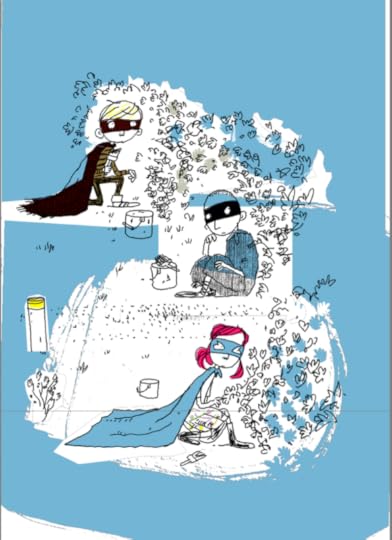
Overdag is Bruno gewoon Bruno. Maar zodra de zon ondergaat, verandert hij in Bruino een superheld die nergens bang voor is. Met zijn kwast en bruine verf gaat hij er s avonds op uit. Bijvoorbeeld om de fietsen van de grootste pestkoppen van de school bruin te schilderen...
Een hartveroverend boek over vriendschap en moed, dat werd bekroond als beste Noorse kinderboek van het jaar.
Een hartveroverend boek over vriendschap en moed, dat werd bekroond als beste Noorse kinderboek van het jaar.
140 pages, Hardcover
First published January 1, 2013
Ratings & Reviews
Friends & Following
Create a free account to discover what your friends think of this book!
Community Reviews
Displaying 1 - 30 of 98 reviews

October 26, 2020
Rusty, whose grandfather dies at the very beginning of Håkon Øvreås' story, must contend with this loss, and must face three older bullies in this children's novel, translated from the Norwegian. Although calm on the surface - when his father tells him that Grandpa has died, his reply is a simple "Okay," with no further comment - it is clear that there is much going on underneath the surface for Rusty, who begins to encounter , when he is out late at night. Assuming the role of a superhero - the eponymous 'Brown,' who wears a brown cape and mask, and who paints one of the bullies' bikes brown - Rusty connects with two other children, Jack and Lou (Louise), who also form superhero alter egos, and join Brown on his crusade against the three older boys. In the end, both story lines - that of the loss of a grandparent, and that of confronting older bullies - have been addressed, and Rusty is able to move on with some peace of mind...
Originally published in Norway as Brune, this short middle-grade novel is the first of a trilogy - the second two, Svartle and Blåse , have yet to be translated into English - and won the Batchelder Award, given annually by the American Library Association for the best children's book translated from another language. I found the story poignant, all the more so given the understatement and restraint shown by Øvreås in telling the tale, and I found the superheroes' turning of the tables on the bullies amusing. The adult in me worried that Rusty was making his situation worse and worse, by not confiding in his parents, but the part of me still connected to my child self understood that this was true to life. Not only is Rusty aware that his parents, especially his mother, are going through a hard time, which might make him reluctant to speak, but he himself is attempting to grapple with his own loss. I also thought the depiction of religion here was quite interesting. My understanding is that Norway is generally quite secular, and that most people interact with their church only for major events - holidays, baptisms, weddings, and funerals - so I was surprised that some of the characters here were more involved - one parent attends Bible study sessions, one grandparent is described as quite religious. On the whole, the depiction ranges from neutral to negative, and the minister himself is a fairly unsympathetic character, more concerned with the bike painting, than with the fact that Rusty has just lost his grandfather. While I have no doubt that this reflects some people's realities, as the daughter of a minister - a gentle man who genuinely loved others, a man to whom people would bring their troubles and sorrow - this made me rather sad. I felt sad for the characters, that they did not have a spiritual leader suited to their needs. That is a very individual reaction of course, and no doubt influenced by my own life circumstances. I doubt most child readers would feel that way, although they certainly might identify with the idea of adult authority figures in general remaining blind to their needs.
Leaving these issues aside, I would recommend this engaging, poignant and somewhat quirky book to middle-grade readers who enjoy stories of contemporary children dealing with some of life's tough challenges with humor and imagination. The accompanying artwork from Øyvind Torseter has a quirky sensibility well-suited to Øvreås' text, and will increase the young reader's pleasure in the book. For my part, I hope that the subsequent two volumes in the series are also translated.
Originally published in Norway as Brune, this short middle-grade novel is the first of a trilogy - the second two, Svartle and Blåse , have yet to be translated into English - and won the Batchelder Award, given annually by the American Library Association for the best children's book translated from another language. I found the story poignant, all the more so given the understatement and restraint shown by Øvreås in telling the tale, and I found the superheroes' turning of the tables on the bullies amusing. The adult in me worried that Rusty was making his situation worse and worse, by not confiding in his parents, but the part of me still connected to my child self understood that this was true to life. Not only is Rusty aware that his parents, especially his mother, are going through a hard time, which might make him reluctant to speak, but he himself is attempting to grapple with his own loss. I also thought the depiction of religion here was quite interesting. My understanding is that Norway is generally quite secular, and that most people interact with their church only for major events - holidays, baptisms, weddings, and funerals - so I was surprised that some of the characters here were more involved - one parent attends Bible study sessions, one grandparent is described as quite religious. On the whole, the depiction ranges from neutral to negative, and the minister himself is a fairly unsympathetic character, more concerned with the bike painting, than with the fact that Rusty has just lost his grandfather. While I have no doubt that this reflects some people's realities, as the daughter of a minister - a gentle man who genuinely loved others, a man to whom people would bring their troubles and sorrow - this made me rather sad. I felt sad for the characters, that they did not have a spiritual leader suited to their needs. That is a very individual reaction of course, and no doubt influenced by my own life circumstances. I doubt most child readers would feel that way, although they certainly might identify with the idea of adult authority figures in general remaining blind to their needs.
Leaving these issues aside, I would recommend this engaging, poignant and somewhat quirky book to middle-grade readers who enjoy stories of contemporary children dealing with some of life's tough challenges with humor and imagination. The accompanying artwork from Øyvind Torseter has a quirky sensibility well-suited to Øvreås' text, and will increase the young reader's pleasure in the book. For my part, I hope that the subsequent two volumes in the series are also translated.

August 26, 2018
Jau trešā šī gada bērnu žūrijas grāmata, kurā bērns atvadās no sava tikko nomirušā vecvecāka. Interesanti, ko par šī gada izvēlēm saka paši bērni, vai nav pārāk depresīvi?
Visā visumā bija inčīgi, un interesantāki bija bērnu piedzīvojumi kā emocionālais pārdzīvojums.
Visā visumā bija inčīgi, un interesantāki bija bērnu piedzīvojumi kā emocionālais pārdzīvojums.

December 10, 2021
﷽
وقتی این کتاب را به دست میگیری، اولین چیزی که بعد از عنوان جلب توجه میکند، عبارت "بهترین کتاب کودک و نوجوان شمال اروپا در سال 2014" است و بعد صفحات آخر را که نگاه میکنی با جوایز ریز و درشتی که این کتاب کسب کرده مواجه میشوی و با همهی اینها انتظار خواندن یک کتاب جذاب با کشش فراوان که در خور گرفتن این همه جایزه بوده را داری، ولی با مطالعهی کتاب تمام این تصورات بهم میریزد.
داستانی روانشناسانه با موضوع رهایی از غم و ابرازِ خود در وضعیتهای ناراحت کنندهی زندگی مانند از دست دادن و فقدان عزیزان. "لوتیت" شخصیت اول داستان پسر بچهای است که وقتی خبر مرگ پدربزرگش را میشنود، بجای اشک ریختن یا فریاد کشیدن فقط یک پاسخ کوتاه میدهد: «باشه» اما هیچکس نمیداند که توی کلهاش چه چیزی میگذرد و چگونه قرار است با این فقدان مواجه شود. او بعد از این واقعه دوستان جدید پیدا میکند، باهم قلعهی چوبی میسازند، بچه قلدرها آن را خراب میکنند، بعد لوتیت مثل یک ابرقهرمان خیالی شبها لباس و شنل بلوطی میپوشد و با یک قوطی رنگ بلوطی با روش خودش به مقابله با زورگویی قلدرها میرود. در حین این اتفاقات لوتیت شبها که به قهرمان بلوطی تبدیل می شود، روح پدربزرگ را میبیند و باهم داستانهایی را مرور میکنند و به گپ و گفت میپردازند.
راستش برای من اینگونه غلبه بر فقدان اصلا جذاب، خاص و در حد کسب یک جایزه نبود!
علاوه بر این، داستان یک تصویر ضد دین هم داشت (به گمان من)! آنجا که سردستهی قلدرها پسر یک کشیش است که او نسبت به رفتارهای ضد اجتماعی پسرش بیتفاوت است و مدام لوتیت را مقصر این اتفاقات میداند و او را متهم میکند؛ و نهایتاً این پسر خود اوست که مقدسات پدر را زیر پا میگذارد و بر روی دیوار کلیسا حرفهای زشت مینویسد. همچنین وقتی لوتیت با روح پدربزرگ صحبت میکند و از مرگ میپرسد، توصیفات او از مرگ با آموزههای من مسلمان بسیار متفاوت است.
در پایان باید گفت برای آموزش مفهوم مرگ و پذیرش فقدان عزیزان به کودکان کتابهای خیلی بهتری برای معرفی به آنان وجود دارد.
وقتی این کتاب را به دست میگیری، اولین چیزی که بعد از عنوان جلب توجه میکند، عبارت "بهترین کتاب کودک و نوجوان شمال اروپا در سال 2014" است و بعد صفحات آخر را که نگاه میکنی با جوایز ریز و درشتی که این کتاب کسب کرده مواجه میشوی و با همهی اینها انتظار خواندن یک کتاب جذاب با کشش فراوان که در خور گرفتن این همه جایزه بوده را داری، ولی با مطالعهی کتاب تمام این تصورات بهم میریزد.
داستانی روانشناسانه با موضوع رهایی از غم و ابرازِ خود در وضعیتهای ناراحت کنندهی زندگی مانند از دست دادن و فقدان عزیزان. "لوتیت" شخصیت اول داستان پسر بچهای است که وقتی خبر مرگ پدربزرگش را میشنود، بجای اشک ریختن یا فریاد کشیدن فقط یک پاسخ کوتاه میدهد: «باشه» اما هیچکس نمیداند که توی کلهاش چه چیزی میگذرد و چگونه قرار است با این فقدان مواجه شود. او بعد از این واقعه دوستان جدید پیدا میکند، باهم قلعهی چوبی میسازند، بچه قلدرها آن را خراب میکنند، بعد لوتیت مثل یک ابرقهرمان خیالی شبها لباس و شنل بلوطی میپوشد و با یک قوطی رنگ بلوطی با روش خودش به مقابله با زورگویی قلدرها میرود. در حین این اتفاقات لوتیت شبها که به قهرمان بلوطی تبدیل می شود، روح پدربزرگ را میبیند و باهم داستانهایی را مرور میکنند و به گپ و گفت میپردازند.
راستش برای من اینگونه غلبه بر فقدان اصلا جذاب، خاص و در حد کسب یک جایزه نبود!
علاوه بر این، داستان یک تصویر ضد دین هم داشت (به گمان من)! آنجا که سردستهی قلدرها پسر یک کشیش است که او نسبت به رفتارهای ضد اجتماعی پسرش بیتفاوت است و مدام لوتیت را مقصر این اتفاقات میداند و او را متهم میکند؛ و نهایتاً این پسر خود اوست که مقدسات پدر را زیر پا میگذارد و بر روی دیوار کلیسا حرفهای زشت مینویسد. همچنین وقتی لوتیت با روح پدربزرگ صحبت میکند و از مرگ میپرسد، توصیفات او از مرگ با آموزههای من مسلمان بسیار متفاوت است.
در پایان باید گفت برای آموزش مفهوم مرگ و پذیرش فقدان عزیزان به کودکان کتابهای خیلی بهتری برای معرفی به آنان وجود دارد.
February 18, 2019
الأبطال الخارقون
النهاية غريبة، لكن القصة مليئة بذكريات طفولية وخيالات لا حصر لها، لقد هيجت القصة ذكريات كثيرة بطفولتي، وذكرتني عندما أزمعت أنا وزميل لي بتأسيس فرقة اسمها فرقة العدالة وكان تخصصنا هو فض المنازعات بين الطلبة. خيالات طفولية خصبة. تنمر أطفال آخرين. الرغبة في العدل واستحضار صوره. القصة حقًا رائعة والنهاية فعلاً غريبة.

January 18, 2018
Ši knygelė toookio mielumo, jauki iki begalybės. Minimalistinės, tačiau viską, kas svarbu, pasakančios iliustracijos. Tekstas, pripildytas kasdienybės smulkmenų, pavergė. Skirta pradinukams, tačiau perskaičiau su malonumo ir prisiminiau vaikystę. Ypač, kai pati vykdydavau savo teisybę, prikrėsdavau šunybių ir po to aplankydavo tas keistas jausmas, mažas kirminėlis pilve, kuris peraugdavo į didelę baimę, kad visi sužinos, kieno tai darbas, ir taip nesmagu pasidarydavo. Daliui, berniukui iš knygos, tikriausiai panašiai.
Dar ši knyga labai padės vaikams, kurie neteko vieno iš senelių. Vaikui tikrai gali būti sunku suvokti situaciją, pačią mirtį, suprasti, kaip taip gali būti, kad daugiau niekada nebepamatys savo mylimo ir artimo žmogaus. Knygelėje vaizduojama, kaip netektį išgyvena Daliaus tėveliai, o pats berniukas su seneliu atsisveikina labai magišku būdu.
Nemoralizuojanti, šviesi istorija apie vaikus, kurie būna vaikais. Patiko!
Dar ši knyga labai padės vaikams, kurie neteko vieno iš senelių. Vaikui tikrai gali būti sunku suvokti situaciją, pačią mirtį, suprasti, kaip taip gali būti, kad daugiau niekada nebepamatys savo mylimo ir artimo žmogaus. Knygelėje vaizduojama, kaip netektį išgyvena Daliaus tėveliai, o pats berniukas su seneliu atsisveikina labai magišku būdu.
Nemoralizuojanti, šviesi istorija apie vaikus, kurie būna vaikais. Patiko!

December 28, 2018
Útla knižka o veľkých veciach. O smútku, odvahe postaviť sa silnejšiemu, vyrovnávaní sa so smrťou, nadväzovaní priateľstiev. Číta sa prakticky sama, ale rozhodne v čitateľovi niečo zanechá – aj v tom detskom.

January 25, 2020
Wspa nia łe.

August 13, 2023
Brown started with the story of Rusty's grandfather who just died leaving him a pocket watch that was broken, paintbrushes and two cans of brown paint. At night, he transformed to a superhero which is his alter ego to stop the bullies who have been terrorizing their small town.
Rusty was bullied by Ruben, Anton and minister's son. Rusty's alter ego can do anything to those bullies. When the night came, he painted one of the bullies bike to brown. And that was the time he began to encounter the ghost of his grandfather.
I love that this story is focusing on very serious issue such as bullying. This is such an engaging and poignant story for middle graders. I also enjoyed the humour of these main characters. Can't wait to read the volume 2.
Thank you Times Reads for sending me this book in return for an honest review.
Rusty was bullied by Ruben, Anton and minister's son. Rusty's alter ego can do anything to those bullies. When the night came, he painted one of the bullies bike to brown. And that was the time he began to encounter the ghost of his grandfather.
I love that this story is focusing on very serious issue such as bullying. This is such an engaging and poignant story for middle graders. I also enjoyed the humour of these main characters. Can't wait to read the volume 2.
Thank you Times Reads for sending me this book in return for an honest review.

November 28, 2019
"Яв Кафяв" на български. Първата от трилогията за три деца, които живеят в малко норвежко село и отмъщават на младежите, които ги тормозят, като им боядисват колелетата, а също се изживяват и нещо като детективи.
Прочетохме и трите книжки със седемгодишата ми дъщеря на един дъх и страшно ни харесаха и на двете. За Ина я четохме и повторно. Най-интересни са самите герои и членовете на техните семейства. Те са предадени съвсем откровено и по човешки, заедно и с недостатъците си, но без авторът да дава някакви нравоучителни оценки. Атмосферата в отдалеченото норвежко село е предадена по много задушевен начин и чрез текста, и чрез чудесните илюстрации в книжката.
Прочетохме и трите книжки със седемгодишата ми дъщеря на един дъх и страшно ни харесаха и на двете. За Ина я четохме и повторно. Най-интересни са самите герои и членовете на техните семейства. Те са предадени съвсем откровено и по човешки, заедно и с недостатъците си, но без авторът да дава някакви нравоучителни оценки. Атмосферата в отдалеченото норвежко село е предадена по много задушевен начин и чрез текста, и чрез чудесните илюстрации в книжката.

February 2, 2017
Boken handlar om Rune han har byggt en koja med sin kompis Atle men en dag kommer det tre pojkar och de tar sönder deras koja men natten där på blir
Rune till Brune...
Rune till Brune...

August 26, 2020
Denne var fin. Kjente jeg ble litt blank i øynene når jeg var kommet meg slutten.

June 14, 2021
semplice e affettuoso, per piccoli lettori, ma anche gli adulti possono sorridere
January 22, 2025
Leuk, vlot boek voor groep 4!

March 20, 2020
Chcela by som viac takychto detskych knih, kde je pribeh straty a smutku spracovany netuctovym a nepatetickym sposobom.

October 7, 2023
Brown- My Alter Ego Is A Superhero, 2020
Batchelder Award
Genre: International, Superhero, Grief
This is a wonderful novel that has pictures and is a short read. This book is about Rusty dealing with his grandfather’s passing. Rusty is trying to find paint with his friend Jack for the fort they are building. The kids were bullying Jack and Rusty and destroying their fort. Rusty sees a movie on TV about a superhero named Ray-X. In the night he heard shouting and that’s when Rusty changed his superhero name to Rusty Brown and would wear his brown superhero outfit. This book shows the importance of your imagination and finding ways to escape. I would use this book in class to help students deal with grief and to show that even though our loved ones are gone we can still continue being reminded that everything will be okay and remembering their legacy.
Batchelder Award
Genre: International, Superhero, Grief
This is a wonderful novel that has pictures and is a short read. This book is about Rusty dealing with his grandfather’s passing. Rusty is trying to find paint with his friend Jack for the fort they are building. The kids were bullying Jack and Rusty and destroying their fort. Rusty sees a movie on TV about a superhero named Ray-X. In the night he heard shouting and that’s when Rusty changed his superhero name to Rusty Brown and would wear his brown superhero outfit. This book shows the importance of your imagination and finding ways to escape. I would use this book in class to help students deal with grief and to show that even though our loved ones are gone we can still continue being reminded that everything will be okay and remembering their legacy.

December 28, 2020
نام فارسی: قهرمانی به رنگ بلوط
فضای داستان و توصیفها خیلی خوب و گاهی بامزه بودن
رابی آبی خیلی خوب بود :) و خونهشون که بوی کلوچهی تازه میداد
اسم اصلی کتاب
Brune
و اسم پسره هست
Rune
که بین این دو کلمه بازی کلامی ایجاد شده. در فارسی هم «بلوطی» و «لوتیت» شبیه هماند و کار مترجم جالب و خلاقانه بوده
فضای داستان و توصیفها خیلی خوب و گاهی بامزه بودن
رابی آبی خیلی خوب بود :) و خونهشون که بوی کلوچهی تازه میداد
اسم اصلی کتاب
Brune
و اسم پسره هست
Rune
که بین این دو کلمه بازی کلامی ایجاد شده. در فارسی هم «بلوطی» و «لوتیت» شبیه هماند و کار مترجم جالب و خلاقانه بوده

October 21, 2020
The book "Brune (Brown)" was written by Hakon Ovreas in 2013 in Norway. It was translated to English. It received the 2020 Batchelder Award that is given to books originally published in another country and translated to English. I was able to find the book at my local library but it was the second library I had to check.
Brune is about a young boy named Rusty who moves to a new city and learns that his grandfather has passed away. He is devastated by the news and is unsure of how to occupy himself as his parents are preoccupied with the funeral. One night after being inspired by a superhero movie, he creates his superhero costumes and goes out in the night. He is greeted by the ghost of his grandfather, which I thought was an interesting element. We see the interaction between him and his grandfather and how this helps initiate his activities in the night. Him and his friends join forces as superheroes and begin to create mischief towards the town bullies. We see how this causes some stress in Rusty's life and we begin to wonder if he will get caught. The story is quick and focuses on the ideas of friendship and death. The plot I feel as though does jump from one thing to the next in certain parts but overall I enjoyed the book.
Even though the book was originally published in Norway, the translation doesn't lose the plot of the story. Also, the book is very relatable to children in the United States and using superheroes and imagination as a common point. All children can make connections to Rusty and what he gets up to in the night. Also, the illustrations bring his superhero qualities to life and help children make connections to the story.
I would recommend the book to young elementary aged students, 2-4th grade. Older students would enjoy it as well and remind them of their imagination.
Brune is about a young boy named Rusty who moves to a new city and learns that his grandfather has passed away. He is devastated by the news and is unsure of how to occupy himself as his parents are preoccupied with the funeral. One night after being inspired by a superhero movie, he creates his superhero costumes and goes out in the night. He is greeted by the ghost of his grandfather, which I thought was an interesting element. We see the interaction between him and his grandfather and how this helps initiate his activities in the night. Him and his friends join forces as superheroes and begin to create mischief towards the town bullies. We see how this causes some stress in Rusty's life and we begin to wonder if he will get caught. The story is quick and focuses on the ideas of friendship and death. The plot I feel as though does jump from one thing to the next in certain parts but overall I enjoyed the book.
Even though the book was originally published in Norway, the translation doesn't lose the plot of the story. Also, the book is very relatable to children in the United States and using superheroes and imagination as a common point. All children can make connections to Rusty and what he gets up to in the night. Also, the illustrations bring his superhero qualities to life and help children make connections to the story.
I would recommend the book to young elementary aged students, 2-4th grade. Older students would enjoy it as well and remind them of their imagination.

March 31, 2020
Наскоро с Вал Стоева от „Детски книги” се съгласихме единодушно, че човек няма защо да чете анотациите на скандинавските детски книги. Ако имаш възможността да прочетеш нов превод на някоя творба за подрастващи от далечния север, то този факт сам по себе си е предостатъчен, за да грабнеш книгата, без капка съмнение в удоволствието и удовлетворението, което ще изпиташ. Не съм сигурен как точно да определя това специфично качество, но то е много характерно за скандинавската детска литература, независимо дали става дума за таблетки смалидон или пръцпрах, за счупени носове или вафлени сърца. С невероятен усет и находчивост, авторите успяват да засегнат най-съществените и дълбоки теми, дори такива, които възрастните често считат за табу и не биха очаквали да открият в детска книга, и то по начин, който не е нито назидателен, нито завоалиран и смекчен. Уютът и магията, есенцията на детството, вървят ръка за ръка с нежна прямота, защото ако нещо ни вълнува и е неминуема част от живота ни – то значи за него не само си струва, но и трябва да се говори. Точно поради тази причина не прочетох анотациите на „Яв Кафяв”, „Ерлен Черен” и „Ина Синя” (изд. „Фют”) на норвежеца Хокон Йовреос. Просто ги грабнах, без ясна представа що за история ме очаква, но с добри предчувствия и високи очаквания. Не останах излъган. Прочетете ревюто на "Книжни Криле": https://knijnikrile.wordpress.com/202...

July 8, 2020
Brown (My Alter Ego is a Super Hero book 1) by Håkon Øvreås and Øyvind Torseter 128 pages. Enchanted Lion Books, 2019. $17.
Content: G.
BUYING ADVISORY: EL, MS - ADVISABLE
AUDIENCE APPEAL: AVERAGE
Rusty is staying with his Aunt when his grandfather dies. She lets him take home a can of brown paint for the fort he and his friend Jack are building. But when they go to their fort in the woods, 3 bullies - the minister's son included - are pulling down their fort and chase Jack and Rusty away. That night, Rusty has an idea - dressed in brown with a brown cape, he becomes Brown - a super hero avenging wrongs - and he paints one of the bullies bikes with the brown paint. Rusty joins him the next night with Black paint, and eventually their other friend, Lou, become Blue. But when the minister notices paint on Rusty's hand at Grandpa's funeral, the super heroes may be in trouble.
This Batchelder award winner from Norway is an interesting character study. I loved the illustrations, simple but emotional. I love Rusty and his friends, but as an adult I wonder if they are just getting themselves into more trouble than they think. Rusty has the guidance and support of his dead grandfather, who is sitting on a large rock in the woods, waiting for, well, whatever happens after one dies. Probably not for every reader, but Brown is quirky enough that I think I know some kids who would really enjoy it. It's book 1 in a series - I wonder where it's headed?
Lisa Librarian
https://kissthebook.blogspot.com/2020...
Content: G.
BUYING ADVISORY: EL, MS - ADVISABLE
AUDIENCE APPEAL: AVERAGE
Rusty is staying with his Aunt when his grandfather dies. She lets him take home a can of brown paint for the fort he and his friend Jack are building. But when they go to their fort in the woods, 3 bullies - the minister's son included - are pulling down their fort and chase Jack and Rusty away. That night, Rusty has an idea - dressed in brown with a brown cape, he becomes Brown - a super hero avenging wrongs - and he paints one of the bullies bikes with the brown paint. Rusty joins him the next night with Black paint, and eventually their other friend, Lou, become Blue. But when the minister notices paint on Rusty's hand at Grandpa's funeral, the super heroes may be in trouble.
This Batchelder award winner from Norway is an interesting character study. I loved the illustrations, simple but emotional. I love Rusty and his friends, but as an adult I wonder if they are just getting themselves into more trouble than they think. Rusty has the guidance and support of his dead grandfather, who is sitting on a large rock in the woods, waiting for, well, whatever happens after one dies. Probably not for every reader, but Brown is quirky enough that I think I know some kids who would really enjoy it. It's book 1 in a series - I wonder where it's headed?
Lisa Librarian
https://kissthebook.blogspot.com/2020...

November 22, 2018
Precitali sme si a celkom to bolo napinave ako sa ten Edo, ktory vyzeral ako nemastny-neslany chlapec bez fantazie vedel premenit na nieco ine. Mozno aj vdaka dedovi, co mu dodaval odvahu, aj ked ho uz nebolo medzi zivymi. Ale zatial este niekde napomedzi, lebo vnukovi bolo treba pomoct, bolo treba sa s nim rozlucit, aj mu zamavat a dat vediet, ze sa o seba bude vediet Edo postarat.
Tato kniha patri pre mna medzi tie - ako ich volam "pocitove". Ze to o co v nich ide, skor vycitis ako vycitas :) Take medziriadkove knihy. Plynula pomaly napriek tomu, ze nebola bez akcie. Opisy pocitov Eda boli vyborne, uplne sa mi stiahol zaludok ako som si o tom citala, ako sa bal :D A kresby sa nam velmi pacili, take jedno-duche a jedno-farebne, to my mozeme, lebo vynikla farebna tema :) v pribehu.
Tato kniha patri pre mna medzi tie - ako ich volam "pocitove". Ze to o co v nich ide, skor vycitis ako vycitas :) Take medziriadkove knihy. Plynula pomaly napriek tomu, ze nebola bez akcie. Opisy pocitov Eda boli vyborne, uplne sa mi stiahol zaludok ako som si o tom citala, ako sa bal :D A kresby sa nam velmi pacili, take jedno-duche a jedno-farebne, to my mozeme, lebo vynikla farebna tema :) v pribehu.

February 26, 2020
Didn't really work for me; I've often enjoyed the Batchelder winners (Murderer's Ape is a favorite), but this was a bit too odd for me. I was bothered by the (mis)placing of blame, the somewhat sinister minister, and some of the interactions between Rusty and his parents. Yes, in a time of grief things could be strained, but they were blaming or suspecting him without realizing his trauma from his grandfather's death and the three boys. There were also some things lost in translation: the floodlights in the cemetery picture had no explanation, and there was an "Auntie" left off the text at one point; her character was somewhat lost as well.

January 29, 2017
Leuk boek over Bruno. Bruno is gewoon Bruna, alleen verandert dat 's avonds en wordt Bruno opeens Bruino. Hij wordt een soort superheld en is de pestkoppen de baas door een pot bruine verf.
Leuk verhaal met een soort stripachtige tekeningen.
(37e boek Boekenbingo 2017)
Leuk verhaal met een soort stripachtige tekeningen.
(37e boek Boekenbingo 2017)

June 27, 2020
2020 Batchelder Winner (for excellence in translated literature for children), first in a series originally published in Norway. A little odd. I usually enjoy the batchelder winners, but the creepy minister character pushed this into the 2 star realm for me.
This entire review has been hidden because of spoilers.

March 27, 2016
En herlig og morsom barnebok om Rune og alteregoet og superhelten Brune, som sammen med vennene Atle (Svartle) og Åse (Blåse) bekjemper bøller med et par malingsspann.

July 22, 2023
Read for Oxford/Bath Spa VCFA trip July 2023.
I want to read more Norwegian stories!
I want to read more Norwegian stories!

February 15, 2020
http://www.esmeraldaviaggielibri.it/a...
Aaron X di Håkon Øvreås, illustrato da Øyvind Torseter, libro per bambini pubblicato da Giunti il 5 febbraio.
Håkon Øvreås è un giovane scrittore norvegese che per Brune (titolo originale dell’opera) ha vinto diversi premi. Questo libricino per bambini, età consigliata 8 anni, parla di bullismo, di perdita, di coraggio e di amicizia. Il personaggio principale è Aaron, ma non è l’unico protagonista, accanto a lui troviamo Neri e Luisa, bambini come lui stufi di essere sopraffatti dai bulli della zona.
Aaron si è da poco trasferito con la famiglia per stare più vicino al nonno, la vita nel nuovo quartiere non è il massimo per lui a causa di tre ragazzini che lo perseguitano passandola sempre liscia. Il giorno in cui muore il nonno Aaron si rende conto di non sapere bene come reagire, è piccolo e non riesce a elaborare la perdita che ha subito, si rende conto che dovrebbe essere triste perché il nonno era un buon nonno, ma non soffre per questa perdita.
Tutto ciò a cui riesce a pensare sono quei tre bulli che hanno devastato senza alcun rimorso la casetta che Aaron e Neri avevano costruito per farne il loro fortino. Una sera, dopo aver visto un film su un supereroe decide che deve fare qualcosa, deve farsi giustizia da solo visto che i grandi sembrano non vedere cosa stia accadendo. Destino vuole che nella cantina di zia Ingrid abbia trovato della vernice marrone e che la zia gli abbia detto di prenderla pure per dipingerci la famosa casetta. Ma si sa che ogni supereroe che si rispetti debba avere un costume adeguato e così Aaron si impegna a realizzarlo e come prima missione decide di andare a casa di uno dei bulli a dipingergli la bicicletta di marrone.
Esce quatto quatto di casa, senza farsi udire da nessuno e compie la sua vendetta, ma ben presto si rende conto di non essere solo. Non lontano da casa, seduto su un masso, c’è proprio suo nonno che lo osserva e veglia su di lui.
Come in tutti i bambini di questa età la fantasia vola leggera e galoppa a perdifiato, quindi i racconti potrebbero essere un tantino esagerati, ma è il bello di avere 8 anni potersi permettere di ingigantire le cose.
Il giorno successivo i bulli si presentano da Aaron e Neri per incolparli della bicicletta dipinta di marrone, Aaron e Neri negano qualsiasi coinvolgimento, ma i bulli non ci stanno e proseguono con le loro malefatte danneggiando irreparabilmente la casetta. I bulli non vogliono lasciare perdere e arrivano a disubbidire a tutti, fregandosene perfino degli avvertimenti degli adulti. Sembra però che Aaron non sia l’unico supereroe presente in zona…e chissà che unendo le forze possano liberarsi dei loro persecutori per sempre.
Ho letto alcuni libri sul bullismo per bambini e ragazzi e questo è quello che meno mi ha colpito. Ho apprezzato il coraggio mostrato da Aaron, Neri e Luisa, ma credo che nessuno debba farsi giustizia da solo e potrebbe passare un messaggio sbagliato. Le figure genitoriali sono importanti, così come lo sono gli insegnanti e gli adulti in generale e credo che ogni bambino debba essere educato a fidarsi di loro quando accade qualcosa di questo tipo. Ho apprezzato lo spalleggiarsi dei tre amici, il farsi forza e l’esserci l’uno per l’altro, ma non bisogna mai dimenticarsi che sono gli adulti che devono intervenire in situazioni come queste. Le illustrazioni sono infantili ma efficaci, il fantasma del nonno è una figura di supporto importante e l’amicizia tra Aaron, Neri e Luisa qualcosa di bello e puro, ma credo che Aaron X non centri appieno l’obiettivo.
Aaron X di Håkon Øvreås, illustrato da Øyvind Torseter, libro per bambini pubblicato da Giunti il 5 febbraio.
Håkon Øvreås è un giovane scrittore norvegese che per Brune (titolo originale dell’opera) ha vinto diversi premi. Questo libricino per bambini, età consigliata 8 anni, parla di bullismo, di perdita, di coraggio e di amicizia. Il personaggio principale è Aaron, ma non è l’unico protagonista, accanto a lui troviamo Neri e Luisa, bambini come lui stufi di essere sopraffatti dai bulli della zona.
Aaron si è da poco trasferito con la famiglia per stare più vicino al nonno, la vita nel nuovo quartiere non è il massimo per lui a causa di tre ragazzini che lo perseguitano passandola sempre liscia. Il giorno in cui muore il nonno Aaron si rende conto di non sapere bene come reagire, è piccolo e non riesce a elaborare la perdita che ha subito, si rende conto che dovrebbe essere triste perché il nonno era un buon nonno, ma non soffre per questa perdita.
Tutto ciò a cui riesce a pensare sono quei tre bulli che hanno devastato senza alcun rimorso la casetta che Aaron e Neri avevano costruito per farne il loro fortino. Una sera, dopo aver visto un film su un supereroe decide che deve fare qualcosa, deve farsi giustizia da solo visto che i grandi sembrano non vedere cosa stia accadendo. Destino vuole che nella cantina di zia Ingrid abbia trovato della vernice marrone e che la zia gli abbia detto di prenderla pure per dipingerci la famosa casetta. Ma si sa che ogni supereroe che si rispetti debba avere un costume adeguato e così Aaron si impegna a realizzarlo e come prima missione decide di andare a casa di uno dei bulli a dipingergli la bicicletta di marrone.
Esce quatto quatto di casa, senza farsi udire da nessuno e compie la sua vendetta, ma ben presto si rende conto di non essere solo. Non lontano da casa, seduto su un masso, c’è proprio suo nonno che lo osserva e veglia su di lui.
Come in tutti i bambini di questa età la fantasia vola leggera e galoppa a perdifiato, quindi i racconti potrebbero essere un tantino esagerati, ma è il bello di avere 8 anni potersi permettere di ingigantire le cose.
Il giorno successivo i bulli si presentano da Aaron e Neri per incolparli della bicicletta dipinta di marrone, Aaron e Neri negano qualsiasi coinvolgimento, ma i bulli non ci stanno e proseguono con le loro malefatte danneggiando irreparabilmente la casetta. I bulli non vogliono lasciare perdere e arrivano a disubbidire a tutti, fregandosene perfino degli avvertimenti degli adulti. Sembra però che Aaron non sia l’unico supereroe presente in zona…e chissà che unendo le forze possano liberarsi dei loro persecutori per sempre.
Ho letto alcuni libri sul bullismo per bambini e ragazzi e questo è quello che meno mi ha colpito. Ho apprezzato il coraggio mostrato da Aaron, Neri e Luisa, ma credo che nessuno debba farsi giustizia da solo e potrebbe passare un messaggio sbagliato. Le figure genitoriali sono importanti, così come lo sono gli insegnanti e gli adulti in generale e credo che ogni bambino debba essere educato a fidarsi di loro quando accade qualcosa di questo tipo. Ho apprezzato lo spalleggiarsi dei tre amici, il farsi forza e l’esserci l’uno per l’altro, ma non bisogna mai dimenticarsi che sono gli adulti che devono intervenire in situazioni come queste. Le illustrazioni sono infantili ma efficaci, il fantasma del nonno è una figura di supporto importante e l’amicizia tra Aaron, Neri e Luisa qualcosa di bello e puro, ma credo che Aaron X non centri appieno l’obiettivo.

October 15, 2020
Hakon Ovreas’ illustrated chapter book “Brown” is a 2020 Mildred L. Batchelder Award winner from Norway, and it is the first book in a series in which the protagonist, an eight year-old boy named Rusty, is the new kid in town whose grandfather has just died. While his parents are distracted with finalizing funeral details, a superhero movie on TV inspires Rusty to become a self-proclaimed superhero himself so he can wreak revenge against three ruffians who started tormenting him. Dressed in brown and wielding brown paint, “Brown” is ready to seek justice alongside unexpected help from other secret superheroes in town. This tale is woven with supernatural elements such as visitations from his grandfather’s spirit who encourages Rusty’s midnight prowls and a seemingly broken pocket watch that works when Rusty is in disguise. The fast-moving plot has readers wondering if Rusty will get caught as he uses his super painting powers against the mischief-makers, and readers will wonder how long Rusty’s grandfather will continue to visit him.
Ideal for ages 6-10, the simple syntax makes the plot accessible and understandable to young readers. Older readers will appreciate the ubiquitous breadth of archetypes that are a juicy delight for those who enjoy layers of symbolism. Children who enjoy tales about alter ego superheroes and seeking justice for wrongdoings will enjoy this book, and children who are coping with loss may find comfort in this story, for it reassures readers that loved ones will always be nearby in spirit. Classroom use of the book can have students discuss the purpose of archetypes in the text and how they can be used to make accurate predictions, and they can partake in activities that ask them to explore themes such as friendship, bullying, justice, and death.
The book’s English translation makes a smooth transition into any culture’s frame of reference. Cultural details take the shape of food references that may be unfamiliar to some readers but certainly not understandable. Syntactical elements flow seamlessly for a well-knit plot structure that maintains the book’s message about the necessity for bravery - not only in the face of bullies, but also in the face of death.
For readers interested in accessing this book, note that it was not available at a local library or on Kindle, but it was available for purchase on Amazon. For more information regarding its award, I acquired the book here: http://www.ala.org/alsc/awardsgrants/...
I accessed this book by ordering a hard copy from Amazon.
Ideal for ages 6-10, the simple syntax makes the plot accessible and understandable to young readers. Older readers will appreciate the ubiquitous breadth of archetypes that are a juicy delight for those who enjoy layers of symbolism. Children who enjoy tales about alter ego superheroes and seeking justice for wrongdoings will enjoy this book, and children who are coping with loss may find comfort in this story, for it reassures readers that loved ones will always be nearby in spirit. Classroom use of the book can have students discuss the purpose of archetypes in the text and how they can be used to make accurate predictions, and they can partake in activities that ask them to explore themes such as friendship, bullying, justice, and death.
The book’s English translation makes a smooth transition into any culture’s frame of reference. Cultural details take the shape of food references that may be unfamiliar to some readers but certainly not understandable. Syntactical elements flow seamlessly for a well-knit plot structure that maintains the book’s message about the necessity for bravery - not only in the face of bullies, but also in the face of death.
For readers interested in accessing this book, note that it was not available at a local library or on Kindle, but it was available for purchase on Amazon. For more information regarding its award, I acquired the book here: http://www.ala.org/alsc/awardsgrants/...
I accessed this book by ordering a hard copy from Amazon.

November 2, 2020
Brown was originally written in Norwegian and translated into English by Kari Dickson. I loved this book so much. The story is great, but the illustrations are what really brings it to life. The cartoonish style of the pictures made me experience this book as if I were a child, constantly imagining things as they unfold. The story follows Ra young boy named Rusty and his alter-ego “Brown,” a crime-fighting superhero whose superpower consists of painting things brown. Colors play a large part in the story, and Rusty and his three friends are each associated with a color. The illustrator Øyvind Torseter uses yellow for Rusty, green for Jack, and red for Lou. These three friends all have alter-egos who paint with different colors! The color yellow continues to make an appearance throughout the book. There are sections that are sad where yellow is faint, such as just a lightbulb shining while the rest of the page is gray. The happy portions of the book are filled with the most yellow, and it is a beautiful gold instead of a dull mustard. I found this to be an enchanting, delightful story of friendship, grief, and imagination. I would recommend this book to readers in elementary school. In the classroom, I would love to dive in deeper with all of the colors, asking students to go through the book and find every instance of yellow, red, and green. Then I would ask students, why do you think the illustrator picked these colors?

June 30, 2020
Rusty is staying with his Aunt when his grandfather dies. She lets him take home a can of brown paint for the fort he and his friend Jack are building. But when they go to their fort in the woods, 3 bullies - the minister's son included - are pulling down their fort and chase Jack and Rusty away. That night, Rusty has an idea - dressed in brown with a brown cape, he becomes Brown - a super hero avenging wrongs - and he paints one of the bullies bikes with the brown paint. Rusty joins him the next night with Black paint, and eventually their other friend, Lou, become Blue. But when the minister notices paint on Rusty's hand at Grandpa's funeral, the super heroes may be in trouble.
This Batchelder award winner from Norway is an interesting character study. I loved the illustrations, simple but emotional. I love Rusty and his friends, but as an adult I wonder if they are just getting themselves into more trouble than they think. Rusty has the guidance and support of his dead grandfather, who is sitting on a large rock in the woods, waiting for, well, whatever happens after one dies. Probably not for every reader, but Brown is quirky enough that I think I know some kids who would really enjoy it. It's book 1 in a series - I wonder where it's headed?
For this and more of my reviews, visit http://kissthebook.blogspot.com
This Batchelder award winner from Norway is an interesting character study. I loved the illustrations, simple but emotional. I love Rusty and his friends, but as an adult I wonder if they are just getting themselves into more trouble than they think. Rusty has the guidance and support of his dead grandfather, who is sitting on a large rock in the woods, waiting for, well, whatever happens after one dies. Probably not for every reader, but Brown is quirky enough that I think I know some kids who would really enjoy it. It's book 1 in a series - I wonder where it's headed?
For this and more of my reviews, visit http://kissthebook.blogspot.com

March 20, 2020
Rusty’s grandfather has died. Rusty loved Him but he’s not sad. Rusty stays with his Aunt while Mum and Dad sort out the hospital ‘practicalities’. Rusty is given his grandfather’s broken pocket watch.
Rusty and his friend jack have built a fort. Three older boys are wrecking it. Rusty tells them to stop and they give chase. He races to Lou’s house and hides there. Lou is curious about why the boys are chasing Rusty.
At home things are sad. Mum cries and Dad is tired. In the middle of this Rusty watched a movie with a superhero. Rusty thinks if he’s s superhero ‘Brown’ maybe he can fix things. He makes a cape and mask and ventures out in the middle of the night to settle the score with the bullies. Grandfather’s pocket watch starts to work and Rusty sees an unexpected visitor sitting in the garden.
What can Rusty do about the bullies? How does he get out the trouble caused by trying to sort the bullies?
A fun read. A great book to read together to discuss life in Norway and the themes the book addresses. Recommended for 8+
Published by Enchanted Lion Books 2019 First English edition.
ISBN 9781592702510
Rusty and his friend jack have built a fort. Three older boys are wrecking it. Rusty tells them to stop and they give chase. He races to Lou’s house and hides there. Lou is curious about why the boys are chasing Rusty.
At home things are sad. Mum cries and Dad is tired. In the middle of this Rusty watched a movie with a superhero. Rusty thinks if he’s s superhero ‘Brown’ maybe he can fix things. He makes a cape and mask and ventures out in the middle of the night to settle the score with the bullies. Grandfather’s pocket watch starts to work and Rusty sees an unexpected visitor sitting in the garden.
What can Rusty do about the bullies? How does he get out the trouble caused by trying to sort the bullies?
A fun read. A great book to read together to discuss life in Norway and the themes the book addresses. Recommended for 8+
Published by Enchanted Lion Books 2019 First English edition.
ISBN 9781592702510
Displaying 1 - 30 of 98 reviews