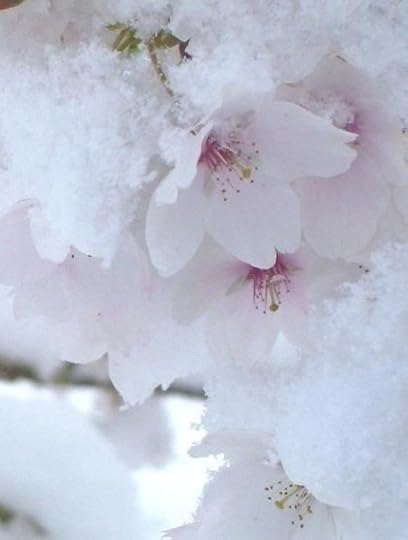
This new translation of the best stories by Ichiyo Higuchi showcases the pioneering author's profound sensitivity and lyrical eye. The crystalline beauty of falling snow is a painful reminder of lost innocence; three children growing up on the fringes of Tokyo's red-light district enjoy a last summer of freedom before adulthood and its compromises overtake them; a discontented serving maid and a prodigal son find their transgressions can be mutually beneficial; and a man's passion for an indifferent teahouse courtesan becomes so consuming that he is willing to sacrifice everything to it - his job, his family, perhaps even his life.
Rarely translated into English, but revered in Japan for the purity of her classical language and her status as the country's first professional woman writer, Ichiyo Higuchi drew on her own short life in a poor Tokyo neighbourhood to inspire her work. With immense delicacy of phrase and feeling, and vivid evocations of the colourful festivals and salty street banter that mask unspoken yearning and disappointed hopes, she transmits both the beauty and the struggle of working-class women's lives in turn-of-the-century Japan. In her clear-eyed vision of the world, longing and memory may be the only solace.
Pen name of poet and writer Natsu Higuchi. She studied at the Haginosha school of poetry run by Utako Nakajima and showed talent from early on. After her father’s death in 1889, she began writing novels to make a living, but she also had a sideline business, a general merchandise store, because she could not survive on income from writing alone. In less than a year from the end of 1894, she successively published such masterpieces as Otsugumori (The Last Day of the Year), Take Kurabe (Comparing Heights), Nigorie (Troubled Waters), and Jusanya (13th Night). She died at the young age of 24 from tuberculosis.
Her image currently appears on the Japanese 5000-yen banknote.
tldr: a candid portrait of Meiji-era Japan and the struggles of womenfolk and the poor. A must-read (!) for all Japanese literature enjoyers.
Ichiyo Higuchi was the face of the 5000-yen bill since 2004, only recently replaced by the likeness of Tsuda Umeko (the founder of Tsuda University) in 2024. Within her two-year career, for she died to an illness at the young age of 24, she left behind 21 short stories and thousands of poems. She is, without a doubt, a big name in the classical Japanese canon.
Thank heavens for Pushkin Press! It is criminal how little presence she has in the West. She should be up there with Osamu Dazai (higher, in my opinion), for she also writes about Japan's stark lifestyle during the Meiji era. I blame the patriarchy for this -- Dazai's writing is by no means of higher quality, nor did he have Higuchi's breadth and depth of emotion.
Troubled Waters is a selection of five of Higuchi's short stories: (1) "A Snowy Day" or "雪の日" (2) "New Year's Eve" or "大つごもり" (3) "Growing Pains" or "たけ比べ" (lit. "Comparing heights") (4) "Troubled Waters" or "にごりえ" (5) "This Mortal Coil" or"うつせみ" (lit. "Fleeting," although its kanji characters 空蝉 also means "empty cicada shell," a symbol of death and short life especially in traditional Japanese poetry. Karetnyk's translation of "This Mortal Coil" attempts to capture this double meaning.)
Three of these -- "New Year's Eve," "Troubled Waters," and "Growing Pains" -- have been adapted for film and TV multiple times. I say this to emphasize Higuchi's influence and quality of work, if the fact that she was literally the face of the 5000yen banknote (for twenty years!) didn't convince you.
As always, I provide a summary of each short story below, alongside some light comments.
"A Snowy Day"
A woman contemplates the snow and reminisces on her foolish childhood. Orphaned at a young age, Tama was adopted by her saintly aunt who arranges for her studies in the capital. There, small town girl Tama falls in love with her city man instructor. Against better judgement, she betrays her aunt and pursues her fleeting desire. As they say, hindsight is twenty-twenty.
This is an incredibly short story, but it says so much about gender roles, social class, and honour in Meiji-era Japan. It is clear that it was no mere "youthful folly" that motivated Tama's footsteps. Instead, her actions take into consideration an explicit disloyalty to her aunt's care, social class traditions, and moral customs. Yet, this is not a moralising story about ignoring wisdom but the tragic result of social stratification, perhaps allegory of how Japan as a whole succumbed to the allure of the new shiny Westerners.
What struck me in this story was Higuchi's lyrical style. Her prose is exceptional, reminiscent of waka poets who invoke deep emotion through reference to nature, the seasons, and other universal sensory information.
"New Year's Eve"
O-Mine is a servant girl struggling to make ends meet. She has found employment at the richest household of the neighbourhood, though the job is by no means easy under the mistress' iron fist. It's almost New Year's Eve, and O-Mine takes the day off to see her uncle and his family, having no other relatives of her own. Her uncle has taken ill, forced to close his small grocer's stall, and his seven-year-old son now bears the mantle of income, gathering clams after school with his bare hands and selling them for a pittance. To make matters worse, they are sorely in dept. "O-Mine, if only you could procure for us just two yen so we may celebrate the New Year?" O-Mine makes a promise that is isn't sure she could keep. Meanwhile, her mistress' household is having troubles of their own. Their first-born son is a prodigal spender indeed, and he comes home drunk, intimidating his parents for more money.
This is a story that frankly reflects Asian values and traditions -- family, honour, filial piety, gender roles, and cultural traditions. In this way, reading this short story was refreshing. Too often in Western literature do we see family conflict being resolved by walking away -- cutting ties, abandonment, divorce, lawsuits, etc. To traditional Asians, these are unthinkable solutions. We opt, instead, for perseverance and compromise. I was happy to see these honest struggles in how the rich family refuses to give up on their prodigal son.
Higuchi also presents an interesting contrast between the rich and poor families, the unsurmountable wealth gap, and their different struggles with money. The ending, too, is surprising. Like other classical Japanese stories, it resists being reduced to a moral, instead relying on circumstance alone. Higuchi doesn't take sides. She doesn't position one family as right and the other as wrong. Whatever happened did so because of circumstance, and its levity implies that their luck could have easily been reversed.
"Growing Pains"
A novella, really; one that touches upon growing up in a constrained area (Yoshiwara) and how class differences function differently in innocence and adulthood.
Fourteen-year-old Midori is everyone's darling. Her family lives a relatively well-off life at the Daikokuya brothel where her older sister works as a successful and popular courtesan. Her best friend is the mature boy Shotaro, who happens to be the head of the Main Street Gang. But her heart belongs to the priest's son Nobuyuki, who, unknown to Midori, has joined the rivalling Back Street Gang lead by the ill-mannered Chokichi, the son of a construction worker.
The two gangs fight, for their own honour certainly, but when Midori gets caught in the midst of their violence, for Midori also. All these, however, are mere excuses. What they are really fighting over is their fleeting sliver of childhood, hanging on to the last threads of their freedom before they must don the yoke of responsibility and carry out the rest of their lives in oppressive, unescapable Yoshiwara.
This novella punches above its weight class. Of course, it is about childhood innocence; not because these kids are truly innocent, but because they wish to hang onto this innocence. Having grown up in this cesspit known as Yoshiwara, they know what lies beyond the veil.
Shotaro, for example, was orphaned at a young age and is now the only caregiver to his aging grandmother. He is forced to take on duties normally reserved for adults -- a money loaner. Nobuyuki's future is to take over his father's position as a Buddhist priest, yet he is disgusted by the hypocrisy of it all: he watches his father greedily collect payment in exchange for half-hearted prayers and blessings. But the biggest price will be paid by Midori, whose future requires the absolute exchange of her entire freedom, a career that has been hanging over her head since the moment she was born as a girl.
"Growing Pains" -- an apt title. It implies that the children know that they are growing up, and it is this knowledge that causes their pain.
"Troubled Waters"
O-Riki is the most popular menu item at the brothel (excuse me, I mean "restaurant") called Chrysanthemum Well (this name brings to mind the tragic folk story of O-kiku and her suicide in a well... translation note: Kiku means Chrysanthemum). She is so successful, in fact, that she had claimed many a man's heart as victim, earning the nickname "Devil" from the wife and child of her most devoted customer, a futon seller. One day, she meets a new customer and as they build rapport, O-Riki reveals the heaviness of her heart Meanwhile, the fortunes of the futon seller, now ignored by O-Riki out of guilt, take a turn for the worse. The end of the story finds the futon seller dead to seppuku, and lying beside him is O-Riki. Her fatal wounds are weird. Was she murdered, or...?
This short story is rather modern and psychological, a departure in tone from Higuchi's previous stories. At a certain point, O-Riki describes what we now know to be an anxiety attack, ending with suicidal ideation. Reversing perspectives, Higuchi shows how courtesans are not manipulators of hearts but victims of the system, giving voice to a class of people who have completely lost their agency.
"This Mortal Coil"
A family navigates though times with their sick daughter -- sick in the mind, not in the body, for she was never the same since her fiancé's death.
Themes of madness (usually exclusively in women and cause d by problems of love, as it is here) are common in traditional Japanese literature. What sets this one apart is its vivid and realistic portrayal of mental illness. The daughter probably suffers from some kind of schizophrenia, given the vision she sees and the illegible scribbles she writes. Some days she is well, which gives her family limitless hope, but other days she is lost.
The technique Higuchi uses -- revelation through omission (move over, Hemingway!) -- also further heightens the tension. We never know outright the cause of her fiancé's death, but through passing comments and what refuses to be said, Higuchi implies a disgraceful suicide, Likewise, the daughter's fate is also unclear. Will she live? Will she die? And how much of her guilt towards her fiancé's death -- whatever it is -- is marred by her illness?
Ending thoughts
This is a phenomenal collection of short stories, enjoyable in its pacing, its characters, and its verisimilitude. Higuchi confronts the troubles of Yoshiwara's floating world head on. She does not shy away from darker and deeper topics that reveal the humanity in us all.
I highly recommend this collection to anyone interested in Japanese literature and history. Higuchi is the eyeball in the centre of the storm. I added this to my list of favourites. Yay!
I liked the stories, but the endings were always a bit weak for my taste. There were almost never any real conclusion to the stories, which made them less memorable. I liked the later stories better, though the first was good too for its shortness, which grabbed the attention.
This is a collection of short stories by an author often described as Japan’s first professional woman writer of the modern era. Born Higuchi Natsuko in 1872, she was the daughter of a peasant who had just managed to achieve samurai status a year before the Meiji Restoration period began, leading to the samurai caste being abolished. After her father’s death, Higuchi and her mother and sister were left struggling financially and Higuchi decided to support her family through her writing. Using the pseudonym Higuchi Ichiyō (in Japanese, the first name comes last), she had her first story published in a magazine in 1892 and went on to write more stories, poems, essays and a diary before dying from tuberculosis at the age of just twenty-four.
This new collection from Pushkin Press contains five of her stories published between 1893 and 1895. The first, A Snowy Day (Yuki no hi), is a beautifully written story in which our narrator looks back on her school days, when she fell in love with an unsuitable man, and reflects on the disillusionment she now feels due to decisions made during that time. Although it’s the shortest story in the book, it has a powerful emotional impact and was the perfect introduction to Higuchi’s work. The second story New Year’s Eve (Ōtsugomori) was even better – probably my favourite of the five. It follows O-Mine, a young woman working as a maid in a rich household, who asks her employer for an advance on her salary so she can help her uncle who is ill and struggling financially. Her employer agrees then cruelly pretends to forget, leaving O-Mine contemplating stealing. I particularly loved the ending which is ambiguous but also very satisfying.
Growing Pains (Takekurabe) is a novella-length story and another I enjoyed. It tells the story of a group of young people living in Yoshiwara, Tokyo’s red light district, and revolves around a feud between two rival gangs, one led by Chōkichi, the son of a construction foreman, and the other by Shōtarō, a pawnbroker’s son. We also meet the shy, serious Nobu, whose father is the local priest, and fourteen-year-old Midori, a bright, lively girl who is being groomed to become a courtesan like her older sister. As this group of children grow older they begin to discover that their hopes and dreams for the future are unlikely to come true as their paths have already been laid out for them by their parents and society. I loved all the insights we get into Japanese culture and the summer and winter festivals, and because this is the longest story in the collection, there’s more time for character development as well.
Karetnyk states in his introduction at the beginning of the book that he has tried to preserve Ichiyō’s classical Japanese writing style, which means there are no quotation marks around dialogue, with sentences and paragraphs often running together into one long section of prose. I found the first three stories easy enough to follow, but for some reason the style was more of a problem for me with the fourth, Troubled Waters (Nigorie), and I sometimes struggled to tell where one person had finished speaking and another had started. For that reason, this story wasn’t one of my favourites, but it’s still a striking depiction of the fate of courtesans, focusing on O-Riki and one of her clients, who has become infatuated with her.
The final story is This Mortal Coil (Utsusemi) and it’s another very short one. It explores a young woman’s overwhelming feelings of guilt that cause her to descend into mental and physical illness. I found it the weakest of the five stories in the book, but it was still interesting and apparently this is the first time this particular story has been translated into English. I would definitely recommend this collection as a whole for what it tells us about Meiji-era Japan and the lives of women during that period. For me personally, most of the Japanese literature I’ve read has been crime, so it was good to have the opportunity to try something different!
Admittedly, I’m not that familiar with the Meiji period or the literature of that time, but good writing always transcends its trappings, which is exactly what this collection did.
There are four short stories and one novella featured in Troubled Water by Ichiyo Higuchi, one of Japan’s first female authors.
While I suspect a number of allusions may have passed me by, I enjoyed the quietness of Higuchi’s writing and her focus on characters from various backgrounds who were likely overlooked during that period.
The only real quibble I had was with the formatting; I sometimes had difficulty following which character was speaking, but it was a minor issue.
My personal favourite in the collection was A Snowy Day. It was the shortest piece in the collection, but it packed the hardest punch and explored a timeless theme.
Despite the rich history of female writers in Japanese, Ichiyō Higuchi was the first female Japanese author to make a living through writing. She grew up in a well-off family, but her circumstances were significantly reduced after her father's death. Having received a classical Japanese education focusing on poetry at a private school, she was forced to move to a lower class district with her mother and younger sister. They earned an income through sewing and laundry work, but inspired by the royalties received by her classmate Kaho Miyake, another future prominent female writer of the Meiji era, Higuchi decided to support her family by writing. She was an avid diarist, writing thousands of pages, but most of her literary output is expressed in short stories. She wrote stories of the poor and marginalised people she encountered in her daily life using classical Japanese of the Heinan era she was trained in. A major influence on later writers (Mieko Kawakami cites Higuchi as her biggest inspiration in Japanese fiction), Higuchi died aged 24 of tuberculosis.
This collection presents five of her short stories, most not previously available in English. The contrast between her classical Japanese and the subject matter of her works does not come through in the English translation to a lack of a comparable stage in the development of the English literary language. Yet the translation gives a very clear sense of her ability to capture social urban landscapes. She speaks to the inequalities and complex social stratifications of the Meiji society and examines the roles of women in it. The stories are at their strongest when they paint the larger picture and convey the archetypes of specific character types of 1890s Japan. They are less successful at creating convincing unique characters. I really appreciated reading these stories and I can definitely see their subsequent influence on 20th and 21st century Japanese writers, but the stories themselves did not quite capture me. I appreciated them intellectually but did not always buy into them emotionally. #japanuary #JapanJanuary
I admit I rarely read classics nor poetry because I struggle with the pacing & the format, but this was truly an exception worth reading.
This novel is composed of Ichiyō's (author's pseudonym) collection of five short stories, chosen accordingly not only to present some of her finest writing, but also to showcase each of these at their highest point.
As Japan's first professional woman writer, she was able to paint a vivid illustration of how the Meiji era was, through her vibrant descriptions in writing, including the poignant & dark history of the literary world as well as society itself.
Treated with injustice, disadvantaged, unprivileged, in no position to hardly do anything, to name a few - these were how women were regarded during this historical period. The focal point of the book was to give voices to the "unheard" : the poor & the underclass of society, maids, slaves, sex workers, and the like.
Although I have to say some parts of the translation seemed incoherent, I was still able to grasp the thought & concept.
Every short story conveys deep understanding & shows intense human emotions & complexities of moral decision-making not only lying on the black and the white. With the straightforward translation, the flow of the narrative was smooth & fluid, just enough to keep me captivated to read.
I did long for more historical context on the mentioned era of Japanese history, since I am not so familiar with it, but all in all, it was truly engaging!
P.S. Greatly appreciated the glossary of Japanese Terms at the end of the book. Enlightened me with some terms I was not familiar with!
Thank you Netgalley & Pushkin Press Classics for this opportunity! 🥹🫶
4/5 ⭐️⭐️⭐️⭐️
P.S. Follow me for more book reviews on: ❥ Instagram @bookwormdenz ❥ Threads @denz.kaye ❥ Meta @bookworm.denz ❥ Goodreads @bookwormdenz
This was for a genre challenge I'm doing on another platform, prompt "short stories in translation."
These stories are melancholy vignettes about various people. Higuchi's vivid descriptions of the characters are often accompanied by their deep emotions. Themes include scandal, unrequited love, class differences, jealousy, anger, and mental health.
‘’I wish I had spent this fleeting life as the moon, shining brightly before it wanes, or as a cherry tree, in blossom for its short season.’’ Ichiyo Higuchi
In the Yoshiwara quarter, under the light of the paper lanterns, while the shamisen is weeping its laments, love is forbidden, innocence is lost, injustice, prejudice and poverty weave a tangled web. Ichiyo Higuchi's stories are elegies of the exploration and the resilience of women who have been dealt the wrong hand by Fate.
‘’[...] her lips painted blood-red, like those of a hound that had just eaten a man.’’
The translation by Bryan Karetnyk masterfully preserves this classical lyricism without softening the gritty realism of the Meiji era. It captures a world where poetic descriptions of moonlit gardens collide harshly with the stench of poverty, ensuring the stories feel like both a haunting melody and a sharp social indictment.
And it is not an easy duty. Ichiyo Higuchi's pen is vivid, realistic, poetic. Modern in its feminist echoes, yet lyrical, sensitive. Silent at times, like a courtesan's tears. Because a courtesan is a temptress, a Japanese Circe. She has neither the ability nor the right to experience feelings…She has been mythologised as a predator while being systematically destroyed as a human.
Ichiyo Higuchi masterfully includes references to tragic, obsessive love stories, myths, and customs as allusions that emphasise the isolation and enmity that have created the walls within which a courtesan spends her life. Young women whose destiny has been sealed from an early age. Men whose love for a courtesan turns into obsession, destroying families. Secrets that result in blood as the women surrender their body and their dignity.
Love becomes a torture, a catalyst for misery. This is a world in which love is thwarted by cruelty. Who can trust, let alone love, the Temptress? How can a courtesan experience attraction without any monetary motive? How can love be born in the pleasure quarter?
A Snowy Day: A young woman narrates the disillusionment, the grief and pain that comes with sacrificing everything in the name of a naive kind of love.
New Year's Eve: A young maid finds herself in the centre of a deeply dysfunctional family as the whims of her tyrannical mistress cause her to commit a questionable deed.
Growing Pains: An unforgettable story that reads like a tale, a fable with deeply realistic roots. Focusing on a brilliant young girl, Midori, Ichiyo Higuchi demonstrates the frighteningly limited choices a girl has once she has been born in the heart of the pleasure quarters. Midori must be one of the most memorable female characters in Japanese Literature.
Troubled Waters: My personal favourite in the collection. A story that sheds light on the way the courtesans were viewed by society, an unflinching, brave tale that would have been a melodrama in the hands of a less competent writer. If we believe that these women are devoid of love, grief and regret, this story will make us think twice. What is undisputed is the evil obsession causes.
This Mortal Coil: The story of a young woman whose guilt (over nothing, in my opinion) causes her to physically wither. Each reader may have their own thoughts on this extremely ambiguous tale, but for me, it is a commentary on mental illness that feels almost absurdly modern.
“They lured men with a mellifluous voice, their call every bit as alluring as a pheasant’s before it goes, and with a dreadful squawk, devours the adder that it has caught whole. And yet they, too, were human; they, too, had spent ten lunar months in their mother’s womb.’’
Ichiyo Higuchi led a life of struggle and died of tuberculosis at the age of 24. She was the first professional woman writer in Japan; her talent left a powerful mark on Japanese Literature and continues to influence Japanese writers.
A side note and a kind reminder. I love the so-called Healing Fiction genre, but Japanese Literature has so much more to offer to the reader who is hungry for brilliance. Its wealth, its beauty, its darkness create a unique tapestry where horror meets poetry, realism meets myth, love meets death.
‘’And yet, how sorrowful the rustling of the willow in the autumn winds…’’
Many thanks to Pushkin Press and NetGalley for the ARC in exchange for an honest review.
Troubled Waters is a collection of five stories by Japan's first female professional writer, Ichiyo Higuchi (born as Natsuko Higuchi).
Her stories here portray the struggles of young women and men caught in the storm of political and social change in the Meiji era and are painted in a deep, melancholic grey. Poverty tests their patience and perseverance, filial piety tears their hearts asunder, hearts that beat faster with the flush of youth and blossom with love.
The stories ‘Troubled Waters’ and ‘Growing Pains’ are set in licensed pleasure districts/quarters. While the former is inspired by many a tale staged in kabuki theater, with a not so predictable, heartbreaking climax, the latter, the longest story in the collection, about 75 pgs long, is an astute study of teenagers growing up in the Yoshiwara red light district. In ‘Growing Pains’, the focus is not on geishas but on children who are forced to shed their innocence early on and reluctantly resign to a fate ordained. Their precocity is frightening. What singularly stands out in the collection is the richness of cultural context, stories dotted with terms that make us look up for more explanation despite footnotes & a glossary coming to our aid. That prominent families with no male heir would traditionally adopt a man as a husband for an unmarried daughter who would bear the twin designation of brother and fiance, that women of marriageable age blackened their teeth & shaved their eyebrows, that the 42nd year(known as Yakudoshi) is traditionally believed to be among the most inauspicious in a man’s life, details of Niwaka festival - the book gave me so much to learn.
Bryan Karetnyk’s translation is consistently radiant. His note can be saved for reading at the end, or at least after reading a few stories to avoid the risk of being spoonfed.
Not about bookshops, cafes and cats; neither dystopian nor about Fukushima or Hiroshima or Nagasaki, set in a period before the world wars, these stories portrayed a Japan I hadn't read about till now. I loved this collection!
Note - a little about the author When her family's fortune dwindled with the decline of Tokugawa shogunate,her brother and father died in quick succession from tuberculosis, the author, her sister and mother were pushed to penury. Mounting debts forced them to leave familiar environs and live in Tokyo, close to Yoshiwara pleasure district. The author took to writing & publishing stories to improve their financial situation. Despite personal ill-health, arduous circumstances, professional and social limitations as a woman in Meiji-era Japan, she wrote extensively - about 4000 poems, an extensive diary, few essays and most importantly, 21 short stories that earned her reputation, before tuberculosis cut her life short when she was just 24 yrs old. From 2004 to 2024 her face appeared on Japan’s 5,000-yen note. I can only be glad that this eminent, distinguished literary voice is reaching many across the world, thanks to the process of translation.
(PS - a review copy was provided by Netgalley and Pushkin Press in return for an honest review)
Let's start with what I thought was less good and the reason I am rating this four stars instead of five. I thought that the editing choice of keeping the paragraphs as is and refraining from using quotation marks makes the text difficult to read. It would have been more comfortable for the reader if the text had been laid out and adapted more carefully.
For the rest, this is a book I thoroughly enjoyed reading and that I found very touching. For one, I thought the translation was good. It never - or only once or twice - felt like the sentence structure or the wording was twisted to more closely match the Japanese text. The footnotes were useful and provided relevant information - if anything I wish there'd been more, as I felt some references went over my head. Finally, the few Japanese words that were left in the text were done so sensibly and the list at the end of the book provides definitions in case you aren't familiar with them.
The characters and themes are really what make those five stories special. Girlhood and femininity tie them all together: it's about finding your place and living up to the expectations of others. "New Year's Eve", "Growing pains" and "Troubled waters" show the harshness with which women of lower classes have to deal with: serving a rich family for almost nothing and not being able to care for your own, growing up in a poor neighborhood to become a courtesan, having to separate from your family to be a courtesan - the only way she could earn a living without taxing her body... Ichiyo paints a beautifully painful portrait of the lives of the poor, the sick, the shamed bodies of her society. "Growing pains", the longest story, focuses particularly on the lives of young children transitioning into adolescence. The way they interact, struggle and show their emotions felt sincere. Children and teenagers have an important place in all stories and I found the situations they find themselves in to be especially moving. Although I can only judge from the translation, it is clear that Ichiyo is also a poet. Her style is vivid, it sketches a clear frame of the decors the action takes place in. The dialogues are witty and sharp. All in all, this book was a pleasure to read (and I am writing way too long of a review for it when I should be studying for my exams, or something of the sort).
If anyone finds this review interested in reading the book/already has it in their hands, give it a go simply to broaden your horizons and because it's quite an easy read.
The prose at times is very beautiful, yet too often it yields to poorly formatted dialogue (not sure if it is the translators or Higuchi's choice) and to advance a plot that is often unconvincing. Truly I just would have liked more of the same beautiful descriptive prose.
"A Snowy Day" - it's a nice little story that prompts reflection on a girl's life and regrets, and does not try to do more.
"New Years Eve" - I would say this was an "interesting" little one but unfortunately I did not actually find it interesting at all. I appreciate very much a quiet story but this one was so quiet that it lost the story part (for me). Nothing very affecting about this one.
"Growing Pains" - This is one where I fear the prose gave too much up to the plot, one which for some reason is significantly more intricate than the other stories seemingly without any need to be. Maybe I was not in a good mood for this one and not paying enough attention to the various characters and their affiliations to the children's gangs, but this story to me was not enjoyable nor easy to read.
"Troubled Waters" - This is deserving of being the titular piece, in my opinion. It walks very nicely the thread of a straightforward story by developing it without doing too much, letting us enough into the characters' mind while still allowing us to explore for ourselves. I will say the ending escaped me and I'm not sure what happened but I'm sure my shortcoming.
"This Mortal Coil" - also a nice straightforward story, which perhaps most directly explores a more powerful emotional state, and yet "explore" is a very generous term for it. There is little nuance to this character's state of being and not much the reader can make of it besides react "that's tragic."
Maybe I need to give this book a reread in the future and didn't reflect upon it enough while reading; more likely I'll just explore more of Higuchi's writing.
This entire review has been hidden because of spoilers.
As usual, I enjoy reading about people who live unconventionally, and who struggle to find their place in the world. This is why I was so happy to get this as an ARC from the publisher on NetGalley and got to reading it as soon as I could.
I am not sure why I couldn’t rate this any higher. The writing style feels very delicate and is undeniably beautiful. The storylines feel a bit incomplete, but they all manage to reach impactful endings nonetheless. Most characters that we meet have a complex past and an unknown future. There is nothing wrong with this book as a whole, yet I just couldn’t connect to it or feel the need to immerse myself further in its universe. Maybe I gravitate towards stories that are either plot-driven or character-driven, and in this case I felt like I was dealing with an in-between that didn’t fully go into either direction.
Many have pointed out how Higuchi’s influence is visible in contemporary Japanese literature, with the most notable comparison being made to Mieko Kawakami’s Breasts and Eggs, which is one of my favourite books, mainly for the way in which poverty and working-class struggles are explored. When it comes to Troubled Waters, this is a subject that remains relevant throughout all five stories and is developed wonderfully. Throughout this collection, the author repeatedly shows how limiting and demoralising dependency can be, especially in a financial sense (but not exclusively). There are many examples of unhealthy attachments and how those can affect someone’s decision making process as well.
Lastly, I loved getting such an insight into the late 1800s urban Japanese society, and I will definitely seek out other works set in those times. Ichiyō Higuchi was a truly gifted writer who knew how to approach things with tenderness and understanding. While I can’t say that this collection in particular is very moving, I can wholeheartedly appreciate its recent translation and publication for bringing such illuminating perspectives to readers today!
Ichiyo Higuchi stands as one of the most significant female voices in Japanese literature. This collection brings together her most celebrated short stories, offering a profound look into the late Meiji period—a time when Japan was undergoing a seismic shift from a feudal society toward modernity. It was an era marked by intense confusion and upheaval, and Higuchi masterfully captures this turbulent spirit through the lives of those often overlooked by society.
What truly draws me in is her ability to reflect the "life and soul" of her characters. Her descriptive prose is remarkable; she makes these figures feel incredibly alive and authentic. There is a delicate yet clear evolution in her characters that guides the reader seamlessly from one point of emotional depth to another. Furthermore, her ability to paint scenes of the era is so vivid that I felt transported back in time, fully immersed in the atmosphere of 19th-century Japan.
Reading this book became a slow, deliberate process for me—partly because I wanted to savor every nuance of her writing, and partly because the physical layout of my edition was challenging. With the text being quite small and dense, I often found myself losing my place, which forced me to slow down even more.
I cannot help but feel a deep sense of sympathy for her characters. Whether they are navigating personal heartbreak or the crushing weight of their circumstances, their struggles and disappointments are portrayed with such raw honesty.
It is truly a pity that Higuchi’s life was cut so short at only 24. Yet, I am immensely grateful for the indelible mark she left behind. Her work is a testament to a brilliant, albeit fleeting, talent, and I highly recommend this collection to anyone looking to deeply understand the human condition within the changing landscape of historical Japan.
Thank you #NetGallery to let me have an opportunity to read this masterpiece.
Come here for an introduction to the very short-lived literary career of a notable female Japanese author, who had a burst of creativity – and then died aged 24. This, as an 'essential' collection (my word, not theirs, to be fair) is just four stories and a novella, with introduction and helpful guiding notes as regards terms, references and suchlike.
We don't start brilliantly, but with a piece that seems incomplete, yet allows for your own plotting of a young woman infatuated with a teacher. Better is when a hard-done-by maid gets told by her poorly, beloved uncle to beg an advance on her wages from her miserly employers. I skipped then to the fourth and title piece, which was just drear, and showed off two demerits to this whole effort – one, the dreadful proofreading (even at digital review copy stage, things were dire), and two the issue with having such a turgid splodge of writing and no attributing speechmarks; here, the yack of the geishas and clients was awkward, clumsy and never once interesting. It's also plotless, until the overly melodramatic closing chapters.
The novella was little better – something about youngsters living adjacent to the geisha quarter, both those in that industry and a lot more pious. So it's down to the maid – and the final piece, where a delirious woman is given attentive care by all and sundry – for what I deemed entertaining here. It's unfortunate, then – the first professional female author Japan had, who wrote with such an eye to that country's thousand-year-plus literary history – just isn't really suited for the general browser taking a chance on this. For specialist audiences only, then – who will rate this much more highly than my brace of stars, which reflect the average reader.
Troubled Waters is an exquisite collection of five short stories by Ichiyō Higuchi, the first Japanese woman to make a living from writing. She lived during the Meiji period in the late 1800s and, after the deaths of her father and brother, moved with her mother and sisters to a rundown neighbourhood beside Yoshiwara, one of Tokyo’s three licensed pleasure districts.
To support her family, Higuchi began publishing short stories and quickly gained recognition as a major new literary voice. In just a few years, she produced more than twenty stories, thousands of poems, and a meticulous diary—now considered a significant literary work in its own right—before dying of tuberculosis at just twenty-four.
Higuchi’s writing is quiet yet devastatingly powerful. Her characters—courtesans, maids, and children on the cusp of adulthood—live within Yoshiwara, the so-called Floating World, surrounded by a filthy moat and drawbridge designed to prevent escape. Her ability to capture a character’s essence in so few pages reminded me of Trollope; she must have been an extraordinary observer of human life.
Higuchi continues to influence modern Japanese literature, particularly Mieko Kawakami. I saw parallels with Kawakami’s exploration of poverty in Osaka in Breasts and Eggs.
This is the first time a collection like this has been translated into English, and we have translator Bryan Karetnyk to thank for this gem. Written in classical Japanese rather than the Meiji vernacular, these stories posed an unusual challenge—Karetnyk compares it to translating late-Victorian writers who still wrote in the English of Chaucer.
Huge thanks to @pushkin_press and @netgalley for this fabulous ARC. Please publish more of Higuchi’s work—with Bryan Karetnyk’s expert translation. .
“I’ve only got myself to blame for this miserable state I’m in. Just look at me: a girl of low birth. And you, a gentleman of stature! We have entirely different outlooks. Even if I were to tell you, could you even understand me? Could you really condescend that low? Who’s to stay?”
“Troubled Waters” is a collection of works by Ichiyō Higuchi, the first woman in Japan to become a professional writer. Despite being written at the tail end of the 19th century, Higuchi’s stories feel timeless, resonant even well over a hundred years later. The primary focus of her stories was class disparity in Japanese society, drawing a clear boundary between the working class and the rich, and the spaces where the two worlds overlap. She often portrays it either directly through the eyes of children or by having them linger close to the story, contrasting the naivety of youth with the societal realities.
Higuchi’s portrayal of women also gives us an idea of the patriarchal imbalance of the times (and how little some things may have changed). The woman bears the greater burden in supporting the home, representing the family, and she alone had to endure the societal shame for mutual decisions, as shown in “A snowy day”, the first story in the collection.
The writing style (and the gorgeous translation by Bryan Karetnyk) show an impressive level of maturity and insight. Highuchi’s life was cut tragically short, as, aged barely 24, she contracted tuberculosis and passed away. I can’t help but wonder how her writing would’ve evolved had she had more years for it.
thanks to Pushkin Press and Netgalley for the arc.
Troubled Waters is a newly-translated collection of five short stories by Japanese author Ichiyo Higuchi. Though her life was tragically cut short at the young age of 24, she is renown for being the first woman author in Japan able to professionally support herself with her writing. The five stories here, written during various points in her career, detail the everyday lives of the less-glamorous members of Meiji-era Japanese society; this includes maids, courtesans, shop workers, and their children.
I greatly enjoyed this collection. Though there was nothing particularly "flashy" or dramatically attention-grabbing about these stories, they are written with a simplicity and a poignancy fully immerses you in their world. "A Snowy Day" was a particular standout for me; though it is the shortest story in the collection, it is the most impactful, managing to capture the regret of youthful folly in only a few short pages. "New Year's Eve" and "Growing Pains" were also excellent. Both document the everyday struggles of those on the knife's edge of financial ruin, yet also contain a hopeful note, set against the backdrop of joyous festivals and holiday celebrations. "Troubled Waters" and "This Mortal Coil" are much more tragic stories, providing an extra layer of emotional depth to the collection. That Ichiyo Higuchi so eloquently captured such incredible "slices of life" at such a young age speaks to how talented she really was. Credit is also due to Bryan Karetnyk for an excellent translation.
Thank you to NetGalley and Pushkin Press for this ARC!
An good introduction to classic Japanese literature, and an interesting look into life in the red-light districts of Tokyo in the late 19th century.
This was my first foray into the world of Japanese classic literature, and given that I don't tend to enjoy the classic genre more generally, perhaps my review should be taken with a grain of salt if you are a classics lover. I found Higuchi's short stories to be a fascinating insight into what life looked like for the poverty-stricken young women living in the slums and red-light districts of Tokyo at the time. Personally, my favourite of the five short stories included in this compilation was not the tituar Troubled Waters, but Growing Pains, which focused on the children coming into adulthood in such challenging circumstances.
To put on my translator's hat, I felt this was a really effective translation, managing to convey Higuchi's distinctive writing style, making it feel both unique and also 'like a classic', without losing its readability. I will say, the footnotes were a strange choice - there was also a glossary at the back of the book, and footnotes were used at random to explain certain references, while other equally obscure, and in some places more, were left alone. So, that wasn't my favourite, but I am an adamant footnotes-hater, so do with that what you will.
Thank you to Netgalley and the publisher for the eArc!
This collection feels timeless and is best read slowly to fully appreciate its depth and complexity. I believe Higuchi was the first Japanese woman to be a professional writer.
Rating: 4.5/5 ☆
While I’m sure the poetic and literary quality of the stories in their original language must be an even greater testament to the author’s talent, I’m very grateful to have access to them through this English translation.
My favorite pieces were the final two stories, “Troubled Waters” and “This Mortal Coil.” Their exploration of feminism and mental health was especially moving. Because the stories are arranged chronologically, it was also interesting to see the author’s voice and perspective evolve over time.
I also really enjoyed “New Year’s Eve,” which brings the reader into reflecting on social inequalities, the weight of family duty and selflessness.
Finally, I appreciated the editor’s work in making these stories more accessible by including helpful notes about the cultural and historical context. Those additions added a lot to the reading experience as I did not have to break immersion to go look for information elsewhere.
Disclaimer: I thank NetGalley for gifting me with an ARC and am leaving this honest review voluntarily.
This is a collection of 5 short stories set during 1890s Tokyo, in and around the Yoshiwara pleasure district. Life in this district was grim, there was no safety net and an injury could easily lead to destitution. These stories are a real slice of life for those less fortunate. I was reminded in places of Amy Stanley Thomas's Stranger in the Shogun's City, which also narrates the life of a woman towards the bottom of the social ladder and the squalor that sometimes accompanies such a life.
I struggled in places with the translation. Ichiyo apparently wrote in a very "literary" Japanese that was unchanged since about 1000 AD, repleat with its style of punctuation and paragraphing. The translator has chosen to retain this quasi-stream of consciousness / lack of punctuation which means that some paragraphs are several pages long and its not always clear when we've changed point of view, nor when someone has stopped speaking. This made it a difficult read and I certainly started skimming whenever the paragraph seemed interminable. Perhaps I would enjoy a translation more suited to contemporary English punctuation/paragraphing.
I received an advance review copy for free, and I am leaving this review voluntarily.
Troubled Waters by Higuchi Ichiyō is a new translation of five stories exploring the lives of Tokyo’s poor and disadvantaged during the Meiji period. Higuchi, regarded as a major literary figure in Meiji-era Japan and the first woman there to earn her living as a writer, produced a number of stories, poems, and diaries before her death at just twenty-four. Her reputation in Japan remains formidable. These stories focus on people living on the edges of respectability: struggling families, young women with limited prospects, and those caught in the rigid social hierarchies of a rapidly modernising city. Higuchi wrote in a highly literary, classical style, and the translator has clearly worked hard to preserve the spirit and rhythms of the original language. Credit is certainly due for that, although it does make for a challenging reading experience. The prose can feel dense and stylised to a modern ear, sometimes distancing rather than immersing the reader. This is perhaps a collection I appreciated than straightforwardly enjoyed. Yet I did enjoy this glimpse into Meiji-era Japan, and the voice of a pioneering woman writer whose work still resonates. Demanding but rewarding, Troubled Waters is well worth the effort and is a great discovery.
I was highly intrigued to read a collection of works from one of Japan's earliest successful female writers. She inspired some of my own favorite authors and wrote all of her works in classical Japanese, so I was excited to see how the translator would approach this collection.
My biggest struggle with the collection was definitely that the traditional structure of the works is vastly different from what I'm used to. This was to be expected but the lack of any kind of structure to differentiate between who is speaking and what's going on was quite disorienting at times.
My favorite thing about the writing was that it draws such a loving picture of the underprivileged people of the Meji era, it gives a voice to the people who usually aren't depicted in literature from this time period and it captures the social landscapes quite brilliantly. The writing style itself is reserved and gentle yet realistic, there's poetic descriptions that spoke to me a lot. This is a precious piece of literature since it gave me the chance to read from such an important writer and enrich my understanding of the Meji era so I can recommend it for those reasons!
Thank you to NetGalley and Pushkin Press for an ARC of this book.
Higuchi’s ‘Troubled Waters’ is a quiet but affecting collection of short stories from the Meiji period. I always find it hard to provide an overall ranking for collections such as this; all stories had their own charm, but I will say I particularly enjoyed ‘Growing Pains’. Across all 5, though, Higuchi affords a sensibility to the plight of the poor which is not often found at this time. For such a young writer, her mastery of storytelling and prose are evident even through translation, and I enjoyed gaining a window into the Meiji period through these snippets of life.
I’ve been in a bit of a reading slump in terms of my enjoyment of books, so this may have come to me at the wrong time. But I did find my enjoyment of Higuchi’s writing impacted by the formatting of the book. The ARC Kindle version has weird breaks and capitalisation at the start of each story and footnotes are located at random places. This obviously follows the formatting of the physical text, so it would have been nice to pay more attention to how it reads on different devices.
Really lovely collection of stories. I like that they give voice and focus to people often not centred in stories from this period - women, the poor, members of the underclass, sex workers. Everyone is treated with sincerity and given complexity, meaning, and intentions, and there’s an understanding of moral complexity and greyness in the decisions people make and lives they lead. The translation is also excellent - it has an easy and natural flow, and feels like it retains a character specific to the author in Japanese, rather than the style becoming muted in translation. It is the type of writing that I just enjoy reading regardless of the plot, having both richness in description and clarity in expression. Emotions are expressed in a way that feels restrained and exact, yet they still come across as intense and deeply felt. The footnotes included are very good in providing points of extra context and cultural references for the reader. I appreciate the introduction to the works of an author I hadn’t been aware of and want to read more from.
Troubled Waters is a thoughtful and emotionally rich book where each story carries depth while staying closely tied to everyday life. The situations feel familiar, and the characters feel real, which makes the emotions land even more strongly.
The author’s personal experiences clearly shape many of the characters and the situations they find themselves in. There is a strong sense of authenticity in the writing, especially in the way it explores desperation after a lost fortune, the quiet pain of a sin committed unwillingly, and the uneasy relief that comes from not getting caught. These feelings are handled with honesty and sensitivity, allowing the reader to truly feel what the characters are going through.
What stands out is how naturally these intense emotions are woven into ordinary moments and daily struggles. The stories don’t rely on dramatic twists; instead, they build slowly, letting emotions unfold in a way that feels true to life. Troubled Waters is reflective, engaging, and deeply human. A book that stays with you long after you’ve finished reading.
Troubled Waters by Ichiyo Higuchi, translated by Bryan KaretnyK. It's a collection of five short stories by a classic Japanese writer, who lived only 24 years. The collection opens with A Snowy Day, where a woman reflects her past, which once seemed pretty exciting when she was deeply in love with her teacher. But was it going to be as exciting as she felt? It was so beautifully written that I began to feel that this book would become one of my favourites. However, as I reached the third story, my opinion began to waver. The third story, Growing Pains, the longest one, although touches on a poignant topic, failed to engage me. The same goes for the fourth, titular story, Troubled Waters. The last story, The Mortal Coil was the strangest of all. Engaging and intriguing, however it ended rather abruptly, leaving many questions unanswered, offering little closure.
Overall it was an interesting reading experience. The stories capture the essence of Japan really well and the writing creates nice imagery.
five stories. five poignant stories of the old Japan, soaked in sake and tears. such a brilliant book this is. the stories are nothing phenomenal, there are no "wow" factors in it, they flow like a river, they meet each other, and they keep flowing. from one story to the next, I met uncountable lives, all tangled in their own deals. love, betrayal, delirium, epiphany- this small book has it all. its scented with the cherry blossoms, yet it bleeds like a moonless night. so poetic, the prose is lustrous. a big round of applause for the translator for doing such a great job at keeping the translation as it fits the Japanese version of the book. its immersive, like watching a Japanese play. in a few words, it fills your imagination. you see the characters standing in front of you. you listen to their voices echoing in your ears. I'm waiting for the other translations of Ichiyō Higuchi, and to see the Japan that existed before I was born.
A really interesting collection of Ichiyō Higuchi's short stories translated by Bryan Karetnyk. The majority of them read more as brief snapshots and vignettes, and it was magical to observe 19th century Japan and the Meiji period, specifically the Yoshiwara, which is depicted so vividly. My favourites of the collection were Growing Pains, Troubled Waters and This Mortal Coil.
I was surprised by how modern the stories felt, but I did find the writing quite difficult to engage with. This might have been because of Ichiyō Higuchi and Bryan Karetnyk's poetic prose, or Karetnyk's decision to preserve Ichiyō Higuchi's idiosyncratic paragraphing and dispense with quotation marks.
I enjoyed this collection, and the stories felt very authentic, but I didn't necessarily feel grabbed by them or their characters. Would still recommend to readers of classic literature, though.
Thank you to NetGalley and Pushkin Press for this eARC