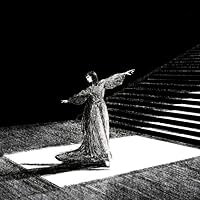
An obscure allegorical fable, written during the mid-1920s, recounts the troubled quest of a young medieval knight, Sir Galwyn of Arthgyl, who sets out in search of the woman he believes is destined for him
Contains reproductions of water-colours by Faulkner.
William Cuthbert Faulkner was an American writer. He is best known for his novels and short stories set in the fictional Yoknapatawpha County, Mississippi, a stand-in for Lafayette County where he spent most of his life. A Nobel laureate, Faulkner is one of the most celebrated writers of American literature and often is considered the greatest writer of Southern literature. Faulkner was born in New Albany, Mississippi, and raised in Oxford, Mississippi. During World War I, he joined the Royal Canadian Air Force, but did not serve in combat. Returning to Oxford, he attended the University of Mississippi for three semesters before dropping out. He moved to New Orleans, where he wrote his first novel Soldiers' Pay (1925). He went back to Oxford and wrote Sartoris (1927), his first work set in the fictional Yoknapatawpha County. In 1929, he published The Sound and the Fury. The following year, he wrote As I Lay Dying. Later that decade, he wrote Light in August, Absalom, Absalom! and The Wild Palms. He also worked as a screenwriter, contributing to Howard Hawks's To Have and Have Not and The Big Sleep, adapted from Raymond Chandler's novel. The former film, adapted from Ernest Hemingway's novel, is the only film with contributions by two Nobel laureates. Faulkner's reputation grew following publication of Malcolm Cowley's The Portable Faulkner, and he was awarded the 1949 Nobel Prize in Literature for "his powerful and unique contribution to the modern American novel." He is the only Mississippi-born Nobel laureate. Two of his works, A Fable (1954) and The Reivers (1962), won the Pulitzer Prize for Fiction. Faulkner died from a heart attack on July 6, 1962, following a fall from his horse the month before. Ralph Ellison called him "the greatest artist the South has produced".
To my notion, man is a buzzing fly blundering through a strange world, seeking something he can neither name nor recognize and probably will not want.
On January 27, 1926, William Faulkner completed and dated a slim handwritten manuscript called "Mayday", a gift for Helen Baird, who he had unsuccessfully courted. At this time, his first novel, Soldier's Pay, had been written but was yet not quite published. The story was illustrated with two pen-and-ink drawings and three watercolors, all by Faulkner himself, who was by then a failed artist (as he was a failed poet, before turning to prose fiction). The story, a medieval fable of disillusionment, is rather removed from his more typical preoccupations and stylistic decision. As a single-edition gift, "Mayday" went undiscovered and unpublished until 1977, and I'd never even heard of it before stumbling on a dusty hardcover copy at the Strand (though they're not really especially difficult to come by). All of which makes this a somewhat strange anomaly.
As an obviously early, minor work, this rather surprises, though. The prose is acrobatic, the ideas well-formed (and as the preface suggests, a precursor to some of those of The Sound and the Fury, which Faulkner may already have been developing at the time), and the story tightly wound and rewarding. Also, Faulkner's impeccable handwriting is reproduced in the front and back inside covers, and I'd now like to steal it. A curiosity, but one of more than passing interest, perhaps.
Regardless of whatever critical acrobatics some may attempt, this little tale seems pretty inconsequential within the corpus of Faulkner’s canon. It is, however (or so it seems to me), profoundly illustrative of the (d)evolution of romance tradition and the quest-adventure novel into and during the twentieth century. The transformation of delightful good humour and ecstasy into terrible, desolating and hopeless pessimism is subtle and delicate, but inescapable if read carefully. Brilliant.
Faulkner's little 1929 book called Mayday languished unknown for half a century before its popular trade edition was finally published in 1976. Carvel Collins' introduction is almost as long as Faulkner's text. Which is okay.
Collins' writings about Faulkner are not always satisfactory, as we saw in his 1962 introduction to William Faulkner: Early Prose and Poetry. He tends to drop more ramshackle hints here and there about his subject's life than he provides a chronological and connected accounting of the biographical information that would be most useful to know. On the other hand, when he does finally settle down here, the thoughts and ideas he's trying to convey about Mayday are interesting, albeit they are not always strictly creditable.
Collins' main theme, when he eventually finds it, is that Faulkner used Mayday as a kind of template for his composition of the last section of The Sound and the Fury, which we may refer to as Quentin's soliloquy. Indeed Collins does cite some intriguing parallels between the two texts. The metaphor can easily be extended beyond the breaking point, however. I recall an argument advanced in Faulkner in the University, for example, that The Sound and the Fury and As I Lay Dying must be closely connected because they both feature a girl with serious life-problems, the girl has three brothers, and the parents have pressing concerns of their own ― a terminally pressing concern in the case of Addie Bundren. Collins makes a parallel argument here. He tells us that, as we find Quentin Compson's case to be in The Sound and the Fury, the protagonist of Mayday, Galwyn of Arthgyl, is suspended between two brother-figures, the red design of Pain and the green design of Hunger (e.g., Jason and Benjy), while he pursues into futility his idealized woman-figure with long shining hair who reminds him of hyacinths in spring and honey and sunlight (Caddy). Now it's true that we can look at these fundamental and recurring relationships as some kind of prime pattern that Faulkner kept exploring. But, we may also reflect, a small handful of characters like these are relatively easy for both reader and writer to keep track of and invest with plausible soul and dimensionality. It's possible that we, or Collins, might perceive connections, or parallels, where no connections or parallels exist. Both perspectives are sound. I am not fully persuaded by Collins' point of view, but I do find the notion intriguing.
I'm more skeptical when Collins goes on to apply Freud to The Sound and the Fury and extends this dubious theory backward into Mayday, however. Collins asserts that Benjy represents the id, Quentin the ego and Jason the superego. If Jason represents the superego, then either Collins or I have a fundamental misunderstanding of what that term is supposed to signify. I don't have any problem with a critic analyzing a work from a Freudian perspective, or from a Marxist perspective or from a feminist perspective; I do find it laughable, however, to think that Faulkner deliberately concocted the characters of The Sound and the Fury to represent well-partitioned Freudian chambers of the mind. Nevertheless, it may be that Collins' theory does make a little more sense in the case of Mayday, which after all is something frankly akin to a medieval allegory, or fairy tale. And yet even here the task of assigning Freud's terms to Galwyn and his red and green design-companions is hardly a self-evident exercise; indeed, the red and the green are so interchangeable it is in fact impossible to know which one is more like Benjy and which one is more like Jason. Connotations associated with the words Hunger and Pain are probably helpful, but the characteristics (i.e., traits deriving from their characters) of these two bit-players cannot be said to map easily onto their alleged counterparts in that other book.
So Collins does dredge up a few ponderables in his introduction, but what is probably most important is his information concerning the degree to which Faulkner's text leans heavily on the works of the Virginian James Branch Cabell; so heavily, Collins insinuates, that I feel a bit remiss talking about Mayday without tracking down and reading Cabell's The Line of Love, and perhaps one or two other novels of his as well. But so be it. The theme of The Line of Love, Collins tells is, is that of the illusions of idealized, romantic love being inevitably overthrown by disillusioning reality. This theme is central to Mayday: I have no dispute with that.
Here I leave Collins for Faulkner.
It's helpful to know the debt Faulkner owes to Cabell, because absent that knowledge this little book appears to be a real enigma. In style it is nothing like either the hapless poetry we've seen before now or the more well known Southern regionalist prose that is soon to come. Mayday is a curiosity, not a text we would expect to find under Faulkner's name. It's a rather bizarre fairy tale of uncertain interpretation. It is true that our hero Galwyn appears to be on a quest for the perfect woman ― for his soul mate. One by one, as he effects short-lived liaisons with fetching ladies, Galwyn is disillusioned as the unobtainable is obtained. Each would-be leading lady proves far too human and therefore tedious to him. One by one he leaves them behind. His accompanying sidekicks, Pain and Hunger, seem to offer very little support or insight during the quest: perhaps they should be seen less as sidekicks than as hangers-on. Pain and Hunger are the companions we all have during our various trips through the world, through life.
Bracketing the action of the tale are a pair of curious settings and encounters; or rather, more probably, the story is not linear but circular. Galwyn returns finally to his point of origin, and encounters again the same warden of the quest, Saint Francis, who was there at the beginning. Saint Francis stands as a tree by the River of Life wherein all the history of the world is recorded. Reading of this river I could not keep from conjuring up visions of a similar river in Hermann Hesse's 1922 novel Siddhartha. In the space of these few handfuls of pages it seems that Galwyn has passed his entire allegorical life, moving away from birth and toward death. If for no other reason then with reference to the Canticle of the Sun, Faulkner has selected Saint Francis as the warden of the adventure in order that he may identify the final object of Galwyn's life-quest as "Little sister Death."
I must note that while Collins, coming at Faulkner's allegory from a Christian tradition, makes much of Galwyn's despair and suicide, I find neither here. Instead, Saint Francis requires Galwyn to make a choice, which strikes me as not being too Christian a concept. One path Galwyn may choose is to undergo an act of reincarnation in which he will retain no memory of his most recent life and its various disillusionments. He will start afresh at birth a tabula rasa. To know what experiences he can expect, one need only return to the first page of Mayday and start reading again. Presumably Galwyn has already made this choice many times at the ends of many previous lifetimes. The alternative path before Galwyn is to put an end to the endless cycling by finally merging with his romantic ideal. I see weariness in our hero, yes, but neither despair nor suicide. Instead, Galwyn chooses to put an end to the karmic cycles of rebirth and, according to another tradition, he achieves nirvana.
My question now is this. Having read Collins' speculations, and having arrived at tentative conclusions of my own, when next I re-read The Sound and the Fury, will I see Quentin's choice through the filter of an Eastern tradition?
Prima che nascesse L'urlo e il furore, l'idea di Quentin aveva già preso posto nella mente di Faulkner. Calendimaggio è un racconto che l'autore scrisse, disegnò e rilegò personalmente nel 1926. È «una storia d'amore scritta e illustrata per la donna del cuore». La donna del cuore era Helen Baird, che accettò il dono ma rifiutò la proposta di matrimonio. Dal dolore per l'amore non corrisposto, Faulkner attinse diverse volte negli anni successivi, in maniera più o meno consapevole. Il protagonista di Calendimaggio è Sir Galwyn di Arthgyl, un cavaliere che intraprende un viaggio alla ricerca di una donna apparsa in sogno, nello specchio di un torrente: «un volto giovane, tutto roseo e bianco dai lunghi capelli lucenti, simili a una colonna d'acqua splendente nel sole». Accompagnato da due figure (che si rivelano essere Fame e Sofferenza), Sir Galwyn vive diverse esperienze prima di arrivare a comprendere cosa si nasconde dietro il volto della ragazza sognata.
This is an interesting little book for die-hard Faulkner fans, at least. It is a chivalric romance which the author of "The Sound and the Fury" produced as part of his unsuccessful effort at courting Helen Baird. He wrote the text in a pseudo-medieval script and produced several drawings and watercolors to accompany it. As the editor of this volume, Carvel Collins, suggests, there are interesting parallels between the knight Galwyn and Quentin Compson in "The Sound and the Fury," and while these parallels do point to possible allegorical underpinnings in Faulkner's mature fiction, I do not agree that they demonstrate Quentin, Benjy, and Jason Compson are a Freudian trio of Ego, Id, and Superego respectively. What Collins does not mention in his introduction is the deliberately anachronistic updating of chivalric discourse. When Galwyn, upon meeting Yseult, praises her beauty, she answers, "You say it so convincingly that I must believe you have said it before -- I am sure you have said that to other girls. Now, haven't you? But I am sorry you saw me with my hair done this way. It does not suit me at all..." (67). This kind of intentional contamination of the romance imagination by a novelistic one is interesting in an author who often cited "Don Quixote" as one of his favorite books. In this regard, too, the intertextuality Collins mentions between "Mayday" and "The Wild Palms" is interesting, as the latter is a self-consciously Cervantine text, especially evident when it read in its original interspersed juxtaposition with "Old Man."
An illustrated short story about a knight on a quest and meets “designs” (or rather human concepts) along the way, like 'pain', 'hunger'..etc. Very symbolic and thought-provoking. Reminded me a bit of The Boy, the Mole, the Fox and the Horse, but way better in my opinion as it poses real complex questions about the human nature.
"Man should beware of Experience as he should beware of all women, for with her or without her he will be miserable, but without her he will not be dangerous."
The story of a man in search of the woman of his dreams. Traveling with Pain and Hunger, his companions, he sets himself on a series of adventures: meeting an old hermit fascinated by the notion of time, watching a soon-to-be-married woman as she bathe on a river, killing her guards on the way, meeting an inviting woman in a forest, and then a goddess who carries him in her mystical chariot into the sky to teach him about love. All of this is as sexist, ridiculous or infuriating as it sounds.
At the end of the fable, confronted with the woman of his dreams, he will have to make a choice that will change his life forever: to follow her into the darkness of the river to forget everything (death) or to keep traveling on the river of pain of suffering.
Well. He wrote this fable as a gift to the woman he loved and who rejected him. Not sure it helped...
Invaluable. There is like absolutely ZERO criticism that I managed to find about this book and it kind of sucks because it sheds some much needed light on The Sound and the Fury.
EDIT, 3/2/10: Was thinking about this yesterday or the day before. The protagonist, who's kind of like an anti-hero, but not really - the reversal at the end changes his characterization a bit - and the way his two traveling partners accompany him mirrors the way the Compson family is structured in TSATF. The choice made by the protagonist, "Little Sister Death," is one made by the elder Compson in relation to his sister (names! names!grrr). Anyway, all this is plain, and as a matter of fact most of the background of how the story came to be and the connections to TSATF are explained in the introductory essay. I highlysuperduperrecommenditif you'rea 'Faulknarian' orifyou're just getting into his work.