للبلاد يعتبر كوبر من أهم الروائيين الأمريكيين في القرن التاسع عشر ومن بين أشهر أعماله التي ترجمت للعديد من اللغات حول العالم روايات (الرواد) و (الربان) و(مائد الغزلان) و(البراري) و (القرصان الأحمر) و (آخر) سلالة الموهيكان)، كانت رواية (الجاسوس) التي تترجم للمرة الأولى إلى اللغة العربية هي الرواية الثانية بين مؤلفات كوبر وتمثل منعطفا هاما في مسيرته المهنية تجري أحداث الرواية خلال فترة الثورة الأمريكية أو حرب الاستقلال وكانت هذه أول رواية أمريكية تحظى بشهرة واسعة، ويمكن القول إنها شكلت بداية الرواية التاريخية الرومانسية التي هيمنت على الخيال الأدبي الأمريكي لمدة طويلة من الزمن في عصر "كوبر" كانت رواية الجاسوسية مقامرة أدبية كبرى، وقبل "كوبر" كان الكتاب والفلاسفة والعسكريون والجماهير بشكل عام لا يهتمون بما يقوم به الجواسيس خدمة لأهداف الإمبراطوريات والدول العظمى على الرغم من أنهم كانوا على دراية بوجودهم على الساحة، وبسب الرؤية السائدة آنذاك فقد كان الجاسوس شخصا منبوذا يقوم بأنشطة غير شرعية وخبيثة وخطيرة ومشوهة أخلاقيا. وبسبب الفضائح المقترنة بالجاسوسية ظل التجسس بالنسبة للكتاب الأمريكيين منطقة سياسية محرمة وساحة بفيضة ومنبوذة أدبياً، وعلى المستوى الفني وقبل نشر رواية (الجاسوس) كان يمكن للأشرار أو المجرمين أو اللصوص أو القتلة أن يلعبوا أدوار البطولة في الروايات الأمريكية، لكن لم يكن مسموحا للجواسيس -سواء أكانوا أبطالا أم أشرارا - أن يظهروا في الروايات الخيالية أو التاريخية، لأنهم كانوا يصنفون خارج نطاق القيود السياسية للمجتمع المتحضر
James Fenimore Cooper was a popular and prolific American writer. He is best known for his historical novel The Last of the Mohicans, one of the Leatherstocking Tales stories, and he also wrote political fiction, maritime fiction, travelogues, and essays on the American politics of the time. His daughter Susan Fenimore Cooper was also a writer.
The neutral ground Westchester County, just north of the British held New York City, time 1780 the American Revolution is in its 5th year, but the endless conflict continues, cavalry patrols by both sides keep the blood flowing, irregulars the skinners for the U.S. and cow- boys their opposite number for England, do much burning, killing and looting, essentially common criminals but with a pretense for the cause, doesn't matter which side. Harvey Birch peddler, suspected spy for the King, is wanted by the Continental Army to be hanged if captured, he has mysteriously escaped twice from custody . The ironic reality is that Mr. Birch is a patriot, working secretly for George Washington as an observer, giving the commander- in- chief valuable information . British Major Andre has just been executed, conspired with Benedict Arnold, tensions are high. The prosperous, loyalist family of Mr. Wharton lives in the area, a neighbor of Mr. Birch professing neutrality, yet with a son Henry, a captain in the British army. Unwisely coming in disguise to visit his father, sisters Sarah and Frances and Aunt Janette. Already another traveler Mr. Harper an impressive gentleman escaping a furious rainstorm is staying there, but who is he? The faithful black servant Caesar, manages the house. When the American patrol ( the cavalry is little used by the combatants in this war, because of the bad terrain), fighting their enemy , stops to rest the wounded to be nursed by the lovely ladies, (the dead buried) at the mansion, the captain is discovered. Hanging seems inevitable but Major Dunwoodie leader of the group falls in love with Frances, how can she be connected with the major when her beloved brother is to be executed. And what about her sister Sarah, a loyalist unlike her younger sister, how will she feel? Then more complications the dishonorable English Colonel Wellmere, a POW asks the trusting Sarah to marry him, not telling her he has another wife across the wide Atlantic Ocean in distant England ... Dr. Sitgreaves a talkative surgeon for the Americans, has helped many soldiers to recover their health, a somewhat cantankerous yet able man who likes to dissect dead bodies for science he says, the good doctor needs undamaged corpses. Always urging the horsemen to slash carefully with their swords, not to cause too much mutilation to the victims. The Skinners burned down Harvey's small house with his father on his death bed , but before expiring gets up and scares the looters from the premises, his ghastly face seems inhuman, a specter, saving the peddler ... Later moved to the headquarters of the Continental Army, Henry Wharton the captain has a short period to live until tomorrow, convicted of espionage by a Court- Martial, his family visiting him but a strange unbending clergyman hated by everyone, also arrives to give final spiritual comfort. Yet in fact is Harvey Birch, master at disguises also Caesar is there , can they free the doom captain? The first important American novel 1821, that is still read today.
My current reading of The Deerslayer has turned my attention to works by Cooper that I've read already, a couple of which I haven't reviewed here before now. Published in 1821, The Spy was only Cooper's second novel, and the first to be much a literary success; set mainly during the Revolutionary War (in 1780, to be exact --Cooper himself was born in 1789), it also marked his first foray into historical fiction. It's very much the production of a fledgling writer still developing his craft; it doesn't have even as much technical proficiency as The Last of the Mohicans (1826), nor as matured a moral sensibility in some areas. I've read it twice (the first time was as a kid), but that's primarily because, when I was homeschooling our daughters, I felt that my memory of it needed a refresher.
Set in Cooper's native state of New York, the subtitle of this book is "A Tale of the Neutral Ground." The area referred to is the "no man's land" between New York City and its immediate environs, held by the British, and the American positions further up the Hudson, where they held their line defending the approaches to Albany. Villagers and landowners between the two might be exposed to the raiding parties of both sides --neither of whom were always scrupulous about respecting civilian life and property-- and to collateral damage in any battles between elements of the two armies. Not surprisingly, it was also a hotbed for guerillas and spies. Loyalties in the area were mixed; of all the thirteen colonies, New York had the highest proportion of Loyalists, or Tories (and was actually the only one of the thirteen to furnish more men for the British army than for the American one!). All of these conditions are faithfully reflected in the novel.
Our protagonist here is young landowner Harvey Birch, a secretive fellow without a family, whose farm suffers much neglect in the course of his mysterious comings and goings. He's generally thought by his neighbors to be a spy --the question is, for which side? (And Cooper will enlighten us on that score only in his own good time.) But we're also soon introduced to his wealthy Tory neighbors, the Whartons, who early on welcome the family's heir, Captain Henry Wharton of the British Army, who's visiting them in disguise. (He's genuinely NOT a spy --but the fact that he's out of uniform could get him hanged as one, if he happens to be captured by the Americans.) In the course of the book, we also meet George Washington (whom Cooper portrays as more involved in hands-on intelligence gathering, and more prone to travel around in disguise, than he probably actually was). Some other engaging characters populate the novel as well, and the author does deliver a plot with considerable action and intrigue. Also on the positive side, he does not demonize the British and their sympathizers; one despicable villain here is British, but he earns the contempt of the other Brits, to their credit, and the American guerillas in the area don't earn any plaudits for good behavior, either.
Cooper's style here is typical of the Romantic school of that day; his syntax is often convoluted, he's got a big vocabulary that includes plenty of long words that he's not afraid of using, and he has a very deliberate mode of storytelling. But I don't consider any of these aspects of early 19th-century diction to be faults as such, and I actually didn't think the dialogue was as unrealistically ornate as it sometimes becomes in The Last of the Mohicans (the latter was actually the only Cooper work I've read so far where I had a real problem with the style). There are no real moral conflicts or choices here that face the characters and cause them to grow. Despite the opportunities for dialogue between the partisans of popular democracy and of aristocratic monarchy, these are mostly ignored; this is not really a novel that explores the ideology of the American Revolution. Readers should be warned that tragic events are a staple of Romantic fiction; and the final chapter, which is projected 33 years into the characters' future, during the War of 1812, to tell us what became of several of them, relies implausibly on a lot of coincidence, and could better have been left out, IMO. Racial insensitivity towards blacks also mars this work; Harvey uses the n-word, and while Cooper's treatment of Mr. Wharton's slave Caesar is in the main positive and sympathetic, he couldn't resist "humorously" implying that a fall on his head couldn't hurt him much. (The humor doesn't succeed, to put it mildly.) By 1826, the author's recognition of non-whites as equal parts of the human race had advanced significantly; but at this point, he still had quite a ways to go.
For readers interested in the fiction of this period, or in Cooper's work in general. this novel is worth reading; and it's not without its rewards in its own right. But it doesn't deserve more than three stars in my estimation, and I wouldn't suggest it as a first introduction to Cooper's novels.
July 20, 10am ~~ Many years ago I read all the books of what is known as The Leatherstocking Tales by James Fenimore Cooper. I loved them, but I never explored other works by this author until a few years ago when I read The Autobiography Of A Pocket Handkerchief. It was a quirky story that made me curious to read more Cooper. That and the opinion I read somewhere (can't remember where) that James Fenimore Cooper was one of the best writers ever of sea stories, which I love.
So when I was planning for 2023 I picked out most of the titles available at Project Gutenberg, set them in order of publication, and considered myself ready for a long-term Cooper project. It has been a bit neglected, thanks to my spending months in medieval Poland with another author, but I did manage to read the first Cooper title on the list, his very first novel, which was horrible.
GR friend Werner assured me at the time that The Spy (Cooper's second novel) was much better, and also reminded me of the Leatherstocking Tales. Naturally I have decided to add them as bonus books at the end of this little project. I do love Natty Bumppo and since it has been many years since I roamed the forests with him, it will be great fun to get together again.
But meanwhile, I found myself ready to start The Spy. And yes, it was better than the first book in Cooper's life list. Much better! It takes place during the American Revolution, and the inspiration came from a conversation the author had with someone who was involved with events back in the day. I did not learn that part until after I had finished the book and returned to the introduction and the author's foreword. (I try never to read those until after I have read THE END.)
This was a fast-paced book, full of the drama surrounding a family who are struggling to survive the war without losing everything. The son is in the British army, one daughter thinks the Royalists need to win the war, the other daughter is for the Americans. The father is trying to be invisible without choosing sides, which is not an easy thing to do. There are mysterious men traveling around making this reader wonder which one will turn out to be the spy, disguises galore, a peddler who knows the forest like the back of his hand (shades of the future Natty Bumppo here?), an army surgeon who was one of my favorite characters, a Captain in the American army who was my other favorite character, and plenty of other people to keep our eyes on.
Needless to say, it was much more vivid, more alive than Cooper's first book. And as I read later, this book was considered the first American novel: written by an American and using American themes. And back when this was published (1821), Revolutionary days were not ancient history the way they feel to us now. No wonder The Spy became a worldwide sensation!
Of course there were attitudes and language that are now objectionable, causing some eye-rolling during certain passages that dealt with Caesar, the family's Black servant who plays a key role in many of the book's events. On the other hand there is more respect towards him than I have seen in other books of the era, but it is something to be aware of. When choosing to read books that were written in different times than our own, each reader must decide for themselves how much they feel they can cope with when encountering attitudes that are supposed to be gone in modern times.
I will close with just a little trivia. My third grade teacher was a woman by the name of Mrs. Fenimore. I wonder if she was any relation? And one other bit: JFC was born in 1789. According to the intro in the edition of The Spy at Gutenberg, his father owned around one thousand acres of property and founded the settlement of Cooperstown. (Yes, the same Cooperstown where the Baseball Hall Of Fame is!).
Imagine growing up exploring the woods back in those days! No wonder he was able to create a person like Harvey Birch in this book and Natty Bumppo later. As an adult Cooper had a career in the Navy, and this knowledge helped him write sea stories with authenticity.
I am looking forward to the rest of my Cooper list so I can see them for myself!
I put off reading this book for a while because I knew it would be an important one, and I wanted to really read it. Well, I really read it, and it was fantastic! I feel kind of numb now that it's over. It was different than I had expected. I guess I thought it would be more complicated and extensive, but it was beautiful in it's simplicity. It was as if the American War for Independence was spread across Google Maps, and then you zoomed in, on just one little area, a house, or maybe a neighborhood and watched the goings on.
"In 1821, when The Spy; or, A Tale of Neutral Ground appeared, for an American author to publish a novel set in America and dealing with an American theme was indeed unusual. For that novel to be successful was thought impossible. Americans, it was said, would never read the work of a countryman writing about other Americans. They would snatch up avidly the romances of Scott or the society novels of other British authors, but since Charles Brockden Brown's heyday nearly twenty years before no one except Washington Irving had dared to offer them truly American fare. And now Irving had deserted the field. The Spy, by James Fenimore Cooper, was to change this attitude once and for all." (From the Foreword, by Curtis Dahl)
I loved this book even more than The Pathfinder, which is saying a lot! I can definitely see the influence of Sir Walter Scott, but the story is truly American. If you enjoyed any of the Waverly novels, you will enjoy this! :)
I don’t think I’ve ever read a book that has surprised me more. I don’t know how many times I thought I had it figured out and he would spring some completely unique twist on me. Cooper has a wonderful way of setting up stock situations and shocking you with energetic solutions. Then the characters were really well done. Well, I wasn’t so enamored of the hero and heroine, but the supporting characters who get most of the action and dialog I really liked. There are comic relief characters that surprise you with touching scenes of friendship and loyalty, slightly fooling characters who surprise you with their courage, heroes that surprise you with their magnanimity, and villains that shock you with their greed and violence. He set these characters in the desperate days of our nation’s founding. He puts them through danger, heartbreak, love, and betrayal. But I’m not sure I’m ready to deal with what he did to my favorite that was one twist too much for me. It almost made it a tragedy instead of an adventure story. It’s not a short book, but all these dramatic events take place over only a few short days, so it has a lot of action packed into every chapter. It is very fast-paced. I would highly recommend it.
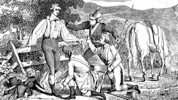
Who am I to review a book that was written 190 years ago? I really enjoyed the book. It’s full of action, adventure and colorful characters. The hero is a master of disguise. (Fortunately for him, people in the 18th Century were easily duped by donning women’s clothing and fashioning wigs out of sheep’s wool.) As in most of Cooper’s novels, there is an old widower who has two diametrically opposed daughters. There is also a conniving housekeeper, a happy-go-lucky slave and a circumlocutory surgeon among others. I read the 1946 “Great Illustrated Classics” edition (No, not a Classics Illustrated comic book!), which contains fascinating illustrations from 19th Century editions of the book. Part of the allure of reading an old library book is wondering who else has read it in the past 60 years and also how many years did it sit unread on the shelf until I borrowed it three weeks ago. Everyone should read more Cooper!
“The law was momentarily extinct … and justice was administered subject to the bias of personal interests.”
Wonderful Romantic adventure “inspired by a true story” during the American Revolutionary War. Well-developed plot. Cooper’s first “hit.”
“The heart which has not become callous, soon sickens with the glory that has been purchased with a waste of human life.”
So, why hasn’t it more famous, and why wasn’t it made into a movie? Why only three stars? Because, being a very early work, it lacks the stirring storytelling for his later works. In fact, it’s awful. Twenty-five years later he was “compelled to admit there are faults so interwoven with the structure of the tale … it would cost less to reconstruct than to repair.” The intervening years also witnessed the publication of Memoir of Col. Benjamin Tallmadge, which revealed much about Washington’s spy network that even Cooper didn’t know.
“A large portion of the inhabitants … affected a neutrality they did not feel.”
The titular neutral ground is that part of Westchester County between the British lines on Manhattan and the Continental lines north of White Plains. Those who lived there were preyed on by both sides and lawless elements taking advantage of the situation.
“The law was momentarily extinct … and justice was administered subject to the bias of personal interests.”
Pretentious vocabulary and convoluted grammar add to the reader’s burden. Why couldn’t he call the “wooden tenement of the deceased” a coffin? The text is also marred by period-appropriate stereotypes of the two warring sides, evangelical Christians, women, and blacks, even though Cooper may have been enlightened for his day.
“There are few who have not felt the seductive pleasure of making our injuries recoil on the author; and there are some who know how much sweeter it is to return good for evil.”
Quibbles: The above mentioned writing style causes modern readers to stop and re-read often. Also, though Cooper wrote of territory he lived in, some descriptions seem improbable, such as being able to see Long Island Sound and the Hudson River from a single vantage point, not to mention “a chain of sentinels from the waters of the Sound to those of the Hudson.”
“I have heard the good Mister Whitefield say that there was no distinction of color in heaven.”
Still, for the student of the American Revolution and nineteenth-century literature, the effort is rewarded. In the hands of a good script doctor, it’d make a good movie.
“Does [redacted] think I have exposed my life, and blasted my character, for money? Tell them I would not take the gold.”
This was a delightful story about a family with divided loyalties in upstate New York during the Revolution. Subtitled A Tale of the Neutral Ground, it focuses around the Wharton family. Mr. Wharton is trying to remain neutral, as he knows it won't go well for him or his family if he supports the side that loses the war. However, his only son is fighting for the British and his oldest daughter is a bit in love with one of their officers. The younger girl has come to love a family friend who is an officer for the Colonists, and she fully believes in their cause. In addition, their neighbor is the titular spy, who may or not not be working with the Red Coats, and the family also entertains an unknown aristocratic man known to them as Harper.
All of these characters and their armies are interacting on and around the so-called Neutral Ground where the Whartons live. Their interactions make up a Romance deserving of the capital letter. Disguises, betrayals and secret assignations fill the pages and keep the story rolling along well. The last few chapters almost let it down, but Cooper managed to give me the bare bones of what I needed to make it work, and the very end was touching.
I'm glad I saw this book cover go by on a random BookTube channel and decided to give it a try. I really had fun with it, even stretching out the reading so it wouldn't be over too soon. There aren't a lot of good adventure classics, and I'm happy to add this one to my repertoire.
NB - Those who have read Cooper's Leatherstocking Tales will know that he writes good adventure stories, but his treatment of Native Americans, women, and probably others, isn't good. I wondered how this book would fare, and it was a better. There is a black servant whose dialect and portrayal aren't great, and an uneducated woman whose dialect includes a mangling of the N- word a few times. Neither of these are prominent characters, but they are there. Other than that I felt his treatment of people on both sides, as well as the women, fit the Romantic mode but wasn't objectional. Readers will have to make their own decisions here.
Written around 1820, this is one of James Fenimore Cooper's lesser known novels. Modern spy novels focus on the gadgets and cleverness of the spy trade. This one highlights the individual, and what it meant to be a spy in the Revolutionary War. Harvey Birch led a lonely and dangerous life, hunted by soldiers from both sides, as he worked more or less directly for George Washington. Anonymity was crucial and he ultimately refused pay, choosing to serve his country selflessly. Other humorous characters include a pompous surgeon who glories in amputations and a black servant, whom Copper gives voice to in the slang of the day. Upon finishing the tale, I felt a little prouder to be an American.
I read my first James Fennimore Cooper novel, "The Deerslayer," in high school. It was tough reading for a ninth-grader, because the writing was unfamiliar, but I loved the story itself. Fast forward some 46 years later, and I can honestly say Cooper is one of my favorite writers--with incredible storytelling ability and compelling characters. I've since read the entire collection of THE LEATHERSTOCKING TALES and just completed "The Spy," a yarn about the American Revolutionary War. I admit to being predisposed to liking anything about the Revolutionary War, but this was a great book from start to finish. My attention never wavered. The characters were all intriguing, and I had no idea where the story would end up. But end it did and it was incredibly satisfying. Not sure if there are other Cooper novels out there for me to read but I'll be on the lookout. A true sign of literary genius when you can sustain attention for several centuries.
I loved this book. I stopped reading Truth’s Ragged Edge: The Rise of the American Novel when author, Philip F. Gura wrote The Spy was the first truly American novel. Previous to The Spy, published in 1821, American novelist relied on European tropes for their inspiration and writing formula. Now back to Truth’s Ragged Edge. Also looking forward to re-reading the Longstocking books. JFC is a wonderful storyteller
The Spy proves that James Fenimore Cooper of Last of the Mohicans fame was not a one-hit wonder and was capable of writing other classics whose worth endures to today. Like all early 19th century novels, this one is slow by modern standards, but is a dramatic and well-crafted tale from first to last.
Последний раз я читал Джеймса Фенимора Купера в школьные годы. Но недавно мы сыном проведали бабушку и дедушку в Кемерово. На книжной полке у родителей взгляд упал на книжку с названием «Шпион». Это было ещё советское издание куперовского романа с пожелтевшими страницами, произведение о событиях времен войны за американскую независимость. Так как в этом году я прочитал подробную биографию Джорджа Вашингтона, то она показалась вполне нормальным вариантом для самолетного чтения на обратном пути из Сибири в Пенсильванию. Что сказать? Читать роман д��ести лет спустя после его написания - это странное ощущение. Что-то вроде прослушивания древних пластинок с шипящим звуком на антикварном граммофоне. Необычно, архаично, но дает возможность почувствовать себя эстетом )) С усилиями, перебиваемыми моментами увлеченности, я закончил чтение в часе лета от аэропорта JFK. В итоге я немного лучше понимаю, как отношения американцев и англичан конца 18 века виделись в начале века девятнадцатого.
I think this is the first James Fenimore Cooper novel I have ever read, and I guess I am glad to have read it. The prose is very early nineteenth century — highly embellished, long-winded, stilted; clearly Cooper never encountered the ideas of Strunk and White! But starting about halfway through, oh my, what a tale he tells; suddenly much more action, moving to an almost breathless ending. Much to complain about, though - among other things, highly sexiest and racist (and cliched) treatment of women and blacks.
Harvey Birch . . . . . Burn Gorman Frances . . . . . Rose Leslie Henry . . . . . Alex Waldmann Mr Wharton . . . . . James Lailey Sarah . . . . . Francine Chamberlain Mr Harper . . . . . Timothy Watson Caesar . . . . . Richard Pepple Peyton Dunwoodie . . . . . Simon Bubb Captain Lawton . . . . . Gerard McDermott Colonel Wellmere . . . . . Adam Billington Isabella Singleton . . . . . Victoria Inez Hardy
Directed by Sasha Yevtushenko. Dramatised by DJ Britton.
Team: Studio managers: Anne Bunting, Jenni Burnett, Alison Craig. Editor: Anne Bunting Production Co-ordinator: Beverly Tagg
blurb - Published in 1821, The Spy was the first commercially successful American work of popular fiction. On top of that, it is also generally regarded as the world's first espionage novel. Until Fenimore Cooper, spies in fiction had been villains, the lowest of the low. But in creating Harvey Birch (played here by Burn Gorman), a double agent during the American War of Independence, Cooper began the tradition of spy-as-hero, leading to the great genre novels of the late 19th and 20th centuries.
Set in Westchester County, New York State, in 1778, we meet Harvey Birch, a mysterious pedlar, when he turns up unexpectedly at The Locusts, a house in no-man's-land between British and American forces, owned by the wealthy Wharton family. The Whartons are a family of divided loyalties: one of the daughters, Frances, is engaged to an American officer. The other, Sarah, is a romantic royalist. Birch who, with his father, lives in a small house nearby is, it is rumoured, a double agent and both sides have put a price on his head. His house has been attacked by British forces, and Birch has been forced to take to the dangerous road...
Travelling on foot with his salesman's pack on his back, Birch appears to steer clear of political or military allegiances, trading with both sides. Yet whenever the honour and the safety of decent people is in danger, Birch is at hand. He suffers appalling indignities, is robbed, burnt out of his home by the terrifying Skinners - American outlaws posing as Patriot irregulars - and is sentenced to death by the American forces. He never uses his privileged position to save his own skin, for, only at the very end of the story is it revealed, that he has a personal commission - from George Washington himself.
This entire review has been hidden because of spoilers.
What am interesting read was The Spy! Since I read classics in the order in which they were published, I didn't expect what I got after "Precaution".
A pretty good tale of personal struggles during the time of America becoming independent from Britain. While I originally rated the book as a solid 3, I ended up with a 4 star rating simply because I have learned more about US history from reading this, then I have from going to school.
Admittedly, I never liked history as a subject, so partially it is my fault, but I simply enjoyed learning history more through a tale rather then a compilation of dates and events I would have to study and remember.
It did take a bit of getting used to the general language in which the book is written, but the same could be said about any classic, so you just expect to have a dictionary link handy already before starting this as well as expecting sentence structure and grammar to be very different as well. So something to expect before hand. This will not be a very fast paced read, even will feel at times like not even really fully English.
Now, the rest of it was very enjoyable, Fenimore Cooper did a good job with characters and pace of the tale, and as always it was just enjoyable to see the "old school" customs and the subject of one's honor described first hand.
Given that I work in NYC and commute from home by train, it made this tale a bit more special since the areas he's describing and where the action occurs I pretty much pass through every day, so I found myself pulling out Google Maps while on the train and looking for specific place he's describing as the train moved through the general area. That was actually pretty awesome!
Also, I definitely thought Harvey Birch was a real person and scoured the Internet looking for some more info on him to find that I wasn't the only one fooled, or maybe not fooled. We'll never know I suppose.
A sign of a good book is me getting attached to characters, and feeling a bit sad as the pages ran out, but such is life. Well done, Fenimore Cooper, well done!
It's important to remember the time period that a book was written in when delving into a work of classical literature. For example, The Spy came out in 1821 when American novelists were still focused on telling stories about their brethren over the pond. It was quite revolutionary (pun sooo intended) to focus a story on American soil. The story is set during the American Revolution and opens at the end of 1780. Slavery clearly still practiced and attitudes about the slaves themselves were not altogether complimentary. If you go into a work of classic literature without remembering the context of the story itself then you are doomed to find the entire body of work unpalatable. With that being said, I must say I really enjoyed The Spy. True to the style of the time there was a lot of focus on unimportant details which made a majority of the tale drag on somewhat. I felt that it didn't really pick up steam (or grab my interest) until about 3/4 of the way through. There are two fantastic characters, however, which kept me turning those pages: Captain John Lawton (of the Continental Army who is fierce, brave, and impetuous) and Harvey Birch (the spy himself who is always full of wit and intensity). These two indomitable spirits are what make this story a classic piece of American literature.
Ugh. So wordy. Never use five words when 20 will do! So much of the book is taken up with useless conversations and the plot is razor thin. Even though I expected sexism and racism in a book written in this era (which, to the author's credit, could have been a great deal worse), I didn't expect for very little to happen for the first at-least half of the story, a scene of violence with no context or explanation, a very abrupt ending, and questions left unanswered. Some really ridiculous things occur, too, such as when the house burns down, the main characters completely forget about other people that were in the building (example - the wife of a side character seemed to cease to exist at that point. He didn't even ask about her!), and the main character begins to show a paper to his captors that can save his life, but changes his mind and swallows it. And why the spy's true loyalty can't be revealed after the war ends is anybody's guess. As to the character Harper's identity revealed at the end - not a chance! Even the descriptions of geography didn't make sense. My overall impression after finally and doggedly finishing this thing was, "Well, that was stupid."
FYI, the description of the plot on the back of this edition is misleading and some of the end notes are missing.
Although not as good as The Last of the Mohicans, this one really isn't half bad.
The Spy centers around one family whose loyalties are divided between the American and British sides during the Revolutionary War. Surrounding them are a small group of characters that the story follows throughout. While Francis Wharton struggles with her feelings for her American fiancé and his code of honor that commands him to hold her Loyalist brother captured and awaiting death, a rumored spy eludes capture from the American officers stationed around the Wharton house. Harvey Birch, peddler and suspected spy, seems to disappear and reappear from the frustrated American soldiers grasp. At times he seems even to be trying to help Francis and the American army.. But is Harvey Birch really who he says he is?
There is a slow reveal of just who The Spy is, but this is by no means a suspenseful or spy-ish intrigue novel. I love James Fenimore Coopers sense of humor that shows itself throughout this book in some silly comical scenes and conversations.
Yes, yes, flowery prose, so agonizing to read; yes, yes, a hundred times yes!, woefully trapped in the time in which it was written (gasp). I've read all the one- and two-star reviews, and I feel pity for these readers. I found this to be a really well-written, courageously plotted (for a first novel), damned near fragrant piece of historical fiction that at times I could almost sink my teeth into. Because I picked it up on a whim, only knowing the author and not the background of the novel itself, I felt throughout that there were many characters who could have fit the bill as the title character. I look forward to reading the complete "Leatherstocking Tales" over the coming months, and compare those more evolved efforts to this fresh and original novel (for its time).
This book was an awesome spy novel that addressed way more complex themes and motivations than I expected, and had some very compelling characters. Definitely not a story of the glamorous spy: this spy is more the precursor of "The Spy Who Came In From the Cold" or other such reviled, tortured, unhappy characters.
Some of the prose gets tiresome, some of the ideals are simplistic, some of the characterizations are flat stereotypes. But ultimately this is a lively little plot with sympathetic characters and deeply interesting messages, both by itself and in historical context.
I always wanted to read n American Classic from the time period of the American Revolution. I was quite surprised to read in the prelude that James Fenimore Cooper was not a particularly good writer. He did not write this book for public consumption but as a way of passing time productively. These comments proved to be true. I did find some of the military tactics quite unbelievable. People of wealth who declared neutrality were able the lavishly entertain both the Southern and Northern officers at the same dinner party.
I laughed and cried. "The Spy" story is 193 years old! Even better is learning about the author. I am just getting started there are some 40 novels written by this author. Overall excellent story, good character development and "The Spy" was the author's second novel. James Fenimore Cooper is my American Jane Austen. If Jane had been a man she would have been James Fenimore Cooper. I am learning that the older books are way better then the authors of 2014. It is a pity when you think of the all the advantages current authors have.
I'd really give it 3.5 stars as it was a great book. I like historical fiction and this was a painless way of learning some about the Revolutionary War. The language in it was a little hard to read and slowed me down a bit but that's probably because I like to read every word in a book. I can see why this is a classic and this is the type of book that if required to read in high school might make history more palatable. It's certainly not anymore fiction than history books are anyway.
Listened to the Librivox.org (http://qurl.com/vtkg6) podcast. Great site for downloading books to listen to while walking the dog.
Enjoyed 'The Spy'. Great to read/listen about fictional historical events by an author who lived nearer the time period. Got a good feel for the language and customs of the period.
I am always saving copies of this book from the Used books sale. I think so overlooked. Set during the American Revolutionary war about a family divided between both sides of the conflict, JFC is excessively verbose but I do love a swashbuckling tale with honor and virtue and love. A fun read that shouldn't be forgotten.