In a world that has forgotten the ancient bond between horses and humans, can one girl's dreams make people remember?
Sahara travels with her clan in a future, barren environment where recyclables are bartered for sustenance, and few remember horses or their connection to humans. But Sahara has recurring dreams of riding astride on magnificent animals that run like the wind. At the Gardener's Camp, she discovers a valuable book and learns that her visions are real. But how can she persuade others of the ancient bond between horses and humans, when she is labeled just a foolish girl?
When Sahara discovers a helpless young horse, she must use both her courage and inborn knowledge to keep the animal safe, convince others of the true worth of horses, and learn the secret of her real identity.
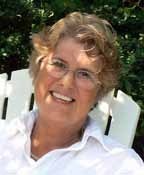
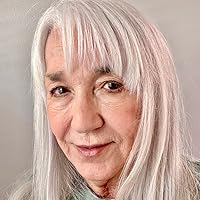
Linda Benson is the author of THE GIRL WHO REMEMBERED HORSES, SIX DEGREES OF LOST, WALKING THE DOG, FINDING CHANCE and THE HORSE JAR (which has been translated into Spanish.)
She is also the author of a series of short fiction called CAT TALES, including THE WINTER KITTEN, THE SPRINGTIME CAT, THE SUMMER CAT, THE AUTUMN KITTEN, THE NEWLYWED CAT, THE ACCIDENTAL KITTEN and THE GRANDFATHER CAT.
Her passion for nature and animals often finds its way into her writing. She has been a veterinary assistant, zoo keeper, race track groom, realtor, children's librarian, and owned both a native plant nursery and a saddle shop. Currently, she volunteers teaching English as a Second Language.
Ms. Benson lives in the Pacific Northwest with her husband and a myriad of animals.
In a recent Twitter chat group, the subject of 'tween' fiction came up ... books that bridge the gap between middle-grade and YA (young adult), much of which seems a little too dark and edgy for most 12- and 13-year-olds, to say nothing of their parents. One of the online participants--a literary agent--gave an electronic sigh, then said that the problem boiled down to shelving, that there wasn't actually a 'tween' fiction section in bookstores which made it kind of hard for booksellers to know where to shelve it. She then added that she'd love to see it, and followed up with: "Tween fiction is a kinder, gentler, YA."
That's what this book is ... kind and gentle. It pulls you in with a whisper, wraps you up in its arms, and leaves you feeling really good about having read it.
As a die-hard print book lover, I'm always impressed when an e-book makes me forget I'm not reading paper. I got so deliciously lost in The Girl Who Remembered Horses that hours zoomed by without my realizing it. I forgot to finish the laundry, the dishes piled up, and that cup of tea I'd been looking forward to, went cold on the counter.
The author's talent with words draws colorful and meaningful pictures, so real you can almost smell the scenery. You can see what Sahara, the main character, sees ... the desert, the meager campground she lives in, the dogs and goats she cares for, and now ... the horses.
But for all its implied bleakness, this is a book about hope, about a girl's resilience and determination to succeed, and that no matter the circumstances, she's going to hang onto her dream.
Prior to reading a book, I don't read reviews or even cover blurbs. I read the first page or two and let the author's voice lure me inside. So, when I began reading The Girl Who Remembered Horses I had no preconceived notions. I didn't even know it was set in the future, which kind of tripped me up when a character found a plastic container. Then the penny dropped. This was post-apocalyptic, one of my favorite genres ... and it included horses. I mean, what could be better?
Young Sahara lives at a time in the future when most of what we know as Earth has been destroyed. Her clan dismisses her dreams about horses as folly, but she can't help but follow her innate feelings about these mysterious creatures. Sahara feels compelled to save horses and show her people that horses serve a purpose among mankind.
I enjoyed Sahara's determination and also her moments of self-doubt. Benson creates wonderful characters such as the loving grandfather, the not-quite-boyfriend Evan, and the bossy,somewhat distant,older sister, Lauren. Descriptions of the post-apocalyptic world included discussions of computers, defunct libraries, and destroyed skyscrapers. I thought Benson did a fantastic job of setting the scene while not letting the scene take over the story.
As a reader, I couldn't help but be with Sahara the whole way and hope that she continued her quest to understand horses despite the obstacles. The Girl Who Remembered Horses evoked thought and stirred emotions. In summary, great characters, plot, setting, pacing, and story. This was the first Linda Benson novel I had read, and it definitely won't be my last.
Linda Benson is definitely a talented writer. The way she crafts words together draws the reader in, creating an intriguing atmosphere the lulls the reader soothingly into the post-apocolyptic world she’s created. A simpler world than the one we live in now. A world of barren wilderness and tribal-like customs where the main character, a young girl named Sahara, uses her unique bond with animals to prove to everyone they were wrong about horses.
In all honesty, I’m kind of surprised I loved the book so much. The types of books I generally gravitate towards are ones with older teen female protagonists, with lots of mystery, twisted romance, fantastical elements, and suspense. The Girl Who Remembered Horses did have suspense, but the plot itself didn’t scream to the reader, “You must keep reading to find out what’s going to happen!” Instead, the author’s writing style and the way you found yourself getting attached to the protagonist and her plight were what made you keep turning page after page, devouring chapter after chapter. It wasn’t a drive to get to the end or find out what was going to happen. It was a desire to linger in the pages and live in the story.
Despite it being geared toward a younger audience with a protagonist the age of 12 and 13, I didn’t seem to mind one bit. It wasn’t dumbed down at all, and although Linda didn’t use very big vocabulary (as to not scare off or confuse her target audience), her use of words and the flow of her writing doesn’t make adult readers feel they are reading a kid’s book.
I loved the pace as well. Not too fast, not too slow. Although, my only complaint, without giving anything away, is that I didn’t want to end. Especially where it did. It had a great ending, but I wanted much more! I wanted to stay there longer and see what else was going to come of Sahara and her horse.
If you’re an animal-lover or especially a horse-lover, you must read this book! You would absolutely love it! But even if not, you should definitely check out this book! With all of the other choices out there, especially for older teens and adults, you may look at this heartwarming young adult book the same way I often look at family-oriented, heartwarming movies like We Bough a Zoo, Facing the Giants, The Blind Side, etc. They look good, but I’m not really sure I’m in the mood to watch them. Then when I do, I’m so glad I did! The Girl Who Remembered Horses is a refreshing and heart-warming story, one that leaves you smiling and ready to go about the rest of your day with a renewed spirit and fresh look at the world. We all need that from time to time.
First Paragraph: Sahara awoke to a pounding inside her head. Thundering. Loud. Was it rain against the tent? Rain would bring relief from the dust and the smothering heat. She blinked, rubbing sleep from her eyes. She heard nothing. The sound must have been from the dream, the dream she had again and again.
Meet Sahara. She's the girl who remembered horses. See how Benson effortlessly introduces us to her on page 2:
Sahara hated being treated like a baby. She was almost thirteen. "I'm here, sister." Laurel appeared anxious to be off. "We have little meat. I will go down along the dry river bed and look for rabbits again. Stay in camp, start the fire, and don't forget to stir the stew." Sahara made a face. Stay in camp. Build the fire. Stir the stew. Her chores were so boring. She wished she could do something important. Why couldn't she have adventures like her older sister?
Sahara isn't a fully-realized three-dimensional character at the end of this passage--it will take a whole book to get her there, but we know what kind of character she is. She's an impatient thirteen-year-old with a taste for adventure who feels oppressed by the older people in her life. A character such as this can't help but get up to some mischief. Before Benson starts in with the world of the post-apocalypse and all the new things the reader may not have encountered before, she makes sure the reader knows who the main character is and what kind of story this is likely to be.
It's important she ground us, because The Girl Who Remembered Horses is an unusual story with a lot going on. Mankind has all been wiped out by a huge epidemic, sort of like the Native Americans just before Columbus arrived. The details of the fall of our society are never made quite clear, but I like to imagine this story is set sometime after Stephen King's The Stand. As there's a rough and grizzled character referenced who's name is Roland, I wonder if Benson isn't also a fan of King's work:)
But this isn't the world of Ashfall, where everyone's trying to eat and/or rape everyone else. The survivors of Benson's apocalypse are mostly well-behaved folks, with the possible exception of Dojo, who really does seem to love the idea of murdering baby horses. It's refreshing to read a vision of the post-apocalypse in which mankind is rebuilding itself in a way that might just be better than its current iteration. I mean I wouldn't have minded if there had been some zombies, but The Girl Who Remembered Horses a nice change of pace in a genre typically dominated by pessimism.
Not that the lives of Sahara and her nomadic clan are without realistic struggles, chief among them travel and keeping everyone fed. No one remembers horses, but Sahara's been having dreams about them, and it's good timing as the clan comes across a pack of wild horses. Like Fiver in Watership Down, Sahara's been struck by divine inspiration and she has an idea the clan could train the horses to be ridden, which might be easier than walking about and having their junk hauled by dogs.
Can Sahara convince her clan to listen to someone as young as she, or will the murderous Dojo bathe in the blood of wild horses? I can't tell you without spoiling, so that's where we'll leave it. Except I had to chuckle, mostly because I've been a fan of Linda Benson for years now, and it amuses me that when she envisioned the darkest vision of the future it was a world without horses.
I think it speaks volumes about Linda Benson that for her, the key to mankind's survival in the post apocalypse is a kinship with animals. And the key to that kinship: a book, of course. Thankfully, an old woman has kept a collection of books, including a book on how to train horses:
The woman hummed to herself. It was hard to know if she had heard or not. "This modern age," she grumbled. "No one seems to think books are important. Everyone experimenting with new things--ways to grow crops and make shelters. No one comes to the old woman on the hill anymore."
Do yourself a favor, Esteemed Reader, and pick up a copy of The Girl Who Remembered Horses. It's a good read for tweens and the rest of us. As always, I'll leave you with some of my favorite passages:
Sahara hoped Laurel's hunt would be successful. Rabbits and small game were scarce this season. Deer, too. She could barely remember the last time she'd eaten venison. Coyotes yodeled in the distance. She cursed them silently. They hunted, too, but at the expense of her full stomach.
Ash was only nine, but surely old enough to hear about the realities of life.
From the eating hall, the smell of baking bread and spicy herbs mingled with the odor of many humans.
Sahara kept having dreams of horses. She dreams of riding them and how horses and human work together. She is told to forget about such silliness. Sahara lives in the future, past the Dark Days, and no one has ever ridden a horse. Horses are hunted and used as food. Sahara lives in the Trader’s Clan, people who find goods and trade them with other clans. When visiting the Gardener’s Camp, the Keeper of the Books gives Sahara an ancient book that has pictures of people riding horses. Sahara now knows that her dreams are real. Soon after finding the book, she saves a hurt horse from a group of hunters and tries to help it , but it escapes. Later, Sahara finds a dying horse and has to battle wild dogs to try to save the horse’s foal. Sahara is determined to raise the foal, but can she convince her clan that horses are more than just food?
This was an awesome dystopian book. I know a lot of people love horses and I think they will LOVE this book. I like horses, but I don’t think I am a huge fan and I LOVED this book too because it was written really well and it is a great adventure. The characters were original and I loved the dystopian world Ms. Benson created. I like Sahara. She is nice, smart and she perseveres. I thought the book ended a bit too soon, but maybe Ms. Benson is thinking of a second book (I hope). The book is a clean read for young advanced readers. *NOTE I received a free copy of this book in exchange for an honest review
This is a sweet, lovely book. It takes place in a post-apocalyptic world, yet it doesn’t have the feel of a dark or depressing dystopian world. It feels realistic in that the people live nomadic hunter/gatherer lifestyles, much like our ancestors did. The main character, 13-year-old Sahara, is a sweet, thoughtful young girl who has recurring dreams of strange beautiful animals.
What could be a better pairing than young girls and horses? They seem to belong together. I have many memories of sitting around with my three sisters sketching horses. (My older sisters were obsessed with them, and my sister Mary bought her first horse at an auction for $50 at the age of 13.) But I digress…
The interaction between Sahara and her dogs and other animals is very touching and realistic. It was easy to be drawn into this world. I really liked this story; it’s exactly the kind of book I would have enjoyed as a young girl.
A tween book. Easy to read, sweet and simple. About coming of age, survival, the meaning of family, friendship, tribe, and of course, horses - but also goats and dogs! Though set one to three hundred years in the future, it feels like it is set 3000 years ago.
Sahara has dreams about animals she’s never seen before. They are magnificent looking, can run like the wind, and she envisions herself riding them. But if she tells anyone about the dreams, they will think she’s crazy.
Ms. Benson picks an intriguing premise for her story line. She places the story in the future, after all cities have been destroyed by a killing flu that crossed the land, and the only survivors behave a lot like the American Indians did long ago. There are nomadic tribes and tribes that stay in one location and grow all the vegetables for the group as well as raise animals. The two tribes share their goods and it keeps them alive and in pretty good health. The author’s words take you to an imaginary world in the future that’s dangerous and unusual and holds your attention as you follow Sahara’s challenges.
The author has made Sahara an individualist, which makes her even more fun to read about. Sahara looks beyond what the tribe has now to what might help them become even more successful. The author also gives Sahara a love interest in the form of Evan, a non-nomadic male who looks after the animals and feels the way Sahara does about them. He’s a good man who cares about Sahara and helps her through rough spots.
Ms. Benson focuses on the people of the times and their emotions. The story would be stronger with more detail of life before the war and an expanded description of how these tribes evolved. The author’s words flow well and her story has realism, so just a bit more detail would have fleshed out the story and helped the reader’s understanding of the situation the tribes faced.
Ms. Benson creates a determined enemy for Sahara. He is a strong, swift hunter who has interest in her older sister and finding food for the tribe. He thinks Sahara is foolish to think horses can be tamed; he just wants to kill one to feed the tribe. Sahara butts heads with him several times and Ms. Benson’s use of this conflict draws you in and makes you care about Sahara.
This is tale of a journey from childhood to a young adult that catches your attention with an interesting plot and plenty of challenges for Sahara. You’ll have to read the book to find out why Sahara knows about horses. You’ll also be glad you did.
The Girl Who Remembered Horses centers around a twelve-year-old girl, raised by her older sister and grandfather, who belongs to a clan of traders. Wandering an arid region and served by dogs, not horses, the members of the trading clan seek out the buried treasure of the industrialized past. Herds of wild horses sometimes go wheeling by on the plains, but they'd no more try to tame a horse than a gazelle.
But the girl, Sahara, has the horse bug. She dreams of horses, feels their coat beneath her fingers, feels their bodies as she sits astride them, feels the wind in her face as she gallops across the plain. Madness, her clan proclaims, all madness, just as so many confused parents, generations removed from the farms, look at their whinnying, cantering daughters skipping around the backyard and wonder where that horse-obsession could have come from. But it was even worse for Sahara: no one even knew horses could be tamed.
Reading this book, I was struck by how delicate our relationship with horses truly is. We are close partners, we are respected leaders, we are members of the herd... but horses all have that streak of wildness lying below the surface. In some it is closer to the top than in others. It was interesting to me that in Sahara's world, when the bond with horses was lost, the bond with dogs remained strong. Dogs are worshipful creatures; they adore working for humans. Horses choose to do it. After you have proven yourself worthy of them.
THE GIRL WHO REMEMBERED HORSES by Linda Benson, is a memorable e-book read. It qualifies as a midgrade/YA that adults will enjoy as well. The main character, Sahara, is a spunky, determined girl of thirteen. Set in the future, during a time and in a place where people wander as nomads, Sahara dreams of horses from long ago, and riding them like the wind. Even though such a creature would be useful for her clan, no one believes the girl's dreams are real. Horses are believed to be 'wild' and untrainable, better to hunt and kill, than to foolishly try to train. Life isn't easy for Sahara and her clan, and yet this character holds fast to her dreams and beliefs and tries to make a difference for the wild horses she encounters. It's obvious that Benson knows her horses from the lifelike descriptions and heartfelt connection in her words. I loved the vivid language and beautiful descriptions, as well as the interesting and believable characters in this unusual tale. I highly recommend this e-book for readers of all ages, especially midgrade girls. This one's a winner!
A few weeks ago, I was asked on twitter if all post-apocalyptic books are considered sci-fi. I automatically answered yes, because if a book is in the future after a disaster of some sorts, it is sci-fi. It isn't until I read this book that I understand this question. The Girl Who Remembered Horses takes place after an epidemic that devastated the world. Humans now live in clans that travel, trade and scavenge. Sahara lives alone with her sister and grandfather, but finds the most comfort in her dreams. In her dreams she finds herself tending a large, beautiful animal that she has never seen yet she knows she loves. This book is the story of Sahara finding out the answer to everything in these dreams.
Linda Benson has written a quiet yet powerful book that, although it takes place in a post-apocalyptic future, is about more than about survival. It is about finding your path which may not be the one laid out for you, it is about following your heart and it is about passion and dreams.
I don't usually like dystopian fiction, but this story by Linda Benson is beautifully written. It draws the reader into Sahara's journey, her dreams and her reality. The story takes place in the post-apolcalyptic world, one where Sahara and her sister travel from place to place with their clan. Sahara dreams of horses, a creature many believe does not exist. Even when her dream animal is proven to exist they are only a source of meat. The clan laughs at her intention to train them.
Sahara's first opportunity to gentle a horse is dashed by her enemy, the boy who is courting her sister and is a tribal hunter. But Sahara get's another chance when she finds an orphan foal. As she faces the death of her grandfather, budding romance with a goat-herder and friendship with a woman who owns books (much-sought after items),her past begins to unravel and soon Sahara learns about the mother she never knew and why she dreams of horses. This is a wonderful read for both kids and adults.
Uplifting Post-Apocolpytic Horse Story, Really! I'd given up on the futuristic tales of this nature, even YAs, because it seems they are just too grim for me. The Girl Who Remembered Horses has restored my faith. Not that it paints a pretty picture of the future, it just doesn't dwell on the negative. Instead, it focuses on the dreams and choices of an almost-teenager. The setting is vivid, and all of the characters are drawn to the perfect degree, depending on their part in the story. The author clearly knows horses and girls' fantasies. Nothing about this story is at all hard to believe. I highly recommend this to horse-crazy girls of all ages, or those who want to understand them a little better.
The Girl Who Remembered Horses is a post-Apocalyptic middle grade novel but without the darkness and misery that seems to come with so many books these days. Sahara's world is harsh and demanding in many ways, but there is a hope present even in the midst of uncertaintly that makes this book a very uplifting, yet realistic read. Benson clearly loves and knows horses (and goats and dogs!) and that love comes through as Sahara discovers horses for herself. Benson presents life on the edge as Sahara comes of age, but in such a life-affirming way. I highly recommend this one to middle grade readers, teens, and adults who just want to read an excellent book.
THE GIRL WHO REMEMBERED HORSES is a grand adventure taking place in a post apocalyptic world. From beginning to end I was completely immersed in the main character, Sahara's futuristic civilization. A well-written gem, it's a gripping tale featuring horses, dreams, danger, obstacles, resilience and hope. Escape into Sahara's world, you won't be disappointed. Highly recommended for middle grade/young adult/adults.
Linda Benson has ventured into what may well be completely unknown territory: a post-apocalyptic horse story. The story line is unique, the imagery powerful, and the characters ring true. There is even a subtle statement here about horse slaughter, a very touchy subject that Benson handled well. I thoroughly enjoyed the escape into Sahara's world and hope Benson writes a sequel to The Girl Who Remembered Horses.
A fantastical, timely story for readers of all ages. Linda Benson's thought provoking novel makes you look at nature and the choices people make in a different light. I wanted more. Much more. Bravo, Benson!
Wonderful story about a girl who dreams of horses although she's never seen one. Loved the setting in the future. Highly recommend to any animal lovers. Looking forward to a sequel.
Title: The Girl Who Remembered Horses Author: Linda Benson Copyright: 2011 Publisher: Musa Publishing ISBN: 978-1-61937
As a child of the 1950s I have grown up with prophecies of doom and gloom. What would end our world as we know it? Today, the big concern isn’t an all out war between super powers, but terrorists with WMDs, global warming, increasing super storms, and seismic disturbances. What would a post-apocalyptic world look like? Author Linda Benson has delved into such a world in her beautifully written story of “The Girl Who Remembered Horses.” Follow along with young Sahara as she travels with her nomadic clan to search for old treasures. The recyclables they excavate give the clan goods to trade for food when they travel from the barren desert in witch they hunt to the home of the Gardner Clan. At the Gardner’s Camp, our spunky little heroine is given an old book about the beautiful animals that fill her dreams. There Sahara’s adventures begin, as she sees, for the first time, the horses in the book and in her dreams thunder across the landscape. She battles to save these beautiful creatures from the hunters in her clan. Sarah finds a newborn foal hiding in the rocks near its fallen mother. She rescues the foal, and hopes her inborn knowledge will be sufficient to keep the helpless baby horse alive. This is a quick moving adventure of a young girl seeking to find her place in a male dominated society. Horse lovers will love this book, but it is an excellent read for the YA and above audience. I highly recommend “The Girl Who Remembered Horses.” Put this one on your Christmas wish list. This tale rates five stars on my review meter. I couldn’t put this one down! Well done Linda.
Reviewed by: Jackie Anton…….Author of the award winning “Backyard Horse Tales” series.
I was disappointed with this read. The reviews were so good but the book was a lot simpler than I thought it would be. Perhaps the audience is intended to be read by children but I think the author could have avoided such restrictions and created a story which could appeal to a broader audience than those whp have started reading on their own but who haven't yet developed a taste for that which reading can provide The simplicity of the prose did lend itself to the feeling of the age in which the book is based, that being more basic and unsophisticated time when technology of the present is no longer and the human race almost me its demise. I persisted through and just when I thought that the book was perhaps developing some depth and interest, it ended. I was left frustrated. The book didn't begin to reveal the special relationship that can exist between horses and humans, barely touched on the dystopian society and their struggles and reality and again avoided any complexity regarding real issues such as family, a sense of belonging, becoming an adult, the experience of poverty and a lack of education. I am giving it a harsh rating because this book could have and should have been more.
The characters were possibly my favorite thing about this story. The main cast of characters was good-sized, but they were all very well-developed and fascinating. They were flawed and independent and believable. I especially loved the character’s dynamics and interactions with each other — that, I think, is really where Linda Benson’s skill in writing shines the brightest. I loved each and every one of these characters, even the not-so-lovable ones, and that can be a very difficult thing for a lot of books to achieve. But The Girl Who Remembered Horses had a cast of characters that makes me desperately wish to return to the world in a sequel to learn more about them. I especially loved Sahara, who was worthy of an entire set of American Girl Doll books and merch.
Come to think of it, that’s exactly what this book felt like! It was a story of heart, of love, and of determination. Sahara is the American Girl Doll of the dystopian future, and her action-packed and heartwarming story illustrates that beautifully.
A "simpler" style of writing than what I'm used to reading, but a very pleasant surprise. This was a relaxing quick read for me; easy to pick up and get into the story right away whenever I had some free time. I would say this is a must-read for horselovers, and I certainly wouldn't hesitate to recommend it to anyone else. Linda did a very good job incorporating horses into a well-portrayed and realistic futuristic setting. Overall I found this book to be quite satisfying.
I've read many YA books and, sorry to say, this wasn't one of the better ones. Though the premise was interesting,the writing style was far too simplistic and the phrasing much too repetitive. Using a post apocalyptic setting, a young girl has dreams about creatures she doesn't know. When she finally sees a real horse, she feels an immediate connection. This connection slowly, very slowly, develops as the story moves along. A very quick read, boring, much to simplistic both in writing and plotting.
The Girl Who Remembered Horses is a cleverly-written young-adult post-apocalyptic story about a girl who has dreams of horses before she is aware that horses are running wild. In this story, humans are collecting remnants of earlier days; books are a rare find, with few people able to read. A book about training horses was determined to be a work of fiction.