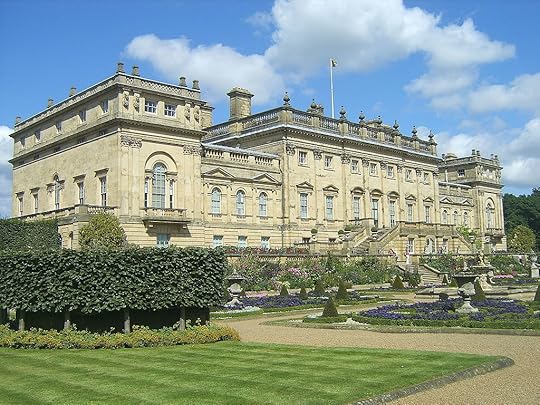
When rising artist Will Turner arrives at Harewood House in high summer, his intention is to sketch the house and grounds, receive his commission, and return to London, where he has started attracting serious attention at the Royal Academy.
But things at the grand house are not quite as he expects. The atmosphere is strange, both above and below stairs, and Will's treatment by his hosts is surprisingly offhand. Most perplexing of all, however, is the appearance of another painter - his childhood friend and now rival, Tom Girtin. While Tom is welcomed into the aristocratic circle, Will finds few allies. As it becomes harder to ignore the whispers of scandal, Will witnesses something that will threaten both his commission and his friendship.
Alive with intrigue and rivalry, 'Will & Tom' offers a glimpse into the early life of Britain's greatest painter, JMW Turner, through the story of a complicated, vibrant friendship, and how it is tested by the dark dynamic of art and power.
Matthew Plampin was born in 1975 and grew up in Essex. He read English and History of Art at the University of Birmingham and then completed a PhD at the Courtauld Institute of Art, London. He now lectures on nineteenth-century art and architecture.
Superb and very very funny. Great story line, wry, erudite and comedic. Loved the curmudgeony, workhorse who is the young (20 going on 40) Turner - so ill at ease amongst the corrupt shannigans of the upper classes. If you liked Andrew Miller's Pure, you'll love this.
3.5 stars Consigned to a poky room in Harewood House, to his mind the "casket chamber", Will Turner* readies himself to perform the task for which he has been hired, i.e. several "drawings"** of Harewood House and environ. He braces himself for the bowing and scraping that he'll have to do (in spite of the honours already received at his young age) to gain the Lascelles family's patronage.
He soon discovers that he is not the only invited artist, but that his friend Tom Girtin*** is also present, and is in fact competing against him. Both artists are "a project" of Beau Lascelles, a fact that does not sit well with Turner. Will is perplexed and confounded by the treatment he receives and angry that Tom has a comfortable upstairs room near the family members whilst Will has a cramped space amongst the servants. Two friends, two artists, both of a similar background but being treated very differently. Very odd indeed! Family, guests and servants alike behave in an extraordinary manner. Meanwhile all Will wants to do is work.
In this fanciful take of a possible**** joint visit to Harewood House, there are various shenanigans and nefarious goings on in which Will becomes more and more embroiled, much against his own instincts. There is an hilarious incident in which Will nervously stuffs his mouth so full that he cannot chew and struggles to swallow; a metaphor perhaps for having taken on more than he could chew by accepting the commission at Harewood House, not in terms of artistic prowess but more about fitting into that social sphere. I had initially intended a higher rating, but unfortunately the plot eventually loses credibility and becomes silly.
For the most part I enjoyed the portrayal of William Turner, and having seen the film Mr Turner I could not help seeing actor Timothy Spall's face and hearing his voice as I read - a testament to his memorable portrayal of the artist.
It is a novel about artists, friendship and class distinction. It also references slavery as the Lascelles family's fortune was made from the slavery trade.
### Some extracts: “He itches to tell her that he has never, never once in his life, received undeserved praise, and name some of the notable connoisseurs and newspaper critics who have singled out William Turner for special attention."
"Burying his puzzlement, he thinks only of the conversation he might make. Nothing comes, though: no topics, no opportunities. The company moves seamlessly from one society scandal to the next, an animated parade of disclosures, dropped names and allusions, interspersed with peals of nasty laughter. He forces a grin at a couple of Beau’s jokes, and even at one of Mr Purkiss’s – feeling a pinch of self-loathing as he does so."
"The heat is staggering, rather like being slowly poached within your clothes; a salty human mist clouds the air and the very walls are stippled with moisture, as if they are sweating along with the multitude they contain. This suffocating atmosphere positively throbs with flattery and forced laughter."
"He looks now, and by God it is achingly fine. A full moon lies against the sky like a new shilling. Around it, in every direction, the clouds are in retreat – dark, trailing strands, wispily thin, banished by the great brightness behind. The landscape below, the rocks and winding hedgerows and patches of woodland, is coloured through a scale of silver-white to blackish blue; but he observes a note of gold as well, where the moon’s influence is strongest, a faint corona that projects earthwards, lending a warm contour to a range of distant hilltops."
"And laid before them, soaring above them, is the heart-stopping fullness of the dawn. Sunlight rakes over a mountainous array of clouds. The giant forms are clear and crisp, tinted with silvery pinks and bordered with a line of burnished copper. Beyond is a mighty sweep of colour, ranging from deep indigo and vermillion through to a celestial yellow-white, the transition impossibly smooth. The effect is one of inestimable distance, of unfathomable scale: of infinity, so awful and elating."
"They approach, weaving and slurring yet also markedly sombre, like a well-oiled funerary procession that has mislaid its coffin.”
** In his Historical Note the author states: “In this period, watercolour paintings were commonly referred to as ‘drawings’, and watercolour brushes as ‘pencils’; this was partly to distinguish them from paintings in oil, which was considered the far superior medium.”
****Talking about Tom Girtin the author states: "He’d been to Harewood in 1796 and would go again in 1799, 1800 and perhaps 1801 as well, but it has never been established that he was there at the same time as Turner."
### About the Author: “Matthew Plampin was born in 1975 and lives in London. He completed a PhD at the Courtauld Institute of Art, and has written and lectured on nineteenth-century art and architecture. He is the author of three previous novels, Illumination, The Street Philosopher and The Devil’s Acre.”
In August 1797 young Will Turner, having earned a reputation as an architectural draughtsman, is invited by Beau Lascelles, the son of the owner, to visit Harewood House with the object of preparing sketches from which he would subsequently produce paintings of the country house.
But once there, Turner finds things not quite as he expected. For starters, he is not the only artist present; he turns out to be one of two men that would make up what was considered by Lascelles and his aristocratic guests 'a Cockney Project'. His fellow artist was none other than a childhood friend in fellow artist Tom Girtin. But at Harewood House the relationship was an uneasy one as the rather ordinarily dressed Turner's object was to get his sketches made and return post-haste to London while the sartorially elegant Girtin had other motives in mind as he mixed with the guests and got himself involved in other extramural activities.
Turner was content to get on with the job and spend his spare time in his room where there were no distractions and he was able to concentrate on the completion of his work. But even so he was still able to pick up whispers of scandal around the house. And then, on one of his sketching trips around the grounds, he saw for himself something that was to threaten both his commission and his lifelong friendship.
Turner found his treatment by his hosts far from pleasant and as a consequence he found himself spending more time with a member of the below stairs staff while Girtin was being welcomed into the aristocratic circle above. This caused tension between the two artists, who disagreed on the best way forward for the commission but Turner was sensible enough to realise that Beau Lascelles was too influential to risk offending so he had to compromise as best he could.
Eventually Turner finished his preparatory sketches and returned to London to begin his interpretations of Harewood House and its environs and Girtin followed in due course to do the same. Both produced inspiring watercolours that belied any tension that had taken place when at the venue but Girtin was to die only five years later when Turner was generous enough to say, 'If Tom Girtin had lived, I would have starved.' [A euphemism if ever there was one!]
There is plenty of intrigue, artistic rivalry and society scandal in 'Will & Tom' and it gives a vivid glimpse into the earlier life of JMW Turner and how artistic patronage flourished in the 19th century.
Really enjoyed this book--more than I thought I would when I first picked it up! I didn't know much about JMW Turner who is the titular "Will" or the lesser known Tom Girtin but it was interesting when I got to the end and the author had a little info on their real lives to see what parts of their lives he had drawn from in the book. I can imagine that if you were a big fan of art and artists at the end of the 18th Century this would be a really interesting book for you. I loved reading about the time period and the politics at play with the upper and lower classes. The plot was a lot of fun, tightly wound and suspenseful. Plampin's writing style is excellent, very evocative and the pacing is well done.
Will & Tom centres around several days where artist Will Turner, at the start of his career, was completing a commission at Harewood House. The author gives his own interpretation of the vents there, including commentary on the upper class, delving into the rivalry between Will and fellow artist Tom Girtin, and also more scandal than nearly every other book I've read.
I have a really deep appreciation for the description in this novel. Plampin is clearly involved in the art world, and the way he describes landscapes and people, as well as how Will translates what he sees in nature to his art, shows that he has a very deep understanding of Will and of the natural world. This sounds a bit like something I would write for an essay in English, but it’s really true; I only really realised towards the end how well Plampin captures nature and art in this novel, and it was the end of a chapter that solidified his writing for me:
“He turns. Tom is on the verge, watching with his arms crossed, his bare feet half-buried in the grass. The sun is behind him, breaking over his shoulder, obscuring his face with a painful radiance. Will squints, raising a hand to shield his eyes, but to no avail. Nothing else can be seen.
‘Thank you,’ he says.”
In terms of characters, I definitely feel like Will and Tom were the most developed. As individuals they had a lot of depth, and I could see them as real people rather than just as characters in a book, something that’s vital when you’re writing a book such as this one. Their interactions were funny and they had so much wit that I found myself looking forward to whenever they were together. I also liked seeing how different their personalities were, and seeing them come together regardless; Will says that they don’t really understand each other, but there's a respect between them they don't really discuss.
It seemed like many of the other characters weren't as fleshed out as Will and Tom to almost differentiate the upper class from the artists, and mostly just worked as villains in society without much depth to them beyond being nasty. There was some extra development of other characters but that was mostly towards the end, and seemed a bit forced to me.
At times the plot seemed to drag, and there wasn't really much of a resolution to the scandal going on. Sometimes the phrasing of certain things seemed awkward and I got a bit confused as to what was going on or what point a character was trying to make, only just getting the gist of what they had said based on character reactions. I enjoyed it, but there was just something holding me back from loving it.
One thing that I loved most about this book was seeing the ideas held by the Romantics fleshed out on the page. I really love the Romantic era, and I stretched out to the painters at the time because this sounded so intriguing and also the cover is pretty, and I was really happy to see that there was commentary on different problems within society and seeing that influence characters was really great.
I recommend this book to fans of art and the Romantic era, and anyone who enjoys books that have writing that relies on description and few characters to drive the story. Also to fans of scandal, there’s a lot of scandal in this!
An interesting story of what might have happened if the artists Turner and Girton had met at Harewood Hall. A funny and lively yarn that makes you want to know more about both artists.
I listened to the audiobook version and have to say I enjoyed but did not love it, taking for me a long time to reach the end. The writing is good, grounded in knowledge and research into the period, with its evocation of the life and times of young JMW Turner, and his relationship with friend and fellow painter, possible rival, Tom Girtin.
Whereas Will is uneasy in the privileged milieu he must inhabit and interact with (toady to) in order to become established and secure, Tom has a chameleon's ability to fit in despite coming like Will from the Lower Orders and sharing his views on the necessity for change. Tom lacks Will's social unease and stonking great chip on his shoulder about the pernicious influence of birth and wealth vs talent and hard work. I do appreciate Will's defensive, bad-tempered attitude is a result of acute social anxiety and very real discrimination, tempered with pride and a healthy self-belief but spending hour after hour in his company is wearying. The novel is all from his pov, in present tense, and tbh I was more intrigued by Tom and hints of more than friendship in Will's feelings.
Plampin describes very well the easy, ostentatious lives enjoyed by the wealthy in Regency England, comfort bought at the cost of slavery in their far-off plantations in the particular case of the Lascelles family of Harewood House. 'Beau' Lascelles is frequently likened in appearance to the Prince Regent, something he regards as flattering where to Will this is one more reason to despise his patron. Tom is an opportunist and pragmatist and Will just can't abide that. With strange goings on at Harewood House Will begins to suspect there's more to the coincidence of Tom's presence than rivalry for a lucrative commission and sets out to investigate.
Will Turner arrives at Harewood House in the summer of 1797 in a turbulent frame of mind. His invitation from ‘Beau’ Lascelles, the eldest son of Baron Harewood, could be the beginning of something big. Will’s talent has been noted by his contemporaries and by the press. Now he might be able to win the greatest prize of all: an understanding patron. On the other hand, in order to achieve said prize, Will is going to have to endure several days in the company of frivolous aristocrats without causing offence which, for an obstinate working-class Londoner with a chip on his shoulder, won’t be easy. And worse is to come. For Will isn’t the only painter who’s been invited to Harewood this summer. When his boyhood friend (and fellow – rival? – painter) Tom Girtin unexpectedly turns up, looking mightily comfortable in this aristocratic milieu, Will bristles, assuming they’ve been set up to compete for the nobles’ amusement. But the truth – if truth it is – turns out to be more peculiar than even he could have imagined...
‘If Girton had lived, I should have starved’ said JMW Turner of his contemporary. This work of fiction could actually have happened had Will Turner and Tom Girton visited Harewood House (Lascelles family pile) at the same time. Plampin brings the contrasting characters and work of the two young, poor artists vividly to life. Turner: obsessive, nervy, suspicious, socially awkward, isolated. Girton: daring, witty, charming, carefree, welcomed. Inevitably they are artistic rivals, but a streak of personal loyalty from their childhood remains. Some insights into the Romantic imagination and into the romantic shenanigans of the aristocrats, as well as the disgusting manners and morals of the gentry, make for a fascinating cultural and social portrait of society in the late 18th century.
Will and Tom - Mathew Plampin R (57 of 98) 27 7 21 Always good when i feel inspired to find out more after I've read the book. Picked the book because Harewood is near to me. Tells the story of the artists Will Turner and Tom Girtin; explores what it's like to be reliant on commissions from the aristocracy to carve out a career. I knew Turner could be a bit curmudgeonly (well ok I got that impression from the excellent film about him) but I knew nothing about Girtin. Turns out (when you look on Wiki) that if he hadn't died young he'd have given Will a run for his money. Most of his work has been lost including this circular panorama of London that was treated as a frivolity and not saved after it's brief display as a side show.
A curious novel, pleasant enough but slightly slow and laboured with not enough plot to keep it chugging along. It wasn't helped for me as Turner is one my heroes and his character in the book is unsympathetic and unimpressive. For all I know it may be an accurate portrayal, but I would rather Turner remained a hero that a very flawed man like the rest of us.
I did read the Author's note at the end and that was very well written; clear and informative. Perhaps Mr Plampin is an academic and not a novelist.
This was my second Matthew Plampin book. Although at times the plot was very slow, his descriptions of the process of making art and of the nature that inspired it were truly beautiful, if not poetic. Of course, the time at Harwood was imagined but the effect on the art world of both Turner and Girtin were not. Also liked how some of the social issues of the day were interwoven.
This was a book group choice, I found the first part very slow and Will Turner not the most appealing character but I very much enjoyed the description of his trade and all his surroundings. The second part was much more enjoyable and worth the wait, the art world comes across as petty and ruthless.
Will Turner, twenty-two years old, is invited to Harewood House in Yorkshire to execute a series of drawings for Edward 'Beau' Lascelles, elder son and heir of Lord Harewood. Awkward, callow and socially out of his depth, Will is annoyed to find that a friend and fellow artist, Tom Girtin, has been invited too, and is being treated more handsomely than he; though it turns out that Tom has been commissioned to do more than produce a few drawings. Within this unostentatious frame is presented a well-crafted picture of the late eighteenth-century bon ton - the shenanigans, the servants, fops and hangers-on, the gossip and scandal, the ambition and intrigue - with a roguish below-stairs interest thrown in as well. Presenting a (very partially) true story of J.M.W. Turner and Thomas Girtin as struggling young men trying to make their way in a socially hazardous world was a nice idea, and Matthew Pamplin has made the most of it. All the characters who appear in the story are well-drawn and convincing, there is an impressive sense of atmosphere and place, and everything is set harmoniously in a context that the author supplies naturally and without contrivance. He is, I think, partly amazed and partly appalled by the sort of life, power and social impunity that wealth beyond the dreams of avarice bestows, but although he moralises a little he does it with a light touch. I wonder if the present Earl of Harewood winced a bit when he read Will and Tom. I rather hope so.
I enjoyed Will and Tom enormously, and read it through twice to savour the nuances. Matthew Pamplin is himself an art historian, well equipped to introduce us to the lost world of eighteenth-century connoisseurship and patronage; he knows his stuff and writes with confidence and authority. There are some copy-editing blemishes, one or two passages of clumsy dialogue and a couple of flaws in the plot, but it would be captious to dwell on these small defects in a first-rate achievement. All in all, Will and Tom is an enjoyable, well conceived and well executed story that I'm happy to recommend.
Very effective blend of researched biographical details and created story line of the young Turner, building his professional status and skills. I enjoyed the painterliness of the images and details of work- stylish writing, and a sense of what painters must see / think/ do , particularly at this time. I would definitely recommend this for individuals who like good writing, and book groups who want enough elements to discuss.
My kind of book. Thought characters so came to life, atmospheric, knowledgeable, poignant and funny too. I was there alongside Will and Tom stumbling through, being outwitted, with my heart in my mouth either because they were about to be caught or because they were being overawed by the beauty of the landscape, the weather or a totally majestic sky which as we know was captured by their artistic talent.