What do you think?
Rate this book


140 pages, Kindle Edition
First published October 2, 2025
There may be some among you who know as little of Benbecula as I do of the great townships of Stornoway or Portree. There is not much to say. We are an island and a small one at that. The land is flat and sodden. ... Before the events I am to describe our family grew what crops we could and gathered seaware for kelp.
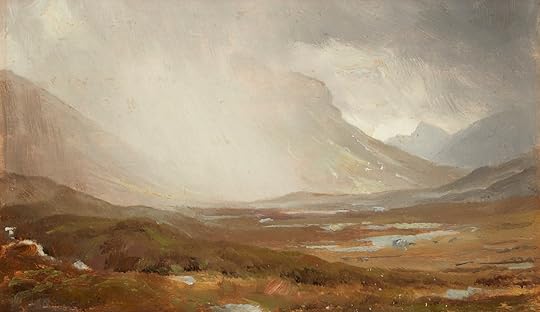
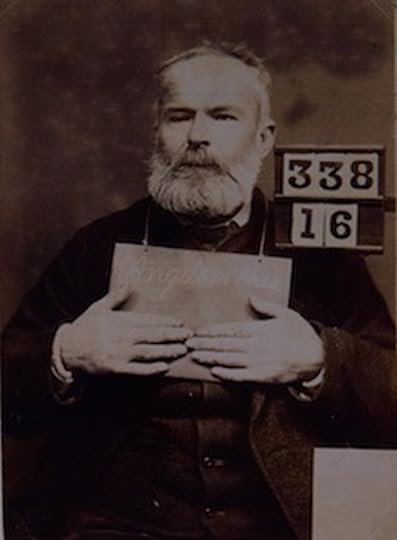
Angus McPhee Photograph of Angus McPhee taken from the Criminal Lunatic Department Case Book. Crown copyright, NRS, HH21/48/1 p61.
'... but hope is not a welcome visitor in these parts. Hope serves only as a buttress to misery. It is better al round to accept one's lot in life and not entertain notions of a less onerous existence.'
I sometimes fancy this house as a skull and myself as the hrain contained within it. The two windows are the eyes and the door is the nasal cavity. It is, you understand, a skull half-buried in the earth. The thatch is the hair. You might object that a skull has no hair but you would be wrong. The worms dispose of the flesh in short order but they have no taste for the hair.Having never been to Scotland, and more specifically Scotland in 1857, I spent more time Googling the vocabulary of a hardscrabble family in the Outer Hebrides, and even how to pronounce Benbecula. (My father’s family came from the same area but racial memory was no help here.) It was an interesting education for sure. This is the fictionalized history of Malcolm, a rather peculiar individual aged around 30 - he's not sure - whose younger brother Angus has beaten to death their parents and aunt. The Malcolm we first meet has very little schooling but has an impeccable selective memory for certain events and speaks with the careful articulation and vocabulary of a university graduate.
As we made our way across the moor MacDonald, who as far as I know never dirtied his hands in the muck, pontificated about some innovation he had heard of in the management of crofts.The author based this short novel on a real crime committed in 1857 after reading handwritten witness statements taken before the real-life Angus' trial and incarceration. The whole book is a catalogue of abuses, from casual cruelty inflicted on the children - beatings and physical restrains to what sounds like free-range incest - and further to the hideous treatment of Angus from the time of his arrest to his 42 years in an asylum. Not in any way an easy read, although it's fascinating and has more than the occasional passage of sneaky black humour that I was almost but not quite ashamed to snicker at. As an aside I wonder if anyone over the years has tried to diagnose exactly what was wrong with this whole family of parents, aunt and four adult children? The family was definitely on a low economic level but always seemed to have money for whiskey, and I kept seeing in all of the children some behaviour or other typical of what I've observed of fetal alcohol syndrome, among other things; the mother rarely left the house, preferring to sit by the fire with her skirts up; and the father was ineffectual and quite physically handicapped so who knows what that was. Anyway just my 2 cents. I'm still on the lookout for more of this author's work. 4 stars
I believe that great improvements in yields can be achieved, he said. I understood perfectly that he meant his remark as criticism of those whose crofts yielded little more than what was sown on them, but John earnestly asked MacDonald about these new methods before turning to me and suggesting that these might be one or two things we could try.
Only an idiot would plant a bushel of grain in order to harvest a bushel of grain, proclaimed MacDonald.