What if Troy was not destroyed in the epic battle immortalized by Homer? What if many legendary cities of the ancient world did not meet their ends through war and conquest as archaeologists and historians believe, but in fact were laid waste by a force of nature so catastrophic that religions and legends describe it as the wrath of god? Apocalypse brings the latest scientific evidence to bear on biblical accounts, mythology, and the archaeological record to explore how ancient and modern earthquakes have shaped history--and, for some civilizations, seemingly heralded the end of the world.
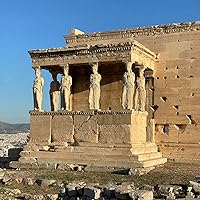
Archaeologists are trained to seek human causes behind the ruins they study. Because of this, the subtle clues that indicate earthquake damage are often overlooked or even ignored. Amos Nur bridges the gap that for too long has separated archaeology and seismology. He examines tantalizing evidence of earthquakes at some of the world's most famous archaeological sites in the Mediterranean and elsewhere, including Troy, Jericho, Knossos, Mycenae, Armageddon, Teotihuacán, and Petra. He reveals what the Bible, the Iliad , and other writings can tell us about the seismic calamities that may have rocked the ancient world. He even explores how earthquakes may have helped preserve the Dead Sea Scrolls. As Nur shows, recognizing earthquake damage in the shifted foundations and toppled arches of historic ruins is vital today because the scientific record of world earthquake risks is still incomplete. Apocalypse explains where and why ancient earthquakes struck--and could strike again.
An enjoyable and fascinating read with compelling arguments for the role of earthquakes in societal collapse, and our blind spot when it comes to recognising the evidence for past, present and future disasters. My only criticism that, whilst there was valid support or criticism of archaeologists of varying viewpoints, no archaeologists were involved in the writing of the book.
A fascinating look at how earthquakes have influenced history, and unraveling quite a few theories here with the use of archaeology. Excellent read, if a bit scholarly and dry in spots.
A good layperson's guide to earthquake history and the likelihood that some ancient civilizations were brought down in part by earthquakes. Lots of jabbing of some snooty opposing theories by archeologists.
A fine meld of geology and archaeology from a foremost expert on both subjectS. Evidence is laid out in a logical sequence and his conclusions follow the evidence.
According to Nur, a geologist, the field of archaeology systematically discounts the effect of earthquakes on civilization. The most important example is the collapse of the bronze age in the eastern Mediterranean region about 1200 BC, which archeology attributes overwhelmingly to human actions, while Nur attributes it primarily to earthquakes. I don't have the background to adjudicate the dispute, but I think he makes his case persuasively.
Nur adduces piles of evidence to support his thesis, most of which, however, read like massive repetition to a non-specialist. For addressing a general audience a long magazine article might have been more appropriate.
Provides a new pool of knowledge for an introduction to the use of seismology when examining the archaeological record. Some of the information can be speculative for the field with little information to back it up, but in examining theories, this introduction makes a case for bringing out more geological study when providing a base for archaeological examination. Especially in earthquake prone areas. May also be used to get a taste for the effect of earthquakes on historical politics and culture.
Perhaps because I currently live only a few short miles from Loma Prieta and have spent a good amount of time in downtown Santa Cruz, Amos Nur didn't have to take 275 pages to convince me that an earthquake could bring about the fall of ancient civilizations. I'm glad he did, though, because I learned a lot! It took a couple days to read and was full of interesting information both about earthquakes and various ancient civilizations.
I enjoyed this book. I don't enough about the site the author believes were or may have been distorted by quakes, but he does a good job of discussing why researchers should allow the idea of earthquakes to be taken more seriously at least on a case by case basis for some of the ruins' causes of distruction. It's still a hard sell that the mass destruction of the late broad age was all earthquakes.....
I enjoyed reading this monograph on archaeoseismology; it brought new insights into how people look at archaeological sites within earthquake prone areas. Though the question still lingers on proving that an earthquake occurred without at least historical records. Still, it was well written and had plenty of examples to make a reasonable argument.
I enjoyed this more than I thought I would. The author points out how the impact of earthquakes has affected cities, civilizations, and history. I particularly liked the segment on the 1755 Lisbon quake and how it changed the state/church relationship and western thought in general.
very interesting book that raises some good poitns to consider: what actually causes the creation of Tells in the middle east? Is destruction at ancient cites invariably due to human agents? Do natural disasters create triggers for wars, cultural shifts or societal collapse?
I don't know what the publushers at Princeton University Press were thinking about when they allowed a B Grade title to be attached to Professor Nur's geologically credible and sound archeological research that is relevant to ancient historians and archeologists.