

What do you think?

The Brides
Before Dracula, there were The Brides. . .
1903. Sir John Seward, survivor of Count Dracula’s murderous campaign ten years before, takes up a post as a psychiatric doctor at an Oxford public asylum. There, a new patient arrives whose traumatic experiences resurrect horrors John has spent a decade trying to forget.
1884. Mafalda Lowell journeys from London to Budapest to care for her recently widowed aunt Reka. She uncovers the chilling truth about her uncle’s death, and writes to her secret love Lucy North for comfort. Chaperoned by former schoolfriend Eliza and lady’s maid Alice, Lucy travels across the continent to be with her beloved.
Only Alice, beset by nightmares and terrifying visions, notices the strange black-clad man who seems to follow them wherever they go. When Eliza is struck down with a mysterious wasting illness, her doctor orders her to take the healing waters of Transylvania, a journey with devastating consequences.
There was meant to be four . . .
A dual timeline novel, told through letters, diary entries, psychiatric reports, that places women at the centre of literature's most famous vampire story.
1903. Sir John Seward, survivor of Count Dracula’s murderous campaign ten years before, takes up a post as a psychiatric doctor at an Oxford public asylum. There, a new patient arrives whose traumatic experiences resurrect horrors John has spent a decade trying to forget.
1884. Mafalda Lowell journeys from London to Budapest to care for her recently widowed aunt Reka. She uncovers the chilling truth about her uncle’s death, and writes to her secret love Lucy North for comfort. Chaperoned by former schoolfriend Eliza and lady’s maid Alice, Lucy travels across the continent to be with her beloved.
Only Alice, beset by nightmares and terrifying visions, notices the strange black-clad man who seems to follow them wherever they go. When Eliza is struck down with a mysterious wasting illness, her doctor orders her to take the healing waters of Transylvania, a journey with devastating consequences.
There was meant to be four . . .
A dual timeline novel, told through letters, diary entries, psychiatric reports, that places women at the centre of literature's most famous vampire story.
401 pages, ebook
First published July 7, 2026
Ratings & Reviews
Friends & Following
Create a free account to discover what your friends think of this book!
Community Reviews
Displaying 1 - 30 of 481 reviews
July 20, 2026
This one was kinda disappointing. I had super high hopes for this one, especially since I realised that it was written in the same format as the original Dracula.
But it just kinda fell flat for me, the main characters were super dull and boring in my opinion. Nothing really even happens in the book until 3/4 in so this was kinda a let down!
But it just kinda fell flat for me, the main characters were super dull and boring in my opinion. Nothing really even happens in the book until 3/4 in so this was kinda a let down!

April 12, 2026
I am so enraged by these f(I'm trying not to swear)ing pestilential authors having their moment reviving f*ing DEAD LESBIAN SYNDROME right now.
This is the worst kind of cluttered, messy, hatefully heteronormative queerbaiting - that epilogue?! I can't fucking stand it.
Read the book, attempt to hunt down this click-baited Sapphic 'love story' (what - they hold one another's hands once?!), realise that it's the weakest kind of self-enfranchisement into the Carmilla canon, and boil it all down to the simpering "Oh Darling, we must take husbands to be historically accurate", then try - just try to see it from a lesbian woman's point of view that this is the most vile tokenistic use of our sexuality. That fucking epilogue! That fucking heterocentric over-glazing queer-eradication, and redemptive straightening-out of all that was Sapphic.
Do I have to write EVERY TIME the same review as The Night Stairs (https://www.goodreads.com/review/show...) over and over and over? I'm not able for it.
[EDIT: I was in such a rage when I wrote this, and I wish I could have been more articulate. Thankfully, Alex has been! https://www.goodreads.com/review/show... ]
This is the worst kind of cluttered, messy, hatefully heteronormative queerbaiting - that epilogue?! I can't fucking stand it.
Read the book, attempt to hunt down this click-baited Sapphic 'love story' (what - they hold one another's hands once?!), realise that it's the weakest kind of self-enfranchisement into the Carmilla canon, and boil it all down to the simpering "Oh Darling, we must take husbands to be historically accurate", then try - just try to see it from a lesbian woman's point of view that this is the most vile tokenistic use of our sexuality. That fucking epilogue! That fucking heterocentric over-glazing queer-eradication, and redemptive straightening-out of all that was Sapphic.
Do I have to write EVERY TIME the same review as The Night Stairs (https://www.goodreads.com/review/show...) over and over and over? I'm not able for it.
[EDIT: I was in such a rage when I wrote this, and I wish I could have been more articulate. Thankfully, Alex has been! https://www.goodreads.com/review/show... ]
July 18, 2026
4.5 🌟
This was so much funn!
I will always be a sucker for a little Dracula story 🫦🩸
I really loved the fact that the story is told through letters and diary entries. It feels so authentic and classic. I really enjoyed the formatting of the story! It keeps you I bit in the dark and leaves a unique sense of mystery, witch just feels right for this kind of story.
We know from the premises what the story will hold, but I was pleasantly surprised by the other topics that are discussed. Like independence and gender roles in late 1800 society. And ofcours we also get a sapphic thread that feels just right.
What a great deput novel by Charlotte Cross! I’m verry excited to see what is next for her!
Thank you NetGalley and Pan Macmillan publishing for this ARC! ❤️
This was so much funn!
I will always be a sucker for a little Dracula story 🫦🩸
I really loved the fact that the story is told through letters and diary entries. It feels so authentic and classic. I really enjoyed the formatting of the story! It keeps you I bit in the dark and leaves a unique sense of mystery, witch just feels right for this kind of story.
We know from the premises what the story will hold, but I was pleasantly surprised by the other topics that are discussed. Like independence and gender roles in late 1800 society. And ofcours we also get a sapphic thread that feels just right.
What a great deput novel by Charlotte Cross! I’m verry excited to see what is next for her!
Thank you NetGalley and Pan Macmillan publishing for this ARC! ❤️
Want to Read
September 26, 2025when am i never gonna devour a retelling of dracula's brides honestly
July 17, 2026
The Brides is a decadent work of gothic horror that is both profound and poignant.
In The Brides we follow the women who will become Dracula's brides. There's such a depth and detail to this story and writing that I fear I will give too much away if I say anymore.
Mafalda is abrasive and manipulative, yet you can't help but fall for her. Her paramour, Lucy, is a vivacious and kindly woman who is easy to love. Being in Lucy's head was refreshing; she's so moral and upright while still being very flawed. The supporting cast is just as compelling and interesting. The diary style writing helps to give everyone a unique voice and tone.
I found this work to be more realistic than less fantastical works when it comes to women and our place in society. This book is very modern in its heart and ideals despite taking place so long ago.
I sped through this book in less than two weeks. I could not get enough of this novel. If you're a lover of sapphic romance, gothic fiction, and horror, this is not to be missed.
In The Brides we follow the women who will become Dracula's brides. There's such a depth and detail to this story and writing that I fear I will give too much away if I say anymore.
Mafalda is abrasive and manipulative, yet you can't help but fall for her. Her paramour, Lucy, is a vivacious and kindly woman who is easy to love. Being in Lucy's head was refreshing; she's so moral and upright while still being very flawed. The supporting cast is just as compelling and interesting. The diary style writing helps to give everyone a unique voice and tone.
I found this work to be more realistic than less fantastical works when it comes to women and our place in society. This book is very modern in its heart and ideals despite taking place so long ago.
I sped through this book in less than two weeks. I could not get enough of this novel. If you're a lover of sapphic romance, gothic fiction, and horror, this is not to be missed.

November 29, 2025
Official-ish blurbage: THE BRIDES is an astonishing literary magic trick, managing to sew itself seamlessly into Dracula in a way that wholly honours the original while forging new ground with vibrant compelling characters and a story that held me rapt.
Unofficial review: LORD this was addictive but also classy? Felt like actual 19th century lit. Incredibly well done.
Unofficial review: LORD this was addictive but also classy? Felt like actual 19th century lit. Incredibly well done.
May 13, 2026
Was it easy to understand?
No.
But did I enjoy reading it?
Also no.
No.
But did I enjoy reading it?
Also no.

Read
March 5, 2026I blurbed this one!
"The Brides is Dracula's worthy successor: a gothic, sapphic epistolary novel that thrills, chills, and delights in equal measure. I loved every page!"
"The Brides is Dracula's worthy successor: a gothic, sapphic epistolary novel that thrills, chills, and delights in equal measure. I loved every page!"
Review of advance copy received from NetGalley
7/18/26: This review (and many others) plus essays and booklists are now available on my blog!
Through letters and journal entries, the story of Lucy, Malfalda, Alice, and Eliza unfolds. In the face of illness and turmoil they make their way to Castle Dracula, but what promises to aid them soon becomes a living nightmare and their secrets and fears might just come back to bite them.
There's something to be said about a retelling being faithful to the original, but I think this may be a case of being a little too faithful to the original. By that I mean that this reads like a classic gothic novel in the sense that it's very slow-paced and it's about 90% people falling ill or having nightmares and 10% actual plot events. That being said, the epistolary format is pretty solid and it's more engaging than I would have expected considering that it is so slow, but unfortunately there are some other issues I have with this.
I got sold a queer Dracula retelling and unfortunately the queer aspect of this book is like...completely forgettable. It's not about queerness, and usually I think that's a good thing because I don't want every book that has queer characters to be *about* queerness, but in this case...that's kind of why I picked up the book. I wanted lesbian wives of Dracula and I got an extremely minor romantic relationship between two women that is either profoundly repressed or profoundly lacking in chemistry to the point of reading as platonic. Additionally, as another review mentions without spoiling the ending too much this is a "bury your gays" situation so even the slightest thing that make this book feel fresh and compelling gets unceremoniously killed off.
I don't think this book is terrible, in fact the writing is pretty great and the author is clearly passionate, but I don't really know who to recommend it to. I don't think you'll be happy with it if you're a huge fan of Dracula and I don't think you'll be happy with it if you're in it for lesbians and vampires because there's very little of each.
Thank you to Charlotte Cross and Hanover Square Press for this ARC in exchange for my full, honest review!
Happy reading!
Through letters and journal entries, the story of Lucy, Malfalda, Alice, and Eliza unfolds. In the face of illness and turmoil they make their way to Castle Dracula, but what promises to aid them soon becomes a living nightmare and their secrets and fears might just come back to bite them.
There's something to be said about a retelling being faithful to the original, but I think this may be a case of being a little too faithful to the original. By that I mean that this reads like a classic gothic novel in the sense that it's very slow-paced and it's about 90% people falling ill or having nightmares and 10% actual plot events. That being said, the epistolary format is pretty solid and it's more engaging than I would have expected considering that it is so slow, but unfortunately there are some other issues I have with this.
I got sold a queer Dracula retelling and unfortunately the queer aspect of this book is like...completely forgettable. It's not about queerness, and usually I think that's a good thing because I don't want every book that has queer characters to be *about* queerness, but in this case...that's kind of why I picked up the book. I wanted lesbian wives of Dracula and I got an extremely minor romantic relationship between two women that is either profoundly repressed or profoundly lacking in chemistry to the point of reading as platonic. Additionally, as another review mentions without spoiling the ending too much this is a "bury your gays" situation so even the slightest thing that make this book feel fresh and compelling gets unceremoniously killed off.
I don't think this book is terrible, in fact the writing is pretty great and the author is clearly passionate, but I don't really know who to recommend it to. I don't think you'll be happy with it if you're a huge fan of Dracula and I don't think you'll be happy with it if you're in it for lesbians and vampires because there's very little of each.
Thank you to Charlotte Cross and Hanover Square Press for this ARC in exchange for my full, honest review!
Happy reading!
Did Not Finish
January 18, 2026DNF 😏

Want to Read
May 17, 2026ARC received. Thank you, Hanover Square Press!

December 3, 2025
The Brides slides into the Dracula corpus as if it's always been there - a prequel and a sequel all at once - while at the same time feeling new and fresh and wholly, entirely its own. A must-read for anyone who loves Dracula, or vampires, or nuanced, meticulously researched explorations of the women living in the shadows of well-known narratives.
I absolutely adored it.
I absolutely adored it.
November 18, 2025
I am so sad to admit that I really struggled to engage with this one. On paper, this should have been immaculate. I adore multiple works of classical literature, grandeur gothicism and of course, the delectable darkness that is Bram Stokers masterpiece, Dracula. The concept of doing an inspired piece from the perspective of Count Draculas wives was an immediate sell to me. However, for me personally, I believe the concept was more engaging than its actual execution.
For me this was entirely a pacing issue, and I can only attribute this to the format in which the tale was presented. I do largely enjoy unconventional presentations of texts, be it diary entries, letters, or snippets of news. But in this particular instance, there were a number of differing povs, a series of unreliable narrators, scewed time-lines, and of course the epistolary written formats. It became incredibly confusing and particularly jarring to attempt to follow the plot.
This jarring and particularly slow pacing (especially for the first few hundred pages!) further damaged my relationship with the characters due to oftentimes being confused as to whose pov I was reading, and as such damaged the levels of empathy I had been attempting to build with this novel.
Whilst I realise this is an attempt at mimicking the original Stoker text, for whatever reason I truly struggled to engage with it. Perhaps I struggled with it being an e-arc as it was not simple to flick back constantly to see who was speaking and at what time.
I am sad to say I struggled with this one, but I would still urge others to read it and form their own opinions on it.
Thanks again to Tor Books/ Pan Macmillan for granting me the opportunity to read this novel as an arc and I look forward to working together again in future!
For me this was entirely a pacing issue, and I can only attribute this to the format in which the tale was presented. I do largely enjoy unconventional presentations of texts, be it diary entries, letters, or snippets of news. But in this particular instance, there were a number of differing povs, a series of unreliable narrators, scewed time-lines, and of course the epistolary written formats. It became incredibly confusing and particularly jarring to attempt to follow the plot.
This jarring and particularly slow pacing (especially for the first few hundred pages!) further damaged my relationship with the characters due to oftentimes being confused as to whose pov I was reading, and as such damaged the levels of empathy I had been attempting to build with this novel.
Whilst I realise this is an attempt at mimicking the original Stoker text, for whatever reason I truly struggled to engage with it. Perhaps I struggled with it being an e-arc as it was not simple to flick back constantly to see who was speaking and at what time.
I am sad to say I struggled with this one, but I would still urge others to read it and form their own opinions on it.
Thanks again to Tor Books/ Pan Macmillan for granting me the opportunity to read this novel as an arc and I look forward to working together again in future!

April 19, 2026
I picked up The Brides because the cover promised me gothic horror, Dracula, dread, atmosphere - the whole Victorian nightmare package. What I got was, well... a historical fiction novel about women writing letters to each other. Which is fine! That is a thing that exists and that people enjoy! It's just not quite what was on the tin.
Let me be clear: this book is not bad. It is ambitious, it has genuine heart, and the relationships between the women at its centre are, at times, genuinely compelling. But it is also a book that will make you feel like you've been handed a 1000-piece puzzle with no picture on the box, three pieces missing, and someone has helpfully scattered the rest across three different timelines. We open in the 1900s, then we're in 1893, then we're in 1883/84, and we're doing all of this through journal entries, letters, and notes from people we haven't been properly introduced to yet. I spent a genuinely embarrassing amount of time not knowing who anyone was. There is also a character whose identity is withheld until near the end - I understand the intended effect was eerie and unsettling, but the actual effect was me flipping back pages going "wait, who?"
Once it clicks, it clicks. The atmosphere does build. There are stretches where you're properly in it, genuinely gripped, feeling the walls close in. And then there are other stretches where you remember you've been reading for two hours and Dracula has not shown up yet and probably won't for a while. The horror, when it arrives, is largely... explained to you. Verbally. Towards the end. Like a villain monologue, but for the entire plot. I did not find this terrifying so much as I found it a little deflating.
The romance is where things get complicated for me.
Would I recommend it? Yes, but only to a very specific person: someone who loves slow-burn historical fiction, isn't too precious about the horror label, and has the patience of someone who genuinely enjoys the journey over the destination. If you're picking this up because the cover made you think you were in for gothic terror - manage those expectations aggressively, or you will spend half the book waiting for something that arrives much later than advertised, and much quieter.
Three stars. It tried. I respect the ambition even when the execution made me want to lie down.
Let me be clear: this book is not bad. It is ambitious, it has genuine heart, and the relationships between the women at its centre are, at times, genuinely compelling. But it is also a book that will make you feel like you've been handed a 1000-piece puzzle with no picture on the box, three pieces missing, and someone has helpfully scattered the rest across three different timelines. We open in the 1900s, then we're in 1893, then we're in 1883/84, and we're doing all of this through journal entries, letters, and notes from people we haven't been properly introduced to yet. I spent a genuinely embarrassing amount of time not knowing who anyone was. There is also a character whose identity is withheld until near the end - I understand the intended effect was eerie and unsettling, but the actual effect was me flipping back pages going "wait, who?"
Once it clicks, it clicks. The atmosphere does build. There are stretches where you're properly in it, genuinely gripped, feeling the walls close in. And then there are other stretches where you remember you've been reading for two hours and Dracula has not shown up yet and probably won't for a while. The horror, when it arrives, is largely... explained to you. Verbally. Towards the end. Like a villain monologue, but for the entire plot. I did not find this terrifying so much as I found it a little deflating.
The romance is where things get complicated for me.
Would I recommend it? Yes, but only to a very specific person: someone who loves slow-burn historical fiction, isn't too precious about the horror label, and has the patience of someone who genuinely enjoys the journey over the destination. If you're picking this up because the cover made you think you were in for gothic terror - manage those expectations aggressively, or you will spend half the book waiting for something that arrives much later than advertised, and much quieter.
Three stars. It tried. I respect the ambition even when the execution made me want to lie down.

July 8, 2026
The Brides is a prequel/sequel to Dracula, giving us insight into his three Brides and the one who escaped. It is told in an epistolary format, much like Dracula. I listened to the audiobook, and the narration was superb. The problem I found was the changing timelines and becoming confused about which timeline I was listening to, particularly early on in the novel. I believe this would work just fine on the page, but it's easy to become lost in the audio. The sapphic love story left me a little cold, feeling as though everything between them was kept at arms length. Perhaps this was by design, but it deemed the relationship as hollow to me. I did, however, thoroughly enjoy the story of the gathering of the Brides themselves, and I'm sure that was influenced by my love for the original Dracula. It was entertaining.
In short, if you enjoyed the story format of Dracula and have ever wanted a little background into the women in the book, this will likely be a fun read.
3.5 stars rounded up
Thank you to the publisher and NetGalley for the advanced copy of the audiobook.
In short, if you enjoyed the story format of Dracula and have ever wanted a little background into the women in the book, this will likely be a fun read.
3.5 stars rounded up
Thank you to the publisher and NetGalley for the advanced copy of the audiobook.

July 15, 2026
Huge thanks to Tor Nightfire, Harlequin Audio, and Netgalley for the audio ARC. This cover sold me immediately. I find that I am often thrown off by multiple narrators, however the work done by Anna Popplewell and Sam Woolf was well done and the change in voiceover marked perspective shifts that were really helpful.
The Brides is a prequel of sorts to Dracula. A dual timeline narrative that presents a collection of letters, medical reports, and diary entries. Young lovers, aunts and uncles in far away lands, unwanted suitors, a psychiatric clinic, kind servants, and of course, the Count. A deeply intricate story that brings together characters new and old.
Now I happened to start this one the same day I began reading a physical copy of The Red Sacrament by Sara Hinkley. Both are vampire novels, gothic in style, and are set in the 1800s. While Hinkley wrote a sumptuous period piece, I’m so glad that this was a different direction as a prequel, so the two never crossed over in my mind. The Brides originality also came across as one of its toughest hurdles. By its structure alone, I knew right from the beginning there would be a lot of names, a multitude of storylines, and that I was going to struggle without the ability of flipping back and forth as I had the audio. It was a harder adjustment at the start, and the stylistic choice is one I ended up quite enjoying, but I could see it putting others off. There is of course a small thread that I thought of pretty early on, where several of the cast members are young ladies pre-marriage, meaning there could also be additional name changes for the flash forwards. For me, this was a neat little trick, and I very much enjoyed it.
Now I know this is blasphemous, but I’ve never finished reading Dracula. I made it around 90 pages or so through a Signet Classic edition, where the font was so small it was giving me headaches (and I felt a vague, foreboding paranoia at that time—which is seriously perfect actually), so I had to set it aside. Still, I have seen several adaptations of the work (perhaps too many) and I was pleasantly surprised in how much this differed. The Brides feels very much so of the same world as Dracula, with even a similar style, but it doesn’t try too hard to be or embody it. And that feels important. The author even addresses this in the acknowledgments, the idea of starting something that will somehow be an accompaniment to something as illustrious as Dracula, and how insane that is, in and of itself, which I greatly appreciated. I personally think they’ve done well.
So yes, this is a prequel, and yes, it features Dracula, but as the title and tagline suggest, this is not his story. Personally, the choice to take readers through so much of the wives’ journey made the inevitable turn hit so much harder. Between the opening and the close, there are of course many things that transpire, but for me, the buildup is what this was all about, and the author showcased some skillful writing to get us there. There is love, kindness, innocence displayed, and yet there is deep-rooted greed, lust, need, and hunger. It’s soft in much of its delivery, but it’s also exactly what you should want and expect from a vampire story.
I could see this one’s film rights getting scooped up pretty quickly. The chance to show Dracula on screen with fresh ideas is probably too much to ignore.
https://fanfiaddict.com/review-the-br...
The Brides is a prequel of sorts to Dracula. A dual timeline narrative that presents a collection of letters, medical reports, and diary entries. Young lovers, aunts and uncles in far away lands, unwanted suitors, a psychiatric clinic, kind servants, and of course, the Count. A deeply intricate story that brings together characters new and old.
Now I happened to start this one the same day I began reading a physical copy of The Red Sacrament by Sara Hinkley. Both are vampire novels, gothic in style, and are set in the 1800s. While Hinkley wrote a sumptuous period piece, I’m so glad that this was a different direction as a prequel, so the two never crossed over in my mind. The Brides originality also came across as one of its toughest hurdles. By its structure alone, I knew right from the beginning there would be a lot of names, a multitude of storylines, and that I was going to struggle without the ability of flipping back and forth as I had the audio. It was a harder adjustment at the start, and the stylistic choice is one I ended up quite enjoying, but I could see it putting others off. There is of course a small thread that I thought of pretty early on, where several of the cast members are young ladies pre-marriage, meaning there could also be additional name changes for the flash forwards. For me, this was a neat little trick, and I very much enjoyed it.
Now I know this is blasphemous, but I’ve never finished reading Dracula. I made it around 90 pages or so through a Signet Classic edition, where the font was so small it was giving me headaches (and I felt a vague, foreboding paranoia at that time—which is seriously perfect actually), so I had to set it aside. Still, I have seen several adaptations of the work (perhaps too many) and I was pleasantly surprised in how much this differed. The Brides feels very much so of the same world as Dracula, with even a similar style, but it doesn’t try too hard to be or embody it. And that feels important. The author even addresses this in the acknowledgments, the idea of starting something that will somehow be an accompaniment to something as illustrious as Dracula, and how insane that is, in and of itself, which I greatly appreciated. I personally think they’ve done well.
So yes, this is a prequel, and yes, it features Dracula, but as the title and tagline suggest, this is not his story. Personally, the choice to take readers through so much of the wives’ journey made the inevitable turn hit so much harder. Between the opening and the close, there are of course many things that transpire, but for me, the buildup is what this was all about, and the author showcased some skillful writing to get us there. There is love, kindness, innocence displayed, and yet there is deep-rooted greed, lust, need, and hunger. It’s soft in much of its delivery, but it’s also exactly what you should want and expect from a vampire story.
I could see this one’s film rights getting scooped up pretty quickly. The chance to show Dracula on screen with fresh ideas is probably too much to ignore.
https://fanfiaddict.com/review-the-br...
March 10, 2026
The Brides expands upon the much beloved Dracula story in a refreshing yet familiar way. It honours the original while creating a new story that will suck you in (pun intended), bring you to the verge of insanity like the women who become Dracula’s brides and leave you enthralled with the world of the dark one. This story feels like it was written at the time of Bram Stoker and Sheridan Le Fanu. It fits so seamlessly into the 19th century style of gothic literature which just adds to experience of reading this book.
Told in the form of diary entries and letters, The Brides gives us multiple points of views and timelines. We meet Sir John Seward who survived Dracula’s deadly campaign, a young servant girl called Alice writing to her mother and sister, and Malfada Lowell who is travelling to Budapest to care for her aunt who is recently widowed and writes to her secret love Lucy about her heartbreaking discoveries.
The way Charlotte has weaved this story together, stringing the multiple timelines, the lives of the various characters and bridging the gap between the orignal story we all know and the emergence of the Brides who terrorise Van Helsing and his companions is so well done. And at its heart is a devastating sapphic love story that will leave you in pieces as the tale unfolds.
It’s an addictive read, haunting and thrilling from the opening lines to the final words. The women of this story are outstanding characters, the skill of the author lies in how she brings them to vivid life on the pages, makes you thoroughly invested in each of their stories. A must for Dracula and vampire enthusiasts. A worthy successor to the original tale and an author who I’m going to be keeping an eye on for future releases.
The Brides will be released on March 19th. Thanks to Pan MacMillan and Tor Nightfire for the arc. 4.5 ⭐️
Told in the form of diary entries and letters, The Brides gives us multiple points of views and timelines. We meet Sir John Seward who survived Dracula’s deadly campaign, a young servant girl called Alice writing to her mother and sister, and Malfada Lowell who is travelling to Budapest to care for her aunt who is recently widowed and writes to her secret love Lucy about her heartbreaking discoveries.
The way Charlotte has weaved this story together, stringing the multiple timelines, the lives of the various characters and bridging the gap between the orignal story we all know and the emergence of the Brides who terrorise Van Helsing and his companions is so well done. And at its heart is a devastating sapphic love story that will leave you in pieces as the tale unfolds.
It’s an addictive read, haunting and thrilling from the opening lines to the final words. The women of this story are outstanding characters, the skill of the author lies in how she brings them to vivid life on the pages, makes you thoroughly invested in each of their stories. A must for Dracula and vampire enthusiasts. A worthy successor to the original tale and an author who I’m going to be keeping an eye on for future releases.
The Brides will be released on March 19th. Thanks to Pan MacMillan and Tor Nightfire for the arc. 4.5 ⭐️
Review of advance copy received from NetGalley
castle dracula, transylvania, austro-hungarian empire.
this sincerely felt like i received actual diary entries from the late 1800s to the early 1900s!
🕯️🥀・❤︎・ “𝓂𝒾𝓈𝓈 𝓁𝑜𝓌𝑒𝓁𝓁 𝓌𝒶𝓈 𝓁𝒶𝒾𝒹 𝑜𝓊𝓉 𝓁𝒾𝓀𝑒 𝒶 𝒸𝑜𝓇𝓅𝓈𝑒. 𝒽𝑒𝓇 𝓈𝓀𝒾𝓃 𝓌𝒶𝓈 𝒶𝓈𝒽𝑒𝓃, 𝒶𝓃𝒹 𝓉𝓌𝑜 𝒷𝓁𝑒𝑒𝒹𝒾𝓃𝑔 𝒷𝒾𝓉𝑒𝓈 𝓂𝒶𝓇𝓀𝑒𝒹 𝒽𝑒𝓇 𝓉𝒽𝓇𝑜𝒶𝓉. 𝒾 𝒸𝓇𝒾𝑒𝒹 𝑜𝓊𝓉 𝓌𝒽𝑒𝓃 𝒾 𝓈𝒶𝓌 𝒽𝑒𝓇. 𝓉𝒽𝑒 𝓋𝒶𝓂𝓅𝓎𝓇 𝓈𝓉𝑜𝑜𝒹 𝒷𝑒𝒻𝑜𝓇𝑒 𝓂𝑒, 𝑔𝓇𝒾𝓅𝓅𝒾𝓃𝑔 𝓂𝓎 𝒷𝑜𝒹𝓎 𝒸𝓁𝑜𝓈𝑒 𝓌𝒾𝓉𝒽 𝑜𝓃𝑒 𝒶𝓇𝓂 𝒶𝓃𝒹 𝒽𝑜𝓁𝒹𝒾𝓃𝑔 𝓂𝓎 𝒸𝒽𝒾𝓃 𝒾𝓃 𝒽𝒾𝓈 𝒻𝓇𝑒𝑒 𝒽𝒶𝓃𝒹, 𝓈𝓉𝒶𝓇𝒾𝓃𝑔 𝒽𝒶𝓇𝒹 𝒾𝓃𝓉𝑜 𝓂𝓎 𝑒𝓎𝑒𝓈.”
alright look, i softly dnf’d dracula last november (i know in my review i said i wasn’t going back to it, i just wasn’t in a good mood at that time) but the brides honestly motivated me to go back and finish it someday after this!
i believe this could be literatures most famous reimagined dracula tale!
this is slow evenly paced that requires a lot of patience.
the structure & format this was written in expressed through various diary entries, letters, medical notes labeled to & from and location on a dual timeline is ∞ embedded in my soul
count draculas wives!
this lures you into an eerie world of four women as they weave across whitby - london - hungary - budapest - romania until they reach castle dracula, transylvania in 1884
🩸 eliza cartwright - a chaperone who accompanies mafalda & lucy
🩸 alice smith - a young lady’s maid that inherits haunting visions while writing to her mother & sister
🩸 mafalda lowell - journeying to care for her ill aunt and writing to her secret love lucy
🩸 lucy north - mafalda’s secret lover girl
i drank in mafalda & lucy’s devastating sapphic romance.
it left a sense of ever-deepening dread.
they all face a blood monstrous destiny when they meet the vampyr as he fades into a saturated hunger.
we also get to read over psychiatrist sir john sewards personal diary at littlemore hospital, oxfordshire.
he’s practicing medicine after the defeat of dracula and the arrival of his new patient miss. lowell in 1903
🕯️🥀・❤︎・”𝒸𝑜𝓂𝑒 𝓉𝑜 𝓂𝑒, 𝒶𝓃𝒹 𝒷𝑒 𝓂𝒾𝓃𝑒 𝒻𝑜𝓇 𝑒𝓉𝑒𝓇𝓃𝒾𝓉𝓎.”
what an astonishing debut novel from charlotte cross!
i’m so thankful i got approved early access for the chance to arc read this.
the late victorian historical era, the affectionate atmosphere felt like i were wandering through the fog.
i can’t wait to look out for what she has in store for us in the future.
whether you enjoy the original dracula or gothic vampires in general, i promise you’ll be curling your toes flipping through each page.
girls want flowers, women want to visit draculas castle and the gorgeous coastal town of whitby, yorkshire.
that’s seamlessly my goal!
🕯️🥀・❤︎・”𝒾 𝒶𝓂 𝒽𝑜𝓁𝓁𝑜𝓌, 𝒻𝓊𝓁𝓁 𝑜𝒻 𝓃𝑜𝓉𝒽𝒾𝓃𝑔 𝒷𝓊𝓉 𝓁𝒶𝓈𝓉𝓈. 𝑜𝓊𝓇 𝓁𝒶𝓈𝓉 𝓃𝒾𝑔𝒽𝓉 𝓉𝑜𝑔𝑒𝓉𝒽𝑒𝓇, 𝑜𝓊𝓇 𝓁𝒶𝓈𝓉 𝓀𝒾𝓈𝓈, 𝑜𝓊𝓇 𝓁𝒶𝓈𝓉 𝓂𝑜𝓂𝑒𝓃𝓉𝓈 𝑜𝒻 𝓁𝑜𝓋𝒾𝓃𝑔 𝒶𝓃𝒹 𝒷𝑒𝒾𝓃𝑔 𝓁𝑜𝓋𝑒𝒹. 𝒾 𝓌𝒶𝓈 𝓃𝑜𝓉 𝓈𝑒𝓃𝓈𝒾𝒷𝓁𝑒 𝑜𝒻 𝓉𝒽𝑒𝒾𝓇 𝒻𝒾𝓃𝒶𝓁𝒾𝓉𝓎, 𝒷𝓊𝓉 𝓃𝑜𝓌 𝑒𝓋𝑒𝓇𝓎 𝓉𝒾𝓃𝓎 𝓉𝒽𝒾𝓃𝑔 𝓂𝒾𝑔𝒽𝓉 𝒷𝑒 𝒾𝓉𝓈 𝑜𝓌𝓃 𝓁𝒶𝓈𝓉. 𝓉𝒽𝑒 𝓁𝒶𝓈𝓉 𝓉𝒾𝓂𝑒 𝓈𝒽𝑒 𝓈𝓅𝑒𝒶𝓀𝓈 𝓉𝑜 𝓂𝑒, 𝓉𝒽𝑒 𝓁𝒶𝓈𝓉 𝓉𝒾𝓂𝑒 𝓈𝒽𝑒 𝓈𝓂𝒾𝓁𝑒𝓈 𝒶𝓉 𝓂𝑒, 𝓉𝒽𝑒 𝓁𝒶𝓈𝓉 𝓉𝒾𝓂𝑒 𝓈𝒽𝑒 𝓁𝒶𝓊𝑔𝒽𝓈 𝒾𝓃 𝓂𝓎 𝓅𝓇𝑒𝓈𝑒𝓃𝒸𝑒. 𝒾 𝓈𝑒𝑒 𝓉𝒽𝑒𝓈𝑒 𝓂𝑜𝓂𝑒𝓃𝓉𝓈 𝒶𝓈 𝓉𝒽𝑒 𝓂𝑒𝓂𝑜𝓇𝒾𝑒𝓈 𝓉𝒽𝑒𝓎 𝓌𝒾𝓁𝓁 𝒷𝑒 𝓌𝒽𝑒𝓃 𝒾 𝓇𝑒𝓉𝓊𝓇𝓃 𝓉𝑜 𝓉𝒽𝑒𝓂 𝑜𝓋𝑒𝓇 𝒶𝓃𝒹 𝑜𝓋𝑒𝓇 𝒾𝓃 𝓌𝒽𝒶𝓉𝑒𝓋𝑒𝓇 𝒻𝓊𝓉𝓊𝓇𝑒 𝒶𝓌𝒶𝒾𝓉𝓈 𝓂𝑒.
‘𝒾’𝓂 𝓈𝓊𝓇𝑒 𝓌𝑒’𝓇𝑒 𝒶𝓁𝓁 𝓋𝒶𝒾𝓃 𝑒𝓃𝑜𝓊𝑔𝒽,’ 𝒾 𝓈𝒶𝒾𝒹 𝒻𝓁𝒶𝓉𝓁𝓎, 𝓉𝓊𝓇𝓃𝒾𝓃𝑔 𝒶𝓌𝒶𝓎.
thank you very much netgalley & harlequin trade publishing for the arc in exchange for my honest review!~
this sincerely felt like i received actual diary entries from the late 1800s to the early 1900s!
🕯️🥀・❤︎・ “𝓂𝒾𝓈𝓈 𝓁𝑜𝓌𝑒𝓁𝓁 𝓌𝒶𝓈 𝓁𝒶𝒾𝒹 𝑜𝓊𝓉 𝓁𝒾𝓀𝑒 𝒶 𝒸𝑜𝓇𝓅𝓈𝑒. 𝒽𝑒𝓇 𝓈𝓀𝒾𝓃 𝓌𝒶𝓈 𝒶𝓈𝒽𝑒𝓃, 𝒶𝓃𝒹 𝓉𝓌𝑜 𝒷𝓁𝑒𝑒𝒹𝒾𝓃𝑔 𝒷𝒾𝓉𝑒𝓈 𝓂𝒶𝓇𝓀𝑒𝒹 𝒽𝑒𝓇 𝓉𝒽𝓇𝑜𝒶𝓉. 𝒾 𝒸𝓇𝒾𝑒𝒹 𝑜𝓊𝓉 𝓌𝒽𝑒𝓃 𝒾 𝓈𝒶𝓌 𝒽𝑒𝓇. 𝓉𝒽𝑒 𝓋𝒶𝓂𝓅𝓎𝓇 𝓈𝓉𝑜𝑜𝒹 𝒷𝑒𝒻𝑜𝓇𝑒 𝓂𝑒, 𝑔𝓇𝒾𝓅𝓅𝒾𝓃𝑔 𝓂𝓎 𝒷𝑜𝒹𝓎 𝒸𝓁𝑜𝓈𝑒 𝓌𝒾𝓉𝒽 𝑜𝓃𝑒 𝒶𝓇𝓂 𝒶𝓃𝒹 𝒽𝑜𝓁𝒹𝒾𝓃𝑔 𝓂𝓎 𝒸𝒽𝒾𝓃 𝒾𝓃 𝒽𝒾𝓈 𝒻𝓇𝑒𝑒 𝒽𝒶𝓃𝒹, 𝓈𝓉𝒶𝓇𝒾𝓃𝑔 𝒽𝒶𝓇𝒹 𝒾𝓃𝓉𝑜 𝓂𝓎 𝑒𝓎𝑒𝓈.”
alright look, i softly dnf’d dracula last november (i know in my review i said i wasn’t going back to it, i just wasn’t in a good mood at that time) but the brides honestly motivated me to go back and finish it someday after this!
i believe this could be literatures most famous reimagined dracula tale!
this is slow evenly paced that requires a lot of patience.
the structure & format this was written in expressed through various diary entries, letters, medical notes labeled to & from and location on a dual timeline is ∞ embedded in my soul
count draculas wives!
this lures you into an eerie world of four women as they weave across whitby - london - hungary - budapest - romania until they reach castle dracula, transylvania in 1884
🩸 eliza cartwright - a chaperone who accompanies mafalda & lucy
🩸 alice smith - a young lady’s maid that inherits haunting visions while writing to her mother & sister
🩸 mafalda lowell - journeying to care for her ill aunt and writing to her secret love lucy
🩸 lucy north - mafalda’s secret lover girl
i drank in mafalda & lucy’s devastating sapphic romance.
it left a sense of ever-deepening dread.
they all face a blood monstrous destiny when they meet the vampyr as he fades into a saturated hunger.
we also get to read over psychiatrist sir john sewards personal diary at littlemore hospital, oxfordshire.
he’s practicing medicine after the defeat of dracula and the arrival of his new patient miss. lowell in 1903
🕯️🥀・❤︎・”𝒸𝑜𝓂𝑒 𝓉𝑜 𝓂𝑒, 𝒶𝓃𝒹 𝒷𝑒 𝓂𝒾𝓃𝑒 𝒻𝑜𝓇 𝑒𝓉𝑒𝓇𝓃𝒾𝓉𝓎.”
what an astonishing debut novel from charlotte cross!
i’m so thankful i got approved early access for the chance to arc read this.
the late victorian historical era, the affectionate atmosphere felt like i were wandering through the fog.
i can’t wait to look out for what she has in store for us in the future.
whether you enjoy the original dracula or gothic vampires in general, i promise you’ll be curling your toes flipping through each page.
girls want flowers, women want to visit draculas castle and the gorgeous coastal town of whitby, yorkshire.
that’s seamlessly my goal!
🕯️🥀・❤︎・”𝒾 𝒶𝓂 𝒽𝑜𝓁𝓁𝑜𝓌, 𝒻𝓊𝓁𝓁 𝑜𝒻 𝓃𝑜𝓉𝒽𝒾𝓃𝑔 𝒷𝓊𝓉 𝓁𝒶𝓈𝓉𝓈. 𝑜𝓊𝓇 𝓁𝒶𝓈𝓉 𝓃𝒾𝑔𝒽𝓉 𝓉𝑜𝑔𝑒𝓉𝒽𝑒𝓇, 𝑜𝓊𝓇 𝓁𝒶𝓈𝓉 𝓀𝒾𝓈𝓈, 𝑜𝓊𝓇 𝓁𝒶𝓈𝓉 𝓂𝑜𝓂𝑒𝓃𝓉𝓈 𝑜𝒻 𝓁𝑜𝓋𝒾𝓃𝑔 𝒶𝓃𝒹 𝒷𝑒𝒾𝓃𝑔 𝓁𝑜𝓋𝑒𝒹. 𝒾 𝓌𝒶𝓈 𝓃𝑜𝓉 𝓈𝑒𝓃𝓈𝒾𝒷𝓁𝑒 𝑜𝒻 𝓉𝒽𝑒𝒾𝓇 𝒻𝒾𝓃𝒶𝓁𝒾𝓉𝓎, 𝒷𝓊𝓉 𝓃𝑜𝓌 𝑒𝓋𝑒𝓇𝓎 𝓉𝒾𝓃𝓎 𝓉𝒽𝒾𝓃𝑔 𝓂𝒾𝑔𝒽𝓉 𝒷𝑒 𝒾𝓉𝓈 𝑜𝓌𝓃 𝓁𝒶𝓈𝓉. 𝓉𝒽𝑒 𝓁𝒶𝓈𝓉 𝓉𝒾𝓂𝑒 𝓈𝒽𝑒 𝓈𝓅𝑒𝒶𝓀𝓈 𝓉𝑜 𝓂𝑒, 𝓉𝒽𝑒 𝓁𝒶𝓈𝓉 𝓉𝒾𝓂𝑒 𝓈𝒽𝑒 𝓈𝓂𝒾𝓁𝑒𝓈 𝒶𝓉 𝓂𝑒, 𝓉𝒽𝑒 𝓁𝒶𝓈𝓉 𝓉𝒾𝓂𝑒 𝓈𝒽𝑒 𝓁𝒶𝓊𝑔𝒽𝓈 𝒾𝓃 𝓂𝓎 𝓅𝓇𝑒𝓈𝑒𝓃𝒸𝑒. 𝒾 𝓈𝑒𝑒 𝓉𝒽𝑒𝓈𝑒 𝓂𝑜𝓂𝑒𝓃𝓉𝓈 𝒶𝓈 𝓉𝒽𝑒 𝓂𝑒𝓂𝑜𝓇𝒾𝑒𝓈 𝓉𝒽𝑒𝓎 𝓌𝒾𝓁𝓁 𝒷𝑒 𝓌𝒽𝑒𝓃 𝒾 𝓇𝑒𝓉𝓊𝓇𝓃 𝓉𝑜 𝓉𝒽𝑒𝓂 𝑜𝓋𝑒𝓇 𝒶𝓃𝒹 𝑜𝓋𝑒𝓇 𝒾𝓃 𝓌𝒽𝒶𝓉𝑒𝓋𝑒𝓇 𝒻𝓊𝓉𝓊𝓇𝑒 𝒶𝓌𝒶𝒾𝓉𝓈 𝓂𝑒.
‘𝒾’𝓂 𝓈𝓊𝓇𝑒 𝓌𝑒’𝓇𝑒 𝒶𝓁𝓁 𝓋𝒶𝒾𝓃 𝑒𝓃𝑜𝓊𝑔𝒽,’ 𝒾 𝓈𝒶𝒾𝒹 𝒻𝓁𝒶𝓉𝓁𝓎, 𝓉𝓊𝓇𝓃𝒾𝓃𝑔 𝒶𝓌𝒶𝓎.
thank you very much netgalley & harlequin trade publishing for the arc in exchange for my honest review!~

March 1, 2026
Thank you to NetGalley, HarperCollins and the author
for an ARC of The Brides!
This was ALMOST a DNF. And I NEVER dnf. I trudged through it though.
The Brides is a feminist gothic horror about the three women who became the brides of Dracula - and the fourth who managed to escape ...
(This blurb snippet is what made me want to read this)
It’s very obvious that a ton of research went into this book. I enjoyed the history aspect and the vampire lore. But other than that, I found the story a bit bland and hard to follow. The characters were difficult to connect with. I feel like this was written for late Victorian readers… And maybe people who like books written in that kind of dense language (like the original Dracula) may be able to follow and enjoy this a little more than me. And while I loved the concept of a story told entirely through letters, documentation and diary entries, I don’t think it worked here. It just made an already confusing story/timeline/pov even more confusing. It was a slow read with, in my opinion, wayyyy too many characters that were unnecessary to the story and a timeline that jumps back and forth through too many pov’s and timelines that it made it so hard to keep track of who’s who.
I think this was a great tribute to the Dracula lore and a reimagining of things that we have yet to experience when it comes to his wives. I also think you NEED some familiarity with the original Dracula works in order to get the full scope of The Brides considering it’s written completely around the original story.
for an ARC of The Brides!
This was ALMOST a DNF. And I NEVER dnf. I trudged through it though.
The Brides is a feminist gothic horror about the three women who became the brides of Dracula - and the fourth who managed to escape ...
(This blurb snippet is what made me want to read this)
It’s very obvious that a ton of research went into this book. I enjoyed the history aspect and the vampire lore. But other than that, I found the story a bit bland and hard to follow. The characters were difficult to connect with. I feel like this was written for late Victorian readers… And maybe people who like books written in that kind of dense language (like the original Dracula) may be able to follow and enjoy this a little more than me. And while I loved the concept of a story told entirely through letters, documentation and diary entries, I don’t think it worked here. It just made an already confusing story/timeline/pov even more confusing. It was a slow read with, in my opinion, wayyyy too many characters that were unnecessary to the story and a timeline that jumps back and forth through too many pov’s and timelines that it made it so hard to keep track of who’s who.
I think this was a great tribute to the Dracula lore and a reimagining of things that we have yet to experience when it comes to his wives. I also think you NEED some familiarity with the original Dracula works in order to get the full scope of The Brides considering it’s written completely around the original story.
October 29, 2025
4.5 stars!
A sapphic epistolary gothic novel that is also (and I mean this in the best way) Dracula fanfic? Sign me up! This is a wonderful homage to Dracula (you can tell Cross loves that book deeply) whilst also managing to be its own thing. Very atmospheric for sure (definitely gave me some wild dreams). Perfect for all my vampire-loving girlies out there!
A sapphic epistolary gothic novel that is also (and I mean this in the best way) Dracula fanfic? Sign me up! This is a wonderful homage to Dracula (you can tell Cross loves that book deeply) whilst also managing to be its own thing. Very atmospheric for sure (definitely gave me some wild dreams). Perfect for all my vampire-loving girlies out there!
May 7, 2026
Absolutely loved it.
I will write more after our book club meet 😏
I will write more after our book club meet 😏

July 26, 2026
Possibly written for me.
I haven't read a vampire novel that so closely mimicked the style and tone of Dracula. I loved the two timelines that we got to follow and I cared so much for the characters Alice and Lucy. It filled me with so much dread and tension, in the same way Stoker's novel did.
This is the book to pick up when you finish Dracula and you crave more of that world. It didn't hurt at all that a devoted lesbian love story was at the heart of it.
I haven't read a vampire novel that so closely mimicked the style and tone of Dracula. I loved the two timelines that we got to follow and I cared so much for the characters Alice and Lucy. It filled me with so much dread and tension, in the same way Stoker's novel did.
This is the book to pick up when you finish Dracula and you crave more of that world. It didn't hurt at all that a devoted lesbian love story was at the heart of it.
August 22, 2026
I wanted to love this book. I cannot tell you how much, on paper, this book spoke to me. The feminist elements, the sapphic romance, the retelling of the Dracula story through the eyes of the brides... it literally had everything I love, and I genuinely thought this was going to be my favourite book of the year.
Firstly, let me start by saying that this book is extremely well researched. The author is clearly a gothic fan and really knows the Dracula story.
The story blends really well with the original, as well as some of the other retellings, and it's clear that the author is an excellent gothic horror writer.
Unfortunately, that's where the positives end for me.
I found the book incredibly slow and difficult to get into. Gothic stories are all about the slow burn, gradually building the atmosphere until you're almost scaring yourself into the story, so I'm absolutely not opposed to a slow-moving story. But this was overly slow, unengaging, and the characters were all so similar that, at times, they started to blur into one for me.
I was also really disappointed by the sapphic elements. Honestly, they felt like they were included to add a touch of spice rather than to tell a genuine queer love story, and I'm disappointed that, in reality, the romance actually went nowhere.
Yes, I understand the time period and the social etiquette of the time. But there were, of course, secret queer romances happening all around us, and I felt like this could have been explored much more deeply and in a way that felt more believable. And, without giving away any spoilers, what happens is both typical and absolutely diabolical.
I honestly wish I wasn't writing this review because I should have absolutely adored this book. It had everything I look for, and I went into it expecting to fall completely in love with it.
I'm genuinely really sad that I didn't.
Firstly, let me start by saying that this book is extremely well researched. The author is clearly a gothic fan and really knows the Dracula story.
The story blends really well with the original, as well as some of the other retellings, and it's clear that the author is an excellent gothic horror writer.
Unfortunately, that's where the positives end for me.
I found the book incredibly slow and difficult to get into. Gothic stories are all about the slow burn, gradually building the atmosphere until you're almost scaring yourself into the story, so I'm absolutely not opposed to a slow-moving story. But this was overly slow, unengaging, and the characters were all so similar that, at times, they started to blur into one for me.
I was also really disappointed by the sapphic elements. Honestly, they felt like they were included to add a touch of spice rather than to tell a genuine queer love story, and I'm disappointed that, in reality, the romance actually went nowhere.
Yes, I understand the time period and the social etiquette of the time. But there were, of course, secret queer romances happening all around us, and I felt like this could have been explored much more deeply and in a way that felt more believable. And, without giving away any spoilers, what happens is both typical and absolutely diabolical.
I honestly wish I wasn't writing this review because I should have absolutely adored this book. It had everything I look for, and I went into it expecting to fall completely in love with it.
I'm genuinely really sad that I didn't.
May 13, 2026
✨✨✨DNF shame 🫣 ✨✨✨
I love anything Dracula, gothic, victorian, vampire related and I was fully expecting that I’d really enjoy this book! I was HIGHLY anticipating this one! I hate DNFing arc books, but sadly I had to with this one. Dnf @ about 20%. 🫣
I honestly really struggled to get into the story. The amount of POVs and the dual timeline made it hard to keep up and connect to the characters and the story. It was way too much going on with the POVS, but also nothing was happening in the story at the same time. ⁉️ I enjoyed the format of journal entries and letters the book is written in. I could see a bit of the gothic atmosphere that I really love. I just wish I could have gotten invested in the story! I don’t mind a slow book, but this one was just too slow for my personal taste.
Thank you to NetGalley and the publisher for providing a free ebook copy in exchange for an honest review. This book is expected to be released July 7, 2026 .
I love anything Dracula, gothic, victorian, vampire related and I was fully expecting that I’d really enjoy this book! I was HIGHLY anticipating this one! I hate DNFing arc books, but sadly I had to with this one. Dnf @ about 20%. 🫣
I honestly really struggled to get into the story. The amount of POVs and the dual timeline made it hard to keep up and connect to the characters and the story. It was way too much going on with the POVS, but also nothing was happening in the story at the same time. ⁉️ I enjoyed the format of journal entries and letters the book is written in. I could see a bit of the gothic atmosphere that I really love. I just wish I could have gotten invested in the story! I don’t mind a slow book, but this one was just too slow for my personal taste.
Thank you to NetGalley and the publisher for providing a free ebook copy in exchange for an honest review. This book is expected to be released July 7, 2026 .
September 7, 2026
3 stars!
I hate when a book has a fantastic cover, a gripping synopsis and a strong start to only fizzle at the mid point. The most interesting part of this story was the beginning. I love retelling/reimagining but I dislike when it goes no where. The writing style was immaculate and the choice to do it in correspondence (just like Dracula) was very smart. I loved the different POV’s and traveling that happens in the book. However, I felt like we were with the characters too long that when shit happened, it was over in 20 pages. The end of the book contains quick scenes of gore/actual plot. It’s a slow burn story for sure. It’s a bunch of notes traveling through different time periods and responses that give you bread crumbs here and there. It was enough to fill me up while reading.
Though I found the writing style very unique and verbose, the character development was one sided with majority of the cast. Some of the characters I really got development from but everyone else seemed to be thrown together for tension and slow burn. Meeting Dracula in this was cool but he didn’t really do much. Also, Van Helsing makes an appearance for two pages and is gone. I would’ve loved more integration of it. Also, it didn’t need to take forever for some characters to turn. I wanted more of the process to be depicted on page.
I was just left with a sigh after closing it. I wanted this to work so much for me but it just didn’t. I was really excited to have this really start the fall TBR. I fear anything else I read will trump this though. Would this be good for the fall, yes but don’t expect it to deliver gore/frenzy/plot. It just falls very short of hitting any of those things. I think this would have been a great audio experience though.
I hate when a book has a fantastic cover, a gripping synopsis and a strong start to only fizzle at the mid point. The most interesting part of this story was the beginning. I love retelling/reimagining but I dislike when it goes no where. The writing style was immaculate and the choice to do it in correspondence (just like Dracula) was very smart. I loved the different POV’s and traveling that happens in the book. However, I felt like we were with the characters too long that when shit happened, it was over in 20 pages. The end of the book contains quick scenes of gore/actual plot. It’s a slow burn story for sure. It’s a bunch of notes traveling through different time periods and responses that give you bread crumbs here and there. It was enough to fill me up while reading.
Though I found the writing style very unique and verbose, the character development was one sided with majority of the cast. Some of the characters I really got development from but everyone else seemed to be thrown together for tension and slow burn. Meeting Dracula in this was cool but he didn’t really do much. Also, Van Helsing makes an appearance for two pages and is gone. I would’ve loved more integration of it. Also, it didn’t need to take forever for some characters to turn. I wanted more of the process to be depicted on page.
I was just left with a sigh after closing it. I wanted this to work so much for me but it just didn’t. I was really excited to have this really start the fall TBR. I fear anything else I read will trump this though. Would this be good for the fall, yes but don’t expect it to deliver gore/frenzy/plot. It just falls very short of hitting any of those things. I think this would have been a great audio experience though.
August 15, 2026
Before starting this, I had high hopes for this book. To be fair, when you start playing around with classics or using them as a springboard for your own work, you are taking a lot on. You are almost starting with a high bar to aim for. So perhaps this is where some of the problem with this novel lies for me. But the main thing which stopped me turning the pages, in the end, was that nothing seemed to be happening. I reached page 118 and truly nothing even remotely chilling, scary or anything else which could be associated to horror, had happened. It was mainly women writing letters to each other, and they weren't that interesting.
Sorry, but I couldn't even tell you what had happened during the pages which I read. This is perhaps one of my biggest disappointing reads of the year so far.
DNF
Sorry, but I couldn't even tell you what had happened during the pages which I read. This is perhaps one of my biggest disappointing reads of the year so far.
DNF

March 27, 2026
3.5 ⭐️

July 12, 2026
The Archive Has Teeth
How Charlotte Cross’s “The Brides” turns Dracula’s forgotten women into witnesses, lovers, patients, monsters, and survivors
By Demetris Papadimitropoulos | July 11th, 2026
Documents are the true haunted house in Charlotte Cross’s “The Brides.” Letters arrive too late. Journals confess what polite society cannot name. Medical files mistake endurance for illness, while a maid’s commonplace book quietly becomes more useful than any gentleman’s certainty. The vampire, of course, has his castle; that is expected of him, like teeth and aristocratic bad manners. But Cross’s deeper chamber is the record itself: who is allowed into it, who is left outside, and what changes when women once reduced to appetite and atmosphere are returned to handwriting, fear, wit, vanity, devotion, and damage.
Even the premise arrives wearing an old cloak with fresh blood stitched into the lining. “The Brides” re-enters the house of Bram Stoker’s “Dracula,” but moves the lamp toward the women left lingering as the Count’s undead household ornaments. In 1884, Mafalda Lowell travels to Buda-Pesth to comfort her grieving aunt, Reka, after her husband’s death. Lucy North, Mafalda’s secret beloved, follows from England with Eliza Cartwright as chaperone and Alice Smith as lady’s maid. Alice is burdened with the Sight; Eliza begins to suffer a wasting illness; family secrets and small incriminating wounds gather around the party until the route toward healing becomes the road to Castle Dracula. Three women will become brides. One will escape.
Mafalda and Lucy give the novel its emotional puncture. Their love is not a decorative scandal but a fact with no respectable furniture and very real domestic, financial, and bodily consequences. Mafalda, proud, brilliant, and dangerously susceptible to fantasies of command, thinks Joseph Lowell’s proposal might provide cover, money, safety, and a respectable arrangement in which Lucy can remain near her forever. Lucy hears something else. Not clever protection, but erasure furnished with a guest room and a leash of gratitude. Cross is especially good at the pain that comes from two people using the same word – love – while imagining entirely different rooms inside it.
Every return to an overvisited vampire has to answer the little cough from the balcony: why this story again? “The Brides” earns its return by refusing the easy work of rescue-by-renaming. Cross does not hand the brides names as if names alone could save them; she gives Eliza, Reka, and Mafalda histories, tempers, habits, and only then their fangs. Their later monstrosity is allowed to be frightening in its own right. Eliza’s tenderness curdles into ghastly maternity; Reka’s grief and grievance harden into predation; Mafalda’s desire for freedom and command turns imperial under Dracula’s hand. A monster becomes more disturbing, not less, when the reader can still see the woman inside the curse.
The 1903 timeline shows Lucy’s catastrophe after society has renamed it illness. Sir John Seward arrives at Littlemore Hospital and meets Dr Beatrice Knight, his capable deputy, just as a high-born female patient presents with nightmares, hallucinations, insomnia, weeping fits, and zoophagy – in her case, eating ants. The patient is Lady Lowell, once Lucy North, whose mind has sealed itself around a useful lie that later hardens: the public story of a carriage accident abroad. Seward and Knight’s inquiry brings the old papers into contact with the older horror. The asylum frame occasionally files dread too neatly, but its injury is precise: Lucy becomes believable only after pain is translated into symptoms, testimony, and case notes.
Rather than sprinting toward the castle, Cross lets dread file itself into place by domestic and clerical means. A letter is translated. A photograph is studied. A symptom is noticed. Garlic flowers appear not as quaint stage dressing but as working protection. A rosary, a shutter, a cup of lemon beebrush tea, a servant’s suspicious glance – these become the survival kit. Labor becomes detection. Dresses must be unfastened, trays brought, rooms prepared, bodies washed, fevers watched, lies managed. Evil may enter by moonlight, but someone still has to keep the household ledger of terror.
In that respect, Alice is the book’s quiet center of gravity. She is not simply the maid who sees visions whenever the plot requires a barometric shiver. Cross gives her a morality of attention: she records instructions, notices disturbances, understands the danger of rank, prays when prayer is needed, doubts herself when doubt is honest, and keeps moving when almost anyone else would collapse. The Sight matters, but the gift itself is less persuasive than the discipline surrounding it.
Placed beside its ancestors, “The Brides” knows exactly which shelves it comes from and refuses to curtsy too low. “Dracula” by Bram Stoker supplies the machinery: diaries, letters, medical notes, delayed testimony, travel, illness, male investigation. “Carmilla” by Sheridan Le Fanu hovers behind the book’s sapphic voltage, with desire, dream, and illness braided together. “A Dowry of Blood” by S. T. Gibson is the obvious modern cousin in its bride-centered reimagining of vampire mythology. Cross is less compressed than Gibson, less insinuating than Le Fanu, and more interested than Stoker in aftercare; her book wants not only seduction and terror, but paperwork, tending, and the right to amend the record.
And yet the novel is not a thesis in a cape. Its strongest pages are alive to daily frictions: Lucy’s jealous tenderness, Mafalda’s proud impatience, Alice’s homesickness, Eliza’s fussing care before it curdles, Seward’s melancholy professionalism, Knight’s dry competence. The book’s feminism is most persuasive when embedded in behavior rather than announcement. Cross lets her women be vain, brave, foolish, devout, possessive, frightened, clever, and wrong. Nobody here is improved by being made exemplary. Even the saintlier figures have enough earth on their hems to be believed.
Prose, here, is better at weather, rooms, and dread than at surprise. Cross writes in an accessible Victorian-inflected register: medium-to-long sentences, formal turns of phrase, drawing-room manners, train compartments, sickrooms, old-world geography, and that excellent habit of making weather feel personally involved. Lucy’s voice is heightened and romantic, sometimes nearly operatic in its devotion to Mafalda. Alice’s letters are plainer, steadier, more plainly useful. Seward’s diary has the careful moral pressure of a doctor trying not to betray either reason or recollection. The diction signals period without becoming taxidermy.
Atmosphere is well furnished without feeling over-furnished. Green fabric, white teeth, garlic, rosaries, wolves, rain, forests, photographs, candlelight, misted windows, locked rooms, and absent reflections recur with satisfying insistence. Cross likes a charged object, but usually gives it work to do. The green dress, especially, becomes more than costume: first glamour, then inheritance, then corruption, then the awful theater in which Lucy must decide whether the woman she loves is still present inside the creature asking for eternity. The image fulfills the gothic contract: entirely too much, and therefore exactly enough.
Dracula himself is both effective and, at moments, too eager to explain himself. Cross’s Count does not merely bite; he interprets. He reads the women’s longings and assigns them monstrous offices: Eliza as mother, Reka as enforcer, Mafalda as general. The nasty little brilliance is conscription: he does not invent their desires so much as draft them into his service. But the scene also reveals one of the book’s costs. At times Dracula sounds too ready to caption his own symbolism, as if he has read the discussion guide and found it broadly accurate. The horror is strongest when it seeps through illness, touch, and delay; it is less uncanny when the monster explains his management structure.
In the papers themselves, the book most fully justifies its return. The epistolary design is not mere homage. It is the method by which Cross asks what counts as knowledge. Lucy’s journal knows desire before danger. Alice’s commonplace book knows danger before authority. Seward’s casework knows symptoms before causes. Translated letters know family shame before public fact. The form insists that truth is not a thunderclap but an arrangement – gathered, sorted, doubted, misfiled, recovered. The novel’s papers are not antiquarian furniture. They are the room where judgment finally changes hands.
More complicated is the 1903 frame: it gives the book architecture and occasionally starches the curtains. Seward and Knight are humane company, and their inquiry allows Cross to treat the vampire story as something that continues after the castle has been left behind: in the body, in marriage, in motherhood, in sleep, in what a woman can and cannot remember without breaking. Necessary, yes; a little over-orderly, also yes. The later diagnosis, however compassionate, can make the earlier nightmare feel too neatly indexed. One wants, now and then, for a few bats to remain uncatalogued.
Its pacing bears the same cost. “The Brides” is not built for knife-edge speed. It sprawls through family correspondence, travel, illness, history, translation, flirtation, domestic observation, and retrospective explanation. Some of that sprawl is productive: the record must feel assembled, not delivered by courier in one convenient packet. Some of it lets pressure leak. The middle passages can circle meanings the reader has already caught, particularly around foreboding, late-arriving letters, and the slow recognition that polite explanations are no match for puncture wounds. The book rarely stalls, but it sometimes takes the scenic route to the cemetery.
The brides matter before they are lost. That is Cross’s best stroke. When Van Helsing later destroys them, the act is not allowed the uncomplicated glow of masculine housekeeping after the fact. It is release, yes, but also brutality, sorrow, and belated mercy. The shift chills the inherited story from a different direction. The brides are not symbols waiting to be dispatched; they are recent women, loved women, women whose hungers were touched by a monster and made into instruments.
Romance, in this book, is neither cure nor infection. Lucy and Mafalda’s love is real, sustaining, and beautiful; it is also vulnerable to secrecy, pride, possession, and catastrophic imagination. Cross is careful not to equate queer desire with vampiric appetite, but she is equally careful not to pretend that love becomes harmless simply because it has been oppressed. Mafalda’s fatal mistake is not loving Lucy too much; it is believing that eternity under Dracula can solve the problem of a world that gives their love no publicly livable form. The Count’s genius is to make a cage look like an exit.
Old pressures move through the book by way of concrete arrangements: who is believed, who is diagnosed, who does the tending, which love can be named, which sorrow must be disguised as something else. Lucy’s testimony has to be gathered, translated, and medically reframed before it can be heard. Her trauma is treated as madness when the truth is socially impossible. Alice’s care work is easy to overlook until it becomes the only thing standing between life and ruin. Cross does not need to point toward the present with a trembling finger. The old machinery is still humming.
Perhaps the ending works because it knows restoration is not repair. Lucy survives. She becomes Lady Lowell, marries Joseph, has children, and recovers memories with Seward’s help. She loves Joseph with gratitude and tenderness, but Mafalda remains the great wound and the great measure. This is one of Cross’s finer acts of proportion: the later domestic life is not treated as false, and it is not treated as sufficient. Lucy’s future is real because it contains compromise, affection, motherhood, dread, and a love that has not obediently died just because the beloved has.
One can hear the possible refusals. Readers wanting rapid vampire spectacle may find the documentary patience elaborate. Readers tired of retellings may grumble at another visit to the Count’s address book. Readers seeking a purely triumphant reclamation may be unsettled by Mafalda’s disastrous choice and by the genuine horror of the brides themselves. But those who like gothic fiction that keeps fog in one hand and a filing system in the other will find much to admire. I would rate “The Brides” 85/100, which corresponds to 4/5 stars: not flawless, but exact in its chosen weather, far more than a tasteful exercise in revision.
Under Cross’s additions, “Dracula” becomes less satisfied with itself. She adds rooms behind the known rooms, pages to the file, witnesses to the scene, grief inside the victory. What had been a masculine record of pursuit and extermination is complicated by women who dressed one another, loved one another, misread one another, saved one another, and, in some cases, failed one another terribly.
Lucy’s final posture gives the novel its truest image: not triumph, not collapse, but vigilance. Garlic flowers grow. Beebrush tea is drunk. A rosary remains near the bed. The survivor has children, a husband, memories, scars, and a private theology of waiting. Horror has not ended; it has steeped into habits of care. That is where “The Brides” leaves us – not at the castle door, but in a room with flowers, tea, children, and a locked memory, while one woman still listens for wolves.
How Charlotte Cross’s “The Brides” turns Dracula’s forgotten women into witnesses, lovers, patients, monsters, and survivors
By Demetris Papadimitropoulos | July 11th, 2026
Documents are the true haunted house in Charlotte Cross’s “The Brides.” Letters arrive too late. Journals confess what polite society cannot name. Medical files mistake endurance for illness, while a maid’s commonplace book quietly becomes more useful than any gentleman’s certainty. The vampire, of course, has his castle; that is expected of him, like teeth and aristocratic bad manners. But Cross’s deeper chamber is the record itself: who is allowed into it, who is left outside, and what changes when women once reduced to appetite and atmosphere are returned to handwriting, fear, wit, vanity, devotion, and damage.
Even the premise arrives wearing an old cloak with fresh blood stitched into the lining. “The Brides” re-enters the house of Bram Stoker’s “Dracula,” but moves the lamp toward the women left lingering as the Count’s undead household ornaments. In 1884, Mafalda Lowell travels to Buda-Pesth to comfort her grieving aunt, Reka, after her husband’s death. Lucy North, Mafalda’s secret beloved, follows from England with Eliza Cartwright as chaperone and Alice Smith as lady’s maid. Alice is burdened with the Sight; Eliza begins to suffer a wasting illness; family secrets and small incriminating wounds gather around the party until the route toward healing becomes the road to Castle Dracula. Three women will become brides. One will escape.
Mafalda and Lucy give the novel its emotional puncture. Their love is not a decorative scandal but a fact with no respectable furniture and very real domestic, financial, and bodily consequences. Mafalda, proud, brilliant, and dangerously susceptible to fantasies of command, thinks Joseph Lowell’s proposal might provide cover, money, safety, and a respectable arrangement in which Lucy can remain near her forever. Lucy hears something else. Not clever protection, but erasure furnished with a guest room and a leash of gratitude. Cross is especially good at the pain that comes from two people using the same word – love – while imagining entirely different rooms inside it.
Every return to an overvisited vampire has to answer the little cough from the balcony: why this story again? “The Brides” earns its return by refusing the easy work of rescue-by-renaming. Cross does not hand the brides names as if names alone could save them; she gives Eliza, Reka, and Mafalda histories, tempers, habits, and only then their fangs. Their later monstrosity is allowed to be frightening in its own right. Eliza’s tenderness curdles into ghastly maternity; Reka’s grief and grievance harden into predation; Mafalda’s desire for freedom and command turns imperial under Dracula’s hand. A monster becomes more disturbing, not less, when the reader can still see the woman inside the curse.
The 1903 timeline shows Lucy’s catastrophe after society has renamed it illness. Sir John Seward arrives at Littlemore Hospital and meets Dr Beatrice Knight, his capable deputy, just as a high-born female patient presents with nightmares, hallucinations, insomnia, weeping fits, and zoophagy – in her case, eating ants. The patient is Lady Lowell, once Lucy North, whose mind has sealed itself around a useful lie that later hardens: the public story of a carriage accident abroad. Seward and Knight’s inquiry brings the old papers into contact with the older horror. The asylum frame occasionally files dread too neatly, but its injury is precise: Lucy becomes believable only after pain is translated into symptoms, testimony, and case notes.
Rather than sprinting toward the castle, Cross lets dread file itself into place by domestic and clerical means. A letter is translated. A photograph is studied. A symptom is noticed. Garlic flowers appear not as quaint stage dressing but as working protection. A rosary, a shutter, a cup of lemon beebrush tea, a servant’s suspicious glance – these become the survival kit. Labor becomes detection. Dresses must be unfastened, trays brought, rooms prepared, bodies washed, fevers watched, lies managed. Evil may enter by moonlight, but someone still has to keep the household ledger of terror.
In that respect, Alice is the book’s quiet center of gravity. She is not simply the maid who sees visions whenever the plot requires a barometric shiver. Cross gives her a morality of attention: she records instructions, notices disturbances, understands the danger of rank, prays when prayer is needed, doubts herself when doubt is honest, and keeps moving when almost anyone else would collapse. The Sight matters, but the gift itself is less persuasive than the discipline surrounding it.
Placed beside its ancestors, “The Brides” knows exactly which shelves it comes from and refuses to curtsy too low. “Dracula” by Bram Stoker supplies the machinery: diaries, letters, medical notes, delayed testimony, travel, illness, male investigation. “Carmilla” by Sheridan Le Fanu hovers behind the book’s sapphic voltage, with desire, dream, and illness braided together. “A Dowry of Blood” by S. T. Gibson is the obvious modern cousin in its bride-centered reimagining of vampire mythology. Cross is less compressed than Gibson, less insinuating than Le Fanu, and more interested than Stoker in aftercare; her book wants not only seduction and terror, but paperwork, tending, and the right to amend the record.
And yet the novel is not a thesis in a cape. Its strongest pages are alive to daily frictions: Lucy’s jealous tenderness, Mafalda’s proud impatience, Alice’s homesickness, Eliza’s fussing care before it curdles, Seward’s melancholy professionalism, Knight’s dry competence. The book’s feminism is most persuasive when embedded in behavior rather than announcement. Cross lets her women be vain, brave, foolish, devout, possessive, frightened, clever, and wrong. Nobody here is improved by being made exemplary. Even the saintlier figures have enough earth on their hems to be believed.
Prose, here, is better at weather, rooms, and dread than at surprise. Cross writes in an accessible Victorian-inflected register: medium-to-long sentences, formal turns of phrase, drawing-room manners, train compartments, sickrooms, old-world geography, and that excellent habit of making weather feel personally involved. Lucy’s voice is heightened and romantic, sometimes nearly operatic in its devotion to Mafalda. Alice’s letters are plainer, steadier, more plainly useful. Seward’s diary has the careful moral pressure of a doctor trying not to betray either reason or recollection. The diction signals period without becoming taxidermy.
Atmosphere is well furnished without feeling over-furnished. Green fabric, white teeth, garlic, rosaries, wolves, rain, forests, photographs, candlelight, misted windows, locked rooms, and absent reflections recur with satisfying insistence. Cross likes a charged object, but usually gives it work to do. The green dress, especially, becomes more than costume: first glamour, then inheritance, then corruption, then the awful theater in which Lucy must decide whether the woman she loves is still present inside the creature asking for eternity. The image fulfills the gothic contract: entirely too much, and therefore exactly enough.
Dracula himself is both effective and, at moments, too eager to explain himself. Cross’s Count does not merely bite; he interprets. He reads the women’s longings and assigns them monstrous offices: Eliza as mother, Reka as enforcer, Mafalda as general. The nasty little brilliance is conscription: he does not invent their desires so much as draft them into his service. But the scene also reveals one of the book’s costs. At times Dracula sounds too ready to caption his own symbolism, as if he has read the discussion guide and found it broadly accurate. The horror is strongest when it seeps through illness, touch, and delay; it is less uncanny when the monster explains his management structure.
In the papers themselves, the book most fully justifies its return. The epistolary design is not mere homage. It is the method by which Cross asks what counts as knowledge. Lucy’s journal knows desire before danger. Alice’s commonplace book knows danger before authority. Seward’s casework knows symptoms before causes. Translated letters know family shame before public fact. The form insists that truth is not a thunderclap but an arrangement – gathered, sorted, doubted, misfiled, recovered. The novel’s papers are not antiquarian furniture. They are the room where judgment finally changes hands.
More complicated is the 1903 frame: it gives the book architecture and occasionally starches the curtains. Seward and Knight are humane company, and their inquiry allows Cross to treat the vampire story as something that continues after the castle has been left behind: in the body, in marriage, in motherhood, in sleep, in what a woman can and cannot remember without breaking. Necessary, yes; a little over-orderly, also yes. The later diagnosis, however compassionate, can make the earlier nightmare feel too neatly indexed. One wants, now and then, for a few bats to remain uncatalogued.
Its pacing bears the same cost. “The Brides” is not built for knife-edge speed. It sprawls through family correspondence, travel, illness, history, translation, flirtation, domestic observation, and retrospective explanation. Some of that sprawl is productive: the record must feel assembled, not delivered by courier in one convenient packet. Some of it lets pressure leak. The middle passages can circle meanings the reader has already caught, particularly around foreboding, late-arriving letters, and the slow recognition that polite explanations are no match for puncture wounds. The book rarely stalls, but it sometimes takes the scenic route to the cemetery.
The brides matter before they are lost. That is Cross’s best stroke. When Van Helsing later destroys them, the act is not allowed the uncomplicated glow of masculine housekeeping after the fact. It is release, yes, but also brutality, sorrow, and belated mercy. The shift chills the inherited story from a different direction. The brides are not symbols waiting to be dispatched; they are recent women, loved women, women whose hungers were touched by a monster and made into instruments.
Romance, in this book, is neither cure nor infection. Lucy and Mafalda’s love is real, sustaining, and beautiful; it is also vulnerable to secrecy, pride, possession, and catastrophic imagination. Cross is careful not to equate queer desire with vampiric appetite, but she is equally careful not to pretend that love becomes harmless simply because it has been oppressed. Mafalda’s fatal mistake is not loving Lucy too much; it is believing that eternity under Dracula can solve the problem of a world that gives their love no publicly livable form. The Count’s genius is to make a cage look like an exit.
Old pressures move through the book by way of concrete arrangements: who is believed, who is diagnosed, who does the tending, which love can be named, which sorrow must be disguised as something else. Lucy’s testimony has to be gathered, translated, and medically reframed before it can be heard. Her trauma is treated as madness when the truth is socially impossible. Alice’s care work is easy to overlook until it becomes the only thing standing between life and ruin. Cross does not need to point toward the present with a trembling finger. The old machinery is still humming.
Perhaps the ending works because it knows restoration is not repair. Lucy survives. She becomes Lady Lowell, marries Joseph, has children, and recovers memories with Seward’s help. She loves Joseph with gratitude and tenderness, but Mafalda remains the great wound and the great measure. This is one of Cross’s finer acts of proportion: the later domestic life is not treated as false, and it is not treated as sufficient. Lucy’s future is real because it contains compromise, affection, motherhood, dread, and a love that has not obediently died just because the beloved has.
One can hear the possible refusals. Readers wanting rapid vampire spectacle may find the documentary patience elaborate. Readers tired of retellings may grumble at another visit to the Count’s address book. Readers seeking a purely triumphant reclamation may be unsettled by Mafalda’s disastrous choice and by the genuine horror of the brides themselves. But those who like gothic fiction that keeps fog in one hand and a filing system in the other will find much to admire. I would rate “The Brides” 85/100, which corresponds to 4/5 stars: not flawless, but exact in its chosen weather, far more than a tasteful exercise in revision.
Under Cross’s additions, “Dracula” becomes less satisfied with itself. She adds rooms behind the known rooms, pages to the file, witnesses to the scene, grief inside the victory. What had been a masculine record of pursuit and extermination is complicated by women who dressed one another, loved one another, misread one another, saved one another, and, in some cases, failed one another terribly.
Lucy’s final posture gives the novel its truest image: not triumph, not collapse, but vigilance. Garlic flowers grow. Beebrush tea is drunk. A rosary remains near the bed. The survivor has children, a husband, memories, scars, and a private theology of waiting. Horror has not ended; it has steeped into habits of care. That is where “The Brides” leaves us – not at the castle door, but in a room with flowers, tea, children, and a locked memory, while one woman still listens for wolves.
July 7, 2026
A bold tale that interweaves the original Dracula to this time before his brides came to be. I found myself trying to put the puzzle pieces together.
This story had the familiar characters of the Harkers, Van Helsing, and the good Dr. Seward. Although they're a bit removed from the new ladies introduced here. The author crafts a world that easily is superimposed on top of the classic tale.
The ladies (Mafalda, Alice, Eliza, Reka, Lucy, Beth, Maria) all come in and out of the story told in the same style is the original Dracula by letters to other characters. It's a bit of an unreliable narrator as you're never quite sure how this piece of information is being communicated or received. Although the latter half of the book does well to draw it all together.
It is strange reading a retelling of sorts, because you know what's going to happen just not how. You can't look away from the impending doom. You become invested in the ladies. Especially Mafalda and Lucy who loved each other so dearly but kept it hidden from the outside. This love also guided their decisions both good and bad. This is not a spicy love story, in fact there is none whatsoever. If you're looking for that payoff, it will be disappointing. It's a journey of love, longing, loss, grief, transformation, and recovery.
It also expands on the time after the death of Dracula, giving you a closing look at some of those main characters. How would they come to love their lives in the real world. How that experience would affect their lives. Reality is so different for them after that life altering moment. I also enjoyed the addition of Dr Knight, who gave a new face and her ability to see the stories intertwine through her eyes.
I did enjoy this story and the author's ability to humanize the Brides. She's gives them a depth not shown in the original. You forget that before the count, they had lives and loves, hopes and dreams.
My only detraction is naming of the one main characters as Lucy North, because it evokes a memory of Lucy Westerna from the original. This might just be a personal detraction, and others won't feel the same.
I would definitely read another book from this author.
Tropes and triggers: retelling, unreliable narrator, vampires, childhood friends, best friends to lovers, forbidden love, found family, witchcraft.
Thank you to Netgalley and Harper Collins for the opportunity. My review is my own, and I'm leaving it voluntarily.
This story had the familiar characters of the Harkers, Van Helsing, and the good Dr. Seward. Although they're a bit removed from the new ladies introduced here. The author crafts a world that easily is superimposed on top of the classic tale.
The ladies (Mafalda, Alice, Eliza, Reka, Lucy, Beth, Maria) all come in and out of the story told in the same style is the original Dracula by letters to other characters. It's a bit of an unreliable narrator as you're never quite sure how this piece of information is being communicated or received. Although the latter half of the book does well to draw it all together.
It is strange reading a retelling of sorts, because you know what's going to happen just not how. You can't look away from the impending doom. You become invested in the ladies. Especially Mafalda and Lucy who loved each other so dearly but kept it hidden from the outside. This love also guided their decisions both good and bad. This is not a spicy love story, in fact there is none whatsoever. If you're looking for that payoff, it will be disappointing. It's a journey of love, longing, loss, grief, transformation, and recovery.
It also expands on the time after the death of Dracula, giving you a closing look at some of those main characters. How would they come to love their lives in the real world. How that experience would affect their lives. Reality is so different for them after that life altering moment. I also enjoyed the addition of Dr Knight, who gave a new face and her ability to see the stories intertwine through her eyes.
I did enjoy this story and the author's ability to humanize the Brides. She's gives them a depth not shown in the original. You forget that before the count, they had lives and loves, hopes and dreams.
My only detraction is naming of the one main characters as Lucy North, because it evokes a memory of Lucy Westerna from the original. This might just be a personal detraction, and others won't feel the same.
I would definitely read another book from this author.
Tropes and triggers: retelling, unreliable narrator, vampires, childhood friends, best friends to lovers, forbidden love, found family, witchcraft.
Thank you to Netgalley and Harper Collins for the opportunity. My review is my own, and I'm leaving it voluntarily.
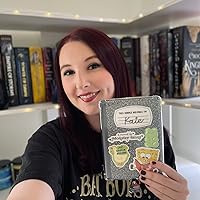
July 17, 2026
Audiobook 4 stars!
Dracula’s Brides + Gothic Horror + Sapphic + Dual Timelines
This story follows two timelines, one with women who go on a trip to visit Dracula and stay at his mansion in an isolated part of town, and one with a survivors of the visit who escaped Dracula’s clutches.
This story touches on the impossibility for queer relationships during the time period as well as women owning property and living independently.
I found this story to be fascinating. I liked the dual timeline idea, however it was a tad confusing to keep track of while listening on audio. I would recommend the physical or ebook version instead.
The narrators voices were great, I especially enjoyed the male narrators voice, it was such a pleasant British accent.
This was sent to me on NetGalley. All thoughts and opinions are my own.
Dracula’s Brides + Gothic Horror + Sapphic + Dual Timelines
This story follows two timelines, one with women who go on a trip to visit Dracula and stay at his mansion in an isolated part of town, and one with a survivors of the visit who escaped Dracula’s clutches.
This story touches on the impossibility for queer relationships during the time period as well as women owning property and living independently.
I found this story to be fascinating. I liked the dual timeline idea, however it was a tad confusing to keep track of while listening on audio. I would recommend the physical or ebook version instead.
The narrators voices were great, I especially enjoyed the male narrators voice, it was such a pleasant British accent.
This was sent to me on NetGalley. All thoughts and opinions are my own.
Displaying 1 - 30 of 481 reviews