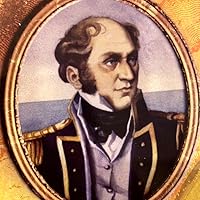
G. M. Trevelyan's eminence among historians has received world-wide recognition, and the Bloodless Revolution is a subject within the period of English history to which he devoted many years of special study. His accomplishments both as an exact scholar and as a writer of exceptional ability have given this book a two-fold importance: it is a piece of literature as well as an outstanding contribution to historical inquiry.
George Macaulay Trevelyan, OM, CBE, FRS, FBA, was an English historian. Trevelyan was the third son of Sir George Trevelyan, 2nd Baronet, and great-nephew of Thomas Babington Macaulay, whose staunch liberal Whig principles he espoused in accessible works of literate narrative avoiding a consciously dispassionate analysis, that became old-fashioned during his long and productive career. Contemporary E. H. Carr considered Trevelyan to be one of the last historians of the Whig tradition.
Many of his writings promoted the Whig Party, an important aspect of British politics from the 1600s to the mid-1800s, and of its successor, the Liberal Party. Whigs and Liberals believed the common people had a more positive effect on history than did royalty and that democratic government would bring about steady social progress.
Trevelyan's history is engaged and partisan. Of his Garibaldi trilogy, "reeking with bias", he remarked in his essay "Bias in History", "Without bias, I should never have written them at all. For I was moved to write them by a poetical sympathy with the passions of the Italian patriots of the period, which I retrospectively shared."
Historians go in and out of fashion as much as periods of history. Manning Clark is barely mentioned and hardly read these days, and yet at the time of Australia's Bicentenary he was lionized by the country. There are so many others too - E.H. Carr, A.J.P. Taylor, and the author of the work under review here, G.M. Trevelyan. It would be interesting to read a "history of the historians", that looked at how fashion and the change in societal mores moves a historian from flavour of the month to the dusty end of the second-hand bookshop - where Trevelyan is now no doubt Schama and Ferguson will be tomorrow - each age must write its own histories, or so it seems.
Trevelyan wrote The English Revolution at a time when it was clear that European despotism was threatening England, and he points out that 1688 had some similarities with his own time. The French were looking to aggressively destroy Protestantism in Europe, and with the ardently Roman Catholic James II on the throne of England, seemed to have garnered an ally in the cause.
However, James II chose incorrectly. Every time. He rode roughshod over Parliament, angering those Tories who were his natural supporters; he tried to ally himself with dissenters, who could see through his chicanery, knowing he only relaxed the right for them to worship to further his Catholic ambitions and so were not inclined to support him; and did not even gain the support of many English Catholics, who were concerned that by connecting themselves to him they might suffer at the hands of the rest of the population.
So it was that a hitherto unthought-of alliance of Tories and Whigs, High Church and Dissenters, rallied around William and Mary when they landed on English Shores, and James yet again made a wrong decision and flew off to France, never to return.
The Revolution meant different things to different participants and different places. In England itself, the Revolution forever affirmed the primacy of Parliament over the Monarchy, and allowed for some freedom of religious worship. It spawned the beginnings of parliamentary parties, of Ministers of the Crown, and of the British way of non-interference in people's personal lives.
This result did not attain, however, in Scotland or Ireland. In the former, the religious toleration south of the border was not replicated, and in the Highlands in particular the feeling that William was not a legitimate King led to the Jacobite revolts that occurred for the next 50 years. Ireland in theory should have fallen for James, but he mis-managed his allies there, and brutal repression of the populace followed.
Trevelyan has written a good, basic introduction to the Revolution in this book, with enough background for those needing to be filled in on the situation before 1688. His view was that the Revolution was a great moment in English history, which allowed the Empire to flourish and for England to defeat France and ensure that Europe's history moved toward democracy. This book was written as part of the "Home University Library", versions of which flourished during the first half of the Twentieth Century. While not being a replacement for a University Education, the noble intent of these volumes was to provide - for those that couldn't attend University - a way of becoming familiar with a topic to a level of some seriousness. Quite often the books were well-written, by knowledgeable men (they were mostly written by men) - from memory the book on Marx was written by Isiah Berlin, for example.
There are probably more up-to-date books one could read on this topic, but if you happen upon this volume in your travels, it is a useful introduction.
Dealing with the complicated political and religious issues with a deft hand, and employing beautiful prose, Trevelyan's work is still the go-to volume for a brief yet thorough narrative of the Glorious Revolution and its long-term effects on Britain, including Scotland and Ireland.
'The expulsion of King James was a revolutionary act, but otherwise the spirit of this strange Revolution was the opposite of revolutionary. It came not to overthrow the law but to confirm it against a law-breaking King'.
A short work in Trevelyan's characteristic limpid Whiggish prose providing an outline of the Glorious Revolution. A helpful summary of how the Wars of the Three Kingdoms finally concluded and the roots of the constitutional freedoms we enjoy today.
You can put up with a Roman Catholic monarch in a Protestant nation if you know he will be suceeded by a staunchly Protestant daughter. But if he then has a son, who will be raised Roman Catholic, everything changes.
James II wanted to push his religion on a nation unwilling to respond. Subverting the Test Acts by placing Roman Catholics in positions of responsibility, and expecting the Church of England to approve of this, resistance came from an unexpected quarter. Seven bishops refused to allow the reading of a Declaration of Indulgence (allowing freedom of worship to both Roman Catholics and Dissenters) to be read in churches of their dioceses. When they were acquitted of treason the stage was set for both High Church Tories and latitudinarian Whigs to invite William III to England.
James II was allowed to flee to France and a Convention invited William and Mary to take over. That Convention in 1688, and subsequent parliaments, then set up a constitution that served England until the Great Reform act of 1830. The fundamental changes were:
- no longer did the king get a perpetual grant of funds. He was dependent on annual votes of parliament.
- no standing army was allowed. It too depended on an annual parliaments
- the king could no longer replace judges at whim
- The Act of Toleration permitted freedom of worship to Trinitarian Dissenters put England on a par with The Netherlands as two countries far more tolerant than anywhere else in Europe.
The fundamental rebalancing of Crown and parliament settled constitutional tensions and enabled England to engage again in Continental affairs preventing French dominance and securing Dutch independence.
The book finishes with chapters on the settlements in Scotland, where there were no Tories so the presbyterians finally achieved victory, and Ireland where the doughty presbyterian defenders of Protestantism as well as the Roman Catholics found themselves an English colony with all the grievances that gave rise to.
Originally written in 1938 Trevelyan's final words provide a challenge to continue standing on the choices made in the Glorious Revolution against the absolutisms threatening European peace at the time. Let us hope that our societies remain clear-eyed about the origins and basis of our freedoms in the challenging years ahead.
It's fine if you can't find anything else on the subject. It was written in 1938, which is really beyond the threshold for what I usually accept when reading histories. It's not a long book and yet Trevelyan still manages to divert into talking about the inferiority of "the Southern Europeans."
I'd recommend Peter Ackroyd's Rebellion: The History of England from James I to the Glorious Revolution over this, even though that book went offtrack at points. At least that one was written after the Civil Rights movement.
A clear, simple narrative that tells the essential story of the Glorious Revolution. It's weird to read an early 20th century historian in the early 21st century. Trevelyan has no doubts about what happened or who the villains were, and doesn't have much to say about sources or evidence.
I was impressed by this slim volume. I normally find British history rather stuffy and dull. This kept my attention and explained the complicated interrelationships of factions in a clear and compelling manner. I feel much better informed on a subject that was wholly muddled to me.
This is one of the books I lost in the flood of '08 (sniff). What a great work on the "cold war" of Catholic/Protestant relations and blossoming of the constitutional monarchy in 17th century England. Trevelyan’s biased - in favor of the whigs. But who cares? He’s such a FANTASTIC read. Okay, I admit it. I really, really like reading about Stuart England. But that’s not enough for me to rate the book as highly as I do. Trevelyan’s enthusiasm for the material is obvious and contagious. He’s not only a historian. He’s a master in wordcraft, and here he’s managed to craft a little jewel. This is what happens when talented people follow their passion: They write terrific, weenie books that make other people happy.
La revolución gloriosa de 1688, mucho menos conocida y mencionada que la revolución francesa (de 100 años después) es sin lugar a dudas un gran hito histórico. El derribamiento de Jacobo II en un tiempo en que Europa estaba profundamente dividida por luchas religiosas y en que Francia dominaba el escenario, fue clave en el surgimiento del estado moderno y el desarrollo británico. Los cambios políticos que impusó esta revolución incruenta, significaron el sometimiento de la monarquía al parlamente y generaron la semillas de muchas de las reformas que sentaron las bases de la democracia parlamentaria moderna. Asimismo permitieron el desarrollo de condiciones que consagraron derechos y libertades individuales, que sería parte importante del desarrollo británico y del mundo.
Trevelyan's account of the revolution is masterful, delicately maneuvering through the complicated events that led up to the expulsion of James and the coronation of William. Equally insightful is his interpretation here on the legacy of the revolution which, if I may sum it up shortly, is essentially that the Glorious Revolution put Britain on a path which gradually allowed the House of Commons to gain ascendancy over the Peers and the King.