Jump to ratings and reviews
Rate this book

In the Hollow of the Wave

Rate this book
A hand-stitched seascape of words and images from an award-winning writer.

In the Hollow of the Wave is a collection of contemporary poetry that weaves together personal memory, cultural heritage, and the natural world. Nina Mingya Powles explores themes of identity, place, and loss through experimental forms and visual elements, creating a unique reading experience.

This collection is for readers who

Poetry that pushes boundariesExploring themes of diaspora and identityImmersive and evocative languageDiscover a world where words and images intertwine to create a powerful and moving exploration of what it means to belong. Powles's work resonates with readers seeking connection, reflection, and a deeper understanding of themselves and the world around them.

104 pages, Kindle Edition

First published July 24, 2025

Loading...
Loading...

About the author

Nina Mingya Powles

15 books232 followers

Ratings & Reviews

What do you think?
Rate this book

Friends & Following

Create a free account to discover what your friends think of this book!

Community Reviews

5 stars
33 (44%)
4 stars
31 (41%)
3 stars
7 (9%)
2 stars
3 (4%)
1 star
1 (1%)
Displaying 1 - 15 of 15 reviews
Profile Image for Femke.
53 reviews1 follower
September 4, 2025
Read this to my new cat in the evenings in an effort to get him to be less scared of me. After a week he is indeed slightly less scared of me, so who knows, maybe this book did the trick! Always very lovely poetry, this collection feels like being bundled up in a quilt that was touched by many hands.
Profile Image for Lily.
13 reviews
August 22, 2025
I love her writing in any form. I feel like I am reading about my own emotions (if they were eloquently worded) especially when the Welly moana or earthquakes are discussed. Brb checking geonet now
Profile Image for Marcus Hobson.
765 reviews120 followers
July 6, 2025
Although I read all the time, I’m a very visual person and I love art and images. Poetry is one of the most vivid forms of writing, but imagine my delight when I discovered that this new book of verse contains pictures as well as words. And two sorts of pictures – some providing background for strips of words superimposed over the top, like strips of embossing tape, and the others as actual pictures, often composites of many small squares with multiple variations. Both types of picture bring a different vibe to the collection and help to make it unique.
The words themselves come in a variety of shapes and formats. I always admire creative use of both the blank page and also the white space that remains once you have applied the words. This is a visual feast for the eyes, so many shapes and different uses of the page.

The collection is divided into four very distinct pieces, each with its own unique look and feel. Themes run throughout the book, but these divisions begin with a woven thread which leads to titles such as Slipstitch, patchwork, backstitch, layering and patterning. This is the section that is rich with pictures. We have composite pictures made up of small cut squares of material, the edges a little frayed and strands of cotton weaving out of the square symmetry. Against the poem ‘layering’ the design gets larger, becoming a rectangle of eighteen small squares, all blue but with a variety of patterns.
I lay strips of pale peach cotton and cloud-printed cloth side by side.
Each becomes a strange, asymmetric quilt block.
Each block like a sentence, each sentence an island, all the islands loosely touching.

Next to another rectangle is a new form of poem call ‘patterning’ and a new set of pictures, some blue and some sunset-pink. These are pictures rather than pieces of fabric; photos of sky and clouds and ocean. There are blue hills and low clouds in an abstract arrangement, sometimes set on their sides. It is very appropriate to pair this with the poem ‘patterning’. The poet provides us with an explanation:
A ‘Germination’ is a poetic form invented by Natalie Linh Bolderston, where each stanza can be read from left to right as well as from top to bottom within each triangle.

There are nine of these triangular stanzas on the page, in rows of three. They all have six words, one on the top line, two in the middle and three at the bottom. Here is an example:
brittle
river seams
the waves stitched
The poem entitled “search?keyword=borneo” is fascinating as an alphabetical listing of words and associations, starting with adze and armband, through charm and chords to hair-pin, hawk-bill and human skeletal remains. I turned the page thinking we might continue on from ‘h’, but that was all. It is rather like a list of images – each word comes with a picture of an object in your mind. Some of the lines pair objects, such as “arrow; dart” or “chord; thread”. Although the keyword search was for Borneo, in reality there are not many items listed that take you specifically to the place. I found myself slipping into my own memories of early-medieval artefacts that I studied many years ago. Apart from the word dart paired with arrow, I could link them all to European archaeology as much as Borneo. Each word a noun, complete with picture in my head. We all bring our own history to a poem.
But I do find a kind of continuation over the page, because the last item “human skeletal remains” is carried over as a reference about a skull from Borneo which is bound by rattan. This reads like a museum index card for an item in their collection, with its size and provenance. Who donated it and where they got it from. The rattan cloth holds the lower jaw in place. The title of the poem “A weaver’s dream seeps into the body of the cloth” then seeps into the next poem, where flowerheads are used to make dye, the memory extracted and used to soak into the cloth. Lovely simple imagery of the spinning of memories, such as this wonderful line:
Begin to learn the language of knots, which carries the dreams of trees and rivers of the past.

“A gown is a glacier, receding” is a ten page poem of great simplicity and also complexity. The gown in question is a qipao, which echoes the same two ideas of simplicity and complexity. The gown becomes a glacier, geological formations, a museum exhibition, a flower or a kelp forest. It stands for the exploitation of the young workers in the factory where the dress was made. A poem of contradictions.
Wearing the qipao is both restrictive and freeing, the hot pink working as a kind of deflective shield.

In the “Spell of the Red Flowers” there are nine pages of text, each has a block of justified words which form a perfect rectangle on the page. Each block of text is a similar size, varying in length from each other by no more than two or three lines. They are an echo of the block pictures. Familiar themes; earthquakes, flowers, volcanos, race. The Japanese artist Yayoi Kusama dominates with her images of red flowers and pumpkins. We are also with a group of schoolchildren, out collecting words for river poems. There is a lovely narrative flow through the blocks, like the river which I imagine has been constrained into an urban environment.
How many poems have
been written about this stretch of river? About
the concrete forms built to hold the river’s past
and present shapes, its future rising selves?

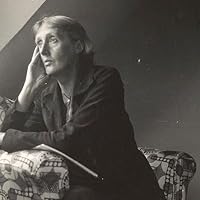
The last section in the book is called “The Heart Works Harder” and is not constrained into a particular form but ranges widely across different styles and techniques, using inspiration from works by Virginia Woolf and Sylvia Plath, or the more everyday use of a recipe from a cooking blog.

“In the Hollow of the Wave” is a brilliant and varied collection, it wins points for range of themes, variation in the way the poems are presented and for leaving you with a sense that you have travelled alongside the poet on a fascinating journey.
27 reviews
April 19, 2026
reading some poetry after quite some time.. got this one as a gift from sanj... reallyyy beautiful, i liked it.. will definitely come back to some of these pieces :)
73 reviews
March 5, 2026
This almost certainly says more about me than about Nina Mingya Powles’ poetry, but I found the experience of reading this collection pretty frustrating. Much of her work alludes to the works of other artists, creators (or even in one case to cooking a specified recipe) using imagery and memories that are deeply autobiographical. Most of the other works referenced were unknown to me. I really struggled to establish any meaningful handhold, or to gain any sense that something universal was being explored.
Profile Image for S P.
746 reviews124 followers
May 20, 2026
sunprint
In the garden in late spring, I lay squares of chemically treated cotton on the paving stones.

Working quickly (working against the light) I placed dried kōwhai petals, scraps of lace and seashells on the pieces.

Where sun touches cloth, a new indigo appears.

The wind picks up in the gap between shadow and the formation of memory. (19)

dear blue,
Dear cotton imprint of a droplet ~ Dear
river encased in snow ~ Dear tender
markings of a seedpod ~ Dear brushed
seafoam ~ Dear knotted current ~ lost
inky ballpoint fieldnote ~ cracked
silken hemisphere ~ fraying unhemmed
dress ~ frozen algal bloom ~ late winter
swirling weather system ~ Dear
subterranean fernery of dreams ~ Dear
language of cloud fragments I used to
know ~ (24)

from A gown is a glacier, receding
a pleat is a faultline
a pleat is a form of architecture
a pleat is an abrupt geological formation
a pleat must lie outside the borders of gender
a pleat is a sentence written by hand on folded paper (56)
Profile Image for Erin Mary.
51 reviews3 followers
July 20, 2025
a beautiful collection of poems about nature, sewing, orientalism and belonging. a lot of this work was creative responses to art work which i found really interesting and haven't come across before!

𝘋𝘦𝘢𝘳 𝘳𝘪𝘷𝘦𝘳, 𝘮𝘺 𝘣𝘰𝘥𝘺 𝘱𝘰𝘴𝘴𝘦𝘴𝘴𝘦𝘴 𝘬𝘯𝘰𝘸𝘭𝘦𝘥𝘨𝘦 𝘰𝘧 𝘵𝘩𝘪𝘯𝘨𝘴 𝘣𝘦𝘧𝘰𝘳𝘦 𝘐 𝘬𝘯𝘰𝘸 𝘵𝘩𝘦𝘮 𝘮𝘺𝘴𝘦𝘭𝘧.

some poems reminded me of a book i read at the height of the pandemic titled 'cusp: feminist writings on bodies, myth and magic'. it was something about how nina captured anxiety and fear that reminded me of a nightmare i had about veins after reading cusp.
104 reviews
August 18, 2025
Love her writing, poetry and essays, so evocative of the places she's lived and visited. I really appreciate the interweaving of different art media into this collection, particularly the focus on garments and fabrics, as I know Mingya Powles is an avid sewer. Can smell in the salt in the air when she writes about the ocean, and love her descriptions of gardens, plants, flowers and trees.
Profile Image for ✰matthew✰.
882 reviews
August 24, 2025
a really interesting collection, lots of different topics are mentioned including art, textiles, nature and food.

the multimedia pieces included are a welcome addition.

the authors writing style is always absolutely beautiful and i underlined so many lines because of this.

having now read all of this authors books i’m intrigued to pick up whatever comes next.
Profile Image for Kelly (kellyinbookland).
327 reviews35 followers
August 20, 2026
2.5 stars.

I read this for day 18 of the Sealey challenge 2026 (if you don’t know what Sealey is - check out there insta but it’s basically 31 poetry/verse books in the 31 days in August).

I would have maybe enjoyed/understood more if these poems had I been interested more in art. Not really my vibe however I did enjoy the ones based in nature.
Profile Image for Brecon.
80 reviews16 followers
December 30, 2025
‘But memory is a house with scraped white walls. / I step inside and choose what to take, what to leave behind.’
Profile Image for Catherine Wilson Garry.
Author 4 books11 followers
January 23, 2026
I absolutely adore Mingya Powles's skill with imagery. Even when abstract, it's impossible not to feel like you are completely entering the world of her poems. This was sublime.
Profile Image for Tom.
508 reviews6 followers
May 9, 2026
I just didn't get these poems at all: I gave up on p50.

And I genuinely don't know who this book is aimed at.

Am I missing something really important? If so, I'm happy to do without it.
Displaying 1 - 15 of 15 reviews