

What do you think?

Durdane #1-3 omnibus
Durdane: Trilogia degli Asutra
Il pianeta Durdane è stato colonizzato migliaia di anni fa da vari gruppi di persone che volevano sfuggire a una Terra troppo meccanizzata, e col passare dei secoli è diventato il regno di ogni sorta di comunità eccentriche. La parte più civile del pianeta è tradizionalmente governata dall'Anome, un individuo che non rivela mai la propria identità, e che vive in mezzo al popolo, distribuendo premi e punizioni immediate. Il protagonista di questo romanzo è un giovane musicista, Gastel Etzwane, che scopre un grave pericolo che minaccia la sua regione: un'invasione di esseri simili all'uomo, ma non del tutto umani. I suoi appelli cadono nel vuoto, e in breve comprende che per salvare tutto il suo pianeta dovrà impadronirsi dei poteri dell'Anome e sostituirsi a lui. Iniziano così le avventure del musicista Etzwane e del terrestre Ifness: avventure che li porteranno a sciogliere gradualmente i misteri di Durdane... e ad affacciarsi sui misteri, assai più vasti, della comunità stellare che li circonda.
523 pages, Paperback
First published January 1, 1971
About the author
Jack Vance
807 books1,648 followersAka John Holbrook Vance, Peter Held, Ellery Queen, Alan Wade.
John Holbrook Vance was an American writer widely celebrated for his imaginative contributions to science fiction, fantasy, and mystery literature. Over a career that spanned more than six decades, he became known for richly detailed worlds, inventive language, and stories that combined adventure with sharp social observation. His work influenced generations of speculative fiction writers and helped expand the literary possibilities of the genre. Vance wrote more than sixty books and numerous short stories, many first appearing in science fiction magazines before later being expanded into novels and collections. His fiction was widely translated and developed an international readership.
Vance grew up in California and spent part of his youth on a ranch near the Sacramento River delta, where he developed a love of the outdoors and an appetite for reading. The family experienced financial hardship during the Great Depression, prompting him to take a variety of jobs before completing his studies at the University of California, Berkeley. During these years he worked in several trades and cultivated interests in music, travel, and sailing, experiences that later informed many of the settings and themes in his fiction. Before becoming a full-time writer he held numerous occupations, including shipyard worker, merchant seaman, carpenter, and surveyor.
His earliest published story appeared in the mid 1940s in a science fiction magazine, marking the beginning of a long writing career. Throughout the following decades he produced stories across multiple genres, though he became best known for science fiction and fantasy cycles that combined imaginative settings with elaborate cultures and social systems. Among his most famous works are The Dragon Masters and The Last Castle, both of which received Hugo Awards. The Last Castle also earned the Nebula Award, confirming Vance's reputation as one of the most distinctive voices in speculative fiction. His fantasy trilogy Lyonesse later received the World Fantasy Award, while his memoir This Is Me, Jack Vance! earned another Hugo decades later.
In addition to speculative fiction, Vance wrote several mystery novels, some under pseudonyms including Ellery Queen. These works often blended crime elements with psychological or social themes and sometimes anticipated ideas that later appeared in his science fiction. His storytelling frequently emphasized cultural conflict, moral ambiguity, and intricate social customs rather than large-scale warfare, setting him apart from many contemporaries in the genre.
Vance maintained close friendships with other science fiction writers and participated in literary communities that shaped postwar American speculative fiction. He traveled widely with his family and spent extended periods abroad, experiences that influenced the exotic settings and cosmopolitan tone found in many of his books. Music also played a role in his life and writing, reflecting his long-standing enthusiasm for traditional jazz.
Despite gradually losing his eyesight later in life, Vance continued writing with the aid of specialized software and completed both fiction and autobiography in his later years. Over time his reputation grew steadily, and he received numerous honors, including the World Fantasy Award for Life Achievement and recognition as a Grand Master by the Science Fiction and Fantasy Writers of America. Critics and fellow writers often praised his distinctive style, wit, and imagination, and his stories remain widely read within the science fiction and fantasy community.
John Holbrook Vance was an American writer widely celebrated for his imaginative contributions to science fiction, fantasy, and mystery literature. Over a career that spanned more than six decades, he became known for richly detailed worlds, inventive language, and stories that combined adventure with sharp social observation. His work influenced generations of speculative fiction writers and helped expand the literary possibilities of the genre. Vance wrote more than sixty books and numerous short stories, many first appearing in science fiction magazines before later being expanded into novels and collections. His fiction was widely translated and developed an international readership.
Vance grew up in California and spent part of his youth on a ranch near the Sacramento River delta, where he developed a love of the outdoors and an appetite for reading. The family experienced financial hardship during the Great Depression, prompting him to take a variety of jobs before completing his studies at the University of California, Berkeley. During these years he worked in several trades and cultivated interests in music, travel, and sailing, experiences that later informed many of the settings and themes in his fiction. Before becoming a full-time writer he held numerous occupations, including shipyard worker, merchant seaman, carpenter, and surveyor.
His earliest published story appeared in the mid 1940s in a science fiction magazine, marking the beginning of a long writing career. Throughout the following decades he produced stories across multiple genres, though he became best known for science fiction and fantasy cycles that combined imaginative settings with elaborate cultures and social systems. Among his most famous works are The Dragon Masters and The Last Castle, both of which received Hugo Awards. The Last Castle also earned the Nebula Award, confirming Vance's reputation as one of the most distinctive voices in speculative fiction. His fantasy trilogy Lyonesse later received the World Fantasy Award, while his memoir This Is Me, Jack Vance! earned another Hugo decades later.
In addition to speculative fiction, Vance wrote several mystery novels, some under pseudonyms including Ellery Queen. These works often blended crime elements with psychological or social themes and sometimes anticipated ideas that later appeared in his science fiction. His storytelling frequently emphasized cultural conflict, moral ambiguity, and intricate social customs rather than large-scale warfare, setting him apart from many contemporaries in the genre.
Vance maintained close friendships with other science fiction writers and participated in literary communities that shaped postwar American speculative fiction. He traveled widely with his family and spent extended periods abroad, experiences that influenced the exotic settings and cosmopolitan tone found in many of his books. Music also played a role in his life and writing, reflecting his long-standing enthusiasm for traditional jazz.
Despite gradually losing his eyesight later in life, Vance continued writing with the aid of specialized software and completed both fiction and autobiography in his later years. Over time his reputation grew steadily, and he received numerous honors, including the World Fantasy Award for Life Achievement and recognition as a Grand Master by the Science Fiction and Fantasy Writers of America. Critics and fellow writers often praised his distinctive style, wit, and imagination, and his stories remain widely read within the science fiction and fantasy community.
Ratings & Reviews
Friends & Following
Create a free account to discover what your friends think of this book!
Community Reviews
Displaying 1 - 11 of 11 reviews

September 26, 2026
Jack Vance, my favorite author, balloon-popper extraordinaire, loves to deflate all sorts of things. In this trilogy, the tropes of the space opera, the planetary romance, the bildungsroman, the war novel, and the spy thriller are all viewed through the typically sardonic, nonchalant, expectation-crushing Vancean lens. SPOILERS AHEAD btw. But for the true Jack Vance fan, nothing that follows should be any surprise. There are a lot of balloons to be popped in Durdane, both figurative and literal.
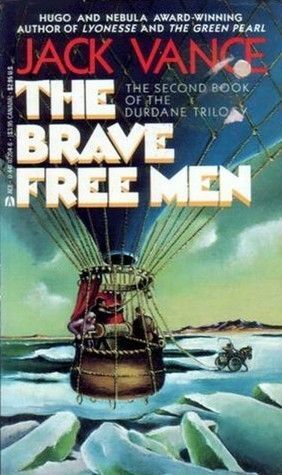
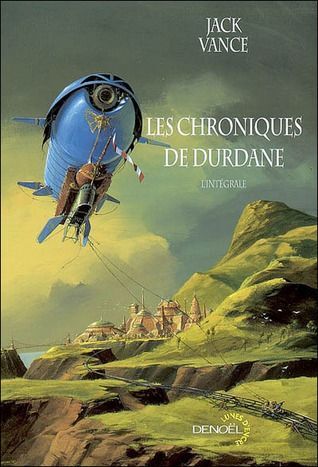
Gastel Etzwane lives in a particularly awful village in the land of Shant, on the planet Durdane. Shant is separated into cantons and a handful of cities, each with its own rigid traditional political systems and and often eccentric social mores. Crime is low and life is relatively peaceful in this land, because any transgression against a local law could potentially result in death, as the bizarre strictures of each place are upheld anonymously by The Faceless Man (aka The Anome) who can explode the torc that each denizen is forced to wear upon reaching adulthood. Gastel's journey across Shant - mainly via balloon - begins before he receives his torc; he leaves his repulsively misogynist, purity-obsessed canton to travel to Shant's capital city. There he plans to meet with The Anome and advocate for his mother, who has been entrapped within an endless indentured servitude.
One might expect that the book would portray a host of fascinating cultures, due to past narratives of this sort and Vance's own skills at creating highly differentiated and insular societies. A history is provided, but no such pan-cultural survey occurs. It is as if the disgust that both Gastel and Vance feel at such a system resulted in a marked lack of interest in going into much detail about the various cultures, each of which promotes provincialism, authoritarianism, and the following of an extensive array of nonsensical rules. The disdain is palpable (and actually make the book somewhat less enjoyable than similar novels written by the author). As the trilogy progresses, it is first revealed that there is an alien invasion occurring which these cantons are almost entirely incapable of handling, and later it is understood that there is a second race that is puppeteering both the aliens who have come to Durdane and certain humans who are in key positions of power.
Balloons Popped
The Bildungsroman: young Gastel does suffer a deep emotional loss during the first book. But our hero doesn't particularly mature over time - he was mature from the start; he does become increasingly cynical about human nature. He never ends up accepting Shant's society; instead, he upends it after taking over the role of the Faceless Man. This isn't a study of a slowly dawning acceptance of society's values; it is a surprisingly low-key tale of revolution. And yet, by the post-revolutionary end of the trilogy, after his society's shackles have been literally removed, he remains dissatisfied with life on Durdane and longs to leave. It should also be said that there is no romance whatsoever in these books, just a few attractive young women who pass briefly through Gastel's life.
The Planetary Romance: during his journey, Gastel meets the trilogy's second most important character: Ifness, a researcher from Earth's Historical Institute. Ifness appears to have marginal interest in Shant and the world of Durdane; he is mainly obsessed with the office politics of his workplace back on Earth. His driving ambitions: to attain increased status and to humiliate his supervisor. He expresses little wonder at this strange world; Ifness studies Durdane as an accountant would study numbers. In his first scene, he declines to save the child Gastel from his tormentors; in his last, he declines to bring offworld our glum hero Gastel, now a young man who has utterly changed how rule of law is practiced in his country. Throughout, Ifness is mainly charactered by a serene disinterest in anything other than a tasty alien dish or any curious item that he could bring back with him to Earth in order to gain more clout. Durdane does not particularly fascinate him. And yet, he is responsible for basically saving this planet from further alien attack.
The Spy Thriller: in the second novel, Gastel travels across Shant to rally the cantons against an alien horde that kills men and captures/rapes/impregnates women. During the journey, he realizes a spy has been working against him and with the aliens. How, why, who? Gastel takes the length of the novel to put his suspicions together and finally, climactically, makes his case and his accusations. Which are summarily dismissed by the suspect, who successfully shoots down each of Gastel's accusations in the space of a couple of paragraphs. Thrills are decidedly minimal and Gastel reacts with a weary sigh at the waste of time his novel-length investigation has led to. The identity of the actual spy is eventually discovered in an almost offhand fashion, and the spy is given a perfunctory exit.
The War Novel: after Shant goes to war against alien invaders, nearly every skirmish on land is a predictable affair resulting in the slaughter and decimation of one side. The warrior tribe most on display becomes apathetic and ineffective after capture; their leader - a generous and rather noble fellow whose aim is to rescue the women of his tribe that have been enslaved - inexplicably runs amuck and is briskly dispatched by Gastel. The entire mission of this tribe and of Gastel to 'save the women' ends in the confines of a muddy off-world slave camp that is less brutal and more exceedingly boring. Gastel's tormenter in the concentration camp is an elderly bully who is easily cowed. Gastel eventually takes the opportunity to rally his fellow prisoners to escape this tedious planet; in the end, it turns out that the escape was so easily accomplished because the alien captors were facilitating their prisoners' journey back home - due to the terms of an off-planet agreement made between Earth and the aliens at war. Of which Gastel and the rest of the prisoners are completely unaware, due to language barriers.
The Space Opera: spaceship on spaceship violence between two alien races (with Durdane in the middle of this war) is rendered almost inexplicable to viewers of the conflict. The reasons for the conflict itself, including the goals and nature of the aliens on either side, are all completely misunderstood by Gastel. There are no thrilling rescues or battles that Gastel leads or is even a part of. The only place we visit off-planet is a repulsive, dull world of bogs and quagmires. The war is settled off-page by Earth's forces, who put a quick stop to all of the nonsense after they learn what's been going on. Gastel's hopes and dreams of an exciting life exploring the stars and visiting Earth are dashed by Ifness, who would rather not be saddled with some provincial whom he clearly views as only marginally intelligent. Wars between worlds turn out to be rather tedious; nothing on a galactic scale is happening, just parasites trying to control their hosts versus hosts who have learned to control their parasites. It's all rather dull and not a little gross. Certainly not operatic.
Jack Vance is masterful prose stylist. In this trilogy, he made a clear choice to de-beautify the worlds on display, to create an almost overwhelming feeling of banality. The writing itself is sleek and his trademark ultra-dry humor appears frequently. But the usual Vancean hallmarks of almost ostentatiously elegant prose (which I love) and witty wordplay (which I also love) are for the most part drained from these books. If Durdane were a person, that person would be dead inside. This is a trilogy that nonchalantly portrays slavery and atrocity and mass rape with a shrug; enslaved women are slaughtered alongside alien enslavers. Human slavers feature heavily in book two and they are alternately hapless and brutal; one and all think nothing of stealing and selling women and children - and perhaps keeping a couple of the younger women around the house for personal use. It's just the way of the world.
Potential romantic interests and noble savage allies are dispatched without ceremony, sometimes accidentally by our usually efficient hero, who does show some slight regret at the loss of life. He moves on quickly. There is a semi-intelligent, fox-like aboriginal race on Durdane who are able to use tools, wear certain items of clothing, perform tasks for humans, and to an extent speak with humans as well; their race is never explored in depth and their alternating use as servants, pets, or (horrifically) as sources of food or materials are remarked upon with scant interest and zero outrage. Confusing, stupid wars and the subjugation of natives and the enslavement of humans are all just facts of life, not worthy of comment, and certainly nothing to get exercised about. The Durdane trilogy is Vance at his most cynical and his most removed. And, perhaps, his most secretly scathing. Humans and the way they deal with, oh, everything, are only worthy of eyerolls.
Jack Vance Lists
Peak Vance
1. Lyonesse (trilogy)
2. Planet of Adventure (series)
3. Night Lamp
4. The Demon Princes (series)
5. Green Magic, Best of Jack Vance, Augmented Agent (short story collections)
6. Showboat World
7. Marune: Alastor 933
8. Emphyrio
9. Maske: Thaery
10. Ports of Call & Lurulu (duo)
11. The Last Castle
12. Galactic Effectuator
13. Son of the Tree
14. Space Opera
15. short stories not included in the collections above:
"The New Prime"
"Chateau d'If"
"Dodkin's Job"
Enjoyable Enough
16. Bad Ronald
17. Trullion: Alastor 2262
18. Big Planet
19. To Live Forever
20. The Gray Prince
21. Wyst: Alastor 1716
22. The Blue World
23. Durdane (trilogy)
24. The Houses of Iszm
25. The Brains of the Earth
26. The Languages of Pao
27. The Dragon Masters
28. Eight Phantasms, Dust of Far Suns (short story collections)
29. Vandals of the Void
30. The Many Worlds of Magnus Ridolph
31. The Five Gold Bands
need to reread:
- The Dying Earth (series)
- Cadwal Chronicles (trilogy)
need to read:
- Monsters in Orbit
- Slaves of the Klau
- all of his mysteries besides Bad Ronald
- a whole bunch of stories

Gastel Etzwane lives in a particularly awful village in the land of Shant, on the planet Durdane. Shant is separated into cantons and a handful of cities, each with its own rigid traditional political systems and and often eccentric social mores. Crime is low and life is relatively peaceful in this land, because any transgression against a local law could potentially result in death, as the bizarre strictures of each place are upheld anonymously by The Faceless Man (aka The Anome) who can explode the torc that each denizen is forced to wear upon reaching adulthood. Gastel's journey across Shant - mainly via balloon - begins before he receives his torc; he leaves his repulsively misogynist, purity-obsessed canton to travel to Shant's capital city. There he plans to meet with The Anome and advocate for his mother, who has been entrapped within an endless indentured servitude.
One might expect that the book would portray a host of fascinating cultures, due to past narratives of this sort and Vance's own skills at creating highly differentiated and insular societies. A history is provided, but no such pan-cultural survey occurs. It is as if the disgust that both Gastel and Vance feel at such a system resulted in a marked lack of interest in going into much detail about the various cultures, each of which promotes provincialism, authoritarianism, and the following of an extensive array of nonsensical rules. The disdain is palpable (and actually make the book somewhat less enjoyable than similar novels written by the author). As the trilogy progresses, it is first revealed that there is an alien invasion occurring which these cantons are almost entirely incapable of handling, and later it is understood that there is a second race that is puppeteering both the aliens who have come to Durdane and certain humans who are in key positions of power.

Balloons Popped
The Bildungsroman: young Gastel does suffer a deep emotional loss during the first book. But our hero doesn't particularly mature over time - he was mature from the start; he does become increasingly cynical about human nature. He never ends up accepting Shant's society; instead, he upends it after taking over the role of the Faceless Man. This isn't a study of a slowly dawning acceptance of society's values; it is a surprisingly low-key tale of revolution. And yet, by the post-revolutionary end of the trilogy, after his society's shackles have been literally removed, he remains dissatisfied with life on Durdane and longs to leave. It should also be said that there is no romance whatsoever in these books, just a few attractive young women who pass briefly through Gastel's life.
The Planetary Romance: during his journey, Gastel meets the trilogy's second most important character: Ifness, a researcher from Earth's Historical Institute. Ifness appears to have marginal interest in Shant and the world of Durdane; he is mainly obsessed with the office politics of his workplace back on Earth. His driving ambitions: to attain increased status and to humiliate his supervisor. He expresses little wonder at this strange world; Ifness studies Durdane as an accountant would study numbers. In his first scene, he declines to save the child Gastel from his tormentors; in his last, he declines to bring offworld our glum hero Gastel, now a young man who has utterly changed how rule of law is practiced in his country. Throughout, Ifness is mainly charactered by a serene disinterest in anything other than a tasty alien dish or any curious item that he could bring back with him to Earth in order to gain more clout. Durdane does not particularly fascinate him. And yet, he is responsible for basically saving this planet from further alien attack.
The Spy Thriller: in the second novel, Gastel travels across Shant to rally the cantons against an alien horde that kills men and captures/rapes/impregnates women. During the journey, he realizes a spy has been working against him and with the aliens. How, why, who? Gastel takes the length of the novel to put his suspicions together and finally, climactically, makes his case and his accusations. Which are summarily dismissed by the suspect, who successfully shoots down each of Gastel's accusations in the space of a couple of paragraphs. Thrills are decidedly minimal and Gastel reacts with a weary sigh at the waste of time his novel-length investigation has led to. The identity of the actual spy is eventually discovered in an almost offhand fashion, and the spy is given a perfunctory exit.
The War Novel: after Shant goes to war against alien invaders, nearly every skirmish on land is a predictable affair resulting in the slaughter and decimation of one side. The warrior tribe most on display becomes apathetic and ineffective after capture; their leader - a generous and rather noble fellow whose aim is to rescue the women of his tribe that have been enslaved - inexplicably runs amuck and is briskly dispatched by Gastel. The entire mission of this tribe and of Gastel to 'save the women' ends in the confines of a muddy off-world slave camp that is less brutal and more exceedingly boring. Gastel's tormenter in the concentration camp is an elderly bully who is easily cowed. Gastel eventually takes the opportunity to rally his fellow prisoners to escape this tedious planet; in the end, it turns out that the escape was so easily accomplished because the alien captors were facilitating their prisoners' journey back home - due to the terms of an off-planet agreement made between Earth and the aliens at war. Of which Gastel and the rest of the prisoners are completely unaware, due to language barriers.
The Space Opera: spaceship on spaceship violence between two alien races (with Durdane in the middle of this war) is rendered almost inexplicable to viewers of the conflict. The reasons for the conflict itself, including the goals and nature of the aliens on either side, are all completely misunderstood by Gastel. There are no thrilling rescues or battles that Gastel leads or is even a part of. The only place we visit off-planet is a repulsive, dull world of bogs and quagmires. The war is settled off-page by Earth's forces, who put a quick stop to all of the nonsense after they learn what's been going on. Gastel's hopes and dreams of an exciting life exploring the stars and visiting Earth are dashed by Ifness, who would rather not be saddled with some provincial whom he clearly views as only marginally intelligent. Wars between worlds turn out to be rather tedious; nothing on a galactic scale is happening, just parasites trying to control their hosts versus hosts who have learned to control their parasites. It's all rather dull and not a little gross. Certainly not operatic.

Jack Vance is masterful prose stylist. In this trilogy, he made a clear choice to de-beautify the worlds on display, to create an almost overwhelming feeling of banality. The writing itself is sleek and his trademark ultra-dry humor appears frequently. But the usual Vancean hallmarks of almost ostentatiously elegant prose (which I love) and witty wordplay (which I also love) are for the most part drained from these books. If Durdane were a person, that person would be dead inside. This is a trilogy that nonchalantly portrays slavery and atrocity and mass rape with a shrug; enslaved women are slaughtered alongside alien enslavers. Human slavers feature heavily in book two and they are alternately hapless and brutal; one and all think nothing of stealing and selling women and children - and perhaps keeping a couple of the younger women around the house for personal use. It's just the way of the world.
Potential romantic interests and noble savage allies are dispatched without ceremony, sometimes accidentally by our usually efficient hero, who does show some slight regret at the loss of life. He moves on quickly. There is a semi-intelligent, fox-like aboriginal race on Durdane who are able to use tools, wear certain items of clothing, perform tasks for humans, and to an extent speak with humans as well; their race is never explored in depth and their alternating use as servants, pets, or (horrifically) as sources of food or materials are remarked upon with scant interest and zero outrage. Confusing, stupid wars and the subjugation of natives and the enslavement of humans are all just facts of life, not worthy of comment, and certainly nothing to get exercised about. The Durdane trilogy is Vance at his most cynical and his most removed. And, perhaps, his most secretly scathing. Humans and the way they deal with, oh, everything, are only worthy of eyerolls.

Jack Vance Lists
Peak Vance
1. Lyonesse (trilogy)
2. Planet of Adventure (series)
3. Night Lamp
4. The Demon Princes (series)
5. Green Magic, Best of Jack Vance, Augmented Agent (short story collections)
6. Showboat World
7. Marune: Alastor 933
8. Emphyrio
9. Maske: Thaery
10. Ports of Call & Lurulu (duo)
11. The Last Castle
12. Galactic Effectuator
13. Son of the Tree
14. Space Opera
15. short stories not included in the collections above:
"The New Prime"
"Chateau d'If"
"Dodkin's Job"
Enjoyable Enough
16. Bad Ronald
17. Trullion: Alastor 2262
18. Big Planet
19. To Live Forever
20. The Gray Prince
21. Wyst: Alastor 1716
22. The Blue World
23. Durdane (trilogy)
24. The Houses of Iszm
25. The Brains of the Earth
26. The Languages of Pao
27. The Dragon Masters
28. Eight Phantasms, Dust of Far Suns (short story collections)
29. Vandals of the Void
30. The Many Worlds of Magnus Ridolph
31. The Five Gold Bands
need to reread:
- The Dying Earth (series)
- Cadwal Chronicles (trilogy)
need to read:
- Monsters in Orbit
- Slaves of the Klau
- all of his mysteries besides Bad Ronald
- a whole bunch of stories

December 13, 2024
I started reading Vance in January of 2011. He immediately became my favorite author and has remained as such ever since. Because he was so prolific, I felt only the need to go at a leisurely pace with new material. A few new books a year. A new series every other year, on average.
This brings me to the end of the journey I started back then. With the exception of a few of his stand alone detective novels I have now read all of his genre work. This was the last multiple volume series for me to tackle. While it is not his best, it is still very good. The third book seems quite the tonal break from the first two...there was a period near the end where I thought it was going to come together perfectly and it kind of missed the mark...but still an enjoyable read as Vance always is.
Being put in a reflective mood by having finished all of these multi-arc stories, I am now of a mind to rank them. Counting only settings/series that have multiple entries (and noting that The Gaen Reach is too vague to be a specific setting on its own as a concept) I would say:
1. The Dying Earth
2. The Demon Princes
3. Cadwal Chronicles
4. Lyonesse
5. Planet of Adventure
6. Durdane
7. Alastor
8. Big Planet
9. Ports of Call/Lurulu
Of course, this being Vance I enjoyed them all, so the lower ranked ones are only to be seen as low compared to the others.
I won't list all of the many many stand alone novels in order, but while I am ranking I would point out that my three favorites are:
1. The Moon Moth
2. The Blue World
3. Space Opera
From these lists I think we can see that the thing that drives me most to Vance is surreal imagery paired with cultural anthropology.
This brings me to the end of the journey I started back then. With the exception of a few of his stand alone detective novels I have now read all of his genre work. This was the last multiple volume series for me to tackle. While it is not his best, it is still very good. The third book seems quite the tonal break from the first two...there was a period near the end where I thought it was going to come together perfectly and it kind of missed the mark...but still an enjoyable read as Vance always is.
Being put in a reflective mood by having finished all of these multi-arc stories, I am now of a mind to rank them. Counting only settings/series that have multiple entries (and noting that The Gaen Reach is too vague to be a specific setting on its own as a concept) I would say:
1. The Dying Earth
2. The Demon Princes
3. Cadwal Chronicles
4. Lyonesse
5. Planet of Adventure
6. Durdane
7. Alastor
8. Big Planet
9. Ports of Call/Lurulu
Of course, this being Vance I enjoyed them all, so the lower ranked ones are only to be seen as low compared to the others.
I won't list all of the many many stand alone novels in order, but while I am ranking I would point out that my three favorites are:
1. The Moon Moth
2. The Blue World
3. Space Opera
From these lists I think we can see that the thing that drives me most to Vance is surreal imagery paired with cultural anthropology.

May 16, 2019
Book one begins with a Boy named Etzwane. The story here is about religious oppression from which our protagonist must escape (a staple Vance storyline). Broadly the story is about the boy escaping and growing up and wanting to gather the cash necessary to pay off his mother's indenture (enslavement) but in classic vance style the plot takes a bit of a left turn half way through and his mother is just killed by some random aliens. So the boy goes to find the head of state and find out why he is doing nothing about these aliens. Then he ends up in a battle of wits with this head of state and also finds an incognito earthman who decides to help him. A lot of random plot developments, a lot of plot threads that don't really pay off.
Book two is the most coherent of the three. Our protagonist Etzwane is now in charge of the government and is engineering a battle against the alien invaders and all the while trying to deal with figures who are entrenched in their institutions and oppose new leadership. This story chronicles Etzwane's choppy navigation of these issues and more or less ends with the defeat of the enemy, so it's a pretty solid, straightforward and satisfying story.
Book 3 is another random one which begins with Etzwane and his earthman colleague searching for... something I couldn't quite follow... An important mission anyway. About halfway through Etzwane is kidnapped by a different but connected group of alien antagonists and the story suddenly changes into some claustrophobic, war-time resistance POW type thing. When this story is resolved (through a combination of guts and verve and lazy random plot developments) it eventually becomes clear that Etzwane's earthman colleague was secretly and unwittingly arranging for Etzwane's imprisonment to be ended, thus invalidating Etzwane's seemingly successful struggle for freedom. The whole series is a frustrating and befuddling sequence of chaotic plot twists but book three takes the cake.
It's definitely one of the weaker vance series... I think my opinion of vance hasn't really changed. There are 2 fantastic series (Lyonesse and Dying Earth) which any SF fan should read. There are 2 pretty good series (Planet of Adventure, Demon Princes) which are worth reading if you liked the other 2. Then there are 3 slightly dodgy ones which are only worth reading if you have become a massive Jack vance fan (Cadwal, Durdane, Alastor). I enjoyed those 3 weaker series but I still would only strongly recommend the two really good series.
I've yet to delve into Vance's short story catalog which is apparently very strong but I always seem to be underwhelmed when I read the short stories of my favourite writers... Not my preferred format I suppose. Either way, I think my journey through the works of Jack vance must be coming to an end. If all that's left is going to be weaker than Durdane then it probably isn't worth proceeding...
Book two is the most coherent of the three. Our protagonist Etzwane is now in charge of the government and is engineering a battle against the alien invaders and all the while trying to deal with figures who are entrenched in their institutions and oppose new leadership. This story chronicles Etzwane's choppy navigation of these issues and more or less ends with the defeat of the enemy, so it's a pretty solid, straightforward and satisfying story.
Book 3 is another random one which begins with Etzwane and his earthman colleague searching for... something I couldn't quite follow... An important mission anyway. About halfway through Etzwane is kidnapped by a different but connected group of alien antagonists and the story suddenly changes into some claustrophobic, war-time resistance POW type thing. When this story is resolved (through a combination of guts and verve and lazy random plot developments) it eventually becomes clear that Etzwane's earthman colleague was secretly and unwittingly arranging for Etzwane's imprisonment to be ended, thus invalidating Etzwane's seemingly successful struggle for freedom. The whole series is a frustrating and befuddling sequence of chaotic plot twists but book three takes the cake.
It's definitely one of the weaker vance series... I think my opinion of vance hasn't really changed. There are 2 fantastic series (Lyonesse and Dying Earth) which any SF fan should read. There are 2 pretty good series (Planet of Adventure, Demon Princes) which are worth reading if you liked the other 2. Then there are 3 slightly dodgy ones which are only worth reading if you have become a massive Jack vance fan (Cadwal, Durdane, Alastor). I enjoyed those 3 weaker series but I still would only strongly recommend the two really good series.
I've yet to delve into Vance's short story catalog which is apparently very strong but I always seem to be underwhelmed when I read the short stories of my favourite writers... Not my preferred format I suppose. Either way, I think my journey through the works of Jack vance must be coming to an end. If all that's left is going to be weaker than Durdane then it probably isn't worth proceeding...
This entire review has been hidden because of spoilers.

July 23, 2013
It was a very fun and entertaining read. Vance is not the author to look for when craving for poetic language, clever playing with words and deep psychological / anthropolical or philosophical digging. It is, however, a story that pulls you through the book in full speed as the story develops quickly and is greatly imaginative from beginning to end. I enjoyed it.

April 10, 2018
Durdane Trilogy
The Anome
AKA: The Faceless Man and Durdane 1
The Anome is the first book of the three part Durdane series. It was first published in February, 1971 under the title The Faceless Man as a two part serial in The Magazine of Science and Science Fiction. It was released as a novel under the title The Anome in 1973. The Anome should be read first, followed by The Brave Free Men. It does not work well as a stand-alone novel. There is no resolution at the end of The Anome so the two novels should really be considered one work with The Asutra as a sequel. I do not find The Anome (or the Durdane series) to be among Vance’s really great works. But the Durdane series novels are well worth reading by Vance fans. Those who enjoy reading about the customs and cultures of unusual societies and alternative worlds might also want to explore this series. For readers unfamiliar with the writings of Jack Vance this would probably not be a good starting point.
For the most recent review and other Vance reviews please see:
https://vancealotjackvanceinreview.bl...
The setting for the novel is in the far future on the planet of Durdane which was colonized nine thousand years ago by people from Earth. The people on Durdane now have no contact with Earth and are not sure it even exists. Durdane is quite backward and has little technology with carriages and hot air balloons being used for transportation. The planet is composed of the regions Shant, Caraz, Palasedran and Beljamar. Our main character lives in Shant where citizens seem to know little about any of the people outside Shant. It is an irregular oblong 1,300 miles long and 500 miles wide that is composed of 62 cantons that are “in loose confederation under the rule of the Faceless Man.” The Faceless Man (formally referred to as the “Anome”) enforces all the laws of the 62 cantons so rules over all of Shant and is feared by the citizens. The Faceless Man also employs deputies who are known as Benevolences and Discriminators. He is called “faceless” because nobody, not even his deputies, know his real identity.
Different Faceless Men have ruled over Shant for over a thousand years and during their rule there has been no war and very little crime. But for citizens there is a high price to pay. When each person in Shant becomes of age, he or she is forced to wear a collar or "torc" around their neck. The torc can never be removed and will explode if an attempt is made to take it off. Each torc is specially coded so that the Faceless Man can locate every person who wears one. If a person is identified as having committed a crime then the Faceless Man can impart “justice” by remotely exploding the torc which usually results in decapitation of the persons head. Torcs are detonated “by means of coded radiation.” All citizens may petition the Faceless Man for a hearing or decision on issues of concern. Each canton has its own set of laws and The Faceless Man does not interfere with canton laws; he just enforces them. He also responds in writing to all citizen petitions submitted to him but has zero tolerance for any crime.
Every canton has its own local rulers, laws and culture. “The cantons of Shant were alike only in their mutual distrust.” Our main character lives in the town of Bashon in the canton called Bastern. Bastern is locally managed or ruled by an all-male religious cult run by the Ecclesiarchs. Followers of the Ecclesiarchs are called Chilites. The head of the Chilites is Grand Male Osso. Only some citizens of Bastern become Chilites. The Ecclesiarchs advocate religious practices focused on self-denial and purity but they do engage in the ritual use of a hallucinogenic drug. They consider all women and girls to be impure and have strict ascetic rules for its members who are initially called “Pure Boys.” Osso has even been known to berate others for even smelling a flower because he says it is a “female procreative organ of the plant.”
Our protagonist, a nine year old boy, is studying to become a Chilite. Initially his name is Mur but he chooses the new name of Gastel Etzwane after being initiated. Mur lives with his mother with whom he is very close. He never knew his father, who is a very famous wandering musician who abandoned his family. One day an old man gives Mur a stringed musical instrument called the Khitan and Mur begins to love playing music and finds music to be more appealing than being a Chilite although he initially tries to combine the two only to find out that the Ecclesiarchs and Chiltes are the only ones in Shant to abhor music, considering it sinful.
Initially Mur likes the idea of becoming a Chilite and defends their practices, denies it is a cult. His mother even defends their practices and laws telling him “If a person breaks Chilite law the Ecclesiarchs punish him. If he runs away, the Faceless Man takes his head.” “If you obey Chilite law, you need never fear the loss of your head.” But Chilite law is very strict with laws and rules that can easily be unintentionally violated because most of them make little sense. Mur is also something of a mischief maker and is not well suited to becoming a Chilite
After going through the purification ritual to become a Chilite, Etzwane visits his mother in her home, something forbidden for him to do. When Osso finds out about this he sends Etzwane’s mother to work as a indentured worker in the tannery as punishment for allowing Etzwane to visit her and thereby contaminating him with “womantaint.” Etzwane as his punishment is locked in a dungeon pending repurifcation rites.
Sending his mother to be a slave in the tannery and locking him up causes Etzwane to rebel against being a Chilite, however, and he manages to break out and flee. His plan is go to the city of Garwiy to petition the Faceless Man to free his mother from having to be indentured to work at the tannery. He also plans to become a wandering musician like his blood father. He does not have a torc yet so he can’t be beheaded but without a torc he also has no protection and can be kidnapped, clamped with a torc and indentured or sold into slavery anywhere in Shant. Etzwane is also certain that Osso will send ahulph trackers to try to find him to either capture him or kill him. Aulphs are creatures used for tracking that have “hairy dog-spider” heads noses in their feet to facilitate tracking. They have a “hairy dog-spider head,” noses in their feet to facilitate tracking and talons that can rip apart the person they are tracking.
Etzwane’s adventures include his development as a musician, petitioning of the Faceless Man for his mother’s freedom, meeting his father who does not know he even exists and dealing with the problem of large murderous human like creatures called Roguskhoi who attack Shant villages while raping and pillaging. Roguskhois are “a kind of mountain savage that can’t be controlled except by its yearnings for strong drink.” The Faceless Man’s minimizes their attacks and refuses to use a militia or other forceful means to control them. Etzwane also meets a man named Ifness who is an interesting and very mysterious character who plays a significant role in all three Durdane novels.
The beginning of The Anome has many strange names and details contained in a few pages but the story soon picks up and moves along. Also, there is no resolution at the end so readers when finishing it should begin reading The Brave Free Men for a satisfactory continuation of the story. I’ve read The Anome three times so far and enjoyed it even more each time. The first time I read it I rated it a 3 or “Liked it” but I now consider it a 4 “Really liked it.”
The Brave Free Men
The Brave Free Men was first published in 1972 in digest form in The Magazine of Fantasy and Science Fiction. Released in 1973 as a novel, this is the second book in the three volume Durdane Chronicles. It is a continuation of the story begun in The Anome and should be read after that book and not as a stand alone novel. This is the second time I have read this series and I liked each of the books even better after rereading. Although the three books are not the very finest Vance has written, I found them fascinating, easy to read and entertaining and recommended them to all Vance fans. The first book, The Anome, introduced most of the characters and had interesting revelations about the government, customs and culture of Slant. The Brave Free Men is more action oriented, continuing the story but focusing more on getting the corrupt government to work properly and motivating the citizens to actively defend themselves against the invading Roguskhoi. In The Brave Free Men the main protagonist, Gastel Etzwane, now has control over the Faceless Man and the government. He and his supporters must mobilize the entire country to defend themselves against the Roguskhoi who keep increasing the frequency and intensity of their attacks on the people of Shant. The Roguskhoi invade towns, killing all men and children and kidnapping the women. The citizens of Shant do not know where these monstrous humanoid creatures came from but suspect that a neighboring country might have created them from cloning to use as a weapon against the Shant. A single Roguskhoi can handle ten equally armed men in combat, but the Roguskhoi have only simple weapons such as clubs so the challenge is to invent and manufacture new more technologically advanced weapons that can turn the odds in the fight against the Roguskhois. Slant has also been without any wars for over a thousand years and has no military or combat trained citizens. The whole country must now mobilize to defend against the invading Roguskhoi. Rallying the citizens proves to be very difficult, however, because the people are extremely passive and have only known the dictatorial, highly centralized and controlled government of the Faceless Man who had total control over their lives but also protected them and kept things peaceful and crime free. When scientists, for example, are asked to invent new more advanced weapons to supplement their swords and crossbows, the scientists want to know exactly what weapons the Faceless Man wants. They are not use to thinking independently or being innovative or creative and expect detailed instructions on how to proceed. The citizens are use to the total control and protection of the Faceless Man and do not know how to take initiative, organize or defend themselves. Many of them are in situations similar to indentured servants with such low wages and high expenses that almost no workers ever pay off their debts to earn their freedom. The Brave Free Men is easy to read, interesting and bristling with action. There is enough resolution at the end of it that the third volume, The Asutra, could be considered optional reading. But I found The Asutra to be an intriguing continuation of the story and the most satisfying of the three books so advise reading it next. I think the Durdane Chronicles are underappreciated by some Vance fans because Vance created some marvelous works of genius that tower over almost everything else in the genre. The Durdane trilogy is not the very best of Vance but is certainly worth reading. I rated The Brave Free Men at a 4 "Really liket it."
The Asutra
The Asutra was first published in digest form in The Magazine of Science Fiction and Fantasy in 1973. It was released as a novel in 1974. This is the third volume of the Durdane Chronicles and builds upon the first two novels. These two initial books in the series (The Anome and The Brave Free Men) should be read one after the other because they are really one novel in two books. The Asutra is best read after reading the other two, but I read it the first time (this is my second reading of the series) as a stand alone novel, and it made sense by itself because the beginning of The Asutra briefly summarizes the previous two novels. The Asutra was for me the most interesting of the three novels although I enthusiastically recommend all three to any Vance fan. In The Asutra the main character, Gastel Etzwane, has withdrawn from public life to devote himself to playing music, but becomes restless for some new adventure. He again encounters Ifness, the visitor from Earth, and learns more about the Asutra, an intelligent, alien creature that controlled the Roguskhoi soldiers who had attacked Shant. It appears that the Asutra, a technologically advanced species, could have used very sophisticated weapons but were experimenting by using the Roguskhoi with their primitive weapons. The home planet of the Asutra and the reason for their experiments are unknown. Etzwane hears rumors from mariners that on a continent called Caraz a large horde of Roguskhoi have reportedly appeared. He and Ifness decide to use a power vehicle from Earth to visit Caraz to investigate. A new adventure begins involving nomadic desert tribes, strange kidnappings, creatures called the Ka, and a risky rescue attempt that involves advanced alien cultures and other planets. It is difficult to discuss anymore without giving too much away. I found The Asutra to be the most intriguing and complex of the three novels in the Durdane Chronicles. Each time I read it I liked it even better and noticed new details that made it more fascinating. The Asutra also brought a more satisfying conclusion to the Durdane Chronicles. What seemed like an ending after The Brave Free Men was actually only an intermission before the storyline took some twists and continued to develop until the underlying mystery was finally revealed and we arrived at a more complete resolution. I am well aware that some Vance fans think the Durdane Chronicles are not among his very best writings. I won't argue with that because some of Vance's novels reach pretty lofty heights. But I have found the three books in this series to be well worth reading and like them even more upon rereading them. I rated The Asutra a 5 "Love it."
The Anome
AKA: The Faceless Man and Durdane 1
The Anome is the first book of the three part Durdane series. It was first published in February, 1971 under the title The Faceless Man as a two part serial in The Magazine of Science and Science Fiction. It was released as a novel under the title The Anome in 1973. The Anome should be read first, followed by The Brave Free Men. It does not work well as a stand-alone novel. There is no resolution at the end of The Anome so the two novels should really be considered one work with The Asutra as a sequel. I do not find The Anome (or the Durdane series) to be among Vance’s really great works. But the Durdane series novels are well worth reading by Vance fans. Those who enjoy reading about the customs and cultures of unusual societies and alternative worlds might also want to explore this series. For readers unfamiliar with the writings of Jack Vance this would probably not be a good starting point.
For the most recent review and other Vance reviews please see:
https://vancealotjackvanceinreview.bl...
The setting for the novel is in the far future on the planet of Durdane which was colonized nine thousand years ago by people from Earth. The people on Durdane now have no contact with Earth and are not sure it even exists. Durdane is quite backward and has little technology with carriages and hot air balloons being used for transportation. The planet is composed of the regions Shant, Caraz, Palasedran and Beljamar. Our main character lives in Shant where citizens seem to know little about any of the people outside Shant. It is an irregular oblong 1,300 miles long and 500 miles wide that is composed of 62 cantons that are “in loose confederation under the rule of the Faceless Man.” The Faceless Man (formally referred to as the “Anome”) enforces all the laws of the 62 cantons so rules over all of Shant and is feared by the citizens. The Faceless Man also employs deputies who are known as Benevolences and Discriminators. He is called “faceless” because nobody, not even his deputies, know his real identity.
Different Faceless Men have ruled over Shant for over a thousand years and during their rule there has been no war and very little crime. But for citizens there is a high price to pay. When each person in Shant becomes of age, he or she is forced to wear a collar or "torc" around their neck. The torc can never be removed and will explode if an attempt is made to take it off. Each torc is specially coded so that the Faceless Man can locate every person who wears one. If a person is identified as having committed a crime then the Faceless Man can impart “justice” by remotely exploding the torc which usually results in decapitation of the persons head. Torcs are detonated “by means of coded radiation.” All citizens may petition the Faceless Man for a hearing or decision on issues of concern. Each canton has its own set of laws and The Faceless Man does not interfere with canton laws; he just enforces them. He also responds in writing to all citizen petitions submitted to him but has zero tolerance for any crime.
Every canton has its own local rulers, laws and culture. “The cantons of Shant were alike only in their mutual distrust.” Our main character lives in the town of Bashon in the canton called Bastern. Bastern is locally managed or ruled by an all-male religious cult run by the Ecclesiarchs. Followers of the Ecclesiarchs are called Chilites. The head of the Chilites is Grand Male Osso. Only some citizens of Bastern become Chilites. The Ecclesiarchs advocate religious practices focused on self-denial and purity but they do engage in the ritual use of a hallucinogenic drug. They consider all women and girls to be impure and have strict ascetic rules for its members who are initially called “Pure Boys.” Osso has even been known to berate others for even smelling a flower because he says it is a “female procreative organ of the plant.”
Our protagonist, a nine year old boy, is studying to become a Chilite. Initially his name is Mur but he chooses the new name of Gastel Etzwane after being initiated. Mur lives with his mother with whom he is very close. He never knew his father, who is a very famous wandering musician who abandoned his family. One day an old man gives Mur a stringed musical instrument called the Khitan and Mur begins to love playing music and finds music to be more appealing than being a Chilite although he initially tries to combine the two only to find out that the Ecclesiarchs and Chiltes are the only ones in Shant to abhor music, considering it sinful.
Initially Mur likes the idea of becoming a Chilite and defends their practices, denies it is a cult. His mother even defends their practices and laws telling him “If a person breaks Chilite law the Ecclesiarchs punish him. If he runs away, the Faceless Man takes his head.” “If you obey Chilite law, you need never fear the loss of your head.” But Chilite law is very strict with laws and rules that can easily be unintentionally violated because most of them make little sense. Mur is also something of a mischief maker and is not well suited to becoming a Chilite
After going through the purification ritual to become a Chilite, Etzwane visits his mother in her home, something forbidden for him to do. When Osso finds out about this he sends Etzwane’s mother to work as a indentured worker in the tannery as punishment for allowing Etzwane to visit her and thereby contaminating him with “womantaint.” Etzwane as his punishment is locked in a dungeon pending repurifcation rites.
Sending his mother to be a slave in the tannery and locking him up causes Etzwane to rebel against being a Chilite, however, and he manages to break out and flee. His plan is go to the city of Garwiy to petition the Faceless Man to free his mother from having to be indentured to work at the tannery. He also plans to become a wandering musician like his blood father. He does not have a torc yet so he can’t be beheaded but without a torc he also has no protection and can be kidnapped, clamped with a torc and indentured or sold into slavery anywhere in Shant. Etzwane is also certain that Osso will send ahulph trackers to try to find him to either capture him or kill him. Aulphs are creatures used for tracking that have “hairy dog-spider” heads noses in their feet to facilitate tracking. They have a “hairy dog-spider head,” noses in their feet to facilitate tracking and talons that can rip apart the person they are tracking.
Etzwane’s adventures include his development as a musician, petitioning of the Faceless Man for his mother’s freedom, meeting his father who does not know he even exists and dealing with the problem of large murderous human like creatures called Roguskhoi who attack Shant villages while raping and pillaging. Roguskhois are “a kind of mountain savage that can’t be controlled except by its yearnings for strong drink.” The Faceless Man’s minimizes their attacks and refuses to use a militia or other forceful means to control them. Etzwane also meets a man named Ifness who is an interesting and very mysterious character who plays a significant role in all three Durdane novels.
The beginning of The Anome has many strange names and details contained in a few pages but the story soon picks up and moves along. Also, there is no resolution at the end so readers when finishing it should begin reading The Brave Free Men for a satisfactory continuation of the story. I’ve read The Anome three times so far and enjoyed it even more each time. The first time I read it I rated it a 3 or “Liked it” but I now consider it a 4 “Really liked it.”
The Brave Free Men
The Brave Free Men was first published in 1972 in digest form in The Magazine of Fantasy and Science Fiction. Released in 1973 as a novel, this is the second book in the three volume Durdane Chronicles. It is a continuation of the story begun in The Anome and should be read after that book and not as a stand alone novel. This is the second time I have read this series and I liked each of the books even better after rereading. Although the three books are not the very finest Vance has written, I found them fascinating, easy to read and entertaining and recommended them to all Vance fans. The first book, The Anome, introduced most of the characters and had interesting revelations about the government, customs and culture of Slant. The Brave Free Men is more action oriented, continuing the story but focusing more on getting the corrupt government to work properly and motivating the citizens to actively defend themselves against the invading Roguskhoi. In The Brave Free Men the main protagonist, Gastel Etzwane, now has control over the Faceless Man and the government. He and his supporters must mobilize the entire country to defend themselves against the Roguskhoi who keep increasing the frequency and intensity of their attacks on the people of Shant. The Roguskhoi invade towns, killing all men and children and kidnapping the women. The citizens of Shant do not know where these monstrous humanoid creatures came from but suspect that a neighboring country might have created them from cloning to use as a weapon against the Shant. A single Roguskhoi can handle ten equally armed men in combat, but the Roguskhoi have only simple weapons such as clubs so the challenge is to invent and manufacture new more technologically advanced weapons that can turn the odds in the fight against the Roguskhois. Slant has also been without any wars for over a thousand years and has no military or combat trained citizens. The whole country must now mobilize to defend against the invading Roguskhoi. Rallying the citizens proves to be very difficult, however, because the people are extremely passive and have only known the dictatorial, highly centralized and controlled government of the Faceless Man who had total control over their lives but also protected them and kept things peaceful and crime free. When scientists, for example, are asked to invent new more advanced weapons to supplement their swords and crossbows, the scientists want to know exactly what weapons the Faceless Man wants. They are not use to thinking independently or being innovative or creative and expect detailed instructions on how to proceed. The citizens are use to the total control and protection of the Faceless Man and do not know how to take initiative, organize or defend themselves. Many of them are in situations similar to indentured servants with such low wages and high expenses that almost no workers ever pay off their debts to earn their freedom. The Brave Free Men is easy to read, interesting and bristling with action. There is enough resolution at the end of it that the third volume, The Asutra, could be considered optional reading. But I found The Asutra to be an intriguing continuation of the story and the most satisfying of the three books so advise reading it next. I think the Durdane Chronicles are underappreciated by some Vance fans because Vance created some marvelous works of genius that tower over almost everything else in the genre. The Durdane trilogy is not the very best of Vance but is certainly worth reading. I rated The Brave Free Men at a 4 "Really liket it."
The Asutra
The Asutra was first published in digest form in The Magazine of Science Fiction and Fantasy in 1973. It was released as a novel in 1974. This is the third volume of the Durdane Chronicles and builds upon the first two novels. These two initial books in the series (The Anome and The Brave Free Men) should be read one after the other because they are really one novel in two books. The Asutra is best read after reading the other two, but I read it the first time (this is my second reading of the series) as a stand alone novel, and it made sense by itself because the beginning of The Asutra briefly summarizes the previous two novels. The Asutra was for me the most interesting of the three novels although I enthusiastically recommend all three to any Vance fan. In The Asutra the main character, Gastel Etzwane, has withdrawn from public life to devote himself to playing music, but becomes restless for some new adventure. He again encounters Ifness, the visitor from Earth, and learns more about the Asutra, an intelligent, alien creature that controlled the Roguskhoi soldiers who had attacked Shant. It appears that the Asutra, a technologically advanced species, could have used very sophisticated weapons but were experimenting by using the Roguskhoi with their primitive weapons. The home planet of the Asutra and the reason for their experiments are unknown. Etzwane hears rumors from mariners that on a continent called Caraz a large horde of Roguskhoi have reportedly appeared. He and Ifness decide to use a power vehicle from Earth to visit Caraz to investigate. A new adventure begins involving nomadic desert tribes, strange kidnappings, creatures called the Ka, and a risky rescue attempt that involves advanced alien cultures and other planets. It is difficult to discuss anymore without giving too much away. I found The Asutra to be the most intriguing and complex of the three novels in the Durdane Chronicles. Each time I read it I liked it even better and noticed new details that made it more fascinating. The Asutra also brought a more satisfying conclusion to the Durdane Chronicles. What seemed like an ending after The Brave Free Men was actually only an intermission before the storyline took some twists and continued to develop until the underlying mystery was finally revealed and we arrived at a more complete resolution. I am well aware that some Vance fans think the Durdane Chronicles are not among his very best writings. I won't argue with that because some of Vance's novels reach pretty lofty heights. But I have found the three books in this series to be well worth reading and like them even more upon rereading them. I rated The Asutra a 5 "Love it."

January 8, 2015
4,5/10
Decisamente al di sopra di “Lyonesse” come qualità complessiva, ma ancora “meh”. L'inizio mi ha impressionata positivamente con una società e una cultura davvero ottime, originali come se ne vedono poche, che fanno da sole gran parte del punteggio che ho assegnato al romanzo; passato l'entusiasmo iniziale, però, la storia si è rivelata per il classico “giovane eroe ribelle dal passato tragico sconfigge da solo grazie al proprio ingegno pronto il governo kattivo/gli alieni kattivi”, una trama peraltro mal condotta nel ritmo e tranciata nel finale – sia dei singoli libri sia nel complesso. L'unico personaggio interessante è l'aiutante terrestre del protagonista, in quanto spesso ambiguo e non prevedibile; per il resto, abbiamo il classico eroe di umili origini che non fa una piega nel gestire una ribellione nazionale tutta da solo e le solite donne-accessorio (la mamma nel congelatore, la segretaria da far saltare sulle ginocchia, la donnina isterica che fa arredamento finché non muore accidentalmente, le centinaia di vittime di violenze assortite che devono giustificare le azioni dell'eroe, la civetta che in situazioni di vita o di morte si preoccupa solo del proprio aspetto fisico, e che la fa annusare ma non la dà perché ama essere lusingata). Il tocco di classe lo dà il velato razzismo di cui Vance dà prova nel rappresentare gli “stranieri” come nei bingo-bonghi, che vivono nel fango e si possono comprare con una manciata di perline di vetro.
Decisamente al di sopra di “Lyonesse” come qualità complessiva, ma ancora “meh”. L'inizio mi ha impressionata positivamente con una società e una cultura davvero ottime, originali come se ne vedono poche, che fanno da sole gran parte del punteggio che ho assegnato al romanzo; passato l'entusiasmo iniziale, però, la storia si è rivelata per il classico “giovane eroe ribelle dal passato tragico sconfigge da solo grazie al proprio ingegno pronto il governo kattivo/gli alieni kattivi”, una trama peraltro mal condotta nel ritmo e tranciata nel finale – sia dei singoli libri sia nel complesso. L'unico personaggio interessante è l'aiutante terrestre del protagonista, in quanto spesso ambiguo e non prevedibile; per il resto, abbiamo il classico eroe di umili origini che non fa una piega nel gestire una ribellione nazionale tutta da solo e le solite donne-accessorio (la mamma nel congelatore, la segretaria da far saltare sulle ginocchia, la donnina isterica che fa arredamento finché non muore accidentalmente, le centinaia di vittime di violenze assortite che devono giustificare le azioni dell'eroe, la civetta che in situazioni di vita o di morte si preoccupa solo del proprio aspetto fisico, e che la fa annusare ma non la dà perché ama essere lusingata). Il tocco di classe lo dà il velato razzismo di cui Vance dà prova nel rappresentare gli “stranieri” come nei bingo-bonghi, che vivono nel fango e si possono comprare con una manciata di perline di vetro.

November 4, 2015
Eindelijk weer een beter boek van Vance. Vance is nou niet bepaald een auteur voor als je poetische proza verwacht, maar meer een recht door zee schrijver
Het is een verhaal dat uitnodigt om door te lezen. Op 12 jarige leeftijd wordt Mur een 'Zuivere Knaap', bestemt om later ingewijd te worden in de sekte der Chilieten - een hallucinerende groep vrouwenhaters . De toekomst er in zijn ogen niet bepaald aanlokkelijk uit. Veel liever wordt Mur khitanspeler. Als hij ontsnapt aan een zware straf wegens heiligschennis, stuurt Grote Man Osso vleesetende ahulfs achter hem aan!
Tot zijn geluk overleeft hij de jacht en hij wordt opgenomen door een troep rondtrekkende muzikanten. Zo belandt hij in de stad Garwiy, waar hij in botsing komt met de mysterieuze Anome, de gevreesde Man zonder Gezicht die vanouds over alle kantons regeert. Zijn heerschappij heeft weinig om het lijf, hij deelt alleen straffen uit: overtreders en kwaadsprekers laat hij op afstand ontploffen. Maar aan het grootste gevaar dat Durdane bedreigt, doet hij eigenaardig genoeg niets.De Rode mensen vallen steeds vaker aan, doden mannen, ontvoeren vrouwen en kinderen. Niemand weet precies waar deze wezens vandaan komen.
..
Het is een verhaal dat uitnodigt om door te lezen. Op 12 jarige leeftijd wordt Mur een 'Zuivere Knaap', bestemt om later ingewijd te worden in de sekte der Chilieten - een hallucinerende groep vrouwenhaters . De toekomst er in zijn ogen niet bepaald aanlokkelijk uit. Veel liever wordt Mur khitanspeler. Als hij ontsnapt aan een zware straf wegens heiligschennis, stuurt Grote Man Osso vleesetende ahulfs achter hem aan!
Tot zijn geluk overleeft hij de jacht en hij wordt opgenomen door een troep rondtrekkende muzikanten. Zo belandt hij in de stad Garwiy, waar hij in botsing komt met de mysterieuze Anome, de gevreesde Man zonder Gezicht die vanouds over alle kantons regeert. Zijn heerschappij heeft weinig om het lijf, hij deelt alleen straffen uit: overtreders en kwaadsprekers laat hij op afstand ontploffen. Maar aan het grootste gevaar dat Durdane bedreigt, doet hij eigenaardig genoeg niets.De Rode mensen vallen steeds vaker aan, doden mannen, ontvoeren vrouwen en kinderen. Niemand weet precies waar deze wezens vandaan komen.
..

October 12, 2014
Grande épopée comme sait seule le faire Jack Vance. A la limite du space-opéra, les deux premiers tomes sont très captivant, avec moult péripétie et aventures,description de diverses cultures et de paysages fantasmagoriques avec même un lexique pour comprendre l'univers crées de toute pièce par Vance; alors que le troisième tome se perd dans un récit guerrier endoctrinant. Avec un soupçon de politique-fiction et de philosophie sur l'intérêt d'un être gérant la destinée des habitants d'un continent entier avec des cultures et des lois diverses, ce livre assez conséquent se lit assez facilement (enfn pour ceux qui ne sont pas rebuter par du Proust science-fictionnesque ;) =

November 29, 2015
Een zeer onderhoudende roman van Jack Vance, misschien wel mijn meest favoriete SF auteur. Niet zijn beste. Wel een interessant gegeven de verschillende zienswijzen van de hoofdrolspelers Etzwane en Ifness. Soms gaan de (grote) gebeurtenissen te snel, of anders gezegd: worden ze te snel verteld.

May 13, 2012
Interesting series - never re-read

Read
August 21, 2018#54-56 1989
Displaying 1 - 11 of 11 reviews