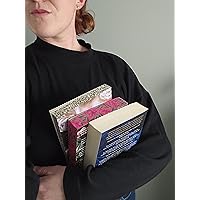
In A Woman in Pink, an unnamed woman recounts her deeply intertwined relationship with Dutch, a man she meets in her twenties and immediately loves. Dutch tells her he has distanced himself from the substance-fueled chaos that once consumed him, while she explains she has left her eating disorder in the past. Together, they convince themselves they' ve outrun their darkest histories. But over the span of their fifteen-year relationship, those shadows loom large, influencing their bond in ways they never expected. She wants to free herself from the turmoil of addiction. She also wants to believe that Dutch is her Johnny Cash, that she is his June Carter, and that theirs is a great love story. When their histories and choices finally collide, she is forced to confront everything she thought she knew about love, identity, and what it means to truly heal.
A Woman in Pink was consumed in a day (tho I did go back and reread slower to catch all the subtle and creative prose) . As an avid reader, this is not always the case! The nuances of colors in depicting, the narrator’s evolution, as well as the many layers found in the main characters we encounter, make this a must read book. The ending still haunts me, and I love when still thinking of the characters long after the book has been set down.
I enjoyed this book, but I also found it somewhat frustrating. For one thing, the eating disorder mentioned in the description is barely part of the storyline, and I also don’t think that the main problem with Dutch is his addiction. Sure, it’s a big problem, but this is more of a story about a woman’s obsession with a dismissive-avoidant, narcissistic man. Initially you can’t help but feel sorry for the narrator. Who hasn’t been in a relationship with someone who always feels just out of reach? The author does a great job of making you feel what it’s like to watch someone descend into this kind of casual cruelty and indifference toward you. But the way the narrator just throws her life away pining away for this man, you want to shake her. She’s so profoundly selfish and unrelatable as the book goes on. She ends the book with this kind of realization about the nature of Dutch’s selfishness, but there’s never any real insight about how her own behavior and belief system parallel his.
Lastly, I think any woman who has had her time wasted by a man and then felt this kind of desperation that is imposed on women as they grow older and watch their friends settle easily into marriages and families will find that parts of this book resonate strongly.
This entire review has been hidden because of spoilers.
Much like the sparks that fly from the first moments they meet, A Woman in Pink plunges the reader into a compelling relationship between two characters in recovery that blurs the boundaries between love and dependency. Set against the backdrop of the opioid crisis and the privileges of wealth, Schikora’s compelling prose vividly unspools the complicated threads of a long-term co-dependent relationship and its consequences on friends, family, and the lovers who come after. The protagonist’s hard-won sense of self in the wake of an eating disorder is challenged when she has to confront both her lover’s addiction and the truth behind his role in a tragic accident. As she navigates where redemption ends and enabling begins, the protagonist must reconcile her feminism with the duty of care women are expected to give to family and community, all while battling her own imposter syndrome. A Woman in Pink is a smart, suspenseful and wrenching story about learning to let go of the person who was the best worst thing ever to happen.
A WOMAN IN PINK is love in all its excess—when it turns obsessive, addictive, impossible to quit.
The narrator becomes entangled with Dutch, an irrepressible, charming, and deeply irresponsible man who is fighting his own demons and addiction. What begins as desire slowly curdles into something more consuming, and she finds herself losing not just her footing, but her very sense of identity as she tries to hold on to him, or maybe the image of him she has created.
What follows is a long, slow fall, one that feels both inevitable and devastating. The novel traces the unraveling with emotional precision, showing how easily love can slip into dependency and how difficult it is to recognize yourself once you’ve disappeared inside someone else, despite her friends' concerns. Sometimes there is nothing.
It's appropriate that Schikora does not name her as we witness the narrator's devastating unraveling and a long fall from selfhood disguised as love.
It's only in the aftermath that a possibility of return will begin.
A Woman in Pink by Megan Schikora checks all my boxes for a great book. The pace is excellent. It immediately pulled me in and never bogged down. The character development is strong. Each person in the story is introduced in a way that quickly reveals who they are, both in relation to the story and as individuals. They feel very real. We have all met people like them. The story itself feels true to life. Fairy tales have happy endings, but real life is full of challenges and living with the choices we make. Sometimes we learn the hard way through our own decisions. If we are lucky and thoughtful, we can avoid the mistakes we see others make. This book gives us a lot to think about. It also meets my final criteria of being efficient. It does all of this in just 195 pages.
"He was lost to me. I was lost to me. In the mirror, I saw a jumble of fragments resembling a person, and didn't know her at all."
"Whether I was too important to abandon or too easy to discard, I could not see. I could not understand the truth of us."
From the first spark of a new love interest, to the devastation of oneself, A Woman in Pink resonated with me right from page one. I devoured this book from start to finish. It opened up deep feelings and has helped me heal. I cried, I laughed, but deep down it made me feel.
The main female character, who is left nameless, falls in love with Butch. But like many individuals in relationships, she loses herself. The need for dependency in a relationship, and to change to fit what that person wants are key factors to the decline that she experienced. To bend yourself to cater to another. There is heartache, and addiction, but there is also a sliver of hope for healing and rediscovery.
Thank you to Megan A. Schikora and Regal House Publishing for my gifted copy of A Woman in Pink.
Woman in Pink pulled me in from the first page and didn’t let go. The story is haunting in a quiet, emotional way — the kind that lingers long after you stop reading. The characters feel incredibly real, and they stirred such mixed emotions in me: empathy, frustration, tenderness, and heartbreak all at once. Their relationship is messy and human, and that’s exactly what made it so compelling.
This was a true can’t‑put‑it‑down read for me, beautifully written and emotionally gripping.
Raw, riveting, and revealing. The story of a woman who finds love, the perfect guy and a perfect life. But is he? She is a strong giving loving woman struggling to understand a flawed man who says the right things but does the wrongs things. If you ever felt you’ve known the ideal version of the person love only to discover real life isn’t what our fantasies are. You’ll see yourself in this captivating story and the characters are more real than you’ll want to recognize. Page turning and remarkable debut novel from a supremely talented author. Get this!!
I inhaled this book. Schikora’s writing is so sharp and honest, part of you wants to shake her nameless narrator by the shoulders as you would a dear friend. But another, bigger part is sucked fully into her story, which Schikora renders with uncommon empathy and scalpel-sharp details. A Woman in Pink manages to be both dazzling and relatable, without a single false note. Anyone who has ever made unwise choices in love, which is to say everybody, should read it immediately.
In A Woman In Pink, Schikora craftfully leads the reader through a tale of intermingled addiction. As the character Dutch rushes through life in a reckless, seemingly self-destructive fashion, his dependency issues claiming victims along the way, the unnamed protagonist becomes addicted to an on-and-off love affair with him, which can never truly end the way she dreams it would.
I hope there is a sequel. We have to know that she moved on from Dutch. Many of us probably have a Dutch in our life, I do and I feel like I have moved on, but maybe not? Really made me wonder if I would be pulled back in to a bad relationship if there were contact. I think we think we can remain friends, but can we? Very engaging and I finished this book in 3 days which is unusual for me.
This entire review has been hidden because of spoilers.
One of the few book I have read in a single sitting. It is an engrossing tragedy which handles many difficult subjects with an elevated nuance most writers do not posses. This book deserves your attention and your time.
Poignant and beautifully written depiction of relationships when addiction is ever present. A Woman In Pink strikes at the heart of the subject with grace and emotion. Absolutely brilliant. I loved this book.
I got sucked in and was ready to tell everyone I know to read this book. It kept me captivated until the end. But to totally gloss over the visitor at the end? And speaking of the end… felt rushed and incomplete. Maybe I missed something.
Schikora’s insightful, resonant, and tragic tale “of wrath and love” reminds us that when we love, we never give up, even if, or when, behavior signals not only our love’s ruin, but our own.
While the protagonist feels she's recounting an epic love story, I'm not so sure I agree with her. As the layers unfold, the reader is drawn into the depths of addiction, feminism, friendship, and love. Is this true love? Maybe. Is it messy? Definitely. Can I relate? Absolutely. The writing is intentional, engaging, and insightful. I would highly recommend A WOMAN IN PINK as anyone's next read.
Megan Schikora’s A Woman in Pink is a compelling and thoughtful story that explores a passionate, yet dysfunctional relationship. The tale has universal themes that many women will understand. From the excitement of infatuation to the feeling of being left on read repeatedly, Schikora artfully weaves in a heartfelt story from the unnamed heroine’s perspective. She dares to explore topics like disordered eating and addiction in a very intimate and realistic way. Schikora is an expert in weaving in subtle events with intense power dynamic nuances that pay off for the reader, leaving an impression that some may find validating, even healing.