Martha Cade comes from a long line of midwives who have served the families of Trinity, Pennsylvania, for generations. A widow with two grown children, she's hopeful that her daughter will follow in her footsteps. But when Victoria runs off, Martha's world is shattered.
Worse, a new doctor has arrived in town, threatening her job, and she can't remember a time when her faith was more tested. Still determined to do the work she knows God intended for her, Martha is unprepared for all that waits ahead. Whether it's trying to stop a town scandal, mending broken relationships, or feeling the first whispers of an unexpected romance, she faces every trial and every opportunity with hope and faith.
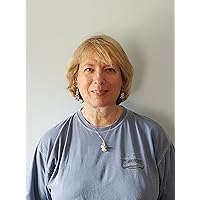
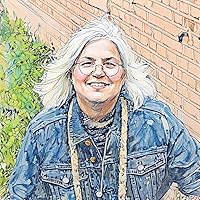
Delia is the author of fifteen historical novels who now devotes herself to writing inspirational historical romance. The mother of three grown children, she is a full-time high school teacher in southern New Jersey who spends her summers writing on Anna Maria Island in Florida.
. This book attracted my attention because of the midwife status (using natural abilities and remedies). It demanded a lot of time and attention from the strong-willed, Martha Cade, who was carrying on a family tradition of midwifery. When the book opens, Martha's greatest adversity in life is revealed which causes her to experience fear, anger, and guilt. After searching for three months, she was left with no choice but to return home without the answer she scoured the county trying to find.
The troubles life offers is a gift meant to be opened and treasured for the lessons it contains. A hardened heart drains not only the spirit, but also the physical body.
This was based in an era when doctors had recently begun being educated in college. What they were being taught in textbooks did not always coincide with what Martha had experienced in real life. It was a struggle between traditional medicine and the newly graduated doctors throughout most of the book, each questioning the other's abilities and methods.
This woman had a huge heart and gave all she had to those in need. There were hints of romance, some humor, and a mystery to be solved. This woman's compassion abounded on a daily basis. The conflict that the story commenced with was never actually resolved. However, there was a note reflecting that it would be soon. The reader will surely learn more in the next installment. . I might be interested in reading the remainder of the series if the price was not so exorbitant. This one was free with Kindle Unlimited. But the next two are nearly $10.00 each. At this time, I will only have the opportunity to read the remainder of the series if someone is willing to loan me a copy through Amazon.
Meantime, to those who open this book, be prepared to enjoy a clean and wholesome adventure into the past, where your eyes will be opened to some of the atrocities that occurred, as well as the blessings and joy that they experienced, not the least of these things -- ushering new life into the world.
Hmm, I am sorely conflicted as to what to rate this book.
I found it rather hard to read, and I did not find Parr's writing style very enjoyable, to say the least. Very heavy on the description, I often felt like I was slogging through, and skimmed a lot. Also, there were a few things that struck me as historically inaccurate and the overall feel of the book felt pretty modern. I had to keep reminding myself that it was the 1830s.
Story wise, I found this book pretty enjoyable, although I don't think it will be a re-read for me. The battle between midwife and doctor I found very interesting, and historically accurate. (Ya'll are suddenly finding out I am a snob for historical accuracy.) I also found the medical details fascinating.
The romance was very sweet and almost non-existent, although for once, I almost wished it was a little more prominent. I loved the character of Thomas. His sarcasm at times had me grinning. Martha was a very sweet MC, and I loved her loyalty, compassion, and trueheartedness.
Overall, I was not really a fan of this book. I gave it 3 stars as there were some things I enjoyed, but otherwise, I would have given it 2 stars. Some people may enjoy it, but not really my thing.
I found this read to be as soothing as a Sunday evening drive. A comforting look at a midwife's life in the 1830's I almost would have passed this one up had the book not been re-released with this beautiful cover. I enjoyed it greatly with a very light touch of romance that I so desperately appreciate! Interesting town people with subtle humor weaved through the pages. This book is not fluffy or syrupy but just classically written with great descriptions and everyday troubles with a little hint of mystery. I look forward to the second one in the series. This was like a vacation from my present reads; just the respite I needed.
This book was a breath of fresh air- everything I love in a christian/historical/romance novel. The religious themes weren't the usual- through Martha's choices and regrets, this book challenges the reader to question their prejudices, become self aware of some overbearing, controlling tendencies, and turn to God for comfort.The portrayal of characters and their flaws, motivations, and rationale was refreshingly honest. And the romance took a backseat. If it hadn't been in mentioned in the plot synopsis, I wouldn't have even been sure it would unfold. I saw this as a strength.
I loved the storyline, the way Martha is able to look back on her words and choices and see where she was wrong. I loved that she realized she erred in judgment- it really goes both ways, doesn't it- by overlooking common sense and things that didn't add up just because of someone's title.
I loved her growth and introspection. The things she struggled with were very relatable- her reputation, anger, temper, patience, integrity, all of it. I loved that sometimes there weren't easy or obvious answers and so she wrestled with some choices, ultimately having to leave them in God's hands.
Though many of the characters were relatable and loveable, and many of the relationships had lessons imbedded, my favorite was the relationship between Martha and Will (aka Boy). I especially loved that Will did have moments of vulnerability, but more often than not was rude, disrepectful and irrascible. It always provokes me when a child is depicted as a flawless angel. Children are wonderful, but have just as many "moments" when they're selfish, greedy, impatient, etc as adults. Martha's relationship with Will was a beautiful example of how to -choose- to view someone the way God sees them and how to practice love when it's not easy or natural.
This was a fairly peaceful, quiet read, though there were moments of suspense. I appreciated that it didn't end with a cliff hanger, yet my immediate thought was, "after all that, I have to know what happens next!" I hopped on Goodreads to see if this was one in a series and lo' and behold! This is actually an updated reprint of a book published over a decade ago... AND THERE IS A SEQUEL! YESSSSS. I've requested it from my library and I will be buying this version and the new version of the sequel because I love the updated covers. Bethany House always does an amazing job with beautiful book covers.
This was a very good book about Martha, a forty-something midwife and healer; a widow trying to survive and care for her daughter after her husband died. Staying in her home village, she was well known and made a living. But while she was away on an extended stay to birth a baby, a new doctor in town was taking over her duties. Suddenly she faces being considered antiquated and losing the only livelihood the women in her family had known for generations.
On top of that, while she was away, her 17 year old daughter joined a traveling theater group. Martha didn't know where she was. Always searching and hoping for a letter stating she's okay, Martha hears nothing for months.
A new academy of young boys overseen by Reverend Hampton and his wife make this village their new home. But not long after their arrival, things start disappearing. Martha is among a few who defend them because there's no proof of their guilt. Townsfolk want to run them out as more and more things go missing. This turns into a mystery that was quite interesting.
Midwifery in the 1800s apparently had different words than normal birthing terms of today, such as forcing pain and grinding pain. Also, the meal prepared by the mother while in early labor for the helpers was called the groaning meal or groaning party. (Cute) Several times they thanked Providence, which I found odd. But Martha was always faithful to give God the glory and thank Him for all things.
Very enjoyable and clean book. Tragedies, joys and mysteries, but God is proclaimed all throughout. Easily recommended to all ages.
Series: Book #1 in the ‘At Home in Trinity’ series
You should read this book if… You enjoy laid-back stories that are compelling and heartwarming, while focusing on character development and growth. Equally enjoyable in this story are the many, obviously well researched facets from history, namely relating to the midwife profession of years past. Also, this novel features an older than average protagonist, perhaps increasing the appeal to a middle-age audience.
Tone and Mood: The writing style of this book brings history to life with vivid detail and a down-to-earth, realistic tone. Although not always filled with happiness, the mood remains uplifting as bits of joy and fun shine through often, revealing the heart of the story beneath trials and hardships.
Characters and Point of View: Martha Cade is a capable and dedicated midwife to Trinity, PA, whose story is revealed through third person limited point of view. As a widow with two grown children, Martha’s character is a refreshing change from the typical twenty-something aged heroine. Naturally, this aspect brings interesting perspectives and thoughts to light. In addition to a likeable protagonist, numerous secondary characters such as expectant mothers, townspeople, and neighbors come to life through the pages of the story, as well.
Storyline: As Martha’s name of the best midwife in the business grew over the years, so did the amount of time she consequently was forced to spend away from her home and children. On one particularly lengthy journey to a the rural residence of an expectant mother, Martha returns home only to find her seventeen-year-old daughter has run away with the theatre troupe, a new doctor has moved to town and threatens to put her out of business, strange thefts have been occurring in the area, and the sweetheart of her youth is in search of a wife! Of course, the solving of each dilemma or disaster makes up the often-surprising storyline of the book.
Themes and Morals: Several impactful take-away values can be found in this story of a midwife. Trusting God with the future – even when life-altering disasters and tragedies strike, forgiving people who have hurt us in the past, and looking at each occurrence in life as a gift provided by God for a purpose are the primary ideals that spoke to me. Throughout the novel, Martha’s faith in God plays an important role and is portrayed often and realistically.
Inappropriate Content: One of the very few aspects of this book that border on inappropriate are realistically to be expected in a book featuring a midwife… Several birthing scenes hold back no details in describing the process and necessary procedures. For some readers this may prove to be a case of ‘too much information’, especially those who are not mothers themselves!
Conclusion: Overall, The Midwife’s Tale is a heartwarming and down-to-earth tale that is certain to delight fans of historically detailed stories rich with vivid characters and a deftly woven plot. After stepping into the town of Trinity, and the life of one very special midwife, you may not be ready to say good-bye after reaching the end. Thankfully, Ms. Parr is already at work on two additional books in the series, the first to be released later this year!
Book has been provided courtesy of Baker Publishing Group and Graf-Martin Communications, Inc.
B- on AAR so 3.5 stars I think The Midwife's Tale might be the first Pennsylvania-set book I've read in ages that doesn't have an Amish person in sight. Instead, readers get to visit a sleepy 19th century country town and follow the adventures of the local midwife as she treats patients and starts to find a love story of her own.
I'll start by saying that if you enjoy books such as Jan Karon's Mitford series, you may well like spending time in Trinity, Pennsylvania. The author fills this book with plenty of side stories about various secondary characters, and lots of local color. If the idea of gentle humor and plots that meander leisurely along makes you want to faint from boredom, this may not be your book. Fortunately, this reader found Trinity a primarily enjoyable place to visit.
The title of the book is apt as the story truly does focus on the midwife, a fortysomething widow named Martha Cade. By all accounts, Martha seems to have loved her husband, but especially now that her two surviving children are grown, midwifery takes up the largest part of her life. Through Martha's eyes, we see a vision of 19th century life that is largely non-romanticized. Everyone, Martha included, works very hard just to keep food on the table and households running. As a widow with no resources other than the payments she receives from patients, Martha has had to live in a small room attached to her brother's tavern and even though we see how simple her life is, readers also spend enough time with Martha to see that she views her position as a calling and that she is largely satisfied with her lot in life.
Practical, good humored Martha is a mostly enjoyable character. Her life is not without struggle, as her young adult daughter has recently run off with a travelling theater troupe, making Martha the subject of gossip tinged alternately with scandal and deep concern. Even though Martha appears respected in Trinity, she also faces a threat to her livelihood in the form of a young doctor who has set up shop in town. Like many doctors, Dr. McMillan finds Martha's way of doing things backward, but his push for modern medicine endangers Martha's practice.
This one is a must read. The story is wonderful and grabs you right away. It shows how trials are really a gift from the Lord, which is why we're to count it all joy when we are going through them; and how having that attitude can change everything. We also see how humbling ourselves and lifting up others can change our lives and not just theirs. Finally we see how forgiving others can work miracles. It's also refreshing to see what it looks like to be a woman of faith living in the real world.
What s wonderful slice of life from a midwive’s perspective. A little romance, mystery and heartbreak thrown in as well makes a complete story that makes you want more. Yes, this is just part one so now I can move on to the next book.
Well, that was a painful read for someone who loves to laugh! There was very little that afforded amusement, however, the story was endearing, just not my cup of tea. There are plenty of raving reviews and just because I didn't care for it did not mean the writing was anything less than amazing. Ms. Parr is an excellent storyteller. Again, just not for me; there was too much drama. I read to escape life not to read about it. :)
The Midwife’s Tale by Delia Parr is a story of the town Trinity’s midwife, Widow Cade, and her trials and adventures. She lives with her seventeen-year-old daughter at her brother and his wife’s tavern. She struggles to keep her esteemed position as the town’s baby deliverer with the arrival of a new-fangled, young doctor. She tries not the notice the handsome widower who once asked to court her years ago …
I think my favorite part of this novel, was the last three or four chapters. That being said, it still was a nice tale as a whole too. It just wasn’t exactly my type of book I suppose, but that ending was quite something, so I’ll give it 3.5 stars.
Historical fiction has always been one of my favorite genres … but I guess I’ve just been liking fantasy better these days. Other reasons The Midwife’s Tale didn’t get the best of ratings: (1) It centers on the life of a middle-aged widow. I couldn’t really connect or relate with her very well. (2) I hate to say this one … but there was basically no romance. Okay, okay, that’s not really the whole point! *winkles nose* The point is that there was no other, like, prominent character it felt like. It was just Martha. I wanted more deep character interaction I guess. An old man named Samuel and little boy named Will has some bigger parts; but still, it felt that we didn’t even see them that much. I felt all the other secondary characters I hardly connected with at all. Hardly remember them. (3) Because of the title, I was expecting this more to be a tale about midwifery. It really wasn’t. Just don’t expect that, and then you won’t be disappointed when there’s only like three … or two … birth scenes. (4) I just … couldn’t get into it much.
On the brighter side, I did get into the story somewhat. I finished it in pretty good time, after all! *smiles* It was interesting, and I did want to see how Martha’s life went. As the tale progressed, I was intrigued by Will’s story as well, and wanted to see what would happen there. There was a little bit of suspense/mystery, which was a nice touch. Overall, it was pretty slow-paced, and it felt like there was no big plot stuff until the very end. But it made for a pleasant read in the end—and I don’t regret reading it.
My very favorite thing about this book, was Martha’s journey of faith. Which really was seen mostly as the end as well. But it was profound, beautiful, and striking home. It was real. Deep. The raw emotion and the struggling and the depth of the faith moments did not feel forced at all. They flowed wonderfully and went straight to touch my heart. Beautiful job with that, Delia Parr!!
So. Not my favorite book; but I’m certain lots of others would enjoy it. Perhaps women at the same stage/place in life as Martha Cade. Or someone who enjoys historical fiction with just a dash of light suspense and mystery.
I received a copy of The Midwife’s Tale from Bethany House Publishers in exchange for my honest review.
Reminiscent of the pastoral works of Elizabeth Gaskell, "The Midwife's Tale" is set in rural Pennsylvania in 1830. Martha Cade has been serving the community as a midwife for many years, following the steps of her esteemed grandmother, and raising her children alone after the death of her husband. Assuming that one day her daughter will apprentice at her side, Martha is devastated to return from a distant birth and discover that Victoria has run away from home - and with a theatrical troupe, at that!
After an unsuccessful attempt to locate Victoria before the company she is with sails for Europe, Martha comes home to find the town of Trinity changed. There's a new young doctor who has been more than willing to step in and deliver babies while she was away, and his presence and practice threaten her life's work. A string of robberies have left citizens on edge and distrustful of one another. Martha decides to take it upon herself to find the culprits and restore peace, but evil is very good at hiding and may still destroy much before she is able to expose it.
I found several things about the book to be quite interesting. I liked that Martha was older than the stereotypical heroine. The whole subplot of choosing doctors of midwives for maternity care is one still going on in real life today, although thankfully bloodletting and leeches are no longer medically acceptable by any care provider! Martha also seeks to look at everything that happens in her life, whether good or bad, as a gift from God, which gave the book a hefty but not preachy spiritual weight.
I should note that very early in the book there was one use of anatomically correct language that took me by surprise only because there has been a bit of an uproar about the use of such words in Christian fiction in the not too distant past. It was not inappropriate in context, and I did not have a problem with it. There are a few birth scenes, although fewer than you might think given the title, but nothing that was overly graphic or shocking if you are familiar with the process.
The story is very gentle and meandering, with a multitude of characters who can seem very unrelated to each other or the plot. I enjoyed the book overall, but it took me quite a while to read and I never felt too invested in what would happen. I would recommend this story to those who enjoy tales of small towns and their quirky citizens. My thanks to the publisher, who provided me a copy of the book in exchange for this honest review. All opinions are my own.
I didn’t realise when I selected this book to review, but it’s actually a reprint of A Place Called Trinity, published by St Martins Press in 2002 to mediocre Amazon reviews. I don’t know why Bethany House decided to publish a medicore reprint when there are a lot of better first-time novelists begging for a chance to be published through Bethany House or one of the other major CBA publishers. It doesn’t seem like it’s undergone any changes since the original version—the writing, frankly, isn’t up to the standard I expect from Bethany House, and I sincerely hope the NetGalley ebook wasn’t the final edited and proofread version (tattoo and tatoo in the same sentence? Please.)
The beginning was slow, as it covered sixty years of medical history in the town of Trinity, and it never got faster. A lot of the story was told in the past rather than being shown in the present—Parr has midwife Martha Cade thinking about a conversation she’s just had rather than showing us the scene in which the conversation occurred. This felt old-fashioned and boring. Yes, I know the book is set in 1830, but it doesn’t need to feel as if it were written in 1830 as well.
The most distracting thing in The Midwife's Tale was the dialogue tags. It seems plain old “said” is too difficult. Instead, the characters gushed, suggested, murmured, whispered, simply said, ventured, argued, offered, spat … and that’s just one conversation. It wouldn’t have been so bad if the tags fit the characters, but gushed sounds like a modern teenage girl—a cheerleader, perhaps—not a staid middle-aged housekeeper or a widowed midwife in 1830. Modern Christian writing has been criticised for obeying the "rules" to the point where individual voice is removed from the writing. This novel is a good argument for the rules.
There were flashes of brilliance in the writing, like “a skein of good intentions that tangled her hopes with disappointment”. But these were outweighed by the ever-present explanatory dialogue tags and excessive telling, which made it hard to see the story. I know there are people who enjoy this kind of writing and storytelling, but I’m not one of them.
Thanks to Bethany House and NetGalley for providing a free ebook for review.
The Midwife's Tale: book 1 At Home in Trinity series**** by Delia Parr
For generations midwifery has been a part of the 1830's Trinity, Pennsylvania. Widow Martha Cade is a midwife with two grown children. Martha is hopeful that Victoria will follow in her footsteps as a midwife just as she did many years ago. But while Martha was away, Victoria runs away from home, leaving no forwarding address. After an exhaustive unsuccessful search, Martha returns home to her rooms in her brother, James and his wife's tavern. Much has changed in her absence. Old Dr. Beyer has died and a very young doctor, Dr. Benjamin McMillan has taken over the practice. Martha and Benjamin soon clash, as he has his own ideas about midwifery and delivering babies. Will this new doctor take her place in delivering the babies of Trinity? What of Victoria, will she come home or has she lost her forever? What does God have in store for her in the months ahead?
This is a slow-paced story for the most part. Martha goes through some challenges, heartaches and journey of faith. I like that her faith journey is shown as she struggles through some difficult times. There is a bit of mystery/suspense in the story that keeps the reader guessing who is responsible and if they will be caught before someone is hurt. Forgiveness, grace, God's love and broken friendships are addressed in the story. I really liked the old man, Samuel and the little mischievous boy, Will. The two sweet spinster sisters, Fern and Ivy, were very likeable and two of my favorite characters in the story (along with Will and Samuel). I would have liked to have seen more about midwifery and deliveries than was shown. Being a retired RN, I was very interested in the home remedies, or simples they were called in the 1800's. I liked that Martha and her helpers prayed together with the new parents after each birth. There is very little romance in this story....did hint at a possible romance between Martha and an old flame. The book gets better toward the end and leaves the reader suddenly hanging.
~I received a copy of this book from TBCN for my honest review~
Before she worried about facing her friends and neighbors, as well as her family...she had to face herself. Honestly. And without pretense.
I'll confess that The Midwife's Tale by Delia Parr is yet another book for which I didn't remember whatever the book blurb had said before I started reading the book. I barely skimmed the blurb, but the cover of the novel is what got me, not so much on account of its loveliness but because the heroine depicted has gray in her hair. It's nice to read about a more mature protagonist when I can, and Martha certainly has her hands full in this story of small-town life, some suspense, and hints of romance.
As far as midwifery goes, it was interesting to see it as a system and culture, not just a lone woman who appears to deliver a baby and disappears from the story again. Though the novel is labeled as historical romance, it's rather light on the romance piece, but it's more a story of Martha's journey of grief, joy, self-discovery, and faith. There are some pretty endearing moments of character interaction, humorous or downright cute, and one duo of ladies in town couldn't help but to remind me of the Baldwin sisters from The Waltons.
While much of this novel is easy reading, not unpleasant, it does move slowly, and halfway through the book, the story didn't seem to have hit a clear stride yet, like it was still in the introductions stage. Martha's feelings about her daughter who has run off, Victoria, are well-expressed, but since I as a reader didn't get to see or meet Victoria for myself, I couldn't connect with Martha's sentiments about who her absent daughter is.
The novel's strength is in its final fourth or so, and though it was a long time in coming, reading wise, it turned out to be enough to interest me in continuing on with the At Home in Trinity series. _________________ Bethany House provided me with a complimentary copy of this book for an honest review.
This book is set in 1830. Martha Cade is a midwife who is experiencing a life crisis. While she was attending a birth miles away from home, her daughter Victoria ran away with a travelling band of actors.
She comes home discouraged and finds a new Doctor in town who is trained on new methods of medicine. He thinks that the town does not need a midwife, leaving Martha to prove her worth and methods in healing and birthing.
I enjoyed Martha's story. She fights a mental, spiritual, and emotional battle as she struggles to find her place again in her small community. Change is hard for her to live with. She is a very strong character with a strong sense of self and courage.
There is a some mystery in the book. Someone has been burglarizing the town and the blame has been placed on a boys academy of orphans. Martha is determined to find the culprits and clear the name of the innocent.
This book has some twists and turns and made for a great read. Delia Parr does a wonderful job at laying down the setting and characters. I liked the community and the many different personalities. Many of the people are struggling with their own issues. Martha as a healer knows of their problems and tries to help them when she is able.
The romance in the book is very light, almost not present. The book says that it is the first in a series of Trinity. I hope that as new books are written that I will find out what happens with Martha and her love interest. There are other characters that I would love to get to know better.
The Midwife’s Tale by Delia Parr is the start to the series At Home in Trinity, and is about Widow Martha Cade who’s profession is a midwife. I found all the details of midwifery very interesting: for instance that the husbands stayed with their wives and held them on a birthing stool, how midwives usually ran in the family, and all the other details of how a midwife assisted deliveries. While all of the history was fascinating, I also enjoyed the Widow Cade herself. She had been widowed for 10 years with two children and lived with her brother and sister-in-law who ran a tavern. She was also a very brave and strong woman.
In this character driven story we watch how Martha relies on God and even when she receives devastating news, she does not shirk her responsibilities and does not let those who depend on her down. We have a whole cast of secondary characters that move the story forward and we have hints of a romance that has been sparked again even after so many years have passed. In this first book of the series, Martha has to now deal with a young new doctor who considers her ways archaic, a new ‘academy’ of orphan boys, and a whole town dealing with a mystery of robberies. I have always enjoyed author Delia Parr’s stories and I look forward to continuing this series. I received a copy of this book for an honest review from The Book Club Network, Inc. and the opinions are my own.
When Martha Cade's daughter runs away from home Martha is devastated but determined to bring her home. When that doesn't pan out she returns home to find her job and her legacy threatened by the arrival of a doctor who could easily take her place. Running out of options and places to turn Martha searches for answers.
This cover art. Bethany House just keeps getting better and better with their visuals. If I were to judge books by their covers I'd be broke from buying up all the books being released by Bethany House.
As for the book itself. I went about 60 pages into the story before calling it quits. It wasn't really the story itself - I just didn't really click with any of the characters. There were some elements that really fascinated me, especially Martha's job, but I just didn't find myself empathizing with the characters and that's a big deal for me. I'm absolutely certain that many people will love this story but for me it wasn't a good fit.
DISCLAIMER: In accordance with the Federal Trade Commission’s 16 CFR, Part 255: “Guides Concerning the Use of Endorsements and Testimonials in Advertising” we would like to note that we received an electronic of “The Midwife's Tale” provided by the publishers, Bethany House, in exchange for our honest review.
the story is well thought out and the characters are well developed. all the information about midwifery in the early 1800's is most interesting! a tad too god-centric for my taste, but i read it knowing that this is christian lit. i actually chose it mostly because i know the author!
This book was an enjoyable story full of Christian wisdom with a happy ending. It tells of hardship and struggles of people to maintain their faith and obedience to God.
This is one of the best books I have read. This is a wonderfully written book. It is identified as a Romance Book; I don't think it really is. The story is centered around Widow Martha Cade, Midwife. There is a love connection between Martha and Mayor Thomas but it doesn't really go into much detail regarding their relationship except to say that they were close and had a love interest prior to their marriages to other people. Martha is a widow and Thomas is a widower. Strong feelings for one another are certainly implied especially in the final paragraph but comparing it to other romance novels there is little on the romance part. I don't think the fact that there isn't much romance does not take away from this wonderful story. This book is about relationships not just romantic ones but love for a prodigal daughter, love of neighbor, love of God, love of family, love of community, and even love for animals. Every single character in this book helps to make this such a wonderful book. In addition to Martha and Thomas, there is Will called, Boy, the orphan boy, Samuel, Webster Cabbot, Rosalind, James, Ivy, Martha, Sheriff Myer, Reverend Hampton and the other orphan boys, and the others along with Grace the horse, and Bird. Also there was her relationship with all the women and children she had helped as a midwife. Also the struggle with quality health care for women and children and how really her experience was more advanced in some ways rather than the health care offered by the medical profession. The medical profession at the time treated pregnancy as an illness rather than a natural process. There were practices like blood letting and other practices that actually endangered the Mother. This was set in 1830 in her practice as a mid-wife she washed her hands and cleanliness was a big part of her routine. It wasn't until 1846 that Hungarian Doctor Ignaz Semmelweis at Johns Hopkins University discovered what a difference the practice made. It wasn't until then that Doctors first began the practice of washing their hands. He noticed in one hospital that on one floor staffed by Doctors who didn't wash their hands and on another floor staffed by midwives that the death rate on the Doctors' floor was 5 times higher than in the midwives' clinic. Many of us are alive today because our ancestors were delivered by a midwives. And as modern as we have become we still have midwives and the importance of natural medicines is still growing.
I just cannot say enough about what a good read this book is.
I felt there were some similarities to the PBS show Lark Rising and Jane Kirkpatrick's books. If you know either, you know you'll be in love with Martha and this town setting quickly. Full of wisdom and insight in the life of a woman. Self examining, lessons learned, wisdom to pass along that will help others to become stronger. Lessons of Christian faith as well. 1830 Western Pennsylvania. Christian Historical. The author says, "I hope The Midwife’s Tale will place midwifery and herbal treatments in historical perspective." A deeply satisfying story that will endear you to the characters, rooting for them along the way and feeling every bump in their road.
Martha is a midwife, trained by her Grandmother whose Mother had been a midwife and hers before her through the generations. She took the responsibility of delivering babies and taking care of children very seriously, continuing a diary that served as a record of births for the area. But a couple of things threw her a curve ball. Her daughter ran away while she was out on a call, and a new doctor came to town while she was away looking for her. She tried to find her daughter without success and returned home to find the new doctor trying to deliver a baby. This is a time when doctors had a way of treating pregnancy as an illness, with policies of bloodletting and purging, contrary to what midwives did using natural ways.
She learns that even though life changes, you can still do your best to be kind and help others, persevering even when others are unkind. A bird in a cage and a young orphan boy come into her life, and she finds new meaning and worth in taking care of them as well as the other people in the small town of Trinity, which for all it's faults will make you love it and want to come back.
"In the end, we must trust God to know what is best before we do, and to know that one day He will shower us with joy equal to the pain we have endured.”
Disclosure of Material Connection: I received this book free from the publisher and NetGalley book review bloggers program. I was not required to write a positive review. The opinions I have expressed are my own. I am disclosing this in accordance with the Federal Trade Commission’s 16 CFR, Part 255 “Guides Concerning the Use of Endorsements and Testimonials in Advertising.” #TheMidwifesTale #NetGalley #DeliaParr #BooksYouCanFeelGoodAbout
The story is set in the 1830’s and revolves around Martha Cade, the midwife in Trinity. PA. Martha is a middle aged widow with 2 grown children.
Martha and her daughter, Victoria, moved in with Martha’s brother after Martha’s husband died. They have a small room attached to her brother’s tavern.
When 17 year old Victoria runs off with a theatre troupe, Martha leaves town to look for her. When Martha returns to Trinity, she finds out that a new doctor has moved to town. Martha is threatened by Dr McMillan’s presence and it doesn’t help that the doctor views Martha’s methods as antiquated and barbaric.
I wanted to read this story because of the title. I thought it would be about Martha’s profession but instead it was more about Martha and a few side stories. I actually didn’t start to enjoy reading it until about chapter 10 which is around the time an orphan named Will appears on the scene.
If you are looking for romance then this is not the book for you. There is very little to no romance - just a hint of a romance. This is actually book 1 of 3 but it doesn’t end in a cliffhanger.
The Midwife's Tale tells the story of Martha, a midwife in her 40's, who lives in a small rural community. It tells of her grief after her daughter runs away, her experiences in serving as midwife, facing competition from a new doctor in town, and her interactions with various people trying to help them. Although I found the character development to be rather stilted at times, I grew to admire her more and more as the novel continued. I found her relationships with the reclusive older man who lived as a hermit and the 7 year old orphan the most heartwarming part of the novel.
I really liked many parts of the plot. However, I did not enjoy the author's style of writing. It really dragged at the beginning for me but fortunately picked up as I continued reading. At times the writing was stilted at times and 'too flowery' for me with too many words used in descriptions.
There is a strong Christian message in the novel which was well written and meaningful.
Martha Cade also know by widow Cane. She lives in a small room, attached to a bar that serves food. Owned by her brother James & his wife Lydia.
While she's far from home, helping woman give birth to first child. She received short note from James that youngest daughter Victoria ran away with troupe.
She spent more than three months to follow the troupe. Trying find her daughter & bring her home. By the time she reached each of places they were to performed, she was 1-2 late. She was so upset she decided to go home to Trinity. Desperately hope Victoria came home. But Victoria had not returned.
There are more Characters in this book & so more to this story, you need to read this book!
I enjoyed this tale by Delia Parr, an author I haven't read before. The characters are engaging, the setting is very well done, the research into the topic was obvious but didn't overpower the story. It included a twist that I sort of saw coming, but had talked myself out of. That was nice! I thought the end was a bit rushed, but it didn't destroy the story or anything.
If you're interested in the early 1880s, stories set in Pennsylvania, and/or stories dealing with early healthcare, this is the book for you. It's not a romance, it's historical, but there is a nice thread of romance that runs throughout. Mostly it's about the midwife and her life, her disappointments, her achievements, and the lives of the people she touches. Well worth reading.
This story begins with the loss of a daughter that ran away from home while Mom was away on a midwife visit. It also shows how sadly we are duped by those we expect we can trust when we ignore that inner feeling of unease. Love & faith win over evil in the end.
I wish there was more specific information shared on herbs etc used for healing during these years though it was fictional & some information was shared I think it would have brought out more of how others depended on a midwife for more than childbirth. I'm glad I read it & would recommend it to others.
In the early 1800, the widow Martha, the town's midwife, is confronted with several incidents and occurences which severely test her faith. After a relatively slow start, the story and the characters did draw me into their lives; Martha's tale is presented to the reader with compassion and humour, so that heartwarming, heartbreaking, and funny parts of the story take turns. It's not a fast-paced tale, but the pace fits the story and life in a small town during that period. A good plot, a very good and fluent narration style, and interesting and sympathetic characters make this a very enjoyable book. I cannot wait to put my hands on the second part of this midwife's tale.
This book did not really hold my interest all that well. I simply kept reading to try and finish it, and even though I have the other two in the series, I'm not anxious to read them. Some of the conversations that dragged on for page after page became boring and I was ready for some action. I was not impressed with her former love, Thomas, and found him grumpy. I didn't see why she chastised Will for his "inappropriate speech" such as confounded (really??) when Thomas was constantly using the same words. I read the book because I love books about midwives, but this was definitely not a favorite.