

What do you think?

Battling Boy #2.1
El momento de Aurora West
El momento de Aurora West es la precuela de Battling Boy, la novela gráfica de Paul Pope que ha levantado pasiones entre los fans del género de todo el mundo. En esta ocasión Paul Pope y David Rubín unen su talento en este spin-off.
El extraordinario mundo creado por Paul Pope en Battling Boy está plagado de monstruos y escasea en héroes… En el spin-off de Battling Boy regresamos a este universo desde el punto de vista de una persona muy especial: Aurora West, la hija del último gran héroe de la ciudad. La joven heroína investiga el misterio en torno a la muerte de su madre mientras trata de hallar su lugar en un mundo dominado por monstruos sobrenaturales y la corrupción de los hombres. El guión de ritmo vertiginoso y lleno de tensión de la mano de Paul Pope y JT Petty junto al arte cinético de David Rubín son un tour de force en la narrativa del cómic.
David Rubín es un autor gráfico español con una vasta obra a sus espaldas, de entre la que destacan El Héroe y Beowulf, sendos éxitos de crítica y ventas. Asimismo, ha dirigido una película de animación, Espíritu del bosque (2008) y su trabajo ha sido objeto de estudio en un documental.
Paul Pope es el reputado autor de Batman: Año 100, Heavy Liquid y 100%. Se destaca por su estilo frenético y enérgico, lleno de acción y crisol de todo tipo de géneros, que le ha valido tres premios Eisner. Vive y trabaja en Nueva York. Su primera novela gráfica para todos los públicos, Battling Boy 1, ha sido un éxito de ventas en todos los territorios donde se ha publicado.
JT Petty es un escritor, director de cine y guionista de videojuegos. Ha publicado una novela gráfica, Bloody Chester, en el sello First Second de la editorial estadounidense MacMillan. Reside en Brooklyn, Nueva York.
El extraordinario mundo creado por Paul Pope en Battling Boy está plagado de monstruos y escasea en héroes… En el spin-off de Battling Boy regresamos a este universo desde el punto de vista de una persona muy especial: Aurora West, la hija del último gran héroe de la ciudad. La joven heroína investiga el misterio en torno a la muerte de su madre mientras trata de hallar su lugar en un mundo dominado por monstruos sobrenaturales y la corrupción de los hombres. El guión de ritmo vertiginoso y lleno de tensión de la mano de Paul Pope y JT Petty junto al arte cinético de David Rubín son un tour de force en la narrativa del cómic.
David Rubín es un autor gráfico español con una vasta obra a sus espaldas, de entre la que destacan El Héroe y Beowulf, sendos éxitos de crítica y ventas. Asimismo, ha dirigido una película de animación, Espíritu del bosque (2008) y su trabajo ha sido objeto de estudio en un documental.
Paul Pope es el reputado autor de Batman: Año 100, Heavy Liquid y 100%. Se destaca por su estilo frenético y enérgico, lleno de acción y crisol de todo tipo de géneros, que le ha valido tres premios Eisner. Vive y trabaja en Nueva York. Su primera novela gráfica para todos los públicos, Battling Boy 1, ha sido un éxito de ventas en todos los territorios donde se ha publicado.
JT Petty es un escritor, director de cine y guionista de videojuegos. Ha publicado una novela gráfica, Bloody Chester, en el sello First Second de la editorial estadounidense MacMillan. Reside en Brooklyn, Nueva York.
160 pages, Paperback
First published July 15, 2014
About the author
Paul Pope
239 books268 followersPAUL POPE is an American cartoonist living and working in New York City. Pope has made a name for himself internationally as an artist and designer. He has been working primarily in comics since the early '90s, but has also done a number of projects with Italian fashion label Diesel Industries and, in the US, with DKNY. His media clients include LucasArts, Paramount Pictures, Cartoon Network, Marvel Comics, DC Comics, Conde-Naste, Kodansha (Japan), Sapporo (Japan), Marc Ecko, Dargaud Editions (France), EMI Canada, Warner Brothers, and The British Film Institute. His iconic Batman: Year 100, a science fiction take on the classic Batman origin tale, has won numerous awards, seen print in many languages, and appears frequently on many Top 10 Batman story lists. In 2010, Pope was recognized as a Master Artist by the American Council Of The Arts, and is currently sitting on the ACA advisory board. His 2010, short science fiction comic strip Strange Adventures (DC Comics)--an homage to the Flash Gordon serials of the '30s-- won the coveted National Cartoonist Society's Reuben Award for Best Comic Book of the year. He has won 5 Eisners to date.
Ratings & Reviews
Friends & Following
Create a free account to discover what your friends think of this book!
Community Reviews
Displaying 1 - 30 of 178 reviews

June 7, 2019
Aurora West has it tough. By day, she's an ordinary teenager in Arcopolis. By night, she's training with her father, Haggard West, in his eternal war against the monsters...
I loved Battling Boy and was hungry for more. Fortunately, the two Aurora West books were still in print and affordably priced. Once I forgave David Rubin for not being Paul Pope, I wound up enjoying it.
The Rise of Aurora West is a prequel to Battling Boy, telling of Aurora coming into her own as her father's partner. It's full of adventure, monsters, and family secrets.
As I alluded to before, I was not initially happy with David Rubin's artwork but it grew on me. Arcopolis is a place nearly overrun by monsters and Rubin's artwork gives them life. Aurora chasing a family secret while struggling to live up to her father's expectations makes for a great story. By the end of the tale, I was just as interested in what comes next as I was when I started, which is a good thing when you're dealing with prequels.
That's about all I have. The book flew by, partly because of it's manga-style pacing and partly because I was wolfing it down like a monster after a baby. 3.5 out of 5 stars.
I loved Battling Boy and was hungry for more. Fortunately, the two Aurora West books were still in print and affordably priced. Once I forgave David Rubin for not being Paul Pope, I wound up enjoying it.
The Rise of Aurora West is a prequel to Battling Boy, telling of Aurora coming into her own as her father's partner. It's full of adventure, monsters, and family secrets.
As I alluded to before, I was not initially happy with David Rubin's artwork but it grew on me. Arcopolis is a place nearly overrun by monsters and Rubin's artwork gives them life. Aurora chasing a family secret while struggling to live up to her father's expectations makes for a great story. By the end of the tale, I was just as interested in what comes next as I was when I started, which is a good thing when you're dealing with prequels.
That's about all I have. The book flew by, partly because of it's manga-style pacing and partly because I was wolfing it down like a monster after a baby. 3.5 out of 5 stars.

September 21, 2014
A prequel to Battling Boy that everyone but me loved this past year, a YA world of monster fighting and school work. This book is a prequel to Battling Boy and focuses on a girl who has homework and then battles monsters with her legendary Dad Haggard… and in the middle of it all, how did Mom die. Pope did not draw this, David Rubin did, and it feels a little rough, and the small size of this volume makes the big action seen cramped. It's YA. The monsters are kinda eh. Story was co-written by Pope and J.T. Petty. It's pretty good and may appeal to teens.

first-second-publications
October 1, 2014Girl heroes!
We love them.
(You could probably tell that by the books we publish -- Zita the Spacegirl, Giants Beware, anyone?)
We were delighted when we got the opportunity to tell the story of a girl hero in the universe of Paul Pope's #1 New York Times Best-Seller BATTLING BOY. It's such a good book, and it's reaching so many readers -- how awesome is it that we get to publish a story for them that shows just how cool girls are?
Yay that!
We love them.
(You could probably tell that by the books we publish -- Zita the Spacegirl, Giants Beware, anyone?)
We were delighted when we got the opportunity to tell the story of a girl hero in the universe of Paul Pope's #1 New York Times Best-Seller BATTLING BOY. It's such a good book, and it's reaching so many readers -- how awesome is it that we get to publish a story for them that shows just how cool girls are?
Yay that!

December 6, 2017
I want to see what happens
November 24, 2014
The Rise of Aurora West is a prequel story to Paul Pope's Battling Boy. The focus of this story is Aurora West, the daughter of a two-fisted, rocket pack hero. Aurora West works closely with her father as he trains her to be a monster fighting hero, but at the same time, he is emotionally distant. This story explores why Aurora and her father have dedicated their lives to fighting monsters.
I recommend reading this story if you are following the Battling Boy storyline. It provides a lot of motivation for Aurora's actions, so when you see her act in Battling Boy, you can really understand why she is doing it. Also, it adds a lot of depth to her interactions with one of the characters in that story. The only downside is that while this story is co-written by Paul Pope, it isn't drawn by him. The artist who draws this has a much more cartoony style than Pope, so the art doesn't have the same impact as Pope's. It's not bad, it just takes a bit of time to get accustomed to the change in style.
I recommend reading this story if you are following the Battling Boy storyline. It provides a lot of motivation for Aurora's actions, so when you see her act in Battling Boy, you can really understand why she is doing it. Also, it adds a lot of depth to her interactions with one of the characters in that story. The only downside is that while this story is co-written by Paul Pope, it isn't drawn by him. The artist who draws this has a much more cartoony style than Pope, so the art doesn't have the same impact as Pope's. It's not bad, it just takes a bit of time to get accustomed to the change in style.

August 18, 2014
This review originally appeared on my blog, Shared Universe Reviews.
Last year saw the release of Battling Boy by Paul Pope. His longest comics work in years. Perhaps unsurprisingly to many, it was a great read and one of my favourite comics of 2013. The Rise of Aurora West is co-written by J.T. Petty and Paul Pope and it is illustrated by David Rubin. I can’t help but to compare this comic to Pope’s Battling Boy. I apologize for that but only briefly because the comparison has help me to realize just how much The Rise of Aurora West stands on its own, despite the obvious ties to Battling Boy.
This comic is a prequel to Battling Boy. It’s set in the same universe (an alternate Earth) as that story and most of the story takes place in the city of Arcopolis, a huge city that has a problem with monsters. Science hero Haggard West, a combination between Doc Savage, Indian Jones and Batman, has made it his personal mission to fight the monsters that wreak havoc in the city and spend their nights kidnapping children. Though he plays a big role in the comic, the focus is pretty clearly put on his daughter, Aurora West. She is training in the art of monster slaying under her father. Many comparisons can be made between the relationship Aurora has with her father and the one Battling Boy has with his father but I do not want to spoil anything by saying too much. I will say that Haggard, for all his faults, seems to be doing a better job of instilling values in Aurora and raison her to be a resourceful young woman. He is teaching his daughter how to be independent and work her way through any situation that could arise. He puts a lot of value into preparation. The thematic developments and character growths of Aurora West and Battling Boy are a delight in contrasts and similarities.
While Battling Boy lacked some of the more mature elements of Paul Pope’s previous comics, it wasn’t exclusively for children and young teens. It was a very good example of the wide appeal that great all-ages comics can have. At first I wasn’t sure I would be able to say the same for The Rise of Aurora West. I’m not sure how I developed this opinion but by the time I finished reading, it was clear to me that it’s a great companion piece to Battling Boy even though it has a different tone. Young readers will certainly enjoy all of the monster hunting action while adult readers will appreciate Aurora’s growth as a character. It’s a book that offers quite a lot to enjoy and it’s clearly the work of skilled creators.
Similarly to how I can’t help but compare the story of both works, I can’t avoid comparing the art by David Rubin to the art of Paul Pope. Much like the comic as a whole, Rubin’s art differentiated itself from Pope’s art and the final result is a style that is occasionally similar to Pope’s but ultimately something unique to Rubin. I wasn’t sure if Rubin was trying to ape Pope’s style and after looking at sample artwork on Tumbler and on Rubin’s blog, I came to the conclusion that he’s not intentionally trying to mimic Pope for Aurora West but Pope is clearly one of many influences on Rubin’s overall style. I also see the influence of Rafael Grampa, particularly in Haggard’s large chin and in some of the smaller details on clothing and hair. Funny enough, that’s also where I see a lot of Pope’s influence, in the clothing and the hair. A lot of the technology feel informed by Pope’s renderings in Battling Boy and that just makes sense considering the close ties this comic has to it. The facial expressions and the monster designs are entirely Rubin’s.
Initially, I felt bad that there was an artist who had to follow Pope’s act. Pope isn’t just a master illustrator, he’s also an excellent storyteller. He has what I would describe as a difficult style. You need to learn how to read it before you can truly appreciate it. He gives the illusion of an artist who is rushed and decided to publish sketches instead of finished art but under that high-energy line work is a mountain of details to be absorbed and cherished by the studious reader. He also uses a lot of heavy inking and in the hands of a lesser artist that could easily be disastrous and result in unreadable and muddy pages. Pope manages to make it all work without putting the storytelling elements out of focus. Pope’s art can seem unpolished and unaesthetic to readers who are unfamiliar with his work but I’ve come to really admire and enjoy it.
Rubin is a different kind of artist. He’s much more expressive than Pope and that works to his advantage in The Rise of Aurora West. He does try to capture the looseness and the frenetic feel of Pope’s art but he doesn’t always succeed. His line work is softer and rounder than Popes and there appears to be the influence of cartoonist, not just skilled illustrators. There are several examples of very good cartooning in this comic. I won’t be adding Rubin’s name to my list of favourite comics artist just yet but he shows promise and I’m looking forward to seeing more work by him. It’s commendable that Rubin took on the challenge of illustrating Aurora West and I hope that he receives the recognition for his efforts on this book. I also hope that his future projects are packaged in a larger format as the 5 x 7 ½ pages weren’t big enough to allow me to fully appreciate the artwork.
The writing was also quite good. Petty used more dialogue than I’m used to seeing in a comic by Pope but I think that worked to his advantage. One of my criticisms for Battling Boy is that it felt light. There wasn’t as much story going on in those 200 pages than what I wanted. Pope usually writes comics that are dense, both in story and in art. The small format of Battling Boy and the quick story made for a lighter than usual read. Contrary to that, The Rise of Aurora West packs significantly more story in its 160 pages than its predecessor did. The dialogue isn’t superfluous though. Petty uses this comic to tell the story of Aurora. That might seem like a strange thing to say but it’s not uncommon for the boy hero to overshadow his female counterpart. I was quite happy to discover that most all the other elements of Battling Boy’s story were found in this comic with the exception of him and any other gods. This statement might make me sound like a cynical comic book reader but female character often get the short end of the stick and I’m just happy to say it’s not the case with this comic.
As a prequel, it’s very effective because the focus is truly on Aurora West. She learns about her mother and her father’s past. Obviously, we’re also along for the ride. But we also learn a lot about Aurora herself and the life she had growing up as the daughter of the hero of Arcopolis. We also learn about her connection to Sadisto and his gang. I would not have been surprised to discover that Pope and Petty used this comic to further develop the world introduced in Battling Boy and that’s exactly what they did but they did it through characters and that made it feel more organic. There are a lot of things we do not know about this world. Where did the monsters come from? Why are they attacking Arcopolis? What are they doing with all of the children they’re kidnapping? We do not get comprehensive answers to any of these questions but we do get a better understanding of Aurora and Haggard’s relationship to both the monster and the city.
After finishing the first volume of Aurora West’s solo adventure, I realised that the comic developed its own identity, separate from Battling Boy. It’s a big compliment but the density of the story, compared to Battling Boy, made it feel substantial and that was rewarding to me as a reader. The character development, for Aurora and Haggard also contributes to making this comic feel like an important addition to the story begun in Battling Boy. It’s not just a cash grab comic. You also can’t argue with the cover price, $11.50 Canadian isn’t a bad price for 160 pages of comics. Pope has said that he has plans to continue to expand the Battling Boy series. It’s unclear if he has any specific plans beyond the sequel to Aurora’s first solo story or the sequel to Battling Boy but if he does, it looks to me like First Second has a hit series on their hands. I’m already looking forward to Battling Boy: The Fall of the House of West.
My advance review copy was provided by Tor.com. The Rise of Aurora West will be released on September 30, 2014.
Last year saw the release of Battling Boy by Paul Pope. His longest comics work in years. Perhaps unsurprisingly to many, it was a great read and one of my favourite comics of 2013. The Rise of Aurora West is co-written by J.T. Petty and Paul Pope and it is illustrated by David Rubin. I can’t help but to compare this comic to Pope’s Battling Boy. I apologize for that but only briefly because the comparison has help me to realize just how much The Rise of Aurora West stands on its own, despite the obvious ties to Battling Boy.
This comic is a prequel to Battling Boy. It’s set in the same universe (an alternate Earth) as that story and most of the story takes place in the city of Arcopolis, a huge city that has a problem with monsters. Science hero Haggard West, a combination between Doc Savage, Indian Jones and Batman, has made it his personal mission to fight the monsters that wreak havoc in the city and spend their nights kidnapping children. Though he plays a big role in the comic, the focus is pretty clearly put on his daughter, Aurora West. She is training in the art of monster slaying under her father. Many comparisons can be made between the relationship Aurora has with her father and the one Battling Boy has with his father but I do not want to spoil anything by saying too much. I will say that Haggard, for all his faults, seems to be doing a better job of instilling values in Aurora and raison her to be a resourceful young woman. He is teaching his daughter how to be independent and work her way through any situation that could arise. He puts a lot of value into preparation. The thematic developments and character growths of Aurora West and Battling Boy are a delight in contrasts and similarities.
While Battling Boy lacked some of the more mature elements of Paul Pope’s previous comics, it wasn’t exclusively for children and young teens. It was a very good example of the wide appeal that great all-ages comics can have. At first I wasn’t sure I would be able to say the same for The Rise of Aurora West. I’m not sure how I developed this opinion but by the time I finished reading, it was clear to me that it’s a great companion piece to Battling Boy even though it has a different tone. Young readers will certainly enjoy all of the monster hunting action while adult readers will appreciate Aurora’s growth as a character. It’s a book that offers quite a lot to enjoy and it’s clearly the work of skilled creators.
Similarly to how I can’t help but compare the story of both works, I can’t avoid comparing the art by David Rubin to the art of Paul Pope. Much like the comic as a whole, Rubin’s art differentiated itself from Pope’s art and the final result is a style that is occasionally similar to Pope’s but ultimately something unique to Rubin. I wasn’t sure if Rubin was trying to ape Pope’s style and after looking at sample artwork on Tumbler and on Rubin’s blog, I came to the conclusion that he’s not intentionally trying to mimic Pope for Aurora West but Pope is clearly one of many influences on Rubin’s overall style. I also see the influence of Rafael Grampa, particularly in Haggard’s large chin and in some of the smaller details on clothing and hair. Funny enough, that’s also where I see a lot of Pope’s influence, in the clothing and the hair. A lot of the technology feel informed by Pope’s renderings in Battling Boy and that just makes sense considering the close ties this comic has to it. The facial expressions and the monster designs are entirely Rubin’s.
Initially, I felt bad that there was an artist who had to follow Pope’s act. Pope isn’t just a master illustrator, he’s also an excellent storyteller. He has what I would describe as a difficult style. You need to learn how to read it before you can truly appreciate it. He gives the illusion of an artist who is rushed and decided to publish sketches instead of finished art but under that high-energy line work is a mountain of details to be absorbed and cherished by the studious reader. He also uses a lot of heavy inking and in the hands of a lesser artist that could easily be disastrous and result in unreadable and muddy pages. Pope manages to make it all work without putting the storytelling elements out of focus. Pope’s art can seem unpolished and unaesthetic to readers who are unfamiliar with his work but I’ve come to really admire and enjoy it.
Rubin is a different kind of artist. He’s much more expressive than Pope and that works to his advantage in The Rise of Aurora West. He does try to capture the looseness and the frenetic feel of Pope’s art but he doesn’t always succeed. His line work is softer and rounder than Popes and there appears to be the influence of cartoonist, not just skilled illustrators. There are several examples of very good cartooning in this comic. I won’t be adding Rubin’s name to my list of favourite comics artist just yet but he shows promise and I’m looking forward to seeing more work by him. It’s commendable that Rubin took on the challenge of illustrating Aurora West and I hope that he receives the recognition for his efforts on this book. I also hope that his future projects are packaged in a larger format as the 5 x 7 ½ pages weren’t big enough to allow me to fully appreciate the artwork.
The writing was also quite good. Petty used more dialogue than I’m used to seeing in a comic by Pope but I think that worked to his advantage. One of my criticisms for Battling Boy is that it felt light. There wasn’t as much story going on in those 200 pages than what I wanted. Pope usually writes comics that are dense, both in story and in art. The small format of Battling Boy and the quick story made for a lighter than usual read. Contrary to that, The Rise of Aurora West packs significantly more story in its 160 pages than its predecessor did. The dialogue isn’t superfluous though. Petty uses this comic to tell the story of Aurora. That might seem like a strange thing to say but it’s not uncommon for the boy hero to overshadow his female counterpart. I was quite happy to discover that most all the other elements of Battling Boy’s story were found in this comic with the exception of him and any other gods. This statement might make me sound like a cynical comic book reader but female character often get the short end of the stick and I’m just happy to say it’s not the case with this comic.
As a prequel, it’s very effective because the focus is truly on Aurora West. She learns about her mother and her father’s past. Obviously, we’re also along for the ride. But we also learn a lot about Aurora herself and the life she had growing up as the daughter of the hero of Arcopolis. We also learn about her connection to Sadisto and his gang. I would not have been surprised to discover that Pope and Petty used this comic to further develop the world introduced in Battling Boy and that’s exactly what they did but they did it through characters and that made it feel more organic. There are a lot of things we do not know about this world. Where did the monsters come from? Why are they attacking Arcopolis? What are they doing with all of the children they’re kidnapping? We do not get comprehensive answers to any of these questions but we do get a better understanding of Aurora and Haggard’s relationship to both the monster and the city.
After finishing the first volume of Aurora West’s solo adventure, I realised that the comic developed its own identity, separate from Battling Boy. It’s a big compliment but the density of the story, compared to Battling Boy, made it feel substantial and that was rewarding to me as a reader. The character development, for Aurora and Haggard also contributes to making this comic feel like an important addition to the story begun in Battling Boy. It’s not just a cash grab comic. You also can’t argue with the cover price, $11.50 Canadian isn’t a bad price for 160 pages of comics. Pope has said that he has plans to continue to expand the Battling Boy series. It’s unclear if he has any specific plans beyond the sequel to Aurora’s first solo story or the sequel to Battling Boy but if he does, it looks to me like First Second has a hit series on their hands. I’m already looking forward to Battling Boy: The Fall of the House of West.
My advance review copy was provided by Tor.com. The Rise of Aurora West will be released on September 30, 2014.

September 27, 2014
3.5/5
Disclaimer: I received an ARC from the publisher. This did not affect my review in any way, nor am I being compensated for this post.
When Gina, First Second's publicist, emailed to ask me if I would be interested in taking part in this tour, I was thrilled. I love First Second's books, and I've enjoyed interacting with Gina (who is the kindest!). Of course I said yes!
This time around, I wasn't really sure what to expect in terms of the book. I also received a copy of Battling Boy (Aurora West is a companion novel/prequel book), but I had never really taken much interest in the book before. But I decided to give both a shot because I love reading books with awesome, kick-ass female characters, and that's what Aurora West seemed to encompass.
While I wasn't necessarily disappointed in the novel, there was a lot that detracted from my overall enjoyment of the book. Firstly, while overall the illustrations were okay (see below for some exclusive art from David Rubin), they're not what appeals to me the most. It's more of a personal preference, but it did take a bit away from my personal enjoyment of the book. Also, I feel conflicted on the black and white and on the size. Sometimes, it felt like there was almost too much going on and in too small of a space. I believe the final copy of the book is a bit bigger. Some of the black and white also bothered me a bit but only when there was a lot going on in a panel or on the page. It felt a bit overwhelming. Additionally, it was just a bit jarring at first to see the difference in illustrations between Battling Boy and Aurora West. While Sadisto's gang pretty much looks the same, some of the characters seem to look a bit different. One thing that especially stuck out to me was the way Aurora, and often her mother's, face was drawn when facing forward. It just looks so...awkward! But perhaps that's Rubin's drawing style. Overall, I enjoyed the illustrations, particularly after the first few pages once I got accustomed to them.
Haggard West also occasionally bothered me for some reason in this book. I enjoyed seeing him outside of the spotlight and to see him as something other than a hero, but sometimes the things he said stuck oddly with me.
But then, one of my favorite aspects of the story is Aurora herself. I love how she's not just kick-ass and awesome; we also see her flaws and her struggles and failures. I believe that makes her more real and more human, something we sometimes forget when we just see the "hero" aspect of someone. We don't see teen heroes and heroines also struggling through school. We don't often see them with their friends, family, and mentors. I love her confidence but also her lack of it at times. I love that she's portrayed as both vulnerable and tough. Because behind every superhero is this duality. You can't be the perfect hero all the time, and both Aurora and Haggard West really embody this idea. As much as Haggard bothered me a bit, I absolutely loved the exploration of the parent-child/daughter relationship. It's really nice because it lends itself to showing Aurora's weakness, but it also shows her determination and spirit. And there's this one scene on a bridge that I can't elaborate on, but that was my favorite scene. It perfectly captures the relationship between a parent and child, and it is SO heartwrenching. I do wish there had been more of a follow-up or a clearer transition or to see its effect more in the rest of the book, but it was amazing nevertheless.
The plot itself was really interesting. The beginning was a bit slow, and it took a lot more time to read the book and get into it than I've experienced with other books in the past. But once Aurora started to piece together the past, it picked up and go very exciting. So do I think Aurora's friend is merely used to lead to important information and discoveries and isn't otherwise needed (beyond the school scenes)? A bit. The connections, though, were cool to put together, and it all came together nicely in the end. Not to say there wasn't a cliffhanger ending that left me like "noooooooooo!" But really, it was the way that the past and present were tied together that made me love this book. It also sets up book 2, as well as explaining some of the monsters and storylines of Battling Boy. (By the way, I should've mentioned this earlier, but you don't need to read Battling Boy in order to read and enjoy The Rise if Aurora West.) Overall, The Rise of Aurora West is a great read!
Disclaimer: I received an ARC from the publisher. This did not affect my review in any way, nor am I being compensated for this post.
When Gina, First Second's publicist, emailed to ask me if I would be interested in taking part in this tour, I was thrilled. I love First Second's books, and I've enjoyed interacting with Gina (who is the kindest!). Of course I said yes!
This time around, I wasn't really sure what to expect in terms of the book. I also received a copy of Battling Boy (Aurora West is a companion novel/prequel book), but I had never really taken much interest in the book before. But I decided to give both a shot because I love reading books with awesome, kick-ass female characters, and that's what Aurora West seemed to encompass.
While I wasn't necessarily disappointed in the novel, there was a lot that detracted from my overall enjoyment of the book. Firstly, while overall the illustrations were okay (see below for some exclusive art from David Rubin), they're not what appeals to me the most. It's more of a personal preference, but it did take a bit away from my personal enjoyment of the book. Also, I feel conflicted on the black and white and on the size. Sometimes, it felt like there was almost too much going on and in too small of a space. I believe the final copy of the book is a bit bigger. Some of the black and white also bothered me a bit but only when there was a lot going on in a panel or on the page. It felt a bit overwhelming. Additionally, it was just a bit jarring at first to see the difference in illustrations between Battling Boy and Aurora West. While Sadisto's gang pretty much looks the same, some of the characters seem to look a bit different. One thing that especially stuck out to me was the way Aurora, and often her mother's, face was drawn when facing forward. It just looks so...awkward! But perhaps that's Rubin's drawing style. Overall, I enjoyed the illustrations, particularly after the first few pages once I got accustomed to them.
Haggard West also occasionally bothered me for some reason in this book. I enjoyed seeing him outside of the spotlight and to see him as something other than a hero, but sometimes the things he said stuck oddly with me.
But then, one of my favorite aspects of the story is Aurora herself. I love how she's not just kick-ass and awesome; we also see her flaws and her struggles and failures. I believe that makes her more real and more human, something we sometimes forget when we just see the "hero" aspect of someone. We don't see teen heroes and heroines also struggling through school. We don't often see them with their friends, family, and mentors. I love her confidence but also her lack of it at times. I love that she's portrayed as both vulnerable and tough. Because behind every superhero is this duality. You can't be the perfect hero all the time, and both Aurora and Haggard West really embody this idea. As much as Haggard bothered me a bit, I absolutely loved the exploration of the parent-child/daughter relationship. It's really nice because it lends itself to showing Aurora's weakness, but it also shows her determination and spirit. And there's this one scene on a bridge that I can't elaborate on, but that was my favorite scene. It perfectly captures the relationship between a parent and child, and it is SO heartwrenching. I do wish there had been more of a follow-up or a clearer transition or to see its effect more in the rest of the book, but it was amazing nevertheless.
The plot itself was really interesting. The beginning was a bit slow, and it took a lot more time to read the book and get into it than I've experienced with other books in the past. But once Aurora started to piece together the past, it picked up and go very exciting. So do I think Aurora's friend is merely used to lead to important information and discoveries and isn't otherwise needed (beyond the school scenes)? A bit. The connections, though, were cool to put together, and it all came together nicely in the end. Not to say there wasn't a cliffhanger ending that left me like "noooooooooo!" But really, it was the way that the past and present were tied together that made me love this book. It also sets up book 2, as well as explaining some of the monsters and storylines of Battling Boy. (By the way, I should've mentioned this earlier, but you don't need to read Battling Boy in order to read and enjoy The Rise if Aurora West.) Overall, The Rise of Aurora West is a great read!

September 5, 2014
Recipe for one kick-ass teenage supergirl:
1 part Hit Girl and Big Daddy
1 part mysterious seven fingered villain
1 part archaeology: Indiana Jones style
1 part Veronica Mars
Best shaken, not stirred.
I don’t mean to imply that The Rise of Auroroa West is derivative–I don’t feel it is–but it had notes of so many other things I love that it made diving in quite enjoyable. Aurora West has a curiosity that just won’t quit when it comes to piecing together the story of her mother’s murder. A symbol and an imaginary friend pick at the back of her brain, slowly opening memories and driving her to a confused but determined vendetta.
The daughter of Acropolis’ wiliest detective, the indomitable Haggard West, Aurora spends her days in training and study and nights patrolling the city protecting innocents from the monsters would would steal them away. She’s got gadgets, she’s got a grudge, and she’s got backup. The one thing she lacks is a rocket pack.
I did suffer a bit from lack of understanding the world of Acropolis that Aurora West lives in and how it came about. I have a feeling this was better covered in Pope’s previous forays into this world, Battling Boy and The Death of Haggard West, which I have not yet read. I didn’t feel so completely lost, however, that I wasn’t able to follow the heart of the story and in the end that’s really what counts. Indeed, I like the accessibility to the story that Aurora gives as a teenage girl struggling with both normal and not-so-normal teenage issues. Aurora is given the monumental task of living up to her father’s heroics while the parent she truly wants to live up to–her mother–is no longer present. Folks, it is hard as a teenage girl to go through the world without your mother, regardless of the positive roll models you have around. I’m just betting doing so in a world where getting a child from birth to adulthood without losing them to the monsters is even more tricky. Her mother’s absence fuels Aurora’s anger in a way that she determines to put to good use.
“Do you want to be that angry?”
“I don’t think so. I mean, could I be a hero otherwise?”
“I think most of the time you’re angry, it just means you’re hurt. Anybody who lives is going to hurt, is going to suffer loss. How you deal with that loss is what makes you a hero.”
I’m not sure that Aurora West has quite reached hero status by the end of The Rise of Aurora West, but she’s well on her way. It’s definitely an opening piece to a greater story–one that’s sure to be filled with intrigue, fight scenes, sleuthing, and of course, monsters.
This review originally appeared at Bunbury in the Stacks.
1 part Hit Girl and Big Daddy
1 part mysterious seven fingered villain
1 part archaeology: Indiana Jones style
1 part Veronica Mars
Best shaken, not stirred.
I don’t mean to imply that The Rise of Auroroa West is derivative–I don’t feel it is–but it had notes of so many other things I love that it made diving in quite enjoyable. Aurora West has a curiosity that just won’t quit when it comes to piecing together the story of her mother’s murder. A symbol and an imaginary friend pick at the back of her brain, slowly opening memories and driving her to a confused but determined vendetta.
The daughter of Acropolis’ wiliest detective, the indomitable Haggard West, Aurora spends her days in training and study and nights patrolling the city protecting innocents from the monsters would would steal them away. She’s got gadgets, she’s got a grudge, and she’s got backup. The one thing she lacks is a rocket pack.
I did suffer a bit from lack of understanding the world of Acropolis that Aurora West lives in and how it came about. I have a feeling this was better covered in Pope’s previous forays into this world, Battling Boy and The Death of Haggard West, which I have not yet read. I didn’t feel so completely lost, however, that I wasn’t able to follow the heart of the story and in the end that’s really what counts. Indeed, I like the accessibility to the story that Aurora gives as a teenage girl struggling with both normal and not-so-normal teenage issues. Aurora is given the monumental task of living up to her father’s heroics while the parent she truly wants to live up to–her mother–is no longer present. Folks, it is hard as a teenage girl to go through the world without your mother, regardless of the positive roll models you have around. I’m just betting doing so in a world where getting a child from birth to adulthood without losing them to the monsters is even more tricky. Her mother’s absence fuels Aurora’s anger in a way that she determines to put to good use.
“Do you want to be that angry?”
“I don’t think so. I mean, could I be a hero otherwise?”
“I think most of the time you’re angry, it just means you’re hurt. Anybody who lives is going to hurt, is going to suffer loss. How you deal with that loss is what makes you a hero.”
I’m not sure that Aurora West has quite reached hero status by the end of The Rise of Aurora West, but she’s well on her way. It’s definitely an opening piece to a greater story–one that’s sure to be filled with intrigue, fight scenes, sleuthing, and of course, monsters.
This review originally appeared at Bunbury in the Stacks.

October 16, 2014
Review courtesy of All Things Urban Fantasy.
THE RISE OF AURORA WEST takes familiar superhero tropes and flips them to a new angle, like a Batman story told through Robin’s eyes. Though Aurora’s monster fighting skills are a credit to her training, she’s also the intellectually curious lens through which readers question her world. Where did this war against monsters begin? Where do they come from? And what really happened all those years ago on the night when Aurora’s mother died…
Despite THE RISE OF AURORA WEST being a prequel to BATTLING BOY, this was my first introduction to the series. The compact, black and white illustrations in this graphic novel weren’t easy to follow in the beginning, when the world and it’s crime fighting technology were being established through frame after frame of rather confusing action. Once Aurora takes center stage, however, exploring the mysteries of her own past in an attempt to understand the present, the art in this book becomes more effective. While all of the adults in THE RISE OF AURORA WEST live in a world of black and white conviction, Aurora is filled with questions. I found her to be an excellent window into this world, as I had my own questions about right and wrong. The child stealing monsters that by turns evoked empathy and disgust, while at times “the good guys” seemed menacing and duplicitous.
These questions of nuance and motive aren’t resolved by book’s end, but I was still completely engaged in the story. And rather than finding definitive answers to her own questions. Aurora seemed in danger of settling into the familiar, potentially misguided sense of certainty as the adults around her. While I’m not ready to run off and read Battling Boy or Haggard’s side of the story, if another Aurora book comes out I’m totally on board.
Sexual content: None
THE RISE OF AURORA WEST takes familiar superhero tropes and flips them to a new angle, like a Batman story told through Robin’s eyes. Though Aurora’s monster fighting skills are a credit to her training, she’s also the intellectually curious lens through which readers question her world. Where did this war against monsters begin? Where do they come from? And what really happened all those years ago on the night when Aurora’s mother died…
Despite THE RISE OF AURORA WEST being a prequel to BATTLING BOY, this was my first introduction to the series. The compact, black and white illustrations in this graphic novel weren’t easy to follow in the beginning, when the world and it’s crime fighting technology were being established through frame after frame of rather confusing action. Once Aurora takes center stage, however, exploring the mysteries of her own past in an attempt to understand the present, the art in this book becomes more effective. While all of the adults in THE RISE OF AURORA WEST live in a world of black and white conviction, Aurora is filled with questions. I found her to be an excellent window into this world, as I had my own questions about right and wrong. The child stealing monsters that by turns evoked empathy and disgust, while at times “the good guys” seemed menacing and duplicitous.
These questions of nuance and motive aren’t resolved by book’s end, but I was still completely engaged in the story. And rather than finding definitive answers to her own questions. Aurora seemed in danger of settling into the familiar, potentially misguided sense of certainty as the adults around her. While I’m not ready to run off and read Battling Boy or Haggard’s side of the story, if another Aurora book comes out I’m totally on board.
Sexual content: None

July 19, 2014
I felt a disconnect with this book between the story and the art. In terms of graphics, every page had so much going on, that I had to stop my reading to decipher the panels. It didn't help that everything was rendered in black and white, whereas I believe color could have made deciphering easier, especially since this was a small volume and the action was cramped. Also, the graphics were a bit cartoony, which is fine if you are illustrating a story that matches, but while I felt the artwork to be somewhat juvenile, the story itself was very adult, making my reading experience so strange. I kept feeling like I was looking at one story, but reading another. I think this book has a place in a middle school or high school classroom library.
My Final Rating: 6. It was Good ... I guess.
My Final Rating: 6. It was Good ... I guess.

July 15, 2015
For numerous reasons, this graphic novel reminds me immensely of my all time favorite anime: Kill la Kill.
There was action, an awesome smart heroine, a cool cast of characters, interesting and gruesomely ugly antagonists. Overall, a good read.
:D
There was action, an awesome smart heroine, a cool cast of characters, interesting and gruesomely ugly antagonists. Overall, a good read.
:D

October 2, 2014
Reread in prep for the next installment in the series.

February 3, 2018
This spin-off of 'Battling Boy' is a lot of fun. Aurora West is sort of like a Batgirl type character to the world's monster killing Batman, Haggard West. In this first volume, she begins to mature into her own hero as she looks in to her own possible connection to her mother's death. The world Paul Pope has created is pretty darned odd. Similar to our own, but bent to the arrival of monsters, which infect things like a Gothic plague. I'm definitely going to have to pick up the next part of the story. You don't have to have read 'Battling Boy' to understand or enjoy this. But read it. It's pretty good.

October 7, 2018
The main character is a bit of a super hero in training. The story takes place in a dystopian world where there are monsters that have to be kept under control. Aurora's father is one of the hero's who keeps the situation in check. He takes her on training missions. The monsters seem to have a way to get the upper hand and Aurora and her father must fix the situation. OK graphics, not great, not bad.
August 16, 2022
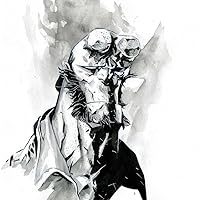
Man I just love Rubín’s art. Would have loved to see this in color but the small format manga-style book was pretty cool.

July 14, 2015
There were so many things this book could have been but never was. So many accidental pursuits of virtue and so many predilections of self-doubt. THE RISE OF AURORA WEST is a fun and entertaining graphic novel, but it's nowhere close to being as fun or as entertaining as it could have been.
Aurora West, the only child of the eponymous city-hero Haggard West, is coming into her own at age fourteen: she's learning to drive, her schedule is full of school work and martial arts instruction, and her father has finally decided to begin her integration into the family business -- "I'm going to train you to fight monsters," Haggard says, but only after grieving the death of his wife and blaming himself for her death for several years.
Paul Pope's Battling Boy was a clever but empty attempt at monster-smashing fun; it gave no real indication as to who/what mattered and why, and ultimately ran out of energy pumping up the action, apparently too busy give any of the characters any real purpose. From Battling Boy we get the character Aurora West, whom, oddly enough, was perhaps one of the best characters from that particular book.
In THE RISE OF AURORA WEST, readers get more Aurora West, which is good. However, where depth of character and a more nuanced spectrum of emotion are welcome additions, other areas of the storytelling completely fall flat. Specifically, the story's multiple subplots get in each other's way: Aurora learning to be a hero from her father; Aurora learning tough love from her tutor, Ms. Grately; Aurora's relationship with an anonymous boy from class; Aurora's detective skills; Haggard's parenting skills; the death of Rosetta West; the origin of monsters; and so on. All interesting. All worthy of ink. But the narration is woefully inconsistent, and this book has only 150 pages.
At best, this graphic novel glimpses part of a much larger world, where humans and monsters are fighting each other for reasons lost to time. Haggard West is blinded by his ambition, and the question remains as to whether his daughter will fall to the same trap as well. Interestingly, THE RISE OF AURORA WEST doesn't capitalize on this angle. Instead, the book continuously introduces conditional side stories, which although related to the greater narrative, haven't much place in a book this short. These side stories may breed their own intrigue of sorts, but their presence is a distraction, splintering the story and never picking up the pieces. This is a graphic novel that jumps around and regularly dismisses occasional and flavorful bits of curiousness without much care.
For example, there's talk in the book about the origin of the monsters. It's never discussed where the monsters come from or how they got into the City of Arcopolis, but there's a flame of intrigue as to how they germinate and why. Even better, one character even presumes they are the manifestation people's fears, nightmares even (and to go one step further, one might suppose they are the fears of Haggard West himself). But as is the case with THE RISE OF AURORA WEST, the book brushes through these little mysteries with feigning interest -- "I guess I never really thought about it," Aurora says, and the subject is dropped.
Ms. Grately, a pivotal figure in the West household, is another example. She's their cook, tutor, medic, mechanic, and instructor. But she's cautious with her affection and the reader is never enlightened as to why this is the case. She has no history and no primary function other than as a super housekeeper. The story clearly implies she has motive but she remains two-dimensional. She simply exists.
Or what about Coil, the monster baddy at the focus of the story? Coil is assumed responsible for certain heinous acts that propel much of the story's clever detective work. But Coil's motives are never revealed. Readers don't have a single clue as to who he is, why he does what he does, or why he plots to do more of what he does. It's presumptuous on the part of the creative team to believe that details such as these can be glossed over (or completely missing) from the final draft and not impact how the book is to be read.
THE RISE OF AURORA WEST doesn't fill one with confidence as to how this franchise is evolving. And as for presentation, the book's undersized canvas squeezes too much art and too many word balloons into too little space. THE RISE OF AURORA WEST is another fun but messy frolic in urban fantasy.
Aurora West, the only child of the eponymous city-hero Haggard West, is coming into her own at age fourteen: she's learning to drive, her schedule is full of school work and martial arts instruction, and her father has finally decided to begin her integration into the family business -- "I'm going to train you to fight monsters," Haggard says, but only after grieving the death of his wife and blaming himself for her death for several years.
Paul Pope's Battling Boy was a clever but empty attempt at monster-smashing fun; it gave no real indication as to who/what mattered and why, and ultimately ran out of energy pumping up the action, apparently too busy give any of the characters any real purpose. From Battling Boy we get the character Aurora West, whom, oddly enough, was perhaps one of the best characters from that particular book.
In THE RISE OF AURORA WEST, readers get more Aurora West, which is good. However, where depth of character and a more nuanced spectrum of emotion are welcome additions, other areas of the storytelling completely fall flat. Specifically, the story's multiple subplots get in each other's way: Aurora learning to be a hero from her father; Aurora learning tough love from her tutor, Ms. Grately; Aurora's relationship with an anonymous boy from class; Aurora's detective skills; Haggard's parenting skills; the death of Rosetta West; the origin of monsters; and so on. All interesting. All worthy of ink. But the narration is woefully inconsistent, and this book has only 150 pages.
At best, this graphic novel glimpses part of a much larger world, where humans and monsters are fighting each other for reasons lost to time. Haggard West is blinded by his ambition, and the question remains as to whether his daughter will fall to the same trap as well. Interestingly, THE RISE OF AURORA WEST doesn't capitalize on this angle. Instead, the book continuously introduces conditional side stories, which although related to the greater narrative, haven't much place in a book this short. These side stories may breed their own intrigue of sorts, but their presence is a distraction, splintering the story and never picking up the pieces. This is a graphic novel that jumps around and regularly dismisses occasional and flavorful bits of curiousness without much care.
For example, there's talk in the book about the origin of the monsters. It's never discussed where the monsters come from or how they got into the City of Arcopolis, but there's a flame of intrigue as to how they germinate and why. Even better, one character even presumes they are the manifestation people's fears, nightmares even (and to go one step further, one might suppose they are the fears of Haggard West himself). But as is the case with THE RISE OF AURORA WEST, the book brushes through these little mysteries with feigning interest -- "I guess I never really thought about it," Aurora says, and the subject is dropped.
Ms. Grately, a pivotal figure in the West household, is another example. She's their cook, tutor, medic, mechanic, and instructor. But she's cautious with her affection and the reader is never enlightened as to why this is the case. She has no history and no primary function other than as a super housekeeper. The story clearly implies she has motive but she remains two-dimensional. She simply exists.
Or what about Coil, the monster baddy at the focus of the story? Coil is assumed responsible for certain heinous acts that propel much of the story's clever detective work. But Coil's motives are never revealed. Readers don't have a single clue as to who he is, why he does what he does, or why he plots to do more of what he does. It's presumptuous on the part of the creative team to believe that details such as these can be glossed over (or completely missing) from the final draft and not impact how the book is to be read.
THE RISE OF AURORA WEST doesn't fill one with confidence as to how this franchise is evolving. And as for presentation, the book's undersized canvas squeezes too much art and too many word balloons into too little space. THE RISE OF AURORA WEST is another fun but messy frolic in urban fantasy.

January 7, 2015
The Rise of Aurora West, Battling Boy
Written by Paul Pope, JT Petty, Illustrated by David Rubín
First Second
September 2014
Acropolis has a nightly curfew, in the attempt to keep kids safe from the monsters who prowl the streets and the dark alleys. They have one hero. Haggard West, a rich scientist, avenging the death of his wife at the hands of one of these foul creatures. Joining him is his teenage daughter, Aurora West. By day she is trained by Ms. Grately in martial arts and by night she prowls the city with her father, hunting down the creatures of the night and stopping their mischief. But Aurora remembers and learns that her imaginary friend from when she was younger...may have had a hand in her mother’s death and may not be so imaginary. As she seeks to balance school, the night hunts, and finding out the truth to the past Aurora may find that she has taken on more than she can handle. And may need all the help she can just not to fall.
This is one of those books that’s difficult for me review, because it’s a spinoff/prequel of one of my favorite books from last year, Battling Boy. Because the book isn’t a direct continuation of Battling Boy, but instead focuses on one of its more interesting side characters, Aurora West, the art, layout, and writing style is different. And that isn’t a bad thing, it just makes it harder for me to review, as I try to keep in mind that this is a completely different book.
With regards to the art I actually like David Rubin’s style a great deal. The figures are dynamic and expressive, and his style really captures the feel of the battles and villains well. The problem for me though is that it isn’t the Aurora West that we met in Battling Boy. And maybe that’s part of a strategic decision since this telling her story before we meet her. But I feel in love with Pope’s version of Aurora and it’s hard to look at someone else drawing her. I know that’s a common thing among superhero comics and we all have our favorite artists that work on a particular character, but for me it feels too soon to have someone else draw her right now. And that’s not really Rubin’s fault, it just pulls me out of book a little bit.
Where I do have some issues though, is that the art and writing in some places at the beginning of the book didn’t quite jive well, particularly with some of the panel transitions. On some of the pages where the grid is broken or tilted at an angle towards the beginning of the book I fall out of the story, because I veer to the wrong panel or just something jars me out. And while I can stand back and look at the page and follow the logic, when I’m reading the story I get drawn out for a couple of seconds trying to figure out what’s really happening, and that’s not a good thing in an action/adventure/hero story. And maybe its because this is the first time this group has worked together and they were finding their footing. By the end of the story I didn’t see as much of this and did get swept into the last quarter of the book and it’s action.
When it comes down to it though, I had trouble with aspects of the story and the art. It just didn’t capture my attention the way Battling Boy did. And although this one didn’t work for me in places, I still love Battling Boy and Aurora West though, so I’ll definitely give the sequel a read because I want to know what happens next. I want to know who this mysterious figure is and what really happened to Aurora’s mother. I give it three out of five stars.
ARC provided by Gina at First Second
Written by Paul Pope, JT Petty, Illustrated by David Rubín
First Second
September 2014
Acropolis has a nightly curfew, in the attempt to keep kids safe from the monsters who prowl the streets and the dark alleys. They have one hero. Haggard West, a rich scientist, avenging the death of his wife at the hands of one of these foul creatures. Joining him is his teenage daughter, Aurora West. By day she is trained by Ms. Grately in martial arts and by night she prowls the city with her father, hunting down the creatures of the night and stopping their mischief. But Aurora remembers and learns that her imaginary friend from when she was younger...may have had a hand in her mother’s death and may not be so imaginary. As she seeks to balance school, the night hunts, and finding out the truth to the past Aurora may find that she has taken on more than she can handle. And may need all the help she can just not to fall.
This is one of those books that’s difficult for me review, because it’s a spinoff/prequel of one of my favorite books from last year, Battling Boy. Because the book isn’t a direct continuation of Battling Boy, but instead focuses on one of its more interesting side characters, Aurora West, the art, layout, and writing style is different. And that isn’t a bad thing, it just makes it harder for me to review, as I try to keep in mind that this is a completely different book.
With regards to the art I actually like David Rubin’s style a great deal. The figures are dynamic and expressive, and his style really captures the feel of the battles and villains well. The problem for me though is that it isn’t the Aurora West that we met in Battling Boy. And maybe that’s part of a strategic decision since this telling her story before we meet her. But I feel in love with Pope’s version of Aurora and it’s hard to look at someone else drawing her. I know that’s a common thing among superhero comics and we all have our favorite artists that work on a particular character, but for me it feels too soon to have someone else draw her right now. And that’s not really Rubin’s fault, it just pulls me out of book a little bit.
Where I do have some issues though, is that the art and writing in some places at the beginning of the book didn’t quite jive well, particularly with some of the panel transitions. On some of the pages where the grid is broken or tilted at an angle towards the beginning of the book I fall out of the story, because I veer to the wrong panel or just something jars me out. And while I can stand back and look at the page and follow the logic, when I’m reading the story I get drawn out for a couple of seconds trying to figure out what’s really happening, and that’s not a good thing in an action/adventure/hero story. And maybe its because this is the first time this group has worked together and they were finding their footing. By the end of the story I didn’t see as much of this and did get swept into the last quarter of the book and it’s action.
When it comes down to it though, I had trouble with aspects of the story and the art. It just didn’t capture my attention the way Battling Boy did. And although this one didn’t work for me in places, I still love Battling Boy and Aurora West though, so I’ll definitely give the sequel a read because I want to know what happens next. I want to know who this mysterious figure is and what really happened to Aurora’s mother. I give it three out of five stars.
ARC provided by Gina at First Second

March 30, 2015
This book appeared in our house as part of a care package to our daughter from a friend of ours. She'd ended up with an extra copy of the book and thought our kid might like it. This is the first part of the second segment of Pope's Battling Boy series, but stands alone perfectly well outside of that storyline.
The creators have stated elsewhere that this book (and the Battling Boy series as a whole) was an attempt to make a monster-filled adventure suitable to young readers as well as old. They've accomplished that admirably, weaving a family story into a Hellboy-esque monster-hunter shoot-em-up.
Aurora's dad is Haggard West, the main (only?) monster-hunter in Arcopolis, and he's decided it's time for her to start training for the family business. Her mother was murdered a year before we join them, in an alley near where her father was giving what would be his last press conference. The monsters recently have been up to something major, and while Haggard just wants to stop them, Aurora suspects there's not only reason to figure out what's happening but to figure out what exactly happened to her mother that night a year ago. It remains to be seen if the two are connected.
Pope only does writing duty on this one, but he's as in form as he's ever been. David Rubín is giving us art that, while reminiscent of Pope's own wild style, is clearly a different beast altogether; he manages to make monsters that are both fearsome and yet palatable without being terrifying for younger readers.
Our soon-eight daughter thoroughly enjoyed this romp, and I couldn't wait to read it when she was done. Now, we're both looking forward to the second instalment. For a reader young or older with a thirst for adventure and a penchant for tough girls and wicked monsters, this is an easy read that's lots of fun.
The creators have stated elsewhere that this book (and the Battling Boy series as a whole) was an attempt to make a monster-filled adventure suitable to young readers as well as old. They've accomplished that admirably, weaving a family story into a Hellboy-esque monster-hunter shoot-em-up.
Aurora's dad is Haggard West, the main (only?) monster-hunter in Arcopolis, and he's decided it's time for her to start training for the family business. Her mother was murdered a year before we join them, in an alley near where her father was giving what would be his last press conference. The monsters recently have been up to something major, and while Haggard just wants to stop them, Aurora suspects there's not only reason to figure out what's happening but to figure out what exactly happened to her mother that night a year ago. It remains to be seen if the two are connected.
Pope only does writing duty on this one, but he's as in form as he's ever been. David Rubín is giving us art that, while reminiscent of Pope's own wild style, is clearly a different beast altogether; he manages to make monsters that are both fearsome and yet palatable without being terrifying for younger readers.
Our soon-eight daughter thoroughly enjoyed this romp, and I couldn't wait to read it when she was done. Now, we're both looking forward to the second instalment. For a reader young or older with a thirst for adventure and a penchant for tough girls and wicked monsters, this is an easy read that's lots of fun.
March 20, 2016
This comic deals with monsters, kidnapping, murder, and an all around world where your life can be turned upside down if you are not careful. So be sure to read this comic before dropping this into a younger readers hand to make sure they can handle it.
Life is not always easy when you are the daughter of a famous hero and monster slayer but amid her academic studies and her physical training at home Aurora West is doing her best even as she goes on patrols with her father. However when interrogating a monster something from Aurora's past surfaces in her memory as we learn about her unusual upbringing. This is the story of a girl and a monster and the destiny they share.
I for one am not the biggest fan of the artwork in this book feeling like it changes now and then but it is not bad and the story is interesting as we delve into the past of Aurora West and get to see how monsters can work together to meet a common goal. Of course you will have to decide if the story outshines the art style if you decide to try this 1st book in a two part series.
If I had to chose a favorite part of the book it would have to be when Haggard (Aurora's father and hero of the city) finds an old man wanting to jump after believing he lost everything important in his life. After a retelling of his troubles Haggard lets the man jump at last but saves him at the last second with his jetpack. Having faced a potential death there is some emotional growing up happening in this touching moment.
Life is not always easy when you are the daughter of a famous hero and monster slayer but amid her academic studies and her physical training at home Aurora West is doing her best even as she goes on patrols with her father. However when interrogating a monster something from Aurora's past surfaces in her memory as we learn about her unusual upbringing. This is the story of a girl and a monster and the destiny they share.
I for one am not the biggest fan of the artwork in this book feeling like it changes now and then but it is not bad and the story is interesting as we delve into the past of Aurora West and get to see how monsters can work together to meet a common goal. Of course you will have to decide if the story outshines the art style if you decide to try this 1st book in a two part series.
If I had to chose a favorite part of the book it would have to be when Haggard (Aurora's father and hero of the city) finds an old man wanting to jump after believing he lost everything important in his life. After a retelling of his troubles Haggard lets the man jump at last but saves him at the last second with his jetpack. Having faced a potential death there is some emotional growing up happening in this touching moment.
December 31, 2014
"The Rise of Aurora West" is a superhero graphic novel set in a fantasy city called Acropolis. The city is overrun with monsters that steal people's children. The city's scientist Haggard West decides to use his technology to help the city, and he becomes a hero. When Haggard's wife, Rosetta West, dies, he dedicates his life to protecting others in the city. With the help of his daughter, Aurora West, Haggard defends the city from the monsters. All the while, Aurora tries to solve the mystery of her mother's death by finding out which monster killed her.
I thought this book was alright. It was hard to get into the fantasy world without reading other books by Paul Pope, even thought this is the first in the series. I admired the strong messages in the book more than it's over the top action scenes. For example, a victim who had his daughter stolen by monsters in Acropolis says, "And the only things you can make worth something are your children. You put everything into them, realize you never really loved anything until they came along". The victim says this to Haggard West. I like how this tied into his drive for protecting Aurora.
I would recommend this book to anyone who likes superhero books that not only have action, but character development as well. I liked how this story portrayed Aurora and Haggard as actual "people" who were looking out for others because they don't want them to feel the pain they did.
I thought this book was alright. It was hard to get into the fantasy world without reading other books by Paul Pope, even thought this is the first in the series. I admired the strong messages in the book more than it's over the top action scenes. For example, a victim who had his daughter stolen by monsters in Acropolis says, "And the only things you can make worth something are your children. You put everything into them, realize you never really loved anything until they came along". The victim says this to Haggard West. I like how this tied into his drive for protecting Aurora.
I would recommend this book to anyone who likes superhero books that not only have action, but character development as well. I liked how this story portrayed Aurora and Haggard as actual "people" who were looking out for others because they don't want them to feel the pain they did.

September 22, 2014
I won a copy of The Rise of Aurora West in a Goodreads giveaway. It's a very nice digest-sized black-and-white graphic novel. Sometimes they're almost unreadable in this format what with the illustrations and dialog-balloons fading into the center binding, but this one works well. My initial impression was that the story suffered because it could not seem to decide if it wanted to be an adult narrative or more of a kiddie-book, but after reflection I decided that duality actually worked pretty well here since it's the story of a youngish girl growing up; Aurora is the daughter (and sort-of partner-in-training) of a superhero. The story focuses on her beginning to develop into her own woman. The only fault I found with the book is an abrupt ending without anything in the way of a resolution. It's a very nicely written and illustrated book, overall.

April 25, 2015
A father and his daughter, battling monsters and on their way to avenging the death of Aurora's mother. The story was enjoyable, if not terribly original by any means, but I liked the relationship between Aurora and Haggard.
The art is definitely not the worst I've seen. It's mostly not so bad, though there are a fair amount of of cringe-worthy panels. Most notably, the proportions for Aurora as a child were awful and somewhat grotesque. Additionally, Ms. Grately's design is very odd: she's a big masculine lady.
Will be checking out The Fall of the House of West.
The art is definitely not the worst I've seen. It's mostly not so bad, though there are a fair amount of of cringe-worthy panels. Most notably, the proportions for Aurora as a child were awful and somewhat grotesque. Additionally, Ms. Grately's design is very odd: she's a big masculine lady.
Will be checking out The Fall of the House of West.

November 24, 2014
La lectura de este tebeo está demasiado condicionada por su publicación en un formato tomo manga. Un tamaño que no hace justicia al trabajo de David Rubín y en el cual resulta del todo imposible disfrutar de los detalles de las imágenes. Después hay aspectos ajenos al formato y que tienen que ver con la propia narrativa, pero que para mi es lo de menos cuando se publica una obra cuyo disfrute está tan mediatizado por una pésima decisión editorial.
Si se repite con la siguiente entrega, conmigo que no cuenten.
Si se repite con la siguiente entrega, conmigo que no cuenten.

October 5, 2014
I found this graphic novel incomprehensible, which perhaps is my usual experience with Paul Pope. Despite this, I keep reading him. His brand of strange, ghoulish, action-y uniqueness is compelling.
However, there's only so much ugly things = bad, pretty things = good that I can stomach without casting my eyes around for something with a little more grey-space.
However, there's only so much ugly things = bad, pretty things = good that I can stomach without casting my eyes around for something with a little more grey-space.

July 24, 2014
excited to get this for review! wonder if the finished copy will be full color? upon first read through was satisfied by balance of adventure, new story, and possible connections w/ battling boy story.


November 18, 2014
needs to be printed on larger paper size

January 3, 2015
I really enjoyed this, and much more than Battling Boy. This one seems to tell much more of a story than Battling Boy did. I still look forward to reading the rest of both series though.

July 22, 2015
Paul Pope's best work. I've never been a huge fan of Mr. Pope's but he's really hit his stride within the city of Arcopolis.

December 14, 2016
I liked it. Didn't exactly love it or anything. Hence the 4 stars. Interesting art, a little off-putting at times.
Yup. That's it.
Yup. That's it.
Displaying 1 - 30 of 178 reviews