

What do you think?

A Meeting with Medusa / Green Mars
Taking place partly on Earth and partly in the atmosphere of Jupiter, the story tells of Howard Falcon, the captain of a new and experimental giant-sized helium-filled airship. When an accident causes the ship to crash, Falcon is badly injured and takes over a year to fully recover.
The story was the inspiration for The Medusa Encounter, the fourth novel in the Venus Prime series by Paul Preuss.
The pilot episode of Star Trek: The Next Generation, entitled "Encounter at Farpoint" (1987), features a large, sentient, space-dwelling jellyfish-like creature similar to the Medusa creature in Clarke's story.
The concept of life on Jupiter was explored in the second episode of Carl Sagan's PBS series Cosmos, which featured lifeforms similar in concept to those in this story.
Clarke himself revisited the notion of giant lifeforms in the atmosphere of Jupiter in his 1982 novel 2010: Odyssey Two.
A sequel, The Medusa Chronicles, will be published in 2016 via a collaborative effort between Alastair Reynolds and Stephen Baxter.
The story was the inspiration for The Medusa Encounter, the fourth novel in the Venus Prime series by Paul Preuss.
The pilot episode of Star Trek: The Next Generation, entitled "Encounter at Farpoint" (1987), features a large, sentient, space-dwelling jellyfish-like creature similar to the Medusa creature in Clarke's story.
The concept of life on Jupiter was explored in the second episode of Carl Sagan's PBS series Cosmos, which featured lifeforms similar in concept to those in this story.
Clarke himself revisited the notion of giant lifeforms in the atmosphere of Jupiter in his 1982 novel 2010: Odyssey Two.
A sequel, The Medusa Chronicles, will be published in 2016 via a collaborative effort between Alastair Reynolds and Stephen Baxter.
180 pages, Unknown Binding
First published October 15, 1988
About the author
Arthur C. Clarke
1,548 books12.1k followersStories, works of noted British writer, scientist, and underwater explorer Sir Arthur Charles Clarke, include
2001: A Space Odyssey
(1968).
This most important and influential figure in 20th century fiction spent the first half of his life in England and served in World War II as a radar operator before migrating to Ceylon in 1956. He co-created his best known novel and movie with the assistance of Stanley Kubrick.
Clarke, a graduate of King's College, London, obtained first class honours in physics and mathematics. He served as past chairman of the interplanetary society and as a member of the academy of astronautics, the royal astronomical society, and many other organizations.
He authored more than fifty books and won his numerous awards: the Kalinga prize of 1961, the American association for the advancement Westinghouse prize, the Bradford Washburn award, and the John W. Campbell award for his novel Rendezvous with Rama. Clarke also won the nebula award of the fiction of America in 1972, 1974 and 1979, the Hugo award of the world fiction convention in 1974 and 1980. In 1986, he stood as grand master of the fiction of America. The queen knighted him as the commander of the British Empire in 1989.
This most important and influential figure in 20th century fiction spent the first half of his life in England and served in World War II as a radar operator before migrating to Ceylon in 1956. He co-created his best known novel and movie with the assistance of Stanley Kubrick.
Clarke, a graduate of King's College, London, obtained first class honours in physics and mathematics. He served as past chairman of the interplanetary society and as a member of the academy of astronautics, the royal astronomical society, and many other organizations.
He authored more than fifty books and won his numerous awards: the Kalinga prize of 1961, the American association for the advancement Westinghouse prize, the Bradford Washburn award, and the John W. Campbell award for his novel Rendezvous with Rama. Clarke also won the nebula award of the fiction of America in 1972, 1974 and 1979, the Hugo award of the world fiction convention in 1974 and 1980. In 1986, he stood as grand master of the fiction of America. The queen knighted him as the commander of the British Empire in 1989.
Ratings & Reviews
Friends & Following
Create a free account to discover what your friends think of this book!
Community Reviews
Displaying 1 - 30 of 60 reviews

February 10, 2022
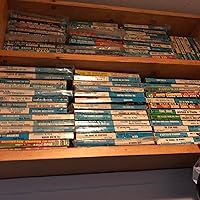
This is the first volume of the Tor double book program, which ran for three dozen books in the late '80s to the early '90s. They were produced like the famous old Ace Doubles, with two titles back-to-back and inverted in relation to one another and with individual covers. This one features two nice Vincent di Fate astronomicals. (I notice that someone at Tor wasn't familiar with the format yet; all of the even numbered pages in both halves of the book have Kim Stanley Robinson's name listed at the top as the author, not just on his story.) Clarke's story was first published in Playboy magazine of all places in 1971. ("Honest, Mom, I'm not looking at the pictures, I'm just reading Arthur C. Clarke!") It won the Nebula Award for best novella of the year but lost the Hugo to a Poul Anderson story from F&SF; perhaps the Nebulas (which are awarded by the members of the writers' union, whereas the Hugos are voted on by the fans) has a broader readership, and the fans tend to stick closer to the genre publications. (There was probably a funny joke there somewhere fifty years back.) It's a very good account of first contact, exploring Jupiter, and human augmentation; a true science fiction masterpiece. Kim Stanley Robinson's Green Mars is from an issue of Asimov's Magazine from 1985. It's part of a bibliographical nightmare, because he wrote an unrelated award-winning novel a few years later and used the same title. It's a fine story about mountain climbing, but I'm not sure that it's a science fiction story. It's set on a terraformed Mars in the future, but those trappings aren't essential to the story about a band of climbers. It's told in a present tense narrative that varied from very to vaguely annoying, but it's a good story once you get into the rhythm. They're both traditional hard-science fiction classics, and still worth reading

June 11, 2016
5 Stars
A Meeting with Medusa is a classic and legendary novella by the scientific great Arthur C. Clarke. This is a futuristic story that touches on first contact. The story takes place on Jupiter, a strange and utterly massive gas planet that is difficult for people to understand. Clarke adds layer upon layer to the speculative fiction by having the protagonist in this one be a man/machine named Howard Falcon.
This is a well written and well done sci-fi thriller. I read it before moving on to the newly released sequel The Medusa Chronicles by Stephen Baxter and Alastair Reynolds.
Simply awesome...
A Meeting with Medusa is a classic and legendary novella by the scientific great Arthur C. Clarke. This is a futuristic story that touches on first contact. The story takes place on Jupiter, a strange and utterly massive gas planet that is difficult for people to understand. Clarke adds layer upon layer to the speculative fiction by having the protagonist in this one be a man/machine named Howard Falcon.
This is a well written and well done sci-fi thriller. I read it before moving on to the newly released sequel The Medusa Chronicles by Stephen Baxter and Alastair Reynolds.
Simply awesome...

January 14, 2019
This is Tor Double #1, of a series of 36 double books published from 1988 to 1991 by Tor Books. It contains two novellas, bound together tête-bêche in mass market paperback – back-to-back, inverted, with two front covers and both titles on the spine. The novellas are listed here alphabetically by author; neither should be considered “primary.”
A Meeting with Medusa, by Arthur C. Clarke (1971)
This was originally published in the December 1971 issue of Playboy Magazine, and won the 1973 Nebula Award in the novella category. It tells the story of an expedition to explore the atmosphere of Jupiter in a helium-filled airship. It contains scientifically plausible speculation on lifeforms that could exist in that environment, along with a thinly developed captain character. The story would probably appeal only to the hard-sf fans of Arthur C. Clarke (such as me).
Green Mars, by Kim Stanley Robinson (1985)
This was originally published in the September 1985 issue of Isaac Asimov's Science Fiction Magazine, and was nominated for several science fiction awards in the novella category. It is not to be confounded with Kim Stanley Robinson's novel of the same name, and does not take place in the same universe as his Mars trilogy, which describes a different terraformed Mars. Instead, it forms a sequence with the short works "Exploring Fossil Canyon" (1982) and "A Martian Romance" (1999) . All three works were included in the collection The Martians, along with "Arthur Sternbach Brings the Curveball to Mars", which shares a character. It tells of the climbing of Olympus Mons, the tallest volcano on Mars and in the entire the solar system, while exposing the issues of a terraformed Martian climate in a scientifically plausible manner. The story would probably appeal only to the hard-sf fans of Kim Stanley Robinson (such as me).
A Meeting with Medusa, by Arthur C. Clarke (1971)
This was originally published in the December 1971 issue of Playboy Magazine, and won the 1973 Nebula Award in the novella category. It tells the story of an expedition to explore the atmosphere of Jupiter in a helium-filled airship. It contains scientifically plausible speculation on lifeforms that could exist in that environment, along with a thinly developed captain character. The story would probably appeal only to the hard-sf fans of Arthur C. Clarke (such as me).
Green Mars, by Kim Stanley Robinson (1985)
This was originally published in the September 1985 issue of Isaac Asimov's Science Fiction Magazine, and was nominated for several science fiction awards in the novella category. It is not to be confounded with Kim Stanley Robinson's novel of the same name, and does not take place in the same universe as his Mars trilogy, which describes a different terraformed Mars. Instead, it forms a sequence with the short works "Exploring Fossil Canyon" (1982) and "A Martian Romance" (1999) . All three works were included in the collection The Martians, along with "Arthur Sternbach Brings the Curveball to Mars", which shares a character. It tells of the climbing of Olympus Mons, the tallest volcano on Mars and in the entire the solar system, while exposing the issues of a terraformed Martian climate in a scientifically plausible manner. The story would probably appeal only to the hard-sf fans of Kim Stanley Robinson (such as me).

July 21, 2016
Alastair Reynolds mi je već s prvim romanom Revelation Space (osvrt) postao omiljen pisac. Nedavno sam vidio da je sa Stephenom Baxterom objavio The Medusa Chronicles, nastavak novelette A. C. Clarka, pa sam ju htio pročitati.
A Meeting with Medusa je priča o Howardu Falconu, čije je tijelo nakon jedne gotovo fatalne nesreće unaprijeđeno mehaničkim dodacima, koji mu kasnije omoguće da istraži Jupiter izbliza, gdje osim zanimljivih mješavina plinova, nađe i nešto puno zanimljivije.
Najbolje u priči je sam opis Jupitera te istraživanja i interakcija s nepoznatom okolinom - to Clarke radi majstorski. Zbilja se osjećaš kao da lebdiš iznad površine Jupitera. Priča je čak i aktualna jer je sonda Juno nedavno uspješno ušla u orbitu Jupitera te će odraditi sličnu misiju kao glavni lik ove priče - još kad bi našla što je i on našao...
Taj "sense of wonder" i je glavni razlog zašto volim Clarka - sigurno ne zbog likova. Ovdje je glavni lik kiborg kojemu tehničari nisu vratili čak ni mogućnost da se može nasmijati! Tako da ne očekujete emotivno vezivanje.
Priča završava praktički kada je najzanimljiviji dio i mislim da bi puno bolje funkcionirala da je Clarke od ovoga ipak napravio kratki roman. Ali svakako je vrijedna čitanja, pogotovu fanovima Clarka. U opisu nastavka vidim da su proširili priču u svim pravcima koje je Clarke zacrtao, pa ga definitivno stavljam na sam vrh liste za čitanje.
A Meeting with Medusa je priča o Howardu Falconu, čije je tijelo nakon jedne gotovo fatalne nesreće unaprijeđeno mehaničkim dodacima, koji mu kasnije omoguće da istraži Jupiter izbliza, gdje osim zanimljivih mješavina plinova, nađe i nešto puno zanimljivije.
Najbolje u priči je sam opis Jupitera te istraživanja i interakcija s nepoznatom okolinom - to Clarke radi majstorski. Zbilja se osjećaš kao da lebdiš iznad površine Jupitera. Priča je čak i aktualna jer je sonda Juno nedavno uspješno ušla u orbitu Jupitera te će odraditi sličnu misiju kao glavni lik ove priče - još kad bi našla što je i on našao...
Taj "sense of wonder" i je glavni razlog zašto volim Clarka - sigurno ne zbog likova. Ovdje je glavni lik kiborg kojemu tehničari nisu vratili čak ni mogućnost da se može nasmijati! Tako da ne očekujete emotivno vezivanje.
Priča završava praktički kada je najzanimljiviji dio i mislim da bi puno bolje funkcionirala da je Clarke od ovoga ipak napravio kratki roman. Ali svakako je vrijedna čitanja, pogotovu fanovima Clarka. U opisu nastavka vidim da su proširili priču u svim pravcima koje je Clarke zacrtao, pa ga definitivno stavljam na sam vrh liste za čitanje.
June 17, 2007
This was really my first classic science fiction book of my own. It includes Clarke's "A Meeting With Medusa" short story describing the first manned (if you can call it that!) expedition to the atmosphere of Jupiter. In fact, this short story is the inspiration for many of the details later seen in Ben Bova's Jupiter! The other half is an excerpt from Kim Stanley Robinson's Green Mars that describes a group of people climbing Mars' immense Mount Olympus in a post-terraforming Mars like people do Mount Everest today. Good fun.
I still own a copy of this double book to this day. :)
I still own a copy of this double book to this day. :)

April 2, 2020
Arthur C Clarke is one of the Big Four-essentially one of the grandfathers of the science fiction genre. (For the record: Asimov, Bradbury, Clarke, and Heinlein.) Clarke is actually the author I have read the least of so it was a pleasure to devour A Meeting with Medusa. This is the story of humanity's exploration of Jupiter, and some startling discoveries made there. Before you tell me the high gravity makes that impossible, let me gently remind you, Constant Reader, that Clarke was a genius. I will not elaborate further though I will say this is a very enjoyable tale.

March 11, 2025
I am starting to think that old-timey hard science fiction is not my bag.

July 6, 2016
I read this book in a couple of hours. It was only 67 pages long. It came in the form of a TOR double. It was presented as a short novel but was in reality more of a long short story. I read it because a sequel, The Medusa Chronicles, was published in June 2016 via a collaborative effort between Alastair Reynolds and Stephen Baxter. Alastair Reynolds is one of my favorite authors and I also enjoy works by Stephen Baxter. I am now cautious about reading their sequel because I just wasn't impressed with this story. Arthur C. Clarke is a master of Science Fiction with a great many works to his credit and I have enjoyed many of his books. Saying that I can only recommend this one to die hard fans of Clarke.

February 5, 2017
Just not my thing. This Sci-Fi novella was written during a more optimistic time. The world was fraught with terrors but we had confidence that science and human compassion were going to win the day. It was also written at a time when we were fascinated by the possibilities of an exciting new technology. Sadly, Kubrick had a clearer vision than Clarke.

September 26, 2017
This was fun
Great short story that was actually first published at playboy magazine ( who would have believed that ? )
Very enjoyable, I sure did !!!
Great short story that was actually first published at playboy magazine ( who would have believed that ? )
Very enjoyable, I sure did !!!

December 28, 2014
I am so glad to be done with this cute, little book. Ugh. I wanted to love it so much, but these two stories literally back to back with their insufferable, arrogant, unsympathetic protagonists and really not that much in the "man-that's-such-a-cool-idea" tank to redeem them were too much even for me, and I have a pretty high tolerance for these things. I am going back for more though and diving into Clarke's Rendezvous with Rama and then KSR's 2312 which is what landed me here in the first place. High hopes.

June 21, 2016
A clever pairing of two compelling novellas.
November 5, 2024
Green Mars: 3 stars
A Meeting With Medusa: 4 stars
A Meeting With Medusa: 4 stars
August 4, 2020
Howard Falcon, after barely surviving an airship accident which killed the entire crew, taking him a few years to heal and rehabilitee, finds himself in a unique position to pilot the first manned airship within Jupiter's atmosphere. During this experience, the reader gradually learns that Falcon has been "enhanced" by the surgeons from his prior accident which gives him the ability to withstand 15Gs of deceleration into Jupiter's atmosphere and other unique talents. it is only until the very last page of this short story we lean the full extent on his modifications which are the cause of his preference for self isolation making him the ideal one man probe pilot. Spoiler: this story tells of two types of Jupiter atmospheric life, the Manta Ray looking predators and the larger Leviathan looking beings. These Leviathans are most certainly the inspiration for books following such as Ben Bova's who has a series about mankind's exploration and settlement of the solar system including mention of the Leviathans of Jupiter.
The second story: Green mars is quite the tale of climbing Olympus Mons, the highest mountain on Mars. Taking place a few centuries from now after Mars has been terraformed so earth life can survive, it revolves around the central character who for the last 40 of his over 300 years was a member of the failed "Green party" who were against Man's turning Mars into an Earthlike park and keeping the serine, bare, but beautiful natural environment. He is at what one could consider a post retirement crisis and decides to join a mountain climbing expedition. If become obvious that he has expert experience in climbing prior to his political career. during the climb which has unexpected events happen, he meets an "old flame" from 280 years ago who, at first, doesn't remember him. He sees life of all types on the slopes of the mountain. All of which have been genetically modified through gene splicing. Over the course of the climb he gradually learns he can change his point of view from being bitter about what Man did to Mars to how it is still beautiful. The book is obviously written by someone that's familiar with technical climbing. There are also references to philosophy relevant to the experience. It is a very unique tale about self discovery, adaptation, and change.
The second story: Green mars is quite the tale of climbing Olympus Mons, the highest mountain on Mars. Taking place a few centuries from now after Mars has been terraformed so earth life can survive, it revolves around the central character who for the last 40 of his over 300 years was a member of the failed "Green party" who were against Man's turning Mars into an Earthlike park and keeping the serine, bare, but beautiful natural environment. He is at what one could consider a post retirement crisis and decides to join a mountain climbing expedition. If become obvious that he has expert experience in climbing prior to his political career. during the climb which has unexpected events happen, he meets an "old flame" from 280 years ago who, at first, doesn't remember him. He sees life of all types on the slopes of the mountain. All of which have been genetically modified through gene splicing. Over the course of the climb he gradually learns he can change his point of view from being bitter about what Man did to Mars to how it is still beautiful. The book is obviously written by someone that's familiar with technical climbing. There are also references to philosophy relevant to the experience. It is a very unique tale about self discovery, adaptation, and change.

October 20, 2020
After an accident aboard the Queen Elizabeth, an experimental helium-filled airship, Captain Howard Falcon is never the same. He is disconnected from his friends and companions, focused on finding a purpose for his newly augmented life. When he hatches an idea to venture to Jupiter with his technologically advanced body, the last thing he expects is to discover creatures halfway between humanity and beast: the creatures he dubs the Medusa. But are they what he is searching for, or will he continue to wander aimlessly unsure of his role in life?
This novella has spread its tendrils of influence far and wide throughout the realm of science fiction. Through multiple novels, and even in infamous television shows such as Star Trek: The Next Generation, we have had countless exposure to creatures like the Medusa that Falcon encounter on Jupiter. The fact that this story has stood the test of time is a testament in itself.
Yet, as with many short stories and novella, often times they fall victim to their length. Falcon’s ultimate revelation isn’t woven into the narrative as much as I would like; his internal conflict isn’t as prevalent as his fascination with the Medusa. I think, ultimately, with a bit more length or understanding of his augmentation, the reader would understand his conclusion in greater depths. Instead, it read a bit more like a report of events, rather than giving us an inward look at Falcon’s struggles.
That being said though, I am glad I read this story. It gives me a glimpse at where some of my favorite sci-fi shows and books have derived influence.
Although, just like Falcon, I really would have loved to explore the “big red spot.”
This novella has spread its tendrils of influence far and wide throughout the realm of science fiction. Through multiple novels, and even in infamous television shows such as Star Trek: The Next Generation, we have had countless exposure to creatures like the Medusa that Falcon encounter on Jupiter. The fact that this story has stood the test of time is a testament in itself.
Yet, as with many short stories and novella, often times they fall victim to their length. Falcon’s ultimate revelation isn’t woven into the narrative as much as I would like; his internal conflict isn’t as prevalent as his fascination with the Medusa. I think, ultimately, with a bit more length or understanding of his augmentation, the reader would understand his conclusion in greater depths. Instead, it read a bit more like a report of events, rather than giving us an inward look at Falcon’s struggles.
That being said though, I am glad I read this story. It gives me a glimpse at where some of my favorite sci-fi shows and books have derived influence.
Although, just like Falcon, I really would have loved to explore the “big red spot.”

January 13, 2023
Two really solid novellas from two masters of science fiction, Kim Stanley Robinson and Arthur C Clarke. Green Mars by Robinson takes place on a nearly completely terraformed Mars and follows a group of people whose goal is to reach the top of Olympus Mons, the largest mountain in the solar system. The story is so focused on the climb one could call it ‘Everything You Wanted to Know About Mountain Climbing but Were Afraid to Ask’, however Robinson is clever enough to make the climb interesting. In the story we learn that humans on Mars have extended lifespans to around 300+ years, which means that many people later in life do not have active memories earlier than their 50s. Roger Claiborne, however, is one of the few blessed or cursed with eidetic memory so remembers his whole life, which has encapsulated the majority of the Martian terraformation. Roger also happens to be one of the minority of Martian settlers who fought tooth and nail against the greening of Mars but on the climb he finds his philosophies challenged.
Clarke’s A Meeting With Medusa follows Howard Falcon as he pilots the first manned craft to explore Jupiter. And I wish I could say more, but it would give nearly everything away if I elaborate further. I will say that despite the similarity of the structure of the title, this story has nothing to do with Clarke’s novel Rendezvous With Rama. It’s possible they may exist in the same timeline as both have enhanced chimpanzees that are referred to as “superchimps”, but nothing was made definite.
Clarke’s A Meeting With Medusa follows Howard Falcon as he pilots the first manned craft to explore Jupiter. And I wish I could say more, but it would give nearly everything away if I elaborate further. I will say that despite the similarity of the structure of the title, this story has nothing to do with Clarke’s novel Rendezvous With Rama. It’s possible they may exist in the same timeline as both have enhanced chimpanzees that are referred to as “superchimps”, but nothing was made definite.

February 18, 2025
Rating: 1.5 / 5
I think it's important to view this book from a historical lens and ask oneself how this story would have felt like from the perspective of 1971 when it was published. This novella was oddly paced with two juxtaposed sub-stories and an abrupt ending that was very much just an idea;
The classic male bravado shown by Falcon, the protagonist, was à la mode for its time, but worn out in ours. While the notion of travel to Jupiter may have seemed adventurous in the 60s and 70s, this notion has lost luster in our modern era even if it remains a technical impossibility. I imagine some people might not have truly grasped that Jupiter has no surface but rather is a gaseous entity, and in this the story may appeal to some sense of adventure. Yet still, no radical ideas were presented by Clarke even for its time. The "prime directive" used in the story had already been popularized by Star Trek in the 60s. And the notion of robots/cyborgs I'm guessing was already a thing by then. Perhaps the most radical idea might be the that we often see lazy modern imaginations turn to when
As much as viewing this story through a 1960s lens feels like a simulation, in the end, this story evokes neither wonder nor adventure. Perhaps I am wrong and my imagination is tainted by all the modern knowledge that may be hard to set aside for this kind of historical review. If accepting this story at face value given our viewpoint from today, this novella would rate even lower. Not to end on a critique, I do appreciate that Clarke helped to bring to the masses how an explorer might move through the gaseous textures that comprise Jupiter.
I think it's important to view this book from a historical lens and ask oneself how this story would have felt like from the perspective of 1971 when it was published. This novella was oddly paced with two juxtaposed sub-stories and an abrupt ending that was very much just an idea;
The classic male bravado shown by Falcon, the protagonist, was à la mode for its time, but worn out in ours. While the notion of travel to Jupiter may have seemed adventurous in the 60s and 70s, this notion has lost luster in our modern era even if it remains a technical impossibility. I imagine some people might not have truly grasped that Jupiter has no surface but rather is a gaseous entity, and in this the story may appeal to some sense of adventure. Yet still, no radical ideas were presented by Clarke even for its time. The "prime directive" used in the story had already been popularized by Star Trek in the 60s. And the notion of robots/cyborgs I'm guessing was already a thing by then. Perhaps the most radical idea might be the that we often see lazy modern imaginations turn to when
As much as viewing this story through a 1960s lens feels like a simulation, in the end, this story evokes neither wonder nor adventure. Perhaps I am wrong and my imagination is tainted by all the modern knowledge that may be hard to set aside for this kind of historical review. If accepting this story at face value given our viewpoint from today, this novella would rate even lower. Not to end on a critique, I do appreciate that Clarke helped to bring to the masses how an explorer might move through the gaseous textures that comprise Jupiter.
November 24, 2024
Overall rating 4
Meeting with Medusa : rating 4
Hadn’t read this before although this read the expansion of the novella into novel length by Stephen Baxter & Alistair Reynolds.
Really enjoyed this story by ACC. As another reviewer said .. if he has expanded this novella it would probably be as well known as his Rama novel.
Descriptions of the clouds, creatures all held my attention and interest. It definitely feels like an opening part of a longer story which he didn’t write.
Green Mars : rating 3.5
Have meant to read the Mars trilogy for years now and never got around to it, not sure why tbh.
This novella which isn’t set in the same universe as the later trilogy it just shares a title and location, follows the thoughts of an newly retired politician on Mars who isn’t happy with the way the world is being changed by terraforming into a second earth. He joins a climbing expedition and the reader follows him and them as they scale Olympus Mons.
It describes the changes being brought to a terraformed planet with genetically created creatures plants etc and asks if it should be done.
An interesting read that I enjoyed but slightly less than the other novella.
Saying that both will probably stick in my thoughts for some time though.
Overall a definite recommendation
Meeting with Medusa : rating 4
Hadn’t read this before although this read the expansion of the novella into novel length by Stephen Baxter & Alistair Reynolds.
Really enjoyed this story by ACC. As another reviewer said .. if he has expanded this novella it would probably be as well known as his Rama novel.
Descriptions of the clouds, creatures all held my attention and interest. It definitely feels like an opening part of a longer story which he didn’t write.
Green Mars : rating 3.5
Have meant to read the Mars trilogy for years now and never got around to it, not sure why tbh.
This novella which isn’t set in the same universe as the later trilogy it just shares a title and location, follows the thoughts of an newly retired politician on Mars who isn’t happy with the way the world is being changed by terraforming into a second earth. He joins a climbing expedition and the reader follows him and them as they scale Olympus Mons.
It describes the changes being brought to a terraformed planet with genetically created creatures plants etc and asks if it should be done.
An interesting read that I enjoyed but slightly less than the other novella.
Saying that both will probably stick in my thoughts for some time though.
Overall a definite recommendation
May 16, 2020
Giving it 3 stars for its creativity and technical aspect of pretty accurately, especially for 1971, understanding and describing the physics of Jupiter.
However, I have a general issue with Clarke, who was clearly a denier of Intelligent Creation and firm believer in pure natural evolution. The problem is that he realizes through scientific research for many of his stories that some features of nature and animals require 'intent'. They simply could not have evolved in pure random selection. So he turns to the phrase "as Mother Nature intended", or "wanted", or some other form of that phrase. Well, folks, intent and want requires intelligence and a plan. Intelligence and a plan cannot develop randomly. And even if they could, adherence to the plan requires "active intelligence"... hence Mother Nature.
I find it amusing how some folks, even highly intelligent ones like Clarke, can't simply admit that the Universe was created, life was created, and humans were created. By what, I have no knowledge. But the evidence is clear that something did.
However, I have a general issue with Clarke, who was clearly a denier of Intelligent Creation and firm believer in pure natural evolution. The problem is that he realizes through scientific research for many of his stories that some features of nature and animals require 'intent'. They simply could not have evolved in pure random selection. So he turns to the phrase "as Mother Nature intended", or "wanted", or some other form of that phrase. Well, folks, intent and want requires intelligence and a plan. Intelligence and a plan cannot develop randomly. And even if they could, adherence to the plan requires "active intelligence"... hence Mother Nature.
I find it amusing how some folks, even highly intelligent ones like Clarke, can't simply admit that the Universe was created, life was created, and humans were created. By what, I have no knowledge. But the evidence is clear that something did.

December 22, 2019
Howard Falcon had been seriously injured while piloting a test flight of the Queen Elizabeth IV thanks to a news camera platform that crashed through the dirigible. Doctors had put him back together, giving him some extras that will come in handy with his next adventure: a trip to Jupiter, the first gaseous planet to be explored by man.
If this type of story was more Clarke's usual output, I might be able to understand why he was considered one of the Big Three in science fiction. The sense of adventure is neatly woven into the story, particularly the suppositions made by Clarke about what might be found on and above Jupiter if we continue with ever closer flybys that can delve deeper into the atmosphere. I will say that the extent of Falcon's "enhancements" took me a bit by surprise, making me wonder just what was left of his physical self. Best guess would be his brain and nothing else. Fascinating and disturbing in equal measures. 4.5 out of 5.
If this type of story was more Clarke's usual output, I might be able to understand why he was considered one of the Big Three in science fiction. The sense of adventure is neatly woven into the story, particularly the suppositions made by Clarke about what might be found on and above Jupiter if we continue with ever closer flybys that can delve deeper into the atmosphere. I will say that the extent of Falcon's "enhancements" took me a bit by surprise, making me wonder just what was left of his physical self. Best guess would be his brain and nothing else. Fascinating and disturbing in equal measures. 4.5 out of 5.

April 24, 2021
A Meeting with Medusa is a delightful short exploring two ideas: planetary ballooning and Carl Sagan's "floating life" in the Jovian atmosphere.
Well crafted and with a good use of its page count, Clarke delivers a charming tale of exploration that has aged well despite all that we know now about the Jupiter system. Written when the space race was in full swing, it makes some interesting assumptions (300+ Jupiter probes in 50 years!), but nothing so off as to break disbelief.
Well crafted and with a good use of its page count, Clarke delivers a charming tale of exploration that has aged well despite all that we know now about the Jupiter system. Written when the space race was in full swing, it makes some interesting assumptions (300+ Jupiter probes in 50 years!), but nothing so off as to break disbelief.
This entire review has been hidden because of spoilers.

January 18, 2021
I read this since I purchased The Medusa Chronicles recently not realizing it was a sequel to this novella.
I found it utterly boring. There were maybe 3 interesting things in it that spanned maybe 10 minutes of reading time. Everything else I gave no shits about and didn't enjoy. I'm hoping this sequel someone else wrote may be more interesting otherwise I wasted my money that's for sure.
I found it utterly boring. There were maybe 3 interesting things in it that spanned maybe 10 minutes of reading time. Everything else I gave no shits about and didn't enjoy. I'm hoping this sequel someone else wrote may be more interesting otherwise I wasted my money that's for sure.
October 16, 2020
It wasn't bad. I think if it was longer it would be better. The audiobook is barely 2 hours and 10 years past from the beginning to the end. So we don't really getting any background or character development.

April 30, 2023
Meh. The Clarke piece--all 67 pages of it--is more an imagining of what it would be like to descend into a gas giant than a story. Well written, but not a lot to it. Robinson's story, which takes up three quarters of the book, is forgettable.

June 5, 2023
Timely Prescience by a Sci-Fi Master
Very enjoyable suspense-filled tale of a Meta-Human traveling to Jupiter to try to understand the challenges that Earthlings of the Future might face.
Clarke can take a nearly unbelievable premise and keep the Reader on the edge of his seat! Four Stars. ****
Very enjoyable suspense-filled tale of a Meta-Human traveling to Jupiter to try to understand the challenges that Earthlings of the Future might face.
Clarke can take a nearly unbelievable premise and keep the Reader on the edge of his seat! Four Stars. ****

November 29, 2019
Slow to catch my interest but glad I stuck with it.
September 28, 2020
Pretty cool classic Sci-Fi short story. Somewhat predictable but always great to see what ideas were already around!

November 23, 2020
Read the Clarke and it blew my mind.

December 6, 2020
It seems such a regular science fiction book, but a lot of the technology in this book seems normal now.
November 17, 2021
Arthur C. Clarke has a flowery language, but the book was a bit boring. Generally for an amateur.
Displaying 1 - 30 of 60 reviews