

What do you think?
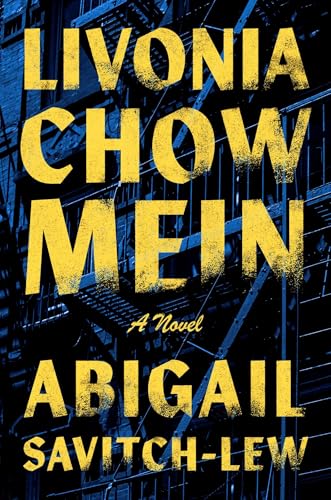
Livonia Chow Mein
In the vein of Happiness Falls and Family Lore, a gripping story of family history and political upheaval centered around a Chinese family-owned restaurant in Brownsville, Brooklyn and its impact on the neighborhood’s Jewish and Black residents over the course of a century.
In 1978, two tenements on Livonia Avenue in Brownsville burn to the ground, killing one resident and displacing dozens of others. It remains unclear who set the buildings ablaze, but the survivors are convinced the culprit is Mr. Wong.
Who exactly is Mr. Wong, and what allegedly drove him to this extraordinary act of violence, is the question that consumes this novel as it plunges into four generations of Wong family history. First is Koon Lai, an immigrant who runs a Chinese restaurant on Livonia Avenue; second, his son Richard, a man desperate for his own chance at the American Dream; and third, Jason, a poet who seeks his escape in the bohemian counterculture of the 1970s, but finds himself an unwitting participant in Brooklyn’s gentrification. In the 21st century, Jason’s daughter Sadie returns to Brownsville as a journalist, determined to unravel the mystery of what happened decades earlier on the night the buildings blazed.
Joining together the present and the past is the community organizer Lina Rodriguez Armstrong, who was also displaced by that fire and who has spent the intervening years fighting for the rights of Brownsville’s residents and organizing a Livonia Avenue community land trust.
A stunning debut from a new talent, Livonia Chow Mein contemplates how the American pursuit of freedom relies on a collective amnesia and challenges us to consider what it would take for us to truly live in harmony.
In 1978, two tenements on Livonia Avenue in Brownsville burn to the ground, killing one resident and displacing dozens of others. It remains unclear who set the buildings ablaze, but the survivors are convinced the culprit is Mr. Wong.
Who exactly is Mr. Wong, and what allegedly drove him to this extraordinary act of violence, is the question that consumes this novel as it plunges into four generations of Wong family history. First is Koon Lai, an immigrant who runs a Chinese restaurant on Livonia Avenue; second, his son Richard, a man desperate for his own chance at the American Dream; and third, Jason, a poet who seeks his escape in the bohemian counterculture of the 1970s, but finds himself an unwitting participant in Brooklyn’s gentrification. In the 21st century, Jason’s daughter Sadie returns to Brownsville as a journalist, determined to unravel the mystery of what happened decades earlier on the night the buildings blazed.
Joining together the present and the past is the community organizer Lina Rodriguez Armstrong, who was also displaced by that fire and who has spent the intervening years fighting for the rights of Brownsville’s residents and organizing a Livonia Avenue community land trust.
A stunning debut from a new talent, Livonia Chow Mein contemplates how the American pursuit of freedom relies on a collective amnesia and challenges us to consider what it would take for us to truly live in harmony.
368 pages, Hardcover
First published April 21, 2026
About the author
Abigail Savitch-Lew
2 books65 followersAbigail Savitch-Lew is a writer of fiction and nonfiction and an American of Jewish and Chinese (Ashkenazi and Toisanese) descent. She has a BA in literary arts from Brown University and an MFA in fiction from Rutgers University-Newark. She is the author of the novel Livonia Chow Mein, and her short stories have been published in The Round, Post Road, The Best Teen Writing of 2010, and The Apprentice Writer. Previously, she was a staff reporter for City Limits, an Asian American Writers’ Workshop Margins Fellow, and an adjunct professor of creative writing at Rutgers.
Ratings & Reviews
Friends & Following
Create a free account to discover what your friends think of this book!
Community Reviews
Displaying 1 - 30 of 211 reviews

April 22, 2026
A fantastic debut novel centered around a decades-old mystery and the culture clashes that engulfed it. Told through varying perspectives, particularly that of a biracial Chinese Jewish journalist determined to unravel the mystery and her family’s potential role in it.
I was as intrigued with the complex family dynamics and trauma as I was the mystery at the center. It has a slow burn quality and yet never feels slow or repetitive. And the audio complements the writing well.
Read if you like:
▪️multi-generational stories
▪️Chinese and/or Jewish culture
▪️character centric novels
▪️literary suspense
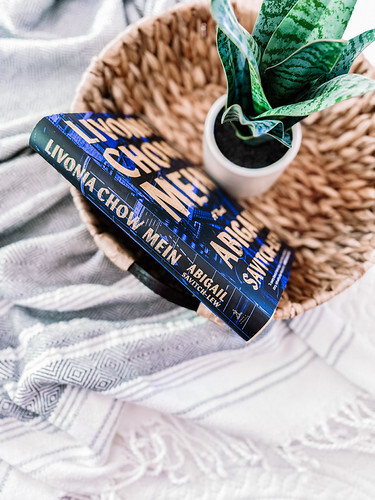
Thank you Simon Books for the gifted copy.
I was as intrigued with the complex family dynamics and trauma as I was the mystery at the center. It has a slow burn quality and yet never feels slow or repetitive. And the audio complements the writing well.
Read if you like:
▪️multi-generational stories
▪️Chinese and/or Jewish culture
▪️character centric novels
▪️literary suspense
Thank you Simon Books for the gifted copy.

May 8, 2026
Whose Home?
Abigail Savitch-Lew's debut novel, “Livonia Chow Mein,” is a fusion of detective fiction, cultural history, and family chronicle, set against the backdrop of Brownsville, Brooklyn.
The story centers on a 1978 fatal blaze and the resulting generational conflict: community activist Lina Rodriguez Armstrong suspects her Chinese American landlord, Richard Wong, of arson, while years later, his granddaughter and journalist Sadie Chin investigates the fire, often challenging Lina's account. This novel offers a critical overview of American capitalism, racism, gentrification, immigration, and community responsibility.
Savitch-Lew excels at grounding the story in the social events of the time, making Richard Wong’s poignant immigrant story from rural China a particular strength. While the novel is rich in detail, the sheer amount of information presented occasionally slows the narrative’s momentum.
“Livonia Chow Mein” is recommended for readers who enjoy multi-generational stories, literary suspense, and character-centric novels that deeply explore complex social issues. 3.5
Thank you to Simon & Schuster and NetGalley for providing an advance reader copy in exchange for an honest review.
Abigail Savitch-Lew's debut novel, “Livonia Chow Mein,” is a fusion of detective fiction, cultural history, and family chronicle, set against the backdrop of Brownsville, Brooklyn.
The story centers on a 1978 fatal blaze and the resulting generational conflict: community activist Lina Rodriguez Armstrong suspects her Chinese American landlord, Richard Wong, of arson, while years later, his granddaughter and journalist Sadie Chin investigates the fire, often challenging Lina's account. This novel offers a critical overview of American capitalism, racism, gentrification, immigration, and community responsibility.
Savitch-Lew excels at grounding the story in the social events of the time, making Richard Wong’s poignant immigrant story from rural China a particular strength. While the novel is rich in detail, the sheer amount of information presented occasionally slows the narrative’s momentum.
“Livonia Chow Mein” is recommended for readers who enjoy multi-generational stories, literary suspense, and character-centric novels that deeply explore complex social issues. 3.5
Thank you to Simon & Schuster and NetGalley for providing an advance reader copy in exchange for an honest review.

December 23, 2025
SO much hope for this book.
A story taking place in Brownsville, with history incorporating the Chinese, Jewish, Black, and Hispanic community over decades.
unfortunately, there was SO much going on, it took away from the characters story, and focused instead on just the research Savitch-Lew discovered when writing this book. It became hard to focus on and I ended up skimming through the majority of it.
I wish she had just focused on the 1940s, centering on the Chinese coming to America to make a better life for themselves. It would have been one heck of a heartbreaker. Instead, my brain is completely confused at the dual timelines.
A story taking place in Brownsville, with history incorporating the Chinese, Jewish, Black, and Hispanic community over decades.
unfortunately, there was SO much going on, it took away from the characters story, and focused instead on just the research Savitch-Lew discovered when writing this book. It became hard to focus on and I ended up skimming through the majority of it.
I wish she had just focused on the 1940s, centering on the Chinese coming to America to make a better life for themselves. It would have been one heck of a heartbreaker. Instead, my brain is completely confused at the dual timelines.

Read
April 7, 2026I’m struggling to give this a set rating because I think it’s a really important book with a rich history of Brownsville and Chinese culture that needs to be read. I also loved reading about someone from mixed identities as I’m a mixed person with little to no stories that reflect my experience. I also appreciated the care and time Savitch-Lew put into this project. I truly learned from this book and for that I’m grateful to have read it.
That being said, I felt I would’ve appreciated staying closer to only one POV or timeline or maybe just two as I often felt a distance from the characters as the emotionality got bogged down by info-dumping. There was often too much going on. I also struggle to read first-person narratives from someone who is outside the writer’s identity. While Lina was lovable, there were elements of her speaking/Spanish that were a little off and stereotypical. As a Latina, I found myself cringing at many aspects.
And then there’s Sadie, she’s entitled and pushy. She forces the reader to have patience, but I felt there was so much more I wanted from her to understand her behavior.
Buuut if you love dual timelines, BIPOC stories, and NY, you’ll probably get something wonderful out of this.
That being said, I felt I would’ve appreciated staying closer to only one POV or timeline or maybe just two as I often felt a distance from the characters as the emotionality got bogged down by info-dumping. There was often too much going on. I also struggle to read first-person narratives from someone who is outside the writer’s identity. While Lina was lovable, there were elements of her speaking/Spanish that were a little off and stereotypical. As a Latina, I found myself cringing at many aspects.
And then there’s Sadie, she’s entitled and pushy. She forces the reader to have patience, but I felt there was so much more I wanted from her to understand her behavior.
Buuut if you love dual timelines, BIPOC stories, and NY, you’ll probably get something wonderful out of this.

Review of advance copy received from Netgalley
Thank you to NetGalley and Simon & Schuster for an ARC of this book.
This is not a book I would have picked up on my own. I was invited to read this book by the publisher in exchange for an honest review. I gave this book 3.5 stars. I liked the characters and reading about their lives. The neighborhood is even a character in this book, which I found interesting. The one criticism I have though is this book was told from multiple points of view, but every time we switched characters, it was very difficult to figure out the timeline we were in because it bounced around so much. I think it would be helpful if every time it changes point of view, that the year or decade be listed so it is easier to follow. This is a debut and I am leery of reading debuts because it's the authors first book and a lot of times you can tell they need to grow as a writer, but not all the time.
It starts in 1978 when two tenements in Brownsville, Brooklyn, are burned to the ground with people living there. The community is in a fight with the city because they want to have control over the lot with a community land trust, but the city wants to build some apartments there. The book goes back and forth in time telling the story of Brownsville's past. It is also a story of gentrification. This book would be less confusing if the timelines were clearer.
This is not a book I would have picked up on my own. I was invited to read this book by the publisher in exchange for an honest review. I gave this book 3.5 stars. I liked the characters and reading about their lives. The neighborhood is even a character in this book, which I found interesting. The one criticism I have though is this book was told from multiple points of view, but every time we switched characters, it was very difficult to figure out the timeline we were in because it bounced around so much. I think it would be helpful if every time it changes point of view, that the year or decade be listed so it is easier to follow. This is a debut and I am leery of reading debuts because it's the authors first book and a lot of times you can tell they need to grow as a writer, but not all the time.
It starts in 1978 when two tenements in Brownsville, Brooklyn, are burned to the ground with people living there. The community is in a fight with the city because they want to have control over the lot with a community land trust, but the city wants to build some apartments there. The book goes back and forth in time telling the story of Brownsville's past. It is also a story of gentrification. This book would be less confusing if the timelines were clearer.

May 3, 2026
Thank you to Simon and Schuster for providing a free copy of this book for review.
Rating: 4.5 stars.
Livonia Chow Mein is, at its heart, a story about family, about community, about choosing to see clearly and then using that knowledge to guide the actions of ourselves and others. Change works best when it is responsive, reflective, focused, and centered on those who will be most affected by those changes.
The very first thing that impressed me about this author was how she shined a light on what is essentially a lost language: Toisanese. We tend to think of Chinese immigrants to the U.S. speaking mainly Mandarin or Cantonese, but the dominant Chinese immigrant language in the first half of the 20th century was actually Toisanese. In this novel, the author does the painstaking work of preserving some of the words and phrases in this dying language, that is no longer taught but which would have been the main language spoken by these early Chinese Americans.
The writing style is easygoing, almost conversational, like if your smartest friend was telling you a story that required her giving you a little background, and lightly touching on historical context. For instance, I had no idea when the Manchu dynasty ended. It is referenced quickly and smoothly, without missing a beat. I really like that fluidity.
I did know about the Chinese Exclusion laws, but this too, was well-explained in a few sentences, and within narrative context. No under or over explaining nor the dreaded info-dumping that can sink a novel which covers a wider time span.
The narrator perspective here is very real, stripped of any stereotypical nonsense, or worse, that angelicalization of a POC gazing towards the audacity of hope. No, this author understands that to talk about all the big topics, like racism, classism, white knight syndrome, gentrification, identity, politics (and everything is political), and on and on, you're going to have to show people as they really are. No cartoonish villain nor idealized Mary Sue. Real people and real interactions are complex and layered, as are their motivations.
For a debut author, Savitch-Lew is very comfortable with storytelling. And I appreciate the nonlinear timeline construction, which creates more impact. This might be one of the few generational sagas I've read with such a strong social activism arc, but I hope it won't be the last.
Rating: 4.5 stars.
Livonia Chow Mein is, at its heart, a story about family, about community, about choosing to see clearly and then using that knowledge to guide the actions of ourselves and others. Change works best when it is responsive, reflective, focused, and centered on those who will be most affected by those changes.
The very first thing that impressed me about this author was how she shined a light on what is essentially a lost language: Toisanese. We tend to think of Chinese immigrants to the U.S. speaking mainly Mandarin or Cantonese, but the dominant Chinese immigrant language in the first half of the 20th century was actually Toisanese. In this novel, the author does the painstaking work of preserving some of the words and phrases in this dying language, that is no longer taught but which would have been the main language spoken by these early Chinese Americans.
The writing style is easygoing, almost conversational, like if your smartest friend was telling you a story that required her giving you a little background, and lightly touching on historical context. For instance, I had no idea when the Manchu dynasty ended. It is referenced quickly and smoothly, without missing a beat. I really like that fluidity.
I did know about the Chinese Exclusion laws, but this too, was well-explained in a few sentences, and within narrative context. No under or over explaining nor the dreaded info-dumping that can sink a novel which covers a wider time span.
The narrator perspective here is very real, stripped of any stereotypical nonsense, or worse, that angelicalization of a POC gazing towards the audacity of hope. No, this author understands that to talk about all the big topics, like racism, classism, white knight syndrome, gentrification, identity, politics (and everything is political), and on and on, you're going to have to show people as they really are. No cartoonish villain nor idealized Mary Sue. Real people and real interactions are complex and layered, as are their motivations.
For a debut author, Savitch-Lew is very comfortable with storytelling. And I appreciate the nonlinear timeline construction, which creates more impact. This might be one of the few generational sagas I've read with such a strong social activism arc, but I hope it won't be the last.

May 25, 2026
Enjoyment: 2/5
Quality: 3.5/5
Characters: 3/5
Plot: 3.5/5
A multigeneratial story about family, immigration and community. The multiple POVs and constant changes in the timeline was the strongest and at the same time some of the weakest aspects for me. Some characters I just didn't care for, but needed their POV for the plot. The pace was on the medium to slower side and fluctuated quite a bit.
Overall a debut with possibility of improvement in the future.
Quality: 3.5/5
Characters: 3/5
Plot: 3.5/5
A multigeneratial story about family, immigration and community. The multiple POVs and constant changes in the timeline was the strongest and at the same time some of the weakest aspects for me. Some characters I just didn't care for, but needed their POV for the plot. The pace was on the medium to slower side and fluctuated quite a bit.
Overall a debut with possibility of improvement in the future.
October 8, 2025
This story weaves the past and present almost seamlessly. I loved the way Savitch-Lew kept you engaged in the story with not very long chapters and sometimes combining characters in a chapter.
You can feel the love for Brownsville through the pages and the desire to get the community's story and the fight for better conditions out in the world. This is a work of fiction, but the history and struggles are real. (The inclusion of resources by the author at the end was excellent).
Initially what drew me in to this book was the title, but I stayed because the characters started to grow on me. Sadie and Lina, you will always have a special place in my heart.
This is a must-read if you are interested in family and community stories.
Thank you to Simon & Schuster and the author for providing a free copy of this book through NetGalley.
You can feel the love for Brownsville through the pages and the desire to get the community's story and the fight for better conditions out in the world. This is a work of fiction, but the history and struggles are real. (The inclusion of resources by the author at the end was excellent).
Initially what drew me in to this book was the title, but I stayed because the characters started to grow on me. Sadie and Lina, you will always have a special place in my heart.
This is a must-read if you are interested in family and community stories.
Thank you to Simon & Schuster and the author for providing a free copy of this book through NetGalley.

May 17, 2026
This is objectively and subjectively a great and meaningful read. The author focuses on history that is important in Brooklyn and New York, but also important to all of us, as we can learn from history and take those lessons forward. The frustration is when we don’t.
Livonia Chow Mein is a book that kept my attention, more effectively near the end as the author begins connecting the dots with real estate deeds and family stories to show how the Brownsville (a Brooklyn neighborhood) community suffered from predatory landlords and real estate development and how they worked together to fight back.
Part of the book I especially enjoyed was when the author showed the inner thoughts of a character initially portrayed as a monster, but their thoughts revealed more inside them than was indicated previously.
There are several timelines and I’ve read negative comments about this book being difficult to follow because of it. I found the shifts here made sense as Sadie, the protagonist, is trying to discover what happened to Brownsville, and what was her grandfather’s role in that, and as she discovers more evidence or new family stories, the timeline shifts.
I don’t live in NYC or Brooklyn and I have no cultural history shared with the characters but I found connections with the human story and the pain that gets carried from generation to generation. Powerful.
Livonia Chow Mein is a book that kept my attention, more effectively near the end as the author begins connecting the dots with real estate deeds and family stories to show how the Brownsville (a Brooklyn neighborhood) community suffered from predatory landlords and real estate development and how they worked together to fight back.
Part of the book I especially enjoyed was when the author showed the inner thoughts of a character initially portrayed as a monster, but their thoughts revealed more inside them than was indicated previously.
There are several timelines and I’ve read negative comments about this book being difficult to follow because of it. I found the shifts here made sense as Sadie, the protagonist, is trying to discover what happened to Brownsville, and what was her grandfather’s role in that, and as she discovers more evidence or new family stories, the timeline shifts.
I don’t live in NYC or Brooklyn and I have no cultural history shared with the characters but I found connections with the human story and the pain that gets carried from generation to generation. Powerful.
June 30, 2026
2.75 stars! (Rounded up to 3 stars on the rating because of ~math but tagged as 2 stars because it's actually more of a round down to 2.5 for me...just ignore my obsessiveness about numbers lol.)
First, thank you to Simon Books for the ARC/giveaway copy of this book.
I am really struggling to write this review because technically, there was nothing wrong with this book. I can't point to a specific problem with the writing, plot, or characters. It just did not do enough to make me really care about it, so I wasn't engaged or invested in any part of it. To be honest, I considered DNF-ing it, but it was going quickly enough (and was an ARC that I won) that I figured I may as well finish it and then rant about why I didn't like it. Now that I have finished it though, I just am not really sure how to pinpoint exactly what I didn't like about it.
In reading other people's reviews, it seemed that a lot of people did not like the multiple POV/time jumps, but that actually was never an issue for me. I was basically able to figure out when in time we were. My issue was actually that there were too many characters that were mentioned/introduced. I kept forgetting a lot of the names, especially since most of those characters weren't actually developed and showed up for a scene or were mentioned here and there, so every time they came back, I was just like, "Wait, who the fuck is that?!" Maybe if I had been more engaged overall, I would have had a better memory for them, but as it was, I just eventually gave up trying to figure out who some of the people were (especially within Lina's parts of the book because she mentions so many people across the years).
I will say that I enjoyed (as I often do) the parts of the book that reflected on how children born and/or raised in America struggle to find the balance between their current culture and their immigrant parents' culture. This was reflected in both Richard and Jason's stories, but I particularly related to Jasonalso because Richard was a huge shit anyway. From wishing he was less Chinese to the way that his parents would casually dismiss his desires as being too “American” and “spoiled,” these were experiences that I also had. I would always want to tell my parents that I was American because I was raised in this culture here. Just like Jason, I could never just pretend that part of me didn’t exist, but it left a cultural gap that my parents and I could never really bridge.
I also really liked the use of various Toisanese phrases throughout the book. While Cantonese and Toisanese are separate languages, they share a lot of similarities and it was pretty cool that I was able to often figure out what was being said without needing to use the language guide at the front of the book just by sounding them out. It almost felt like an immersive reading experience for me, because I could essentially hear something similar to what those words would have sounded in the moment that the characters said them.
Koon Lai Chin's story in particular really got me. He left his homeland at 19 to support his village and family, and he never gets to go back to China. After finding out about his family's deaths from far away, it feels like that grief never fully leaves him, and that grief is also what ends up killing him in the end. My dad and his older brother both came over from Hong Kong years ago for work, and while they have both gone back to visit over the years, they have lived in America for many years since. I actually finished this book yesterday only a couple hours after finding out that same uncle had just died, which made Koon Lai's story feel even more poignant. I wondered how my uncle felt being so far away from the rest of his family (the other four of my dad's other siblings did not come to America) and people culturally like him at the end of his life.
As I mentioned, I didn't fully connect with Richard because he was a shit, but I also did not particularly connect with Sadie or Lina either.
Sadie was actually pretty annoying and infuriating with her belief that she could change things for the Brownville citizens with nothing but her college degree from Yale, classes in race and African-American culture, and good intentions. Even as she realized that was not the case, her constant guilt for her family's history and how that intersected with Brownville really felt like those performative posts that I always see on social media to me. She just read as super young and naive across the board. I appreciate that she wanted to help the citizens of Brownville and that she actually listened to them in the end and pitched in to help with practical things in the community. But also...she just decided to quit her job as a journalist so that she could work full time (unpaid) with the Brownsville community? How is she going to live? That just read again as both naive and privileged, because she had the social support and her family's money to fall back on—so I really just did not feel that she had enough or significant character development by the end of the book.
I didn't have any specific issues with Lina per se. Just like the book overall, I couldn't really point to something I didn't like about her (and there was a lot I did like about her). I just didn't feel connected with her, and I don't know why. Maybe it was just her personality and stubbornness when it came to activism, because it was so unlike mine, or something like that. But also, I think Lina's character really was a reflection of one of my bigger issues with this book, which was that this whole book felt like a blatant lecture on Why Racism is Bad. Between the heavy-handedness of this and the extensive history lesson on Brownsville (honestly, I had zero interest in buildings and city planning before this book, and I can't say I have developed any more of a passion for this topic) that Lina's character sort of represented, I left the book mostly feeling...scolded? It's not a great feeling to come away from a book with, tbh, and I think that was why I ended up giving it such a low rating despite all the things I did enjoy.
I would recommend this book for anyone who wants to learn more about the racism within and the ghettoization of Brownsville, Brooklyn in the 1970s (make sure you actually want to hear extensively about city planning and the bureaucratic process of figuring out what to do with an empty lot), or if you enjoy a story that crosses racial and generational perspectives. Honestly, I'm still not completely satisfied with this review because I feel like it doesn't quite capture my feelings about this book, but it's as close as I'm going to get.
First, thank you to Simon Books for the ARC/giveaway copy of this book.
I am really struggling to write this review because technically, there was nothing wrong with this book. I can't point to a specific problem with the writing, plot, or characters. It just did not do enough to make me really care about it, so I wasn't engaged or invested in any part of it. To be honest, I considered DNF-ing it, but it was going quickly enough (and was an ARC that I won) that I figured I may as well finish it and then rant about why I didn't like it. Now that I have finished it though, I just am not really sure how to pinpoint exactly what I didn't like about it.
In reading other people's reviews, it seemed that a lot of people did not like the multiple POV/time jumps, but that actually was never an issue for me. I was basically able to figure out when in time we were. My issue was actually that there were too many characters that were mentioned/introduced. I kept forgetting a lot of the names, especially since most of those characters weren't actually developed and showed up for a scene or were mentioned here and there, so every time they came back, I was just like, "Wait, who the fuck is that?!" Maybe if I had been more engaged overall, I would have had a better memory for them, but as it was, I just eventually gave up trying to figure out who some of the people were (especially within Lina's parts of the book because she mentions so many people across the years).
I will say that I enjoyed (as I often do) the parts of the book that reflected on how children born and/or raised in America struggle to find the balance between their current culture and their immigrant parents' culture. This was reflected in both Richard and Jason's stories, but I particularly related to Jason
I also really liked the use of various Toisanese phrases throughout the book. While Cantonese and Toisanese are separate languages, they share a lot of similarities and it was pretty cool that I was able to often figure out what was being said without needing to use the language guide at the front of the book just by sounding them out. It almost felt like an immersive reading experience for me, because I could essentially hear something similar to what those words would have sounded in the moment that the characters said them.
Koon Lai Chin's story in particular really got me. He left his homeland at 19 to support his village and family, and he never gets to go back to China. After finding out about his family's deaths from far away, it feels like that grief never fully leaves him, and that grief is also what ends up killing him in the end. My dad and his older brother both came over from Hong Kong years ago for work, and while they have both gone back to visit over the years, they have lived in America for many years since. I actually finished this book yesterday only a couple hours after finding out that same uncle had just died, which made Koon Lai's story feel even more poignant. I wondered how my uncle felt being so far away from the rest of his family (the other four of my dad's other siblings did not come to America) and people culturally like him at the end of his life.
As I mentioned, I didn't fully connect with Richard because he was a shit, but I also did not particularly connect with Sadie or Lina either.
Sadie was actually pretty annoying and infuriating with her belief that she could change things for the Brownville citizens with nothing but her college degree from Yale, classes in race and African-American culture, and good intentions. Even as she realized that was not the case, her constant guilt for her family's history and how that intersected with Brownville really felt like those performative posts that I always see on social media to me. She just read as super young and naive across the board. I appreciate that she wanted to help the citizens of Brownville and that she actually listened to them in the end and pitched in to help with practical things in the community. But also...she just decided to quit her job as a journalist so that she could work full time (unpaid) with the Brownsville community? How is she going to live? That just read again as both naive and privileged, because she had the social support and her family's money to fall back on—so I really just did not feel that she had enough or significant character development by the end of the book.
I didn't have any specific issues with Lina per se. Just like the book overall, I couldn't really point to something I didn't like about her (and there was a lot I did like about her). I just didn't feel connected with her, and I don't know why. Maybe it was just her personality and stubbornness when it came to activism, because it was so unlike mine, or something like that. But also, I think Lina's character really was a reflection of one of my bigger issues with this book, which was that this whole book felt like a blatant lecture on Why Racism is Bad. Between the heavy-handedness of this and the extensive history lesson on Brownsville (honestly, I had zero interest in buildings and city planning before this book, and I can't say I have developed any more of a passion for this topic) that Lina's character sort of represented, I left the book mostly feeling...scolded? It's not a great feeling to come away from a book with, tbh, and I think that was why I ended up giving it such a low rating despite all the things I did enjoy.
I would recommend this book for anyone who wants to learn more about the racism within and the ghettoization of Brownsville, Brooklyn in the 1970s (make sure you actually want to hear extensively about city planning and the bureaucratic process of figuring out what to do with an empty lot), or if you enjoy a story that crosses racial and generational perspectives. Honestly, I'm still not completely satisfied with this review because I feel like it doesn't quite capture my feelings about this book, but it's as close as I'm going to get.

Review of advance copy received from Netgalley
Here's as an awesome author interview:
https://youtu.be/MkqOs0EOxEg
Centering a gritty historical mystery of arson and more realistic themes for book club discussions, this complex community-empowering generational saga reflects heartbreak as well as joy and powerful advocacy to stand up to racism, immigrants’ rights, and gentrification. This debut novel is a lyrical ode to four generations of the diverse families rooted in the Brownsville neighborhood of Brooklyn in New York City.
Thank you to Abigail Savitch-Lew, Simon & Schuster, and Netgalley; this five-star read will be among my highest recommended publishing in 2026!
Abigail Savitch-Lew is a third generation Brooklynite of Jewish (Ashkenazi) and Chinese (Toisanese) descent. She features the Toisanese language with a thorough glossary!
Themes:
debut, arson, historical, place-based, mystery, generational saga, dual-timelines, complex, gentrification, housing projects, community, neighborhood, New York City, Brownsville neighborhood, Brooklyn, food, culture, Toisanese language, racism, Chinese immigrants, Black, Jewish, social justice, advocacy, reparations
https://youtu.be/MkqOs0EOxEg
Centering a gritty historical mystery of arson and more realistic themes for book club discussions, this complex community-empowering generational saga reflects heartbreak as well as joy and powerful advocacy to stand up to racism, immigrants’ rights, and gentrification. This debut novel is a lyrical ode to four generations of the diverse families rooted in the Brownsville neighborhood of Brooklyn in New York City.
Thank you to Abigail Savitch-Lew, Simon & Schuster, and Netgalley; this five-star read will be among my highest recommended publishing in 2026!
Abigail Savitch-Lew is a third generation Brooklynite of Jewish (Ashkenazi) and Chinese (Toisanese) descent. She features the Toisanese language with a thorough glossary!
Themes:
debut, arson, historical, place-based, mystery, generational saga, dual-timelines, complex, gentrification, housing projects, community, neighborhood, New York City, Brownsville neighborhood, Brooklyn, food, culture, Toisanese language, racism, Chinese immigrants, Black, Jewish, social justice, advocacy, reparations

April 29, 2026
I really wanted to like this. Look, everyone who reads my reviews knows how I feel about dual timelines, they should die and rot like dogs in hell, but I admit they CAN work. I feel like it almost worked here, but in the end it just muddied the waters a bit too much and both timelines suffer for it. It's still a good story, if you're the type who isn't bothered by jumping back and forth, but I just couldn't get past it.

April 5, 2026
This was a slow-paced, contemplative look at the evolution of Brownsville, New York, as it struggles with outsiders developing projects instead of listening to community needs, almost the opposite of gentrification. It's inspired by the author's own family history and her extensive research into the story of this changing community.
It's told in competing timelines and points of view, which could start to get jumbled up in my head even as I tried to give it the close reading it deserved, mostly because it kept jumping back and forth in time and I struggled keeping track of all the characters. A list of all the characters and their time periods at the beginning would have resolved this concern I think, though.
Sadie Chin is a 24-year-old fresh-faced, half-Chinese, half-Jewish reporter assigned to cover the Brownsville beat. She lives in gentrified Park Slope, so she's eager to cover Real America. But her family has roots in the town that complicate matters. Her grandfather used to own a Chinese restaurant in the area, then a checkered tenement building that burned down in a suspicious fire.
We get a lot of different ideas thrown at us, almost too many. In some ways I wish the book had focused more on Sadie because I found her interesting. It covered each of her family members and their character development, starting from the immigrant struggles of her grandfather who was indentured to the Chinese restaurant.
It was inspiring to see the community activism and the resilience of people who hold their community together despite it descending into drugs and poverty, but I did feel this focused on politics more than the people involved despite all the personality profiles. There was a bit of distance I felt to the characters because there were so many of them, so that it almost read like a journalist's first novel, though I do not know the author's background.
I pulled it from 3 to 4 stars though because despite its flaws I thought this was a fascinating look at a complicated immigrant family making their way in a new world, with the backdrop of changing neighborhoods. It tried to do too much, but I still enjoyed how it all came together and would read more by this author.
I'm also an epic fantasy reader so the multiple POVs didn't bother me like I could see them confusing some readers. If you don't mind a slow pace and like historical and literary fiction though, you might like this one too. I just wish it had been more character-driven. The main character was almost the community itself, an interesting take. It had a very strong sense of place.
Thank you to Netgalley and the publisher for the advance review copy. I am leaving this review voluntarily.
It's told in competing timelines and points of view, which could start to get jumbled up in my head even as I tried to give it the close reading it deserved, mostly because it kept jumping back and forth in time and I struggled keeping track of all the characters. A list of all the characters and their time periods at the beginning would have resolved this concern I think, though.
Sadie Chin is a 24-year-old fresh-faced, half-Chinese, half-Jewish reporter assigned to cover the Brownsville beat. She lives in gentrified Park Slope, so she's eager to cover Real America. But her family has roots in the town that complicate matters. Her grandfather used to own a Chinese restaurant in the area, then a checkered tenement building that burned down in a suspicious fire.
We get a lot of different ideas thrown at us, almost too many. In some ways I wish the book had focused more on Sadie because I found her interesting. It covered each of her family members and their character development, starting from the immigrant struggles of her grandfather who was indentured to the Chinese restaurant.
It was inspiring to see the community activism and the resilience of people who hold their community together despite it descending into drugs and poverty, but I did feel this focused on politics more than the people involved despite all the personality profiles. There was a bit of distance I felt to the characters because there were so many of them, so that it almost read like a journalist's first novel, though I do not know the author's background.
I pulled it from 3 to 4 stars though because despite its flaws I thought this was a fascinating look at a complicated immigrant family making their way in a new world, with the backdrop of changing neighborhoods. It tried to do too much, but I still enjoyed how it all came together and would read more by this author.
I'm also an epic fantasy reader so the multiple POVs didn't bother me like I could see them confusing some readers. If you don't mind a slow pace and like historical and literary fiction though, you might like this one too. I just wish it had been more character-driven. The main character was almost the community itself, an interesting take. It had a very strong sense of place.
Thank you to Netgalley and the publisher for the advance review copy. I am leaving this review voluntarily.

August 2, 2026
Bit of a struggle. Some really interesting stories but the way they're woven together is hard to follow at times.

May 26, 2026
Had strong potential.
Got preachy.
Very preachy.
It didnt get into the point where I felt i was being talked down to, but it did get to the point where I felt I was hearing someone lecture someone else
Got preachy.
Very preachy.
It didnt get into the point where I felt i was being talked down to, but it did get to the point where I felt I was hearing someone lecture someone else

Read
November 29, 2025DNF. This story skips around a lot in POV and time period with no markers, making it hard for me to follow. It's also just not grabbing me.

August 14, 2026
Livonia Chow Mein tells the story of three generations of a Chinese American family, but at its heart, it is about place, belonging, and the people left behind.
Koon Lai comes to America during the Chinese Exclusion era, but is forced to change give up his name and identity from Wong to Chin so he can enter under the harsh restrictions. Back in China, owning a restaurant in Brooklyn makes him seem almost like royalty, while the reality is that he faces discrimination and his daily living is far from the royal treatment his relatives imagine. Eventually, the money he sends to his wife and family members have detrimental consequences for his family members struggling to survive the Communist Revolution.
His son, Richard, wants more than anything to be American. He fights for his country believing that will finally earn him acceptance and then chases the suburban American Dream—the money, the house, his piece of the pie. His wife, Foon Wah, leaves her home and village in China and follows Richard to suburbia, but his version of the American Dream was never really hers. As Richard becomes more consumed with success and what he believes he is entitled to, he loses connection with his wife, his son, and eventually makes selfish decisions with irreversible consequences.
But the Brownsville community is really at the heart of the book—a convergence of cultures shaped by immigration, white flight, redlining, abandoned businesses, disinvestment, and eventually gentrification. Through all of it are the people who stayed. And ultimately, that is what stuck with me: Who gets to tell the story of a place—and who gets to decide its future? Residents are fighting to reclaim their history and destiny, bring land back into community control, and make sure investment actually benefits the people who already call Brownsville home. They want fresh food, community spaces, local businesses, and housing they can actually afford—not development that simply pushes them further out.
If you teach AP Human Geography—or are just interested in immigration, identity, the American Dream, redlining, white flight, gentrification, and how people reclaim their communities—this book is for you.
Koon Lai comes to America during the Chinese Exclusion era, but is forced to change give up his name and identity from Wong to Chin so he can enter under the harsh restrictions. Back in China, owning a restaurant in Brooklyn makes him seem almost like royalty, while the reality is that he faces discrimination and his daily living is far from the royal treatment his relatives imagine. Eventually, the money he sends to his wife and family members have detrimental consequences for his family members struggling to survive the Communist Revolution.
His son, Richard, wants more than anything to be American. He fights for his country believing that will finally earn him acceptance and then chases the suburban American Dream—the money, the house, his piece of the pie. His wife, Foon Wah, leaves her home and village in China and follows Richard to suburbia, but his version of the American Dream was never really hers. As Richard becomes more consumed with success and what he believes he is entitled to, he loses connection with his wife, his son, and eventually makes selfish decisions with irreversible consequences.
But the Brownsville community is really at the heart of the book—a convergence of cultures shaped by immigration, white flight, redlining, abandoned businesses, disinvestment, and eventually gentrification. Through all of it are the people who stayed. And ultimately, that is what stuck with me: Who gets to tell the story of a place—and who gets to decide its future? Residents are fighting to reclaim their history and destiny, bring land back into community control, and make sure investment actually benefits the people who already call Brownsville home. They want fresh food, community spaces, local businesses, and housing they can actually afford—not development that simply pushes them further out.
If you teach AP Human Geography—or are just interested in immigration, identity, the American Dream, redlining, white flight, gentrification, and how people reclaim their communities—this book is for you.
May 7, 2026
I wanted to read this book for the longest time because of the setting. As a native of Brooklyn, New York, where one grandmother, my bubbe, lived in Brownsville, and the other, my beloved Grandmama, lived just on its border, many of my childhood days in the 1950's and '60's were spent walking along the very streets mentioned in Livonia Chow Mein. My grandfather bought my siblings and me all our holiday clothes in Young Folks on Pitkin Avenue, and we had the best pizza we ever ate to date, and luscious charlotte russes on Rutland Road. Furthermore, my father's best friend's family owned the Kosher Deli and my sibs and I spent many a Saturday having franks and knishes there after watching movies at the Lowe's Pitkin. So, reading about the familiar history and ultimate gentrification of Brownsville from those early days, was like revisiting my youth and young adulthood. I got to understand it from the inside out. The nostalgia, alone, was enough to make this an enjoyable read.
Beyond the nuts and bolts of all the historical references, though, the story line was very entertaining, the writing clear, and the characters all believable. I breezed through this novel in one day, caring for the people and the characters as I would old friends. That says a lot. And even if you don't hale from the rich diversity and cultural breadth of Brooklyn, New York, you are sure to enjoy Livonia Chow Mein. For me, it was a wonderful journey down memory lane.
Beyond the nuts and bolts of all the historical references, though, the story line was very entertaining, the writing clear, and the characters all believable. I breezed through this novel in one day, caring for the people and the characters as I would old friends. That says a lot. And even if you don't hale from the rich diversity and cultural breadth of Brooklyn, New York, you are sure to enjoy Livonia Chow Mein. For me, it was a wonderful journey down memory lane.

September 12, 2026
I thought this was really good!
We get POV from quite a few characters, who are all connected through a fire that happens at an apartment building.
Sadie is a young journalist who finds out while working on an article that an entire community believed her grandfather burned down an apartment building, and was responsible for not only the displacement of a number of families, but also multiple deaths.
Despite being too close to the story, she starts to investigate what really happened, reopening wounds for a lot of people in the community.
We follow the stories of Sadie’s father, grand father and great grandfather and her grandmother, from the time they immigrated to the United States.
I thought this was really well done and it was a great listen.
Thank you @simonandschuster for sending this book for review consideration. All opinions are my own.
We get POV from quite a few characters, who are all connected through a fire that happens at an apartment building.
Sadie is a young journalist who finds out while working on an article that an entire community believed her grandfather burned down an apartment building, and was responsible for not only the displacement of a number of families, but also multiple deaths.
Despite being too close to the story, she starts to investigate what really happened, reopening wounds for a lot of people in the community.
We follow the stories of Sadie’s father, grand father and great grandfather and her grandmother, from the time they immigrated to the United States.
I thought this was really well done and it was a great listen.
Thank you @simonandschuster for sending this book for review consideration. All opinions are my own.

May 7, 2026
I was actually pretty surprised at how much I enjoyed this book! It was a little hard at first to follow. It took me probably 40% of the book to really be able to know who was who. It’s multigenerational but all interconnected and I love those kind of stories! The underlying sub stories about race and discrimination and struggle and hardship across generations, especially of Chinese immigrants and Jews was very interesting and to hear some of the sub context really makes you think and makes you want to ensure that that never happens again.

August 11, 2026
2-1/2 ⭐️. Brownsville was once a vibrant low-to-middle-income Brooklyn neighborhood of Chinese, Jewish, Black and Hispanic residents. This story of its decline, covering decades of civic and social neglect and crime, opens with a suspicious fire in 1978 that destroyed 2 derelict apartment buildings, killing one resident and injuring others. I found the novel to be ambitious but confusing, with a large cast of characters and a storyline that jumps back and forth over many decades.

March 29, 2026
Such an awesome historical read. This story tells the tale of Brownsville. This book takes you back and forth through time to see how much truly changes, and doesn’t over the years. It will truly leave you on the edge of your seat. I highly recommend reading this amazing book.

May 31, 2026
It took me a while to finish this book but I thought it was thought provoking. Culture, family dynamics, racism, and capitalism stuck out to me the most.
July 9, 2026
Really 3.5⭐
September 19, 2026
super interesting read set in brownsville and other parts of brooklyn over decades. it was really cool learning abt the history of chinese immigration to nyc far before my parents arrived and also connecting with name drops like Wo Hop and Confucius Square. i also thought the way the author broached race relations in nyc was pretty thorough. the ending was solid but maybe a bit too hopecore but we all need that so it’s okay

June 30, 2026
DNF 8%
I just couldn't get into it.
I just couldn't get into it.

April 29, 2026
I received this book as part of a giveaway.
I truly wanted to like this book more than I did. The reader can clearly tell that this author did her research, which is both a blessing and a curse for this book. While it helps set the stage for the exploration of themes like gentrification and racism, the details really slow down the narrative and detract from its impact. It read, at times, more like a book report than a “gripping epic.” Also, the author lays it on heavy with the finger wagging and “racism is bad” commentary. It would’ve been a lot more powerful if this lesson hadn’t been so specifically stated. Finally, the timeline was jumpy, which would’ve been fine had the author provided dates or any indication of the switch.
I truly wanted to like this book more than I did. The reader can clearly tell that this author did her research, which is both a blessing and a curse for this book. While it helps set the stage for the exploration of themes like gentrification and racism, the details really slow down the narrative and detract from its impact. It read, at times, more like a book report than a “gripping epic.” Also, the author lays it on heavy with the finger wagging and “racism is bad” commentary. It would’ve been a lot more powerful if this lesson hadn’t been so specifically stated. Finally, the timeline was jumpy, which would’ve been fine had the author provided dates or any indication of the switch.
May 6, 2026
I enjoyed this book!

July 15, 2026
fuck landlords
Displaying 1 - 30 of 211 reviews