Sorrowland meets Manhunt in this literary horror debut in which an isolated newlywed--covered in mushroom growths like all the other wives in her community--strikes a precarious balance between following her husband's strict rules and pursuing an intense connection with a woman who makes her question everything.
Forbidden from leaving her house from girlhood until marriage, Nicole has only her mother's lessons and what she can see from her bedroom window to draw on in forming her view of the world, and of herself. Taught that the mushrooms which cover the women in her village are repulsive and dangerous, she conforms to a rigid set of rules to protect herself and those around her.
When her wedding day arrives, Nicole moves from one prison to another--an empty mansion on the very outskirts of town belonging to the husband she's been promised to since birth. As she haunts the edges of Silas's unknowable life and decaying home, maintaining control over her own transforming body becomes increasingly impossible. And when another wife with rebellious tendencies pays Nicole an unexpected visit, something within her cracks open. Their furtive explorations yield confusing answers, unearthing the long-buried secrets of the generations of resentful brides that came before. Unmoored, angry, and at last awakened, Nicole must reckon with who she really is, and perhaps, give in to what she truly wants.
Raw, visceral, and relentless, Wife Shaped Bodies is an exploration of gender, power, and community through the lens of mycological body horror and an ode to the unsettling beauty of the natural world.
Laura Cranehill is an amalgamation of horrific faceless things living in the Pacific Northwest with her spouse, three children, and three cats. She was born in Michigan where she grew up on a haunted peacock farm. Wife Shaped Bodies is her debut novel.
full rtc closer to pub day but one of the creepier horror novels with phenomenal commentary on female bodies and the multitude of ways abuse is inflicted upon them i’ve read lately!
"I feel as if I'm about to encounter a great mystery and recognize it as myself.”
I'm not a mycologist, but I am a little closer to becoming one now. I'm a hiker so I love finding unique mushrooms and pondering about the connectedness of their mycelium.
This horror debut reads more like seasoned dystopia. The writing and focus on the main character reminded me of the flow of I Who Have Never Known Men, if you liked that book, then I highly recommend this! I absolutely loved this. It was like a fungal coming of age, with a focus on character over plot. I saw in a blurb that this is an ode to anyone who has ever felt "weird" in their body.
Nicole lives sequestered within the walls of her family. Her mother helps her shave off the various mushroom growths that sprout from her head and all over her body. All the women and girls must wear gloves to when touching each other because their fungi could be toxic for others. Women are essentially taught they are poisonous and they need to fear one another. Nicole eventually meets another woman who does not see it that way. She even lets her mushrooms grow.
This is a patriarchal world where women turned into partially-fungal beings that need to be maintained or it seems the desire is to return to the earth, to the wet, and to decomposition. Nicole moves in with her new husband, who is odd. Not all bad. The smells of men and people take Nicole some getting used to because she is more mushroom than woman. Her husband explains the history of first-wives who died or were killed, and the next generation of women became mushrooms.
The mycelium that holds her body together comes alive in the forest and she wants to plant herself somewhere in the dark. Nicole becomes pregnant and her journey of self-discovery propels towards what Nicole wants for herself.
Laura Cranehill has an excellent knowledge of mushroom species and inner-workings. I enjoyed the vivid language. There were many quotable moments that I didn't capture this time around, but I bet this will be a re-read some day. Absolutely in love!
Wife Shaped Bodies is a post-apocalyptic novel with feminist and queer themes. The book follows the story of Nicole, who is a wife living in a compound where women's bodies are covered in mushrooms and they are bound by rules set by the men in the community. The story of Nicole takes some time for the reader to understand as she has spent most of her life confined to a small world where she has rarely left her house. After her marriage, she begins to learn more and more beyond the secrets and lies that have filled her life up to that point. She forms a relationship with another wife named Teaghan who helps her to expand her world even further.
This book touches upon issues such as the cycle of abuse and coming to terms with one's body and sexuality while using the science of mycology as its background. The exploration of the symbiotic relationship that characterizes fungi was especially intriguing and worked well within the setting of a horror driven narrative. While this book may not be for everyone, I found it to be unique with multiple layers that will have me continuing to ponder for some time.
This is a wild, intimate story. There is a constant sense of wonder erupting on every page, lush, reflective and descriptive. The setting and the world are perfect – it is disorienting, similar enough to the world as we know it now for the reader to land on their feet but different enough that each step is cautious. We learn bits and pieces of what happened to make the world as it is, but never a full explanation, and never any confidence that everything we learn is exactly correct. Every bit of information we receive is unreliable, because none of the characters are reliable, whether that is due to their naivete and sheltered existence, in the case of the main character, or whether due to their insistence on manipulation and control, in the case of the men in the community. This is highly effective, it makes everything have this penumbrous feeling, revelation and uncertainty in equal measure. Yes, the world as presented is a wild fever dream of mycological body horror and the dying gasps of an over-extended and inherently inadequate patriarchy, but it is entirely recognizable. It is more than easy to see ourselves and our world, our society, in every darkened, moist crevice of this story. There is a type of fragile, sumptuous relatability that makes the story eminently compelling.
The ideas that it explores are all pretty much on the nose, but there is nothing didactic or preachy. It wants to know how we exist in the shadows of those who control us “for our own good.” The ways women’s bodies are cultivated and owned, yet somehow also the site of danger if uncontrolled, is explored in various ways. The dangerous power that comes from self-knowledge, along with the powers of radical community and empathy. What it means to grow in the shadow of unachievable expectations built upon nostalgia. What freedom looks like, and how it doesn’t need to fit the shape that the moldering captivity of the status quo insists upon. These and so much more, delicately and curiously investigated, arriving at confident character determinations even if the world and narrative refuses neat confinement.
I think that if this was a novella it would have been perfect. The writing itself is really wonderful; I like the flow and cadence. As mentioned it is wonderfully descriptive and never loses its sense of discovery, letting the prose parallel the experiences of the main character. However, there does feel like a good bit of repetition through the first half, and maybe almost the first two-thirds. The writing never feels stale or tried, and the writing itself doesn’t have a sense of dragging to it, but the story does not really go anywhere…. And that is fine, this is as much a character study as anything else. But through the early sections the character herself doesn’t seem to grow or change, and her internal landscape may be expanding and changing, the ways she experiences the world transmogrifying, but it feels like this part of her journey is more about standing in place and observing all directions than it is about making progress on her journey. Since the language is so pleasant to read and the world so inviting I was not put off by this pacing or this internal exploration, but I did feel that if some of that early section was tightened a bit then there would be a greater sense of momentum and movement that would have served the overall story and made the final act not feel quite as rushed or discordant from what had come before. So that is my only mild critique, but it is not one that stopped me from greatly enjoying this story. It was wildly fun to read, offering discomfort and empowerment in equal measures.
I really wanted to love this but for a short book this is extremely slow. It feels like it's moving at a snails pace. The writing is great but I can't connect to any of the characters & nothing even remotely interesting has happened.
I've seen other reviewers talking about the gore that I'm assuming is coming somewhere in the last 30% but it's been so flat up until this point that I just don't care to finish.
I know a lot of people will love this but unfortunately I am not one of them.
Thank you to NetGalley & the publisher for this arc in exchange for an honest review
My Selling Pitch: The Handmaid’s Tale mushroom horror
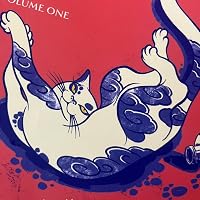
Pre-reading: This cover is incredible.
(obviously potential spoilers from here on) Thick of it: Oh, right in on the mushroom horror!
Oh cool, more Handmaid’s Tale shit. (I really need to read and watch it, but I worry it would upset me too much.)
Ha ha, it may be a dystopia, but Saturday is still for the boys!
Oh my god, get the poor girl a new pair of panties!
Detritus sin
SO SHE’S TWO I'm assuming they're a strain of mushrooms that makes them have a super fast life cycle, but like jesus FUCK.
Was the Crown Royal a bag of fertilizer? (Kinda!)
Is she hallucinating or is it speculum rape or like what is going on omg! (Nailed it.)
His wife grew up in a commune so he thought he could recreate her by abusing another girl?
Is the powder the old wife’s ashes? (Warmer…)
I dunno, I'm a little tired of the lesbian patriarchy horrors. Like yay representation, and obviously it’s horrific to be subjugated under men when you don't even like them, but I'm kinda craving a more nuanced horror story where like what if all this awful stuff is true and you STILL are only attracted to men. How do you make peace with that? Asking for a friend lmao.
I do think it's good symbolism that the enlightened women are the ones who have to die.
It's not dust, it's spores. Do mushrooms self-pollinate? So women are self-fertilizing and men are moot. Fuckin’ typical.
All the wet mouth vagina mucus is a lottttt
I feel like this is missing some oomph, and I'm not sure why. Because the symbolism is great- like shaving off your unique qualities to please men, A+. But like something just isn't doing it for me. Maybe part of it is that we didn't get to fall in love with Teaghan? It's like all instalust. And our narrator doesn't have much of her own personality to latch onto. She's as clueless as we are.
It reminds me of Spread Me, but it's missing the seduction. Like Spread Me was actually sexy.
Interesting that they have Christianity and the Greek pantheon.
Hello, pregnancy horror.
See, it's funny because you're like ew, a mushroom eating its host, BUT THAT’S WHAT REAL BABIES DO TOO. Their DNA stays in you. How is that not terrifying? (Fun fucking facts: Biological "Theft" During Pregnancy * Nutrients and Glucose: Fetal cells, particularly those from the father, can manipulate the mother's metabolism to increase the supply of sugary nutrients. * Calcium: If dietary intake is insufficient, the fetus will take necessary calcium from the mother’s bones. * Cells: Fetal cells travel into the mother's bloodstream and embed themselves in maternal tissues, including the brain, heart, and liver)
Mushroom vagina dentata omg
Can't educate the women! Can't give them bodily autonomy! If they knew the true horrors of pregnancy they wouldn't do it!
Not the women are manipulators and so are fungi. Oh man, this book is so smart sometimes.
I wasn't loving it earlier, but now that she's got this vicious, hungry streak, I like it much more. But is that her or is it Teaghan’s infection/infection of ideas-which again, so clever.
Wanna try out my fuzzy pink handcuffs 🎶
Is that a typo, should it be she? Oh no, it's a memory. Carry on.
Oh god, he's farming his son.
God, I think this book would be pretty impossible to read if miscarriage is a trigger for you. Like it’s well done, but I’m sick to my stomach. I'm like borderline idk if I can keep reading.
Not shit-moist, ew!
You know, mushroom scissoring is not something I ever thought I would read.
And I promise the mushrooms aren't changing your life🎶
The book’s losing me again. This is too long. Too much nature, not enough commentary.
Post-reading: This should’ve been a banger, but it kinda fell flat for me. The pacing’s a hard one. It’s both too fast and way too slow. Hallucinatory writing is fun and pretty much mandatory with a magic mushroom storyline, but it’s hard to mix that in while your reader and your main character are still learning the world they’ve been dropped into. It makes for a frustrating read. Nicole is kind of a blank slate, and while it’s vibey and mysterious to untangle the world with her, she’s missing a personality to bond the audience to her. The romance trips out of the gate because instead of making the audience fall in love with Teaghan, we’re just told that she digs her and forced to accept it as fact. We have no meaningful interaction between the two characters to justify why she’s willing to sneak out to meet her.
I would’ve liked to see a bit more development of the dystopian world. It’s pretty bare bones. We know they collect rainwater and live in a compound, but the food situation is pretty murky. It’s never made entirely clear why all the women have become mushrooms, but none of the men. You’re telling me the entire compound dosed their families all at the same time off of a small clinical trial? I don’t believe you. I thought the enduring culture references were really interesting. I like the men’s bar songs, and how they refer to everything in the world as it’s useful to them. I would’ve liked to see more of that and explore how they have both the Greek pantheon and Christianity going on. I can’t tell if it was a really subtle men are always thinking about the Roman empire joke, but I don’t think it was.
This book is most successful when it starts in on the pregnancy and miscarriage horror. That shit worked. It was viscerally disturbing and appropriately emotional, and I almost stopped reading. Horror books should upset you. They make you confront society, and I love ‘em for it.
The mushroom smut was also really well written. It was fucking gross, but it was appropriately gnarly.
This book succeeds with a lot of symbolism. Women have to shave off parts of themselves to please their husbands. Enlightened women have to be killed because they’re dangerous. In a world without beauty, nostalgia becomes power is a banger of a line, and a concept I wish the book lingered on more. I would’ve liked to see the psychological toll it’s been taking on these men attempting to reincarnate their wives over and over again, and you know those sick fucks were swapping wives when they first realized they could do this. I would’ve liked to see more about how children are raised. We see a baby and we see an older child, but we don’t see the in-between. What’s the homeschooling like? I would’ve liked to see the book explore more of what it meant to essentially be farming a wife for another man to fuck and impregnate.
Like there’s so much to this book that does work! So it’s a real shame for me to finish and be pretty lukewarm on it. I don’t like the ending at all. I think it’s idiotic. I think it would’ve been a little trite, but I would’ve preferred to see the mushroom women go off and thrive in the wilderness and start their own commune rather than merging into one. I respect the coming home to the mother strain, but I don’t love the forgo your individuality and give up your body for the sake of the children messaging.
It’s just kind of a mixed bag. I think if it intrigues you at all, you should definitely pick it up, and if you like mommy horror, I think you’ll at least enjoy parts of this. I don’t think it’s a horror must read, but I’d pick the author up again.
Who should read this: Femme horror fans Queer horror fans Dystopian horror fans
Ideal reading time: Summer
Do I want to reread this: No, I'll remember it
Would I buy this: Yes.
Similar books: * Moonflow by Bitter Karella-mushroom horror, revenge thriller, cults, queer, trans * The Unworthy by Augustina Bazterrica-dystopian, horror, cults, religious and social commentary, queer * Tender is the Flesh by Augustina Bazzterrica-dystopian, horror, social commentary * Spread Me by Sarah Gailey-contagion horror, sci-fi, queer, trans * You Weren’t Meant to Be Human by Andrew Joseph White-dystopian, pregnancy horror, social commentary, cults, queer, trans, autism * Overgrowth by Mira Grant-sci-fi thriller, queer, trans, autism
*2.5 stars I really enjoyed the first few chapters of this but the direction it took after really lost me interest wise. It seemed there was so much lore missing that would have filled so many gaps.
2.5 ⭐️ rounded up The first 50 pages had me hooked, but unfortunately it kind of lost me after that. Very fever dream-y. I loved the dystopian setting. Wanted more from the sapphic relationship.
This was unfortunately a rather disappointing book. The first chapter was incredible and genuinely had me thinking that this was going to be a five star read. But it only went downhill from there.
We open on Nicole on ever wedding day. She is set to marry a man she has been promised to since before she was born, a man she has never met. Her mother is preparing her for her his land by cutting off her growths - because all of the women in their community have bungle growing all over their bodies. But because the men do not like looking at the growths, married women are expected to cut them off continuously at a high cost to their own comfort. She now has to leave the house she has been confined to for all of her life - only to move to her husband's house which she will, once again, not be allowed to leave.
Those all sound like great ideas that would add up to a book I’d really like. But unfortunately the ideas proved to be much better than the execution.
Overall, the story just felt directionless, lacking a clear plotline. And there’s books that don’t have a clear plotline and red thread tugging the reader along that are still great and interesting to read, but it just didn’t work for me in this case. Originally what kept me reading was the fact that the world-building information is only conveyed to the reader in small parts, partially because the protagonist herself doesn’t know a lot of things. So, I was curious to know the whole background of this world. But honestly I even lost interest in that about halfway through.
The sapphic romance is also just kinda… meh. I never really felt any sort of spark between the two. I found the dynamic of Nicole developing an obsession with this other woman she sometimes saw through the window but never actually talked to really interesting, but the book just doesn’t do anything with it. ---- Thank you to Saga Press for the ARC
this was not the type of weird body horror that worked for me unfortunately, but I can't pinpoint why other than the baby/pregnancy talk, which I always dislike, but I did appreciate all the feminist commentary and beautiful writing.
This is 4.5 out of 5. I felt like it was stretched to make it a novel but as a novella it would have been perfect!
Three Words That Describe This Book: sporror/body horror combo, immersive, single pov
Other words: atmospheric, near future, post apocalyptic landscape, eco horror, unease that gets its feelers into you-- you feel the fungus grown on your own body...loved that--Gothic, queer, feminist, original, cults, female rage, multiple levels of abuse of the women here-- a lot of psychological abuse to go with the physical, visceral but not bloody.
Before I go into anything else about this book the unease is enhanced because readers only see this strange, near future, apocalyptic world through the eyes of Nicole and only Nicole. She is unreliable in the literal sense as she has only lived her life locked in her parent's home, is venturing out to be wed and live as a wife in the community as the book opens. This is before we learn about the weird, allowed in community the live in.
The women as all covered in elaborate mushrooms, which they shave once married. The men run this world and are trying to protect the community after the destruction of civilization.
Details are let out in small doses as Nicole befriends and falls in love with another wife (Teaghan)-- but it is not so much romantic as more all consuming-- physically, yes but also Nicole has never had a friend, and this woman is her conduit to the "truth."
Clearly, something is going on with the women in this community. They are being absued physically and psychologically. The men are running things and using them in ways we learn over the course of the book. While the details are let out, they pile up on each other, many of these details are shocking at first, but Cranehill does a great job making every detail build a fuller picture of the world.
It all adds up in the end, giving readers a picture of this strange landscape. We don't have all the answers of what is going on outside their walled community but we do get closure on the world the story is set in. And it is satisfying in every way-- intellectually, emotionally, and most importantly-- revenge worthy!
I cannot stress enough how well Cranehill does weaving the fungus and mushrooms into the entire novel. Readers feel them, smell them, see them. There were times I was batting something away from my eyes or scratching a part of my body because of what was written on the page. WELL DONE!
Great world building, interesting story, immersive in every sense of the word, and Nicole was a naive protagonist uncovering the truth that I wanted to follow.
Reminded me of if the cultish post apocalyptic world of The Unworthy by Bazterrica joined forces with VanderMeer's Southern Reach series. Also reminded my of Pink Slime by Fernanda Trías and Gather the Daughters by Jennie Melamed
would have had more fun doing shrooms than i did reading this book.
this was painfully slow & ultimately confusing (not sure i know exactly what happened in the book, was in the dark as much as our main character, nicole). in my humble opinion, silvia moreno-garcia’s mushroom horror in “mexican gothic” can’t be beat, and this book certainly doesn’t even come close.
When I read the premise, I was hooked and was really looking forward to reading it; but, I think it is trying to do way too much without succeeding at anything.
While I expected there to be some questions about the world going into it, I feel like we never fully came to understand the way the mushroom concept works. Sure, I don't need everything explained to me, but I wish at least the aging process would have been explained, because what do you mean the MC is two years old? Two in like... dog years or something?
However, if the worldbuilding was the only problem, I would still have been able to enjoy this book. But it's not the only problem.
My main issue came with the book's characterization, or lack there of. Our MC, Nicole, switches her thoughts and personality on a whim. She is supposed to be somewhat naive, as she grew up secluded and knows very little, however, she often goes on long, philosophical tirades that come from nowhere, while, at the same time, being clueless about the world and other people. It feels like the author just wanted to make some profound statements without actually putting in work to make those tangents apply to the plot.
Additionally, Nicole's opinions on people must change depending on the position of the sun, because she contradicts her own thoughts, particularly on Silas, often within the same chapter. And there is no inciting incident that changes her thoughts; she will randomly just go from "I hate Silas, I wish I could break his bones" to "I want to do anything to please him".
Silas himself has a characterization problem, as we are often told what we should believe about him, rather than actually witnessing his personality. In general, I think this book does a lot of telling and not showing.
I think some of these mischaracterization issues could be remedied if we had spent more time in Nicole's original house with her mother, so we could understand how she was raised and what her personality was like before she was married off.
Outside of lackluster characters and plot, the writing of this book felt excessively poetic, and not in a good way. Almost every paragraph was filled with long metaphors that often did not make sense or added nothing to the story. It felt like the book wanted to appear "well-written", but it ended up looking like a thesaurus with little concern for if these words belonged together. Some sentences felt unedited as well, but also some of the descriptions felt...strange? Like someone's skin being described as "shit-moist". Some times words would just be joined together, and the combination didn't make much sense.
Lastly, it felt like the book did not deliver on some of the themes described in the blurb. Its "feminist" ideas are very in-your-face without expanding on basic concepts of men taking control of women. We've known that men abuse women in marriage, what else is new? The sapphic element of the story is incredibly forced, as Nicole's connection with Teagan comes from nowhere and they have little to no chemistry. You don't really come to care about their relationship, as Nicole herself only seems to occasionally remember Teagan exists when it benefits her. Teagan herself doesn't even serve the "contradictory wife" role that the blurb says she does. Sure, she questions the male society but not all that much more than anyone else. The relationship between Nicole and Teagan was just very insta-love.
I have several more thoughts on this book, but I'll share one more, cause I thought it was a little strange. I found the emphasis on babies and women having children to be a little off-putting, as it felt very...pro-baby, if that makes sense. It felt like the narrative that "what makes women special is their ability to have babies". Not that the book explicitly says this, but it does place a lot of emphasis on women having babies and viewing it as a beautiful and unique thing. Not that having babies is bad, but this idea kinda gets into a TERFy line of thinking. Not too accuse the author of anything, it just felt a little bizarre.
A trippy horror for readers of CITY LIKE WATER (Dorothy Tse) and I WHO HAVE NEVER KNOWN MEN (Jacqueline Harpman), leaning stylistically towards the former.
4.25.5 “I have never been as alone as I am while trying to fit my life into Silas’s. Never been so isolated as when I push myself away from my own skin so he will see someone else when he looks at me.”
“I know this pattern all too well. Violence simmers inside him. All my life I’ve had to learn about men so I could survive, so I could be something a man wants to keep around.”
even tho the plot lost me in the second half, the conversation around women’s bodies, autonomy, beauty, queerness, community… etc was so strong that i really enjoyed my time with this book.
There is a lot of symbolism to dissect in this novel. I actually listened to it twice just to get a deeper understanding of all that was being said.
There are some real life comparisons to how women are treated in today's society.
I liked the idea of the women connecting back to the earth and drawing their power from the original mother. There was so much I enjoyed from the story but I really felt I had to take my time with it and relisten to passages to truly get into the depths of its meanings.
The way it is written can definitely cause confusion but it's still beautiful.
This fable-ish novel is set in a post-apocalyptic world where nearly everything is poisoned or tainted in some way. Especially the women. They are afflicted with mushroom-like growths all over their bodies. They are also assigned to marry certain men at the time of their birth.
Actually there’s more to it than that and the book follows Nicole, a very young woman who doesn’t leave her house, ever, until her wedding day when she goes to live with Silas. Now that she is out in the world she learns about the other women of the settlement.
I think this book just needs to find its people, and, unfortunately, that’s not me. I’m not squeamish but the constant discussion of the “mushrooms” bothered me and the story just didn’t hold my interest. But it may turn out to be a horror-ish book that people love, what do I know?
Kinda hated this. The concept was really cool and the first chapter sets it up really nicely but everything is just boring as hell! The writing was incredibly slow and there were parts that were so abstract that it completely took me out of the story. Nicole has such complex thoughts for a woman that can’t read and has had minimal to no disruptions to her daily life, it comes off inauthentic. Gave extra star for the creepy imagery and gross, moist feelings but the rest of the plot was very dull. Don’t quite understand the last 50 pages of the book and I’m ok with that, I just don’t care.
I...hated this. I judged the book by the super cool cover and was miserably disappointed by the actual contents of the book. It's about as subtle as a brick to the face with the commentary on women being expected to conform into men's desired image of them, considering the characters literally cut themselves down into the womanly shape that their husband wants.
I think maybe if you've never read a book about a woman who rebels against the patriarchy then you might like this book and find it enlightening. For someone like me though who has read a lot of similar fiction, this was just too much for me. It was so heavy handed on the messaging, which isn't necessarily the worst thing ever considering how poor media literacy is. But the narrator would just outright describe the oppression and sexism she faces instead of the author showing it. That's just so boring to me.
I think the descriptions of the infected women were cool at times but that was such a small portion of the book and it was completely overshadowed by the female characters talking about submitting to men and then the male characters talking about wanting their wives to submit properly.
I will probably never think of this book ever again and I wouldn't ever recommend it to anyone unless you're really into mushrooms but even then I can't imagine you'll love "Wife Shaped Bodies."
If The Handmaid's Tale was full of body horror and covered in mushrooms, they'd probably be cousins.
This novel was an absolute treat and met all my expectations. The world building through slow, patient reveals is one of my favourite things. Even the MC's name is barely present in the book, because it matters to so few people. This is a story about the disposability of women, the hubris of men, and so very much the story of patriarchy. The novel gave me my first true experience of body horror being an aspect of beauty.
This is a novel I'll buy for my shelves and keep for the rest of my days. Highly recommend.
Viena keistesnių šiemet skaitytų knygų! Toks vat I Who Have Never Known Men su bio horror elementais. Moterys, apaugusios grybais, keistas miestelis, dar keistesni vyrai ir vestuvių papročiai.
Labiausiai patiko autorės rašymo stilius, kaip gražiai, šlykščiai ir keistai šlapiai ji geba aprašyti tiek veiksmus, tiek veikėjus. Skaitant tikrai, atrodė, dažnai net tvanku buvo, dar dažniau nemalonu — ypač galvojant apie kūnus, autonomiją, bendrystę.
Kažkaip skaitydama nelabai žinojau, kur link viskas eina, bet kai viskas pradėjo aiškėti, siužetas ir paslapčių išrišimas patiko (nors gal ta pirma, paslaptingesnė knygos pusė buvo kiek įdomesnė). Tik tiek iš aprašymų, tiek tematikos pusės nėra labai maloni knyga skaityti, bet man tikrai patiko!
Tik vat jei nemėgstat grybų, šita knyga tikrai bus ne jūsų vaibo 🫨
I've been really into ecological horror so when I saw Wife Shaped Bodies, I knew I needed to read it asap.
Let's start with what I liked: I enjoyed the fact that I only knew what Nicole herself understood and discovered throughout the novel. The new world is bizarre and terrible and you're drip fed information little bits at a time. This was really cool. But it was also maddening. Because Nicole is young and was isolated her whole life, so she can't offer much in the way of answers. And there isn't a ton of plot happening, so you're left listening to her ruminations. I'm a character driven reader, so this wasn't horrible for me.
On a line level, this book is great. Like honestly the prose is gorgeous. I was eating it up!
But I think I came into this with too many expectations. I thought the sapphic element would play a larger role than it did. The husband is just as big of a character, if not moreso, than the love interest. That's kind of a problem for me. The love interest wasn't around much, therefore I didn't buy into the developing relationship.
Wife Shaped Bodies is less than 300 pages and yet it's too slow. While I enjoyed getting so many of Nicole's thoughts it really hindered the pacing. And then, when things ramped up, they sped up a bit TOO quickly. Every time we hit an interesting scene it felt like we were instantly shifting gears and starting another one. It left me yearning and unsatisfied. Perhaps a bit like Nicole every time she was stuck in the rotting house with Silas rather than her love.
God, and the ending! On one hand, it's horror. I understand that a big aspect of horror is unhappy or bittersweet endings. But something about it didn't quite land for me.
Wife Shaped Bodies might not have been my perfect fit but I'm excited to see what else Laura Cranehill writes.
Thank you to NetGalley, Saga Press, and Laura Cranehill for the ARC.
Touching Grass Has Never Been More Complicated BWAF RECOMMENDED READ BWAF Score: 7/10
TL;DR: Wife Shaped Bodies does what only the best feminist horror manages: it makes the patriarchy’s machinery viscerally, biologically real, then tears it apart at the cellular level. Dense prose, genuine dread, and an ending that earns its devastation. Cranehill is the real thing.
I read the first three chapters of Wife Shaped Bodies standing in my kitchen at midnight with my shoes still on and the stove cold, having completely forgotten I was supposed to be making dinner. That is not a boast. That is a confession. That is the specific quality of disruption this book inflicts on your life before you’ve had any say in the matter.
Here’s what happens on page one: Nicole’s mother shaves off her mushroom growths the night before her wedding. Slices away the creamy-orange shrubbery of her shin, the woody folds at her knees, the moist masses at her hips that “splatter when they hit the porcelain.” Nicole is being cut down to the size of a wife. She says so herself, with a flatness that is not resignation so much as the absence of any frame of reference in which to locate resistance. She has never known a body that wasn’t shaped for someone else. The shaving is not horror in any genre sense. It is mundane and intimate and wrong in ways the book doesn’t rush to name, and by the time Cranehill does name them, you’re already past the point of being able to stop. I put down my phone, looked up, and thought: oh, this is going to be a problem for me.
That is how this novel operates. It walks you into something terrible at a pace you mistake for ordinary.
The world is a post-apocalyptic compound where a small group of elderly male scientists and their descended families live behind a wall separating them from a forest supposedly poisoned by radiation. The women of this world are semi-fungal beings, their bodies wrapped in mushroom growths that the men require them to shave off daily, because the growths mark them as other, as dangerous, as not-wife-shaped. Nicole has spent her entire life in a single house, looking through a window at a street she has never been allowed to walk. When she finally leaves for her wedding day, she walks past the graves and the granary and the lab and all the infrastructure of this small, suffocating civilization, and the world is both larger and more confining than she imagined. The horror in this book is not what is in the woods. The horror is the compound itself, the decades of management passed off as protection.
None of that sounds like a 7 to me when I write it out. It sounds like the premise of a perfect book. So let me be honest about where it isn’t, before I tell you what it is.
Nicole is a hard protagonist to spend two hundred pages inside. She is passive in a way that is almost certainly intentional, her interiority shaped by a lifetime of confinement so complete that she has never developed the interior architecture for defiance. Cranehill is making a point about the structure of captivity, about how oppression doesn’t just restrict action but atrophies the imagination of action. I understand this. I believe it. And I spent the middle third of the novel wanting to shake her by the shoulders anyway, because understanding the thematic function of a character’s stillness doesn’t make it less still, and understanding why someone can’t act doesn’t stop you from wanting them to act, and I know that says something unflattering about me as a reader, and I don’t give a shit. The pregnancy section in particular, long and hallucinatory and structurally correct, is rough going. There’s brilliant imagery in there. But it is slow. It is the novel trusting the reader further than some readers will want to be trusted.
What saves everything is Teaghan.
Every scene Teaghan walks into becomes the best scene in the book. She is the reckless, bell-sleeved, fungus-crowned nightmare of a girl who has been wandering out of the compound’s frame her whole life just to see what’s there. She eats raw animals in the dark. She announces things casually that should not be casual. She already knows more than Nicole and doesn’t feel obligated to explain herself, ever, to anyone, and frankly good for her. Cranehill is clearly more comfortable in Teaghan’s body than in Nicole’s, and the novel knows it and uses the imbalance correctly, because what is Nicole’s story but the story of a woman who can only understand her own hunger by watching it operate freely in someone else first.
There are set-pieces in this book that are among the best horror writing I’ve encountered in years. I won’t describe them. What I’ll say is that the dread Cranehill builds is not the dread of the monster visible and approaching but the dread of the system understood, of the moment when you have finally parsed how something works and the parsing is the horror. She is doing something harder than making you afraid. She is making you complicit in an act of comprehension, and it’s fucked up, and it works.
Speaking of the body: I want to talk about the prose, because it is doing work that most debut novelists don’t attempt and several veterans have failed at. Cranehill writes flesh the way you’d write landscape, with geological patience and genuine desire, like she is mapping something that matters. The touch system, where women share memory and sensation through skin contact and fungi, is not a metaphor and not an occasion for sentiment. It is a communication technology with specific properties and costs, and Cranehill understands it at the cellular level because she has apparently read everything Paul Stamets and Merlin Sheldrake and Terence McKenna ever put to paper and then asked herself what it would mean for a human body to be mycorrhizal with other human bodies. The answer is lyrical and accurate and a little disgusting in exactly the right ways.
The mythological frame runs through the book as consistently as the fungi, Greek myth deployed the way it always should be: as a management structure the inhabitants have partially internalized and are in the process of dismantling. The problem is that a few of these insertions feel imposed from above, moments where the novel stops moving to make sure you noticed what it’s doing, and those are the only times the prose loses the feverish forward pressure that is otherwise its greatest attribute. You don’t need to slow down for me. I’m right there with you. Keep going.
But then there is the ending. And the ending is extraordinary in a specific, difficult way: it makes good on the promise of the opening while arriving somewhere the opening couldn’t have predicted. The emotional register is volcanic and strange and quiet, all three at the same time. The epilogue is a different kind of beauty. I am not a person who typically has good things to say about epilogues.
Laura Cranehill‘s prior work appeared in Vastarien, ergot., Strange Horizons, and PANK, which tells you something about what she has read and what she thinks fiction can do. Vastarien especially matters here, built as it is around the conviction that consciousness is a mistake and the universe is hostile to organic life, and there is something of that cosmic indifference in the men of this novel, in their absolute certainty that what they have built is civilization when it is actually a terrarium. But Cranehill is not a pessimist. She is a mycologist’s kind of optimist: she believes in decomposition as a creative force, in the idea that the organisms that break down dead systems are what make new life possible. This book is not hopeful in any comfortable sense. It is something stranger and more durable than hope.
Wife Shaped Bodies is a debut, and it reads like one in the places I’ve described. But the places it doesn’t read like a debut are the places that matter more. The touch-as-communion system is fully original. The fungi are genuinely researched and deployed with understanding rather than vibes. The Teaghan and Nicole dynamic is the most interesting queer relationship in genre fiction this year, and it does not soften itself or explain itself or apologize for the places where it gets difficult to categorize.
I mean it when I say the middle third is rough going and Nicole’s stillness costs the reader something real. I also kept turning the pages. The book got its hooks in and didn’t ask permission, and that is the only thing that has ever mattered.
“But women’s singing is not like men’s singing. Our songs aren’t predetermined or learned by rote like theirs. We don’t sing in words. We feed the notes to each other, sense the harmony before it happens. Rising as one, falling as one, holding one note concurrently.”
What I thought was going to be a horrific view of the ways in which men rule over women in a dystopian future actually became a run-of-the-mill gothic that really didn’t do much for me. And while I enjoy myself a gothic once in a while, I was just expecting that the story would lean more into what made it unique as opposed to current publishing trends!
Wife Shaped Bodies takes place in a vaguely futuristic compound after the end of the world (this is all the world building we get in the book I’m being so for real). We follow Nicole, who is being married off to a man named Silas. In the compound, there are very few men and the women are infected with mushrooms and fungi. There’s some oppression there because obviously. And there’s a sapphic relationship as well.
As alluded to earlier, this book is extremely too vague. At first, the disorienting nature of the story made me feel like the loose details and the undefined world was intentional, so that there would be a big moment later when it was all formed together. Then, after 250 pages, I realized the vagueness was just the fact that the author really didn’t know where to take the concept. There is ONE LINE in the ENTIRE BOOK that answers a question about the world. I personally am someone who loves ambiguity, but within the context of this book, it felt like a mistake instead of an intention. I understand that Nicole doesn’t know anything about her world, but the way these stories often go is that the epiphany kickstarts the change. Instead, Nicole is radicalized by… a pretty lady. There are countless moments where actual world building should have been established (the lab scene, the graveyard with the ladies, being over the wall, etc.) and YET WE GET NOTHING.
Don’t even get me started on the birth section. If this was meant to be the radicalizing portion, then I’m really confused as to when that happens. The narrator is so out of it that the book tells stories of various people being in her house that we know can’t be real, but it does it so often that it made me think the book was doing something cooler than it actually was. Over and over again it faked me out with a plot I thought we be more realized, only for it to be pulled out from under me as ANOTHER hallucination.
There’s a part of me that thinks that in the big 26, a story like this reeks of gender essentialism. By intentionally NOT discussing why the world is set up the way it is, and especially given the ending, it makes me question why this story had to be told in the first place. Women are mushrooms and men are oppressors. And there is no nuance to that. The one character who you think will be the nuance (Silas) is completely changed within the span of 50 pages just to further work towards the gender essentialist framework that weakens the story as a whole.
There were parts I enjoyed! I really loved the first 80 pages or so where everything was being set up. The first scene was so intriguing and really pulled me into the world in a beautiful way. But the moment Nicole goes to Silas’s house was the moment it lost me. I also thought that the scenery and setting was extremely well developed. There were lines about the trees creeping in and the earth taking back its land which I quite liked.
I don’t want to keep harping on but the fact the story ends LIKE THAT makes me more and more convinced that this book would have been revolutionary in 1985 and not in 2026.
Fantastically weird and delightful in all the best ways. Review coming soon!
-
Wife Shaped Bodies is quite the journey. The post-apocalyptic setting, with women whose bodies are covered in mushrooms and the strict patriarchy, created such a unique and memorable novel that will stick with me for a long time.
It all begins with the death of Nicole’s mother, and slowly the truth of the world begins to unravel. There has been radiation poisoning, and as a result, a new society has formed. Cranehill strikes the perfect balance between answering what is happening in this strange new world and leaving some mystery behind. I really enjoy when a story leaves me with a few questions to deeply analyze while still providing a satisfying conclusion.
The body horror elements were incredibly well done. Cranehill has such lush writing, and I found myself feeling completely transported into this peculiar world. This is a phenomenal debut novel, and I’ll definitely be keeping an eye out for future releases.
Thank you Netgalley and S&S/Saga Press for an ARC of Wife Shaped Bodies in exchange for a fair and honest review.