

What do you think?

Un voleur honnête
Astafi Ivanovitch avait été tellement frappé de ce qui venait de se passer, qu’en le regardant j’en oubliai le vol. Il ne pouvait s’en remettre. A chaque instant, il abandonnait son travail et recommençait à dire comment tout cela était arrivé : qu’il était là et que sous ses yeux, à deux pas de lui, on avait volé le pardessus ; et que le voleur s’y était si bien pris qu’on n’avait pas même pu le rattraper. Ensuite il reprenait son ouvrage, qu’il quittait bientôt. Enfin il alla chez le portier recommencer son récit et lui reprocher que de pareilles choses puissent se passer dans sa cour. Après quoi il revint auprès d’Agrafena et, à son tour, la réprimanda. Puis, il se remit au travail en marmonnant entre ses dents comment tout cela était arrivé ; « Il était ici, moi là, et, sous mes yeux, à deux pas, il a pris le pardessus... », etc. En un mot, Astafi Ivanovitch était complètement bouleversé.
Paperback
First published January 1, 1848
About the author
Fyodor Dostoevsky
3,540 books79.8k followers
Фёдор Михайлович Достоевский
(Russian)
Works, such as the novels Crime and Punishment (1866), The Idiot (1869), and The Brothers Karamazov (1880), of Russian writer Feodor Mikhailovich Dostoyevsky or Dostoevski combine religious mysticism with profound psychological insight.
Very influential writings of Mikhail Mikhailovich Bakhtin included Problems of Dostoyevsky's Works (1929),
Fyodor Mikhailovich Dostoevsky composed short stories, essays, and journals. His literature explores humans in the troubled political, social, and spiritual atmospheres of 19th-century and engages with a variety of philosophies and themes. People most acclaimed his Demons(1872) .
Many literary critics rate him among the greatest authors of world literature and consider multiple books written by him to be highly influential masterpieces. They consider his Notes from Underground of the first existentialist literature. He is also well regarded as a philosopher and theologian.
See also:
Russian → Фёдор Михайлович Достоевский
French → Fédor Dostoïevski
French → Fiodor Dostoïevski
Spanish → Fiódor Dostoyevski
Portuguese → Fiódor Dostoiévski
Works, such as the novels Crime and Punishment (1866), The Idiot (1869), and The Brothers Karamazov (1880), of Russian writer Feodor Mikhailovich Dostoyevsky or Dostoevski combine religious mysticism with profound psychological insight.
Very influential writings of Mikhail Mikhailovich Bakhtin included Problems of Dostoyevsky's Works (1929),
Fyodor Mikhailovich Dostoevsky composed short stories, essays, and journals. His literature explores humans in the troubled political, social, and spiritual atmospheres of 19th-century and engages with a variety of philosophies and themes. People most acclaimed his Demons(1872) .
Many literary critics rate him among the greatest authors of world literature and consider multiple books written by him to be highly influential masterpieces. They consider his Notes from Underground of the first existentialist literature. He is also well regarded as a philosopher and theologian.
See also:
Russian → Фёдор Михайлович Достоевский
French → Fédor Dostoïevski
French → Fiodor Dostoïevski
Spanish → Fiódor Dostoyevski
Portuguese → Fiódor Dostoiévski
Ratings & Reviews
Friends & Following
Create a free account to discover what your friends think of this book!
Community Reviews
Displaying 1 - 30 of 509 reviews
![Profile Image for s.penkevich [hiatus-will return-miss you all].](https://i.gr-assets.com/images/S/compressed.photo.goodreads.com/users/1735525095i/6431467._UX200_CR0,11,200,200_.jpg)
July 7, 2023
Even the minor works of Fyodor Dostoevsky have a profound and dynamic psychological inquiry that always reaches deep into my heart. If ever there is a day that feels like a piece of stale toast, Dostoevsky’s writing is butter and jam that soaks in and makes it delicious again. An early work written in 1848, An Honest Thief delivers many of Dostoevsky’s characteristic themes in their early stages in this tale of a kindly man struggling with his fatherly relationship with a man reduced to alcoholism and petty theft. Following his first novel, Poor Folk, Dostoevsky continues with his humanitarian representation of the poorer classes and the way they must survive feeling discarded from society, often with a sort of “found family” such as between lodgers like Astafy Ivanovich and Emelyan here. Heartfelt and redemptive, there is a sentimental sincerity that shines beyond the sadness of the tale and an excellent psychological portrait of custodianship and guilt.
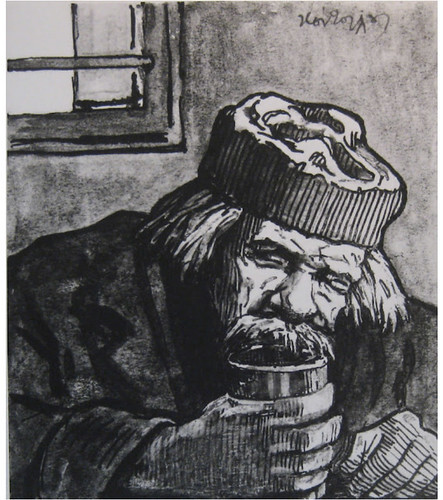
Depiction of An Honest Man by greek painter Photis Kontoglou
Something I’ve always quite enjoyed in the short stories of Russian literature is the way the narration is often nested inside another story. Here we have three degrees of separation from the author, opening to a story of the narrator taking in Astafy Ivanovich as a lodger. But when a theft of his coat occurs and Astafy cannot catch the thief, he begins his tale about an—you guessed it!—honest thief that becomes the primary focus of the short work. Dostoevsky is far from the first to employ this nested narrative technique, certainly learning it himself from the works of his major influences, Nikolai Gogol and Alexander Pushkin, who also embedded tales within tales. I enjoy how this style frames tales as secondhand stories and shows how a tale acts upon the world in which it was told or provides context to a character in a larger story. Dostoevsky seems experimenting with it here, and quite successfully so.
‘When a man is guilty, you know, sir, he scents trouble far off, like the birds of the air before a storm.’
This tale of a guilty conscience feels a precursor to that of Raskolnikov in Crime and Punishment, and the “accidental family,” such as that of Astafy and Emelyn, is a theme he would continue to create variations on all the way up to The Adolescent (titled Accidental Family in the Richard Freeborn translation). We see both men suffering with the conscience, Astafy Ivanovich with his conflicting feelings of wanting to cast Emelyn aside ‘like the rubbish you are’ but also sacrificing his own meager share of food, water and money to care for this discarded man and hopefully help him back on his feet. He pushes him towards his own vocation of tailoring, though Emelyn’s shaky hands can’t grasp it. In Emelyn, we have the guilt of having fallen destitute due to his addictions and stealing in order to survive. We see him sleep on the steps in the cold as Astafy threatens he would make him do out of shame for returning home drunk again and even running away for four days over what we later learn is guilt for stealing from Astafy and lying about it. In this way we see how even the poor, even during their harshest moments, still are struggling to be good people in keeping with what Dostoevsky would later write in Crime and Punishment that ‘poverty is not a vice…in poverty you may still retain your innate nobility of soul.’
Alcoholism is a tragic addiction, and it is tragic to see Emelyn suffer from it. Worse, is his suffering from guilt, sitting at the window gazing into nothing nearly motionless for days, and I must confess I’m rather charmed by the phrasing that he ‘moped like an owl.’ We find a parallel to this—and one of the many ways we see Astafy filling the Emelyn role—in the story’s ‘present,’ Astafy Ivanovich sits in the same spot sewing all day on end. One could wonder if his enthusiasm to catch the thief is somehow a desire to chase down the ghost of Emelyn.
But to the matter of the title, and the bewilderment of the narrator when told about said honest thief. ‘To my thinking there is no vermin in the world worse than a thief,’ the narrator thinks, ‘another takes what you can spare, but a thief steals the work of your hands, the sweat of your brow, your time.’ Emelyn does steal more than just the expensive pants from Astafy, such as seemingly robbing him of his peace of mind as well as his rations of food and money, but Astafy brushes all that aside to characterize him as honest. Even though he has lied. And, as one should expect with Dostoevsky, there are some biblical references at play here yet again reminding me of this old meme:
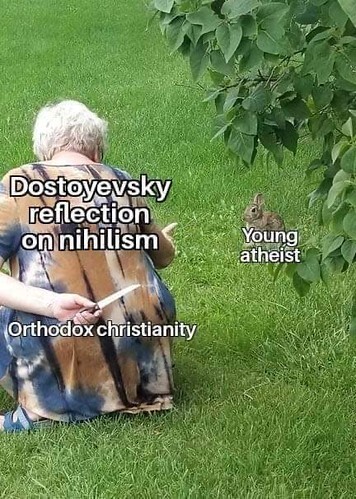
First, the return of Emelyn after his three nights in the cold and Astafy’s joy in his return reads much like the Parable of the Prodigal Son. He even means to get a feast for Emelyn, and by feast I mean more bread and onions beyond his usual rationing. But the biggest theme here is the redemption through confession which calls to mind Dismas the Good (or penitent) Thief. Dismas admits to his crimes and calls Jesus innocent as he awaits death crucified himself, such as Emelyn confesses to stealing the pants upon his sudden deathbed. Astafy forgives him as he dies, much as Jesus tells the thief he will go to heaven.
It is a short and fairly inconsequential tale in Dostoevksy’s oeuvre, and a sad one at that, but the psychological nature and focus on forgiveness make it a satisfying story nonetheless. His themes are all on display and his writing seeps into you in his characteristic comforting yet thought provoking manner. While not his strongest or more memorable, An Honest Thief is still certainly worth the read.
3.5/5
Depiction of An Honest Man by greek painter Photis Kontoglou
Something I’ve always quite enjoyed in the short stories of Russian literature is the way the narration is often nested inside another story. Here we have three degrees of separation from the author, opening to a story of the narrator taking in Astafy Ivanovich as a lodger. But when a theft of his coat occurs and Astafy cannot catch the thief, he begins his tale about an—you guessed it!—honest thief that becomes the primary focus of the short work. Dostoevsky is far from the first to employ this nested narrative technique, certainly learning it himself from the works of his major influences, Nikolai Gogol and Alexander Pushkin, who also embedded tales within tales. I enjoy how this style frames tales as secondhand stories and shows how a tale acts upon the world in which it was told or provides context to a character in a larger story. Dostoevsky seems experimenting with it here, and quite successfully so.
‘When a man is guilty, you know, sir, he scents trouble far off, like the birds of the air before a storm.’
This tale of a guilty conscience feels a precursor to that of Raskolnikov in Crime and Punishment, and the “accidental family,” such as that of Astafy and Emelyn, is a theme he would continue to create variations on all the way up to The Adolescent (titled Accidental Family in the Richard Freeborn translation). We see both men suffering with the conscience, Astafy Ivanovich with his conflicting feelings of wanting to cast Emelyn aside ‘like the rubbish you are’ but also sacrificing his own meager share of food, water and money to care for this discarded man and hopefully help him back on his feet. He pushes him towards his own vocation of tailoring, though Emelyn’s shaky hands can’t grasp it. In Emelyn, we have the guilt of having fallen destitute due to his addictions and stealing in order to survive. We see him sleep on the steps in the cold as Astafy threatens he would make him do out of shame for returning home drunk again and even running away for four days over what we later learn is guilt for stealing from Astafy and lying about it. In this way we see how even the poor, even during their harshest moments, still are struggling to be good people in keeping with what Dostoevsky would later write in Crime and Punishment that ‘poverty is not a vice…in poverty you may still retain your innate nobility of soul.’
Alcoholism is a tragic addiction, and it is tragic to see Emelyn suffer from it. Worse, is his suffering from guilt, sitting at the window gazing into nothing nearly motionless for days, and I must confess I’m rather charmed by the phrasing that he ‘moped like an owl.’ We find a parallel to this—and one of the many ways we see Astafy filling the Emelyn role—in the story’s ‘present,’ Astafy Ivanovich sits in the same spot sewing all day on end. One could wonder if his enthusiasm to catch the thief is somehow a desire to chase down the ghost of Emelyn.
But to the matter of the title, and the bewilderment of the narrator when told about said honest thief. ‘To my thinking there is no vermin in the world worse than a thief,’ the narrator thinks, ‘another takes what you can spare, but a thief steals the work of your hands, the sweat of your brow, your time.’ Emelyn does steal more than just the expensive pants from Astafy, such as seemingly robbing him of his peace of mind as well as his rations of food and money, but Astafy brushes all that aside to characterize him as honest. Even though he has lied. And, as one should expect with Dostoevsky, there are some biblical references at play here yet again reminding me of this old meme:
First, the return of Emelyn after his three nights in the cold and Astafy’s joy in his return reads much like the Parable of the Prodigal Son. He even means to get a feast for Emelyn, and by feast I mean more bread and onions beyond his usual rationing. But the biggest theme here is the redemption through confession which calls to mind Dismas the Good (or penitent) Thief. Dismas admits to his crimes and calls Jesus innocent as he awaits death crucified himself, such as Emelyn confesses to stealing the pants upon his sudden deathbed. Astafy forgives him as he dies, much as Jesus tells the thief he will go to heaven.
It is a short and fairly inconsequential tale in Dostoevksy’s oeuvre, and a sad one at that, but the psychological nature and focus on forgiveness make it a satisfying story nonetheless. His themes are all on display and his writing seeps into you in his characteristic comforting yet thought provoking manner. While not his strongest or more memorable, An Honest Thief is still certainly worth the read.
3.5/5

November 11, 2021
Is there such a thing as an honest thief? Astafy Ivanovich believes there is, as he relates a tale of Emelyan Ilyich to his landlord. The man was a homeless drunkard, but Ivanovich was kind to him, took him under his wing.
A sweet tale of understanding and forgiveness.
A sweet tale of understanding and forgiveness.

January 20, 2019
ربما تكون قد سمعت عن اللص الظريف أرسين لوبين و بالتأكيد سمعت عن اللص الشريف روبن هوود الذي يسرق من الأغنياء ليعطي الفقراء تماما كبطلنا الشعبي علي الزيبق الذي اشتهر في عهد المماليك.
و لكن اللص هنا ليس لصا أصلا و كذلك لا ينطبق عليه صفة شريف فهو سكير مدمن على الشراب و لا يفعل شيء في حياته سوى تسول الشراب و المأوى و مع ذلك فهو عزيز النفس و يبدو أنه فعلا من أصل شريف و دفعه الإدمان لسرقة سروال من الرجل الذي يأويه و لكنه سرعان ما أحس بالندم الشديد و دفع حياته ثمنا لذلك الخطأ.
قصة ساذجة جدا كأنها موعظة دينية و قصة مدرسية لولا أسلوب دوستويفسكي و ترجمة الدروبي

September 11, 2026
audiobook
presentation & narration
5/5
A man takes in an alcoholic and thief and tries to help him find a better way forward in life. Dostoevsky is honest about dealing with those kinds of struggles and addictions. Very much a spiritual journey story.
3.75
presentation & narration
5/5
A man takes in an alcoholic and thief and tries to help him find a better way forward in life. Dostoevsky is honest about dealing with those kinds of struggles and addictions. Very much a spiritual journey story.
3.75

October 4, 2026
رجلٌ أنهكه الفقر والشرب، ففرغت نفسه، وذهب دوستويفسكي إلى داخل هذا الخواء ونقله لنا ببراعة.
يتركنا دوستويفسكي هنا محتارين في الحكم على هذه الشخصية، أَنراها لصًا آثمًا، أم نعذره لفقره وقلة حيلته؟
~تمت القراءة في أكتوبر 2026~

October 7, 2018
رغم محبتي العميقة لدوستوفسكي، لكن هذه القصة عن شخص مثير للشفقة كانت مثيرة للشفقة ايضاً.....

March 10, 2016
A woefully touching story, within a story.

June 30, 2017
قصة قصيرة لدوستويفسكي خيرًا من عشر رواياتٍ مما تعدون.
أيكون اللص شريفًا؟ الإجابة لا في المعتاد، لكن في هذه القصة نرى نموذج له نعاصره في واقعنا إلى اليوم.. رؤية الأمر من منظور إنساني أكثر منه أخلاقي؛ لهذا قالوا أن فيسكي رائد المذهب الوجودي، وما قرأته من أعمال لفيودر إلى الآن يؤكد على هذا.
أيكون اللص شريفًا؟ الإجابة لا في المعتاد، لكن في هذه القصة نرى نموذج له نعاصره في واقعنا إلى اليوم.. رؤية الأمر من منظور إنساني أكثر منه أخلاقي؛ لهذا قالوا أن فيسكي رائد المذهب الوجودي، وما قرأته من أعمال لفيودر إلى الآن يؤكد على هذا.

March 11, 2016
Dostoyevsky's story within a story gives us the character, Emelyan Ilyitch, maybe the saddest, most pitiful person I've come across. That's saying something because literature is full of them, especially Russian literature.

February 3, 2017
Although it was sad, when you turn the last page you are left with a sweet sensation.
The story as a whole didn't have this spark that makes it distinguishable..If it wasn't written by Dostoyevsky probably it would have been just another short story.
The story as a whole didn't have this spark that makes it distinguishable..If it wasn't written by Dostoyevsky probably it would have been just another short story.

June 16, 2022
“Has he a passport anyway or something of the sort?
To be sure he has, he is a good man, a man of experience; three rubles he’s promised to pay.”
Dostoevsky published many short stories, during 1846 to 1848 and this is interesting to know that his first novel ‘Poor Folks’ was also published in 1846. The wizard was getting ready to rule the world. I have encountered his non-physical style of writing in his novels Crime and punishment and the Idiot. What I mean by non-physical is his famous cerebral narration, which happens inside the head!
Last week I decided to opt for his short stories and two tales that got qualified were 'Bobok' and this one. In this tale, an elderly man (Astafy) convinced Agrafena to admit himself in the kitchen as a lodger and boarder. Agrafena is the cook, washerwoman, and housekeeper of the narrator. The narrator is the owner of the lodge. Agrafena was such a silent creature that except for some dinner inquiries she had not uttered a single word in the last six years.
This elderly man turns out to be an old soldier and he shares many stories. One day a man steals a coat from the peg in front of their eyes and this old man runs after him, but could not catch him and returns empty-handed. But he makes friends with the narrator after this deed the narrator is the owner of the house!
Once the old man starts sharing his story, it becomes a story within the story and the original narrator just disappears. My binoculars could not find him anymore. The two terms you will find in this story’s description, are 'dual-layer narration' and 'naturalistic storytelling'. The story within the story is dual-layer narration and the meaning of naturalistic prose that I comprehended initially was something which is natural. But this is not the case. It’s not being realistic. Certainly not like Chekhov’s realistic tales. Naturalism occurs when the character of humans is governed by the environment in a plot.
One day this soldier, who was a tailor too, does not find the breeches, that he had made for some wealthy men, He talks to the drunkard,
“No Astafy Ivanovitch, I never- sort of – touched your breeches.”
This was my first story of Dostoevsky. And I will remember it. If you will read this, you will find a strange thing in the dialogues. You will find the repeated utterances of all the time and though it may be highly irritating. It did not irritate me. When the story was finished, which was not a happy ending the repeated occurrences of salutations made it multifold sympathetic.
There is a very strange tone in all this narration and that tone is a tone of commiseration. If you will read it in flow you will feel as if a climax scene is going on and the compassion and sympathy are outpourings.
In the major part of the story, you will see the narrator(that old man) would be speaking to the three people at a time. First the drunkard (Emelyanoushka ), the second is the inn owner (the sir,) and the third is you (the reader). And what a wonder, this genius has constructed the game. I loved it.
It's about poor folks whom this drunkard man represented! One poor fellow who was an honest thief!
I also know that Dostoevsky experimented with many narrative techniques in his early career and this tale might have tumbled out of his experimental desk. Who knows, but this was a new tryout for me too.
A bizarre sympathetic tone throughout, I will remember for a long!

September 15, 2020
رواية مثيرة للشفقة ......
تسائلت كثيرا ما الداعي للرجوع لضميرنا
وهنا ربما لمست بعض من الإجابة
بأن تأنيب الضمير يميتنا يُبقي داخلنا ذلك الشعور المزري لأنفسنا .
يميت داخلنا الرضا وهنا يبدأ جسمنا بالتمرد علينا
ليس الجوع والعطش ما يجعلنا نعيش
إنما الرضا عن نفسنا وعلي أفعالنا وتجنب التعارض مع ذلك الرضا ومواجهة تأنيب الضمير .....
تسائلت كثيرا ما الداعي للرجوع لضميرنا
وهنا ربما لمست بعض من الإجابة
بأن تأنيب الضمير يميتنا يُبقي داخلنا ذلك الشعور المزري لأنفسنا .
يميت داخلنا الرضا وهنا يبدأ جسمنا بالتمرد علينا
ليس الجوع والعطش ما يجعلنا نعيش
إنما الرضا عن نفسنا وعلي أفعالنا وتجنب التعارض مع ذلك الرضا ومواجهة تأنيب الضمير .....

November 11, 2019
In this short, short story Dostoyevsky gives us a story within a story, a writing technique not a favorite of mine, and yet I still enjoyed it. Why? Dostoyevsky always gets under the surface of human behavior. Your head tells you to act in one way, you turn around and do the opposite. Dostoyevsky never shoves his message down your throat. He has you thinking. He shows you that what you logically should do is not what you necessarily do. There will always be a dichotomy between heart and head. Dostoyevsky understands people and he mirrors this in what he writes.
What will a person do to relieve a bad conscience?
Is it possible to change who we are?
A story about understanding another person’s existence, friendship, regret and forgiveness.
Max Bollinger narrates the audiobook. He mispronounces simple English words. His reading is stilted. Nevertheless, I could easily follow the story, so I am willing to give the narration performance two stars.
What will a person do to relieve a bad conscience?
Is it possible to change who we are?
A story about understanding another person’s existence, friendship, regret and forgiveness.
Max Bollinger narrates the audiobook. He mispronounces simple English words. His reading is stilted. Nevertheless, I could easily follow the story, so I am willing to give the narration performance two stars.

September 19, 2026
3.5!
Man, oh man, Dostoyevsky really does love writing stories about lonely Russian men 😅 I only wish this one were a bit longer.
Man, oh man, Dostoyevsky really does love writing stories about lonely Russian men 😅 I only wish this one were a bit longer.

December 8, 2022
امتیازم به داستان بالا نیست اما این دلیل بر بد بودن داستان نیست.
داستایفسکی با قدرت خارقالعاده خودش به ما این امتیاز را میدهد تا وارد روح و افکار انسانها بشویم.
آیا دزد شرافتمند وجود دارد؟ به عقیده داستایفسکی چنین انسانی وجود دارد. او به ما در یک داستان کوتاهِ تیره و تار انسانی را نشان میدهد که تحت شرایط خاص و از سر فقر دزدی میکند! اما تحولات روحی روانی و عذابی که بعد از سرقت مشاهده میشود نشان دهنده وجدان پاک این انسان است. از این داستان کوتاه معانی زیادی میتوان استخراج کرد.
داستایفسکی در «جنایت و مکافات» میگوید: "مردی که وجدان دارد، در حالی که به گناه خود اعتراف میکند عذاب میکشد. این مجازات اوست."
از کتاب:
"آدم گناه کار همیشه اینطوره، سریع احساسات رو درک میکنه، درست مثل پرنده ای که قبل از سر رسیدن توفان باخبر میشه."
داستایفسکی با قدرت خارقالعاده خودش به ما این امتیاز را میدهد تا وارد روح و افکار انسانها بشویم.
آیا دزد شرافتمند وجود دارد؟ به عقیده داستایفسکی چنین انسانی وجود دارد. او به ما در یک داستان کوتاهِ تیره و تار انسانی را نشان میدهد که تحت شرایط خاص و از سر فقر دزدی میکند! اما تحولات روحی روانی و عذابی که بعد از سرقت مشاهده میشود نشان دهنده وجدان پاک این انسان است. از این داستان کوتاه معانی زیادی میتوان استخراج کرد.
داستایفسکی در «جنایت و مکافات» میگوید: "مردی که وجدان دارد، در حالی که به گناه خود اعتراف میکند عذاب میکشد. این مجازات اوست."
از کتاب:
"آدم گناه کار همیشه اینطوره، سریع احساسات رو درک میکنه، درست مثل پرنده ای که قبل از سر رسیدن توفان باخبر میشه."

March 12, 2023
مؤلمة جداااا وبؤس شديد 💔

September 27, 2018
O Ladrão Honrado, terá sido um dos primeiros trabalhos de Dostoiévski onde o protagonista, um alcoólatra sem família e sem trabalho que vive entre o vício e a caridade alheia, enfrenta um dilema moral e se vê a braços com um sério problema de remorsos. Características que irá aprofundar em obras futuras e, quiçá, um primeiro ensaio para uma das personagens mais marcantes que viria a criar : o inesquecível Raskólnikov de Crime e Castigo .

April 26, 2019
What was best of all, Astafy Ivanovitch would sometimes tell a story, describing some incident in his own life. In the perpetual boredom of my existence such a story-teller was a veritable treasure. One day he told me one of these stories. It made an impression on me. The following event was what led to it...
A rather slow-paced plot, and not a challenging one as Dostoyevsky got us accustomed to, but the ending - described with heartbreaking poignancy - saved the story.
April 26, 19
* Later on my blog.

March 20, 2018
This guy, whose name i can never pronounce, is sad; really sad, very sad.

December 27, 2021
An 1848 short story within a story by Fyodor Dostoevsky about a quiet loner whose housekeeper, Agrafena, persuades him to take on a lodger in a spare room. The man is an ex-soldier, poor, suffering, a drunkard and also, as it turns out, a thief; an old coat from his landlord has gone missing. Border Astafy Ivanovich, hearing the story, tells his own story of a man named Yemelyan Ilyitch—an “honest thief” he once knew and helped. The landlord is doubtful that such a person actually exists:
“To my thinking there is no vermin in the world worse than a thief. Another takes what you can spare, but a thief steals the work of your hands, the sweat of your brow, your time . . . ”
Astafy encourages Yemelyan to give up his drinking throughout the story, but it’s a struggle. Then Astafy’s riding breeches are stolen, and Yemelyan is the chief suspect. Accused, feeling guilty but in denial, Yemelyan becomes ill, drinks to excess. But in decline, he tells the truth to Astafy, and he gives him his only remaining possession of any worth, an old coat. This story is told to the landlord. What’s the point? Well, you can take different views of crime, of poverty, of human nature. Sad and sweet early work.

January 27, 2020
"كان قلبي ينفطر ألمًا حين أنظر إليه. وكنت أعلم أنه ينظر إليَّ... كنت أحس أنه يريد أن يقول لي شيئًا ولكنه لا يجرؤ... وأخيرًا نظرت إليه أنا. إنه لا يحوِّل بصره عني. ولكنه حين لاحظ أنني نظرت إليه أشاح بعينيه."
القصة لمست قلبي... ولا يستطيع أن يفعلها أحد مثل دوستويفسكي، ويعزف برقة على أوتار المشاعر في أغوارها البعيدة.
هنا رجل في غاية الطيبة والعطف ورقة القلب يدعى أستافي إيفانوفيتش، لم يكن السارق الشريف، بل كان الرجل العطوف الذي قدم، بدون مقابل، للسارق الشريف، المأوى وشاركه كسرة خبزه، وكانت كل ما يملك من طعام، ومنحه عطف قلبه، في عالم قليلة جدًا فيه القلوب الطيبة العطوفة مثله...
27.01.2020
القصة لمست قلبي... ولا يستطيع أن يفعلها أحد مثل دوستويفسكي، ويعزف برقة على أوتار المشاعر في أغوارها البعيدة.
هنا رجل في غاية الطيبة والعطف ورقة القلب يدعى أستافي إيفانوفيتش، لم يكن السارق الشريف، بل كان الرجل العطوف الذي قدم، بدون مقابل، للسارق الشريف، المأوى وشاركه كسرة خبزه، وكانت كل ما يملك من طعام، ومنحه عطف قلبه، في عالم قليلة جدًا فيه القلوب الطيبة العطوفة مثله...
27.01.2020

January 17, 2017
Ένας Τίμιος Κλέφτης
Ακόμα μία μικρή ιστορία του Ντ. η οποία, αν και μελαγχολική, αφήνει μία γλυκιά αίσθηση απροσδιόριστης φύσης στο τέλος. Ίσως να έπαιρνε και άλλη ανάπτυξη, ίσως και όχι. Σίγουρα έχει κάμποσα να πει στον μέσο αναγνώστη.
Ακόμα μία μικρή ιστορία του Ντ. η οποία, αν και μελαγχολική, αφήνει μία γλυκιά αίσθηση απροσδιόριστης φύσης στο τέλος. Ίσως να έπαιρνε και άλλη ανάπτυξη, ίσως και όχι. Σίγουρα έχει κάμποσα να πει στον μέσο αναγνώστη.

January 12, 2025
An Honest Thief is about a man (the narrator) who takes in a "drunkard" who eventually opens up about his life. I'd say it's mostly a story about a man who is a victim of his circumstances, having to rely on the kindness of others as he floats around in a kind of desperate bewilderment.
Dostoyevsky never ridicules this character or makes him into a punchline. He never feels wicked in any way. He wants to be good and productive but he just can't get a handle on his life.
The writing style is simple and effective, focusing on small meaningful details instead of dramatics. The portrayal of the thief’s weakness feels authentic, showing him as flawed but not beyond understanding. The gradual reveal of his story builds empathy, making it hard to view him as just a criminal. The ending ties everything together in a satisfying way that left me with a bitter sweet feeling.
The one detail that confused me is why this needed to be a story within a story. That felt like an unnecessary layer.
I enjoyed it!
4 ⭐️
Dostoyevsky never ridicules this character or makes him into a punchline. He never feels wicked in any way. He wants to be good and productive but he just can't get a handle on his life.
The writing style is simple and effective, focusing on small meaningful details instead of dramatics. The portrayal of the thief’s weakness feels authentic, showing him as flawed but not beyond understanding. The gradual reveal of his story builds empathy, making it hard to view him as just a criminal. The ending ties everything together in a satisfying way that left me with a bitter sweet feeling.
The one detail that confused me is why this needed to be a story within a story. That felt like an unnecessary layer.
I enjoyed it!
4 ⭐️

April 30, 2025
estoy, de cierta manera, bastante molesta con este final… pero la historia en por sí misma es brillante (pero no voy a engañarles, por qué tenía que terminar así?!?!).

June 29, 2026
قصة قصيرة بتحكي عن خياط عجوز استأجر غرفة عند شخص ، وأثناء حديثهما يبدأ الخياط يحكي عن رجل اسمه إيميليان
إيميليان شخص طيب ولطيف ، لكنه ضعيف وفقير ، لا يمتلك وظيفة ، ولا حتى يسعى للحصول على واحدة
مشكلته الوحيدة إنه سكير .. الخياط يشفق عليه ويقرر يسيبه يعيش معاه في بيته البسيط ، ويشاركه أكله وشربه ويحاول أكتر من مرة ينصحه يشتغل ويبدأ حياة جديدة ، لكن إيميليان كان رافض أي محاولة للتغيير، واستسلم لحياته بالشكل ده
في يوم يختفي بنطلون من عند الخياط ، وكان يقدر يبيعه بمبلغ يساعده ، يبدأ يشك في إيميليان ومن اللحظة دي تتغير حالته تماماً
يحس بالذنب ، ويتعب ، وتنهار نفسيته ، ويعيش في عذاب ضمير قاسي وتستمر الأحداث بعد كده
أكتر حاجة أثرت فيا هي عذاب الضمير ، كان أقسى من أي عقوبة ممكن يتعرض لها ، لأن إيميليان في النهاية لم يكن شخص شرير ولا حتى سارق ، لكنه كان إنسان ضعيف غلبه ضعفه
القصة قصيرة ، لكنها مليانة مشاعر كعادة كتابات دوستويفسكي
قرأتها من سنين ، وحبيت أرجع لها مرة تانية ولسه شايفاها من أجمل قصص دوستويفسكي القصيرة
إيميليان شخص طيب ولطيف ، لكنه ضعيف وفقير ، لا يمتلك وظيفة ، ولا حتى يسعى للحصول على واحدة
مشكلته الوحيدة إنه سكير .. الخياط يشفق عليه ويقرر يسيبه يعيش معاه في بيته البسيط ، ويشاركه أكله وشربه ويحاول أكتر من مرة ينصحه يشتغل ويبدأ حياة جديدة ، لكن إيميليان كان رافض أي محاولة للتغيير، واستسلم لحياته بالشكل ده
في يوم يختفي بنطلون من عند الخياط ، وكان يقدر يبيعه بمبلغ يساعده ، يبدأ يشك في إيميليان ومن اللحظة دي تتغير حالته تماماً
يحس بالذنب ، ويتعب ، وتنهار نفسيته ، ويعيش في عذاب ضمير قاسي وتستمر الأحداث بعد كده
أكتر حاجة أثرت فيا هي عذاب الضمير ، كان أقسى من أي عقوبة ممكن يتعرض لها ، لأن إيميليان في النهاية لم يكن شخص شرير ولا حتى سارق ، لكنه كان إنسان ضعيف غلبه ضعفه
القصة قصيرة ، لكنها مليانة مشاعر كعادة كتابات دوستويفسكي
قرأتها من سنين ، وحبيت أرجع لها مرة تانية ولسه شايفاها من أجمل قصص دوستويفسكي القصيرة

September 15, 2025
تنها چیزی که نظرم رو جلب کرد، این بخش بود:
«من میدانستم که اگر آگرافنا به سرش بزند که کاری را بکند، بهتر است آن کار فوراً انجام بشود، وگرنه امانم را میبرید. هر وقت چیزی خلاف میلش بود، خلقش تنگ میشد و به غم و غصهی شدیدی میافتاد که دو سه هفته طول میکشید. در این مدت غذاهایم غیر قابل خوردن میشد کف منزلم کثیف میماند، و چند تایی از وسایل نظافت شخصی هم گم میشد، و خلاصه زندگیم تبدیل میشد به یک رشته اتفاقات بد.»
شخصیتی کمرنگ که عصبانیتش منجر به رخ دادن اتفاقهای پررنگ میشه.
«من میدانستم که اگر آگرافنا به سرش بزند که کاری را بکند، بهتر است آن کار فوراً انجام بشود، وگرنه امانم را میبرید. هر وقت چیزی خلاف میلش بود، خلقش تنگ میشد و به غم و غصهی شدیدی میافتاد که دو سه هفته طول میکشید. در این مدت غذاهایم غیر قابل خوردن میشد کف منزلم کثیف میماند، و چند تایی از وسایل نظافت شخصی هم گم میشد، و خلاصه زندگیم تبدیل میشد به یک رشته اتفاقات بد.»
شخصیتی کمرنگ که عصبانیتش منجر به رخ دادن اتفاقهای پررنگ میشه.

April 6, 2021
Μικρό και συγκινητικό διήγημα που περιγράφει τη σχέση ανάμεσα στον Αστάφι και σε έναν μεθύστακα τον Γιεμελιούσκα τον οποίο φιλοξενεί στο σπίτι του για να τον βοηθήσει χωρίς να έχει καμία υποχρέωση απέναντί του. Όταν όμως ο Γιεμελιούσκα τον αδικεί με μια κακή πράξη του ο Αστάφι ο Ντοστογιέφσκι μας οδηγεί στο δια ταύτα της ιστορίας που είναι η συγχώρεση.

July 15, 2016
I was supposed to be moved by this story but I am Not.
Good story though which also happens to be my first Fyodor Dostoyevsky story.
Good story though which also happens to be my first Fyodor Dostoyevsky story.

August 30, 2024
عن الفقر والألم والعوز والجوع في قصة بسيطة وعادية.

February 23, 2023
Who can handle the tears of a lost, innocent man?
An old soldier, Astafy Ivanovich, provoked by the incident in his landlord’s home, remembers a man he used to help—Emelyan Ilyitch. That man was a hopeless case. Destroyed by his addiction to alcohol, he had no place on earth and was left alone to starve like a stray dog.
The main character, for reasons unknown to a man, felt immense compassion for the drunkard. So much so, he let him stay in his home, eat his food, and drink his tea without asking for a thing in return. However, the drunken man started running away—something tormented him more than an empty stomach.
It’s a clever short story that not only explores the psychological and moral aspects of a man, but also criticises the relationships between Russian classes at the time.
An old soldier, Astafy Ivanovich, provoked by the incident in his landlord’s home, remembers a man he used to help—Emelyan Ilyitch. That man was a hopeless case. Destroyed by his addiction to alcohol, he had no place on earth and was left alone to starve like a stray dog.
The main character, for reasons unknown to a man, felt immense compassion for the drunkard. So much so, he let him stay in his home, eat his food, and drink his tea without asking for a thing in return. However, the drunken man started running away—something tormented him more than an empty stomach.
It’s a clever short story that not only explores the psychological and moral aspects of a man, but also criticises the relationships between Russian classes at the time.
Displaying 1 - 30 of 509 reviews