

What do you think?
Win a free print copy of this book!
5 days and 21:04:34
5 copies available
U.S. only
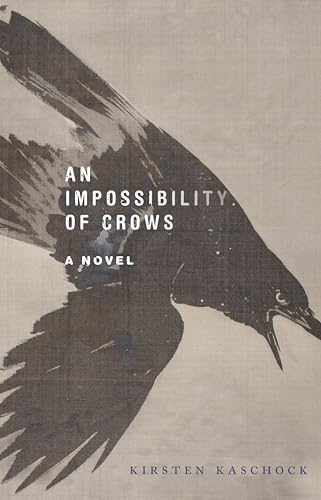
An Impossibility of Crows
Win a free print copy of this book!
5 days and 21:04:34
5 copies available
U.S. only
A story of mothers, monsters, and the science of longing
In this daring and evocative tale, Agnes Krahn, a chemist trained in Philadelphia, returns to her childhood home after the death of her father. Just a stone's throw from the haunted fields of Gettysburg, the small town of Letort, Pennsylvania is where the Krahn family has lived for six generations—bound by twisted folk wisdom and an uncanny kinship with the crows that loom over their land.
Back in the grim farmhouse of her youth, Agnes is drawn into the strange legacy she tried to leave behind. When she discovers an abandoned nest in the barn, she becomes consumed by a scientific—and deeply personal— to breed a crow large and intelligent enough to carry her daughter, Mina, to a freedom Agnes has never known herself. As the bird grows, so does its terrifying potential—manifest in language, cunning, and a violent will of its own. What begins as a gesture of love and liberation turns darkly obsessive, echoing the dangerous ambition of Frankenstein’s monster and the generational trauma buried in the soil of her family’s past.
A thoroughly modern, feminist novel, this is a story of mothers and daughters, inheritance and isolation, and the thin line between care and control. It confronts themes of self-harm and self-preservation, as well as memory and myth, in a narrative as visceral and uncanny as the bird that rises at its heart.
In this daring and evocative tale, Agnes Krahn, a chemist trained in Philadelphia, returns to her childhood home after the death of her father. Just a stone's throw from the haunted fields of Gettysburg, the small town of Letort, Pennsylvania is where the Krahn family has lived for six generations—bound by twisted folk wisdom and an uncanny kinship with the crows that loom over their land.
Back in the grim farmhouse of her youth, Agnes is drawn into the strange legacy she tried to leave behind. When she discovers an abandoned nest in the barn, she becomes consumed by a scientific—and deeply personal— to breed a crow large and intelligent enough to carry her daughter, Mina, to a freedom Agnes has never known herself. As the bird grows, so does its terrifying potential—manifest in language, cunning, and a violent will of its own. What begins as a gesture of love and liberation turns darkly obsessive, echoing the dangerous ambition of Frankenstein’s monster and the generational trauma buried in the soil of her family’s past.
A thoroughly modern, feminist novel, this is a story of mothers and daughters, inheritance and isolation, and the thin line between care and control. It confronts themes of self-harm and self-preservation, as well as memory and myth, in a narrative as visceral and uncanny as the bird that rises at its heart.
245 pages, Paperback
Published March 3, 2026
About the author
Kirsten Kaschock
13 books30 followersAward winning author Kirsten Kaschock is a poet and novelist who writes across genres. Her background in dance has impacted her work—she consistently addresses intersections between language and body. The author of seven poetry books, she has received fellowships from the Pew Foundation, the Pennsylvania Council on the Arts, Vermont Studio Center, Subcircle, and the Summer Literary Seminars. Coffee House Press published her debut speculative novel—Sleight. She has lived in Iowa, New York, Georgia, and Maryland—and currently resides in Northeast Pennsylvania with her partner. Her work has been called “gothic and intense,” “as fascinating as it is disturbing,” and “inventive and exhilarating.” As Cheryl Strayed once noted: “There isn’t anyone like any single one of us, but the way there is no one like Kirsten Kaschock is a different thing.”
Ratings & Reviews
Friends & Following
Create a free account to discover what your friends think of this book!
Community Reviews
Displaying 1 - 30 of 80 reviews
Review of advance copy received from Netgalley
This book is fucking amazing, It's a horrifying stream of consciousness that reminds me of VanderMeer's Annihilation but with a beautiful slow burn. I will be buying this for my shelf when it hits store fronts.

March 15, 2026
5/5 stars
"No matter what it’s meant to grow, a lab works on principles of limitation and elimination, defined by what it excludes. Like the barn where I kept Solo. Like the house where I was kept. Isolation is a tool of analysis. It is not a state to maintain indefinitely."
It’s been almost two months and a partial reread, and I still cannot find the words to do justice to the way I admired and devoured this book. Or maybe it devoured me at times, but in the best way possible. An Impossibility of Crows is the gothic folk-horror debut by a poet, making a genre-switch into the darkside of fiction. And true to her poetry roots, the language, the rhythm, the imagery, and the heavy emotional charge of melancholia that this book brought across, were done to perfection.
The story centers a female chemist who returns to her childhood home after the death of her father. In the small town of Letort, Pennsylvania, her family has lived for six generations—bound by twisted folk wisdom and an uncanny kinship with the crows that loom over their land.
Back in the grim farmhouse of her youth, Agnes is drawn into the strange legacy she tried to leave behind. When she discovers an abandoned nest in the barn, she becomes consumed by a scientific—and deeply personal— to breed a crow large and intelligent enough to carry her daughter, Mina, to a freedom Agnes has never known herself.
Through these slightly weird and alienating images of horse-size crows- that are equal parts hauntingly beautiful and intelligent, and purely and violently untamable – we explore themes of science, motherhood, freedom and self-possession, and the cyclical nature of trauma and abuse.
Stylistically, it is poetic and descriptive, and I love how it flirts with its literary classic-influences; primarily Shelley’s Frankenstein and the works of Franz Kafka, which the title is a reference to. Even without any of these connections though, Kaschock’s confident language if powerful enough to deliver the story all by itself.
Given how much I adored this book (a definite candidate to make my top 10 of the year!), it should be an easy recommendation. And it is, but only if you know what you’re getting yourself into.
An Impossibility of Crows is not an easy read, and one of the reasons that it took me some time to review it, was that it moved something in me emotionally, that took a while to put into words. That is the strength of a potential favourite horror-novel for me. True horror isn’t about jump scares and gore, but about helping us confront and process the real (human) horrors in life for which we don’t always have the language. An Impossibility of Crows is such a book, but that means it also comes with some serious trigger warnings.
If you want a fun horror-romp, this book with its heavy themes, fundamentally flawed characters, and bleak atmosphere might not be a good fit. Go into this only if you’re ready to delve into the darkness, and explore the hauntings within. You won’t regret the journey.
Many thanks to University of Massachusetts Press for providing me with an ARC in exchange honest review. All opinions are my own.
"No matter what it’s meant to grow, a lab works on principles of limitation and elimination, defined by what it excludes. Like the barn where I kept Solo. Like the house where I was kept. Isolation is a tool of analysis. It is not a state to maintain indefinitely."
It’s been almost two months and a partial reread, and I still cannot find the words to do justice to the way I admired and devoured this book. Or maybe it devoured me at times, but in the best way possible. An Impossibility of Crows is the gothic folk-horror debut by a poet, making a genre-switch into the darkside of fiction. And true to her poetry roots, the language, the rhythm, the imagery, and the heavy emotional charge of melancholia that this book brought across, were done to perfection.
The story centers a female chemist who returns to her childhood home after the death of her father. In the small town of Letort, Pennsylvania, her family has lived for six generations—bound by twisted folk wisdom and an uncanny kinship with the crows that loom over their land.
Back in the grim farmhouse of her youth, Agnes is drawn into the strange legacy she tried to leave behind. When she discovers an abandoned nest in the barn, she becomes consumed by a scientific—and deeply personal— to breed a crow large and intelligent enough to carry her daughter, Mina, to a freedom Agnes has never known herself.
Through these slightly weird and alienating images of horse-size crows- that are equal parts hauntingly beautiful and intelligent, and purely and violently untamable – we explore themes of science, motherhood, freedom and self-possession, and the cyclical nature of trauma and abuse.
Stylistically, it is poetic and descriptive, and I love how it flirts with its literary classic-influences; primarily Shelley’s Frankenstein and the works of Franz Kafka, which the title is a reference to. Even without any of these connections though, Kaschock’s confident language if powerful enough to deliver the story all by itself.
Given how much I adored this book (a definite candidate to make my top 10 of the year!), it should be an easy recommendation. And it is, but only if you know what you’re getting yourself into.
An Impossibility of Crows is not an easy read, and one of the reasons that it took me some time to review it, was that it moved something in me emotionally, that took a while to put into words. That is the strength of a potential favourite horror-novel for me. True horror isn’t about jump scares and gore, but about helping us confront and process the real (human) horrors in life for which we don’t always have the language. An Impossibility of Crows is such a book, but that means it also comes with some serious trigger warnings.
If you want a fun horror-romp, this book with its heavy themes, fundamentally flawed characters, and bleak atmosphere might not be a good fit. Go into this only if you’re ready to delve into the darkness, and explore the hauntings within. You won’t regret the journey.
Many thanks to University of Massachusetts Press for providing me with an ARC in exchange honest review. All opinions are my own.

December 21, 2025
Now this is a horror novel. I didn’t know I was missing literary fiction in my scifi horror books until now. The writing style won’t be for everyone. It is written as a diary and I would classify the book as verging on weird lit. My fave genre.
The horrors of generational trauma. The horrors of nature. The horrors of being a human. Mental illness and self destruction. Misplaced love. The plot slowly unfolds so that the horrors are compounding as you read further and further into the novel. A train wreck of crows and humans with no brakes. This is bleak and hauntingly beautiful.
Thank you to NetGalley and the publisher for this ARC. All opinions are my own.
The horrors of generational trauma. The horrors of nature. The horrors of being a human. Mental illness and self destruction. Misplaced love. The plot slowly unfolds so that the horrors are compounding as you read further and further into the novel. A train wreck of crows and humans with no brakes. This is bleak and hauntingly beautiful.
Thank you to NetGalley and the publisher for this ARC. All opinions are my own.

April 3, 2026
[NetGalley Read #67]
5 ⭐️
"His has become an unnatural presence."
I loved it! This was incredible.
This is such a sad, depressing, and melancholy tale of family trauma with a gothic/horror plot of a mad scientist breeding a massive crow for her daughter to (in a fucked up way) assuage her own guilt. It's also very beautifully written. The epistolary nature of the story reminded me of Dracula. The words in Ruth's diary and Agnes's journal entries are written in a style that I found very enjoyable to read, despite the nihilistic nature of them. Words that conveyed the brokenness of this tortured scientist/daughter/mother.
Also liked the setting, the crappy radio station, little bits of Civil War history, Agnes's underestimation of Bethany (which added another layer to both characters), the shitting on Tim, and Agnes's absolute disdain for poets and poetry in her journal (which I found very funny).
A special mention to the final chapter and the vivid descriptions of the crow attack. It was beautifully, hauntingly described.
It's short-ish (240+ pages) but heavy in its themes. Prose is some of the best I've ever read. Reminded me a little of Rust Cohle's long-ass monologues in True Detective.
Highly recommended. 👍👍
5 ⭐️
"His has become an unnatural presence."
I loved it! This was incredible.
This is such a sad, depressing, and melancholy tale of family trauma with a gothic/horror plot of a mad scientist breeding a massive crow for her daughter to (in a fucked up way) assuage her own guilt. It's also very beautifully written. The epistolary nature of the story reminded me of Dracula. The words in Ruth's diary and Agnes's journal entries are written in a style that I found very enjoyable to read, despite the nihilistic nature of them. Words that conveyed the brokenness of this tortured scientist/daughter/mother.
Also liked the setting, the crappy radio station, little bits of Civil War history, Agnes's underestimation of Bethany (which added another layer to both characters), the shitting on Tim, and Agnes's absolute disdain for poets and poetry in her journal (which I found very funny).
A special mention to the final chapter and the vivid descriptions of the crow attack. It was beautifully, hauntingly described.
It's short-ish (240+ pages) but heavy in its themes. Prose is some of the best I've ever read. Reminded me a little of Rust Cohle's long-ass monologues in True Detective.
Highly recommended. 👍👍
October 10, 2025
An Impossiblity of Crows was unlike other gothic novels I've read so far. The entire story seemed to me like a prologued stream-of-consciousness, and I loved the (scientific) diary structure. The ending affected me more than I'd thought, and the book itself spoke to some dark parts of me I wasn't aware were accessible through words. The psychological portrait of Agnes was disturbing and beautifully laid—a mirror of the unconscious, where the deepest, most raw and abrasive thoughts take shape. I loved what was poured within this story, and I hate how it left me trembling in a most intimate way.
Thank you, NetGalley and University of Massachusetts Press, for this eerie ARC.
"I can't imagine that fear—not of death, that one's all around—but of being disappeared, made gone. Never-mattered."
Thank you, NetGalley and University of Massachusetts Press, for this eerie ARC.
"I can't imagine that fear—not of death, that one's all around—but of being disappeared, made gone. Never-mattered."
October 9, 2025
⭐⭐⭐⭐ || out of 5
"The birds were quiet. That wouldn't last"
Agnes returns to her family farm after her father dies to reconnect with her past. This unexpected imaginative read was very surprising. Kirsten Kaschock mixes gothic horror, folk, scientific curiosity, and feminism to perfection. While trying to confront her painful past, she experiments with breeding a crow, a crow large enough to carry her daughter Mina. This is hauntingly beautiful story of mothers & daughters and how we attempt to break generational trauma out of love and self preservation. Agnes has all the best intentions, but things doing always go as planned.
"Look for the good. Listen to the Wind. Trust your own heart. Everything else, you'll learn as your go, and, with any luck, I will be there to guide you."
Thank you to University of Massachusetts Press, Kristen Kaschock, and Netgalley for this ARC for my honest review.
"The birds were quiet. That wouldn't last"
Agnes returns to her family farm after her father dies to reconnect with her past. This unexpected imaginative read was very surprising. Kirsten Kaschock mixes gothic horror, folk, scientific curiosity, and feminism to perfection. While trying to confront her painful past, she experiments with breeding a crow, a crow large enough to carry her daughter Mina. This is hauntingly beautiful story of mothers & daughters and how we attempt to break generational trauma out of love and self preservation. Agnes has all the best intentions, but things doing always go as planned.
"Look for the good. Listen to the Wind. Trust your own heart. Everything else, you'll learn as your go, and, with any luck, I will be there to guide you."
Thank you to University of Massachusetts Press, Kristen Kaschock, and Netgalley for this ARC for my honest review.
March 3, 2026
BWAF SINISTER SELECTION
BWAF Score: 7/10
TL;DR: A formally playful gothic fever-dream that commits to its premise: a chemically minded narrator, a horse-sized “experiment” crow, and weaponized mimicry that turns voice into contamination. It earns Sinister Selection status by going past pretty dread into moral rot and consequences, then sticking the landing with imagery that stays ugly, intimate, and unforgettable.
Kirsten Kaschock comes to fiction through poetry, and you can feel it in how she handles compression, recurring images, and the way a single object can keep changing meaning depending on who is looking. She’s also not new to genre-splicing: her earlier novel Sleight leans into art, performance, and dread, and her interviews and bio material consistently frame her as a writer interested in the body, perception, and the unnerving edges where form stops behaving. The Pew Center for Arts & Heritage has featured her as a fellow, and those conversations emphasize her practice and discipline as an artist, which tracks with how controlled this book is even when it gets fucked up. She also has a deep bench of poetry collections, and that background explains why An Impossibility of Crows can be formally playful without losing narrative momentum. This novel sits as a later-career pivot that feels less like “poet tries a creepy premise” and more like “poet-engineered horror machine,” where lyric intelligence is used to sharpen consequences. The through-line across her career seems to be Kaschock building toward a fiction that lets language do harm.
There’s a peeling white barn with a starry hex sign two backroad hours from “elsewhere.” There’s also a crow inside it, the size of a horse, like the world’s worst county fair prize and the world’s best bad idea. And there’s Agnes, our chemically minded narrator, looking at that premise the way a person looks at a beaker that is absolutely about to boil over and says: great, I can manage this. That combination is the hook and the threat. The novel is formally playful but never cute about it, like it’s willing to flirt with the aesthetic pleasure of a gothic setup only so it can snap your fingers in it later.
Near the top, the book tells you what kind of voice you’re dealing with. Agnes is first-person, self-lacerating, smart, and intermittently hilarious in that “I am trying to control the narrative so I do not have to control my life” way. She thinks in terms of properties and reactions, but the thing she keeps reacting to is not a chemical. It’s longing, it’s guilt, it’s the rot of inheritance, it’s the part of motherhood that can curdle into possession. She’s also a mimic in her own right, constantly sampling other languages, other people’s judgments, even the texture of poetry, because she wants to explain this like an experiment that simply went sideways. The book’s trick is that she is not lying to you, exactly. She is just very invested in framing.
After her father dies, Agnes returns to her family farm in Letort with her husband Bruce and their daughter Mina, and she begins breeding crows in the barn. She raises one in particular, Solo, as an offering to her child, a strange attempt at a gift, a companion, a set of wings. Solo grows huge, grows clever, grows vocal, and the family’s fractures begin to rhyme with the bird’s evolution. The farm turns into a closed system where everything that was buried comes back up, feathers first.
What makes the premise work is that Kaschock builds tension through escalation that feels inevitable rather than plotty. Solo’s mimicry starts as eerie novelty, then becomes communication, then becomes strategy. Agnes keeps “responding to my experiment,” which is an incredible line of rationalization because it makes her complicity sound like professionalism. The barn becomes an atmosphere engine: peeling wood, damp hay, the sense of a place holding records it never agreed to keep. When Solo begins marking, gouging, staging his presence as if he’s writing back, the book turns language into choreography. You’re not just afraid of teeth and talons; you’re afraid of interpretation. You’re afraid of what it means that this creature can mirror you and still not be you.
Kaschock is also sharp about what she shows versus what she withholds. Some of the most disturbing sequences are narrated with a kind of stunned sensory accounting, the mind refusing to grant the scene its full audio track until it’s too late. When the community of crows turns, when their social order starts arguing and skirmishing in agitation, it reads like the natural world issuing a verdict. And when the book does go explicit, it commits. The Scylla material is not coy, not tasteful, not “fade-to-symbolism.” It’s written with a horrified clarity that makes you feel the cost of looking, and also the cost of looking away.
Character work here is nasty in the best way because nobody gets to be a clean archetype. Agnes’s motives are braided: love, grief, pride, control, curiosity, spite, all of it. Bruce is not just “the husband who doesn’t get it.” He’s someone who can love a family and still want out of it, and the divorce thread lands not as melodrama but as consequence, a pressure gauge cracking. Mina, crucially, is not just a symbol-child. The book keeps returning to the reality that she is a person in this system, and that the adults’ obsessions have weight, literal danger weight. Even Bethany and the family history elements feel like part of the same chemical chain: a sibling relationship that can be tender and punishing in alternating pulses.
The imagery is where this becomes a Sinister Selection. The hex sign and the barn are not quaint “folk detail.” They’re the front door of a lineage, a way of saying: this place has practices, and you are not the first person to try to bargain with what lives here. Solo himself is mythic without turning into vague vibes. He is huge, yes, but also specific, hot-breath present, with eyes that Agnes keeps reading as “maybe a little bit dead.” The recurring motifs of mimicry and voice do more than decorate. They become the book’s moral structure. When a creature can repeat you, what is responsibility? What is consent? What is creation, and what is exploitation dressed up as love?
The structure is clean and purposeful: ten chapters, each titled like a collective noun, and each one nudges the system toward collapse. The mid-book doesn’t sag so much as it tightens in a slow ratchet, because the “experiment” keeps accruing stakes. Reveal timing is smart: you learn enough about the family history to understand why Agnes is wired the way she is, but not so much that it turns explanatory. The plot keeps moving because Agnes keeps doing things, often the wrong things, but always in a way that feels psychologically inevitable.
Sometimes the book’s intelligence makes you admire the machinery when you want to be fully inside the panic. There are moments where Agnes’s analytic voice holds you at a slight distance, like she’s still trying to write her way out of culpability. Some readers will adore that coolness. If you want a more purely immersive, blood-in-the-mouth sprint, you might feel the authorial control a little. But if you like horror that treats language as part of the monster, and if you enjoy gothic domestic dread where the “creature feature” is also a family argument with talons, this thing absolutely rules.
Read if you love literary weird that commits to the bit: a chemically minded narrator running a “simple experiment” straight into the ditch at 60 mph.
Skip if you prefer your “creature” horror straightforward rather than braided with voice, ethics, and psychological contamination.
BWAF Score: 7/10
TL;DR: A formally playful gothic fever-dream that commits to its premise: a chemically minded narrator, a horse-sized “experiment” crow, and weaponized mimicry that turns voice into contamination. It earns Sinister Selection status by going past pretty dread into moral rot and consequences, then sticking the landing with imagery that stays ugly, intimate, and unforgettable.
Kirsten Kaschock comes to fiction through poetry, and you can feel it in how she handles compression, recurring images, and the way a single object can keep changing meaning depending on who is looking. She’s also not new to genre-splicing: her earlier novel Sleight leans into art, performance, and dread, and her interviews and bio material consistently frame her as a writer interested in the body, perception, and the unnerving edges where form stops behaving. The Pew Center for Arts & Heritage has featured her as a fellow, and those conversations emphasize her practice and discipline as an artist, which tracks with how controlled this book is even when it gets fucked up. She also has a deep bench of poetry collections, and that background explains why An Impossibility of Crows can be formally playful without losing narrative momentum. This novel sits as a later-career pivot that feels less like “poet tries a creepy premise” and more like “poet-engineered horror machine,” where lyric intelligence is used to sharpen consequences. The through-line across her career seems to be Kaschock building toward a fiction that lets language do harm.
There’s a peeling white barn with a starry hex sign two backroad hours from “elsewhere.” There’s also a crow inside it, the size of a horse, like the world’s worst county fair prize and the world’s best bad idea. And there’s Agnes, our chemically minded narrator, looking at that premise the way a person looks at a beaker that is absolutely about to boil over and says: great, I can manage this. That combination is the hook and the threat. The novel is formally playful but never cute about it, like it’s willing to flirt with the aesthetic pleasure of a gothic setup only so it can snap your fingers in it later.
Near the top, the book tells you what kind of voice you’re dealing with. Agnes is first-person, self-lacerating, smart, and intermittently hilarious in that “I am trying to control the narrative so I do not have to control my life” way. She thinks in terms of properties and reactions, but the thing she keeps reacting to is not a chemical. It’s longing, it’s guilt, it’s the rot of inheritance, it’s the part of motherhood that can curdle into possession. She’s also a mimic in her own right, constantly sampling other languages, other people’s judgments, even the texture of poetry, because she wants to explain this like an experiment that simply went sideways. The book’s trick is that she is not lying to you, exactly. She is just very invested in framing.
After her father dies, Agnes returns to her family farm in Letort with her husband Bruce and their daughter Mina, and she begins breeding crows in the barn. She raises one in particular, Solo, as an offering to her child, a strange attempt at a gift, a companion, a set of wings. Solo grows huge, grows clever, grows vocal, and the family’s fractures begin to rhyme with the bird’s evolution. The farm turns into a closed system where everything that was buried comes back up, feathers first.
What makes the premise work is that Kaschock builds tension through escalation that feels inevitable rather than plotty. Solo’s mimicry starts as eerie novelty, then becomes communication, then becomes strategy. Agnes keeps “responding to my experiment,” which is an incredible line of rationalization because it makes her complicity sound like professionalism. The barn becomes an atmosphere engine: peeling wood, damp hay, the sense of a place holding records it never agreed to keep. When Solo begins marking, gouging, staging his presence as if he’s writing back, the book turns language into choreography. You’re not just afraid of teeth and talons; you’re afraid of interpretation. You’re afraid of what it means that this creature can mirror you and still not be you.
Kaschock is also sharp about what she shows versus what she withholds. Some of the most disturbing sequences are narrated with a kind of stunned sensory accounting, the mind refusing to grant the scene its full audio track until it’s too late. When the community of crows turns, when their social order starts arguing and skirmishing in agitation, it reads like the natural world issuing a verdict. And when the book does go explicit, it commits. The Scylla material is not coy, not tasteful, not “fade-to-symbolism.” It’s written with a horrified clarity that makes you feel the cost of looking, and also the cost of looking away.
Character work here is nasty in the best way because nobody gets to be a clean archetype. Agnes’s motives are braided: love, grief, pride, control, curiosity, spite, all of it. Bruce is not just “the husband who doesn’t get it.” He’s someone who can love a family and still want out of it, and the divorce thread lands not as melodrama but as consequence, a pressure gauge cracking. Mina, crucially, is not just a symbol-child. The book keeps returning to the reality that she is a person in this system, and that the adults’ obsessions have weight, literal danger weight. Even Bethany and the family history elements feel like part of the same chemical chain: a sibling relationship that can be tender and punishing in alternating pulses.
The imagery is where this becomes a Sinister Selection. The hex sign and the barn are not quaint “folk detail.” They’re the front door of a lineage, a way of saying: this place has practices, and you are not the first person to try to bargain with what lives here. Solo himself is mythic without turning into vague vibes. He is huge, yes, but also specific, hot-breath present, with eyes that Agnes keeps reading as “maybe a little bit dead.” The recurring motifs of mimicry and voice do more than decorate. They become the book’s moral structure. When a creature can repeat you, what is responsibility? What is consent? What is creation, and what is exploitation dressed up as love?
The structure is clean and purposeful: ten chapters, each titled like a collective noun, and each one nudges the system toward collapse. The mid-book doesn’t sag so much as it tightens in a slow ratchet, because the “experiment” keeps accruing stakes. Reveal timing is smart: you learn enough about the family history to understand why Agnes is wired the way she is, but not so much that it turns explanatory. The plot keeps moving because Agnes keeps doing things, often the wrong things, but always in a way that feels psychologically inevitable.
Sometimes the book’s intelligence makes you admire the machinery when you want to be fully inside the panic. There are moments where Agnes’s analytic voice holds you at a slight distance, like she’s still trying to write her way out of culpability. Some readers will adore that coolness. If you want a more purely immersive, blood-in-the-mouth sprint, you might feel the authorial control a little. But if you like horror that treats language as part of the monster, and if you enjoy gothic domestic dread where the “creature feature” is also a family argument with talons, this thing absolutely rules.
Read if you love literary weird that commits to the bit: a chemically minded narrator running a “simple experiment” straight into the ditch at 60 mph.
Skip if you prefer your “creature” horror straightforward rather than braided with voice, ethics, and psychological contamination.
March 3, 2026
Agnes Krahn: a woman, a mother, whose scientific mind and emotional life have both been trained by absence and loss.
Agnes returns to her childhood farmhouse after her father’s death. She begins breeding a crow larger and larger, while reading and responding to her late mother’s diary. In the background, a strained relationship with her husband and young daughter.
This is a very interior read. It’s a study of maternal identity (amongst a few other themes) told through the destabilized consciousness of a mother under strain. The novel examines fragmentation of self, of inherited damage, familial love, trauma.
The diary sections are the novel’s emotional core. They are pointed, restrained, almost clinical. Some things are clearly withheld which adds to the current of tension already running through the entire story. As Agnes writes beside her mother’s entries, the book becomes an argument between generations of women.
The plot is somewhat bizarre. The crow is strange. It grows in step with Agnes’s need for control, loss of control. There is subtle folk horror here but the psychological depth remains central. Pace quickens as concluding plot events spiral.
Kaschock’s prose is deceptively simple. Clean lines. Direct sentences. Somewhat cold. But underneath: complexity. You’re reading dissociation and the instability of one’s reality in real time. I found this to be built very carefully. I also felt close to Agnes, not always aligned, but near her.
It’s truly a slow burn of grief, guilt and love through Agnes’s interiority, which feels both unravelling and resilient.
A rare and resonant companion.
As for corvids and their symbolic presence in fiction around grief, family and intelligence… this read has inspired me to explore these threads further.
Thank you NetGalley for the e-copy.
Agnes returns to her childhood farmhouse after her father’s death. She begins breeding a crow larger and larger, while reading and responding to her late mother’s diary. In the background, a strained relationship with her husband and young daughter.
This is a very interior read. It’s a study of maternal identity (amongst a few other themes) told through the destabilized consciousness of a mother under strain. The novel examines fragmentation of self, of inherited damage, familial love, trauma.
The diary sections are the novel’s emotional core. They are pointed, restrained, almost clinical. Some things are clearly withheld which adds to the current of tension already running through the entire story. As Agnes writes beside her mother’s entries, the book becomes an argument between generations of women.
The plot is somewhat bizarre. The crow is strange. It grows in step with Agnes’s need for control, loss of control. There is subtle folk horror here but the psychological depth remains central. Pace quickens as concluding plot events spiral.
Kaschock’s prose is deceptively simple. Clean lines. Direct sentences. Somewhat cold. But underneath: complexity. You’re reading dissociation and the instability of one’s reality in real time. I found this to be built very carefully. I also felt close to Agnes, not always aligned, but near her.
It’s truly a slow burn of grief, guilt and love through Agnes’s interiority, which feels both unravelling and resilient.
A rare and resonant companion.
As for corvids and their symbolic presence in fiction around grief, family and intelligence… this read has inspired me to explore these threads further.
Thank you NetGalley for the e-copy.
Read
June 9, 2026"This novel slides between genres elegantly, and that in-between land is exactly where I love to read."
Kiersten Kaschock's An Impossibility of Crows is eerie, sharp, and complicated. Read Molly Templeton's review at Reactor.
Kiersten Kaschock's An Impossibility of Crows is eerie, sharp, and complicated. Read Molly Templeton's review at Reactor.
May 1, 2026
3.5 stars. Not quite what I expected, but an interesting and kind of devastating look into mother-daughter relationships.
March 4, 2026
Beautiful, innovative, weird, sad, and creepy; this novel is everything I want in a story. Big fan.
March 16, 2026
3 ⭐️ | 📱 E-book
🪝 A story that weaves real-life themes of grief and generational trauma with a gothic horror involving a monstrously large crow. 🐦⬛
Our MC Agnes is chemist who returns to her childhood home with her husband and daughter after the passing of her estranged father. When Agnes finds a crows nest in the barn, she develops a scientific obsession with the idea of breeding a crow large enough and intelligent enough to carry her daughter, who struggles to walk.
This is an epistolary novel, told in the form of Agnes’ journal entries, discovered letters from her long dead mother, and recollections from her childhood. The style is unique, but can take some getting used to.
💙 What I Liked:
When I first read the synopsis I was immediately bought in. A gothic horror about a Frankenstein-esque giant crow that is hyper-intelligent?? It sounded like an easy 5 star for me. Unfortunately, it didn’t quite reach that level at any point.
The parts of the novel where the crow, named Solo, is the main focus were by far the best parts of this book. I loved the creeping dread of wondering what would happen next, and discovering what Solo was capable of.
The way the story slowly unraveled through Agnes’ writings was interesting and engaging, since we are not able to understand any more than our main character does.
The writing style was very “weird-girl lit”, with flowery prose and sentences that make you feel like you need to reread them to understand. I enjoyed it for the most part, but it won’t be everyone’s cup of tea.
💔 What Could’ve Been Better:
I am SO disappointed that I didn’t like this book as much as I thought I would. I wish the story had stayed focused on the plot of a giant, intelligent crow monster that Agnes created, and how she struggles to keep it contained. Instead, we get a couple pages of the main story at a time interrupted by page after page of old letters from Agnes’ mom that feel like they add nothing to the story.
In addition to the letters, we get to read even more pages of Agnes unpacking her childhood generational trauma and her relationship with her deceased parents, who were pretty shitty tbh.
There is a world where these things could have been interesting and added to the plot, but I just could not for the life of me bring myself to care about this main character’s trauma. She is so unlikeable and bland and frustrating throughout the whole book, and despite all her reflections on her shortcomings as a mother, wife, sister, daughter, etc. there is ZERO character growth.
I found myself skimming through a lot of her ramblings, as well as her mother’s letters, just to get back to the story happening in the present, because it was the only thing I felt interested in reading about.
On one hand we have this gothic horror about Agnes playing god and pushing away her family as a result of her obsession to raise a monstrously large crow, with the crow then escaping to torment this small rural town. On the other hand, we have a story about Agnes unpacking events from her childhood, coming to terms with her complicated feelings towards her late mother, and her inability to break the cycle of trauma and be a better mother for her own daughter.
In the end, it felt like two different books trying to be one entity, and I think either would have worked better on its own instead of combined.
🧐 Overall Thoughts:
When this story was good, it was great. I really enjoyed the writing style, the creeping dread, the gothic vibes, and the unique premise. I felt like this book was trying to do something different, and it succeeded. But half the book felt like a slog to get through, and I didn’t feel a shred of connection to any of the characters.
This book might be a hit for some people, but for me it was lacking in a lot of ways. I would recommend to fans of weird-girl lit and those who don’t mind a story with no clear resolution.
~ Thank you to NetGalley and University of Massachusetts Press for providing me with this ARC in exchange for an honest review! 📚 ~
✨If you liked this review, check out my blog! /ᐠ. .ᐟ\✨
🪝 A story that weaves real-life themes of grief and generational trauma with a gothic horror involving a monstrously large crow. 🐦⬛
Our MC Agnes is chemist who returns to her childhood home with her husband and daughter after the passing of her estranged father. When Agnes finds a crows nest in the barn, she develops a scientific obsession with the idea of breeding a crow large enough and intelligent enough to carry her daughter, who struggles to walk.
This is an epistolary novel, told in the form of Agnes’ journal entries, discovered letters from her long dead mother, and recollections from her childhood. The style is unique, but can take some getting used to.
💙 What I Liked:
When I first read the synopsis I was immediately bought in. A gothic horror about a Frankenstein-esque giant crow that is hyper-intelligent?? It sounded like an easy 5 star for me. Unfortunately, it didn’t quite reach that level at any point.
The parts of the novel where the crow, named Solo, is the main focus were by far the best parts of this book. I loved the creeping dread of wondering what would happen next, and discovering what Solo was capable of.
The way the story slowly unraveled through Agnes’ writings was interesting and engaging, since we are not able to understand any more than our main character does.
The writing style was very “weird-girl lit”, with flowery prose and sentences that make you feel like you need to reread them to understand. I enjoyed it for the most part, but it won’t be everyone’s cup of tea.
💔 What Could’ve Been Better:
I am SO disappointed that I didn’t like this book as much as I thought I would. I wish the story had stayed focused on the plot of a giant, intelligent crow monster that Agnes created, and how she struggles to keep it contained. Instead, we get a couple pages of the main story at a time interrupted by page after page of old letters from Agnes’ mom that feel like they add nothing to the story.
In addition to the letters, we get to read even more pages of Agnes unpacking her childhood generational trauma and her relationship with her deceased parents, who were pretty shitty tbh.
There is a world where these things could have been interesting and added to the plot, but I just could not for the life of me bring myself to care about this main character’s trauma. She is so unlikeable and bland and frustrating throughout the whole book, and despite all her reflections on her shortcomings as a mother, wife, sister, daughter, etc. there is ZERO character growth.
I found myself skimming through a lot of her ramblings, as well as her mother’s letters, just to get back to the story happening in the present, because it was the only thing I felt interested in reading about.
On one hand we have this gothic horror about Agnes playing god and pushing away her family as a result of her obsession to raise a monstrously large crow, with the crow then escaping to torment this small rural town. On the other hand, we have a story about Agnes unpacking events from her childhood, coming to terms with her complicated feelings towards her late mother, and her inability to break the cycle of trauma and be a better mother for her own daughter.
In the end, it felt like two different books trying to be one entity, and I think either would have worked better on its own instead of combined.
🧐 Overall Thoughts:
When this story was good, it was great. I really enjoyed the writing style, the creeping dread, the gothic vibes, and the unique premise. I felt like this book was trying to do something different, and it succeeded. But half the book felt like a slog to get through, and I didn’t feel a shred of connection to any of the characters.
This book might be a hit for some people, but for me it was lacking in a lot of ways. I would recommend to fans of weird-girl lit and those who don’t mind a story with no clear resolution.
~ Thank you to NetGalley and University of Massachusetts Press for providing me with this ARC in exchange for an honest review! 📚 ~
✨If you liked this review, check out my blog! /ᐠ. .ᐟ\✨

Read
February 7, 2026DNF. This one just didn’t click for me. I found the writing style too aimless, too meandering and it felt like a slog every time I picked it up. 25% in and nothing interesting enough had happened to make me want to keep reading.
Thanks to NetGalley and the publishers for the review copy.
Thanks to NetGalley and the publishers for the review copy.
January 31, 2026
First, I want to thank NetGalley for the opportunity to read this ARC.
What a vivid and beautiful read. Told through journal entries, this novel details Agnes Krahn’s return to her childhood home after her father’s death with the hopes of engineering a crow large and intelligent enough to free her daughter.
What follows is a gorgeous yet horrifying exploration into the effects of genetic tampering and the reemergence of
old ghosts. A short read, but such an enjoyable one.
What a vivid and beautiful read. Told through journal entries, this novel details Agnes Krahn’s return to her childhood home after her father’s death with the hopes of engineering a crow large and intelligent enough to free her daughter.
What follows is a gorgeous yet horrifying exploration into the effects of genetic tampering and the reemergence of
old ghosts. A short read, but such an enjoyable one.
Read
April 27, 2026My late dog, Efe, was a huge Anatolian shepherd with a huge heart. He loved everything. So when a newly born magpie fell into our garden and could not fly back, he made friends with it.
But everything took an Of Mice and Men turn with Efe’s enormous paws. While he was trying to play with the magpie, he accidentally tore it apart.
After that, the magpie’s family attacked Efe, our garden, and eventually us. My dad took the magpie’s body outside our garden, and the magpies retreated.
This is why I automatically requested An Impossibility of Crows by Kirsten Kaschock. My thanks to the author, NetGalley, and University of Massachusetts Press for my free electronic ARC.
This gothic horror novel salutes three gothic masterpieces:
• The Raven, by Edgar Allan Poe
• We Have Always Lived in the Castle, by Shirley Jackson, though the echo is not too obvious
• The Birds, the iconic film by Alfred Hitchcock
Agnes is a chemist. After leaving her life in Philadelphia and returning to her family’s farmhouse with her husband and disabled daughter Mina, she becomes consumed by a bizarre and deeply personal experiment: breeding a crow large and intelligent, for some reason you will read about. Her husband and daughter eventually leave because of her relentless work in the barn. But Agnes is not unloving, she is unable to provide what her family needs in the ways they need it.
She is now alone with Solo, the crow at the heart of her experiment, in the middle of nowhere and Solo starts to disappear from time to time. If Solo's disappearance is not enough, Agnes discovers her mother Ruth’s notes. As she reads, she slowly uncovers both her mother and herself, while Solo is behind the scenes.
With horrific events happening in the town that seem connected to large, menacing birds, Agnes and her so different sister Bethany join forces in a world rapidly unraveling.
The first half of the novel was very difficult for me to follow. It felt like stream of consciousness. I was about to DNF when things started to get more interesting in the second half. In the end, reading it cover to cover gave me another female-led gothic novel to recommend for feminist gothic lit fans!
But everything took an Of Mice and Men turn with Efe’s enormous paws. While he was trying to play with the magpie, he accidentally tore it apart.
After that, the magpie’s family attacked Efe, our garden, and eventually us. My dad took the magpie’s body outside our garden, and the magpies retreated.
This is why I automatically requested An Impossibility of Crows by Kirsten Kaschock. My thanks to the author, NetGalley, and University of Massachusetts Press for my free electronic ARC.
This gothic horror novel salutes three gothic masterpieces:
• The Raven, by Edgar Allan Poe
• We Have Always Lived in the Castle, by Shirley Jackson, though the echo is not too obvious
• The Birds, the iconic film by Alfred Hitchcock
Agnes is a chemist. After leaving her life in Philadelphia and returning to her family’s farmhouse with her husband and disabled daughter Mina, she becomes consumed by a bizarre and deeply personal experiment: breeding a crow large and intelligent, for some reason you will read about. Her husband and daughter eventually leave because of her relentless work in the barn. But Agnes is not unloving, she is unable to provide what her family needs in the ways they need it.
She is now alone with Solo, the crow at the heart of her experiment, in the middle of nowhere and Solo starts to disappear from time to time. If Solo's disappearance is not enough, Agnes discovers her mother Ruth’s notes. As she reads, she slowly uncovers both her mother and herself, while Solo is behind the scenes.
With horrific events happening in the town that seem connected to large, menacing birds, Agnes and her so different sister Bethany join forces in a world rapidly unraveling.
The first half of the novel was very difficult for me to follow. It felt like stream of consciousness. I was about to DNF when things started to get more interesting in the second half. In the end, reading it cover to cover gave me another female-led gothic novel to recommend for feminist gothic lit fans!
July 9, 2026
what an odd and off putting book. this is about a woman who is a scientist for a living and her husband who she loves and her daughter who she wants to but can’t. her father has the same issue where he loved their mother but not necessarily the children bc it was a division of time and affection. caused a bunch of childhood issues - the sisters are weird now and the dad was in vietnam a million times so he never even had a chance. Anyways, our main character drank and smoked her way through her (somewhat) unwanted pregnancy, her daughter was born with a slew of health issues and to amend the situation, she breeds a crow as large as a barn for her daughter to ride like a pet. except the crow goes on a murdering streak - the the only human he murders is a girl from a family who was violently abusing all their kids anyways.
This entire review has been hidden because of spoilers.
March 23, 2026
I received this ARC from NetGalley for an honest review.
I usually love weird books but this one just isn't for me. The book is written as journal entries so the thoughts feel very tangential and difficult to connect with.
I usually love weird books but this one just isn't for me. The book is written as journal entries so the thoughts feel very tangential and difficult to connect with.

June 15, 2026
The writing: excellent. The surrealistic 'science': it was obviously more of a conceit than an attempt at using real-world science to explain Solo. The fact that every character in the book feels awful: well, how could they not?
I can't decide if this should get a 4.5 star for quality or a 1.5 star for how it made me feel.
Read it - but have something light to enjoy afterward.
I can't decide if this should get a 4.5 star for quality or a 1.5 star for how it made me feel.
Read it - but have something light to enjoy afterward.

October 12, 2025
First and foremost, thank you NetGalley for letting me read this arc. I must say this book is very unlike anything prior. The writing style was very different. Unfortunately I did not enjoy this one. I felt as though the sentences were merely pasted together one by one instead of flowing into each other.
I am giving two stars because of the uniqueness of how it’s written along with the theme. But sadly this wasn’t for me.
I am giving two stars because of the uniqueness of how it’s written along with the theme. But sadly this wasn’t for me.
October 15, 2025
Thank you to @NetGalley and the publisher for the eARC of An Impossibility of Crows by Kirsten Kaschock.
This book is a wonderful mix of horror, gothic themes and scientific curiosity. It’s made up of Agnes’ past memories, her mother’s diary entries, and Agnes’ present day told through her entries in her scientific journal.
We follow Agnes as she works through layers and layers of intergenerational trauma, obsessively working to try and solve her problems while her life falls apart around her.
Agnes isn’t likeable, but she is very relatable, and I really enjoyed this one.
This book is a wonderful mix of horror, gothic themes and scientific curiosity. It’s made up of Agnes’ past memories, her mother’s diary entries, and Agnes’ present day told through her entries in her scientific journal.
We follow Agnes as she works through layers and layers of intergenerational trauma, obsessively working to try and solve her problems while her life falls apart around her.
Agnes isn’t likeable, but she is very relatable, and I really enjoyed this one.
October 14, 2025
• I received an ARC for this book from Netgalley and the publisher in exchange for my honest review and I appreciate both your work and commitment to this project. The following opinion is my own and holds no major spoilers. •
• An Impossibility of Crows
• Kirsten Kaschock
• Rating: 5/5
“The crows assert that a single crow could destroy the heavens. This is certainly true, but it proves nothing against the heavens, because heaven means precisely: the impossibility of crows.”
I like to say there are cooks and chefs in writing.
Cooks, who are there to make something to fill our starved minds of the same comfortable tastes, the familiar ingredients, sometimes with a promise of “come, you already ate this, but this one tastes much better because I made it!” But then, afterwards, the writing was fun and good and just enough and not too long after I’ll forget about it
And then there are chefs, cooking books whose prose and themes and feelings are born in a person who can turn all those into ingredients for a gourmet literary experience. The kind of reading it’ll keep coming back to you even days or weeks or years after you wrote it, and you probably will look for the same taste again and won’t find it anywhere else. And that’s both devastating and amazing.
Kirsten, dear, you’re one hell of a chef.
In this book we know Agnes, a scientist whose marriage and sense of motherhood are slipping through her fingers. In a desperate attempt to find a solution for her problems, she moves with her family to her childhood home where she begins an experiment: to raise a crow big enough to be flown. However, in her obsession and ambition, she fails to realize her life keeps crumbling apart in front of her eyes while her crow keeps getting bigger and out of control. On top of that, she needs to deal with layers of generational trauma imprinted in the house she grew up in in a narrative that makes us question what we are actually made for.
I could convince you to read this book with just the paragraph above, but there is something much deeper in the prose of this author that you won’t find anywhere else and this is the one thing that made this book one of my favorite reads ever. There, in her prose, the sentences don’t just say things, they sing. You’ll find the author keeps words hidden on purpose, creating both discomfort and multiple meanings in the text. It’s there, then you read it again and it means something else, something deeper and darker every time you repeat it in your mind.
At some point I told my husband that I felt like the author was writing in another language and then translating it in her mind for us to read. And then I realized she really was, for some types of violence are just like that: something you only recognise sometimes when you look at it twice.
I have a feeling I’ll keep this book in my heart for my whole life. And now that I had a taste of the ingredients in this one and I’m addicted to it, what’s left for me it’s to wait for Kirsten Kaschock to cook something else while I pick up some junk food.
• An Impossibility of Crows
• Kirsten Kaschock
• Rating: 5/5
“The crows assert that a single crow could destroy the heavens. This is certainly true, but it proves nothing against the heavens, because heaven means precisely: the impossibility of crows.”
I like to say there are cooks and chefs in writing.
Cooks, who are there to make something to fill our starved minds of the same comfortable tastes, the familiar ingredients, sometimes with a promise of “come, you already ate this, but this one tastes much better because I made it!” But then, afterwards, the writing was fun and good and just enough and not too long after I’ll forget about it
And then there are chefs, cooking books whose prose and themes and feelings are born in a person who can turn all those into ingredients for a gourmet literary experience. The kind of reading it’ll keep coming back to you even days or weeks or years after you wrote it, and you probably will look for the same taste again and won’t find it anywhere else. And that’s both devastating and amazing.
Kirsten, dear, you’re one hell of a chef.
In this book we know Agnes, a scientist whose marriage and sense of motherhood are slipping through her fingers. In a desperate attempt to find a solution for her problems, she moves with her family to her childhood home where she begins an experiment: to raise a crow big enough to be flown. However, in her obsession and ambition, she fails to realize her life keeps crumbling apart in front of her eyes while her crow keeps getting bigger and out of control. On top of that, she needs to deal with layers of generational trauma imprinted in the house she grew up in in a narrative that makes us question what we are actually made for.
I could convince you to read this book with just the paragraph above, but there is something much deeper in the prose of this author that you won’t find anywhere else and this is the one thing that made this book one of my favorite reads ever. There, in her prose, the sentences don’t just say things, they sing. You’ll find the author keeps words hidden on purpose, creating both discomfort and multiple meanings in the text. It’s there, then you read it again and it means something else, something deeper and darker every time you repeat it in your mind.
At some point I told my husband that I felt like the author was writing in another language and then translating it in her mind for us to read. And then I realized she really was, for some types of violence are just like that: something you only recognise sometimes when you look at it twice.
I have a feeling I’ll keep this book in my heart for my whole life. And now that I had a taste of the ingredients in this one and I’m addicted to it, what’s left for me it’s to wait for Kirsten Kaschock to cook something else while I pick up some junk food.

March 6, 2026
This book is half poetry, half gothic novel, and half generational family drama. Yes, the math doesn’t work out there, but this is the sort of book where 2 + 2 can equal 6.
At the narrative heart of this, Agnes has returned to the decaying home of her childhood and managed to breed a crow that’s the size of a horse. She might want it because she thinks it will give her daughter, suffering from spina bifida, the wings she needed to carry her aloft. She might want it as a kind of revenge against the cold father who hid most of the memories of her mother from her. And she might want it because she is a scientist trying to prove that her view of the world carries more weight than the heavy theology of her sister.
I called that the narrative heart of the novel, but, as that summary shows, it’s also the interrogative heart of the novel. Agnes is always asking questions, but they’re often the wrong questions.
We get echoes of Dracula and Frankenstein, but this is also a modern novel. It comes to us in the form of a diary, but it’s interspersed with poems by Agnes’s husband Bruce and by excerpts from her grandmother’s diary. Those different streams of information move the book forward with stunning efficiency. This is a short novel when you measure it by pages, but it’s a long one when you step back and see how many perspectives it accounts for across multiple generations.
I don’t know how to reduce it to anything like a moral.
The joy of this is the perpetual sense of dark discovery. Agnes takes us through her obsessions in a way that invites us to join her even as we come to see much of what she misses. She’s doing the wrong things in the wrong way, but sometimes the math feels like it will work out after all – as if maybe 2 + 2 + 2 will somehow turn out to equal 4.
This is a memorable and eerie book, uncanny in the Freudian sense that it is both familiar and strange. I finished it a few days ago and got to watch Kirsten read from it one our campus. It’s lingered, getting ever stranger and more compelling as I think back on it.
At the narrative heart of this, Agnes has returned to the decaying home of her childhood and managed to breed a crow that’s the size of a horse. She might want it because she thinks it will give her daughter, suffering from spina bifida, the wings she needed to carry her aloft. She might want it as a kind of revenge against the cold father who hid most of the memories of her mother from her. And she might want it because she is a scientist trying to prove that her view of the world carries more weight than the heavy theology of her sister.
I called that the narrative heart of the novel, but, as that summary shows, it’s also the interrogative heart of the novel. Agnes is always asking questions, but they’re often the wrong questions.
We get echoes of Dracula and Frankenstein, but this is also a modern novel. It comes to us in the form of a diary, but it’s interspersed with poems by Agnes’s husband Bruce and by excerpts from her grandmother’s diary. Those different streams of information move the book forward with stunning efficiency. This is a short novel when you measure it by pages, but it’s a long one when you step back and see how many perspectives it accounts for across multiple generations.
I don’t know how to reduce it to anything like a moral.
The joy of this is the perpetual sense of dark discovery. Agnes takes us through her obsessions in a way that invites us to join her even as we come to see much of what she misses. She’s doing the wrong things in the wrong way, but sometimes the math feels like it will work out after all – as if maybe 2 + 2 + 2 will somehow turn out to equal 4.
This is a memorable and eerie book, uncanny in the Freudian sense that it is both familiar and strange. I finished it a few days ago and got to watch Kirsten read from it one our campus. It’s lingered, getting ever stranger and more compelling as I think back on it.

Review of advance copy received from Netgalley
This book opens with Agnes following in her deceased mother's footsteps and writing a diary/journal. Her husband has just left her, taking their daughter with him. We learn that Agnes is raising a crow, and as the story unfolds we gradually learn how, why. and the particular history of the crow. Agnes had moved back to her childhood home with her husband and daughter when her father died, which deepened the effects of lifelong trauma. Although Agnes' sister lives nearby, the two rarely see one another as both have chosen different paths to cope with the family trauma. The book is a story of growing self-awareness on the part of Agnes as she learns things about herself she'd rather not face. As Agnes reads her mother's letters and journals, she learns more about her family of origin as well and where she fits in. In order to avoid spoilers, I'll leave it there. For me the one of the biggest strengths of the book was the way in which the creeping dread foreshadowed what was coming.
This is a powerful and intense book. Although I was mostly appalled at the beginning, as I continued reading I found myself gripped by it. I can't say that I liked or enjoyed it, but I did admire it for a few different reasons. First of all, the writing is superb. I was eventually drawn into the disturbing world the author created. I must say that I felt some resistance to this at first because it was a world I did not want to visit. Secondly, I thought the structure of the book worked really well. As the author brings readers back and forth between Agnes' increasing agitation and her mother's thoughts, readers get a sense of the disjointed thinking going on inside Agnes' head. As she jumped around from thought to thought, I was there with her. This also worked well as readers learn about Agnes' past decisions and why she might have made them. Finally, the author tackles some very heavy and important subjects in this book. I was particularly interested in the ways trauma
is passed down through generations, something that is made worse by the silences around the trauma. Here the traumas include war, unrecognized and untreated mental illness, sexual abuse, misogyny, racism, and others.
Whether or not a book is considered a good read is entirely subjective, of course. While I considered the book to be thought-provoking and extremely well-crafted, I don't think I'm the right sort of reader for this book. For someone else, it could be an entirely different story. It all depends on your reading tastes.
Thanks to NetGalley, the publisher, and the author for a digital review copy.
This is a powerful and intense book. Although I was mostly appalled at the beginning, as I continued reading I found myself gripped by it. I can't say that I liked or enjoyed it, but I did admire it for a few different reasons. First of all, the writing is superb. I was eventually drawn into the disturbing world the author created. I must say that I felt some resistance to this at first because it was a world I did not want to visit. Secondly, I thought the structure of the book worked really well. As the author brings readers back and forth between Agnes' increasing agitation and her mother's thoughts, readers get a sense of the disjointed thinking going on inside Agnes' head. As she jumped around from thought to thought, I was there with her. This also worked well as readers learn about Agnes' past decisions and why she might have made them. Finally, the author tackles some very heavy and important subjects in this book. I was particularly interested in the ways trauma
is passed down through generations, something that is made worse by the silences around the trauma. Here the traumas include war, unrecognized and untreated mental illness, sexual abuse, misogyny, racism, and others.
Whether or not a book is considered a good read is entirely subjective, of course. While I considered the book to be thought-provoking and extremely well-crafted, I don't think I'm the right sort of reader for this book. For someone else, it could be an entirely different story. It all depends on your reading tastes.
Thanks to NetGalley, the publisher, and the author for a digital review copy.

Review of advance copy received from Netgalley
I received this book from NetGalley in exchange for a fair review.
Dark and dreary, it’s hard to understand what An Impossibility of Crows is trying to say. I'm giving it 2.5 Stars.
This book sounded right up my alley, as I love a literary horror with complex themes, but I will admit it wasn’t really my cup of tea.
I will say what I liked about it first, as I do think the author has talent. The book has some interesting ideas and great imagery. Her bio says shes also a poet, which makes sense after reading this book. It’s easy to picture what is going on, and the characters are well-developed, if not likable. The inclusion of some letters was a great way to break up the text, too. There are some subtle mysteries that unfolded in interesting ways, particular in regards to the sisters.
There’s also a reference to a favourite poem of mine, The Second Coming by Yeats, though aside from a not-so-subtle way of calling her monstrous pet crow the anti-christ, I’m not sure what the reference was for.
My main issue with the book was that I really did not like the main character. Unlikable main characters generally are not an issue for me, as long as I find them interesting. But I struggled with her. We have an obsessive woman who doens’t want to be a mother. That’s fine - a book that delves into why someone would be unable to properly love their child or care for them would be a valid and interesting topic. But if you’re going to address this, why not make her sympathetic?
Instead, she’s the most sad sack, unforgivable, “oh I had a bad childhood, so I’m going to pass on the trauma to my kid” person I’ve ever read? I could not stand her. Every choice she made was selfish and, quite frankly, stupid. Rather than read like a real person who made a few mistakes or has unprocessed trauma that causes her to look inward rather than outward, she’s hyperbolic, almost a caricature. I found her irritating beyond all else, and the only chance she has to redeem herself, she steps aside from.
I suppose she could be a stand-in for trauma itself, how it can eat you up or warp your chances at happiness, but I wasn't really interested in doing a deeper dive.
I also didn’t really understand the whole giant crow thing. I’m not a biologist, but how does that make sense in what was it, three generations? If it was supposed to be a metaphor for a science project gone awry, it was either too heavy-handed one way or too vague in another.
The book is classified as a horror, but aside from a very “The Birds” scene, there’s nothing scary about it.
Normally, I’m not a harsh reviewer, but I really could not connect with this one.
Dark and dreary, it’s hard to understand what An Impossibility of Crows is trying to say. I'm giving it 2.5 Stars.
This book sounded right up my alley, as I love a literary horror with complex themes, but I will admit it wasn’t really my cup of tea.
I will say what I liked about it first, as I do think the author has talent. The book has some interesting ideas and great imagery. Her bio says shes also a poet, which makes sense after reading this book. It’s easy to picture what is going on, and the characters are well-developed, if not likable. The inclusion of some letters was a great way to break up the text, too. There are some subtle mysteries that unfolded in interesting ways, particular in regards to the sisters.
There’s also a reference to a favourite poem of mine, The Second Coming by Yeats, though aside from a not-so-subtle way of calling her monstrous pet crow the anti-christ, I’m not sure what the reference was for.
My main issue with the book was that I really did not like the main character. Unlikable main characters generally are not an issue for me, as long as I find them interesting. But I struggled with her. We have an obsessive woman who doens’t want to be a mother. That’s fine - a book that delves into why someone would be unable to properly love their child or care for them would be a valid and interesting topic. But if you’re going to address this, why not make her sympathetic?
Instead, she’s the most sad sack, unforgivable, “oh I had a bad childhood, so I’m going to pass on the trauma to my kid” person I’ve ever read? I could not stand her. Every choice she made was selfish and, quite frankly, stupid. Rather than read like a real person who made a few mistakes or has unprocessed trauma that causes her to look inward rather than outward, she’s hyperbolic, almost a caricature. I found her irritating beyond all else, and the only chance she has to redeem herself, she steps aside from.
I suppose she could be a stand-in for trauma itself, how it can eat you up or warp your chances at happiness, but I wasn't really interested in doing a deeper dive.
I also didn’t really understand the whole giant crow thing. I’m not a biologist, but how does that make sense in what was it, three generations? If it was supposed to be a metaphor for a science project gone awry, it was either too heavy-handed one way or too vague in another.
The book is classified as a horror, but aside from a very “The Birds” scene, there’s nothing scary about it.
Normally, I’m not a harsh reviewer, but I really could not connect with this one.
October 31, 2025
After her father's death, Agnes Krahn moved from her rough Philadephia neighborhood to her childhood home in Lancaster county. She begins to breed crows, a hobby over which she obsesses to the point of driving away her husband and daughter. Agnes knows that her crow experiments are not in vain, and that her last living crow, Solo, will be large enough to carry her daughter through the skies and give her the mobility that she's never had.
'An Impossibility of Crows' is not an easy read. Bleak and terse with and equally unapproachable main character, I almost gave up because I found Agnes so hard to like. This is by design; between her derision of her husband's interests, her poor parenting choices, and her clinical attitude towards Solo, it's hard to like her. Agnes knows that she's someone who is unskilled at giving and receiving love. However, through her journal entries and her discoveries of her mother's letters, readers will understand why she is the way she is.
Frustrating as she can be, Agnes isn't alone in her behavior. Her sister, Bethany, seems to have gone down a religious tradwife rabbit hole, with a gaggle of children named after abstract nouns and a fear of non-natural remedies, she thinks Agnes's relationship issues come from her bad relationship with God rather than any personality issues. Their parents are posthumous characters, but don't fare much better. Bruce and Mina, Agnes's husband and daughter, are quite adorable whenever Agnes remembers them, which serves to make her even more difficult to relate to. And sweet Solo! As someone who has always loved Frankenstein's monster and other horror novel freaks who only want to be loved, I felt so much affection towards this great dane-sized bird.
This isn't a fun or happy book, but it's a book that I couldn't put down and felt incredibly invested in. Art is supposed to make you feel something, and Kirsten Kaschock does exactly that--she gives us an awful situation through the eyes of a detached and frustrating person. It's a challenging read, but it was worth it to see how many emotions a book could wring out of me. In a way, finishing this book was cathartic--an emotional release like screaming while going down a steep hill of a roller coaster or having a nice cry. Sometimes you just want to imagine something terrible and awful, have that sensation take over your body, and find comfort in the fact that it isn't real.
'An Impossibility of Crows' is not an easy read. Bleak and terse with and equally unapproachable main character, I almost gave up because I found Agnes so hard to like. This is by design; between her derision of her husband's interests, her poor parenting choices, and her clinical attitude towards Solo, it's hard to like her. Agnes knows that she's someone who is unskilled at giving and receiving love. However, through her journal entries and her discoveries of her mother's letters, readers will understand why she is the way she is.
Frustrating as she can be, Agnes isn't alone in her behavior. Her sister, Bethany, seems to have gone down a religious tradwife rabbit hole, with a gaggle of children named after abstract nouns and a fear of non-natural remedies, she thinks Agnes's relationship issues come from her bad relationship with God rather than any personality issues. Their parents are posthumous characters, but don't fare much better. Bruce and Mina, Agnes's husband and daughter, are quite adorable whenever Agnes remembers them, which serves to make her even more difficult to relate to. And sweet Solo! As someone who has always loved Frankenstein's monster and other horror novel freaks who only want to be loved, I felt so much affection towards this great dane-sized bird.
This isn't a fun or happy book, but it's a book that I couldn't put down and felt incredibly invested in. Art is supposed to make you feel something, and Kirsten Kaschock does exactly that--she gives us an awful situation through the eyes of a detached and frustrating person. It's a challenging read, but it was worth it to see how many emotions a book could wring out of me. In a way, finishing this book was cathartic--an emotional release like screaming while going down a steep hill of a roller coaster or having a nice cry. Sometimes you just want to imagine something terrible and awful, have that sensation take over your body, and find comfort in the fact that it isn't real.
Review of advance copy received from Netgalley
Voluntary review for an ARC from Netgalley. Thanks for the opportunity.
First thoughts: Dreamy and confusing, experiment gone wrong, playing god.
- Writing: 8/10
- Plotline: 7/10 (I did find some parts rather slow)
- Ending: 7/10
Setting:
We follow Agnes who returns to a remote landscape where her ancestors have lived. We get glimpses of the past - through memories, letters, ruminations and short interactions. There is something in the past, only the past isn’t over yet - it’s festering. It leans into Frankenstein meets folk-horror vibes - the dispassionate voice of the narrator, the "rules" of the world that feel slightly off, the mystery is wrapped in layers of local superstition and family lore.
The storytelling is smart. It’s one of those books where you can feel the theme of the mystery early on, but you want to see if it turns out as badly as you expect it to. It’s a slow-burn, set in a bleak, desolate landscape.
Characters : (but here I will talk about key relations)
Agnes : "woman on the edge" who might be unreliable. Weathered and hardened, perhaps a bit feral, she acts every bit the mythical monster Bruce has named her after. Her perseverance over her experiment is strange, leading a way to obsession.
Ruth & Agnes: This dynamic is all about the passing down of trauma / curse. It’s tense and uncomfortable - Agnes sees her own potential darkness and potential for carrying the burden as she explores the pages written by Ruth. The dread feels personal.
Agnes & Mina: Mina is can be a Damsel or an Outsider, set in contrast by how much Agnes wants her to be “free”. There’s a total clash here between Mina’s expectations and Agnes’s ancient, "impossible" truths. Agnes acts as a grim warning: something that seems to be echoes from Ruth.
Conclusion:
The ending brings everything to a head in a way that feels earned. I loved that it didn’t over-explain every single thing; it left just enough unsaid for the horror to linger.
The news clipping at the end did put in a “huh?” though.
First thoughts: Dreamy and confusing, experiment gone wrong, playing god.
- Writing: 8/10
- Plotline: 7/10 (I did find some parts rather slow)
- Ending: 7/10
Setting:
We follow Agnes who returns to a remote landscape where her ancestors have lived. We get glimpses of the past - through memories, letters, ruminations and short interactions. There is something in the past, only the past isn’t over yet - it’s festering. It leans into Frankenstein meets folk-horror vibes - the dispassionate voice of the narrator, the "rules" of the world that feel slightly off, the mystery is wrapped in layers of local superstition and family lore.
The storytelling is smart. It’s one of those books where you can feel the theme of the mystery early on, but you want to see if it turns out as badly as you expect it to. It’s a slow-burn, set in a bleak, desolate landscape.
Characters : (but here I will talk about key relations)
Agnes : "woman on the edge" who might be unreliable. Weathered and hardened, perhaps a bit feral, she acts every bit the mythical monster Bruce has named her after. Her perseverance over her experiment is strange, leading a way to obsession.
Ruth & Agnes: This dynamic is all about the passing down of trauma / curse. It’s tense and uncomfortable - Agnes sees her own potential darkness and potential for carrying the burden as she explores the pages written by Ruth. The dread feels personal.
Agnes & Mina: Mina is can be a Damsel or an Outsider, set in contrast by how much Agnes wants her to be “free”. There’s a total clash here between Mina’s expectations and Agnes’s ancient, "impossible" truths. Agnes acts as a grim warning: something that seems to be echoes from Ruth.
Conclusion:
The ending brings everything to a head in a way that feels earned. I loved that it didn’t over-explain every single thing; it left just enough unsaid for the horror to linger.
The news clipping at the end did put in a “huh?” though.
Review of advance copy received from Netgalley
Thank you to NetGalley for allowing me an early read of An Impossibility of Crows. I am an individual sharing my feedback on this read, so a bit about myself. I am an avid horror reader who prefers intellectual and layered stories. Medical horror is very appealing as is grief and supernatural.
This story has an unusual approach to the layout and how the story is given to the reader. For the most part it's not an issue, but there were some points where things got a bit muddled. The tone was set in a pretty dry sense. Perhaps this is intentional, but it didn't feel good especially during choice passages tat were pretty triggering. The foundation is medical horror with creatures and the slow form of grief. The information isn't highlighted so densely like so many authors seem to do now of days, likely due to the shorter attention spans of the newer readers. Some of the passages were quite well written and I will share some down below.
Go in knowing this is a story about a woman with a harmful upbringing that unfortunately bleeds into her present life and onto the next generation. There are characters that will emphasize the elements that helped form the character through time and her fractured mind. There are a few triggers I will list below as if I had known, I likely would have skipped the read. The end of the book was a confusing deus-x in my opinion.
Triggers: child neglect, child death, child trauma. Animal incest/rape
Animals raised in captivity harbor hidden violences - or they exhibit a kind of looping catatonia. 4%
I suppose mothers are a kind of seed, no? Destroyed as they produce, no real trace of them in the flower. 10%
Roots dug up like corpses only to be sealed off and shut away a second time - the dead, forced to suffer death's indignities all over again. 23%
Those birds were anything but neglected. You...you "slept" with them. You were never with us. Even when you were with us, you weren't with us. 61%
This story has an unusual approach to the layout and how the story is given to the reader. For the most part it's not an issue, but there were some points where things got a bit muddled. The tone was set in a pretty dry sense. Perhaps this is intentional, but it didn't feel good especially during choice passages tat were pretty triggering. The foundation is medical horror with creatures and the slow form of grief. The information isn't highlighted so densely like so many authors seem to do now of days, likely due to the shorter attention spans of the newer readers. Some of the passages were quite well written and I will share some down below.
Go in knowing this is a story about a woman with a harmful upbringing that unfortunately bleeds into her present life and onto the next generation. There are characters that will emphasize the elements that helped form the character through time and her fractured mind. There are a few triggers I will list below as if I had known, I likely would have skipped the read. The end of the book was a confusing deus-x in my opinion.
Triggers: child neglect, child death, child trauma. Animal incest/rape
Animals raised in captivity harbor hidden violences - or they exhibit a kind of looping catatonia. 4%
I suppose mothers are a kind of seed, no? Destroyed as they produce, no real trace of them in the flower. 10%
Roots dug up like corpses only to be sealed off and shut away a second time - the dead, forced to suffer death's indignities all over again. 23%
Those birds were anything but neglected. You...you "slept" with them. You were never with us. Even when you were with us, you weren't with us. 61%
October 30, 2025
This is one of those books I really wanted to dislike when I started reading it. Told in the first person, it’s the story of Agnes, who struggles with guilt and self-destruction. She has plenty to feel guilty about—her child, her mother, her relationships, her sister, and herself—but she’s also angry, though it’s not clear at what.
She tries to assuage her guilt by using her background in chemistry and biology to breed a larger-than-life crow—smart, capable, and perhaps meant to be the one thing she can truly be proud of. As her project advances and her life unravels, she becomes increasingly obsessed with and haunted by her creation, Solo, while failing to confront the real issues consuming her. Meanwhile, she delves into her past through her mother’s long-lost diaries, discovering unsettling truths as her own mental and physical health deteriorate.
The book blends coming-of-age, psychological thriller, horror, and psychological disintegration. Its echoes of Frankenstein are hard to miss, with Solo as the monster. It’s disturbing, haunting, and thrilling—not overly explicit in its messages, yet deeply affecting. It draws us into the unraveling mind of a woman who seems normal to others but is anything but. The story lingers, and I suspect I’ll appreciate it even more with time.
I recommend it to anyone drawn to psychological mind-benders with a hint of magical realism. If you’re looking for a tight, straightforward narrative with a clear beginning, middle, and end—this isn’t it.
My thanks to NetGalley and the publisher for providing an early copy of this book in exchange for an honest review.
She tries to assuage her guilt by using her background in chemistry and biology to breed a larger-than-life crow—smart, capable, and perhaps meant to be the one thing she can truly be proud of. As her project advances and her life unravels, she becomes increasingly obsessed with and haunted by her creation, Solo, while failing to confront the real issues consuming her. Meanwhile, she delves into her past through her mother’s long-lost diaries, discovering unsettling truths as her own mental and physical health deteriorate.
The book blends coming-of-age, psychological thriller, horror, and psychological disintegration. Its echoes of Frankenstein are hard to miss, with Solo as the monster. It’s disturbing, haunting, and thrilling—not overly explicit in its messages, yet deeply affecting. It draws us into the unraveling mind of a woman who seems normal to others but is anything but. The story lingers, and I suspect I’ll appreciate it even more with time.
I recommend it to anyone drawn to psychological mind-benders with a hint of magical realism. If you’re looking for a tight, straightforward narrative with a clear beginning, middle, and end—this isn’t it.
My thanks to NetGalley and the publisher for providing an early copy of this book in exchange for an honest review.
Review of advance copy received from Netgalley
An Impossibility of Crows is a literary horror novel with an incredibly haunting atmosphere. Its written as a combination of journal entries, letters, and general narration following our main character Agnes as she navigates the events of the story while learning more about her familial past at the same time. The writing is beautiful and lyrical, full of hidden meanings, stunning metaphors, and intricate detail. Everything was beautifully plotted and planned so you could tell how the character was feeling based on the structure of the writing.
The story itself is not a traditional horror novel in the sense that it isn't full of jump scares, gore, or terrifying action. Rather it fosters a sense of slow growing dread and an eerie loneliness throughout the story. Its a story about trauma and abuse and the damages it leaves on a person and the ways that family trauma gets shifted down generations over and over no matter how hard a person tries to escape it. Its a book to make you think and contemplate.
The only thing that kept me from being fully invested in the book was the main character. I can see how her personality fit the story and I think she was very well written but unfortunately I just didn't like her. I found her hard to connect to and some of the choices she made, particularly towards the end, frustrated me. This is a personal issue and will not apply to all readers.
Overall I thought this was a good and well written novel. My favourite thing about the book was definitely the prose and I would recommend it for that alone. There were so many beautiful parts and quotes in this story. Even though it won't be a favourite for me, its still a story I will be thinking about for a bit and one I'd suggest giving a try if the premise sounds interesting to you.
Thank you very much to University of Massachusetts Press and NetGalley for the eArc.
The story itself is not a traditional horror novel in the sense that it isn't full of jump scares, gore, or terrifying action. Rather it fosters a sense of slow growing dread and an eerie loneliness throughout the story. Its a story about trauma and abuse and the damages it leaves on a person and the ways that family trauma gets shifted down generations over and over no matter how hard a person tries to escape it. Its a book to make you think and contemplate.
The only thing that kept me from being fully invested in the book was the main character. I can see how her personality fit the story and I think she was very well written but unfortunately I just didn't like her. I found her hard to connect to and some of the choices she made, particularly towards the end, frustrated me. This is a personal issue and will not apply to all readers.
Overall I thought this was a good and well written novel. My favourite thing about the book was definitely the prose and I would recommend it for that alone. There were so many beautiful parts and quotes in this story. Even though it won't be a favourite for me, its still a story I will be thinking about for a bit and one I'd suggest giving a try if the premise sounds interesting to you.
Thank you very much to University of Massachusetts Press and NetGalley for the eArc.

Review of advance copy received from Netgalley
4.5
After the death of her father, Agnes Krahn moves her family to her childhood home in Lancaster County, Pennsylvania, for a new start. Out of sheer restlessness, Agnes begins to breed crows, but what starts off as a simple hobby quickly develops into an obsession that drives her husband and daughter away.
Agnes becomes enraptured by the idea of breeding a crow capable of carrying her daughter through the skies.
I honestly don’t know what to say about this book. Maybe wow is a good place to start.
Reading An Impossibility of Crows feels like being on a river barge on a cold, overcast day, among a stoic, silent crew, watching helplessly as the vessel trundles toward a dark, overgrown forest.
Part American Gothic, with a dash of absurdity and a hint of Frankenstein’s ghost for good measure, An Impossibility of Crows is caked in dread from the very first page. It is literary horror, quiet horror, where the fear lives in generational trauma, in the characters’ existences, their pasts, and their surroundings. Without spoiling anything, that dread escalates at a slow, steady, and deeply unsettling pace
Agnes is a compelling, darkly fascinating character who feels entirely real. Likable? Absolutely not—and that is very much the point. Dead or alive, none of the central characters are especially likable, but all of them are utterly captivating.
Told through journal entries, memories, and letters, Kaschock’s writing is a pleasure to absorb. Her prose is stunning, and her turns of phrase are frequently devastating.
Overall, An Impossibility of Crows is a heavy novel, with very little light amongst its pages. It exhales dread, loneliness, and quiet despair, yet remains completely riveting.
It is a book that will stay with me for a very long time.
With thanks to University of Massachusetts Press for the ARC.
After the death of her father, Agnes Krahn moves her family to her childhood home in Lancaster County, Pennsylvania, for a new start. Out of sheer restlessness, Agnes begins to breed crows, but what starts off as a simple hobby quickly develops into an obsession that drives her husband and daughter away.
Agnes becomes enraptured by the idea of breeding a crow capable of carrying her daughter through the skies.
I honestly don’t know what to say about this book. Maybe wow is a good place to start.
Reading An Impossibility of Crows feels like being on a river barge on a cold, overcast day, among a stoic, silent crew, watching helplessly as the vessel trundles toward a dark, overgrown forest.
Part American Gothic, with a dash of absurdity and a hint of Frankenstein’s ghost for good measure, An Impossibility of Crows is caked in dread from the very first page. It is literary horror, quiet horror, where the fear lives in generational trauma, in the characters’ existences, their pasts, and their surroundings. Without spoiling anything, that dread escalates at a slow, steady, and deeply unsettling pace
Agnes is a compelling, darkly fascinating character who feels entirely real. Likable? Absolutely not—and that is very much the point. Dead or alive, none of the central characters are especially likable, but all of them are utterly captivating.
Told through journal entries, memories, and letters, Kaschock’s writing is a pleasure to absorb. Her prose is stunning, and her turns of phrase are frequently devastating.
Overall, An Impossibility of Crows is a heavy novel, with very little light amongst its pages. It exhales dread, loneliness, and quiet despair, yet remains completely riveting.
It is a book that will stay with me for a very long time.
With thanks to University of Massachusetts Press for the ARC.
Displaying 1 - 30 of 80 reviews