

What do you think?

Tolkien: Man and Myth
J.R.R. Tolkien's The Lord of the Rings took first place in a nationwide British poll to find the greatest book of the century! He may be the most popular writer of our age, but Tolkien is often misunderstood. This major new study of his life, his character and his work reveals the facts and confronts the myths. It explores the background to the man and the culture in which he wrote.
Tolkien: Man and Myth observes the relationships that the master writer had with his closest literary colleagues. It reveals his unique relationship with C.S. Lewis, the writer of the Narnia books, and the roots of their estrangement. In this original book about a leading literary life, Joseph Pearce enters the world created by Tolkien in the seven books published during his lifetime. He explores the significance of Middle Earth and what it represented in Tolkien's thinking. Myth, to him, was not a leap from reality but a leap into reality."
Tolkien: Man and Myth observes the relationships that the master writer had with his closest literary colleagues. It reveals his unique relationship with C.S. Lewis, the writer of the Narnia books, and the roots of their estrangement. In this original book about a leading literary life, Joseph Pearce enters the world created by Tolkien in the seven books published during his lifetime. He explores the significance of Middle Earth and what it represented in Tolkien's thinking. Myth, to him, was not a leap from reality but a leap into reality."
256 pages, Paperback
First published January 1, 1998
About the author
Joseph Pearce
197 books306 followersLibrarian Note: There is more than one author with this name on GR
Joseph Pearce (born 1961) is an English-born writer, and as of 2004 Writer in Residence and Professor of Literature at Ave Maria University in Ave Maria, Florida; previously he had a comparable position, from 2001, at Ave Maria College in Ypsilanti, Michigan. He is known for a number of literary biographies, many of Catholic figures. Formerly aligned with the National Front, a white nationalist political party, he converted to Roman Catholicism in 1989, repudiated his earlier views, and now writes from a Catholic perspective. He is a co-editor of the St. Austin Review and editor-in-chief of Sapientia Press.
Joseph Pearce (born 1961) is an English-born writer, and as of 2004 Writer in Residence and Professor of Literature at Ave Maria University in Ave Maria, Florida; previously he had a comparable position, from 2001, at Ave Maria College in Ypsilanti, Michigan. He is known for a number of literary biographies, many of Catholic figures. Formerly aligned with the National Front, a white nationalist political party, he converted to Roman Catholicism in 1989, repudiated his earlier views, and now writes from a Catholic perspective. He is a co-editor of the St. Austin Review and editor-in-chief of Sapientia Press.
Ratings & Reviews
Friends & Following
Create a free account to discover what your friends think of this book!
Community Reviews
Displaying 1 - 30 of 57 reviews

February 21, 2017
With two superb authors like Tolkien and Pearce a book almost can’t go wrong. Not that I put Joseph Pearce in the same class as J.R.R.Tolkien. Tolkien is in a class of his own, but Pearce is one of the finest biographers I have read, especially of literary figures. His Literary Converts: Spiritual Inspiration in an Age of Unbelief remains one of my favorites. As soon as I can get it back from a friend, I want to reread it.
Tolkien: Man and Myth, a Literary Life shines it light on the man who was John Ronald Reuel Tolkien, his private world to be sure, while focusing primarily on his many writings, not just the famous The Hobbit and The Lord of the Rings, but also on his lesser known works, voluminous correspondence and his tour-de-force, the unequaled and yet unfinished The Silmarillion.
This is a book that anyone who really wants to understand Tolkien needs to add to their reading list. Likewise, if you only want to read one book on Tolkien you can rest assured of a well-researched and fully sourced guide.
I learned a great deal—although not in so much detail as I would have liked—about his relationships with the various Inklings, especially his mercurial friendship with C.S.Lewis. Further, it has brought out many aspects of the stories which I never appreciated before, especially their deep Christian basis. It was humorous to discover some hidden allegories which no doubt would have irked Tolkien as he and Lewis argued over this, Tolkien assuming the high road claiming fiction should not contain Christian Allegory such as were so blatant in Lewis’s Narnian Chronicles.
The most interesting aspect of the book for me was learning about all of Tolkien’s critics. As much as I love his books, I forgot about how things might have been when his books were first published. So I was surprised to read about both the opposition during his own lifetime and that his work continues to be looked down on to this day. Recently, the Lord of the Rings was voted the most popular book of the 20th century. Apparently this didn’t sit well with some, so another poll was run. Same results, only with a bigger lead for LoR. Then the Folio Society ran a separate poll; the Folio being the most prestigious book publisher in Great Britain. Guess who came out a clear winner again? Yup. Mr. Tolkien and his crew of hobbits, dwarves, elves, etc. in Lord of the Rings. The next closest contender, 1984 wasn’t even close!
This news does not surprise fans but realists don’t like it. They want us to believe this—what we can see, touch and measure—is all there is. I am not sure why, unless it is so we can be as miserable as they are. Whatever the reason, fantasy doesn’t teach us to escape from reality, but to run to it! Myths teach a TRUTH deeper than anything we can see.
Tolkien knew that. He never stopped believing. You either, okay?!
<><><><><><><><><><><><><><><>
Have read this before though can't say I remember it. Since dear husband and I are planning to listen to The Hobbit and The Lord of the Rings trilogy I thought I would read up on Tolkien and Middle Earth on my own...
)ctober 20, 2020: Minor grammatical errors amended.
Tolkien: Man and Myth, a Literary Life shines it light on the man who was John Ronald Reuel Tolkien, his private world to be sure, while focusing primarily on his many writings, not just the famous The Hobbit and The Lord of the Rings, but also on his lesser known works, voluminous correspondence and his tour-de-force, the unequaled and yet unfinished The Silmarillion.
This is a book that anyone who really wants to understand Tolkien needs to add to their reading list. Likewise, if you only want to read one book on Tolkien you can rest assured of a well-researched and fully sourced guide.
I learned a great deal—although not in so much detail as I would have liked—about his relationships with the various Inklings, especially his mercurial friendship with C.S.Lewis. Further, it has brought out many aspects of the stories which I never appreciated before, especially their deep Christian basis. It was humorous to discover some hidden allegories which no doubt would have irked Tolkien as he and Lewis argued over this, Tolkien assuming the high road claiming fiction should not contain Christian Allegory such as were so blatant in Lewis’s Narnian Chronicles.
The most interesting aspect of the book for me was learning about all of Tolkien’s critics. As much as I love his books, I forgot about how things might have been when his books were first published. So I was surprised to read about both the opposition during his own lifetime and that his work continues to be looked down on to this day. Recently, the Lord of the Rings was voted the most popular book of the 20th century. Apparently this didn’t sit well with some, so another poll was run. Same results, only with a bigger lead for LoR. Then the Folio Society ran a separate poll; the Folio being the most prestigious book publisher in Great Britain. Guess who came out a clear winner again? Yup. Mr. Tolkien and his crew of hobbits, dwarves, elves, etc. in Lord of the Rings. The next closest contender, 1984 wasn’t even close!
This news does not surprise fans but realists don’t like it. They want us to believe this—what we can see, touch and measure—is all there is. I am not sure why, unless it is so we can be as miserable as they are. Whatever the reason, fantasy doesn’t teach us to escape from reality, but to run to it! Myths teach a TRUTH deeper than anything we can see.
Tolkien knew that. He never stopped believing. You either, okay?!
<><><><><><><><><><><><><><><>
Have read this before though can't say I remember it. Since dear husband and I are planning to listen to The Hobbit and The Lord of the Rings trilogy I thought I would read up on Tolkien and Middle Earth on my own...
)ctober 20, 2020: Minor grammatical errors amended.

February 28, 2013
This Tolkien bio was a breath of fresh air in many ways. First, it reminded me how hobbit-y I am. Trees, and books, and delicious food (6 times a day) and what not. Second, it reminded me of some beautiful passages, memories really, from some of my favorite stories. Third, it was a biography that didn't over reach and make unfounded assumptions and intimations about the author. And fourth, it gave me a clear and beautiful sense of Tolkien's understanding of the relationship between myth and truth and the way that this concept shaped his writing.
Pearce writes, "For most modern critics a myth is merely another word for a lie or a falsehood, something which is intrinsically NOT true. For Tolkien, myth had virtually the opposite meaning. It was the only way that certain transcendent truths could be expressed in intelligible form."
We have all had that sense of transcendent truth, seen it written in nature as Tolkien so often did. And his explanation of the way myths and fairy stories help us grasp something of that Truth explains why they seem to resonate.
There is a wonderful account of a conversation between Tolkien and Hugo Dyson and C.S. Lewis that laid the foundations for Lewis's Christianity.
"We have come from God, Tolkien argued, and inevitably the myths woven by us, though they contain error, reflect a splintered fragment of the true light, the eternal truth that is with God."
Tolkien maintained that God expressed Himself "through the minds of poets," using their images to reveal parts of His eternal truth.
What had a profound effect on Lewis was the next step in the argument: Tolkien's belief that "Christianity was exactly the same except for the enormous difference that the poet who invented it was God Himself, and the images He used were real men and actual history." It is in this sense that Lewis called Christianity "a true myth." Using actual history and events, God told the story of His love for humanity, a story that illuminates the Truth in the world around us and the world within us (hat tip to Stratford Caldecott).
Pearce starts his 8th chapter with a quote from GK Chesterton: "We have come out of the shallows and the dry places to the one deep well, and the Truth is at the bottom of it." Tolkien's understanding of the beauty of Truth permeates all of his work, and Pearce does a masterful job laying that out for the reader. So glad I picked this one up!
Pearce writes, "For most modern critics a myth is merely another word for a lie or a falsehood, something which is intrinsically NOT true. For Tolkien, myth had virtually the opposite meaning. It was the only way that certain transcendent truths could be expressed in intelligible form."
We have all had that sense of transcendent truth, seen it written in nature as Tolkien so often did. And his explanation of the way myths and fairy stories help us grasp something of that Truth explains why they seem to resonate.
There is a wonderful account of a conversation between Tolkien and Hugo Dyson and C.S. Lewis that laid the foundations for Lewis's Christianity.
"We have come from God, Tolkien argued, and inevitably the myths woven by us, though they contain error, reflect a splintered fragment of the true light, the eternal truth that is with God."
Tolkien maintained that God expressed Himself "through the minds of poets," using their images to reveal parts of His eternal truth.
What had a profound effect on Lewis was the next step in the argument: Tolkien's belief that "Christianity was exactly the same except for the enormous difference that the poet who invented it was God Himself, and the images He used were real men and actual history." It is in this sense that Lewis called Christianity "a true myth." Using actual history and events, God told the story of His love for humanity, a story that illuminates the Truth in the world around us and the world within us (hat tip to Stratford Caldecott).
Pearce starts his 8th chapter with a quote from GK Chesterton: "We have come out of the shallows and the dry places to the one deep well, and the Truth is at the bottom of it." Tolkien's understanding of the beauty of Truth permeates all of his work, and Pearce does a masterful job laying that out for the reader. So glad I picked this one up!

October 17, 2016
One of Pearce's best books. When John and Edith died, I felt like I had lost friends.

June 27, 2020
I thoroughly enjoyed this biography of Tolkien. Pearce does a fabulous job drawing from previous biographies, personal letters and Tolkien's own works to present a readable (200 pages) biography.
Favorite quote (which Tolkien easily could have written had not Chesterton beat him to it)-
"The more truly we can see life as a fairy tale, the more clearly the tale resolves itself into war with the dragon who is wasting fairyland." - G.K. Chesterton
Favorite quote (which Tolkien easily could have written had not Chesterton beat him to it)-
"The more truly we can see life as a fairy tale, the more clearly the tale resolves itself into war with the dragon who is wasting fairyland." - G.K. Chesterton

June 27, 2019
I pretty much love everything by Joseph Pearce. His writing style really resonates with me. I picked this book up because I went to see the ‘semi-biopic’ movie on Tolkien and I wanted to see how much was true to fact. (Side note- it did fairly well). However a movie can never go to the same depths as the written word due to limitations of the medium and the book rightly explored some areas the the movie could not portray. My one complaint: the book was a blend of Tolkien’s life story and the inspiration for his works. To ignore his work would be negligent of course but it sometimes overtook the narrative of his life. I think Pearce has a very particular viewpoint to communicate and it dominated the entire piece. And he kind of geeked out over a few things. But none of that prevents me for giving it a hearty recommendation. It’s a book I’m glad I purchased because I’ll definitely reread it.

January 18, 2020
A diferencia de la biografía que leí de Colin Duriez, esta tiene un enfoque distinto. No sólo se basa en hecho, sino se adentra en la persona de Tolkien, desentrañando todo lo que puedo haber tenido efecto en él sin asumir por completo que algo da total certeza de que eso influyó por completo. Pearce me maravilla con cada nueva biografía que hace, las haces cortas y concisas y siempre dando algo nuevo. Espero pronto leer las biografías que realizo de Solzhenitsyn y de Wilde, aparte de las intrsopecciones que hace al Hobbit y a las obras de Shakespeare.
June 11, 2017
Not only is this a very informative source of information about Tolkien himself, but it also includes quite a bit of information regarding his close friend C.S. Lewis, which added some surprising (for me) context to the sudden and significant evolution of Lewis's religiousness that would of course become the most conspicuous theme of his writing.

February 5, 2024
I would have preferred a bit more variety in this look at Tolkien's life and thought. At times it seemed unnecessarily repetitive or even unnecessary. It is less of a biography and more of an explanation that Tolkien's work is deeply and purposefully Catholic. For myself, who knew that and wanted something more, it was boring at times. For those who still need to discover the richness of Tolkien, this is a great place to start!

January 9, 2020
Great book. Mr. Pierce even participated in an interview session with my college class via phone about Tolkien. I thoroghly enjoy his work.

Read
August 15, 2024A thematic rather than thorough biography, but still quite interesting.

Read
June 6, 2016No voy a puntuar el libro, no sabría cómo hacerlo. No he leído ningún otro ensayo sobre Tolkien y/o su obra, así que no puedo comparar. Sin embargo, añado algunas impresiones.
En primer lugar, me ha desagradado el tono de Pearce. No es que exponga una teoría interpretativa, sino que desde su punto de vista expone LA TEORÍA. Da por hecho que la lectura que propone es la "correcta", e incluso he notado cierto desprecio al referirse a otras interpretaciones.
Otro gran punto flaco, para mí, ha sido el excesivo afán por la lectura de la obra de Tolkien desde la visión católica. En el prefacio, Pearce nos habla de que el propio Tolkien dividía los hechos acaecidos a lo largo de su vida en tres categorías: "insignificantes", "más significativos" y "en verdad significativos". Integra en este último grupo su infancia en Sharehole y su fe cristiana (más concretamente, católica).
Partiendo de esta clasificación, Pearce da unas escasas pinceladas sobre la vida de Tolkien en "la Comarca" durante la "era premecánica". El tema está ahí, pero al igual que el resto de motivos queda eclipsado por el análisis desde el catolicismo.
La insistencia en la importancia de la doctrina para Tolkien, la interpretación desde el catolicismo de la mitología y la historia que crea, son una constante en el libro de Pearce. La sensación final es la de una visión sesgada, la de ver a Tolkien a través de un filtro incapaz de abarcar la vastedad de sus influencias.
Me ha gustado saber más de Tolkien, descubrir su biografía y añadir pequeños detalles por lo general desconocidos aquí y allí. Además, las citas y referencias abundan en el texto, que da la sensación de llevar tras de sí una buena labor de documentación. No obstante, lo dicho: extraño mayor amplitud de miras, y me quedo con la sensación de que a veces Pearce fuerza las citas para sostener su tesis.
En primer lugar, me ha desagradado el tono de Pearce. No es que exponga una teoría interpretativa, sino que desde su punto de vista expone LA TEORÍA. Da por hecho que la lectura que propone es la "correcta", e incluso he notado cierto desprecio al referirse a otras interpretaciones.
Otro gran punto flaco, para mí, ha sido el excesivo afán por la lectura de la obra de Tolkien desde la visión católica. En el prefacio, Pearce nos habla de que el propio Tolkien dividía los hechos acaecidos a lo largo de su vida en tres categorías: "insignificantes", "más significativos" y "en verdad significativos". Integra en este último grupo su infancia en Sharehole y su fe cristiana (más concretamente, católica).
Partiendo de esta clasificación, Pearce da unas escasas pinceladas sobre la vida de Tolkien en "la Comarca" durante la "era premecánica". El tema está ahí, pero al igual que el resto de motivos queda eclipsado por el análisis desde el catolicismo.
La insistencia en la importancia de la doctrina para Tolkien, la interpretación desde el catolicismo de la mitología y la historia que crea, son una constante en el libro de Pearce. La sensación final es la de una visión sesgada, la de ver a Tolkien a través de un filtro incapaz de abarcar la vastedad de sus influencias.
Me ha gustado saber más de Tolkien, descubrir su biografía y añadir pequeños detalles por lo general desconocidos aquí y allí. Además, las citas y referencias abundan en el texto, que da la sensación de llevar tras de sí una buena labor de documentación. No obstante, lo dicho: extraño mayor amplitud de miras, y me quedo con la sensación de que a veces Pearce fuerza las citas para sostener su tesis.

May 8, 2019
Este fue el primer ensayo sobre catolicismo y cultura que recuerdo disfrutando. Así como Harry Potter me destapó las delicias de la lectura de novelas con diez años, Tolkien, hombre y mito me hizo descubrir que un texto histórico y argumentativo podía atraparte tanto o más que una buena aventura bien contada. Puede que sea el trabajo más conseguido de Pearce, en parte por la entidad del personaje, elegido por el público inglés como autor del libro inglés más importante del siglo XX. Recuerdo el impacto que me produjo la interpretación que Tolkien hacía de los mitos en sentido católico: cómo decía "el cristianismo es el cuento de hadas que ocurrió en la historia", y de toda la comprensión del relato como portador de sentido profundo y verdadero mucho antes de que las teorías del inconsciente colectivo fueran popularizadas por Vogler. El libro muestra la original fundamentación intelectual y moral del catolicismo de Tolkien, y la muestra como algo vivo y que da vida a lo que lo toca: de modo que la luz que desprenden los libros del anillo y que a tantos sorprende, se descubre bebiendo de esa fuente central de nuestra cultura que son los Evangelios y la Historia de la Iglesia. Una joya.
November 21, 2012
Tolkien: Man and Myth is a good introduction into the life of Tolkien. It isn't meant to be a comprehensive study of his life but it extremely interesting and an easy, engrossing read. It's not long and can be read quickly.
Joseph Pearce openly rejects the trap of psychoanalysis that many biographers fall into as they attempt to become their subject's personal psychologist. He leaves all insight into Tolkien's mind to Tolkien's own words and deals mainly with organization and presentation of facts. He seems to understand that Tolkien, the genius that he is, is the best source for an understanding of himself.
Anyone who loved The Lord of the Rings and is interested in learning about its maker will love this biography. I tend to be particular in the way biographies are written but I am more than comfortabble in highly recommending Tolkien: Man or Myth.
Joseph Pearce openly rejects the trap of psychoanalysis that many biographers fall into as they attempt to become their subject's personal psychologist. He leaves all insight into Tolkien's mind to Tolkien's own words and deals mainly with organization and presentation of facts. He seems to understand that Tolkien, the genius that he is, is the best source for an understanding of himself.
Anyone who loved The Lord of the Rings and is interested in learning about its maker will love this biography. I tend to be particular in the way biographies are written but I am more than comfortabble in highly recommending Tolkien: Man or Myth.

January 31, 2014
The title says it well, "man and myth". Pearce shows the beautiful intertwining of the man, Tolkien, and the myths he composed (sub-created).
I began listening to online lectures and podcasts by Professor Corey Olsen (www.tolkienprofessor.com) as I read this book. I found this book and the lectures to be wonderfully complementary.
I was deeply moved by the final chapters of this book, by Tolkien's faith, and his concerns about the changes in the Church stemming from Vatican II, which Tolkien endured.
For those who want a deeper understanding of Tolkien's philosophy of myth, I highly recommend this book. For those wanting a "simple biography", I highly recommend this book...to learn why "simple biographies" of great men are inadequate.
I began listening to online lectures and podcasts by Professor Corey Olsen (www.tolkienprofessor.com) as I read this book. I found this book and the lectures to be wonderfully complementary.
I was deeply moved by the final chapters of this book, by Tolkien's faith, and his concerns about the changes in the Church stemming from Vatican II, which Tolkien endured.
For those who want a deeper understanding of Tolkien's philosophy of myth, I highly recommend this book. For those wanting a "simple biography", I highly recommend this book...to learn why "simple biographies" of great men are inadequate.

September 1, 2009
Summer 2004/ 2005
Always, well nearly always, enjoy J.P. biographies, and this was no exception. Some neat anecdotes and insights. Good read, esp. for Tolkien lovers and those interested in seeing how his faith impacted his writing.
Always, well nearly always, enjoy J.P. biographies, and this was no exception. Some neat anecdotes and insights. Good read, esp. for Tolkien lovers and those interested in seeing how his faith impacted his writing.

December 28, 2022
As time goes on, I find more and more that most of my favorite authors' stories are almost as interesting as the stories they wrote. Tolkien's story is particularly interesting in the context of his place in time and among other great English writers within his Inklings association. An interesting thing about Pearce's book is that he only gives 2 chapters to Tolkien/Lewis and Tolkien/Inklings - an amount that is enough to give some perspective on the relationships but certainly not exhaustive.
The powerful thing about this Tolkien biography is that Pearce comes at it from a Catholic perspective and seeks to show Tolkien's life and work in the light of his Catholic faith. The result is a wonderful account of a faithful man seeking to live his faith in his work and throughout his life. Pearce takes on Tolkien critics, sharing their perspectives, then arguing persuasively that much of their criticism stemmed from their inability to understand what Tolkien was saying in his writing and its reflection of a deep faith in God and the power of myth.
The book is loaded with examples of letters, editorials, and perspectives from other books - all of which gives great depth to the points Pearce makes. He also includes letters written by Tolkien himself that speak directly to his faith journey, hope for his children, and the sources of inspiration for The Lord of the Rings and other works.
in the end, we see a man who was steady throughout his life, simple in many of his joys, and faithful to his Catholic beliefs, his family, and the work he set before himself in his role as professor and author. My admiration for Tolkien the author, and Tolkien the man, continue to grow the more I learn of him. This book is an excellent read for anyone curious about Tolkien, the Inklings, C.S. Lewis, or the Christian underpinnings of Tolkien's writing.
The powerful thing about this Tolkien biography is that Pearce comes at it from a Catholic perspective and seeks to show Tolkien's life and work in the light of his Catholic faith. The result is a wonderful account of a faithful man seeking to live his faith in his work and throughout his life. Pearce takes on Tolkien critics, sharing their perspectives, then arguing persuasively that much of their criticism stemmed from their inability to understand what Tolkien was saying in his writing and its reflection of a deep faith in God and the power of myth.
The book is loaded with examples of letters, editorials, and perspectives from other books - all of which gives great depth to the points Pearce makes. He also includes letters written by Tolkien himself that speak directly to his faith journey, hope for his children, and the sources of inspiration for The Lord of the Rings and other works.
in the end, we see a man who was steady throughout his life, simple in many of his joys, and faithful to his Catholic beliefs, his family, and the work he set before himself in his role as professor and author. My admiration for Tolkien the author, and Tolkien the man, continue to grow the more I learn of him. This book is an excellent read for anyone curious about Tolkien, the Inklings, C.S. Lewis, or the Christian underpinnings of Tolkien's writing.
March 3, 2022
Refreshing and fascinating documentation about an equally refreshing and fascinating man and his creation. Tolkien Man and Myth are a detailed but also concise biography that didn't overstay its welcome but also left a few stones unturned in the analysis of a foundational fantasy author. A lot of mainstream representations of JRR Tolkien like from the film sharing his last name, or the attempts to justify the butchering of his legacy in the new amazon adaptation of the first age fail to understand or wish to brush aside "problematic" elements of his life, like his strong roman catholic convictions. Joseph Pearce clearly cared about actually providing an accurate picture of Tolkien, even if it meant showing his messier side that might disagree with modern sensibilities, the only truly respectful way to write a biography. Indeed the level of detail is also impressive considering all the letters and quotations compiled throughout this book and its extensive bibliography.
I'd recommend this book to anyone who wants to understand who Tolkien was in the truest sense. Reading this certainly has made me want to reread the lord of the rings triolgy in hindsight.
I'd recommend this book to anyone who wants to understand who Tolkien was in the truest sense. Reading this certainly has made me want to reread the lord of the rings triolgy in hindsight.
May 19, 2023
This literary biography is an absolutely invaluable tool to understanding not only Tolkien's enduring legacy but more importantly, his motivation. I never realized how much contemporary critics in both the UK and the US hated LOTR when it was first published. There's something to be said for being hated by all the right people (then and now).
I'm guessing I probably would not enjoy LOTR if I read it for the first time in 2023, as I've lived in Mordor for too long and am now far too jaded to enjoy such heart-on-the-sleeve romanticism. But I'll never forgot the unpolluted excitement my 19 year-old self felt the first time I read these books. While I've certainly read many books I've enjoyed since then, I don't think I ever went on that kind of adventure with the printed page again. Knowing what made JRRT tick (his faith, his children, his belief in self-sacrifice for a higher good, etc.) brings it all home in a very satisfying way. Highly recommended if you're a fan; definitely skip it if you're not.
I'm guessing I probably would not enjoy LOTR if I read it for the first time in 2023, as I've lived in Mordor for too long and am now far too jaded to enjoy such heart-on-the-sleeve romanticism. But I'll never forgot the unpolluted excitement my 19 year-old self felt the first time I read these books. While I've certainly read many books I've enjoyed since then, I don't think I ever went on that kind of adventure with the printed page again. Knowing what made JRRT tick (his faith, his children, his belief in self-sacrifice for a higher good, etc.) brings it all home in a very satisfying way. Highly recommended if you're a fan; definitely skip it if you're not.

September 10, 2019
I think that the mark of a good biography is that leaves you feeling like you have come to know a person that you never met.
By that benchmark Pearce has done an amazing job, taking me through the history of the man, and by using his very own letters stepping out of the way allow Tolkien reveal himself through his own words.
There's a tendency to reduce a man to his seminal work as we know it, perhaps it's just easier that way for us to make things narrow and simple. But it has been for me a far more rewarding experience to see Tolkien as more than simply the author of Lord of The Rings, but to witness his loss and grief, and depths of his passion, which gave his work the permanence that it retains to this day.
By that benchmark Pearce has done an amazing job, taking me through the history of the man, and by using his very own letters stepping out of the way allow Tolkien reveal himself through his own words.
There's a tendency to reduce a man to his seminal work as we know it, perhaps it's just easier that way for us to make things narrow and simple. But it has been for me a far more rewarding experience to see Tolkien as more than simply the author of Lord of The Rings, but to witness his loss and grief, and depths of his passion, which gave his work the permanence that it retains to this day.
January 24, 2025
This is a sympathetic account with good biographical detail, including criticism (or worse, dismissal) of Tolkien's work. Pearce identifies precursors to Tolkien, along with his contemporaries. He makes a sustained argument for a religious reading of Silmarillion and The Lord of the Rings, both as Christian works as well as Catholic ones. Pearce quoted letters where Tolkien argued for Catholic beliefs. Yet it seemed as if Tolkien remained a Catholic due to his mother's decision to convert in the face of strong family opposition. Tolkien's father died when he was a child, and his mother's conversion led to hardship for her family. I would have liked to hear Tolkien explain why he retained Catholic beliefs as an adult.
March 31, 2022
To read this, you need to read a couple other biographies first. This wasn't my favorite Tolkien biography- it was too caught up in other sources, and entire chunks of it could have been cut out without removing the main point. He quotes far too much, and quotes at length, and I think this entire book would've served better as an article, or a study. His points are very interesting, and some were useful for my project. The focus on Tolkien's Catholicism was interesting, especially comparing it to the Silmarillion. The opening of the novel, with the studies about the top UK novel, was also neat.

May 11, 2023
I have read many books about Tolkien and each have their own approach. Garth, Shippey, and Carpenter all are superb in their own right, but something about this books really captured Tolkien in a different light. A nonfiction book can be difficult to elicit strong emotion. The way Pearce writes really emotionally invested me in the pages. Intertwining letters and other writings from Tolkien and others wove a beautiful tale of the man so many admire today. I could feel Edith’s loss and remorse at Lewis and Tolkiens distancing friendship. This book fleshes out Tolkien’s faith and shows us how much it molded the creator of Middle Earth. A wonderful book.

September 10, 2023
A very special biography, since instead of merely relating Tolkien's life, Pearce gives a just and beautiful account of the South African by disputing or contesting what others have said about him that was not true. Of course, he also cites authors he agrees with, but not as often. One might think that this procedure would rend the book illegible and hard... Not at all! A very enjoyable book, even for a non-native English speaker - and reader like me.

April 3, 2024
An excellent look into the spiritual biography of Tolkien and his writings. I find this author hard to read because he is SO intent on proving the importance of Catholicism at every turn. He is very defensive of Catholicism and so sometimes makes very strange connections. He also brings in seemingly random rabbit trails fairly often. However, he also has very interesting, unusual insights and themes in the various biographies of his I've read.

November 7, 2024
Joseph Pearce has written a quick biographical overview of Tolkien and Middle-Earth with a major emphasis on the influences that Catholicism had on his life and his work.
If you're only starting to read about Tolkien, or if you are interested in Catholicism, then this book is for you. Otherwise, there are more comprehensive biographies, such as Humphrey Carpenter's 'J. R. R. Tolkien: A Biography'.
If you're only starting to read about Tolkien, or if you are interested in Catholicism, then this book is for you. Otherwise, there are more comprehensive biographies, such as Humphrey Carpenter's 'J. R. R. Tolkien: A Biography'.

March 7, 2025
I loved the book, however it’s so complex that it’s difficult to review it!
I enjoyed understanding Tolkien’s vision of myth, diving into parts of the LOTR, expanding into the catholic influence and I specially loved all the fragments of letters he wrote at some point. They’re a small window into his mind view of the world.
Tolkien was truly a man in love with God, and this book very much reflects that.
I enjoyed understanding Tolkien’s vision of myth, diving into parts of the LOTR, expanding into the catholic influence and I specially loved all the fragments of letters he wrote at some point. They’re a small window into his mind view of the world.
Tolkien was truly a man in love with God, and this book very much reflects that.

September 4, 2021
This book takes a look at Tolkien’s life mainly through the lens of his major works, the Lord of the Rings and Silmarillion. The author also references Tolkien’s devotion to Christian orthodoxy through his Catholic faith and how that faith influenced his writings as well as his relationships with friends and family. Tolkien was a dedicated family man as well as author.

June 2, 2019
A vital book for understanding Tolkien's life and work through the lens of his Catholic faith, which really can't be left out of any true understand of Tolkien's work. Pearce does a deft job weaving in Tolkien's letters, work, and research to create a full picture of the man.
January 16, 2020
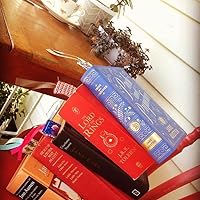
A beautiful illustration of Tolkien and the world he so lovingly created. Joseph Pearce gives an in-depth and insightful look into the man behind Middle-earth.
I really enjoyed this book, and hope all those who love Tolkien as well as his work read it too!
I really enjoyed this book, and hope all those who love Tolkien as well as his work read it too!

April 8, 2022
I bought this book after I heard the author speak at a conference on Tolkien. This book focuses on the faith and philosophy that led Tolkien to create Middle-earth. Recommended for those interested in such things.
Displaying 1 - 30 of 57 reviews