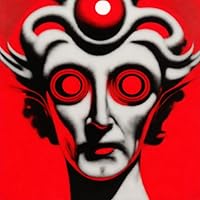
Un autorretrato inédito y libre de máscaras del maestro del pensamiento, desde su salvaje juventud en Bucarest y Berlín hasta su ático parisino.
«Busque la verdad sobre un autor en su correspondencia, más que en su obra. La obra suele ser una máscara».
Pocos pensadores contemporáneos han influido tanto en nuestra forma de enfrentar la existencia como Emil Cioran. Seleccionadas de entre los miles de archivos personales del escritor, las ciento sesenta cartas reunidas aquí, la mayoría de ellas inéditas, están dirigidas a su familia y amigos (en Rumanía y luego en Francia), a sus compañeros intelectuales y a sus lectores. En particular conoceremos su relación con Aurel, su hermano pequeño seminarista. También seremos testigos de aquello que compartió con nombres de la altura de Mircea Eliade, Carl Schmitt, Jean Paulhan, François Mauriac, María Zambrano, Fernando Savater, Samuel Beckett, Armel Guerne o Clément Rosset; y con la «Gitana», su última relación sentimental.
Lúcidas, irónicas y existenciales, estas cartas fueron escritas entre sus diecinueve y sus setenta y nueve años, por lo que componen un autorretrato íntimo del autor, quizá el más honesto hasta la fecha. Revelan, a su vez, el genio de Cioran para el arte epistolar, que cultivó y veneró por encima de los demás.
Reseñas:«Los amantes de la melancolía, la furia, el insomnio, el dolor de cabeza, la soledad y el gran estilo tienen aquí un raro ejemplar de un inpiduo en lucha contra todo y, en primer lugar, contra sí mismo». Le Point
«Cioran es un escritor literalmente insustituible: cuando uno se aficiona a su tono, no consiente reemplazarlo por ningún paliativo». Fernando Savater, El País
«En esta antología de cartas, en gran parte inédita, el lado oscuro no se salva. Descubrimos otro Cioran, alejado de la imagen convencional del ermitaño de la rue de l Odéon». Le Figaro
«No se consideraba ni filósofo ni escritor, pero logró ser ambas cosas. Su reflexión va inextricablemente unida a un estilo (una literatura) e hizo de su subjetividad su mundo filosófico. Su universo es el de un nostálgico de la mística transformada en un bisturí mortífero». Juan Malpartida, ABC
«A su discreta manera, Emil Cioran se ha convertido en un clásico de culto [...] Pocos como Cioran son capaces de alentar la reflexión y la duda, algo necesario en esta época de ruido y derivas intrascendentes». Héctor J. Porto, La Voz de Galicia
«Cioran es el filósofo de la segunda mitad del siglo XX más heterodoxo y original y apasionado, más desgarrador y poético e independiente». Toni Montesinos, La Razón
«Cioran fue un ogro exquisito y adorable». Rafael Narbona, El Cultural
«Cioran, ese loco sin locura , no nos cansamos nunca de él». ActuaLitté
Born in 1911 in Rășinari, a small village in the Carpathian Mountains of Romania, raised under the rule of a father who was a Romanian Orthodox priest and a mother who was prone to depression, Emil Cioran wrote his first five books in Romanian. Some of these are collections of brief essays (one or two pages, on average); others are collections of aphorisms. Suffering from insomnia since his adolescent years in Sibiu, the young Cioran studied philosophy in the “little Paris” of Bucarest.
A prolific publicist, he became a well-known figure, along with Mircea Eliade, Constantin Noïca, and his future close friend Eugene Ionesco (with whom he shared the Royal Foundation’s Young Writers Prize in 1934 for his first book, On the Heights of Despair).
Influenced by the German romantics, by Schopenhauer, Nietzsche, and the Lebensphilosophie of Schelling and Bergson, by certain Russian writers, including Chestov, Rozanov, and Dostoyevsky, and by the Romanian poet Eminescu, Cioran wrote lyrical and expansive meditations that were often metaphysical in nature and whose recurrent themes were death, despair, solitude, history, music, saintliness and the mystics (cf. Tears and Saints, 1937) – all of which are themes that one finds again in his French writings. In his highly controversial book, The Transfiguration of Romania (1937), Cioran, who was at that time close to the Romanian fascists, violently criticized his country and his compatriots on the basis of a contrast between such “little nations” as Romania, which were contemptible from the perspective of universal history and great nations, such as France or Germany, which took their destiny into their own hands.
After spending two years in Germany, Cioran arrived in Paris in 1936. He continued to write in Romanian until the early 1940s (he wrote his last article in Romanian in 1943, which is also the year in which he began writing in French). The break with Romanian became definitive in 1946, when, in the course of translating Mallarmé, he suddenly decided to give up his native tongue since no one spoke it in Paris. He then began writing in French a book that, thanks to numerous intensive revisions, would eventually become the impressive 'A Short History of Decay' (1949) -- the first of a series of ten books in which Cioran would continue to explore his perennial obsessions, with a growing detachment that allies him equally with the Greek sophists, the French moralists, and the oriental sages. He wrote existential vituperations and other destructive reflections in a classical French style that he felt was diametrically opposed to the looseness of his native Romanian; he described it as being like a “straight-jacket” that required him to control his temperamental excesses and his lyrical flights. The books in which he expressed his radical disillusionment appeared, with decreasing frequency, over a period of more than three decades, during which time he shared his solitude with his companion Simone Boué in a miniscule garret in the center of Paris, where he lived as a spectator more and more turned in on himself and maintaining an ever greater distance from a world that he rejected as much on the historical level (History and Utopia, 1960) as on the ontological (The Fall into Time, 1964), raising his misanthropy to heights of subtlety (The Trouble with being Born, 1973), while also allowing to appear from time to time a humanism composed of irony, bitterness, and preciosity (Exercices d’admiration, 1986, and the posthumously published Notebooks).
Denied the right to return to Romania during the years of the communist regime, and attracting international attention only late in his career, Cioran died in Paris in 1995.
J'y découvre, l'homme, encore plus que dans ses entretiens, du jeune homme au vieillard, déjà vieux et amoureux, c'est touchant, c'est triste. Cioran n'a jamais changé de ton de style mais quelle poésie dans son choix des mots pour exprimer ses maux, quel verbe. N-a fost sã fie (Cela n’a pas été de telle sorte que cela soit) la phrase le dicton qui marque le plus la destinée de Cioran et par ces lettres comme toujours dans toutes les vies, les êtres vont et viennent et l'auteur maintient sa destination.
Es muy bueno, pero no hay que exagerar. Para los que no lo conozcan, Cioran practicó el arte de la desesperación y lo llevó a sus últimas consecuencias. En realidad, quiso ser un místico más que un filósofo. En su búsqueda de Dios, encontró la nada, el vacío, y se lanzó a contemplar ese abismo. Y ahí estaba...
Los epistolarios son siempre un punto de vista desconocido e interesante, sobre todo con personalidades tan complejas y contradictorias como la de Cioran.