

What do you think?

A Village Life: Poems
A Village Life, Louise Glück’s eleventh collection of poems, begins in the topography of a village, a Mediterranean world of no definite moment or place:
All the roads in the village unite at the fountain.
Avenue of Liberty, Avenue of the Acacia Trees—
The fountain rises at the center of the plaza;
on sunny days, rainbows in the piss of the cherub.
—from “tributaries”
Around the fountain are concentric circles of figures, organized by age and in degrees of distance: fields, a river, and, like the fountain’s opposite, a mountain. Human time superimposed on geologic time, all taken in at a glance, without any undue sensation of speed.
Glück has been known as a lyrical and dramatic poet; since Ararat, she has shaped her austere intensities into book-length sequences. Here, for the first time, she speaks as “the type of describing, supervising intelligence found in novels rather than poetry,” as Langdon Hammer has written of her long lines—expansive, fluent, and full—manifesting a calm omniscience. While Glück’s manner is novelistic, she focuses not on action but on pauses and intervals, moments of suspension (rather than suspense), in a dreamlike present tense in which poetic speculation and reflection are possible.
87 pages, Kindle Edition
First published September 1, 2009
About the author
Louise Glück
101 books2,259 followersAmerican poet Louise Elisabeth Glück served as poet laureate of the United States from 2003 to 2004.
Parents of Hungarian Jewish heritage reared her on Long Island. She attended Sarah Lawrence College and later Columbia University.
She was the author of twelve books of poetry, including: A Village Life (2009); Averno (2006), which was a finalist for The National Book Award; The Seven Ages (2001); Vita Nova (1999), which was awarded The New Yorker's Book Award in Poetry; Meadowlands (1996); The Wild Iris (1992), which received the Pulitzer Prize and the William Carlos Williams Award of the Poetry Society of America; Ararat (1990), which received the Rebekah Johnson Bobbitt National Prize for Poetry from the Library of Congress. She also published a collection of essays, Proofs and Theories: Essays on Poetry (1994), which won the PEN/Martha Albrand Award for First Nonfiction.
In 2001, Yale University awarded Louise Glück its Bollingen Prize in Poetry, given biennially for a poet's lifetime achievement in his or her art. Her other honors include the Lannan Literary Award for Poetry, the Sara Teasdale Memorial Prize (Wellesley, 1986), the Pulitzer Prize for Poetry in 1993 for her collection, The Wild Iris . Glück is the recipient of the National Book Critics Circle Award ( Triumph of Achilles ), the Academy of American Poet's Prize ( Firstborn ), as well as the Massachusetts Institute of Technology Anniversary Medal (2000), and fellowships from the Guggenheim, Rockefeller foundations and the National Endowment for the Arts.
In 2020, Glück was awarded the Nobel Prize in Literature, "for her unmistakable poetic voice that with austere beauty makes individual existence universal."
Glück also worked as a senior lecturer in English at Williams College in Williamstown, Massachusetts, served as a member of the faculty of the University of Iowa and taught at Goddard College in Vermont. She lived in Cambridge, Massachusetts, and teached as the Rosencranz writer in residence at Yale University and in the creative writing program of Boston University.
Parents of Hungarian Jewish heritage reared her on Long Island. She attended Sarah Lawrence College and later Columbia University.
She was the author of twelve books of poetry, including: A Village Life (2009); Averno (2006), which was a finalist for The National Book Award; The Seven Ages (2001); Vita Nova (1999), which was awarded The New Yorker's Book Award in Poetry; Meadowlands (1996); The Wild Iris (1992), which received the Pulitzer Prize and the William Carlos Williams Award of the Poetry Society of America; Ararat (1990), which received the Rebekah Johnson Bobbitt National Prize for Poetry from the Library of Congress. She also published a collection of essays, Proofs and Theories: Essays on Poetry (1994), which won the PEN/Martha Albrand Award for First Nonfiction.
In 2001, Yale University awarded Louise Glück its Bollingen Prize in Poetry, given biennially for a poet's lifetime achievement in his or her art. Her other honors include the Lannan Literary Award for Poetry, the Sara Teasdale Memorial Prize (Wellesley, 1986), the Pulitzer Prize for Poetry in 1993 for her collection, The Wild Iris . Glück is the recipient of the National Book Critics Circle Award ( Triumph of Achilles ), the Academy of American Poet's Prize ( Firstborn ), as well as the Massachusetts Institute of Technology Anniversary Medal (2000), and fellowships from the Guggenheim, Rockefeller foundations and the National Endowment for the Arts.
In 2020, Glück was awarded the Nobel Prize in Literature, "for her unmistakable poetic voice that with austere beauty makes individual existence universal."
Glück also worked as a senior lecturer in English at Williams College in Williamstown, Massachusetts, served as a member of the faculty of the University of Iowa and taught at Goddard College in Vermont. She lived in Cambridge, Massachusetts, and teached as the Rosencranz writer in residence at Yale University and in the creative writing program of Boston University.
Ratings & Reviews
Friends & Following
Create a free account to discover what your friends think of this book!
Community Reviews
Displaying 1 - 30 of 349 reviews

February 20, 2022
A mountain and hills, small rural village life revolving around the seasons and the sun as a metaphor for life in general, nightly walks. All pervaded by a sense of sadness, accentuated by the burning of leaves on the grey earth.
In the window, the moon is hanging over the earth, meaningless but full of messages.
It’s dead, it’s always been dead,
but it pretends to be something else,
burning like a star, and convincingly, so that you feel sometimes it could actually make something grow on earth.
If there’s an image of the soul, I think that’s what it is.
- A village life
When you look at a body you see a history
Once that body isn’t seen anymore,
the story it tried to tell gets lost -
- Walking at Night
Just be glad you were in a bed,
where the cries of love drown out the screams of the corpses
- Hunters
Never accumulation, never one wave trying to build on another, never the promise of shelter -
The sea doesn’t change as the earth changes;
it doesn’t lie.
You ask the sea, what can you promise me
and it speaks the truth; it says erasure
- March
He think it’s my job to learn, not his job to teach me.
- Figs
His breathing’s not regular: he breathes in with reluctance;
he doesn’t want to commit himself to being alive.
And he breathes out fast, like a king banishing a servant.
- Marriage
But there are truths that ruin a life; the same way, some lies
are generous, warm and cozy like the sun on the brick wall.
- Olive Trees
I had to see the fields were still shining,
the sun telling the same lies about how beautiful the world is
when all you need to know of a place is, do people live there.
If they do, you know everything.
- Sunrise
In the window, the moon is hanging over the earth, meaningless but full of messages.
It’s dead, it’s always been dead,
but it pretends to be something else,
burning like a star, and convincingly, so that you feel sometimes it could actually make something grow on earth.
If there’s an image of the soul, I think that’s what it is.
- A village life
When you look at a body you see a history
Once that body isn’t seen anymore,
the story it tried to tell gets lost -
- Walking at Night
Just be glad you were in a bed,
where the cries of love drown out the screams of the corpses
- Hunters
Never accumulation, never one wave trying to build on another, never the promise of shelter -
The sea doesn’t change as the earth changes;
it doesn’t lie.
You ask the sea, what can you promise me
and it speaks the truth; it says erasure
- March
He think it’s my job to learn, not his job to teach me.
- Figs
His breathing’s not regular: he breathes in with reluctance;
he doesn’t want to commit himself to being alive.
And he breathes out fast, like a king banishing a servant.
- Marriage
But there are truths that ruin a life; the same way, some lies
are generous, warm and cozy like the sun on the brick wall.
- Olive Trees
I had to see the fields were still shining,
the sun telling the same lies about how beautiful the world is
when all you need to know of a place is, do people live there.
If they do, you know everything.
- Sunrise

January 25, 2024
Here in Japan the time from late December to early January is very quiet (most businesses shut down and there are no countdown parties) so it’s a personal tradition to go on a short trip. I love reading while traveling, which makes it crucial to choose a good book as a companion.
This year I chose a few collections of poetry by Louise Glück, starting with A Village Life while (ironically?) traveling to one the largest city in the world. Reading a few Glücks and observing life through a train window made me think about how each of us inhabits this earth, experiencing so many pleasures and struggles in but a moment, how life moves on no matter whether we are ready or not. And yet there is something else which makes us hang on to this dear little thing - a sense of connection and continuation.
The night is an open book.
But the world beyond the night remains a mystery.
Although the title of this collection might suggest a place, it’s not about anywhere in particular. While there is a certain pastoral aspect to some images Glück plays with, I wouldn’t say it’s actually a rural life that is portrayed here. Some other familiar themes such as the relationship between the human and natural worlds, the seasons and the passing of time are easily recognizable, yet Glück looks at them in a way that is unique. Poems in this collection are written in straight lines, yet they go on and on rather like circles. They feel like brief interconnected narratives constituting a whole, reminding me of one of those ukiyo-e scrolls or folding screens. Pictures of the floating world they are.
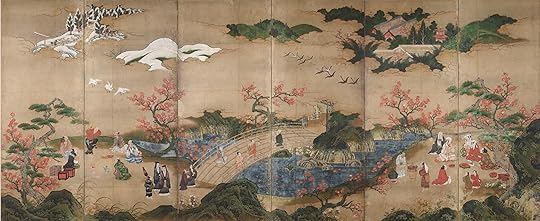
Maple Viewing at Takao, Kano Hideyori
Glück includes all kinds of narrators and characters old and young, old young and young old. And they are not only humans: sometimes living and not entirely living things come forth and have their say.
It is not sad not to be human
nor is living entirely within the earth
demeaning or empty: it is the nature of the mind
to defend its eminence, as it is the nature of those
who walk on the surface to fear the depths - one's
position determines one's feelings.
Sometimes they look back at their past selves, sometimes they glimpse into the future. Glück can see as much tranquility in death as she can see death in tranquility. So don’t ask me about hope. Yet, if we choose to read attentively enough, there might be moments of grace, joy and humour.
She believes in the Virgin the way I believe in the mountain,
though in one case the fog never lifts.
But each person stores his hope in a different place.
All in all, Glück doesn’t seem to do anything special in this collection and yet I feel she’s got such a rare talent - in each poem she can find a celebration in the ordinary, in life as it is.
It’s quite rare for me to read books by the same author back to back, but this year I’ve read three Glück collections in a row. Although in Glück’s case each collection is about 100 pages and one can breeze through that in one sitting, I do feel her work insists on multiple readings, her thoughts linger in my mind for a long time. I had been on several poetry kicks in the past, but it’s been some time since I’ve actually picked up a poetry collection, it feels good to discover the joy and meaning of reading poetry again.
Nothing can be forced to live.
The earth us like a drug now, like a voice from far away,
a lover or a master. In the end, you do what the voice tells you.
It says you forget, you forget.
It says begin again, you begin again.
This year I chose a few collections of poetry by Louise Glück, starting with A Village Life while (ironically?) traveling to one the largest city in the world. Reading a few Glücks and observing life through a train window made me think about how each of us inhabits this earth, experiencing so many pleasures and struggles in but a moment, how life moves on no matter whether we are ready or not. And yet there is something else which makes us hang on to this dear little thing - a sense of connection and continuation.
The night is an open book.
But the world beyond the night remains a mystery.
Although the title of this collection might suggest a place, it’s not about anywhere in particular. While there is a certain pastoral aspect to some images Glück plays with, I wouldn’t say it’s actually a rural life that is portrayed here. Some other familiar themes such as the relationship between the human and natural worlds, the seasons and the passing of time are easily recognizable, yet Glück looks at them in a way that is unique. Poems in this collection are written in straight lines, yet they go on and on rather like circles. They feel like brief interconnected narratives constituting a whole, reminding me of one of those ukiyo-e scrolls or folding screens. Pictures of the floating world they are.
Maple Viewing at Takao, Kano Hideyori
Glück includes all kinds of narrators and characters old and young, old young and young old. And they are not only humans: sometimes living and not entirely living things come forth and have their say.
It is not sad not to be human
nor is living entirely within the earth
demeaning or empty: it is the nature of the mind
to defend its eminence, as it is the nature of those
who walk on the surface to fear the depths - one's
position determines one's feelings.
Sometimes they look back at their past selves, sometimes they glimpse into the future. Glück can see as much tranquility in death as she can see death in tranquility. So don’t ask me about hope. Yet, if we choose to read attentively enough, there might be moments of grace, joy and humour.
She believes in the Virgin the way I believe in the mountain,
though in one case the fog never lifts.
But each person stores his hope in a different place.
All in all, Glück doesn’t seem to do anything special in this collection and yet I feel she’s got such a rare talent - in each poem she can find a celebration in the ordinary, in life as it is.
It’s quite rare for me to read books by the same author back to back, but this year I’ve read three Glück collections in a row. Although in Glück’s case each collection is about 100 pages and one can breeze through that in one sitting, I do feel her work insists on multiple readings, her thoughts linger in my mind for a long time. I had been on several poetry kicks in the past, but it’s been some time since I’ve actually picked up a poetry collection, it feels good to discover the joy and meaning of reading poetry again.
Nothing can be forced to live.
The earth us like a drug now, like a voice from far away,
a lover or a master. In the end, you do what the voice tells you.
It says you forget, you forget.
It says begin again, you begin again.

November 5, 2020
The summer night glowed; in the field, fireflies were glinting.
And for those who understood such things, the stars were sending messages:
You will leave the village where you were born
and in another country you’ll become very rich, very powerful,
but always you will mourn something you left behind, even though you can’t say what it was,
and eventually you will return to seek it.
This year I decided to read poetry. I read a lot of short fiction, largely due to time pressure, but also because of the form itself. In genre fiction like SF, for example, many writers either begin their careers as short-form writers, or many end up specialising in it (one only has to think of Ted Chiang’s ‘Exhalation’).
So why not read poetry, which is even shorter, and therefore seems the ideal reading experience in our mad rush of a modern world? I simply began my poetry-reading journey by jumping in wherever I felt like, and reading collections and poets that caught my fancy.
When I heard that Louise Glück won the 2020 Nobel Prize in Literature, I immediately thought of Bob Dylan doing the same in 2016. Songwriting? Poetry? What was up? Curious, I grabbed two of Glück’s collections at random to see what all the fuss was about, ‘Averno’ and ‘A Village Life’.
Off the bat, I have to say that it has been my most frustrating and difficult poetry-reading experience so far. Like ‘Averno’, ‘A Village Life’ is a themed collection that slowly accretes into … I don’t really know what. A vision of the world? A cry out against the futility of it all? An acknowledgement of the beauty of life and nature and how it all will end up in darkness and decay? The cruelty and epiphanies of human beings? All of this, and so much more.
Glück’s writing style is oddly fragmented and conversational at the same time. To be honest, a lot of her poetry reads like prose. But as I slowly read ‘A Village Life’ (you don’t read poetry faster because it is a shorter form, unfortunately), the same thing happened as with ‘Averno’: I became fully immersed in Glück’s world, with her murmuring in my ear.
Certainly not a great experience that – Glück is supremely depressing and downbeat. But there is something so seductive and mesmerising about the world that she conjures in the reader’s mind. Like the best fiction, it is fully formed in all its contradictions and revelations, filled with flawed people who fulfil both their biological and societal destinies with depressing conformity.
It is a haunting experience that stays with you days, if not forever. I am still thinking about both ‘Averno’ and ‘A Village Life’. Flashes of Glück’s imagery, which finds its power in focusing on minute details of things, or unusual and seemingly random comparisons, creates a kind of synaesthesia in the reader that does not fade easily. Think of Glück as a shaman in the dark, whose regard of the world through her poetry is a benediction of wisdom.
And for those who understood such things, the stars were sending messages:
You will leave the village where you were born
and in another country you’ll become very rich, very powerful,
but always you will mourn something you left behind, even though you can’t say what it was,
and eventually you will return to seek it.
This year I decided to read poetry. I read a lot of short fiction, largely due to time pressure, but also because of the form itself. In genre fiction like SF, for example, many writers either begin their careers as short-form writers, or many end up specialising in it (one only has to think of Ted Chiang’s ‘Exhalation’).
So why not read poetry, which is even shorter, and therefore seems the ideal reading experience in our mad rush of a modern world? I simply began my poetry-reading journey by jumping in wherever I felt like, and reading collections and poets that caught my fancy.
When I heard that Louise Glück won the 2020 Nobel Prize in Literature, I immediately thought of Bob Dylan doing the same in 2016. Songwriting? Poetry? What was up? Curious, I grabbed two of Glück’s collections at random to see what all the fuss was about, ‘Averno’ and ‘A Village Life’.
Off the bat, I have to say that it has been my most frustrating and difficult poetry-reading experience so far. Like ‘Averno’, ‘A Village Life’ is a themed collection that slowly accretes into … I don’t really know what. A vision of the world? A cry out against the futility of it all? An acknowledgement of the beauty of life and nature and how it all will end up in darkness and decay? The cruelty and epiphanies of human beings? All of this, and so much more.
Glück’s writing style is oddly fragmented and conversational at the same time. To be honest, a lot of her poetry reads like prose. But as I slowly read ‘A Village Life’ (you don’t read poetry faster because it is a shorter form, unfortunately), the same thing happened as with ‘Averno’: I became fully immersed in Glück’s world, with her murmuring in my ear.
Certainly not a great experience that – Glück is supremely depressing and downbeat. But there is something so seductive and mesmerising about the world that she conjures in the reader’s mind. Like the best fiction, it is fully formed in all its contradictions and revelations, filled with flawed people who fulfil both their biological and societal destinies with depressing conformity.
It is a haunting experience that stays with you days, if not forever. I am still thinking about both ‘Averno’ and ‘A Village Life’. Flashes of Glück’s imagery, which finds its power in focusing on minute details of things, or unusual and seemingly random comparisons, creates a kind of synaesthesia in the reader that does not fade easily. Think of Glück as a shaman in the dark, whose regard of the world through her poetry is a benediction of wisdom.

Read
December 22, 2023Finished, but I plan to reread it anyway because I liked it so well, perhaps as well as any Glück I've read (and, according to the experts. The Wild Iris deserves that designation).
Maybe its the "Our Town" aura that helps it, the way LG uses Everyvillage to show us certain things about the human condition (general) through the device of various villagers (specific). A few of these poems use the ubiquitous pronoun "I" but not many -- a welcome relief.
I found this excerpt mentioning the book from an online interview she gave to Henri Cole:
I also think of my books as either operating on a vertical axis, from despair to transcendence, or moving horizontally, with concerns that are more social or communal, the sort of material you might expect to show up in a novel rather than a poem. Averno (2006), for instance, is a book quintessentially on a vertical axis. And A Village Life (2009) is utterly the opposite—with different speakers coming from different times of life, living in some unspecified little seemingly Mediterranean village, though the model was Plainfield, Vermont, where I lived for many years. You make substitutions to keep yourself inventing.
Vermont? I knew these sound more familiar than a European village should!
See what I mean with this example from the text:
In the Plaza
For two weeks he's been watching the same girl,
someone he sees in the plaza. In her twenties maybe,
drinking coffee in the afternoon, the little dark head
bent over a magazine.
He watches from across the square, pretending
to be buying something, cigarettes, maybe a bouquet of flowers.
Because she doesn't know it exists,
her power is very great now, fused to the needs of his imagination.
He is her prisoner. She says the words he gives her
in a voice he imagines, low-pitched and soft,
a voice from the south as the dark hair must be from the south.
Soon she will recognize him, then begin to expect him.
And perhaps then every day her hair will be freshly washed,
she will gaze outward across the plaza before looking down.
and after that they will become lovers.
But he hopes this will not happen immediately
since whatever power she exerts now over his body, over his emotions,
she will have no power once she commits herself—
she will withdraw into that private world of feeling
women enter when they love. And living there, she will become
like a person who casts no shadow, who is not present in the world;
in that sense, so little use to him
it hardly matters whether she lives or dies.
Maybe its the "Our Town" aura that helps it, the way LG uses Everyvillage to show us certain things about the human condition (general) through the device of various villagers (specific). A few of these poems use the ubiquitous pronoun "I" but not many -- a welcome relief.
I found this excerpt mentioning the book from an online interview she gave to Henri Cole:
I also think of my books as either operating on a vertical axis, from despair to transcendence, or moving horizontally, with concerns that are more social or communal, the sort of material you might expect to show up in a novel rather than a poem. Averno (2006), for instance, is a book quintessentially on a vertical axis. And A Village Life (2009) is utterly the opposite—with different speakers coming from different times of life, living in some unspecified little seemingly Mediterranean village, though the model was Plainfield, Vermont, where I lived for many years. You make substitutions to keep yourself inventing.
Vermont? I knew these sound more familiar than a European village should!
See what I mean with this example from the text:
In the Plaza
For two weeks he's been watching the same girl,
someone he sees in the plaza. In her twenties maybe,
drinking coffee in the afternoon, the little dark head
bent over a magazine.
He watches from across the square, pretending
to be buying something, cigarettes, maybe a bouquet of flowers.
Because she doesn't know it exists,
her power is very great now, fused to the needs of his imagination.
He is her prisoner. She says the words he gives her
in a voice he imagines, low-pitched and soft,
a voice from the south as the dark hair must be from the south.
Soon she will recognize him, then begin to expect him.
And perhaps then every day her hair will be freshly washed,
she will gaze outward across the plaza before looking down.
and after that they will become lovers.
But he hopes this will not happen immediately
since whatever power she exerts now over his body, over his emotions,
she will have no power once she commits herself—
she will withdraw into that private world of feeling
women enter when they love. And living there, she will become
like a person who casts no shadow, who is not present in the world;
in that sense, so little use to him
it hardly matters whether she lives or dies.

December 28, 2021
In this collection Glück brings together a number of poems that revolve around life in a village, certainly not an American one, it has more of a Mediterranean feel. It is one where time more or less stands still, or rather, where youthfulness and hope have departed. Older people mainly live there, and the poet portrays this aging in a poignant way, in many details of everyday life. In at least four places she comes back to the image of the burning of dead leaves, a bad omen indeed. And the closing lines of the poem with the telling title 'Fatigue' do not require further explanation:
“The sun goes down, the dark comes.
Now that summer’s over, the earth is hard, cold;
By the road, a few isolated fires burn.
Nothing remains of love,
only estrangement and hatred.”
As in her other collections, the tone of this one is very colloquial and descriptive. But Glück maintains this so consistently that it takes on something conjuring and mesmerizing. I don't think everything in this collection is equally successful, because it seems as if some poems have been pasted in. But behind her rather chilly, descriptive tone there is a gripping, sobering message.
“The sun goes down, the dark comes.
Now that summer’s over, the earth is hard, cold;
By the road, a few isolated fires burn.
Nothing remains of love,
only estrangement and hatred.”
As in her other collections, the tone of this one is very colloquial and descriptive. But Glück maintains this so consistently that it takes on something conjuring and mesmerizing. I don't think everything in this collection is equally successful, because it seems as if some poems have been pasted in. But behind her rather chilly, descriptive tone there is a gripping, sobering message.

October 12, 2020
Ne znam da li mi je draže kad Nobela dobije neko koga nisam ili koga jesam čitao. U prvom slučaju, gotovo uvek otkrijem zaista pažnje vredan glas, u drugom dobijam radosnu potvrdu da je moj čitalački osećaj, zajednički još nekome. Tako sam se mnogo obradovao kada sam otkrio ovogodišnju dobitnicu, koja je obistinila moj poetični ideal – služeći se običnim, svima dostupnim rečima, dopreti tamo gde niko pre nije došao. Poezija Luiz Glik je blistava: ima neku nesvakidašnju privlačnost, suptilnu erotičnost, kojom uspeva da oblikuje, svakim čitanjem sve sadržajnije lirske planove.
Dopalo mi se objašnjenje Švedske akademije za dodeljivanje nagrade Luiz Glik, gde je istaknuta njena nepogrešiva poetika i striktna lepota koja individualno pretače u univerzalno. Sve više volim poeziju koja želi da bude razumevana, koja se ne plaši od svojih čitanja, ne beži od sebe. A često se danas iza težnje za zaumnim, eksperimentalnim, hermetičnim, nalazi nesposobnost autora da napiše pesmu koja uspeva da ostvari svoj pun komunikacioni potencijal. Ali jedan od najtežih poduhvata, vrednog svake nagrade, jeste pomiriti prijemčljivost i dubinu – mapirati dušu kako treba, ostavljajući prostora za preplete i prepoznavanja u tekstu.
A ako govorimo o jednostavnom u poeziji, možemo govoriti i o istinitom, ali i prepoznatljivom. Pitanje zašto pamtimo određene stihove, ili npr. dramske replike, a neke ne pamtimo i ne doživljavamo ih kao posebne, jeste još jedno od tih magičnih neodgovorivih pitanja. Ono prevazilazi stilističku analizu, iako ona može biti od koristi. Jedan poznati primer – čujemo „Očiju tvojih da nije” – i osim, ako imamo makar malo osećaja za poeziju, a imamo, ne zaboravimo taj stih više nikad u životu. Verovatno je da zaboravimo okolnosti, autora, samu pesmu, pa i da sam stih ne možemo da prizovemo, ali on će se u svojoj punoći aktivirati svaki put kada bude prizvan. I jasne su ovde sintaksičke kerefeke i inverzije, međutim, da je bilo koja druga kombinacija bila, rezultat bi bio sasvim drukčiji. On je u zvuku, a dozvoliće mi sve makar malo mistički inspirisane duše, i u nekom nad-zvuku, nevidljivoj poetskoj obući.
Zato mi je bilo posebno drago što sam te nevidljive, neprevodive zvončiće čuo u originalu. Gde se mogu videti ovakve strofe:
„We sat in the reeds at the edge of the river
throwing small stones. When the stones hit,
you could see the stars multiply for a second, little explosions of light
flashing and going out. There was a boy I was beginning to like,
not to speak to but to watch.
I liked to sit behind him to study the back of his neck.”
Ili stihovi:
„To get born, your body makes a pact with death,
and from that moment, all it tries to do is cheat”
Koga to bude zanimalo, može da nađe u ovoj zbirci, briljantno oživljavanje pastorale u savremenoj književnosti, kao i iznenađujuće promišljenu kompoziciju. Ovde je i nečeg zavodljivo mediteranskog, ali bez trunčice samodopadljivosti i zaslađivanja.
Iako nema podele na cikluse ili nekakve druge celine, pesme se briljantno prožimaju i to na jedan neuslovan i neopterećujuć način. To posebno važi za motive vezane za prirodu, kao i za sećanja.
Sviđa mi se i česta, dvoplanska struktura poezije Luiz Glik – njena lirska optika (odnosno, njenog lirskog subjekta koji je, kao i sve u njenoj poeziji, iznenađujuće promenjiv), kreće od nekog prizora svakodnevice, koji se uparuje sa nečim što ga prevazilazi. Kao, više puta spomenuti motiv paljenja lišća, u kome se može videti trajanje sveta:
Sunset
At the same time as the sun’s setting,
a farm worker’s burning dead leaves.
It’s nothing, this fire.
It’s a small thing, controlled,
like a family run by a dictator.
Still, when it blazes up, the farm worker disappears;
from the road, he’s invisible.
Compared to the sun, all the fires here
are short-lived, amateurish—
they end when the leaves are gone.
Then the farm worker reappears, raking the ashes.
But the death is real.
As though the sun’s done what it came to do,
made the field grow, then
inspired the burning of earth.
So it can set now.
Dopalo mi se objašnjenje Švedske akademije za dodeljivanje nagrade Luiz Glik, gde je istaknuta njena nepogrešiva poetika i striktna lepota koja individualno pretače u univerzalno. Sve više volim poeziju koja želi da bude razumevana, koja se ne plaši od svojih čitanja, ne beži od sebe. A često se danas iza težnje za zaumnim, eksperimentalnim, hermetičnim, nalazi nesposobnost autora da napiše pesmu koja uspeva da ostvari svoj pun komunikacioni potencijal. Ali jedan od najtežih poduhvata, vrednog svake nagrade, jeste pomiriti prijemčljivost i dubinu – mapirati dušu kako treba, ostavljajući prostora za preplete i prepoznavanja u tekstu.
A ako govorimo o jednostavnom u poeziji, možemo govoriti i o istinitom, ali i prepoznatljivom. Pitanje zašto pamtimo određene stihove, ili npr. dramske replike, a neke ne pamtimo i ne doživljavamo ih kao posebne, jeste još jedno od tih magičnih neodgovorivih pitanja. Ono prevazilazi stilističku analizu, iako ona može biti od koristi. Jedan poznati primer – čujemo „Očiju tvojih da nije” – i osim, ako imamo makar malo osećaja za poeziju, a imamo, ne zaboravimo taj stih više nikad u životu. Verovatno je da zaboravimo okolnosti, autora, samu pesmu, pa i da sam stih ne možemo da prizovemo, ali on će se u svojoj punoći aktivirati svaki put kada bude prizvan. I jasne su ovde sintaksičke kerefeke i inverzije, međutim, da je bilo koja druga kombinacija bila, rezultat bi bio sasvim drukčiji. On je u zvuku, a dozvoliće mi sve makar malo mistički inspirisane duše, i u nekom nad-zvuku, nevidljivoj poetskoj obući.
Zato mi je bilo posebno drago što sam te nevidljive, neprevodive zvončiće čuo u originalu. Gde se mogu videti ovakve strofe:
„We sat in the reeds at the edge of the river
throwing small stones. When the stones hit,
you could see the stars multiply for a second, little explosions of light
flashing and going out. There was a boy I was beginning to like,
not to speak to but to watch.
I liked to sit behind him to study the back of his neck.”
Ili stihovi:
„To get born, your body makes a pact with death,
and from that moment, all it tries to do is cheat”
Koga to bude zanimalo, može da nađe u ovoj zbirci, briljantno oživljavanje pastorale u savremenoj književnosti, kao i iznenađujuće promišljenu kompoziciju. Ovde je i nečeg zavodljivo mediteranskog, ali bez trunčice samodopadljivosti i zaslađivanja.
Iako nema podele na cikluse ili nekakve druge celine, pesme se briljantno prožimaju i to na jedan neuslovan i neopterećujuć način. To posebno važi za motive vezane za prirodu, kao i za sećanja.
Sviđa mi se i česta, dvoplanska struktura poezije Luiz Glik – njena lirska optika (odnosno, njenog lirskog subjekta koji je, kao i sve u njenoj poeziji, iznenađujuće promenjiv), kreće od nekog prizora svakodnevice, koji se uparuje sa nečim što ga prevazilazi. Kao, više puta spomenuti motiv paljenja lišća, u kome se može videti trajanje sveta:
Sunset
At the same time as the sun’s setting,
a farm worker’s burning dead leaves.
It’s nothing, this fire.
It’s a small thing, controlled,
like a family run by a dictator.
Still, when it blazes up, the farm worker disappears;
from the road, he’s invisible.
Compared to the sun, all the fires here
are short-lived, amateurish—
they end when the leaves are gone.
Then the farm worker reappears, raking the ashes.
But the death is real.
As though the sun’s done what it came to do,
made the field grow, then
inspired the burning of earth.
So it can set now.

December 21, 2022
Estou rendida a Louise Glück. Foi uma das minhas descobertas de 2022. Recomendo uma leitura com tempo, como quem viaja com a alma.

June 25, 2021
This is the eleventh collection by the 2020 Nobel Laureate.
I am not normally a reader of poetry – far preferring long-form literary fiction – but when I researched her work a little, it was this collection (despite being not mentioned in the Nobel Citation) that made me think I might enjoy her work as it seemed to imply that her collections were perhaps more coherent than much poetry I had seen and thus perhaps more likely to appeal to my literary sensibilities.
And I think largely that did prove to be the case across all of her work and further this collection did indeed prove to be perhaps the most unified of any of hers I have read.
The poems are set in an unnamed and unplaced rural village – although one has the strong sense of perhaps a village set deep in the Italian countryside and a setting ranging perhaps around the 1970s.
And it is a book that explores rural isolation and marginalsation (I was reminded a little of Claire Fuller’s 2021 Women’s Prize shortlisted “Unsettled Ground”) – of a sense of dissatisfaction for those who stay, those who leave and those who return;
The poems include those of people set into
Patterns of life - the opening poem “Twilight” is about a working man enjoying his too brief daily opportunity to sit and look
Roles - “Tributaries” is a brilliant poem about the fountain where all the villages roads converge, and how, seen through the eyes of young mothers they can already see the paths of their past and already mapped out futures converging in their present “Avenue of Broken Faith, Avenue of Disappointment”
Evolving but pre-ordained futures - “Noon” for example brilliant captures the evolving relationship of two childhood friends – a boy and a girl – and this theme of youngsters exploring their futures and trying to understand how relationships form is also covered in “At the River” (about a boy first being told the facts of life), “ A Night in Spring” (a girl trying to understand her body and birth) and “At the Dance”)
Marriage - “A Corridor” about a man and a woman trapped in a marriage
with variations on this in “Marriage” (a couple on holiday but divided by years of silence) and the excellent “Figs” (a woman feeling that her husband is trying to turn her into his own mother – and her cooking – while destroying her own memories of her mother and her food) plus “Olive Trees” (a couple now living in a factory town, with the wife missing the Olive trees of her youth but the husband saying)
Old age – “Walking at Night” describes an ageing woman for who the resulting lack of a male gaze makes her now free to walk “the streets at dusk that were so dangerous have become as a safe as the meadows” – and who has passed from fear and downcast eyes to freedom with invisibility
Ill health – “A Slip of Paper” about an ageing man confronted by a young female doctor about his lifestyle induced poor health (and who in turn blames the women in his life – mother, grandmother, wife for their lack of advice) but who also reflects on his own mortality (and how old age will eventually come to the doctor)
A lost past – “Sunrise” starts with a Proustian moment as a City living woman is reminded of the hill s of the Village by the smell of the herbs in her windowbox but who knows she can no longer return as everyone she cares about has died or moved away
Confines of behaviour. “In the Café” is about a man already seeing no real change in the future
but intrigued by a friend who moves from woman to woman, making them the centre of his life and the sole focus of his seemingly selfless empathy and attention, before switching it to another girl.
The village itself – “March” is a meditation on a neighbour unable to escape the trap of the village for the seaside life she has always wished for and “now she’s down to two words, never and only to express this sense that life’s cheated her ….. Never the crises of the gulls, only in summer, the crickets, cicadas”)
The collections has an interspersed set of poems “Sunset”, three “Burning Leaves” return to an image of a farm worker burning dead leaves
And my favourite poem overall “Pastoral” includes
Highly recommended.
I am not normally a reader of poetry – far preferring long-form literary fiction – but when I researched her work a little, it was this collection (despite being not mentioned in the Nobel Citation) that made me think I might enjoy her work as it seemed to imply that her collections were perhaps more coherent than much poetry I had seen and thus perhaps more likely to appeal to my literary sensibilities.
And I think largely that did prove to be the case across all of her work and further this collection did indeed prove to be perhaps the most unified of any of hers I have read.
The poems are set in an unnamed and unplaced rural village – although one has the strong sense of perhaps a village set deep in the Italian countryside and a setting ranging perhaps around the 1970s.
And it is a book that explores rural isolation and marginalsation (I was reminded a little of Claire Fuller’s 2021 Women’s Prize shortlisted “Unsettled Ground”) – of a sense of dissatisfaction for those who stay, those who leave and those who return;
The poems include those of people set into
Patterns of life - the opening poem “Twilight” is about a working man enjoying his too brief daily opportunity to sit and look
Roles - “Tributaries” is a brilliant poem about the fountain where all the villages roads converge, and how, seen through the eyes of young mothers they can already see the paths of their past and already mapped out futures converging in their present “Avenue of Broken Faith, Avenue of Disappointment”
Evolving but pre-ordained futures - “Noon” for example brilliant captures the evolving relationship of two childhood friends – a boy and a girl – and this theme of youngsters exploring their futures and trying to understand how relationships form is also covered in “At the River” (about a boy first being told the facts of life), “ A Night in Spring” (a girl trying to understand her body and birth) and “At the Dance”)
Marriage - “A Corridor” about a man and a woman trapped in a marriage
He has found someone else – not another person exactly
but a self who despises intimacy, as though the privacy of a marriage
is a door that two people shut together
and no one can get out alone, not the wife, not the husband,
so the heat gets trapped there until they suffocate
with variations on this in “Marriage” (a couple on holiday but divided by years of silence) and the excellent “Figs” (a woman feeling that her husband is trying to turn her into his own mother – and her cooking – while destroying her own memories of her mother and her food) plus “Olive Trees” (a couple now living in a factory town, with the wife missing the Olive trees of her youth but the husband saying)
And I tell her I know we’re trapped here. But better to be trapped
by decent men …
than by the sun and hills. When I complain here
my voice is heard ….
In the other life, your despair just turns into silence
Old age – “Walking at Night” describes an ageing woman for who the resulting lack of a male gaze makes her now free to walk “the streets at dusk that were so dangerous have become as a safe as the meadows” – and who has passed from fear and downcast eyes to freedom with invisibility
When you look at a body you see a history
Once that body isn’t seen anymore
the story it tried to tell gets lost –
Ill health – “A Slip of Paper” about an ageing man confronted by a young female doctor about his lifestyle induced poor health (and who in turn blames the women in his life – mother, grandmother, wife for their lack of advice) but who also reflects on his own mortality (and how old age will eventually come to the doctor)
There’s a trap door here, and through that door,
the country of the dead. And the living push you through,
they want you first ahead of them
A lost past – “Sunrise” starts with a Proustian moment as a City living woman is reminded of the hill s of the Village by the smell of the herbs in her windowbox but who knows she can no longer return as everyone she cares about has died or moved away
Confines of behaviour. “In the Café” is about a man already seeing no real change in the future
“Its natural to be tired of earth
When you’ve been dead this long, you’ll probably be tired of heaven
You do what you can in a place
but after a while you exhaust that place
so you long for rescue”
but intrigued by a friend who moves from woman to woman, making them the centre of his life and the sole focus of his seemingly selfless empathy and attention, before switching it to another girl.
The village itself – “March” is a meditation on a neighbour unable to escape the trap of the village for the seaside life she has always wished for and “now she’s down to two words, never and only to express this sense that life’s cheated her ….. Never the crises of the gulls, only in summer, the crickets, cicadas”)
The collections has an interspersed set of poems “Sunset”, three “Burning Leaves” return to an image of a farm worker burning dead leaves
And my favourite poem overall “Pastoral” includes
No one really understands
the savagery of this place,
the way it kills people for non reason,
just to keep in practice
So people flee – and for a while, away from here
they’re exuberant, surrounded by so many choices –
…
When they come back, they’re worse
They think they failed in the city
not that the city doesn’t make good its promises.
They blame their upbringing: youth ended and they’re back,
silent, like their fathers
….
To my mind, you’re better of if you stay
that way, dreams don’t damage you
When you got tired of walking
you lay down in the grass
When you got up again, you could see for a moment where you’d been
the grass was slick there, flattened out
into the shape of a body. When you looked back later,
it was as though you’d never been there at all
Highly recommended.

Read
January 2, 2023A Village Life is quite the accomplishment by Glück - it’s the capturing of a sense of a place that proves so elusive for so many, though seeming deceptively simple. The poems are about life, as they so often are, but they are contained within the village and within the hearts of those who have left the village. Each and every single one was satisfying, even if I did not connect with some of them. They are telling a story, after all, and it’s hard to dismiss the reality of them.
Poems I enjoyed:
- Twilight
- Tributaries
- Noon
- A Corridor
- A Slip of Paper
Poems I enjoyed:
- Twilight
- Tributaries
- Noon
- A Corridor
- A Slip of Paper

October 16, 2020
Nunca tinha ouvido falar desta senhora até ela ser laureada com o Nobel de Literatura este ano de 2020. Dizem que este nem é o melhor livro dela, mas dei 5 estrelas, porque é o melhor livro de poemas que li este ano. Adorei este estilo bucolique-dépressif , pois nao romantiza a vida no campo como muitos poetas fazem, pelo contrario, mostra uma vida de trabalho arduo, debaixo do sol escaldante, os relacionamentos descendo ladeira abaixo, os jovens querendo fugir dali, a solidao, a vida sem sentido das mulheres. A natureza é perfeita: as montanhas, as flores, o trigo, etc. O que estraga sao os habitantes.
__________________________________
__________________________________
__________________________________
To get born, your body makes a pact with death,
and from that moment, all it tries to do is cheat
__________________________________
Nothing can be forced to live.
The earth is like a drug now, like a voice from far away,
a lover or master. In the end, you do what the voice tells you.
It says forget, you forget.
It says begin again, you begin again.
__________________________________
Now we return to what we were,
animals living in darkness
without language or vision—
Nothing proves I’m alive.
There is only the rain, the rain is endless.
__________________________________
I know things are hard here. And the owners—I know they lie sometimes.
But there are truths that ruin a life; the same way, some lies
are generous, warm and cozy like the sun on the brick wall.
So when you think of the wall, you don’t think prison.
More the opposite—you think of everything you escaped, being here.
And then my wife gives up for the night, she turns her back.
Some nights she cries a little.
Her only weapon was the truth—it is true, the hills are beautiful.
And the olive trees really are like silver.
But a person who accepts a lie, who accepts support from it
because it’s warm, it’s pleasant for a little while
— that person she’ll never understand, no matter how much she loves him.

January 7, 2017
All her life she dreamed of living by the sea
but fate didn’t put her there.
[…]
now she’s
down to two words,
never and only, to express this sense that life’s
cheated her.
Never the cries of the gulls, only, in summer, the
crickets, cicadas.
Only the smell of the field, when all she wanted
was the smell of the sea, of disappearance
*The lovers part. The sea hammers the shore, the
mark each wave leaves
wiped out by the wave that follows.
Never accumulation, never one wave trying to
build on another,
never the promise of shelter—
The sea doesn’t change as the earth changes;
it doesn’t lie.
You ask the sea, what can you promise me
and it speaks the truth; it says erasure.
*
and the smell of the past is everywhere,
[...]
the smell of too many illusions—
but fate didn’t put her there.
[…]
now she’s
down to two words,
never and only, to express this sense that life’s
cheated her.
Never the cries of the gulls, only, in summer, the
crickets, cicadas.
Only the smell of the field, when all she wanted
was the smell of the sea, of disappearance
*The lovers part. The sea hammers the shore, the
mark each wave leaves
wiped out by the wave that follows.
Never accumulation, never one wave trying to
build on another,
never the promise of shelter—
The sea doesn’t change as the earth changes;
it doesn’t lie.
You ask the sea, what can you promise me
and it speaks the truth; it says erasure.
*
and the smell of the past is everywhere,
[...]
the smell of too many illusions—

May 1, 2024
FIRST SNOW
Like a child, the earth’s going to sleep,
or so the story goes.
But I’m not tired, it says.
And the mother says, You may not be tired but I’m tired—
You can see it in her face, everyone can.
So the snow has to fall, sleep has to come.
Because the mother’s sick to death of her life
and needs silence.
Like a child, the earth’s going to sleep,
or so the story goes.
But I’m not tired, it says.
And the mother says, You may not be tired but I’m tired—
You can see it in her face, everyone can.
So the snow has to fall, sleep has to come.
Because the mother’s sick to death of her life
and needs silence.
May 2, 2021
A minha estreia com a Nobel da Literatura de 2020.
"Uma vida de aldeia" tem um tom poético simples, quase como os ambientes e as vidas que nos fala. Há também algo muito americano na voz da autora, no bom sentido, de um país repleto de idiossincrasias. Uma autora para descobrir, sem dúvida.
"Tomorrow the dawn won't come.
The sky won't go back to being the sky of day; it will go on as night,
except the stars will fade and vanish as the storm arrives,
lasting perhaps ten hours altogether.
But the world as it was cannot return."
(in "Before the storm")
"Uma vida de aldeia" tem um tom poético simples, quase como os ambientes e as vidas que nos fala. Há também algo muito americano na voz da autora, no bom sentido, de um país repleto de idiossincrasias. Uma autora para descobrir, sem dúvida.
"Tomorrow the dawn won't come.
The sky won't go back to being the sky of day; it will go on as night,
except the stars will fade and vanish as the storm arrives,
lasting perhaps ten hours altogether.
But the world as it was cannot return."
(in "Before the storm")

October 6, 2009
I can understand (most of) the critiques I've heard / read about this book so far. Still, Glück remains a poet with the ability to move me, even in the midst of her obsessions. While individual poems rarely stand apart in my mind, I always find myself at home in the steady accumulation of her lines, both across pages and across books. Read Glück not for flash, but for mastery.

February 26, 2020
i do not want to look at a world beyond this masterful book, which i have come to adore to a place of no return
favorites: 'confession,' 'midsummer' & 'crossroads'
favorites: 'confession,' 'midsummer' & 'crossroads'

April 28, 2021
"MINHOCA
Não é triste não ser humano,
nem viver inteiramente dentro da terra é
aviltante ou vazio: é da natureza da mente
defender a sua eminência, tal como é da natureza daqueles
que caminham à superfície temer as profundidades -
a nossa posição determina os nossos sentimentos. Ainda assim,
caminhar sobre alguma coisa não significa prevalecer sobre ela -
é mais o oposto, uma dependência dissimulada
mediante a qual o escravo completa o amo. Do mesmo modo,
a mente menospreza o que não pode controlar
e que por isso irá destruí-la. Não é doloroso regressar
desprovido de linguagem ou de visão: se, como os budistas,
recusamos deixar
inventários do ser, emergimos num espaço
que a mente não pode conceber, sendo totalmente físico, não
metafórico. Qual é a vossa palavra? Infinidade, que significa
aquilo que não se pode medir."
Não é triste não ser humano,
nem viver inteiramente dentro da terra é
aviltante ou vazio: é da natureza da mente
defender a sua eminência, tal como é da natureza daqueles
que caminham à superfície temer as profundidades -
a nossa posição determina os nossos sentimentos. Ainda assim,
caminhar sobre alguma coisa não significa prevalecer sobre ela -
é mais o oposto, uma dependência dissimulada
mediante a qual o escravo completa o amo. Do mesmo modo,
a mente menospreza o que não pode controlar
e que por isso irá destruí-la. Não é doloroso regressar
desprovido de linguagem ou de visão: se, como os budistas,
recusamos deixar
inventários do ser, emergimos num espaço
que a mente não pode conceber, sendo totalmente físico, não
metafórico. Qual é a vossa palavra? Infinidade, que significa
aquilo que não se pode medir."

Read
October 13, 2020Thoughts soon.

Want to Read
December 23, 2020Döden och osäkerheten som väntar mig,
som väntar oss alla, skuggorna som bedömer mig
eftersom det kan ta tid att förstöra en människa,
spänningselementet
måste bevaras -
Ur Ett byliv
översättning av Jonas Brun
Hämtad ur senaste numret av 20-tal som innehåller flera
tidigare opublicerade översättningar av Louise Glücks dikter
som väntar oss alla, skuggorna som bedömer mig
eftersom det kan ta tid att förstöra en människa,
spänningselementet
måste bevaras -
Ur Ett byliv
översättning av Jonas Brun
Hämtad ur senaste numret av 20-tal som innehåller flera
tidigare opublicerade översättningar av Louise Glücks dikter

August 17, 2010
Well, who am i to criticize poetry? But where is Ogden Nash when you need him? I like a little bit of sweet with my bitter and even though I am sure the author is an excellent poet, I just felt so gloomy reading these that I have to say, "not my cup of tea".
I wrote the above dismissive review back in 2010. Now 9 years later, I re-read the book not realizing I had read it the first time till I went into this site to express my admiration for her poetry. How funny to run into my earlier self, so critical. They are very gloomy poems---I agree but they're really beautiful too. " She believes in the Virgin the way I believe in the mountain,/though in one case the fog never lifts./ But each person stores his hope in a different place." Lovely.
I wrote the above dismissive review back in 2010. Now 9 years later, I re-read the book not realizing I had read it the first time till I went into this site to express my admiration for her poetry. How funny to run into my earlier self, so critical. They are very gloomy poems---I agree but they're really beautiful too. " She believes in the Virgin the way I believe in the mountain,/though in one case the fog never lifts./ But each person stores his hope in a different place." Lovely.

October 20, 2020
Earthworm
Moral standing on top of the earth, refusing
to enter the earth: you tell yourself
you are able to see deeply
the conflicts of which you are made but, facing death,
you will not dig deeply—if you sense
that pity engulfs you, you are not
delusional: not all pity
descends from higher to lesser, some
arises out of the earth itself, persistent
yet devoid of coercion. We can be split in two, but you are
mutilated at the core, your mind
detached from your feelings—
repression does not deceive
organisms like ourselves:
once you enter the earth, you will not fear the earth;
once you inhabit your terror,
death will come to seem a web of channels or tunnels like
a sponge’s or honeycomb’s, which, as part of us,
you will be free to explore. Perhaps
you will find in these travels
a wholeness that eluded you—as men and women
you were never free
to register in your body whatever left
a mark on your spirit.
############################################
It is not sad not to be human
nor is living entirely within the earth
demeaning or empty: it is the nature of the mind
to defend its eminence, as it is the nature of those
who walk on the surface to fear its depths -- one's
position determines one's feelings. And yet
to walk on top of a thing is not to prevail over it --
it is more the opposite, a disguised dependency,
by which the slave completes the master. Likewise
the mind disdains what it can't control,
which will in turn destroy it. It is not painful to return
without language or vision: if, like the Buddhists,
one declines to leave
inventories of the self, one emerges in a space
the mind cannot conceive, being wholly physical, not
metaphoric. What is your word? Infinity, meaning
that which cannot be measured.
Moral standing on top of the earth, refusing
to enter the earth: you tell yourself
you are able to see deeply
the conflicts of which you are made but, facing death,
you will not dig deeply—if you sense
that pity engulfs you, you are not
delusional: not all pity
descends from higher to lesser, some
arises out of the earth itself, persistent
yet devoid of coercion. We can be split in two, but you are
mutilated at the core, your mind
detached from your feelings—
repression does not deceive
organisms like ourselves:
once you enter the earth, you will not fear the earth;
once you inhabit your terror,
death will come to seem a web of channels or tunnels like
a sponge’s or honeycomb’s, which, as part of us,
you will be free to explore. Perhaps
you will find in these travels
a wholeness that eluded you—as men and women
you were never free
to register in your body whatever left
a mark on your spirit.
############################################
It is not sad not to be human
nor is living entirely within the earth
demeaning or empty: it is the nature of the mind
to defend its eminence, as it is the nature of those
who walk on the surface to fear its depths -- one's
position determines one's feelings. And yet
to walk on top of a thing is not to prevail over it --
it is more the opposite, a disguised dependency,
by which the slave completes the master. Likewise
the mind disdains what it can't control,
which will in turn destroy it. It is not painful to return
without language or vision: if, like the Buddhists,
one declines to leave
inventories of the self, one emerges in a space
the mind cannot conceive, being wholly physical, not
metaphoric. What is your word? Infinity, meaning
that which cannot be measured.

November 29, 2024
"no one really understands / the savagery of this place, / the way it kills people for no reason, / just to keep in practice"
no estoy segura de que me encanten estos versos tan largos y expansivos, cuasi novelescos, pero desde luego es interesante. la atmósfera apocalíptica que se construye con el poemario entero me ha gustado.
no estoy segura de que me encanten estos versos tan largos y expansivos, cuasi novelescos, pero desde luego es interesante. la atmósfera apocalíptica que se construye con el poemario entero me ha gustado.
February 9, 2011
I just absolutely fell in love with this book. The poetry is structured in such a way that it reads almost like a story. But, taken in bits and pieces it is just as intense.
Every time I read it I can see, so clearly, the mountain. The dark dirt, cold under the shadows of the trees. The inhabitants in their lives, their houses.
It's, it's just wonderful. Just the image on the cover is a preview of what lies within - foggy nights, cool afternoons with the dark walk home through the bramble, all alone.
Every time I read it I can see, so clearly, the mountain. The dark dirt, cold under the shadows of the trees. The inhabitants in their lives, their houses.
It's, it's just wonderful. Just the image on the cover is a preview of what lies within - foggy nights, cool afternoons with the dark walk home through the bramble, all alone.

February 15, 2026
“The summer night glowed; in the field, fireflies were glinting.
And for those who understood such things, the stars were sending messages:
You will leave the village where you were born and in another country you'll become very rich, very powerful,
but always you will mourn something you left behind, even though you can't say what it was, and eventually you will return to seek it”.
Everyone who grew up in an old town or a village can relate to this spesific mood in this book.
And for those who understood such things, the stars were sending messages:
You will leave the village where you were born and in another country you'll become very rich, very powerful,
but always you will mourn something you left behind, even though you can't say what it was, and eventually you will return to seek it”.
Everyone who grew up in an old town or a village can relate to this spesific mood in this book.
Read
March 6, 2026My soul has been so fearful, so violent:
forgive its brutality.
forgive its brutality.

January 10, 2025
[Mio corpo, ora che non viaggeremo più insieme per molto
comincio a provare una nuova tenerezza per te, molto immatura e insolita,
come quel che ricordo dell’amore quando ero giovane —
amore che era tanto spesso sciocco nei suoi obiettivi
ma non nelle sue scelte, nelle sue intensità.
Troppe le richieste preliminari, troppe le promesse impossibili —
La mia anima è stata così paurosa, così violenta:
perdona la sua brutalità.
Come se fosse l’anima, la mia mano passa su te cautamente,
non volendo offendere
ma desiderosa, finalmente, di realizzare l’espressione come sostanza:
non è la terra che mi mancherà,
sei tu che mi mancherai.]
comincio a provare una nuova tenerezza per te, molto immatura e insolita,
come quel che ricordo dell’amore quando ero giovane —
amore che era tanto spesso sciocco nei suoi obiettivi
ma non nelle sue scelte, nelle sue intensità.
Troppe le richieste preliminari, troppe le promesse impossibili —
La mia anima è stata così paurosa, così violenta:
perdona la sua brutalità.
Come se fosse l’anima, la mia mano passa su te cautamente,
non volendo offendere
ma desiderosa, finalmente, di realizzare l’espressione come sostanza:
non è la terra che mi mancherà,
sei tu che mi mancherai.]
October 15, 2020
“Un viento frío sopla en las noches de verano, removiendo el trigo.
El trigo se inclina, las hojas de los durazneros
murmuran el resto de la noche.
Un chico cruza el campo en medio de la oscuridad:
ha tocado a una chica por primera vez,
así que camina a casa hecho un hombre, con apetitos de hombre.
La fruta madura lentamente,
cestas y cestas provenientes de un mismo árbol,
por lo que algo se pudre cada año
y durante algunas semanas hay demasiado:
antes y después, nada.
En medio de las hileras de trigo
puedes ver los ratones, asomándose y huyendo
a través de la tierra, a través de las torres de trigo que sobre ellos
se sacuden cuando sopla el viento de verano.
La luna está llena. Del campo proviene
un sonido extraño, quizás el viento.
Pero para los ratones es una noche de verano como cualquier otra.
Fruta y grano: época de abundancia.
Nadie muere, nadie pasa hambre.
Ningún sonido, salvo el rugido del trigo.”
(«Abundancia»)
He marcado prácticamente todos los poemas del libro. Se erige ya «Una vida de pueblo», junto con «El iris salvaje», como uno de mis libros favoritos de poesía. Cada poema, cada verso de cada poema, es tal y como debe ser en su relación con el resto. Es casi extático participar en este acontecimiento. Glück sale a pasear sobre la tierra y bajo ella, nos mide el tamaño y la profundidad de los pasos de sus habitantes, nos narra una historia y con ella la nuestra, aunque jamás hayamos vivido algo semejante.
El trigo se inclina, las hojas de los durazneros
murmuran el resto de la noche.
Un chico cruza el campo en medio de la oscuridad:
ha tocado a una chica por primera vez,
así que camina a casa hecho un hombre, con apetitos de hombre.
La fruta madura lentamente,
cestas y cestas provenientes de un mismo árbol,
por lo que algo se pudre cada año
y durante algunas semanas hay demasiado:
antes y después, nada.
En medio de las hileras de trigo
puedes ver los ratones, asomándose y huyendo
a través de la tierra, a través de las torres de trigo que sobre ellos
se sacuden cuando sopla el viento de verano.
La luna está llena. Del campo proviene
un sonido extraño, quizás el viento.
Pero para los ratones es una noche de verano como cualquier otra.
Fruta y grano: época de abundancia.
Nadie muere, nadie pasa hambre.
Ningún sonido, salvo el rugido del trigo.”
(«Abundancia»)
He marcado prácticamente todos los poemas del libro. Se erige ya «Una vida de pueblo», junto con «El iris salvaje», como uno de mis libros favoritos de poesía. Cada poema, cada verso de cada poema, es tal y como debe ser en su relación con el resto. Es casi extático participar en este acontecimiento. Glück sale a pasear sobre la tierra y bajo ella, nos mide el tamaño y la profundidad de los pasos de sus habitantes, nos narra una historia y con ella la nuestra, aunque jamás hayamos vivido algo semejante.

November 17, 2020
solo he leído a Glück por el Nobel, porque siendo sinceras no la habría encontrado de otra manera. lo cual es bien trágico porque sin saber yo nada de poesía me ha encantado este libro. tiene (o yo le veo) todo lo que me gusta: imágenes potentes y bellísimas, naturaleza, pero no es una voz muy intimista y tampoco deja fuera temas más humanos, por decirlo de alguna manera. me gusta que hable del cuerpo de las mujeres, de los cuerpos cuando ya nadie los ve y de cuándo empiezan a ser vistos y deseados. lo veo también un poemario muy narrativo, quizás por eso mi afinidad con él. en fin, recomendable para todas y todos los millenials y genz que queremos abandonar todo e irnos a vivir a un pueblo.

November 4, 2020
April 2024: Still my least favorite of Glück's texts (or Firstborn), but it has some glimmers to offer. I think my point of resistance is that the voice is so thoroughly not her own; this is a strength in the strange garden magic of The Wild Iris but just appears displaced here. And the bats???
I will say that the mirror imagery is effective ("the earth is like a mirror") with some lines mimicking reflection through syntax ("what lives, lives underground / what dies, dies").
"But always you will mourn something you left behind, even though you / can't say what it was, / and eventually you will return to seek it" (Midsummer).
November 2020: "A spell was on us, but it was a sickness too, / the men and women choosing each other almost by accident, randomly / and the lights glittering, misleading, / because what you did then you did forever— / And it seemed at the time / such a game, really—lighthearted, casual..." (50).
I truthfully wasn't too enchanted by this text or Meadowlands, but I'll definitely be going back through Vita Nova over the next few days. Hooray for reading poetry in an attempt to avoid overthinking about the election.
I will say that the mirror imagery is effective ("the earth is like a mirror") with some lines mimicking reflection through syntax ("what lives, lives underground / what dies, dies").
"But always you will mourn something you left behind, even though you / can't say what it was, / and eventually you will return to seek it" (Midsummer).
November 2020: "A spell was on us, but it was a sickness too, / the men and women choosing each other almost by accident, randomly / and the lights glittering, misleading, / because what you did then you did forever— / And it seemed at the time / such a game, really—lighthearted, casual..." (50).
I truthfully wasn't too enchanted by this text or Meadowlands, but I'll definitely be going back through Vita Nova over the next few days. Hooray for reading poetry in an attempt to avoid overthinking about the election.

February 15, 2021
A Village Life
...In the window the moon is hanging over the earth,
meaningless but full of messages.
It’s dead, it’s always been dead,
but it pretends to be something else,
burning like a star, and convincingly, so that you feel
sometimes
it could actually make something grow on earth.
If there’s an image of the soul, I think that’s what it is.
Sunset
At the same time as the sun’s setting,
a farm worker’s burning dead leaves.
It’s nothing, this fire.
It’s a small thing, controlled,
like a family run by a dictator.
Still, when it blazes up, the farm worker disappears;
from the road, he’s invisible.
Compared to the sun, all the fires here
are short-lived, amateurish—
they end when the leaves are gone.
Then the farm worker reappears, raking the ashes.
But the death is real.
As though the sun’s done what it came to do,
made the field grow, then
inspired the burning of earth.
So it can set now.

January 11, 2021
While the titular village indeed starts out as a mediterranean village in ones mind, it soon begins to become more and more universal as the strong poems move on and on like the daily village life. There is a wide range of topics covered by the poems, with the seemingly more important in repeated variants. There are four four poems about burning leaves, earth and harvest also play a big role in the never-ending cycle of seasons, aging and human life stages. Throughout the poems there is a certain tranquility, as one would imagine from rural life in a village. But the tranquility is not always positive, the destruction and decay follows in these calm and tranquil scenarios. A vital role in most of the poems are also roads, paths and other connections between humans and the nature. The repeating topics point out the repeated struggle of one’s life, beginning with childhood and ending in death. Nature plays a pivotal role in this struggle, be it in the form of already mentioned tranqulity as in the meadows, figs, olive trees and poplars. But there is also death in this tranquility, death in the heat of the sun, death in the cold of the mountains and the loneliness. Ultimately, there is no hope in these poems but the scenes of a dying life style which is hinted by the longing for the distant city.
From a narrative point, the universalness of the village life in these poems reminded me of the works of Italo Calvino, especially of the figure of Marcovaldo and his struggle in a fast changing world. This collection may not be the best for dark winter days in solitude, but it shows us human struggle in a interesting way.
From a narrative point, the universalness of the village life in these poems reminded me of the works of Italo Calvino, especially of the figure of Marcovaldo and his struggle in a fast changing world. This collection may not be the best for dark winter days in solitude, but it shows us human struggle in a interesting way.
Displaying 1 - 30 of 349 reviews