

What do you think?
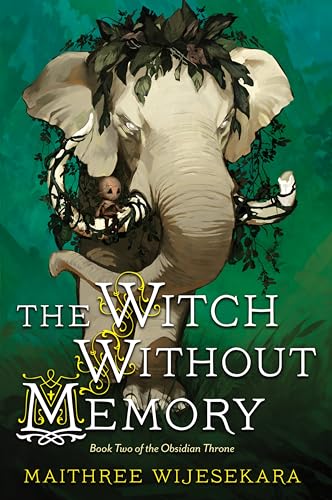
Obsidian Throne #2
The Witch Without Memory
The second epic installment of the Obsidian Throne trilogy, an epic fantasy of betrayal, memory, and the fight for an empire, in which a prince and a witch must find a way to burn the world to the ground in order to raise it up out of the ashes.
An empress with vengeance in her heart
Prince Ashoka’s sister, Aarya, has named herself empress and is determined to reverse her brother’s mercy for the mayakari.
A witch lost in dreams
Shakti is being held by shadowy figures, drugged and forced to commit an unspeakable crime. When she wakes, she finds herself prisoner, but gaps in her memory around the curse she has cast trap her more thoroughly than any cage.
The prince trying to change the world
Ashoka must find allies and quickly if he is to usher in a new dawn for the mayakari, but the tougher the decision he makes, the farther he gets from his true self. He must determine what he is willing to lose in pursuit of his vision of the future.
The first blow has been dealt by Ashoka and Shakti, but the empire not only remains, it appears stronger—and more brutal—than ever. Both must find ways to fight back before nature is deprived of its spirits and guardians, and the reign of the new empress spreads its destruction and oppression to lands beyond.
An empress with vengeance in her heart
Prince Ashoka’s sister, Aarya, has named herself empress and is determined to reverse her brother’s mercy for the mayakari.
A witch lost in dreams
Shakti is being held by shadowy figures, drugged and forced to commit an unspeakable crime. When she wakes, she finds herself prisoner, but gaps in her memory around the curse she has cast trap her more thoroughly than any cage.
The prince trying to change the world
Ashoka must find allies and quickly if he is to usher in a new dawn for the mayakari, but the tougher the decision he makes, the farther he gets from his true self. He must determine what he is willing to lose in pursuit of his vision of the future.
The first blow has been dealt by Ashoka and Shakti, but the empire not only remains, it appears stronger—and more brutal—than ever. Both must find ways to fight back before nature is deprived of its spirits and guardians, and the reign of the new empress spreads its destruction and oppression to lands beyond.
384 pages, Kindle Edition
First published March 10, 2026
About the author
Maithree Wijesekara
10 books166 followersMaithree Wijesekara is the Sunday Times bestselling author of The Prince Without Sorrow. Graduating with a Masters in Dentistry in 2021, she splits her time between telling people to please brush their teeth, and writing stories inspired by the fantastical and the real world. Born in Sri Lanka and raised in country Victoria, she now resides in Melbourne, where all four seasons occur within a single day.
Ratings & Reviews
Friends & Following
Create a free account to discover what your friends think of this book!
Community Reviews
Displaying 1 - 30 of 77 reviews

April 30, 2026
A magical second instalment of the Obsidian Throne trilogy, with a return to the Ran Empire.
'An empress with vengeance in her heart
A witch lost in dreams
The prince trying to change the world'
I enjoyed how this story was told from the perspectives of Ashoka and Shakti, with memory as an important theme throughout. I enjoyed how the interesting magical system complex family dynamics were explored in this story.
I am looking forward to what comes next in this series.
'An empress with vengeance in her heart
A witch lost in dreams
The prince trying to change the world'
I enjoyed how this story was told from the perspectives of Ashoka and Shakti, with memory as an important theme throughout. I enjoyed how the interesting magical system complex family dynamics were explored in this story.
I am looking forward to what comes next in this series.

May 4, 2026
I can't help but adore this series and DO NOT get the hate that its received on review sites. The characters are shockingly well developed and continue to become more interesting in book 2. The storytelling is excellent and feels like risks were taken.
The Witch Without Memory sort of has the vibe of Stormlight Archives meets Avatar The Last Airbender, and focuses on the dark sides of the characters we met in book 1. The twisted family relationships got even more messed up, the sacrilegiousness continues, and the character relationships feel even more fleshed out. In particular, Aarya really drives this book as a horribly awful villain that has such a strong connection with both lead characters- shes the absolute star of the show.
I think the Obsidian Throne series is is an odd duck because its written with prose that feels YA, but it is focusing on adult characters. I think the best audience for this book are adult fantasy fans who would be inclined to read a low romance political adventure romp, but the series is mostly being picked up by romance YA fans who felt very unsatisfied with book 1. For me, this continues to be a wonderful romp.
The Witch Without Memory sort of has the vibe of Stormlight Archives meets Avatar The Last Airbender, and focuses on the dark sides of the characters we met in book 1. The twisted family relationships got even more messed up, the sacrilegiousness continues, and the character relationships feel even more fleshed out. In particular, Aarya really drives this book as a horribly awful villain that has such a strong connection with both lead characters- shes the absolute star of the show.
I think the Obsidian Throne series is is an odd duck because its written with prose that feels YA, but it is focusing on adult characters. I think the best audience for this book are adult fantasy fans who would be inclined to read a low romance political adventure romp, but the series is mostly being picked up by romance YA fans who felt very unsatisfied with book 1. For me, this continues to be a wonderful romp.

November 16, 2025
The first few chapters of The Witch Without Memory did, in all honesty, give me some hope that this book would be better. It wasn't. I wasn’t a fan of the first book: the writing style was serviceable but flat and verging on awkward, the plot was dragged along by coincidences rather than ever feeling like it was driving towards an interesting idea, the characters felt very surface-level, and the themes of morality, pacifism, and oppression never came together into an interesting exploration nor a meaningful portrayal. The first few chapters of this book did seem like it was attempting to address some of these ideas: the overuse of awkward metaphors was dialed back, some odd character traits such as Ashoka’s commitment to pacifism despite an upbring steeped in violence seemed like they were getting some explanation, and there was ample room to return to the themes brought up in the first installment. And then…the book just…fell apart. Just like the first one. Unfortunately, the more this book went on, the more it felt as though absolutely nothing mattered, that no consequences or developments couldn’t be immediately unwritten, and both the characters and the themes were underdeveloped and unexplored.
This book follows directly from the first and is split once again between two major narratives of Shakti and Ashoka. Shakti is a prisoner of Aarya, the acting empress, who hates her both on principle for being a mayakari and personally for trying to use the memory of her father to manipulate her. Her narrative centers her conflict as she grapples with something terrible, she did under extreme duress, and trying to unbury Mauryan secrets surrounding the Great Spirit of the holy mountain. Ashoka is trying to maintain his ban on mayakari burnings in Taksila while also navigating the political conflict with his sister, who would like to see him unseated. At the same time, his guard and closest friend Rahil has drawn away from him since he killed in the first book, and he is struggling to rectify the situation.
All in all, my biggest overarching issue with this book is that the exploration of its themes feels toothless, and it doesn’t have a strong or coherent enough plot or characters to make the story stand on its own without its themes. For example, a main plot point early in Ashoka’s story is that he would like to witness the testing of a new kind of weapon which will harm in unexpected ways. For whatever reason, everyone involves dismisses testing this on an animal –even though they just ate a dinner full of meat—and instead they decide to test it on a criminal facing capital punishment. After some, quite frankly, dumb mind game, the weapon is used to kill the prisoner, and everyone decides that this was a good and worthwhile way to test this weapon. For a book all about morality and violence, it was utterly shocking to me that there was no reflection on the use of lethal force on someone who was already imprisoned and presented no danger to anyone else, to the idea of getting testimony from the accused to ensure a fair outcome, or to the idea a person in protective custody is being experimented upon with a weapon capable of causing severe and unnecessary suffering. All of this… for weapons which are inherently unpredictable, meaning that there’s no reason for this to have been done at all because the next weapon will work entirely differently. This is just one example, but it is, quite frankly, an honest representation of the depth that this book achieves. I believe from the synopsis that a main theme of the book is Ashoka is drifting away from his ideals and risking himself in the process, but in the book, I never felt as though there was weight behind his decisions, or an internal struggle he was facing. When Rahil rightfully is perturbed by his actions, the book makes the point that actually Rahil is in the wrong for being upset and more or less just needs to get over it.
Like I said, this would all be more tolerable if the storyline of the book was compelling for its own sake, but it just isn’t. The book frequently relies on what might be called ‘plot-driven decision-making,’ where characters act less like people and more like narrative tools. I am going to be vague here because I don’t want to spoil major pieces of this book, but one realization that a main character has basically yeets any and all consequences they originally thought they were facing for their choices because it turns out those consequences were a lie and they can do whatever they want actually. The enemies of the book continue to be nothing more than cartoon cutouts of villains who are simultaneously 30 steps ahead of our heroes (when the plot wants the characters to fail) or dense as bricks (when the plot wants to characters to succeed—I truly hate to be so blasé about this but their foes truly lack any and all depth and whether the heroes succeed or fail is equally random; ergo, the plot never achieves any weight). Justifications for actions are no more than convenient: for example, Aarya’s obsessed with mining a mountainbecause the plot needs the involve the Great Sprit on that mountain because there’s some rock there that blows up and she wants it for weapons I guess, but her obsession is justified for a short time and then just accepted. Her willingness to sacrifice her own people for a resource with, at best, potential applications and that no one knows how to use is never explained in a way that makes me feel like I understand why this is so important to her. Really, that’s the main throughline I feel about the plot: it’s a series of things happening and choices made such that the characters get to the next scene, not because there’s a strong and driving through-line or meaningful character choices that get us there.
Moreover, the writing style just doesn’t work for me. Sometimes, there are two sentences in a row where the words as written on the page don’t necessarily disagree, but their implications do (for example, one sentence says that for a long moment a character couldn’t do something, which implies that after a long horrible moment there character could do that thing. The next second said that doing that thing continued to elide them. Were they able to do the thing or not? I legitimately don’t know). Some actions of the characters are the same, disagreeing with an action they just took or something they just said. Dialog is often awkward. The actions of characters are awkward—there are two characters repeatedly described as having conversations while way up in each other personal space in a way that is ridiculous, like having a decently long conversations while so close that their noses were brushing, which reads less as two characters being emotionally close and more as unnatural and uncomfortable. A lot of story is told in these weird aside italics—often they are the thoughts of a mentor or important character in a character’s head, and I’m assuming they’re meant to be a character’s consciousness or better judgement, but they read more like a quick way for a character to change their mind or come to a major conclusion without exploring why. Also, characters are able to communicate an absolute ton of information through looks—a lot of plot is told through some version of a character reading another’s expression as clearly and complexly as if they were actually talking, but not in a ‘oh these characters are such good friends’ way, more in a ‘this character is basically reading minds so we can tell rather than show another person’s thoughts and feelings’. Altogether, these result in the kind of book that never let me get lost in the story because I feel alienated by the prose.
On top of all of my other critiques, there comes the things I struggle with because they’re immersion-breaking: the characters frequently openly discussing their borderline treasonous plans in the open or telling random other people about their plans for no reason. Characters and the narrative alike failing to see the most obvious solutions to their problems that are right in front of their noses. Characters making giant assumptions about how something works because there’s no logical way to explain it. A character appears who can just explain the plot to another character at just the right time.
Altogether, the result is a book that just doesn’t carry any weight. The plot favors momentum over coherence, but without coherence the book doesn’t convince me that anything that happens matters. I do truly hope to see the final book in the trilogy pull the story together into something meaningful—I do fully acknowledge that critiquing a book for the themes not coming together is a far less meaningful critique when the series isn’t finished, and I will gladly update my opinions if the final book lands for me. For now, though, this book just did not work for me.
Thank you to Haper Voyager providing an ARC in exchange for an honest review.
This book follows directly from the first and is split once again between two major narratives of Shakti and Ashoka. Shakti is a prisoner of Aarya, the acting empress, who hates her both on principle for being a mayakari and personally for trying to use the memory of her father to manipulate her. Her narrative centers her conflict as she grapples with something terrible, she did under extreme duress, and trying to unbury Mauryan secrets surrounding the Great Spirit of the holy mountain. Ashoka is trying to maintain his ban on mayakari burnings in Taksila while also navigating the political conflict with his sister, who would like to see him unseated. At the same time, his guard and closest friend Rahil has drawn away from him since he killed in the first book, and he is struggling to rectify the situation.
All in all, my biggest overarching issue with this book is that the exploration of its themes feels toothless, and it doesn’t have a strong or coherent enough plot or characters to make the story stand on its own without its themes. For example, a main plot point early in Ashoka’s story is that he would like to witness the testing of a new kind of weapon which will harm in unexpected ways. For whatever reason, everyone involves dismisses testing this on an animal –even though they just ate a dinner full of meat—and instead they decide to test it on a criminal facing capital punishment. After some, quite frankly, dumb mind game, the weapon is used to kill the prisoner, and everyone decides that this was a good and worthwhile way to test this weapon. For a book all about morality and violence, it was utterly shocking to me that there was no reflection on the use of lethal force on someone who was already imprisoned and presented no danger to anyone else, to the idea of getting testimony from the accused to ensure a fair outcome, or to the idea a person in protective custody is being experimented upon with a weapon capable of causing severe and unnecessary suffering. All of this… for weapons which are inherently unpredictable, meaning that there’s no reason for this to have been done at all because the next weapon will work entirely differently. This is just one example, but it is, quite frankly, an honest representation of the depth that this book achieves. I believe from the synopsis that a main theme of the book is Ashoka is drifting away from his ideals and risking himself in the process, but in the book, I never felt as though there was weight behind his decisions, or an internal struggle he was facing. When Rahil rightfully is perturbed by his actions, the book makes the point that actually Rahil is in the wrong for being upset and more or less just needs to get over it.
Like I said, this would all be more tolerable if the storyline of the book was compelling for its own sake, but it just isn’t. The book frequently relies on what might be called ‘plot-driven decision-making,’ where characters act less like people and more like narrative tools. I am going to be vague here because I don’t want to spoil major pieces of this book, but one realization that a main character has basically yeets any and all consequences they originally thought they were facing for their choices because it turns out those consequences were a lie and they can do whatever they want actually. The enemies of the book continue to be nothing more than cartoon cutouts of villains who are simultaneously 30 steps ahead of our heroes (when the plot wants the characters to fail) or dense as bricks (when the plot wants to characters to succeed—I truly hate to be so blasé about this but their foes truly lack any and all depth and whether the heroes succeed or fail is equally random; ergo, the plot never achieves any weight). Justifications for actions are no more than convenient: for example, Aarya’s obsessed with mining a mountain
Moreover, the writing style just doesn’t work for me. Sometimes, there are two sentences in a row where the words as written on the page don’t necessarily disagree, but their implications do (for example, one sentence says that for a long moment a character couldn’t do something, which implies that after a long horrible moment there character could do that thing. The next second said that doing that thing continued to elide them. Were they able to do the thing or not? I legitimately don’t know). Some actions of the characters are the same, disagreeing with an action they just took or something they just said. Dialog is often awkward. The actions of characters are awkward—there are two characters repeatedly described as having conversations while way up in each other personal space in a way that is ridiculous, like having a decently long conversations while so close that their noses were brushing, which reads less as two characters being emotionally close and more as unnatural and uncomfortable. A lot of story is told in these weird aside italics—often they are the thoughts of a mentor or important character in a character’s head, and I’m assuming they’re meant to be a character’s consciousness or better judgement, but they read more like a quick way for a character to change their mind or come to a major conclusion without exploring why. Also, characters are able to communicate an absolute ton of information through looks—a lot of plot is told through some version of a character reading another’s expression as clearly and complexly as if they were actually talking, but not in a ‘oh these characters are such good friends’ way, more in a ‘this character is basically reading minds so we can tell rather than show another person’s thoughts and feelings’. Altogether, these result in the kind of book that never let me get lost in the story because I feel alienated by the prose.
On top of all of my other critiques, there comes the things I struggle with because they’re immersion-breaking: the characters frequently openly discussing their borderline treasonous plans in the open or telling random other people about their plans for no reason. Characters and the narrative alike failing to see the most obvious solutions to their problems that are right in front of their noses. Characters making giant assumptions about how something works because there’s no logical way to explain it. A character appears who can just explain the plot to another character at just the right time.
Altogether, the result is a book that just doesn’t carry any weight. The plot favors momentum over coherence, but without coherence the book doesn’t convince me that anything that happens matters. I do truly hope to see the final book in the trilogy pull the story together into something meaningful—I do fully acknowledge that critiquing a book for the themes not coming together is a far less meaningful critique when the series isn’t finished, and I will gladly update my opinions if the final book lands for me. For now, though, this book just did not work for me.
Thank you to Haper Voyager providing an ARC in exchange for an honest review.

April 6, 2026
Thank you HarperFiction and NetGalley for this eARC in exchange for an honest review!
Immediately into reading this, I remembered all the reasons why I loved The Prince Without Sorrow: beautiful writing, a fascinating world blending nature spirits with brutal tyrannies and complex magic systems and two main characters as complex as they are lovable. This sequel did not fall to the issues I've had with other sequels where character assassinations happen, or the world expands too much, too soon, and random new plot points are added without significance. Instead, both Ashoka and Sakshti go through their own troubles and highlights in order to continue their transformations from who they were at the start of the Prince Without Sorrow. This book also manages to pack a huge punch in terms of events in just under 400 pages. I was really impressed by all that happened in The Witch Without Memory, but at the same time didn't feel like anything happened too quickly or that events were thrown in randomly. All the plot points from the first book were continued and expanded upon while new elements were added in order to create more drama, and prepare for what I'm sure will be quite the epic conclusion in book three!
Immediately into reading this, I remembered all the reasons why I loved The Prince Without Sorrow: beautiful writing, a fascinating world blending nature spirits with brutal tyrannies and complex magic systems and two main characters as complex as they are lovable. This sequel did not fall to the issues I've had with other sequels where character assassinations happen, or the world expands too much, too soon, and random new plot points are added without significance. Instead, both Ashoka and Sakshti go through their own troubles and highlights in order to continue their transformations from who they were at the start of the Prince Without Sorrow. This book also manages to pack a huge punch in terms of events in just under 400 pages. I was really impressed by all that happened in The Witch Without Memory, but at the same time didn't feel like anything happened too quickly or that events were thrown in randomly. All the plot points from the first book were continued and expanded upon while new elements were added in order to create more drama, and prepare for what I'm sure will be quite the epic conclusion in book three!

April 3, 2026
You know I find it so fascinating that so many people hate this series, because I have done nothing but enjoy it so far!!
It’s the second book and things definitely start ramping up on all cylinders. I love Rahil and Ashoka so much (plus Sau having to put up with them being lovesick idiots is great too). More characters get fleshed out, and it’s so interesting to see Ashoka stepping into “necessary violence”, which I think this book does have an overarching theme of. To what point does violence become “justified”?
I will say one thing: Aarya is written so well in this. She’s cunning and violent and methodical and it’s so interesting to see how her mind works.
The whole last third of the book had me turning page after page. There’s good twists and I can say that I didn’t see any of them coming.
I very much look forward to the final book in the trilogy!!
It’s the second book and things definitely start ramping up on all cylinders. I love Rahil and Ashoka so much (plus Sau having to put up with them being lovesick idiots is great too). More characters get fleshed out, and it’s so interesting to see Ashoka stepping into “necessary violence”, which I think this book does have an overarching theme of. To what point does violence become “justified”?
I will say one thing: Aarya is written so well in this. She’s cunning and violent and methodical and it’s so interesting to see how her mind works.
The whole last third of the book had me turning page after page. There’s good twists and I can say that I didn’t see any of them coming.
I very much look forward to the final book in the trilogy!!

May 25, 2026
Was completely blinsided by the curse I hate the curse and how blind I was to it 🫠

December 2, 2025
Thank you NetGalley and the Publisher for the ARC.
DNF at 33%
I wanted to enjoy this so much. The fantasy aspects, the witches, spirits, and animals are all described beautifully and so unique from the typical fantasy worlds of western culture. However the writing really was too frustrating to enjoy the book.
The author really beats the reader over the head with belief system and morals, and yet they’re all over the place. One minute curses are atrocious and shameful, the next they’re acceptable if there is good intent, then they’re back to awful. And Akosha’s dilemma of to kill or not to kill is eye-roll inducing. I just don’t buy that someone who refuses to even hunt or eat meat is suddenly justifying killing and curses, this character shift happens almost overnight.
The story line is there, the world is there, but the writing is just too chaotic. For example, “Killing someone who wasn’t afraid of death seemed senseless.” What?? What does that even mean??
This book needs a better editor who can go through the story and clean up the writing and inner monologues so that they’re more consistent throughout. Without that editing, this book and its characters just don’t make sense.
DNF at 33%
I wanted to enjoy this so much. The fantasy aspects, the witches, spirits, and animals are all described beautifully and so unique from the typical fantasy worlds of western culture. However the writing really was too frustrating to enjoy the book.
The author really beats the reader over the head with belief system and morals, and yet they’re all over the place. One minute curses are atrocious and shameful, the next they’re acceptable if there is good intent, then they’re back to awful. And Akosha’s dilemma of to kill or not to kill is eye-roll inducing. I just don’t buy that someone who refuses to even hunt or eat meat is suddenly justifying killing and curses, this character shift happens almost overnight.
The story line is there, the world is there, but the writing is just too chaotic. For example, “Killing someone who wasn’t afraid of death seemed senseless.” What?? What does that even mean??
This book needs a better editor who can go through the story and clean up the writing and inner monologues so that they’re more consistent throughout. Without that editing, this book and its characters just don’t make sense.

March 13, 2026
I thoroughly enjoyed this 2nd book in the series. Confused if it's going to be 3 or 4 books as the author mentions in the credit's someone in her family reading the last 2 books.
Anyway, this continues the story of Ashoka and Shakti. I really love both these characters. We have an fmc that not only is a Witch but has no love interests, which is really refreshing. Ashoka, our mmc, has been in love with his male bodyguard Rahil throughout 2 books, and the relationship is sweet, slow, and heartbreaking. It's so nice to read a fantasy that has no sex in it at all, which makes this series, so far anyway, suitable for younger readers, I would say 14+.
Ends on a cliffhanger but can't wait to read book 3. This is more of a solid fantasy book than romantasy, so people should be aware of that to avoid disappointment. I love fantasy so I really liked it.
Anyway, this continues the story of Ashoka and Shakti. I really love both these characters. We have an fmc that not only is a Witch but has no love interests, which is really refreshing. Ashoka, our mmc, has been in love with his male bodyguard Rahil throughout 2 books, and the relationship is sweet, slow, and heartbreaking. It's so nice to read a fantasy that has no sex in it at all, which makes this series, so far anyway, suitable for younger readers, I would say 14+.
Ends on a cliffhanger but can't wait to read book 3. This is more of a solid fantasy book than romantasy, so people should be aware of that to avoid disappointment. I love fantasy so I really liked it.

July 15, 2026
Book one was a breath of fresh air, I was lucky enough to meet the author and talk all things writing, plotting and life. Book two made its way into my world and it’s just as gorgeous as the first. I thoroughly enjoyed book two and the chaos that came with it. It’s fast passed, magical, political and has each character questioning their entire life existence.
Now you should probably read book one before you continue with the rest of my review. If you love a great fantasy series this one’s for you!
“Power remembers... even when you don’t.”
The Ran Empire is on the brink, and the fight for its future is only just beginning. Ashoka is determined to create a better world for the mayakari, but every choice pulls him further from the person he once was. Meanwhile, his sister Aarya has claimed the throne, ruling with vengeance and threatening to undo everything he fought for.
Captured, drugged and haunted by missing memories, Shakti must uncover the truth behind a devastating curse before it’s too late. As the empire grows stronger and more ruthless, Ashoka and Shakti must decide how much they’re willing to sacrifice to stop it before its darkness spreads beyond its borders.
Now you should probably read book one before you continue with the rest of my review. If you love a great fantasy series this one’s for you!
“Power remembers... even when you don’t.”
The Ran Empire is on the brink, and the fight for its future is only just beginning. Ashoka is determined to create a better world for the mayakari, but every choice pulls him further from the person he once was. Meanwhile, his sister Aarya has claimed the throne, ruling with vengeance and threatening to undo everything he fought for.
Captured, drugged and haunted by missing memories, Shakti must uncover the truth behind a devastating curse before it’s too late. As the empire grows stronger and more ruthless, Ashoka and Shakti must decide how much they’re willing to sacrifice to stop it before its darkness spreads beyond its borders.

July 15, 2026
Ugh my heart!
The way these characters keep scheming and the situation keeps spiralling has me on the edge of my seat.
I find that the author does her job so well at making innocent characters spiral and evolve into the kind of people they'd used to despise, how both the circumstances but also their own flaws and thinking escalates the story. I'm so interested to see either how they get out of this or how this is going to become so much worse.
My only gripe with this sequel is (minor spoiler): that I would've liked a little more focus on the relationship between Rahil and Ashoka once it bloomed to make the ending land that much harder.
Do I really have to wait until 2027???
The way these characters keep scheming and the situation keeps spiralling has me on the edge of my seat.
I find that the author does her job so well at making innocent characters spiral and evolve into the kind of people they'd used to despise, how both the circumstances but also their own flaws and thinking escalates the story. I'm so interested to see either how they get out of this or how this is going to become so much worse.
My only gripe with this sequel is (minor spoiler): that I would've liked a little more focus on the relationship between Rahil and Ashoka once it bloomed to make the ending land that much harder.
Do I really have to wait until 2027???

Did Not Finish
June 15, 2026I was unsure whether to continue this series or not so I wanted to try book two, but the things I didn’t like in book one felt amplified here. The characters went downhill in my opinion especially Ashoka.

May 4, 2026
If The Prince Without Sorrow was cool, then The Witch Without Memory is even cooler. We start off with Shakti in the worst situation imaginable, and Ashoka rising above anyone’s expectations of him to really begin working towards the downfall of his family.
Ashoka’s growth interested me the most in this book, partly because Shakti was mostly in a reactive position trying to stay alive while also trying to fight back. The idea of being forced to use your greatest power to do something you’re unable to remember is viscerally painful and recognizable by anyone who has been robbed of their autonomy.
The big Plot Bomb that dropped in this book had me immediately texting my friend to shout “WHAT???” because it’s just. So well done. I’m enjoying this series so much and cannot wait to see what happens next!!!!!!!
Ashoka’s growth interested me the most in this book, partly because Shakti was mostly in a reactive position trying to stay alive while also trying to fight back. The idea of being forced to use your greatest power to do something you’re unable to remember is viscerally painful and recognizable by anyone who has been robbed of their autonomy.
The big Plot Bomb that dropped in this book had me immediately texting my friend to shout “WHAT???” because it’s just. So well done. I’m enjoying this series so much and cannot wait to see what happens next!!!!!!!

April 28, 2026
“You and I are much the same, little witch. We are both broken.”
I read and loved The Prince Without Sorrow last year so I was excited to pick up this sequel.
The Witch Without Memory, like the first book in the series, heavily focused on politicking and plotting. This is a brutal fantasy world and the history of it gets explored more as we go. I think the things the characters go through and how this changes them is the most important aspect of this series. Both Ashoka and Shakti are morally grey and it seems like they’re both getting pushed towards more and more extreme actions. They certainly went through a lot in this book.
I can only see it getting worse for my favourites from here, but still I’m very curious to see how it all ends in the final book!
A quote:
“We can’t avoid suffering, but we can choose our attachments. Learn which ones to keep and which ones to let go.”
I read and loved The Prince Without Sorrow last year so I was excited to pick up this sequel.
The Witch Without Memory, like the first book in the series, heavily focused on politicking and plotting. This is a brutal fantasy world and the history of it gets explored more as we go. I think the things the characters go through and how this changes them is the most important aspect of this series. Both Ashoka and Shakti are morally grey and it seems like they’re both getting pushed towards more and more extreme actions. They certainly went through a lot in this book.
I can only see it getting worse for my favourites from here, but still I’m very curious to see how it all ends in the final book!
A quote:
“We can’t avoid suffering, but we can choose our attachments. Learn which ones to keep and which ones to let go.”

August 10, 2026
Updated review:
The second instalment in the Obsidian Throne trilogy, The Witch Without Memory by Maithree Wijesekara throws us right back into the action 🐘
After subduing her brother and taking Shakti as her prisoner, Araya has declared herself the new Empress and will do whatever it takes to wipe out the mayakari.
Her brother, Ashoka, will do anything to stop this from happening. He needs to gather allies around the world quickly, and move to usurp his sister on the throne.
Shakti meanwhile has been drugged, tortured, and made to curse someone - and she has no memory of it.
Time is running out to figure who she might’ve cursed if she has any chance of reversing it.
Weaving Indian myth, fantasy, and history together, The Witch Without Sorrow was a very solid follow up to the first book (The Prince Without Sorrow,) and has set the story up well for the conclusion.
I like that it immediately rejoined the story, but it does get a bit long winded at times and either more needed to happen or it just needed to be a bit shorter.
However, I do really love this trilogy so far!
The way Maithree Wijesekara blends Indian myth and culture into this fantasy story is really beautiful and informative.
The political aspects echo real life power struggles, and the world building is so rich and vibrant.
The Witch Without Memory ⭐️⭐️⭐️✨
______________________________________________
Original review:
A solid follow up to the first book, and set the scene well for the third!
It gets a little long winded at times, but overall still really enjoy the world and fantastical elements blending with culture.
Full review to come.
The second instalment in the Obsidian Throne trilogy, The Witch Without Memory by Maithree Wijesekara throws us right back into the action 🐘
After subduing her brother and taking Shakti as her prisoner, Araya has declared herself the new Empress and will do whatever it takes to wipe out the mayakari.
Her brother, Ashoka, will do anything to stop this from happening. He needs to gather allies around the world quickly, and move to usurp his sister on the throne.
Shakti meanwhile has been drugged, tortured, and made to curse someone - and she has no memory of it.
Time is running out to figure who she might’ve cursed if she has any chance of reversing it.
Weaving Indian myth, fantasy, and history together, The Witch Without Sorrow was a very solid follow up to the first book (The Prince Without Sorrow,) and has set the story up well for the conclusion.
I like that it immediately rejoined the story, but it does get a bit long winded at times and either more needed to happen or it just needed to be a bit shorter.
However, I do really love this trilogy so far!
The way Maithree Wijesekara blends Indian myth and culture into this fantasy story is really beautiful and informative.
The political aspects echo real life power struggles, and the world building is so rich and vibrant.
The Witch Without Memory ⭐️⭐️⭐️✨
______________________________________________
Original review:
A solid follow up to the first book, and set the scene well for the third!
It gets a little long winded at times, but overall still really enjoy the world and fantastical elements blending with culture.
Full review to come.

April 11, 2026
3.5 ⭐️
I felt so betrayed when I turned the page and saw “acknowledgments.” Like, what do you mean THAT was where we ended?? It felt like there should be so much more awaiting me 😭
Now, I shall simply ache for the third book and wonder for the next week straight of every theory possible on how this all goes.
*I was provided an ARC by NetGalley in exchange for an honest review. All opinions are my own.*
I felt so betrayed when I turned the page and saw “acknowledgments.” Like, what do you mean THAT was where we ended?? It felt like there should be so much more awaiting me 😭
Now, I shall simply ache for the third book and wonder for the next week straight of every theory possible on how this all goes.
*I was provided an ARC by NetGalley in exchange for an honest review. All opinions are my own.*

Review of advance copy received from Netgalley
3.5
The Witch Without Memory picks up right after the events of the first book. Just like book one, there are a lot of moral dilemmas our two main characters, Shakti and Ashoka, must face. While the plot moved fairly quickly, I'm not sure I'm totally convinced by Ashoka's about-face from book one. Shakti was still my favorite character, and I like how she maneuvers the politics around her. I'm interested to see how book three handles things and finishes the series.
Overall, this is a really cool world and I'm definitely engaged and looking forward to more books by this author!
A big thank you to HarperCollins for the free eARC in exchange for my honest thoughts!
The Witch Without Memory picks up right after the events of the first book. Just like book one, there are a lot of moral dilemmas our two main characters, Shakti and Ashoka, must face. While the plot moved fairly quickly, I'm not sure I'm totally convinced by Ashoka's about-face from book one. Shakti was still my favorite character, and I like how she maneuvers the politics around her. I'm interested to see how book three handles things and finishes the series.
Overall, this is a really cool world and I'm definitely engaged and looking forward to more books by this author!
A big thank you to HarperCollins for the free eARC in exchange for my honest thoughts!

September 1, 2026
Pensaba que me iba a meter en un pedazo de bloqueo lector pero lo he conseguido terminar.
No engancho con la historia, demasiado lento para que no pase nada hasta las últimas 100 páginas...
La historia en sí no está mal, pero la forma en la que la cuenta me estaba aburriendo muchísimo...
No engancho con la historia, demasiado lento para que no pase nada hasta las últimas 100 páginas...
La historia en sí no está mal, pero la forma en la que la cuenta me estaba aburriendo muchísimo...
Review of advance copy received from Netgalley
— 5★
thank you to Maithree Wijesekara, Samantha Larabee from William Morrow, Harper Voyager US and Netgalley for the eARC!
RTC
thank you to Maithree Wijesekara, Samantha Larabee from William Morrow, Harper Voyager US and Netgalley for the eARC!
RTC

March 27, 2026
Teetering on a 3.5, I kinda wish I hadn’t picked this series up so soon into its publication. This feels like one that will benefit from reading as a whole.

April 18, 2026
Love a book where the main characters make such terrible decisions for their lives that its like watching a train wreck - so damn entertaining 🤠

April 20, 2026
Volume 2 of The Obsidian Throne series just as strong as volume 1! Can’t wait for volume 3!

November 16, 2025
This book does not know what it is about.
The themes are all over the place, the characters are inconsistent, the writing is meh, and the plot is not satisfying or coherent. I would not recommend this book to anyone. Despite this and the many things I want to complain about, I am going to try very hard to be objective and not just fill this review with incoherent screaming.
Themes: The Prince Without Sorrow sets up a clear conflict between the ideas of pacifism and violence, where each side is championed by one of the two main characters. Shakti represents the idea of necessary violence, rejecting her pacifist heritage in favor of necessary violence in the face of oppression. On the other side, Ashoka rejects the violent nature of his father and siblings and strives for peace and pacifism. The end of the first book turns this dichotomy on its head when Ashoka also turns away from pacifism to kill a cruel governor in order to save and protect a city of mayakari. When I finished the first book, I was confused by where the author was going with this and what the series would have to say about the idea of ‘necessary violence.’ I had hoped that this book would clarify this theme.
It did not.
While A Witch Without Memory continues to harp on about violence and pacifism, the theme is at best muddy and unclear, and at worse, in clear favor of a violent solution to every problem. Both Ashoka and Shakti continue to employ incredible violence at every turn and face no real consequences for these actions – in fact, the plot seems to reward them for it! And while the mayakari witches are supposed to accrue bad karma for using their magic to harm people, there is no evidence in the book that this is actually true. (The most obvious example of this is, of course, Shakti facing no repercussions for cursing Adil, but this book provides many many more examples). I hesitate to believe that the author truly does believe that unregulated violence is the answer, but the only other explanation at this point is that they have completely failed to interrogate their own writing.
Related to this is the idea of fault and blame. If your actions lead to someone’s death through unpredictable or uncontrollable means – are you at fault? If someone threatens to kill your friend if you do not find a way to do the impossible – can you really be blamed if they’re killed when you fail an impossible task? Personally, I think no. The fault is always with the one holding the sword. However, the characters in this book seem to believe that yes, anyone who dies as a result of your actions, no matter how abstract or tenuous the connection, is your fault. However, the characters feel no remorse for killing people that they consider ‘evil’ or ‘bad.’ This leads to a strange paradox where the characters are full of guilt for actions that are not their fault but have no care for the trail of bodies left in their wake.
Beyond this, the characters seem significantly more focused on punishing the people they hate, rather than helping the people they care about, which just doesn’t sit right with me.
Characters: The main characters in this book don't have any character development and only become more crazy and more violent as time goes on. Both Shakti and Ashoka literally become the thing they swore to stop.
Shakti continues to perceive herself as the victim, despite having accumulated incredibly powerful and dangerous powers. She is accountable to nothing and no one, there are no restrictions on her powers and there is no one to tell her if she’s gone to far (yes, yes she has). No matter how many people she kills or how many minds she invades and turns to her will, she sees her actions as justified and morally correct. She scoffs at the idea that the people she hurts are victims in their own right. I have become more and more convinced that Shakti is a terrible person who just happens to be on the right side of the war.
Ashoka is basically an entirely different person in this book, in comparison to the first book. The man who cried when a deer was killed, murdered a man in cold blood and has only continued to escalate.
Plot: The plot in this book is all over the place. There are many specific plot points I could critique but broadly, the issue is there isn’t a clear structure and you can’t follow the plot logically from one beat to the next. The main plot points of the first third of book barely come up again in the second half, and plot beats in the second half make whole swaths of the first half meaningless.
Additionally, there are a lot of minor plot points that are given a lot of attention in the moment, that are then summarily ignored and forgotten about. It’s like cocking 15 Chekov’s guns and then tossing them all in the trash. This left me waiting for resolution on things that never came and made it difficult to know how much attention to pay anything because it was impossible to tell the difference between actually important plot points and random arbitrary details.
It feels like the author went into this series hoping to represent oppression and racism in a fantasy world, with the mayakari being the fantasy version of Jews during WW2 or witches during the witch trials. Except that parallel breaks down when your oppressed people are also capable of wildly powerful magic. This leads to a weird paradox where the author wants the mayakari to be cool and powerful but cannot let them actually use their magic, otherwise they wouldn’t be on the losing end of this war.
Related to this, I cannot tell if the author wants the hatred of the mayakari to be seen as rational and justified (because of specific actions in the past) or completely irrational and unjustified (as real world racism is). This book provides a lot of explanation for why the emperor hates mayakari and is trying to kill them, in a way that seems to portray him as rational and justified which absolutely does not sit right with me. Added to this is the fact that the mayakari are basically nuclear weapons and it kind of makes sense why a ruler would feel threatened by the presence of an entire people that are basically unregulated vigilante superheros. Yes, they are supposed to be pacifists and protect nature and do no harm, but that is not a guarantee (as is clearly shown by Shakti and the damage she has wrought).
The only plot that brought me enjoyment was the Ashoka/Rahil romance and even that was such a minor part of the story and spread out across everything else like tiny sprinkles.
In my opinion, the only thing that can save this series is some sort of grand reckoning where Ashoka and Shakti realize that their violent methods have in fact made everything much worse and they suffer the consequences of their actions.
Other minor comments:
- The mayakari are unnecessarily and absurdly creative when creating curses. Why not make every curse something like ‘quick death’? If the main argument against curses is that they are unpredictable (which is already crazy, the main issue should be the violence and bad karma), then why would you make them more unpredictable by making them stuff like ‘spread and drown good spirits’
- It didn’t bother me very much in the first book, but I am becoming more unsettled by the conversations surrounding the fact that all mayakari are women. There is an undertone of only women can understand and connect to nature, and all men are bad or worthless that is starting to bother me.
- Everyone comments on the relationship between Ashoka and Rahil, to a completely unreasonable degree.
- It's a little strange how often these people hear other people's voices in their heads. I have never been plagued by "what would my mom think of this decision." Related to this, it is often unclear who’s voice Shakti is hearing in her head, since there’s at least three potential options.
- The writing has a lot of long descriptions of very minor details, like clothing and food and places that are unnecessarily and felt like a waste of time.
- So many very important and secret conversations happen in public where they could easily been overheard. Additionally, characters share secret information willy nilly to their own detriment.
- All of this over magic nitroglycerin?????? Which isn’t even mentioned again after the halfway mark????
I withheld judgement on the first book because I wasn’t sure where the author was going. But I can now say with confidence: no where good.
Thank you to Haper Voyager providing an ARC in exchange for an honest review.
The themes are all over the place, the characters are inconsistent, the writing is meh, and the plot is not satisfying or coherent. I would not recommend this book to anyone. Despite this and the many things I want to complain about, I am going to try very hard to be objective and not just fill this review with incoherent screaming.
Themes: The Prince Without Sorrow sets up a clear conflict between the ideas of pacifism and violence, where each side is championed by one of the two main characters. Shakti represents the idea of necessary violence, rejecting her pacifist heritage in favor of necessary violence in the face of oppression. On the other side, Ashoka rejects the violent nature of his father and siblings and strives for peace and pacifism. The end of the first book turns this dichotomy on its head when Ashoka also turns away from pacifism to kill a cruel governor in order to save and protect a city of mayakari. When I finished the first book, I was confused by where the author was going with this and what the series would have to say about the idea of ‘necessary violence.’ I had hoped that this book would clarify this theme.
It did not.
While A Witch Without Memory continues to harp on about violence and pacifism, the theme is at best muddy and unclear, and at worse, in clear favor of a violent solution to every problem. Both Ashoka and Shakti continue to employ incredible violence at every turn and face no real consequences for these actions – in fact, the plot seems to reward them for it! And while the mayakari witches are supposed to accrue bad karma for using their magic to harm people, there is no evidence in the book that this is actually true. (The most obvious example of this is, of course, Shakti facing no repercussions for cursing Adil, but this book provides many many more examples). I hesitate to believe that the author truly does believe that unregulated violence is the answer, but the only other explanation at this point is that they have completely failed to interrogate their own writing.
Related to this is the idea of fault and blame. If your actions lead to someone’s death through unpredictable or uncontrollable means – are you at fault? If someone threatens to kill your friend if you do not find a way to do the impossible – can you really be blamed if they’re killed when you fail an impossible task? Personally, I think no. The fault is always with the one holding the sword. However, the characters in this book seem to believe that yes, anyone who dies as a result of your actions, no matter how abstract or tenuous the connection, is your fault. However, the characters feel no remorse for killing people that they consider ‘evil’ or ‘bad.’ This leads to a strange paradox where the characters are full of guilt for actions that are not their fault but have no care for the trail of bodies left in their wake.
Beyond this, the characters seem significantly more focused on punishing the people they hate, rather than helping the people they care about, which just doesn’t sit right with me.
Characters: The main characters in this book don't have any character development and only become more crazy and more violent as time goes on. Both Shakti and Ashoka literally become the thing they swore to stop.
Shakti continues to perceive herself as the victim, despite having accumulated incredibly powerful and dangerous powers. She is accountable to nothing and no one, there are no restrictions on her powers and there is no one to tell her if she’s gone to far (yes, yes she has). No matter how many people she kills or how many minds she invades and turns to her will, she sees her actions as justified and morally correct. She scoffs at the idea that the people she hurts are victims in their own right. I have become more and more convinced that Shakti is a terrible person who just happens to be on the right side of the war.
Ashoka is basically an entirely different person in this book, in comparison to the first book. The man who cried when a deer was killed, murdered a man in cold blood and has only continued to escalate.
Plot: The plot in this book is all over the place. There are many specific plot points I could critique but broadly, the issue is there isn’t a clear structure and you can’t follow the plot logically from one beat to the next. The main plot points of the first third of book barely come up again in the second half, and plot beats in the second half make whole swaths of the first half meaningless.
Additionally, there are a lot of minor plot points that are given a lot of attention in the moment, that are then summarily ignored and forgotten about. It’s like cocking 15 Chekov’s guns and then tossing them all in the trash. This left me waiting for resolution on things that never came and made it difficult to know how much attention to pay anything because it was impossible to tell the difference between actually important plot points and random arbitrary details.
It feels like the author went into this series hoping to represent oppression and racism in a fantasy world, with the mayakari being the fantasy version of Jews during WW2 or witches during the witch trials. Except that parallel breaks down when your oppressed people are also capable of wildly powerful magic. This leads to a weird paradox where the author wants the mayakari to be cool and powerful but cannot let them actually use their magic, otherwise they wouldn’t be on the losing end of this war.
Related to this, I cannot tell if the author wants the hatred of the mayakari to be seen as rational and justified (because of specific actions in the past) or completely irrational and unjustified (as real world racism is). This book provides a lot of explanation for why the emperor hates mayakari and is trying to kill them, in a way that seems to portray him as rational and justified which absolutely does not sit right with me. Added to this is the fact that the mayakari are basically nuclear weapons and it kind of makes sense why a ruler would feel threatened by the presence of an entire people that are basically unregulated vigilante superheros. Yes, they are supposed to be pacifists and protect nature and do no harm, but that is not a guarantee (as is clearly shown by Shakti and the damage she has wrought).
The only plot that brought me enjoyment was the Ashoka/Rahil romance and even that was such a minor part of the story and spread out across everything else like tiny sprinkles.
In my opinion, the only thing that can save this series is some sort of grand reckoning where Ashoka and Shakti realize that their violent methods have in fact made everything much worse and they suffer the consequences of their actions.
Other minor comments:
- The mayakari are unnecessarily and absurdly creative when creating curses. Why not make every curse something like ‘quick death’? If the main argument against curses is that they are unpredictable (which is already crazy, the main issue should be the violence and bad karma), then why would you make them more unpredictable by making them stuff like ‘spread and drown good spirits’
- It didn’t bother me very much in the first book, but I am becoming more unsettled by the conversations surrounding the fact that all mayakari are women. There is an undertone of only women can understand and connect to nature, and all men are bad or worthless that is starting to bother me.
- Everyone comments on the relationship between Ashoka and Rahil, to a completely unreasonable degree.
- It's a little strange how often these people hear other people's voices in their heads. I have never been plagued by "what would my mom think of this decision." Related to this, it is often unclear who’s voice Shakti is hearing in her head, since there’s at least three potential options.
- The writing has a lot of long descriptions of very minor details, like clothing and food and places that are unnecessarily and felt like a waste of time.
- So many very important and secret conversations happen in public where they could easily been overheard. Additionally, characters share secret information willy nilly to their own detriment.
- All of this over magic nitroglycerin?????? Which isn’t even mentioned again after the halfway mark????
I withheld judgement on the first book because I wasn’t sure where the author was going. But I can now say with confidence: no where good.
Thank you to Haper Voyager providing an ARC in exchange for an honest review.

Review of advance copy received from Netgalley
This is review is for the second book in the Obsidian Throne Trilogy and will contain spoilers for book one.
Shakti has been discovered to be a mayakari by Aarya, who declared herself empress after poisoning her brother, Arush, and claiming his throne. Aarya plans to rain down terror on the mayakari as her father once did. Shakti is taken prisoner and given milk of poppy to keep her contained. During one of her brief moments of clarity, Shakti gets the horrible feeling that she has cursed someone at Aarya's command. Shakti remembers rief flashes of pain and believes that she would have done anything to try to get the pain to stop.
Meanwhile, Prince Ashoka is still governing Taksila and dealing with the populace that doesn't want to listen to his decree of non-violence toward the mayakari. Ashoka is also seeking allies in other kingdoms in a bid to raise an army against his sister. Ashoka meets with the queen of Kalinga to request her aid. The queen is determined to test him and to see if he is truly different from his family. While visiting with the queen, he also learns of a revolutionary way to use mayakari power that may just turn the tide for him.
This was very good. Things are not great for either Shakti or Ashoka. The political intrigue continues strongly in this book. I loved seeing both Shakti and Ashoka grow. Especially Ashoka. This was a wild ride toward the end with some twists I did not see coming. I'm excited for the next book!
Thank you to NetGalley, Harper Voyager, Avon Books, and author Maithree Wijesekara for the gifted eARC.
Shakti has been discovered to be a mayakari by Aarya, who declared herself empress after poisoning her brother, Arush, and claiming his throne. Aarya plans to rain down terror on the mayakari as her father once did. Shakti is taken prisoner and given milk of poppy to keep her contained. During one of her brief moments of clarity, Shakti gets the horrible feeling that she has cursed someone at Aarya's command. Shakti remembers rief flashes of pain and believes that she would have done anything to try to get the pain to stop.
Meanwhile, Prince Ashoka is still governing Taksila and dealing with the populace that doesn't want to listen to his decree of non-violence toward the mayakari. Ashoka is also seeking allies in other kingdoms in a bid to raise an army against his sister. Ashoka meets with the queen of Kalinga to request her aid. The queen is determined to test him and to see if he is truly different from his family. While visiting with the queen, he also learns of a revolutionary way to use mayakari power that may just turn the tide for him.
This was very good. Things are not great for either Shakti or Ashoka. The political intrigue continues strongly in this book. I loved seeing both Shakti and Ashoka grow. Especially Ashoka. This was a wild ride toward the end with some twists I did not see coming. I'm excited for the next book!
Thank you to NetGalley, Harper Voyager, Avon Books, and author Maithree Wijesekara for the gifted eARC.
This entire review has been hidden because of spoilers.

Review of advance copy received from Netgalley
I think my gut instinct was right that I'd eventually be shoving this series at everyone and going "LOOK! It gets better!!" because this sequel was a marked improvement from the first. HOWEVER, I do have notable issues that keep this book, like the first, hovering around the 3 star mark for me. But first, the good:
-The Witch Without Memory successfully resolves many issues from The Prince Without Sorrow. Namely, we delve more into Emperor Adil's and Ashoka's backstories, which explains why the emperor was so against the mayakari and why Ashoka is so pacifistic while the rest of his family is not. In doing so, I think this closes quite a few plot holes that the series may have had. These feel like planned out fixes rather than hastily added ones, so I suspect the trilogy was always going this way, which is always a good feeling to have
-The writing has gotten better. I am not sure if this is because this ARC was better edited or because the author herself honed her craft (or perhaps both?), but I struggled less frequently than I did in the first book. Because of this, emotional beats hit with more intensity and in the desired ways.
-Ashoka's arc in particular is very strong. I think his turn from pacifism to a desire to seize the throne is quite logical and well-crafted
-In the first book, I kinda thought we were going to make Shakti/Aarya a super toxic relationship. Think The Wicked and The Willing. It didn't go that way, and I'm actually glad that it didn't, given the way the plot transpired. I am happy we're only juggling one romantic subplot here and that it's not Shakti's
-As in the first book, the second half is quite good, with entangled politics coming to a head and creating a satisfying finale. Also as in the first book, I greatly enjoyed the way the cliffhanger went: it left me wanting more while also getting a complete(ish) story.
THAT BEING SAID, I had still issues:
-Like in the first book, Shakti has the potential to be such a compelling character, but she is kept literally and metaphorically shackled for a good portion of the plot. The first half progresses because of the actions of Aarya, the acting Empress, who uses Shakti as a puppet. When Shakti herself finally takes action, it feels illogical.
-The demands of the plot determine the moral alignment of the mayakari. SPOILER!! A large subplot is that Ashoka is taught how to craft cursed weapons by another country's mayakari, so that the mayakari resistance may be able to arm themselves and their allies. We are told (in the first book and this) that cursing is an act of great consequence to the mayakari, and that it has massive karmic significance so they will not do it unless necessary. I am on board with the idea of revolutionaries risking their own rebirth for the greater good, but I am not onboard with the mayakari of the other country making weapons for the good of their empire. Another example is how Shakti makes a big deal of killing, because of how it impacts karma, and yet has racked up quite the body count - some of these are explained away while others are not.
-Some of the transitions between chapters feel super clunky. One example is a romantic subplot which finally comes to fruition right when the lovers kiss; the next time we pop back to this POV, we go to the throne room and to a political plotline with no mention of the lovers until it's convenient. I'm all for a good romance, but this one's adding nothing for the romance girlies AND nothing for the plot girlies??
So, all in all, I had a different beef with this book than I did with Book 1. But seeing it resolves a lot of my issues from the first book makes me really want to read Book 3, because maybe it'll resolve my beef with Book 2? I know the whole point of a review is to be like "do I recommend this book?" and my answer is: I have no clue. I want to see how the trilogy ends. I want to see if Wijesekara can pull it off, because I like what the Obsidian Throne trilogy is doing, and I think I need to see the big picture. I just don't know if I like each particular piece of this puzzle yet.
Many thanks to NetGalley, Avon and Harper Voyager, and Maithree Wijesekara for gifting me this e-ARC in exchange for my honest review!
-The Witch Without Memory successfully resolves many issues from The Prince Without Sorrow. Namely, we delve more into Emperor Adil's and Ashoka's backstories, which explains why the emperor was so against the mayakari and why Ashoka is so pacifistic while the rest of his family is not. In doing so, I think this closes quite a few plot holes that the series may have had. These feel like planned out fixes rather than hastily added ones, so I suspect the trilogy was always going this way, which is always a good feeling to have
-The writing has gotten better. I am not sure if this is because this ARC was better edited or because the author herself honed her craft (or perhaps both?), but I struggled less frequently than I did in the first book. Because of this, emotional beats hit with more intensity and in the desired ways.
-Ashoka's arc in particular is very strong. I think his turn from pacifism to a desire to seize the throne is quite logical and well-crafted
-In the first book, I kinda thought we were going to make Shakti/Aarya a super toxic relationship. Think The Wicked and The Willing. It didn't go that way, and I'm actually glad that it didn't, given the way the plot transpired. I am happy we're only juggling one romantic subplot here and that it's not Shakti's
-As in the first book, the second half is quite good, with entangled politics coming to a head and creating a satisfying finale. Also as in the first book, I greatly enjoyed the way the cliffhanger went: it left me wanting more while also getting a complete(ish) story.
THAT BEING SAID, I had still issues:
-Like in the first book, Shakti has the potential to be such a compelling character, but she is kept literally and metaphorically shackled for a good portion of the plot. The first half progresses because of the actions of Aarya, the acting Empress, who uses Shakti as a puppet. When Shakti herself finally takes action, it feels illogical.
-The demands of the plot determine the moral alignment of the mayakari. SPOILER!! A large subplot is that Ashoka is taught how to craft cursed weapons by another country's mayakari, so that the mayakari resistance may be able to arm themselves and their allies. We are told (in the first book and this) that cursing is an act of great consequence to the mayakari, and that it has massive karmic significance so they will not do it unless necessary. I am on board with the idea of revolutionaries risking their own rebirth for the greater good, but I am not onboard with the mayakari of the other country making weapons for the good of their empire. Another example is how Shakti makes a big deal of killing, because of how it impacts karma, and yet has racked up quite the body count - some of these are explained away while others are not.
-Some of the transitions between chapters feel super clunky. One example is a romantic subplot which finally comes to fruition right when the lovers kiss; the next time we pop back to this POV, we go to the throne room and to a political plotline with no mention of the lovers until it's convenient. I'm all for a good romance, but this one's adding nothing for the romance girlies AND nothing for the plot girlies??
So, all in all, I had a different beef with this book than I did with Book 1. But seeing it resolves a lot of my issues from the first book makes me really want to read Book 3, because maybe it'll resolve my beef with Book 2? I know the whole point of a review is to be like "do I recommend this book?" and my answer is: I have no clue. I want to see how the trilogy ends. I want to see if Wijesekara can pull it off, because I like what the Obsidian Throne trilogy is doing, and I think I need to see the big picture. I just don't know if I like each particular piece of this puzzle yet.
Many thanks to NetGalley, Avon and Harper Voyager, and Maithree Wijesekara for gifting me this e-ARC in exchange for my honest review!

March 13, 2026
***Thank you to Harper Voyager for providing an advanced copy of the book via NetGalley. My review contains my honest thoughts about my reading experience.***
Ugh. I really wanted to love The Witch Without Memory because there were so many cool aspects in the first book despite its flaws. Unfortunately, I think this sequel worked even less for me than its predecessor. This book was messy and left me wondering what the point was. The themes of the work were muddled, and the characters seemed even more naive than in the first book, which I didn’t think was possible.
The plot of The Witch Without Memory was all over the place. There was a lot of political maneuvering alongside a difficult rescue mission. It had its moments, and I was happy to see some answers to big questions I had from the first book. However, the first three quarters of the book ultimately felt like it went nowhere with a lot of meandering that seemed to have little impact on the overall story. The ending had me by the throat, though. I’ll be picking up the final book in the trilogy only because of the last 30-40 pages. lol.
Both Shakti and Ashoka were once again POV characters in The Witch Without Memory. Ashoka barely felt like the same person. He very quickly gave up on pacifism when it didn’t suit him anymore, and most of his story in this book was about positioning himself to take power from his siblings and rule the empire. Whereas poor Shakti was just barely hanging on for dear life. She’d been captured at the end of book one and spent a lot of this book in captivity. Her righteous anger continued to fuel her, though, and she managed to learn a lot about her powers, the empire’s history, and magic, in general, despite her precarious state. My biggest problem with the two of them was how dumb they still were. From randomly talking about secret plans, which weren’t that good to begin with, where anyone could hear them to all of the impulsive things they did, I was honestly surprised that anything they did succeeded. I’m pretty sure they only did because the plot needed them to. That being said, the story still managed to make me care about the characters quite a lot even though I did wish there was more depth and nuance to them.
My favorite things about the first book were still my favorite things about The Witch Without Memory: the magic and the family drama. I really loved seeing the nature spirits in action during certain parts of the story, and I still think they’re such a cool concept. The magic of the mayakari, especially the curses, took some interesting twists in this book, as well. As for the family drama, it was dialed up to a boiling point. Secrets were spilled. Lines were crossed. The drama ratcheted up into unforgiveable actions that’ll have far-reaching consequences for all the characters and the future of the empire. It just wasn’t quite enough to make up for all of the story’s shortfalls for me.
All in all, The Witch Without Memory had similar strengths and weaknesses to its predecessor. If you enjoyed the first book, you’ll likely end up feeling okay about this one, too. If the weaknesses in the plot, writing, and character work heavily impacted your experience with book one, it’s probably safe to say you should skip this one unless you’re a desperate completionist. While not an awful time, this story was not nearly as good as it could have been. Therefore, I rate this book 3 out of 5 stars.
Ugh. I really wanted to love The Witch Without Memory because there were so many cool aspects in the first book despite its flaws. Unfortunately, I think this sequel worked even less for me than its predecessor. This book was messy and left me wondering what the point was. The themes of the work were muddled, and the characters seemed even more naive than in the first book, which I didn’t think was possible.
The plot of The Witch Without Memory was all over the place. There was a lot of political maneuvering alongside a difficult rescue mission. It had its moments, and I was happy to see some answers to big questions I had from the first book. However, the first three quarters of the book ultimately felt like it went nowhere with a lot of meandering that seemed to have little impact on the overall story. The ending had me by the throat, though. I’ll be picking up the final book in the trilogy only because of the last 30-40 pages. lol.
Both Shakti and Ashoka were once again POV characters in The Witch Without Memory. Ashoka barely felt like the same person. He very quickly gave up on pacifism when it didn’t suit him anymore, and most of his story in this book was about positioning himself to take power from his siblings and rule the empire. Whereas poor Shakti was just barely hanging on for dear life. She’d been captured at the end of book one and spent a lot of this book in captivity. Her righteous anger continued to fuel her, though, and she managed to learn a lot about her powers, the empire’s history, and magic, in general, despite her precarious state. My biggest problem with the two of them was how dumb they still were. From randomly talking about secret plans, which weren’t that good to begin with, where anyone could hear them to all of the impulsive things they did, I was honestly surprised that anything they did succeeded. I’m pretty sure they only did because the plot needed them to. That being said, the story still managed to make me care about the characters quite a lot even though I did wish there was more depth and nuance to them.
My favorite things about the first book were still my favorite things about The Witch Without Memory: the magic and the family drama. I really loved seeing the nature spirits in action during certain parts of the story, and I still think they’re such a cool concept. The magic of the mayakari, especially the curses, took some interesting twists in this book, as well. As for the family drama, it was dialed up to a boiling point. Secrets were spilled. Lines were crossed. The drama ratcheted up into unforgiveable actions that’ll have far-reaching consequences for all the characters and the future of the empire. It just wasn’t quite enough to make up for all of the story’s shortfalls for me.
All in all, The Witch Without Memory had similar strengths and weaknesses to its predecessor. If you enjoyed the first book, you’ll likely end up feeling okay about this one, too. If the weaknesses in the plot, writing, and character work heavily impacted your experience with book one, it’s probably safe to say you should skip this one unless you’re a desperate completionist. While not an awful time, this story was not nearly as good as it could have been. Therefore, I rate this book 3 out of 5 stars.

April 4, 2026
This is how you write a sequel.
The Witch Without Memory picks up right where book one left off and immediately throws you back into a world of moral chaos, political tension, and spirit-infused magic that just keeps getting darker and more layered.
We’re back with Shakti and Ashoka, and this is very much a character-driven epic fantasy and is heavy on family drama, and impossible decisions where there is no clean or 'right' answer.
And Ashoka… oh Ashoka.
Watching his evolution from the quieter, more pacifist prince in book one into someone who is being forced to confront the reality that sometimes change comes with a cost, sometimes with blood, is one of my favourite parts of this series. His moral boundaries are constantly being tested, stretched, and sometimes broken, and the tension of how far will he go? sits over every decision he makes.
Because the thing is, he’s not like his siblings. He’s not power hungry. He doesn’t want to rule through fear. He genuinely wants something better… but the world he’s in doesn’t offer easy or kind solutions. And that internal conflict? It’s so compelling.
And then we have Shakti, who in this book is navigating captivity, memory loss, and the consequences of something she doesn’t fully remember doing. Her storyline adds this layer of mystery and unease that runs parallel to the political chaos, and I loved how both of their arcs feel equally important, even when they’re physically apart.
But listen… we need to talk about Ashoka and Rahil.
Because the tension? The slow build? The 'do I cross this line?' energy?? I was kicking my feet. I was giggling. I was screaming.
There’s a moment where Ashoka has to come up with a cover story for Rahil’s absence and I, lost my mind. Their relationship is handled so well because it’s not the main plot, it’s woven into the story in a way that feels natural and grounding. This is still very much an epic fantasy first… but that sprinkle of romance? Perfectly done.
Also, I genuinely cannot choose between loving Ashoka or Shakti more… but if Rahil is involved, then yes, I am legally obligated to lean toward Ashoka.
The stakes in this book feel bigger, the world feels harsher, and the consequences feel heavier. And that ending?? I am frothing for book three.
Like Maithree… respectfully… if you need a beta reader, ARC reader, emotional support reader, I am available. Immediately.
Also side note: my Illumicrate special edition is on its way and I am READY
The Witch Without Memory picks up right where book one left off and immediately throws you back into a world of moral chaos, political tension, and spirit-infused magic that just keeps getting darker and more layered.
We’re back with Shakti and Ashoka, and this is very much a character-driven epic fantasy and is heavy on family drama, and impossible decisions where there is no clean or 'right' answer.
And Ashoka… oh Ashoka.
Watching his evolution from the quieter, more pacifist prince in book one into someone who is being forced to confront the reality that sometimes change comes with a cost, sometimes with blood, is one of my favourite parts of this series. His moral boundaries are constantly being tested, stretched, and sometimes broken, and the tension of how far will he go? sits over every decision he makes.
Because the thing is, he’s not like his siblings. He’s not power hungry. He doesn’t want to rule through fear. He genuinely wants something better… but the world he’s in doesn’t offer easy or kind solutions. And that internal conflict? It’s so compelling.
And then we have Shakti, who in this book is navigating captivity, memory loss, and the consequences of something she doesn’t fully remember doing. Her storyline adds this layer of mystery and unease that runs parallel to the political chaos, and I loved how both of their arcs feel equally important, even when they’re physically apart.
But listen… we need to talk about Ashoka and Rahil.
Because the tension? The slow build? The 'do I cross this line?' energy?? I was kicking my feet. I was giggling. I was screaming.
There’s a moment where Ashoka has to come up with a cover story for Rahil’s absence and I, lost my mind. Their relationship is handled so well because it’s not the main plot, it’s woven into the story in a way that feels natural and grounding. This is still very much an epic fantasy first… but that sprinkle of romance? Perfectly done.
Also, I genuinely cannot choose between loving Ashoka or Shakti more… but if Rahil is involved, then yes, I am legally obligated to lean toward Ashoka.
The stakes in this book feel bigger, the world feels harsher, and the consequences feel heavier. And that ending?? I am frothing for book three.
Like Maithree… respectfully… if you need a beta reader, ARC reader, emotional support reader, I am available. Immediately.
Also side note: my Illumicrate special edition is on its way and I am READY

March 25, 2026
Thank you to Sam from Avon Books/Harper Voyager for offering me this ARC! It took me some time to finally start the book and even longer to finish it. This book was a little more interesting than the first entry in this series. However, there are still some issues with it.
-
Positives: Interesting development of the mayakari lore and political relationships between the surrounding countries.
-
Negatives: Underused plot elements and abrupt ending without resolutions.
-
**Spoilers Below**
The addition of cursed weapons is incredibly interesting and one of my favorite developments within the lore. I also loved the connection between the Great Spirit and The Collective. I’m skeptical of Shakti suddenly having the ability to speak with spirits, even during their enraged states. I’m also skeptical of her being able to use the cursed tongue without remembering and being coerced into doing so. The curse being revealed later along in the book does little to satisfy me either. While the curse was meant for Ashoka, it instead took control of another person. I hope this is explained in greater detail once the exact words are remembered. I think it would’ve been far more interesting to curse Ashoka in an attempt to make him more agreeable since he was disobeying direct orders. The “twist” at the end just didn’t land for me. I also didn’t care for the death of his brother. It seemed like a quick revival just to kill him off again. I didn’t care and I doubt others do, either. The true loss was his mother. Yet, neither character is given much time in this book to exist or have plot lines of their own. Moving forward, I’m excited to see the war in the next installment along with Shakti potentially using the spirits to fight with. Ashoka’s budding relationship is also something I enjoy, even if we don’t see much. I fear this won’t happen until the memory loss storyline is resolved.
As a final note, Ashoka being part mayakari shouldn’t be the reason he’s so empathetic and understanding of their plight. This revelation undercuts his intentions in both the kingdom’s eyes along with readers. While it does explain his treatment from his father and the burning of his ear, I didn’t find this revelation all that surprising. It would’ve been far more interesting if one of his siblings were actually a mayakari, not him.
-
Positives: Interesting development of the mayakari lore and political relationships between the surrounding countries.
-
Negatives: Underused plot elements and abrupt ending without resolutions.
-
**Spoilers Below**
The addition of cursed weapons is incredibly interesting and one of my favorite developments within the lore. I also loved the connection between the Great Spirit and The Collective. I’m skeptical of Shakti suddenly having the ability to speak with spirits, even during their enraged states. I’m also skeptical of her being able to use the cursed tongue without remembering and being coerced into doing so. The curse being revealed later along in the book does little to satisfy me either. While the curse was meant for Ashoka, it instead took control of another person. I hope this is explained in greater detail once the exact words are remembered. I think it would’ve been far more interesting to curse Ashoka in an attempt to make him more agreeable since he was disobeying direct orders. The “twist” at the end just didn’t land for me. I also didn’t care for the death of his brother. It seemed like a quick revival just to kill him off again. I didn’t care and I doubt others do, either. The true loss was his mother. Yet, neither character is given much time in this book to exist or have plot lines of their own. Moving forward, I’m excited to see the war in the next installment along with Shakti potentially using the spirits to fight with. Ashoka’s budding relationship is also something I enjoy, even if we don’t see much. I fear this won’t happen until the memory loss storyline is resolved.
As a final note, Ashoka being part mayakari shouldn’t be the reason he’s so empathetic and understanding of their plight. This revelation undercuts his intentions in both the kingdom’s eyes along with readers. While it does explain his treatment from his father and the burning of his ear, I didn’t find this revelation all that surprising. It would’ve been far more interesting if one of his siblings were actually a mayakari, not him.
This entire review has been hidden because of spoilers.

April 13, 2026
if perfection were a book, it would be the witch without memory. i loved the first book, but this book? phew. it blew all my expectations out of the water and left me gasping for more. it starts pretty much where book 1 left us, and just tosses you into the action and a world of treachery, disorder, political strife and mysterious spirit magic.
the pacing was absolutely amazing and unrelenting. literally, it felt like you couldn’t look away because things kept happening at every turn of the page. even when things are slow, they aren’t really. the story has a thrilling undercurrent of tension woven into it, which makes you feel like things could go wrong in the blink of an eye. or even when political machinations are happening. i don’t know what maithree wijesekara put in this book, but reading her words felt like pure adrenaline and magic. the way she wrote this book made it so easy to immerse myself back into this world, and never once did i feel like i was forgetting anything that happened.
ashoka and shakti and their actions are what move the narrative across. both of them are dealing with the effects of the events of book 1, each suffering the consequences of their actions. ashoka is no longer the pacifist prince that we originally met. he wants to change things for the better, but as the story progresses, he realises change cannot come just by peaceful negotiations. violence will be involved.
shakti goes through a lot too, navigating prison, violence at the hands of aarya, memory loss and whisperings of something she doesn’t remember. her storyline reminded me of a mystery/thriller, as she tries to learn more about her powers, the great spirit and the consequences of mayakari magic. her story is one of the most important parts of the book & her powers reveal important secrets, ones i feel are gonna have rippling effects in the next book.
there’s not much to say without spoiling what happens, but the last few chapters of the book were bonkers in the best way possible. and also so angsty. like ashoka and rahil…i don’t think they’re
(or anyone) gonna find happiness anytime soon. the witch without memory was magnificent and i already want to get my hands on the finale. seriously, i am ready to beg for that last book!
thank you harper voyager uk for sending me an e-arc!
the pacing was absolutely amazing and unrelenting. literally, it felt like you couldn’t look away because things kept happening at every turn of the page. even when things are slow, they aren’t really. the story has a thrilling undercurrent of tension woven into it, which makes you feel like things could go wrong in the blink of an eye. or even when political machinations are happening. i don’t know what maithree wijesekara put in this book, but reading her words felt like pure adrenaline and magic. the way she wrote this book made it so easy to immerse myself back into this world, and never once did i feel like i was forgetting anything that happened.
ashoka and shakti and their actions are what move the narrative across. both of them are dealing with the effects of the events of book 1, each suffering the consequences of their actions. ashoka is no longer the pacifist prince that we originally met. he wants to change things for the better, but as the story progresses, he realises change cannot come just by peaceful negotiations. violence will be involved.
shakti goes through a lot too, navigating prison, violence at the hands of aarya, memory loss and whisperings of something she doesn’t remember. her storyline reminded me of a mystery/thriller, as she tries to learn more about her powers, the great spirit and the consequences of mayakari magic. her story is one of the most important parts of the book & her powers reveal important secrets, ones i feel are gonna have rippling effects in the next book.
there’s not much to say without spoiling what happens, but the last few chapters of the book were bonkers in the best way possible. and also so angsty. like ashoka and rahil…i don’t think they’re
(or anyone) gonna find happiness anytime soon. the witch without memory was magnificent and i already want to get my hands on the finale. seriously, i am ready to beg for that last book!
thank you harper voyager uk for sending me an e-arc!

April 1, 2026
speechless, emotions high and therapist STILL on speed dial - what. a. sequel.
the witch without memory is a solid five star read from me and i don’t really give those out easily. The world grows bigger, the politics and dynamics more complicated, our characters stuck in more and more precarious situations, like the plot has me on my arms and knees in pain going “how do we get out of this bro” HAAAAAA
the second book builds on the first, we explore new areas, we meet new characters and the schemes for power grows deeper - i felt like there were so many pieces of the game moving which i found so interesting cause it opens new character dynamics, motivations and possible betrayals - i am scared lmao. One of my favourite things about this book is that we get to see more mayakri magic in action - and oh boy there is action ;))) - i literally got goosebumps on page 92.
the sibling dynamics?!?! would put every family drama reality tv show to shame - like wow every revelation, every defiance and every scene where there were two Maurya siblings in proximity??? like i knew my emotions were in for a ride. As an older sister to 2 siblings, I strongly related alot of the narrative, and if I was put in the same situation where i want power, like yeahh lowkey i will girlboss, gaslight, gatekeep :)))
Some of my favourite themes were “nature vs. nurture” and “necessary violence” that builds on from the first book. We see our characters progress through the plot with MORE inner turnmoil (yay *cries*) and we see how that shapes their decisions and overview of the world they live in - whether the path they are taking is good or bad i don’t know, especially ashoka - i love following his journey cause i really cannot predict whether the changes in his character will be his saving grace or his downfall. Are we more inclined to violence based on our parentage? or are we more inclined to violence from external pressures? Is there such thing as a necessary violence? a good type of violence? and is there a line? who determines that line? Such thought provoking questions and maithree does so well in exploring them in the narrative aghhhh
honestly such an amazing sequel and maithree’s writing? i am in awe, you should see all my book tabs and quotes. This book was so so worth my sleep deprivaion (i finished it at like 3am).
p.s maithree says she can’t write romance but she is a liar bc i ate UP every single scene where there was even a hint of it
p.p.s i want at least 10 more books in this universe kthxbye cough i want more sau couGH
p.p.p.s maithree said the ending to this trilogy was “justified” - :DDDDDDD
the witch without memory is a solid five star read from me and i don’t really give those out easily. The world grows bigger, the politics and dynamics more complicated, our characters stuck in more and more precarious situations, like the plot has me on my arms and knees in pain going “how do we get out of this bro” HAAAAAA
the second book builds on the first, we explore new areas, we meet new characters and the schemes for power grows deeper - i felt like there were so many pieces of the game moving which i found so interesting cause it opens new character dynamics, motivations and possible betrayals - i am scared lmao. One of my favourite things about this book is that we get to see more mayakri magic in action - and oh boy there is action ;))) - i literally got goosebumps on page 92.
the sibling dynamics?!?! would put every family drama reality tv show to shame - like wow every revelation, every defiance and every scene where there were two Maurya siblings in proximity??? like i knew my emotions were in for a ride. As an older sister to 2 siblings, I strongly related alot of the narrative, and if I was put in the same situation where i want power, like yeahh lowkey i will girlboss, gaslight, gatekeep :)))
Some of my favourite themes were “nature vs. nurture” and “necessary violence” that builds on from the first book. We see our characters progress through the plot with MORE inner turnmoil (yay *cries*) and we see how that shapes their decisions and overview of the world they live in - whether the path they are taking is good or bad i don’t know, especially ashoka - i love following his journey cause i really cannot predict whether the changes in his character will be his saving grace or his downfall. Are we more inclined to violence based on our parentage? or are we more inclined to violence from external pressures? Is there such thing as a necessary violence? a good type of violence? and is there a line? who determines that line? Such thought provoking questions and maithree does so well in exploring them in the narrative aghhhh
honestly such an amazing sequel and maithree’s writing? i am in awe, you should see all my book tabs and quotes. This book was so so worth my sleep deprivaion (i finished it at like 3am).
p.s maithree says she can’t write romance but she is a liar bc i ate UP every single scene where there was even a hint of it
p.p.s i want at least 10 more books in this universe kthxbye cough i want more sau couGH
p.p.p.s maithree said the ending to this trilogy was “justified” - :DDDDDDD
Displaying 1 - 30 of 77 reviews