Your guide to positioning yourself for a career as a creative writer.
Interviews include:
· Stephan Bugaj (Pixar and beyond) · Jerri Bell (O-Dark-Thirty Managing Editor) · Anthony Burch (Borderlands 2) · Kelly Ann Jacobson (Cairo in White) · Joshua Rubin (Assassins Creed 2) · Tomiko Breland (Editor with Zharmae) · Allen Warner (Ninja Boy) · Joyce Lee (Paper Words) · Will Wight (the Traveler's Gate trilogy)
- And more!
Based on a lifetime of struggling to make it as a creative writer, "Creative Writing Career: Becoming a Writer of Movies, Video Games, and Books" is a guide for aspiring writers to help them position themselves in an extremely competitive field. The book includes information on the writing process and ways to improve one’s craft, but mostly focuses on how to get discovered and where to concentrate energy in the meantime. The content of the book is supplemented by writer interviews, featuring some incredibly gifted people who share the wisdom they have gained. With writing, as with most aspects of life, I have chosen to rely on those with demonstrated wisdom to move ahead. This book presents that wisdom for the reader to do the same.
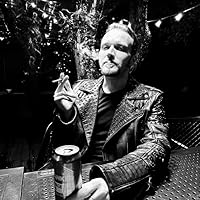
JUSTIN SLOAN wrote video games before becoming a full-time author, with credits on such games as Game of Thrones, Tales from the Borderlands, Walking Dead, and Marvel and mobile games. Now you can find his military science fiction and space superheroes books on Amazon, KU, and Audible.com. He taught Muay Thai kickboxing and Marine Corps Martial Arts, and can play three songs on the bagpipes. Justin holds advanced degrees in international relations/economics and creative writing. Oh, and he acted in movies for a bit - all small roles though.
A great book on how to prostitute yourself out to the writing industry.
Far from actually writing good stories or anything like that, the main advice in this book appears to be the following: visit as many writing conventions as you can (regardless of how much they cost), be as artificial as possible (don't ever reveal what you really think about something; instead, just agree with everyone on everything), never forget to kiss an author's or an editor's ass when you have the chance, and, most importantly, networking. Yes, networking. The author keeps stressing this last point in the book. Somehow, talking with other people, all the while being as artificial as possible, is supposed to help you become a writer. Most authors would agree that writing is the most important part in being a writer. For Justin Sloan, it's networking.
It's a shame that the book had nearly nothing at all to say about actually, you know, writing things. However, this may not come as much of a surprise, considering that the author's other books appear to revolve mainly around . . . teddy bears. Indeed, he even goes on to cite passages from his teddy bear books as examples of "writing" in this one. Amazing.
On the other hand, perhaps the author's advice on how to whore yourself out to the writing industry really does work—it appears to have worked for him. And for that, the book earns two stars.
EDIT: Also, you've got to love how the author himself has rated this as well as some other books of his with five stars. Such integrity!
Interesting and pragmatic mix of advice for a range of writing careers; perhaps a bit dated now. This is especially the case where the advice is region-specific, or specific to particular writer's conferences, websites, events etc.
tbh the majority of this book wasn't especially relevant to me (as a UK-based aspiring writer of short stories and novels), but still a fascinating time- (and place?) capsule, about the trials and concerns that would have been faced by anyone trying to break into a California-centred industry (movies, games) that must have changed considerably in the years since the book was written.
I liked the broad range of interviews. Listening to everyone's individual stories about rejection and making it, was motivating. I wouldn't say that the information was particularly useful - it's mostly things I've read before in every other book - but if a book makes me feel motivated to work, then it has done its job.
In a series of interviews with a variety of creative writers, Justin Sloan (and colleagues) discuss different aspects of the writing process, the structure of a good story, conferences to attend, and plenty of other tips for aspiring writers. Some of the information is a bit sobering. I'm still not convinced you don't need to live in L.A., or at the very least, California in order to be a successful screenwriter. Still, it's not brutal; it's just honest.
The screenwriting interviews are certainly the most disheartening as they follow the advice I hear all the time -- you need to be in L.A., you should get an MA, you have to attend conferences, and you should be wary of entering screenwriting contests because they give you visibility, but little else for your money. The problem is, IT ALL COSTS MONEY! And for struggling screenwriters, who in the world can afford all this?
Also, while many of the screenwriters have successful careers, hardly any of them have a feature film to their name, or one that I've heard of. More likely, they have a ton of projects in development that don't end up going anywhere. This is remarkably common for many screenwriters, by the way.
As for the video game writers, they recommend not only playing games but knowing design and creating your own games. Talk about hard work.
Finally the novelists were more encouraging about their craft, but there's still the knowledge that you're unlikely to have a break-out hit and will probably have to juggle a day job with writing for a long time. Ah, the life of a writer!
I was expecting a lot of this information, so hardly anything was that surprising to me, nor was it that enlightening or compelling. It was a fine read, with some useful writing tips outside of the interviews, but I'm partial more to craft books than a book of interviews anyways. Next time, I'd recommend a broader range of interviews because the perspectives seemed a bit limited in scope.
Excellent overview of becoming a writer. Of course, this is one of the first books I've read on the subject. The book has many references to other sources available and good information on how to and lessons learned, many of which were from persons of interest in the industry. These lessons learned were from interviews that the author conducted. This book has made me seek more information about the author and has put some of his books on my "to read" list. Audible version, with very good narration by Thomas Block.
Received this book in exchange for an honest review.
I found this book particularly very helpful and informative. Creative Writing Career is a collection of interviews with writers. Especially when Sloan interviewed Joshua Robin, a videogame writer, since I'm a big fan of Assassin Creed myself and I haven't thought about researching for more info at this certain field.
It has great tips, but it focuses a lot on USA specific and even moving to LA. I'm from another continent, it's annoying. Also, there's also a lot of focus on veterans, which he has a book about, but uses this book to talk about that? It really isn't relevant for writing careers. Overall, the book has great tips and the interviews are educational. I've learned a lot.
Nice try. But the author is very very low himself and hardly in position to advice anything beyond the hacks, pardon, the writers selling for pennies on self publishing platforms.
Last summer, I listened to the audiobook version of Creative Writing Career by Justin Sloan. I had been listening to the CWC Podcast for a couple months by then and had read Sloan’s first fantasy book Land of Gods, so I already knew a little about his background. I knew that he had worked as a writer for Telltale Games and had done some screenwriting as well, but it was his experience getting started writing fantasy novels that I most interested in.
In Creative Writing Career, Sloan writes about methods that can be used to build a successful writing career. He doesn’t get deep into the mechanics of writing itself. He leaves that to the many other writing books out there, but he offers recommendations on which ones to read, to learn everything from learning prose and structure to writing for television or video games.
In the first part of the book, Sloan writes about positioning yourself to become a full-time writer. He talks about staying focused and finding inspiration as well as getting an education on writing craft. Whether it’s through formal college courses in the classroom setting or online, joining a writing group, or self-study, there are many options available to anyone who wants to improve as a writer.
About half of the book contains interviews with other writers who talk about how they got started and what recommendations they have for anyone seeking a successful writing career. Some of them are authors of novels, but Sloan also interviews screenwriters, video game writers, and non-fiction authors. Most of them have experience in multiple writing fields. While I really just want to write novels, I still found a lot of value from the other interviews.
Creative Writing Career is the second book on writing that I’ve read or listened to since I decided to become a writer myself. After I first listened to it, I thought it was good, but didn’t feel I knew enough about creative writing or had read enough on the topic to give a valid review.
So I waited. I read several other books, and I took an Introduction to Creative Writing course through SNHU. One of the things I found was that, although I enjoy listening to audiobooks, it’s good to own hardcopies of any that you might want to reference later on. So, I ordered the paperback version of Creative Writing Career. I like to reference it sometimes when I’m having a hard time writing, and I’ve probably reread most of the book that way.
I rate Creative Writing Career five stars. It was really useful for me when I started developing my own career plan to become an author. I still have a long way to go, but I get inspired from learning about others who have done the same.