

What do you think?

La construcción de la Muralla China
About the Book "The Great Wall of China" ("Beim Bau der Chinesischen Mauer") is a short story written by Franz Kafka in 1917. It was not published until 1931, seven years after his death. Max Brod selected stories and published them in the collection Beim Bau der Chinesischen Mauer. -wikipedia For more eBooks visit www.kartindo.com
Unknown Binding
First published January 1, 1931
About the author
Franz Kafka
3,613 books41.5k followersFranz Kafka was a German-speaking writer from Prague whose work became one of the foundations of modern literature, even though he published only a small part of his writing during his lifetime. Born into a middle-class Jewish family in Prague, then part of the Austro-Hungarian Empire, Kafka grew up amid German, Czech, and Jewish cultural influences that shaped his sense of displacement and linguistic precision. His difficult relationship with his authoritarian father left a lasting mark, fostering feelings of guilt, anxiety, and inadequacy that became central themes in his fiction and personal writings.
Kafka studied law at the German University in Prague, earning a doctorate in 1906. He chose law for practical reasons rather than personal inclination, a compromise that troubled him throughout his life. After university, he worked for several insurance institutions, most notably the Workers Accident Insurance Institute for the Kingdom of Bohemia. His duties included assessing industrial accidents and drafting legal reports, work he carried out competently and responsibly. Nevertheless, Kafka regarded his professional life as an obstacle to his true vocation, and most of his writing was done at night or during periods of illness and leave. Kafka began publishing short prose pieces in his early adulthood, later collected in volumes such as Contemplation and A Country Doctor. These works attracted little attention at the time but already displayed the hallmarks of his mature style, including precise language, emotional restraint, and the application of calm logic to deeply unsettling situations. His major novels The Trial, The Castle, and Amerika were left unfinished and unpublished during his lifetime. They depict protagonists trapped within opaque systems of authority, facing accusations, rules, or hierarchies that remain unexplained and unreachable. Themes of alienation, guilt, bureaucracy, law, and punishment run throughout Kafka’s work. His characters often respond to absurd or terrifying circumstances with obedience or resignation, reflecting his own conflicted relationship with authority and obligation. Kafka’s prose avoids overt symbolism, yet his narratives function as powerful metaphors through structure, repetition, and tone. Ordinary environments gradually become nightmarish without losing their internal coherence. Kafka’s personal life was marked by emotional conflict, chronic self-doubt, and recurring illness. He formed intense but troubled romantic relationships, including engagements that he repeatedly broke off, fearing that marriage would interfere with his writing. His extensive correspondence and diaries reveal a relentless self-critic, deeply concerned with morality, spirituality, and the demands of artistic integrity. In his later years, Kafka’s health deteriorated due to tuberculosis, forcing him to withdraw from work and spend long periods in sanatoriums. Despite his illness, he continued writing when possible. He died young, leaving behind a large body of unpublished manuscripts. Before his death, he instructed his close friend Max Brod to destroy all of his remaining work. Brod ignored this request and instead edited and published Kafka’s novels, stories, and diaries, ensuring his posthumous reputation.
The publication of Kafka’s work after his death established him as one of the most influential writers of the twentieth century. The term Kafkaesque entered common usage to describe situations marked by oppressive bureaucracy, absurd logic, and existential anxiety. His writing has been interpreted through existential, religious, psychological, and political perspectives, though Kafka himself resisted definitive meanings. His enduring power lies in his ability to articulate modern anxiety with clarity and restraint.
Kafka studied law at the German University in Prague, earning a doctorate in 1906. He chose law for practical reasons rather than personal inclination, a compromise that troubled him throughout his life. After university, he worked for several insurance institutions, most notably the Workers Accident Insurance Institute for the Kingdom of Bohemia. His duties included assessing industrial accidents and drafting legal reports, work he carried out competently and responsibly. Nevertheless, Kafka regarded his professional life as an obstacle to his true vocation, and most of his writing was done at night or during periods of illness and leave. Kafka began publishing short prose pieces in his early adulthood, later collected in volumes such as Contemplation and A Country Doctor. These works attracted little attention at the time but already displayed the hallmarks of his mature style, including precise language, emotional restraint, and the application of calm logic to deeply unsettling situations. His major novels The Trial, The Castle, and Amerika were left unfinished and unpublished during his lifetime. They depict protagonists trapped within opaque systems of authority, facing accusations, rules, or hierarchies that remain unexplained and unreachable. Themes of alienation, guilt, bureaucracy, law, and punishment run throughout Kafka’s work. His characters often respond to absurd or terrifying circumstances with obedience or resignation, reflecting his own conflicted relationship with authority and obligation. Kafka’s prose avoids overt symbolism, yet his narratives function as powerful metaphors through structure, repetition, and tone. Ordinary environments gradually become nightmarish without losing their internal coherence. Kafka’s personal life was marked by emotional conflict, chronic self-doubt, and recurring illness. He formed intense but troubled romantic relationships, including engagements that he repeatedly broke off, fearing that marriage would interfere with his writing. His extensive correspondence and diaries reveal a relentless self-critic, deeply concerned with morality, spirituality, and the demands of artistic integrity. In his later years, Kafka’s health deteriorated due to tuberculosis, forcing him to withdraw from work and spend long periods in sanatoriums. Despite his illness, he continued writing when possible. He died young, leaving behind a large body of unpublished manuscripts. Before his death, he instructed his close friend Max Brod to destroy all of his remaining work. Brod ignored this request and instead edited and published Kafka’s novels, stories, and diaries, ensuring his posthumous reputation.
The publication of Kafka’s work after his death established him as one of the most influential writers of the twentieth century. The term Kafkaesque entered common usage to describe situations marked by oppressive bureaucracy, absurd logic, and existential anxiety. His writing has been interpreted through existential, religious, psychological, and political perspectives, though Kafka himself resisted definitive meanings. His enduring power lies in his ability to articulate modern anxiety with clarity and restraint.
Ratings & Reviews
Friends & Following
Create a free account to discover what your friends think of this book!
Community Reviews
Displaying 1 - 30 of 138 reviews
August 13, 2026
لماذا بُني سور الصين العظيم؟
سؤال بسيط يطرحه مواطن جنوبي مجهول، لكنه سرعان ما يتحول عند كافكا إلى متاهة من الأساطير والتفسيرات.
قيل إن السور بُني لحماية الجنوب من الكائنات الغريبة القادمة من الشمال، وقيل إن ما بُني ليس إلا أساسًا لبناء أعظم لم يأتِ أوانه بعد، ثم يمتد السؤال إلى القيصر وسلطته وتعاليم وأساطير الماضي.
❞ نحن نتبع تعاليم وتحذيرات تأتي إلينا من العصور الماضية. ❝
ربما كان السور عند كافكا أكثر من بناء ضخم. بدا لي رمزًا لمشروع هائل يشارك الإنسان في بنائه دون أن يعرف غايته كاملة، ينفذ الجزء الذي بين يديه، ثم يتركه لغيره، بينما يظل الهدف النهائي غامضًا.
والأكثر غرابة أن الشعب نفسه شديد الوفاء لقيصره، رغم أن القيصر بعيد وغامض بالنسبة إليهم:
❞ ويجب أن أكرر مرات ومرات لا يوجد شعب وفي لقيصره أكثر من شعبنا في الجنوب. ❝
شعرت أن كافكا يتحدث عن الإنسان الذي يعيش وفق أوامر السلطة، وتعاليم الماضي، ومخاوف ورثها عن أجيال سابقة، دون أن يعرف دائمًا إن كانت هذه المخاوف حقيقية أو إن كان ما يفعله يحقق الغاية التي بدأ من أجلها.
الفكرة أثارت اهتمامي، لكن الغموض كان زائدًا بالنسبة لي، خصوصًا في الأجزاء المتعلقة بالقيصر والرموز التي لم أستطع الإمساك بخيوطها كاملة.
نص غريب ومثير للتفكير والبحث!
~تمت القراءة في أغسطس2026~

November 1, 2014
There is another review in Arabic after this review - مراجعتي بالانجليزية تليها مراجعة بالعربية
It is the temporal gap between the present and the past which not tangible,
The spatial gap,between the north and the south,..
the gap between the ruler and the people
This gaps lead to an imbalance in the social foundation.
His interesting style, in his philosophical narrative as old Chinese engineer , was a great by the way :)
*****
الفجوة الزمنية مابين الحاضر و الماضي ، و المكانية مابين الشمال و الجنوب ، الفجوة مابين الحاكم و المحكوم ، كل هذه الفجوات و امثالها يقودونا الى خلل في البناء الاجتماعى شبهه الكاتب بذلك الخلل في بناء سور الصين العظيم من وجهة نظر المهندس :) !
اسلوبه الفلسفي الشيق في الحكي كواحد من المهندسين الصينيين القدماء كان تجربة رائعه بالمناسبة
It is the temporal gap between the present and the past which not tangible,
The spatial gap,between the north and the south,..
the gap between the ruler and the people
This gaps lead to an imbalance in the social foundation.
His interesting style, in his philosophical narrative as old Chinese engineer , was a great by the way :)
*****
الفجوة الزمنية مابين الحاضر و الماضي ، و المكانية مابين الشمال و الجنوب ، الفجوة مابين الحاكم و المحكوم ، كل هذه الفجوات و امثالها يقودونا الى خلل في البناء الاجتماعى شبهه الكاتب بذلك الخلل في بناء سور الصين العظيم من وجهة نظر المهندس :) !
اسلوبه الفلسفي الشيق في الحكي كواحد من المهندسين الصينيين القدماء كان تجربة رائعه بالمناسبة

May 10, 2020
أول قصة لكافكا تعجبني
القصة علي لسان أحد بناؤو سور الصين العظيم.
يصف بها أحوال بناء السور في عصره و كيفية
بناء السور علي أجزاء متفرقة، لم يفاجئني فقد بنيته من قبل!
أكثر ما أعجبني في القصة التحدث عن إمبراطورية الصين نفسها، وعن ضعف علاقة الشعب بالحكام لبعدهم عنهم.
و كيف أن الحياة تسير حتي لو مات أمبراطور ما او قامت ثورة في مكان آخر.
فكل شئ يحدث هو بعيد بعد كافي لكي تبرد كل الأحداث حينما تصل الأخبار لك.
كما نري الوصف المبالغ به من الراوي للقصر الملكي و كم هو كبير، وذكرني هذا ببعض حكايات عن قصور ملوك عملاقة لم يعثر لها علي أثر، وما زال يعيش الناس وهم يحلفون بحياتها وقوة و عظمة الملك التي لم توجد ابدًا.
القصة علي لسان أحد بناؤو سور الصين العظيم.
يصف بها أحوال بناء السور في عصره و كيفية
بناء السور علي أجزاء متفرقة، لم يفاجئني فقد بنيته من قبل!
أكثر ما أعجبني في القصة التحدث عن إمبراطورية الصين نفسها، وعن ضعف علاقة الشعب بالحكام لبعدهم عنهم.
و كيف أن الحياة تسير حتي لو مات أمبراطور ما او قامت ثورة في مكان آخر.
فكل شئ يحدث هو بعيد بعد كافي لكي تبرد كل الأحداث حينما تصل الأخبار لك.
كما نري الوصف المبالغ به من الراوي للقصر الملكي و كم هو كبير، وذكرني هذا ببعض حكايات عن قصور ملوك عملاقة لم يعثر لها علي أثر، وما زال يعيش الناس وهم يحلفون بحياتها وقوة و عظمة الملك التي لم توجد ابدًا.

May 18, 2014
Kafka dissects the Great Wall
18 May 2014
Okay, maybe I shouldn't be writing too much about this particular short story (if one can call it a story) because it is really only ten pages long, though the funny thing about Kafka is that despite the fact that a piece of writing is, well, short, you can still get an enormous amount out of it (as I discovered when we chatted about Die Verwandlung in a coffee shop today). Anyway, at first glance, one wonders if the story is about this rather large structure in northern Asia:
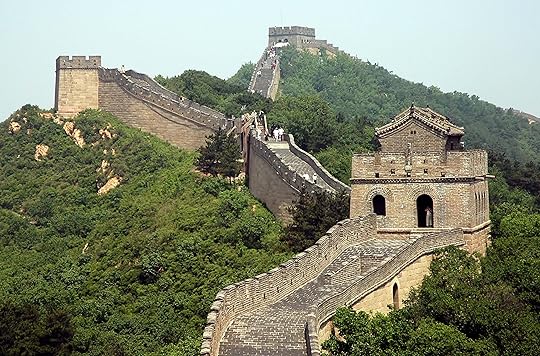
and in a way it is, but in another way it seems that he uses this particular Wonder of the World to explore, once again, the nature of bureaucracy. In fact this seemed to be something that Kafka loved to explore and that is the dark nature of the bureaucratic world (and in many cases Ancient China was incredibly bureaucratic) that dominates his literature.
The first thing that I notice about this text is how he outlines the absurdity of the Great Wall. He points out that it was started at either end and met in the middle, however it was never actually completed because there were a lot of gaps along its entire length This is not actually true because the Great Wall was built in stages over hundreds of years and the wall that we see now is, once again, a wall that was built in stages. I believe (and it is too late for me to do some real research) that the wall that I have shown above was the Ming Dynasty wall. Anyway here is a map (with a legend) to help you understand what I mean about the Great Wall:
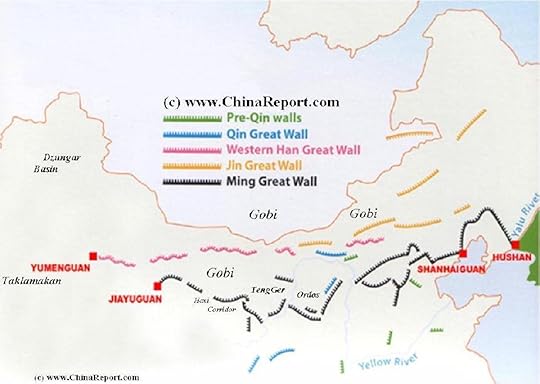
I guess that map should also point out the absurdity of the wall. As Kafka indicates, in that there are quite a number of gaps in it which meant that it was actually very ineffective in keeping the Mongols out of China. In fact despite the existence of the wall, the Mongols still invaded.
Which leads me (and of course Kafka, who goes on a massive tangent in this piece of writing, as I seem to also do) to the idea of the medieval (or ancient) village: the complete and utter lack of knowledge of the outside world. In one sense the villagers know that there is an emperor, but would have absolutely no idea as to who the emperor was, or even what he looked like, simply because they are so disconnected from the centre of the empire. In fact they may even believe that an emperor who had died a hundred years ago was the current emperor because nobody would have told them otherwise.
So also with the barbarian invader – most villagers would have no idea what the barbarian invader looked like, or whether somebody coming into the village was an invader because, well, nobody had seen a barbarian and thus nobody actually knew what a barbarian looked like and how a barbarian would be any different to say a horde of bandits that came in and raided and pillaged the village. Actually, you would, I suspect, get the same reaction in a small town in the middle of the country here in Australia. These locals may have been to the main city say, a couple of times, but not much because the distance is simply so vast that it is only on a special occasion that you would go there which means that they would simply not encounter anybody from outside their own community. In fact, much of their understanding of the outside world would come to them through the television, and they would see no reason to question it.
18 May 2014
Okay, maybe I shouldn't be writing too much about this particular short story (if one can call it a story) because it is really only ten pages long, though the funny thing about Kafka is that despite the fact that a piece of writing is, well, short, you can still get an enormous amount out of it (as I discovered when we chatted about Die Verwandlung in a coffee shop today). Anyway, at first glance, one wonders if the story is about this rather large structure in northern Asia:
and in a way it is, but in another way it seems that he uses this particular Wonder of the World to explore, once again, the nature of bureaucracy. In fact this seemed to be something that Kafka loved to explore and that is the dark nature of the bureaucratic world (and in many cases Ancient China was incredibly bureaucratic) that dominates his literature.
The first thing that I notice about this text is how he outlines the absurdity of the Great Wall. He points out that it was started at either end and met in the middle, however it was never actually completed because there were a lot of gaps along its entire length This is not actually true because the Great Wall was built in stages over hundreds of years and the wall that we see now is, once again, a wall that was built in stages. I believe (and it is too late for me to do some real research) that the wall that I have shown above was the Ming Dynasty wall. Anyway here is a map (with a legend) to help you understand what I mean about the Great Wall:
I guess that map should also point out the absurdity of the wall. As Kafka indicates, in that there are quite a number of gaps in it which meant that it was actually very ineffective in keeping the Mongols out of China. In fact despite the existence of the wall, the Mongols still invaded.
Which leads me (and of course Kafka, who goes on a massive tangent in this piece of writing, as I seem to also do) to the idea of the medieval (or ancient) village: the complete and utter lack of knowledge of the outside world. In one sense the villagers know that there is an emperor, but would have absolutely no idea as to who the emperor was, or even what he looked like, simply because they are so disconnected from the centre of the empire. In fact they may even believe that an emperor who had died a hundred years ago was the current emperor because nobody would have told them otherwise.
So also with the barbarian invader – most villagers would have no idea what the barbarian invader looked like, or whether somebody coming into the village was an invader because, well, nobody had seen a barbarian and thus nobody actually knew what a barbarian looked like and how a barbarian would be any different to say a horde of bandits that came in and raided and pillaged the village. Actually, you would, I suspect, get the same reaction in a small town in the middle of the country here in Australia. These locals may have been to the main city say, a couple of times, but not much because the distance is simply so vast that it is only on a special occasion that you would go there which means that they would simply not encounter anybody from outside their own community. In fact, much of their understanding of the outside world would come to them through the television, and they would see no reason to question it.

July 1, 2015
كافكا مرة أخرى في أبهى حلله..
كيف يقع الإنسان تحت أقدام السلطة المطلقة؟؟
كافكا يجيب على هذا السؤال في تلك القصة المذهلة..
ترددت كثيرا تجاه رمزية القصة.. هل كافكا يتحدث عن السلطة الفاشية الإنسانية؟ أم كافكا يتحدث عن سلطة الدين الإلهية؟
وفي النهاية وجدت القصة يمكن تفسيرها على الوجهين..
كيف يصبح الإنسان عبدا؟
"لم يبدأ العمل في الجدار اعتباطا...فقبل ٥٠ عاما من الشروع فيه تم الإعلان في كل الأراضي الصينية -التي تم تقرير بناء سور فيها- عن أن فن العمارة -و من بعده التشييد- من أهم العلوم ... و أن أهمية العلوم الأخرى تتحدد بمدى ارتباطها بهما."
لابد أولا من وجود هدف معين .. هدف تحدده "القوى العليا" .. و تجعل البشر العاديين يتبعونه .. هدف نهائي يجعل الفرد يضع حياته بأكملها في خدمته..
قد يكون هذا الهدف العبادة الإلهية.. او الجنة.. و بالتالي تصبح الحياة بأكملها في خدمة الدين..
أو قد يكون هذا الهدف "الرخاء الدنيوي" مثلما ترفع شعاراته الحكومات الشيوعية المتسلطة مثلا..
حتى لو كنت من داخلك تراودك الشكوك حول هذا الهدف .. لكنك لا يمكنك التصريح بهذه المخاوف.. و إلا سيتم اتهامك بالخروج عن الدين.. أو بخيانة الدولة..
"من هو العدو الذي كان السور سيحمينا منه؟ إنها شعوب الشمال! انا من جنوب شرق الصين و لا يوجد أي شعب شمالي يهدد حياتنا .....
لم نرهم! و لو بقينا في قريتنا لن نراهم مدى الحياة حتى لو جاءونا على خيولهم الوحشية و توجهوا إلينا مباشرة.. إن بلادنا مترامية الأطراف و لن تسمح لهم بالمجئ إلينا.. سوف يبقون عالقين في الهواء الخاوي!"
فانت تعلم الحقيقة من الداخل و لكنك مضطر للصمت! فلتعتبر مخاوفك مجرد أوهام!
و بعد أن تقوم السلطة بمنحك هذا الهدف ستقوم بتشويه صورة أي حياة أخرى قد تحياها إذا ما سرت في أي طريق آخر..
فانت ستدخل النار أو سيحل عليك غضب الإله..
أو أنك ستعيش في فوضى و دمار لو لم تتبع أوامر الحكومة...
"كان هناك الكثير من الفوضى في عقول الناس..و ربما كانت هذه الفوضى نابعة من محاولة جمع العديد من الناس حول هدف واحد.. الإنسان بطبيعته متراخ مثل التراب العالق في الهواء .. لا يحب القيود ولو أخذ على عاتقه شيئا بنفسه سرعان ما يبدأ في تكسير قيوده بجنون و تدمير السدود و القيود و تدمير نفسه بكل ما أوتى من قوة.."
فالإنسان قد اصبح كائنا قاصرا لا يستطيع تحمل مسئولية نفسه.. فلابد له من اتباع طريق الإله.. او طريق الحكومة.. ولا يمكنه ابدا العيش بحسب قرارته.. فقراراته لابد و أن تؤدي إلى الخطأ..
"عندما نكرر اوامر القيادة العليا كلمة ورراء كلمة فنحن بهذا نتعرف على أنفسنا.. نعترف بأنه بدون قيادة لن تساعدنا الحكمة التي تعلمناها في المدارس و لا الذكاء البشري للقيام بواجاباتنا"
لكن كيف يعيش الإنسان إذن؟؟ هو يعلم الهدف النهائي و لكنه لا يعلم التفاصيل الدقيقة.. وقتها يحين دور "رجال الحكومة" أو "رجال الإله"...
"في غرفة القيادة -حيث لم يجبني احد ممن سألتهم عن مكانها ولا عمن يجلس بها- في هذا المحراب تطايرت جميع الأفكار و الرغبات البشرية و تشابكت جميع الأهداف و الإنجازات البشرية.. و هبطت من النافذة صورة العوالم الإلهية على أيدي القادة الذين رسموا الخطط"
فكل ما يأمر به رجال الحكومة هو عبقرية خالصة.. حكمة مصفاة.. لابد من اتباعها..
أو هى أوامر سماوية يتلقاها رجال الدين و منها للشعب...
ولكن طبعا فتلك المعرفة هى حكر على مجموعة من الناس.. فرجال الحكومة هم وحدهم من لديهم "الصورة الشاملة و الخطة الكبرى" و الأفراد هم فقط منفذون ولا يدركون تلك الصورة..
ورجال الدين هم فقط من يملكون "الحقيقة المطلقة" و الأفراد هم فقط منفذون لا يدركون منها إلا ما "يتساقط من مائدة رجال الدين"..
"يدعي أساتذة إدارة الدولة و التاريخ في الجامعات أنهم فقهاء كبار في هذا الأمر و انهم يمكنهم نقل معارفهم هذه إلى طلبتهم.. و كلما نزلنا إلى المدارس الأدنى تختفي الشكوك حول المعرفة الشخصية بصورة أكبر.. وتتمحور أمواج انصاف المتعلمين المتكسرة حول بضع معلومات بسيطة تطبع في العقول على مدار قرون.. و هى معلومات لا تخلو من حقائق مطلقة.. لكنها تظل غير واضحة المعالم وسط أبخرة ضبابية"
هكذا يرسم كافكا صورة العالم الفاشي الذي نعيش فيه.. العالم الذي يجري فيه الإنسان وراء اهداف عبثية تم فرضها عليه من خارج حياته.. ليظل طوال حياته أسيرا لقيودها..
على الرغم من قصرها فقد استمتعت بكل حرف فيها..
كيف يقع الإنسان تحت أقدام السلطة المطلقة؟؟
كافكا يجيب على هذا السؤال في تلك القصة المذهلة..
ترددت كثيرا تجاه رمزية القصة.. هل كافكا يتحدث عن السلطة الفاشية الإنسانية؟ أم كافكا يتحدث عن سلطة الدين الإلهية؟
وفي النهاية وجدت القصة يمكن تفسيرها على الوجهين..
كيف يصبح الإنسان عبدا؟
"لم يبدأ العمل في الجدار اعتباطا...فقبل ٥٠ عاما من الشروع فيه تم الإعلان في كل الأراضي الصينية -التي تم تقرير بناء سور فيها- عن أن فن العمارة -و من بعده التشييد- من أهم العلوم ... و أن أهمية العلوم الأخرى تتحدد بمدى ارتباطها بهما."
لابد أولا من وجود هدف معين .. هدف تحدده "القوى العليا" .. و تجعل البشر العاديين يتبعونه .. هدف نهائي يجعل الفرد يضع حياته بأكملها في خدمته..
قد يكون هذا الهدف العبادة الإلهية.. او الجنة.. و بالتالي تصبح الحياة بأكملها في خدمة الدين..
أو قد يكون هذا الهدف "الرخاء الدنيوي" مثلما ترفع شعاراته الحكومات الشيوعية المتسلطة مثلا..
حتى لو كنت من داخلك تراودك الشكوك حول هذا الهدف .. لكنك لا يمكنك التصريح بهذه المخاوف.. و إلا سيتم اتهامك بالخروج عن الدين.. أو بخيانة الدولة..
"من هو العدو الذي كان السور سيحمينا منه؟ إنها شعوب الشمال! انا من جنوب شرق الصين و لا يوجد أي شعب شمالي يهدد حياتنا .....
لم نرهم! و لو بقينا في قريتنا لن نراهم مدى الحياة حتى لو جاءونا على خيولهم الوحشية و توجهوا إلينا مباشرة.. إن بلادنا مترامية الأطراف و لن تسمح لهم بالمجئ إلينا.. سوف يبقون عالقين في الهواء الخاوي!"
فانت تعلم الحقيقة من الداخل و لكنك مضطر للصمت! فلتعتبر مخاوفك مجرد أوهام!
و بعد أن تقوم السلطة بمنحك هذا الهدف ستقوم بتشويه صورة أي حياة أخرى قد تحياها إذا ما سرت في أي طريق آخر..
فانت ستدخل النار أو سيحل عليك غضب الإله..
أو أنك ستعيش في فوضى و دمار لو لم تتبع أوامر الحكومة...
"كان هناك الكثير من الفوضى في عقول الناس..و ربما كانت هذه الفوضى نابعة من محاولة جمع العديد من الناس حول هدف واحد.. الإنسان بطبيعته متراخ مثل التراب العالق في الهواء .. لا يحب القيود ولو أخذ على عاتقه شيئا بنفسه سرعان ما يبدأ في تكسير قيوده بجنون و تدمير السدود و القيود و تدمير نفسه بكل ما أوتى من قوة.."
فالإنسان قد اصبح كائنا قاصرا لا يستطيع تحمل مسئولية نفسه.. فلابد له من اتباع طريق الإله.. او طريق الحكومة.. ولا يمكنه ابدا العيش بحسب قرارته.. فقراراته لابد و أن تؤدي إلى الخطأ..
"عندما نكرر اوامر القيادة العليا كلمة ورراء كلمة فنحن بهذا نتعرف على أنفسنا.. نعترف بأنه بدون قيادة لن تساعدنا الحكمة التي تعلمناها في المدارس و لا الذكاء البشري للقيام بواجاباتنا"
لكن كيف يعيش الإنسان إذن؟؟ هو يعلم الهدف النهائي و لكنه لا يعلم التفاصيل الدقيقة.. وقتها يحين دور "رجال الحكومة" أو "رجال الإله"...
"في غرفة القيادة -حيث لم يجبني احد ممن سألتهم عن مكانها ولا عمن يجلس بها- في هذا المحراب تطايرت جميع الأفكار و الرغبات البشرية و تشابكت جميع الأهداف و الإنجازات البشرية.. و هبطت من النافذة صورة العوالم الإلهية على أيدي القادة الذين رسموا الخطط"
فكل ما يأمر به رجال الحكومة هو عبقرية خالصة.. حكمة مصفاة.. لابد من اتباعها..
أو هى أوامر سماوية يتلقاها رجال الدين و منها للشعب...
ولكن طبعا فتلك المعرفة هى حكر على مجموعة من الناس.. فرجال الحكومة هم وحدهم من لديهم "الصورة الشاملة و الخطة الكبرى" و الأفراد هم فقط منفذون ولا يدركون تلك الصورة..
ورجال الدين هم فقط من يملكون "الحقيقة المطلقة" و الأفراد هم فقط منفذون لا يدركون منها إلا ما "يتساقط من مائدة رجال الدين"..
"يدعي أساتذة إدارة الدولة و التاريخ في الجامعات أنهم فقهاء كبار في هذا الأمر و انهم يمكنهم نقل معارفهم هذه إلى طلبتهم.. و كلما نزلنا إلى المدارس الأدنى تختفي الشكوك حول المعرفة الشخصية بصورة أكبر.. وتتمحور أمواج انصاف المتعلمين المتكسرة حول بضع معلومات بسيطة تطبع في العقول على مدار قرون.. و هى معلومات لا تخلو من حقائق مطلقة.. لكنها تظل غير واضحة المعالم وسط أبخرة ضبابية"
هكذا يرسم كافكا صورة العالم الفاشي الذي نعيش فيه.. العالم الذي يجري فيه الإنسان وراء اهداف عبثية تم فرضها عليه من خارج حياته.. ليظل طوال حياته أسيرا لقيودها..
على الرغم من قصرها فقد استمتعت بكل حرف فيها..

August 5, 2017
Before I decided to read Animal Farmthis month I read a short story by Kafka that examines the inner workings of and cohesion in Imperial China. For such a short story it backs a mass of information and makes you think. Kafka makes you ask how a government would convince millions of people living feudal conditions to abandon their homes and build a very big wall. Then he really gets by saying "now why would they have people from one side of the country go to the other side to build this wall? Very intriguing story.

January 30, 2015
I rather enjoyed this short story, particularly because of the issues that Kafka attempts to, and succeeds in, bringing to light. The notion that we must not question more grandiose issues that are beyond our supposed comprehension is still an issue in these more contemporary times, and I often find myself frustrated at the challenge of balancing this blissful ignorance with unattained intellectual prosperity. To be fair, I fluctuate between the two frequently, so I cannot really say which end of the spectrum I would like to find myself on.
In effect, this is the same conclusion the narrator draws, so damnit Kafka, you've done it again.
In effect, this is the same conclusion the narrator draws, so damnit Kafka, you've done it again.
December 24, 2024
إن القارئ الذي ينغمس في رواية “سور الصين العظيم” لفرانز كافكا يدرك سريعاً أنه لا يتعامل مع قصة عن بناء هيكل حجري فقط، بل مع عمل أدبي رمزي يُسائل الأسس العميقة التي تُقام عليها حياة الإنسان في مجتمع يكتنفه الغموض، والسلطة المطلقة، والبحث العبثي عن المعنى.
سرد حكاية البناء: عندما يتحول الجدار إلى فكرة
تبدو القصة للوهلة الأولى وكأنها تقرير عن بناء سور الصين العظيم، لكنها تتخذ أبعاداً فلسفية أعمق بكثير. فالكاتب، بأسلوبه الغامض والمليء بالاستعارات، يُبرز الطريقة التي تم بها بناء السور: أجزاء صغيرة ومنفصلة دون أي محاولة حقيقية للربط بينها.
تتساءل الرواية بصوت غير مباشر: لماذا تبني السلطة سوراً لا يكتمل أبداً؟ وما الهدف من تكريس طاقة المجتمع لمشروع يبدو عبثياً في جوهره؟ هذه الأسئلة التي يطرحها كافكا تضع القارئ أمام مرآة الحقيقة التي تعكس عبثية النظام البشري، والطريقة التي يُقاد بها الأفراد نحو تنفيذ أعمال كبرى دون إدراكهم لمعناها.
السور في الرواية ليس مجرد مشروع دفاعي أو هندسي، بل رمز لكل الجدران التي تبنيها السلطة والمجتمع في وجه الفرد:
• الطاعة العمياء: السور يجسد مدى استعداد البشر لتنفيذ أوامر السلطة دون سؤال، وكأن البناء في حد ذاته غاية وليس وسيلة.
• العزلة والانقسام: الطريقة التي بُني بها السور في أجزاء منفصلة تعكس الواقع الإنساني، حيث يعيش الأفراد في عزلة نفسية عن بعضهم البعض.
• العبثية واللاجدوى: السور يرمز إلى عبثية الوجود، حيث يُنشئ الإنسان مشاريع ضخمة بلا هدف واضح، تماماً كما يسعى لفهم العالم وهو يدرك أنه لن يصل إلى اليقين.
الإمبراطور في الرواية هو تجسيد للسلطة المركزية التي لا يراها الشعب ولا يتواصل معها. وجوده أشبه بأسطورة تُرهب الجميع وتُبقيهم في حالة دائمة من الخضوع. هذا التباعد بين الحاكم والمحكوم يُبرز التناقض بين مركزية القرار وهامشية التنفيذ، حيث يُترك الأفراد يتخبطون في العشوائية دون رؤية واضحة.
ما يُميز كافكا في هذه الرواية هو أسلوبه الذي يجمع بين الهدوء الظاهري والعمق الفلسفي. اللغة تبدو بسيطة، لكنها تحمل بين طياتها طبقات من المعاني التي تدفع القارئ إلى التوقف والتفكير. الأحداث لا تتبع تسلسلاً واضحاً، مما يعزز الشعور بالعبثية، ويضع القارئ في حالة تأمل دائم في الغايات الغامضة للحياة.
• البحث عن المعنى: الرواية تطرح سؤالاً محورياً: هل يمكن أن نجد معنى حقيقياً في أعمالنا، أم أن الحياة تُبنى على الوهم والروتين؟
• السلطة والهيمنة: كافكا يُظهر كيف يمكن للسلطة أن تُبقي الشعوب في حالة من الخضوع عبر مشاريع عظيمة لا تخدم سوى تعزيز السيطرة.
• الفرد والمجتمع: الرواية تُبرز كيف يتم سحق الفردية تحت وطأة المشاريع الكبرى التي لا تراعي الإنسان ككيان مستقل.
“سور الصين العظيم” ليس مجرد رواية تُقرأ للمتعة، بل هي عمل أدبي فلسفي يتحدى القارئ ليعيد النظر في علاقته بالعالم والسلطة والمجتمع. إنها نص يُلخص رؤية كافكا للوجود: حياة تبدو فيها الأعمال الكبرى مجرد وهم يختبئ خلفه العبث.
فرانز كافكا، بهذا النص العميق، يبني لنا سوراً أدبياً نتسلقه لنطل على أسئلة لا إجابة لها، وأسوار لا نهاية لبنائها.
When a reader dives into Franz Kafka’s “The Great Wall of China”, they quickly realize that they are not dealing with a simple story about constructing a monumental structure. Instead, it is a profound literary work that questions the fundamental principles underpinning human existence in a world shrouded in mystery, absolute authority, and the futile search for meaning.
The Story of Construction: When a Wall Becomes an Idea
At first glance, the story appears to be a report about the construction of the Great Wall of China. However, it soon takes on deeper philosophical dimensions. Kafka, through his enigmatic and metaphor-laden style, highlights the peculiar method in which the wall was built—piecemeal and fragmented, without any real effort to connect the sections.
The narrative implicitly asks: Why would authority construct a wall that is never truly completed? And what is the purpose of dedicating society’s energy to an endeavor that seems fundamentally absurd? These questions reflect Kafka’s exploration of the human condition, the arbitrariness of systems, and the way individuals are drawn into grand projects without comprehending their true purpose.
Symbolism in Every Stone
In Kafka’s hands, the wall is not just a defensive or architectural project but a symbol of all the barriers erected by authority and society against the individual:
• Blind Obedience: The wall represents humanity’s willingness to follow orders from authority without question, as if building is an end in itself rather than a means to an end.
• Isolation and Division: The fragmented construction of the wall mirrors human reality, where individuals live in psychological isolation from one another.
• Absurdity and Futility: The wall symbolizes the absurdity of existence, where humanity engages in grand ventures devoid of clear purpose, much like the quest to understand a world that defies certainty.
Kafka and the Absent Emperor
The emperor in the story embodies a distant and mythical authority figure. The people neither see him nor communicate with him, yet his presence looms large as an awe-inspiring force. This disconnect between ruler and subjects underscores the paradox of centralized power and decentralized execution, leaving individuals floundering in chaos without a clear vision of their purpose.
The Genius of Kafka’s Style: Quiet Absurdity with Philosophical Eloquence
What sets Kafka apart in this story is his ability to blend apparent simplicity with profound depth. The language is straightforward, yet it carries layers of meaning that compel the reader to pause and reflect. Events unfold in a non-linear, fragmented manner, enhancing the sense of absurdity and placing the reader in a constant state of contemplation about life’s mysterious goals.
The Story’s Messages: A Cry into the Void
• The Search for Meaning: The narrative raises a central question: Can we ever find genuine meaning in our endeavors, or is life built on illusion and routine?
• Power and Control: Kafka exposes how authority keeps societies submissive through grand projects that serve only to consolidate power.
• The Individual and Society: The story highlights how individuality is crushed beneath the weight of collective pursuits that disregard the human being as an independent entity.
Conclusion: Kafka’s Wall Against Traditional Understanding
“The Great Wall of China” is not merely a story to be read for entertainment; it is a philosophical literary work that challenges readers to rethink their relationship with the world, authority, and society. It encapsulates Kafka’s view of existence: a life in which grand undertakings are mere illusions masking absurdity.
Through this profound text, Franz Kafka constructs for us a literary wall—one that we climb to gaze upon unanswerable questions and endless walls that will never truly be completed.

Read
August 17, 2026Franz Kafka’s "The Great Wall of China" ("Beim Bau der Chinesischen Mauer") is a surreal, philosophical parable that uses the massive construction project to explore human labor, bureaucracy, and distant power. The narrator reflects on why the wall was built in scattered, piecemeal sections rather than all at once, suggesting it was designed not just for defense, but to unite a vast population around a shared, incomprehensible goal. Central to the story is the theme of an elusive, almost mythical Emperor, whose actual will and presence remain completely unreachable to the ordinary people living on the empire's distant fringes.

July 12, 2018
این کتاب مجموعه ای از داستان های کوتاه کافکاست که مهمترینشان دیوار چین و در محضر قانون یا در پیشگاه قانون است . در پیشگاه قانون که یکی از مهمرترین نوشته های کافکاست و این داستانو در بخش پایانی رمان محاکمه خودش نیز اورده است ایده ی چگونگی تعریف و امکانات قانون برای اقشار پایین جامعه امده است .
در دیوار چین نیز به بررسی مفهوم امپراتوری چین در اذهان روستاییان و سپس کارکرد دیوار چین برای حفظ این امپراتوری و شباهت دیوار چسن با برج بابل میپردازد .
در دیوار چین نیز به بررسی مفهوم امپراتوری چین در اذهان روستاییان و سپس کارکرد دیوار چین برای حفظ این امپراتوری و شباهت دیوار چسن با برج بابل میپردازد .

December 29, 2025
بحث تاريخي مصغر في كيفيه بناء سور الصين العظيم والهدف الحقيقي من بناءه

February 12, 2021
يسرد كافكا القصة من منظور أحد الصينيين القدامى الذين شاركوا ببناء سور الصين العظيم، تتحدث هذه الشخصية عن أثر وقوع الشعوب تحت السلطة المطلقة للحاكم..
أعلنت الصين القديمة قبل ٥٠ عاماً من بداية بناء السور أن العمارة هي أهم العلوم و أقنعت الرأي العام الصيني بهذه الفكرة لكي تصبح المشاركة في بناء السور شرف لا يضاهى و واجب وطني حتى عند الصينيين الجنوبيين (علماً أن بناء السور كان الهدف منه هو حماية مناطق الصين الشمالية فقط من شعوب الشمال).. ما الذي يجعل هذا الصيني الجنوبي بهذه الحالة يضحي باستقراره مع اسرته و يمضي ليبني سوراً في الشمال سوى الاتباع الأعمى لكل ما يتم فرضه من قِبل سلطة الامبراطور.. السلطة المقدسة التي لا يمكن التشكيك بحكمتها.
أعلنت الصين القديمة قبل ٥٠ عاماً من بداية بناء السور أن العمارة هي أهم العلوم و أقنعت الرأي العام الصيني بهذه الفكرة لكي تصبح المشاركة في بناء السور شرف لا يضاهى و واجب وطني حتى عند الصينيين الجنوبيين (علماً أن بناء السور كان الهدف منه هو حماية مناطق الصين الشمالية فقط من شعوب الشمال).. ما الذي يجعل هذا الصيني الجنوبي بهذه الحالة يضحي باستقراره مع اسرته و يمضي ليبني سوراً في الشمال سوى الاتباع الأعمى لكل ما يتم فرضه من قِبل سلطة الامبراطور.. السلطة المقدسة التي لا يمكن التشكيك بحكمتها.

November 21, 2017
«ليس بالضرورة أن تكون الأشياء العميقة معقّدة، وليس بالضرورة أن تكون الأشياء البسيطة ساذجة... إن الانحياز الفني الحقيقي هو: كيف يستطيع الإنسان أن يقول الشيء العميق ببساطة.» ... قالها غسان كنفاني وجسدها من قبله كافكا في هذه القصة العظيمة.
كتب كافكا هذه القصة الألمانية القصيرة في عام 1917، ولم تُنشر حتى عام 1931 بعد سبع سنوات من وفاة كافكا في مجموعة قصص قصيرة قام صديقه ماكس برود بتجميعها ونشرها بنفس عنوان هذه القصة "سور الصين العظيم"، في البداية يصف كافكا للقراء مراحل بناء سور الصين العظيم، وكيفية وسبب بنائه، والأساس التي قامت عليه فكرة البناء وما إلى ذلك من أمور، ويتخلل هذا الوصف رونق كافكا الرائع في وصف العلاقة بين الحكومة أو الطبقة العليا بالعوام من الناس أو الطبقة الدُنيا، وفي هذا الوصف إني واثقٌ من أن القارئ سيندهش من مقدرة كافكا على السخرية من السلطات بنبرة احترام، والتخفيف من قَدْرهم بكل جدية!
إن كان الكاتب قارئًا نهمًا وبالذات لأناس عظماء مثل «هبل، غريلبرتسر، بايرون، فلوبير، هوفمنستال، توماس مان، ستندال، شتيفتر، هرمان هيسه، فيودور دوستويفسكي، تولستوي وسترندبرغ» فإن القارئ بالتأكيد على وشك أن يقرأ عملًا عظيمًا لن ينساه في حياته، وهذا ما حدث لي بالضبط عند قراءتي الأولى للعظيم "كافكا".
يظل كافكا رائدًا في الوصف، حيث تشعر من خلال أعماله بموهبته الفنية، وميله إلى الوصف الذي يتجلى أيضًا من خلال لوحاته التعبيرية التي رسمها كما يقول عنه المؤرخ والمترجم التشيكي يوسف تشيرماك. والتقييم: 8 من 10.
كتب كافكا هذه القصة الألمانية القصيرة في عام 1917، ولم تُنشر حتى عام 1931 بعد سبع سنوات من وفاة كافكا في مجموعة قصص قصيرة قام صديقه ماكس برود بتجميعها ونشرها بنفس عنوان هذه القصة "سور الصين العظيم"، في البداية يصف كافكا للقراء مراحل بناء سور الصين العظيم، وكيفية وسبب بنائه، والأساس التي قامت عليه فكرة البناء وما إلى ذلك من أمور، ويتخلل هذا الوصف رونق كافكا الرائع في وصف العلاقة بين الحكومة أو الطبقة العليا بالعوام من الناس أو الطبقة الدُنيا، وفي هذا الوصف إني واثقٌ من أن القارئ سيندهش من مقدرة كافكا على السخرية من السلطات بنبرة احترام، والتخفيف من قَدْرهم بكل جدية!
إن كان الكاتب قارئًا نهمًا وبالذات لأناس عظماء مثل «هبل، غريلبرتسر، بايرون، فلوبير، هوفمنستال، توماس مان، ستندال، شتيفتر، هرمان هيسه، فيودور دوستويفسكي، تولستوي وسترندبرغ» فإن القارئ بالتأكيد على وشك أن يقرأ عملًا عظيمًا لن ينساه في حياته، وهذا ما حدث لي بالضبط عند قراءتي الأولى للعظيم "كافكا".
يظل كافكا رائدًا في الوصف، حيث تشعر من خلال أعماله بموهبته الفنية، وميله إلى الوصف الذي يتجلى أيضًا من خلال لوحاته التعبيرية التي رسمها كما يقول عنه المؤرخ والمترجم التشيكي يوسف تشيرماك. والتقييم: 8 من 10.

January 14, 2019
إسقاطات رهيبة على السلطة والمستضعفين ، التاريخ وجدواه ، المركزية وغيرها من الأشياء المهمة ، جميلة جميلة جميلة

August 4, 2026
[6.5/10] – (2026) – "I chociaż, jak sobie przypominam, ustami tego żebraka przemawiała do nas nieodparcie groźna prawda życiowa, ze śmiechem kiwano głowami i nie chciano o tym słyszeć. Tak łatwo wymazuje się u nas teraźniejszość".
Read
February 21, 2025Muziek in de Basic Fit stond te hard om er iets van mee te krijgen
June 23, 2024
we as humans pour ourselves into acts we may not fully understand and by doing this we give our lives a meaning. whether we fail is beside the point.

November 1, 2024
This was whack
June 7, 2025
kind of enjoyed this book but already halfway through it i realized i’m not smart enough to understand the significance of this.

January 14, 2025
quite a delightful short story
February 4, 2022
داستان های کوتاه کافکا. بد نبود.

January 11, 2024
Não se assustem com algumas das experiências surrealistas do Kafka nesse livro, que podem ser de difícil leitura. Aguardem pacientemente até chegar na tríade "Blumfeld, um solteirão", "A construção" e "Investigações de um cachorro". Esses três são contos poderosíssimos, são algumas das mais impressionantes manifestações do "fazer literário" que já encontrei. Incrível como os personagens são vivos e a gente praticamente nem percebe que são uma criação da cabeça do Kafka. Fantástica as alegorias que essa mente era capaz de criar e como elas penetram fundo na alma humana. Que baita escritor ele foi.

March 6, 2015
قرأت القصة منذ عشر سنوات ولم تعجبني. والآن أعود إليها لاكتشف فيها مالم أكتشفه من قبل . شيء مثل مذاق القهوة وصوت فيروز عرفتهم منذ الصغر لكن لم أبهر بهم إلا في سن الثلاثين. هذا نفس شعوري نحو تلك القصة التي تنحرف نحو المقال ومع ذلك تبقى فريدة من نوعها. تبدو لي بداية فكرة الأخ الأكبر التي ظهرت في 1984 بعد ذلك بربع قرن. القيصر الذي لا يعرفه أحد والمشروع القومي الذي يذوب فيه الناس والهدف صد هجوم قبائل الشمال غير الموجودة. تكنيك البناء المقطع فقط للحفاظ على الحماس القومي متقد.

August 13, 2017
لماذا بُني سور الصين بشكل متقطع وليس بشكل متصل ؟!
لماذا لم يكتمل بناء سور الصين الذي سيحميها من كافة الشرور الشمالية ؟
كيف صدق الناس ان هذا السور سيحفظهم من كافة الأعداء ؟
لماذا لم يهدم العدو الشمالي السور ؟!
في هذه القصة القصيرة اتخذ كافكا بناء سور الصين بشكل فلسفي وحاول ان يسال بعض الأسئلة المبهمة والتي تركت فجوة في قصة السور كما نركت فجوات في السور نفسه
لماذا لم يكتمل بناء سور الصين الذي سيحميها من كافة الشرور الشمالية ؟
كيف صدق الناس ان هذا السور سيحفظهم من كافة الأعداء ؟
لماذا لم يهدم العدو الشمالي السور ؟!
في هذه القصة القصيرة اتخذ كافكا بناء سور الصين بشكل فلسفي وحاول ان يسال بعض الأسئلة المبهمة والتي تركت فجوة في قصة السور كما نركت فجوات في السور نفسه
August 3, 2025
كافكا يكتب بلغة باردة، دقيقة، متأملة، تبتعد عن العاطفة لكنها تخترق النفس. قصته هنا ليست ذات حبكة تقليدية، بل أقرب إلى تأمل فكري على لسان شاهد عيان غامض، يشكّك في كل شيء حتى في أوامر " الإمبراطور" التي يخضع لها الجميع.
تشترك "سور الصين العظيم" مع باقي أعمال كافكا مثل "التحول" في الشعور بالاغتراب، والانفصال عن الحقيقة، والعبث.
تشترك "سور الصين العظيم" مع باقي أعمال كافكا مثل "التحول" في الشعور بالاغتراب، والانفصال عن الحقيقة، والعبث.
May 26, 2016
Well this one just went right past through me.
"Human nature, essentially changeable, unstable as the dust, can endure no restraint; if it binds itself it soon begins to tear madly at its bonds, until it rends everything asunder, the wall, the bonds, and it’s very self." - The Great Wall Of China
"Human nature, essentially changeable, unstable as the dust, can endure no restraint; if it binds itself it soon begins to tear madly at its bonds, until it rends everything asunder, the wall, the bonds, and it’s very self." - The Great Wall Of China

February 12, 2021
قصة قصيرة لرجل صيني يظهر متفكرا وباحثا في تفاصيل السنوات التي أمضاها مع أبناء وطنه في بناء سور الصين العظيم، في إمبراطورية يكادون لا يعرفون فيها من هو الإمبراطور وما هي الصراعات التي تدور حول العرش وتبدو فيها إمكانيات التمرد مستحيلة.
يحاول كافكا أن يسرد من خلال القصة سلبيات البيروقراطية في الأنظمة الإمبراطورية الضخمة التي يبدو فيها الصينيون العاديون يفنون أعمارهم في بناء سور ضخم بلا بداية ولا نهاية في أطراف الإمبراطورية بعيدا عن أهلهم وأحبابهم لحماية الإمبراطورية (بالأحرى الإمبراطور الذي ربما يكون قد مات لكن لم يصلهم خبر موته بعد لبعد مسافته) من عدو في الشمال هم متأكدون من أنه لا يشكل خطرا حقيقيا عليهم. لكنهم لا يطرحون الكثير من الأسئلة حيث سيودي ذلك بحياتهم وعليهم فقط أن ينفذو تعاليم القيادة وأن يتنبؤوا بالحكمة التي ربما تكون خافية وراء تعليماتها عديمة الجدوى.
قرأتها مترجمة للإنكليزية مما غالبا ما أفقدها شيئا من جمالها.
يحاول كافكا أن يسرد من خلال القصة سلبيات البيروقراطية في الأنظمة الإمبراطورية الضخمة التي يبدو فيها الصينيون العاديون يفنون أعمارهم في بناء سور ضخم بلا بداية ولا نهاية في أطراف الإمبراطورية بعيدا عن أهلهم وأحبابهم لحماية الإمبراطورية (بالأحرى الإمبراطور الذي ربما يكون قد مات لكن لم يصلهم خبر موته بعد لبعد مسافته) من عدو في الشمال هم متأكدون من أنه لا يشكل خطرا حقيقيا عليهم. لكنهم لا يطرحون الكثير من الأسئلة حيث سيودي ذلك بحياتهم وعليهم فقط أن ينفذو تعاليم القيادة وأن يتنبؤوا بالحكمة التي ربما تكون خافية وراء تعليماتها عديمة الجدوى.
قرأتها مترجمة للإنكليزية مما غالبا ما أفقدها شيئا من جمالها.

December 29, 2025
"كان الكثير من الناس يعيشون وفق حكمة سرية، حاول ان تفهم مراسيم القيادة العليا ولكن لمدى معين، وبعدها تجنب الذهاب في تأملاتك إلى ابعد من ذلك"
أولا هل كانت هذه المقالة لكافكا جزءا من دراسته الجامعية؟ او انه نام وحلم بإمبراطور صيني وطلب منه ان يكتب قصة بناء سور الصين؟ وها هو قد قالها بنفسه:
"إن شعبنا مصاب بهاجس نفي الحاضر "
في الحقيقة احسست بأن القصة/المقالة/ أو سموها كما تشاءون، لم تكن بالمستوى المتوقع من كافكا ، حتى لو كتب عن أي شيء فإنه لابد ان يعطيه نكهة فريدة، ولكني لم أجد هذه النكهة هنا
أولا هل كانت هذه المقالة لكافكا جزءا من دراسته الجامعية؟ او انه نام وحلم بإمبراطور صيني وطلب منه ان يكتب قصة بناء سور الصين؟ وها هو قد قالها بنفسه:
"إن شعبنا مصاب بهاجس نفي الحاضر "
في الحقيقة احسست بأن القصة/المقالة/ أو سموها كما تشاءون، لم تكن بالمستوى المتوقع من كافكا ، حتى لو كتب عن أي شيء فإنه لابد ان يعطيه نكهة فريدة، ولكني لم أجد هذه النكهة هنا

December 20, 2020
Like eternally hopeful children they said farewell to their homes; the desire once more to labor on the wall of the nation became irresistible. They set off earlier than they needed; half the village accompanied them for long distances. Groups of people with banners and streamers waving were all on the roads; never before had they seen how great and rich and worthy of love their country was. Every fellow countryman was a brother for whom one was building a wall of protection, and who would return life-long thanks for it with all he had and did. Unity! Unity! Shoulder to shoulder, a ring of brothers, a current of blood no longer confined within the narrow circulation of one's body, but sweetly rolling and yet ever returning throughout the endless leagues of China.
—excerpt from the Willa and Edwin Muir translation of "The Great Wall of China"
Like, Kafka's other story "The Hunter Gracchus," "The Great Wall of China" is also split into two segments, both combined into one single book on GoodReads; so, I will be reviewing both the original story, "The Great Wall of China," and its afterthought, "The News of the Building of the Wall: A Fragment." Both of these were published posthumously and were Kafka's candid, autobiographical takes on the event, as well as how it was received in the West.
It seems to be a flurry, a stream of consciousness, that is to say, a partial criticism of the stagnation in public consciousness and in other parts, an admiration for the culture. The building of a wall is more relevant than ever, with the last election United States election cycle, and Kafka points out the fallacy of such things, by saying in regards to the protection of China's nation: "the essential responsibility for it lies with government, which in the most ancient empire in the world has not succeeded in developing, or has neglected to develop, the institution of an empire to such precision that its workings extend directly and unceasingly to the farthest frontiers of the land."
So, in laymen's terms: If there is a well-instituted, governmental system — there should be no need for a wall.
He also holds the people responsible for the mistake and states that because there is lack of unity and faith among the civvies, that their lack to help sustain the empire is the reason why a wall was even deemed necessary. Circling back to the United States juxtaposition, I think the same can be said, I think the lack optimism and motivation from the past administrations, was what ultimately lead to the proposition of the wall. As a country, we are unable to come to a moral consensus, and therefore, we leave ourselves open and unfortified to nonnative enemies, who often exploit the fact that our country's ethos strives for a diversity of opinion.
The last memoir, was a short essay, talking about the West's delusional view of China's wall. Kafka tells the story from his childhood and says that his father was infatuated with the beauty of the wall, so therefore, he was mortified when he discovered that the wall was not an artistic expression, but in fact, a Trojan horse, used as an excuse to protect the Emperor from foreign invaders! I thought that the way the media and China (with its citizens) practically disillusioned the WHOLE world into backing the fallacious venture was a powerful conclusion to an, otherwise, solecistic story.
"My father was holding me by the hand, something he was fond of doing to the end of his days, and running his hand up and down his very long, very thin pipe, as though it were a flute. With his sparse, rigid beard raised in the air, he was enjoying his pipe, while gazing upwards across the river. As a result of the pigtail, object of the children's veneration, sank lower, rustling faintly on the gold-embroidered silk of his holiday gown. At the moment, a bark drew up before us, the boatman beckoned to my father to come down the embankment, while he himself climbed up towards him. They met halfway, the boatman whispered something in my father's ear, in order to come quite close he had embraced him. I could not understand what they said, I only saw that my father didn't seem to believe the news, that the boatman tried to insist upon its truth, that when my father still refused to believe it the boatman, with the passion of sailors, almost tore the garment from his dress to prove the truth, whereupon my father fell silent and and the boatman jumped noisily into the bark and sailed away."
—excerpt from the Tania and James Stern translation of "The News of the Building of the Wall: A Fragment"
—excerpt from the Willa and Edwin Muir translation of "The Great Wall of China"
Like, Kafka's other story "The Hunter Gracchus," "The Great Wall of China" is also split into two segments, both combined into one single book on GoodReads; so, I will be reviewing both the original story, "The Great Wall of China," and its afterthought, "The News of the Building of the Wall: A Fragment." Both of these were published posthumously and were Kafka's candid, autobiographical takes on the event, as well as how it was received in the West.
It seems to be a flurry, a stream of consciousness, that is to say, a partial criticism of the stagnation in public consciousness and in other parts, an admiration for the culture. The building of a wall is more relevant than ever, with the last election United States election cycle, and Kafka points out the fallacy of such things, by saying in regards to the protection of China's nation: "the essential responsibility for it lies with government, which in the most ancient empire in the world has not succeeded in developing, or has neglected to develop, the institution of an empire to such precision that its workings extend directly and unceasingly to the farthest frontiers of the land."
So, in laymen's terms: If there is a well-instituted, governmental system — there should be no need for a wall.
He also holds the people responsible for the mistake and states that because there is lack of unity and faith among the civvies, that their lack to help sustain the empire is the reason why a wall was even deemed necessary. Circling back to the United States juxtaposition, I think the same can be said, I think the lack optimism and motivation from the past administrations, was what ultimately lead to the proposition of the wall. As a country, we are unable to come to a moral consensus, and therefore, we leave ourselves open and unfortified to nonnative enemies, who often exploit the fact that our country's ethos strives for a diversity of opinion.
The last memoir, was a short essay, talking about the West's delusional view of China's wall. Kafka tells the story from his childhood and says that his father was infatuated with the beauty of the wall, so therefore, he was mortified when he discovered that the wall was not an artistic expression, but in fact, a Trojan horse, used as an excuse to protect the Emperor from foreign invaders! I thought that the way the media and China (with its citizens) practically disillusioned the WHOLE world into backing the fallacious venture was a powerful conclusion to an, otherwise, solecistic story.
"My father was holding me by the hand, something he was fond of doing to the end of his days, and running his hand up and down his very long, very thin pipe, as though it were a flute. With his sparse, rigid beard raised in the air, he was enjoying his pipe, while gazing upwards across the river. As a result of the pigtail, object of the children's veneration, sank lower, rustling faintly on the gold-embroidered silk of his holiday gown. At the moment, a bark drew up before us, the boatman beckoned to my father to come down the embankment, while he himself climbed up towards him. They met halfway, the boatman whispered something in my father's ear, in order to come quite close he had embraced him. I could not understand what they said, I only saw that my father didn't seem to believe the news, that the boatman tried to insist upon its truth, that when my father still refused to believe it the boatman, with the passion of sailors, almost tore the garment from his dress to prove the truth, whereupon my father fell silent and and the boatman jumped noisily into the bark and sailed away."
—excerpt from the Tania and James Stern translation of "The News of the Building of the Wall: A Fragment"

June 4, 2024
Hugo Rating: 3.1
Big wall. Potential business idea.
Big wall. Potential business idea.
Displaying 1 - 30 of 138 reviews