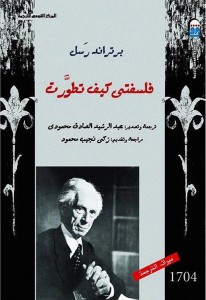
Very interesting reflection by Russell himself on the development of his thinking in the twentieth century. It's not a biography and one has to have some background information about the people, concepts and theories he mentions.
Basically he moved from being occupied with mathematical logic to epistemology to language, pretty much re-stating many times prior positions. The man changed his opinions more than there are grains of sand on a beach. This makes him both brutally honest (and an example to follow for many of us) and very hard to understand.
Although the book is about Russell's development (i.e. changing opinions on philosophical and scientific matters), there is one thing he kept holding on to throughout his long life: the method of analysis. According to Russell, all domains of knowledge, whether in science or mathematics, are to be based on the reduction of complex into simple concepts. And all simple concepts are complex concepts for a more fundamental field of study. This reductionism might strike many as shallow or empty, yet Russell is right in emphasizing its use in discovering new knowledge. Russell's life was characterized by mourning the loss of certainty and completeness of deductive knowledge, and trying to cope with the uncertainty and incompleteness of inductive knowledge. Paraphrasing Russell, although former times offered us certainty and comfort, modern times offer us truth, at the cost of uncertainty and discomfort. This attitude, although difficult to cope with, is a huge step forward for mankind.
The book is shot through with all kinds of Russellian wit and humor. He doesn't shy away from calling a spade a spade and from offending colleagues.
I'll re-read it at a later time for sure.
---------------------------------
On re-reading this book, I was struck by the change of mind that Russell went through after his phase of being occupied solely with mathematical logic (around 1900-1910). Prior to his mathematical stage he was a full blown Hegelian (albeit in the Bradleian fashion), but problems in physics led him to throw away the totalitarian system-building and focusing on founding mathematics in logic. During this stage in his career he was a full blown Platonist, in the sense that his logical and mathematical system was rooted in certain logical constructs - points, moments, particles, etc. existed as entities.
After working on Principia Mathematica Russell turned more and more towards empirical problems, for example the relationship between psychology and physics, and in shifting his philosophical focus his mindset became more and more empirical, pragmatic and pluralistic - implicitly rejecting his earlier naïve realism and monism. For example, wielding Occam's razor he explicitly stated that all the earlier entities (like points and instants) he assumed existed are nothing but logical constructs. They are useful in scientific and mathematical theories, but they are utterly useless, or at least redundant, in understanding the empirical world. The physicist who works with the concept of atoms to understand certain physical processes assumes these atoms to exist, but really they're theoretical tools with which to understand the world.
For Russell, the use in these constructs lies solely in the fact that they allows us to lay bare the structure of reality. And it is the logical structure of the world that has to map, somehow, to the logical structure of our mental activities. In this sense, Russell adheres to a correspondence theory of truth, in which the structure of events in the world is mirrored in the structure of our thoughts - or, by extension, when we use language to formulate our thoughts, in sentences.
Although he changed his minds many, many times throughout his rather long career as a philosopher, he stuck to the above mentioned beliefs. Throughout his career we see a man shifting his focus from the logical foundations of mathematics, through questions about theory of knowledge to the relationship between mind and matter (ultimately reducing them both to one primal stuff - his neutral monism - on which he changed his mind pretty quickly, again). He started becoming more and more interested in problems of language and in the 30's and 40's this culminated in his analysis of things like truth, meaning, probability, and non-deductive inference.
The latter is perhaps the most interesting, since most of our common sense and scientific knowledge is non-deductive, yet it pays for us to believe in the truth in these. In his last great work, Human Knowledge, Russell tried to analyze these non-deductive inferences and, allegedly, formulated five principles that make it possible for us to found our common sense and scientific beliefs in inferences that are of a non-deductive nature.
Again, what struck me on my second reading of this magnificent and beautiful book is Russell's dualism: he was extremely convinced of the beliefs he held, yet he also was extremely quick to change his mind on things at the sight of insoluble problems. His was a mind that was in dire need for certainty and truth, yet also a mind that became increasingly skeptical about the attainability of both of those. In the end, he worked out a theory on the probabilities of the truth of our knowledge, and even though this in itself is a resignation of uncertainty and likelihood, in the way he formulates the five principles on which this theory is built one can glimpse the dire need for certainty in exactly those principles.
Lovely book by a lovely man! Every now and then, after having read some demanding and obscure works by other philosophers, I'd like to pick up a book by Bertrand Russell and enjoy the breeze of fresh air and intellectual clarity and honesty. After having recently delved into Foucault and Merleau-Ponty, I am (again) hugely impressed by the talents of Russell both as a writer and a thinker, in expressing his complex ideas in beautiful and lucid prose. It makes me wonder why most of the Continental philosophers (especially the twentieth century ones) have written in such an obscure and indigestible way... Do they have something to hide? Is the struggle with the text that makes readers of these works admire them - as opposed to their content? Honestly, I don't know - but I do know I prefer a book by Russell over even two sentences of Husserl, Heidegger or Sartre.