

What do you think?

قدم هذا الكتاب عرضًا تفصيليًا مبسطًا لمفهوم الجمال، وحاول تعريف المفهوم والإلمام به في مستوياته وسياقاته المختلفة بدءًا من المعنى البسيط المتداول في سياق الحياة اليومية، وصولًا إلى المعنى التقني (الاستطيقا) في سياق النظرية الجمالية وفلسفة الفن، كما يضع حدودا دقيقة بين الجمال الفني والجمال الطبيعي، وما يعرض له تحت مسمى جماليات الحياة اليومية، ويطرح مجموعة من التساؤلات المهمة : ما الفرق بين الجمال في الفن والجمال في الطبيعة ؟ ما الفرق بين الجميل والجليل ؟ تساؤلات عدة تفتح مجال نقاش حول الكثير من القضايا الأساسية.
250 pages, Paperback
First published January 1, 2009
About the author
Roger Scruton
147 books1,397 followersSir Roger Scruton was a writer and philosopher who has published more than forty books in philosophy, aesthetics and politics. He was a fellow of the British Academy and a Fellow of the Royal Society of Literature. He taught in both England and America and was a Visiting Professor at Department of Philosophy and Fellow of Blackfriars Hall, Oxford, he was also a Senior Fellow at the Ethics and Public Policy Center, Washington D.C.
In 2015 he published two books, The Disappeared and later in the autumn, Fools Frauds and Firebrands. Fools Frauds and Firebrands is an update of Thinkers of the New Left published, to widespread outrage, in 1986. It includes new chapters covering Lacan, Deleuze and Badiou and some timely thoughts about the historians and social thinkers who led British intellectuals up the garden path during the last decades, including Eric Hobsbawm and Ralph Miliband.
In 2016 he again published two books, Confessions of A Heretic (a collection of essays) and The Ring of Truth, about Wagner’s Ring cycle, which was widely and favourably reviewed. In 2017 he published On Human Nature (Princeton University Press), which was again widely reviewed, and contains a distillation of his philosophy. He also published a response to Brexit, Where We Are (Bloomsbury).
In 2015 he published two books, The Disappeared and later in the autumn, Fools Frauds and Firebrands. Fools Frauds and Firebrands is an update of Thinkers of the New Left published, to widespread outrage, in 1986. It includes new chapters covering Lacan, Deleuze and Badiou and some timely thoughts about the historians and social thinkers who led British intellectuals up the garden path during the last decades, including Eric Hobsbawm and Ralph Miliband.
In 2016 he again published two books, Confessions of A Heretic (a collection of essays) and The Ring of Truth, about Wagner’s Ring cycle, which was widely and favourably reviewed. In 2017 he published On Human Nature (Princeton University Press), which was again widely reviewed, and contains a distillation of his philosophy. He also published a response to Brexit, Where We Are (Bloomsbury).
Ratings & Reviews
Friends & Following
Create a free account to discover what your friends think of this book!
Community Reviews
Displaying 1 - 30 of 384 reviews

Read
August 21, 2019
I both read and listened to the audio book of Roger Scruton's Beauty, A Very Short Introduction. Rarely has an author rubbed me in such the wrong ways. Here are four of the many:
1) In all the many dozens of works of art, music and literature he references, ALL ARE CREATED BY MEN! Hey, Roger, this is the 21st century. Wake up, pal;
2) Roger's language is 100% sexist - man, he, his throughout; not a she or her in the entire book;
3) Continually speaking of humans as "rational beings." I can appreciate we humans have reason and logic but I can't remember my last conversation with a "rational being." How about the emotions? the passions? the intuition? that part of the mind that goes beyond reason? (and, one could argue, where beauty in this world truly resides);
4) The more I read, the more it became clear to me Roger isn't a big fan of the human body, probably why there is not one reference to the beauty of dance - groups like Moscow Ballet, Pilobolus Dance Company or Cirque du Soleil. For me, some of the most beautiful experiences I've had have been watching such performances or participating in ecstatic dance workshops (Gabrielle Roth Dance, Philadelphia Group Motion, to name just two). Oh, the body in motion can be so, so beautiful!
I'm hardly alone in my assessment. Art critic Sebastian Smee speaks along similar lines in his Guardian review of Roger Scruton's book. Here are several juicy excerpts:
"John Updike thought that, for most men, a naked woman is the most beautiful thing they will ever see. He didn't say it was so for all men, nor did he venture an opinion on whether the reverse held for women. But the proposition, so bluntly delivered – as if centuries of hair-splitting philosophy and frenetic sublimation could be swept aside with one cheerfully ingenuous sentence – has always struck me as hard to refute.
Its implications – that our idea of beauty is linked to sexual selection and Darwinian evolution and that, as such, it is possibly quite banal – are firmly rejected by Roger Scruton in his new book Beauty. This is not an attempt to define beauty. Rather, it asks whether there are correct judgments to be made about it – reasons why we should prefer Titian's Venus of Urbino to Boucher's Blonde Odalisque or, indeed, to photographs of porn stars having sex. Framing the question in this way implies a search for standards. It also implies an attempt to link beauty with morality, which is no easy task.
The work of both artists (paintings of women by Velázquez and Rembrandt) is beautiful, but not, I think, in the rational sense Scruton champions, which depends too heavily on the more easily communicable concept of taste. In the end the most important question about beauty, to return to Updike's salvo, is whether it is special and profound or ubiquitous and really rather unremarkable. The art critic Peter Schjeldahl expressed a synthesis of these two possibilities when he wrote: "Beauty is, or ought to be, no big deal, though the lack of it is. Beauty presents a stone wall to the thinking mind. But to the incarnate mind – deferential to the buzzing and gurgling body – beauty is as fluid, clear, and shining as an Indian summer afternoon.
Roger Scruton has moments of great insight and clarity in this attractively slim volume, but he is less than deferential to the buzzing and gurgling body. He seems to find it distasteful. For him, beauty is not connected to animal joy, but to human reason. I'm not at all sure he has it right."
Thanks, Sebastian.
But I'll end my own review on a positive note. Roger's book does offer many insights on an entire range of subjects that will be particularly appealing for readers with a rich background in philosophy and the arts revolving around the European tradition. I especially enjoyed his reflections on the writings of David Hume, Théophile Gautier, Günter Grass and Clement Greenberg.

August 30, 2011
Roger Scruton’s little 2009 book Beauty makes some interesting if very unfashionable points.
Scruton links beauty with equally unfashionable concepts like truth and goodness, suggest that beauty has a moral dimension, and rejects moral and cultural relativism. He also links beauty with the sacred, not perhaps in an explicitly religious way but to do so at all would be unlikely to get you very far in the art world of 2011.
He rejects everything postmodernists hold dear, and sees their project as being not merely to ignore or belittle everything of value, including beauty, but to deliberately desecrate it.
Also interesting is his chapter on the beauties of everyday life, of the search for harmony and order even in such humble matters as table settings or fashion or the design of a door.
He also speaks movingly of the pleasures afforded by a domesticated countryside, of gardens and of harmonious streetscapes.
A couple of quotes:
“...this change was art of the great shift in educated opinion which we know as the romantic movement, and which placed the feelings of the individual, for whom self is more interesting than other and wandering more noble than belonging, at the centre of our culture. Art became the enterprise through which the individual announces himself to the world and calls on the gods for vindication. Yet it has proved singularly unreliable as the guardian of our higher aspirations. Art picked up the torch of beauty, ran with it for a while, and then dropped it in the pissoirs of Paris.”
“It is one mark of rational beings that they do not live only - or even at all - in the present. They have the freedom to despise the world that surrounds them and to live in another way.”
Scruton links beauty with equally unfashionable concepts like truth and goodness, suggest that beauty has a moral dimension, and rejects moral and cultural relativism. He also links beauty with the sacred, not perhaps in an explicitly religious way but to do so at all would be unlikely to get you very far in the art world of 2011.
He rejects everything postmodernists hold dear, and sees their project as being not merely to ignore or belittle everything of value, including beauty, but to deliberately desecrate it.
Also interesting is his chapter on the beauties of everyday life, of the search for harmony and order even in such humble matters as table settings or fashion or the design of a door.
He also speaks movingly of the pleasures afforded by a domesticated countryside, of gardens and of harmonious streetscapes.
A couple of quotes:
“...this change was art of the great shift in educated opinion which we know as the romantic movement, and which placed the feelings of the individual, for whom self is more interesting than other and wandering more noble than belonging, at the centre of our culture. Art became the enterprise through which the individual announces himself to the world and calls on the gods for vindication. Yet it has proved singularly unreliable as the guardian of our higher aspirations. Art picked up the torch of beauty, ran with it for a while, and then dropped it in the pissoirs of Paris.”
“It is one mark of rational beings that they do not live only - or even at all - in the present. They have the freedom to despise the world that surrounds them and to live in another way.”

January 18, 2023
“Beauty is vanishing from our world because we live as though it did not matter.”
Beauty matters! That is the point to this wonderfully slim introduction to aesthetics, and on that point I stand in complete accordance with Scruton. Although, I didn’t agree with all that he said, and at times I thought his ideas needed a bit of clarification, I thought many of his main points hit home, and I appreciated the mass assortment of references on the subject. When addressing postmodernism’s desire to destroy the sacred so that art becomes less about aesthetics, but more about taking pleasure in the act of destruction it reminds me of Philip Rieff’s “third world culture”. The idea that there are three cultures, first, second, and third world. First and second worlds containing continuity in that they are both based on a sacred order and a higher authority. Third world being characterized by not only it’s divergence from the first two, but of it’s hatred of the sacred and of viewing itself as the higher authority. What Rieff calls an "anti-culture" because it effectively destroys culture through acts that he calls, “deathworks.” These are attempts to tear down the sacred order and wipe out it’s history. A cross pickled in urine for example or explicit pornography as art, etc. According to Scruton these works of art are not beautiful precisely because they lack the sacred and they defile art, in his opinion these are acts of the destruction of art, that give momentary pleasure to the viewer and artist solely in the shock that they produce.
A culture like this that looks to destroy it’s ties to the past and destroy any intrinsic meaning in what was previously viewed by the west as sacred and beautiful, cannot be sustained because it stands against itself. It looks to justify it’s actions based on itself alone, but it is actively cutting the roots that tie it to a culture. Thus it is an “anti-culture”. It is self destructive. I think Scruton is getting at a similar idea if not the exact idea. Our modern world looks at beauty through it’s utilitarian lenses of function and profit. They wish to objectify beauty. What is it’s function? Does it satisfy a desire? This causes consumerism in the modern world to masquerade as art.
“wanting it for its beauty is not wanting to inspect it: it is wanting to contemplate it—and that is something more than a search for information or an expression of appetite. Here is a want without a goal: a desire that cannot be fulfilled since there is nothing that would count as its fulfilment.”
Scruton believes that beauty is much deeper than that. That it does not have a function other than itself. That making it about desire and satiation is stripping it of what it actually is.
“Beauty is not the source of disinterested pleasure, but simply the object of a universal interest: the interest that we have in beauty, and in the pleasure that beauty brings.”
What shines forth to me in this book is Scruton’s understanding that beauty carries transcendence into the eternal. That beauty feeds man’s soul. That it takes us out of ourselves and our desires and has us reflect on something greater than ourselves.
“Nobody who is alert to beauty, therefore, is without the concept of redemption—of a final transcendence of mortal disorder into a ‘kingdom of ends’. In an age of declining faith art bears enduring witness to the spiritual hunger and immortal longings of our species. Hence aesthetic education matters more today than at any previous period in history.”
“Art moves us because it is beautiful, and it is beautiful in part because it means something. It can be meaningful without being beautiful; but to be beautiful it must be meaningful.”
Overall a wonderful primer on the subject especially due to it’s easily digestible size, and I think Scruton is shooting in the right direction, even if not always on target.
Beauty matters! That is the point to this wonderfully slim introduction to aesthetics, and on that point I stand in complete accordance with Scruton. Although, I didn’t agree with all that he said, and at times I thought his ideas needed a bit of clarification, I thought many of his main points hit home, and I appreciated the mass assortment of references on the subject. When addressing postmodernism’s desire to destroy the sacred so that art becomes less about aesthetics, but more about taking pleasure in the act of destruction it reminds me of Philip Rieff’s “third world culture”. The idea that there are three cultures, first, second, and third world. First and second worlds containing continuity in that they are both based on a sacred order and a higher authority. Third world being characterized by not only it’s divergence from the first two, but of it’s hatred of the sacred and of viewing itself as the higher authority. What Rieff calls an "anti-culture" because it effectively destroys culture through acts that he calls, “deathworks.” These are attempts to tear down the sacred order and wipe out it’s history. A cross pickled in urine for example or explicit pornography as art, etc. According to Scruton these works of art are not beautiful precisely because they lack the sacred and they defile art, in his opinion these are acts of the destruction of art, that give momentary pleasure to the viewer and artist solely in the shock that they produce.
A culture like this that looks to destroy it’s ties to the past and destroy any intrinsic meaning in what was previously viewed by the west as sacred and beautiful, cannot be sustained because it stands against itself. It looks to justify it’s actions based on itself alone, but it is actively cutting the roots that tie it to a culture. Thus it is an “anti-culture”. It is self destructive. I think Scruton is getting at a similar idea if not the exact idea. Our modern world looks at beauty through it’s utilitarian lenses of function and profit. They wish to objectify beauty. What is it’s function? Does it satisfy a desire? This causes consumerism in the modern world to masquerade as art.
“wanting it for its beauty is not wanting to inspect it: it is wanting to contemplate it—and that is something more than a search for information or an expression of appetite. Here is a want without a goal: a desire that cannot be fulfilled since there is nothing that would count as its fulfilment.”
Scruton believes that beauty is much deeper than that. That it does not have a function other than itself. That making it about desire and satiation is stripping it of what it actually is.
“Beauty is not the source of disinterested pleasure, but simply the object of a universal interest: the interest that we have in beauty, and in the pleasure that beauty brings.”
What shines forth to me in this book is Scruton’s understanding that beauty carries transcendence into the eternal. That beauty feeds man’s soul. That it takes us out of ourselves and our desires and has us reflect on something greater than ourselves.
“Nobody who is alert to beauty, therefore, is without the concept of redemption—of a final transcendence of mortal disorder into a ‘kingdom of ends’. In an age of declining faith art bears enduring witness to the spiritual hunger and immortal longings of our species. Hence aesthetic education matters more today than at any previous period in history.”
“Art moves us because it is beautiful, and it is beautiful in part because it means something. It can be meaningful without being beautiful; but to be beautiful it must be meaningful.”
Overall a wonderful primer on the subject especially due to it’s easily digestible size, and I think Scruton is shooting in the right direction, even if not always on target.

February 4, 2018
"... a beleza é exigente: é um chamamento para renunciarmos ao nosso narcisismo e olharmos para o mundo com reverência."
"Sem uma procura consciente da beleza arriscamo-nos a cair num mundo de prazeres que causam dependência e na banalização dos actos de dessacralização, um mundo em que já não se percebe bem porque vale a pena a vida humana."
"O mundo do kitsch é de certa maneira um mundo desumano, onde a emoção é desviada do seu alvo normal para estereótipos adocicados, autorizando-nos a prestar tributo ao amor e à tristeza sem o incómodo de o sentirmos."
"Uma marca dos seres racionais é não viverem apenas no presente. São livres de desprezarem o mundo que os rodeia e de viverem de um modo diferente. A arte, a literatura e a música nascidas na nossa civilização lembram os seres humanos desta sua natureza e indicam-lhes o caminho que têm diante de si: o caminho que os conduz não à dessacralização mas ao sagrado e ao sacrificial. É isto, numa palavra, que a beleza nos ensina."
"O juízo da beleza põe as emoções e os desejos em ordem. Pode exprimir o prazer e o gosto das pessoas, mas trata-se do prazer naquilo a que dão valor e do gosto pelos seus ideais verdadeiros."
Um ensaio muito interessante sobre a Beleza, que Roger Scruton divide em quatro tipos.
a beleza humana e o desejo que inspira;
a beleza da natureza como estímulo à contemplação;
a beleza do quotidiano (arquitectura, jardins, objectos) e o bem estar que proporcionam;
a beleza artística como objecto do gosto.
Foi uma leitura enriquecedora na medida em que, além de aprender bastante sobre arte, proporcionou-me alguns momentos de reflexão. No entanto, este livro comete um pequeno pecado: no capítulo em que é feita a interacção entre beleza humana e arte, é apenas referida a beleza feminina, quer através do texto, quer das imagens exemplificativas. No meu entender (e suponho que, pelo menos, no de metade da população mundial), o corpo masculino é tão belo como o feminino. Penso que um trabalho deste género deveria ser generalizado e não se focar apenas nos gostos do autor. Até parece que Roger Scruton escreveu este livro só para homens. Corrijo: só para homens que têm medo, sequer, de pensar que os homens são bonitos.
É verdade que a Vénus de Sandro Botticelli tira a respiração a qualquer pessoa mas o Sebastian também. Um representa o nascimento e a alegria; o outro a morte e a dor. E ambos estão para além do desejo.
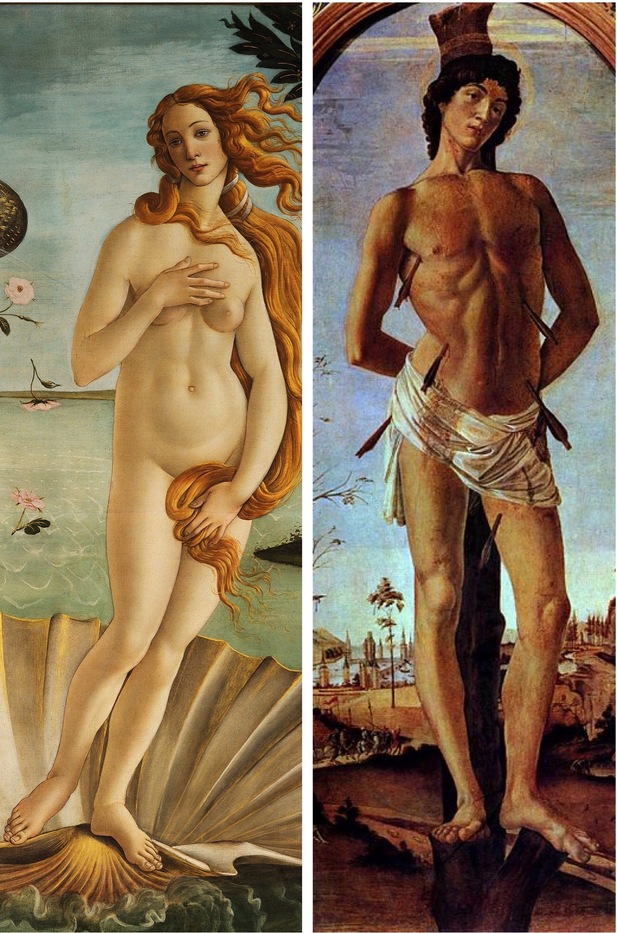
Há dias, fiquei embasbacada a olhar para esta beleza:
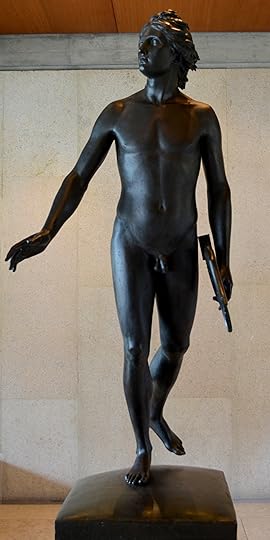
(Jean-Antoine Houdon, Apolo - Fundação Calouste Gulbenkian, Lisboa)
e, há anos, para esta:
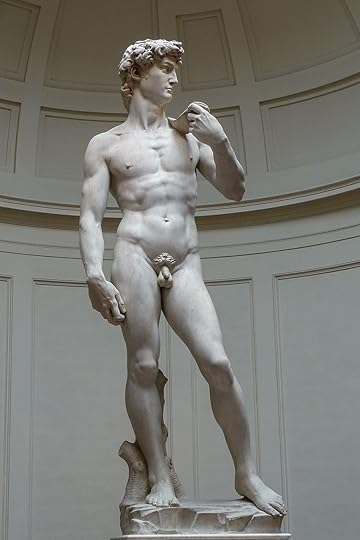
(Michelangelo, David - Galeria da Academia de Belas Artes, Florença)
quem não ficaria?
"Sem uma procura consciente da beleza arriscamo-nos a cair num mundo de prazeres que causam dependência e na banalização dos actos de dessacralização, um mundo em que já não se percebe bem porque vale a pena a vida humana."
"O mundo do kitsch é de certa maneira um mundo desumano, onde a emoção é desviada do seu alvo normal para estereótipos adocicados, autorizando-nos a prestar tributo ao amor e à tristeza sem o incómodo de o sentirmos."
"Uma marca dos seres racionais é não viverem apenas no presente. São livres de desprezarem o mundo que os rodeia e de viverem de um modo diferente. A arte, a literatura e a música nascidas na nossa civilização lembram os seres humanos desta sua natureza e indicam-lhes o caminho que têm diante de si: o caminho que os conduz não à dessacralização mas ao sagrado e ao sacrificial. É isto, numa palavra, que a beleza nos ensina."
"O juízo da beleza põe as emoções e os desejos em ordem. Pode exprimir o prazer e o gosto das pessoas, mas trata-se do prazer naquilo a que dão valor e do gosto pelos seus ideais verdadeiros."
Um ensaio muito interessante sobre a Beleza, que Roger Scruton divide em quatro tipos.
a beleza humana e o desejo que inspira;
a beleza da natureza como estímulo à contemplação;
a beleza do quotidiano (arquitectura, jardins, objectos) e o bem estar que proporcionam;
a beleza artística como objecto do gosto.
Foi uma leitura enriquecedora na medida em que, além de aprender bastante sobre arte, proporcionou-me alguns momentos de reflexão. No entanto, este livro comete um pequeno pecado: no capítulo em que é feita a interacção entre beleza humana e arte, é apenas referida a beleza feminina, quer através do texto, quer das imagens exemplificativas. No meu entender (e suponho que, pelo menos, no de metade da população mundial), o corpo masculino é tão belo como o feminino. Penso que um trabalho deste género deveria ser generalizado e não se focar apenas nos gostos do autor. Até parece que Roger Scruton escreveu este livro só para homens. Corrijo: só para homens que têm medo, sequer, de pensar que os homens são bonitos.
É verdade que a Vénus de Sandro Botticelli tira a respiração a qualquer pessoa mas o Sebastian também. Um representa o nascimento e a alegria; o outro a morte e a dor. E ambos estão para além do desejo.
Há dias, fiquei embasbacada a olhar para esta beleza:
(Jean-Antoine Houdon, Apolo - Fundação Calouste Gulbenkian, Lisboa)
e, há anos, para esta:
(Michelangelo, David - Galeria da Academia de Belas Artes, Florença)
quem não ficaria?

November 28, 2009
My interest in this book started when I saw Prof. Scruton on BBC discussing the importance of aesthetically pleasing architecture as opposed to it being minimalistic and practical.
I was hoping to read some good criticism regarding modern art. And the book exceeded my expectations. He wonderfully compared his thoughts with Plato, spoke of the true masterpieces. His criticism of the modern art is so balanced, soft and highly rational.
This book should be given to every Art teacher and student so as to have a certain height towards which to aspire to. He opens eyes as to what real Beauty constitutes, without cliches, but addressing higher senses.
"True art is an appeal to our higher nature, an attempt to affirm that other kingdom in which moral and spiritual order prevails. Art matters, because it is the real presence of our spiritual ideals. Without the conscious pursuit of beauty we risk falling into a world in which the worthwhileness of human life is no longer clearly perceivable.
We seem to be caught between two forms of sacrilege, the one dealing in sugary dreams, the other in savage fantasies. Both are forms of falsehood, ways of reducing and demeaning our humanity."
I was hoping to read some good criticism regarding modern art. And the book exceeded my expectations. He wonderfully compared his thoughts with Plato, spoke of the true masterpieces. His criticism of the modern art is so balanced, soft and highly rational.
This book should be given to every Art teacher and student so as to have a certain height towards which to aspire to. He opens eyes as to what real Beauty constitutes, without cliches, but addressing higher senses.
"True art is an appeal to our higher nature, an attempt to affirm that other kingdom in which moral and spiritual order prevails. Art matters, because it is the real presence of our spiritual ideals. Without the conscious pursuit of beauty we risk falling into a world in which the worthwhileness of human life is no longer clearly perceivable.
We seem to be caught between two forms of sacrilege, the one dealing in sugary dreams, the other in savage fantasies. Both are forms of falsehood, ways of reducing and demeaning our humanity."

Read
July 30, 2009This is one of those books you begin loving. Like, say, Jennifer Love Hewitt, then as you spend more time with it you love it less and less. till you can't even really look at it without wanting to kill it.
it's hard to kill books, stephen segal, and apparently for the books author, judeo-christian sexual hangups.
setting aside for the moment he's clearly one of those academics who runs around the house sunday afternoons in a tweed jacket listening to Wagner and talking about the symbolism of Rothko's "Untitled, Mural for End Wall" for hours on end--I imagine, he mentions none of this in the book-he starts out the book with a wonderful dissection of how to define beauty, and its criteria. He poses an intellectual argument based on thousands of years of bickering and while the argument is mostly baseless the points are interesting.
I felt certain within 20 pages he may redefine my thoughts on beauty. Now, I am certain after completing the book he redefined nothing for me aside from my initial excitement being redefined as dismay.
Somewhere along the way he transforms the book from discussion of beauty to discussion of his deep fears about ever coming in contact with the unruly and chaotic aspects of life. His disgust at all things overtly sexual, his need to sanitize life and the flesh painfully become the focus of the book rather than beauty.
I refuse any description of beauty that does not include entropy, filth, baseness, and reality. Scruton's beauty is a human beauty. it's a beauty of the mind. A construction removed from the wild untamed grit and girth of the natural world.
Further, his assertions about the difference between erotic art and pornography read like a sunday sermon. His deepest fear, for all his talk about being moved, or compelled by beauty, is to actually feel beauty in something that would not be readily explainable to his peers or the repressed man-boy lurking just under the covers.
Faced with his one dimensional, whitewashed view of beauty I had to really fight through the last 50 pages or so. Given that there must always be extreme poles to all things, he on the one side, Warhol declaring urine dribbles as art on the other, I am, surprisingly more likely to side with Warhol who I'd kill if he was still alive.
which should say everything i need to say, I think.
it's hard to kill books, stephen segal, and apparently for the books author, judeo-christian sexual hangups.
setting aside for the moment he's clearly one of those academics who runs around the house sunday afternoons in a tweed jacket listening to Wagner and talking about the symbolism of Rothko's "Untitled, Mural for End Wall" for hours on end--I imagine, he mentions none of this in the book-he starts out the book with a wonderful dissection of how to define beauty, and its criteria. He poses an intellectual argument based on thousands of years of bickering and while the argument is mostly baseless the points are interesting.
I felt certain within 20 pages he may redefine my thoughts on beauty. Now, I am certain after completing the book he redefined nothing for me aside from my initial excitement being redefined as dismay.
Somewhere along the way he transforms the book from discussion of beauty to discussion of his deep fears about ever coming in contact with the unruly and chaotic aspects of life. His disgust at all things overtly sexual, his need to sanitize life and the flesh painfully become the focus of the book rather than beauty.
I refuse any description of beauty that does not include entropy, filth, baseness, and reality. Scruton's beauty is a human beauty. it's a beauty of the mind. A construction removed from the wild untamed grit and girth of the natural world.
Further, his assertions about the difference between erotic art and pornography read like a sunday sermon. His deepest fear, for all his talk about being moved, or compelled by beauty, is to actually feel beauty in something that would not be readily explainable to his peers or the repressed man-boy lurking just under the covers.
Faced with his one dimensional, whitewashed view of beauty I had to really fight through the last 50 pages or so. Given that there must always be extreme poles to all things, he on the one side, Warhol declaring urine dribbles as art on the other, I am, surprisingly more likely to side with Warhol who I'd kill if he was still alive.
which should say everything i need to say, I think.

November 3, 2015
So, how to rate this book? Roger Scruton is a very good writer, and he brings up interesting subjects in this book, for instance the attention to everyday beauty, such as gardens, the way people dress, etc., which is often overlooked in aesthetic discussions.
However, he never fails to give me the willies with the actual content of his writings; Scruton has an extremely conservative, elitist, and - in my opinion - narrow-minded opinion of art, degrading practically all of contemporary culture, including but not limited to modern painting, architecture, pop music, photography (boy, is he particularly butthurt about photography), etc., and would sooner wish for the world to regurgitate the same classical art until the end of all time rather than granting artists true freedom to express themselves, to experiment and thus explore new opportunities in the artworld. It comes as no surprise that he has given lectures organized by the most hardcore far-right political party in this country.
Despite the contents of his writings I believe that anyone interested in art philosophy should make oneself acquainted with his work, even if you utterly disagree with Scruton's ideas. Of course, if you, on the other hand, share his conservative views on art, then you will find a lot to agree about in his work.
However, he never fails to give me the willies with the actual content of his writings; Scruton has an extremely conservative, elitist, and - in my opinion - narrow-minded opinion of art, degrading practically all of contemporary culture, including but not limited to modern painting, architecture, pop music, photography (boy, is he particularly butthurt about photography), etc., and would sooner wish for the world to regurgitate the same classical art until the end of all time rather than granting artists true freedom to express themselves, to experiment and thus explore new opportunities in the artworld. It comes as no surprise that he has given lectures organized by the most hardcore far-right political party in this country.
Despite the contents of his writings I believe that anyone interested in art philosophy should make oneself acquainted with his work, even if you utterly disagree with Scruton's ideas. Of course, if you, on the other hand, share his conservative views on art, then you will find a lot to agree about in his work.

December 9, 2017
Scruton is fabulously well-read in this subject, and there were many worthwhile insights here. But there is no transcendental traction at all.

October 9, 2013
Sir Roger Scruton's Very Short Introduction To Beauty
Broad and complex subjects may be approached in many ways. The subject of Roger Scruton's "very short introduction", "Beauty" (2009), for example, might have been written as an overview, presenting various possible definitions of "beauty" followed by a discussion and assessment of alternative ways of understanding beauty that have been offered over the years. This approach is not Scruton's. He deliberately avoids trying to define the nature of beauty and he steers clear of summarizing competing interpretations. Instead, Scruton offers his own philosophical understanding of beauty. His discussion is informed, provocative, and it takes account of the thinking of others. Still, it is much less an overview than the presentation of a position. As such, it is challenging and valuable. Scruton is a British philosopher and conservative political commentator who has published extensively on a wide range of subjects. He has, for example, written the volumes on Kant and Spinoza for the "Very Short Introductions" series, as well as this book on beauty, for Oxford University Press.
Scruton states the direction of his approach to beauty at the outset. He rejects a "skeptical" approach to beauty which denies the possibility of a shared conception beyond the preferences of individuals:
"In this book I suggest that such sceptical thoughts about beauty are unjustified. Beauty, I argue, is a real and universal value, one anchored in our rational nature, and the sense of beauty has an indispensable part to play in shaping the human world. My approach to the topic is not historical, neither am I concerned to give a psychological, still less an evolutionary explanation of the sense of beauty. My approach is philosophical, and the principal sources for my argument are the works of philosophers. The point of this book is the argument it develops, which is designed to introduce a philosophical question and to encourage you, the reader, to answer it."
Scruton writes that the understanding of beauty requires human rationality and is part of a fully-developed concept of reason. He maintains that beauty is properly shared and common rather than wholly individual. Individuals may not agree fully on, for example, the beauty of an individual painting or work of music, but the conditions for beauty can be assessed. Beauty shows what Scruton paradoxically describes as "disinterested interest". For Scruton, beauty is not found only in the great music of Beethoven's late string quartets, for example, but rather is also a part of every day human experience, in the proper "fit" and setting of a door, the setting of a table, and the wearing of appropriate clothing. Beauty is a way of passing beyond the immediacy of desire to what is ideal, good, and sacred in human life. Scruton writes:
"Our favourite works of art seem to guide us to the truth of the human condition and, by presenting completed instances of human actions and passions, freed from the contingencies of everyday life, to show the worthwhileness of being human."
Much of the book focuses on sexuality and eroticism and their relationship to beauty. Scruton considers briefly and rejects exclusively psychological approaches to beauty. He spends a great deal of space discussion Plato's conception of beauty and of eros, which he ultimately rejects. Scruton works to distinguish erotic, self-interested beauty from what he describes as disinterested contemplation. In the realm of sexuality, this distinction requires the rejection of pornography, for example, which objectifies human beings into mere bodies and separates bodies from persons.
Scruton develops his conception of beauty as "disinterested interest" and proceeds to describe four kinds of beauty summarized (p. 124) as: "human beauty as an object of desire; natural beauty,as an object of contemplation; everyday beauty as an object of practical reason; and artistic beauty as a form of meaning and an object of taste." He then returns to an attack on "art as eros" followed by a critique of postmodernism and relativism with their various rejections of beauty as a goal for art and the embracing, in many popular instances, of kitsch as an equivalent for art. Scruton offers the following summary of his understanding of beauty and its purpose.
"everything I have said about the nature of beauty implies that it is rationally founded. It challenges us to find meaning in its object, to make critical comparisons, and to examine our lives and emotions in light of what we find. Art, nature and the human form invite us to place this experience at the centre of our lives. If we do so, then it offers a place of refreshment of which we can never tire.... For a free being, there is right feeling, right experience and right enjoyment just as much as right action. The judgement of beauty orders the emotions and desires of those who make it. It may express their pleasure and their taste; but it is pleasure in what they value and taste for their true ideals."
Scruton writes gracefully, tightly, and well. Sections and paragraphs of this little book almost stand alone as essays. Much of the book has an aphoristic, quotable character. The philosophers most influential to Scruton's approach, even when he disagrees with them, are Kant and Plato. The book is full of discussion and comparison of paintings, works of literature, and pieces of music. Among other things, Scruton is a great admirer of Schubert's song-cycle, "Die Winterreise" about rejected love, and he discusses it beautifully.
There is much to be learned from this book even if the reader disagrees. In a review in "The Observer" (quoted in part on the book jacket), Sebastian Smee praised Scruton's thought while expressing skepticism about Scruton's focus on reason, disinterestedness, and, particularly, attitude towards eros. Smee quotes John Updike saying "for most men a naked woman is the most beautiful thing they will ever see" as a suggestion for an alternative position. Scruton's book will engage the reader and encourage thought on the nature of beauty, whether or not the reader fully agrees with Scruton. In this way, the book is valuable in itself and more than fulfills the goal of a "very short introduction" to a topic.
Robin Friedman
Broad and complex subjects may be approached in many ways. The subject of Roger Scruton's "very short introduction", "Beauty" (2009), for example, might have been written as an overview, presenting various possible definitions of "beauty" followed by a discussion and assessment of alternative ways of understanding beauty that have been offered over the years. This approach is not Scruton's. He deliberately avoids trying to define the nature of beauty and he steers clear of summarizing competing interpretations. Instead, Scruton offers his own philosophical understanding of beauty. His discussion is informed, provocative, and it takes account of the thinking of others. Still, it is much less an overview than the presentation of a position. As such, it is challenging and valuable. Scruton is a British philosopher and conservative political commentator who has published extensively on a wide range of subjects. He has, for example, written the volumes on Kant and Spinoza for the "Very Short Introductions" series, as well as this book on beauty, for Oxford University Press.
Scruton states the direction of his approach to beauty at the outset. He rejects a "skeptical" approach to beauty which denies the possibility of a shared conception beyond the preferences of individuals:
"In this book I suggest that such sceptical thoughts about beauty are unjustified. Beauty, I argue, is a real and universal value, one anchored in our rational nature, and the sense of beauty has an indispensable part to play in shaping the human world. My approach to the topic is not historical, neither am I concerned to give a psychological, still less an evolutionary explanation of the sense of beauty. My approach is philosophical, and the principal sources for my argument are the works of philosophers. The point of this book is the argument it develops, which is designed to introduce a philosophical question and to encourage you, the reader, to answer it."
Scruton writes that the understanding of beauty requires human rationality and is part of a fully-developed concept of reason. He maintains that beauty is properly shared and common rather than wholly individual. Individuals may not agree fully on, for example, the beauty of an individual painting or work of music, but the conditions for beauty can be assessed. Beauty shows what Scruton paradoxically describes as "disinterested interest". For Scruton, beauty is not found only in the great music of Beethoven's late string quartets, for example, but rather is also a part of every day human experience, in the proper "fit" and setting of a door, the setting of a table, and the wearing of appropriate clothing. Beauty is a way of passing beyond the immediacy of desire to what is ideal, good, and sacred in human life. Scruton writes:
"Our favourite works of art seem to guide us to the truth of the human condition and, by presenting completed instances of human actions and passions, freed from the contingencies of everyday life, to show the worthwhileness of being human."
Much of the book focuses on sexuality and eroticism and their relationship to beauty. Scruton considers briefly and rejects exclusively psychological approaches to beauty. He spends a great deal of space discussion Plato's conception of beauty and of eros, which he ultimately rejects. Scruton works to distinguish erotic, self-interested beauty from what he describes as disinterested contemplation. In the realm of sexuality, this distinction requires the rejection of pornography, for example, which objectifies human beings into mere bodies and separates bodies from persons.
Scruton develops his conception of beauty as "disinterested interest" and proceeds to describe four kinds of beauty summarized (p. 124) as: "human beauty as an object of desire; natural beauty,as an object of contemplation; everyday beauty as an object of practical reason; and artistic beauty as a form of meaning and an object of taste." He then returns to an attack on "art as eros" followed by a critique of postmodernism and relativism with their various rejections of beauty as a goal for art and the embracing, in many popular instances, of kitsch as an equivalent for art. Scruton offers the following summary of his understanding of beauty and its purpose.
"everything I have said about the nature of beauty implies that it is rationally founded. It challenges us to find meaning in its object, to make critical comparisons, and to examine our lives and emotions in light of what we find. Art, nature and the human form invite us to place this experience at the centre of our lives. If we do so, then it offers a place of refreshment of which we can never tire.... For a free being, there is right feeling, right experience and right enjoyment just as much as right action. The judgement of beauty orders the emotions and desires of those who make it. It may express their pleasure and their taste; but it is pleasure in what they value and taste for their true ideals."
Scruton writes gracefully, tightly, and well. Sections and paragraphs of this little book almost stand alone as essays. Much of the book has an aphoristic, quotable character. The philosophers most influential to Scruton's approach, even when he disagrees with them, are Kant and Plato. The book is full of discussion and comparison of paintings, works of literature, and pieces of music. Among other things, Scruton is a great admirer of Schubert's song-cycle, "Die Winterreise" about rejected love, and he discusses it beautifully.
There is much to be learned from this book even if the reader disagrees. In a review in "The Observer" (quoted in part on the book jacket), Sebastian Smee praised Scruton's thought while expressing skepticism about Scruton's focus on reason, disinterestedness, and, particularly, attitude towards eros. Smee quotes John Updike saying "for most men a naked woman is the most beautiful thing they will ever see" as a suggestion for an alternative position. Scruton's book will engage the reader and encourage thought on the nature of beauty, whether or not the reader fully agrees with Scruton. In this way, the book is valuable in itself and more than fulfills the goal of a "very short introduction" to a topic.
Robin Friedman

January 12, 2025
What an adventure through so many nooks and crannies!
There was a portion towards the beginning regarding judgement of beauty, where he set the stage with some needed caveats and cautions. Taken on its own and detached from the other two transcendentals (goodness and truth), beauty can be rendered incomplete and lacking. Something beautiful is not automatically true, etc.
I was particularly taken with the chapter on everyday beauty (having in mind the items that make up a household, as well as architecture/urban design.... everything need not be ornate! there is a good and common beauty that is proper to many things!)
His meditations on art and eros were also clarifying. I appreciated the thoughts on how pornography fits into this as a type of desecration of the human person, of true eros, of beauty itself. In fact, the whole bit on desecration and profanation (often in an attempt to control or be rid of those sacred things which would otherwise convict or see through us) was seering.
The exploration of our modern kitsch phenomenon--a type of cheap flight from the feeling of true emotions, of reveling in anything transcendent--was apt.
----------------------
'The post-Renaissance rehabilitation of sexual desire laid the foundations for a genuinely erotic art, an art that would display the human being as both subject and object of desire, but also as a free individual whose desire is a favour consciously bestowed. But this rehabilitation of sex leads us to raise what has become one of the most important questions confronting art and the criticism of art in our time: that of the difference, if there is one, between erotic art and pornography. Art can be erotic and also beautiful, like a Titian Venus. But it cannot be beautiful and also pornographic—so we believe, at least. And it is important to see why. In distinguishing the erotic and the pornographic we are really distinguishing two kinds of interest: interest in the embodied person and interest in the body—and, in the sense that I intend, these interests are incompatible. (See the discussion in Chapter 2.) Normal desire is an inter-personal emotion. Its aim is a free and mutual surrender, which is also a uniting of two individuals, of you and me—through our bodies, certainly, but not merely as our bodies. Normal desire is a person to person response, one that seeks the selfhood that it gives. Objects can be substituted for each other, subjects not. Subjects, as Kant persuasively argued, are free individuals; their non-substitutability belongs to what they essentially are. Pornography, like slavery, is a denial of the human subject, a way of negating the moral demand that free beings must treat each other as ends in themselves.”
“Our word ‘poetry’ comes from Greek poiēsis, the skill of making things”
“The old morality, which told us that selling the body is incompatible with giving the self, touched on a truth. Sexual feeling is not a sensation that can be turned on and off at will: it is a tribute from one self to another and—at its height— an incandescent revelation of what you are. To treat it as a commodity, that can be bought and sold like any other, is to damage both present self and future other. The condemnation of prostitution was not just puritan bigotry; it was a recognition of a profound truth, which is that you and your body are not two things but one, and by selling the body you harden the soul. And that which is true of prostitution is true of pornography too. It is not a tribute to human beauty but a desecration of it.”
“One cure for the pain of desecration is the move towards total PROFANATION: in other words, to wipe out all vestiges of sanctity from the once worshipped object, to make it merely a thing OF the world, and not just a thing IN the world, something that is nothing over and above the substitutes that can at any time replace it. That is what we see in the spreading addiction to pornography - a profanation that removes the sexual bond entirely from the realm of intrinsic values. It involves wiping out one area in which the idea of the beautiful had taken root, so as to protect ourselves from the possibility of loving it and therefore losing it.”
"Beauty is vanishing from our world because we live as though it did not matter; and we live that way because we have lost the habit of sacrifice and are striving always to avoid it. The false art of our time, mired in kitsch and desecration, is one sign of this.”
“Art, as we have known it, stands on the threshold of the transcendental. It points beyond this world of accidental and disconnected things to another realm, in which human life is endowed with an emotional logic that makes suffering noble and love worthwhile. Nobody who is alert to beauty, therefore, is without the concept of redemption – of a final transcendence of mortal disorder into a ‘kingdom of ends.”
“The pursuit of absolute or ideal beauty may distract us from the more urgent business of getting things right. It is well and good for philosophers, poets and theologians to point towards beauty in its highest form. But for most of us it is far more important to achieve order in the things surrounding us, and to ensure that the eyes, the ears and the sense of fittingness are not repeatedly offended.”
------------------------
Now interested anew in these books I've shelved in recent months, after seeing them each brought up and recommended more than once:
- On Beauty and Being Just (Elaine Scarry)
- Beauty: A Theological Engagement with Gregory of Nyssa (Natalie Carnes)
- The Ethics of Beauty (Timothy G. Patitsas)
There was a portion towards the beginning regarding judgement of beauty, where he set the stage with some needed caveats and cautions. Taken on its own and detached from the other two transcendentals (goodness and truth), beauty can be rendered incomplete and lacking. Something beautiful is not automatically true, etc.
I was particularly taken with the chapter on everyday beauty (having in mind the items that make up a household, as well as architecture/urban design.... everything need not be ornate! there is a good and common beauty that is proper to many things!)
His meditations on art and eros were also clarifying. I appreciated the thoughts on how pornography fits into this as a type of desecration of the human person, of true eros, of beauty itself. In fact, the whole bit on desecration and profanation (often in an attempt to control or be rid of those sacred things which would otherwise convict or see through us) was seering.
The exploration of our modern kitsch phenomenon--a type of cheap flight from the feeling of true emotions, of reveling in anything transcendent--was apt.
----------------------
'The post-Renaissance rehabilitation of sexual desire laid the foundations for a genuinely erotic art, an art that would display the human being as both subject and object of desire, but also as a free individual whose desire is a favour consciously bestowed. But this rehabilitation of sex leads us to raise what has become one of the most important questions confronting art and the criticism of art in our time: that of the difference, if there is one, between erotic art and pornography. Art can be erotic and also beautiful, like a Titian Venus. But it cannot be beautiful and also pornographic—so we believe, at least. And it is important to see why. In distinguishing the erotic and the pornographic we are really distinguishing two kinds of interest: interest in the embodied person and interest in the body—and, in the sense that I intend, these interests are incompatible. (See the discussion in Chapter 2.) Normal desire is an inter-personal emotion. Its aim is a free and mutual surrender, which is also a uniting of two individuals, of you and me—through our bodies, certainly, but not merely as our bodies. Normal desire is a person to person response, one that seeks the selfhood that it gives. Objects can be substituted for each other, subjects not. Subjects, as Kant persuasively argued, are free individuals; their non-substitutability belongs to what they essentially are. Pornography, like slavery, is a denial of the human subject, a way of negating the moral demand that free beings must treat each other as ends in themselves.”
“Our word ‘poetry’ comes from Greek poiēsis, the skill of making things”
“The old morality, which told us that selling the body is incompatible with giving the self, touched on a truth. Sexual feeling is not a sensation that can be turned on and off at will: it is a tribute from one self to another and—at its height— an incandescent revelation of what you are. To treat it as a commodity, that can be bought and sold like any other, is to damage both present self and future other. The condemnation of prostitution was not just puritan bigotry; it was a recognition of a profound truth, which is that you and your body are not two things but one, and by selling the body you harden the soul. And that which is true of prostitution is true of pornography too. It is not a tribute to human beauty but a desecration of it.”
“One cure for the pain of desecration is the move towards total PROFANATION: in other words, to wipe out all vestiges of sanctity from the once worshipped object, to make it merely a thing OF the world, and not just a thing IN the world, something that is nothing over and above the substitutes that can at any time replace it. That is what we see in the spreading addiction to pornography - a profanation that removes the sexual bond entirely from the realm of intrinsic values. It involves wiping out one area in which the idea of the beautiful had taken root, so as to protect ourselves from the possibility of loving it and therefore losing it.”
"Beauty is vanishing from our world because we live as though it did not matter; and we live that way because we have lost the habit of sacrifice and are striving always to avoid it. The false art of our time, mired in kitsch and desecration, is one sign of this.”
“Art, as we have known it, stands on the threshold of the transcendental. It points beyond this world of accidental and disconnected things to another realm, in which human life is endowed with an emotional logic that makes suffering noble and love worthwhile. Nobody who is alert to beauty, therefore, is without the concept of redemption – of a final transcendence of mortal disorder into a ‘kingdom of ends.”
“The pursuit of absolute or ideal beauty may distract us from the more urgent business of getting things right. It is well and good for philosophers, poets and theologians to point towards beauty in its highest form. But for most of us it is far more important to achieve order in the things surrounding us, and to ensure that the eyes, the ears and the sense of fittingness are not repeatedly offended.”
------------------------
Now interested anew in these books I've shelved in recent months, after seeing them each brought up and recommended more than once:
- On Beauty and Being Just (Elaine Scarry)
- Beauty: A Theological Engagement with Gregory of Nyssa (Natalie Carnes)
- The Ethics of Beauty (Timothy G. Patitsas)

February 9, 2026
Wonderful analysis on the different forms of art that exist and what we refer to when we make aesthetic judgements. When we make aesthetic judgements, we are making judgements about the intrinsic value of a piece of art, not making a judgement about the utility of the art or how it makes us feel.
Scruton also provides several rejoinders to many platitudes about beauty, such as that beauty judgements are rooted in subjective experiences or that beauty judgements don't guarantee beauty.
Scruton also provides several rejoinders to many platitudes about beauty, such as that beauty judgements are rooted in subjective experiences or that beauty judgements don't guarantee beauty.

September 23, 2023
Beauty by Roger scruton talks about various aspects of beauty by mentioning the several opinions of philosophers ( kant, plato, Dickens..) and it's significance in human experience "in exploring beauty we're investigating the sentiments of people, rather than the deep structure of the world"
The book is full of interesting questions "*is the pleasure in beauty a sensory or an intellectual pleasure? But then, what is the difference between the two? The pleasure of a hot bath is sensory; the pleasure of a mathematical puzzle intellectual" , though not all of them are answered within it, it will make you form your own questions for example I wondered, is it possible to study beauty at all? How can we analyze something that varies from person to person, something that doesn't exist until someone forms an opinion and declares it beautiful?. And, despite the differences in what we perceive as beautiful, we all share the same feeling towards beautiful things.
it also talks about the relation between beauty and sexual desire " we cannot infer that the sentiment of beauty was necessary to the process of sexual selection", "Some argue that it is not beauty that prompts desire, but desire that summons beauty", on the other hand Plato argues that there's a base form of desire, which targets the body, and a higher form, which targets the soul.
the author sees the humane as rational being, a creature who does not merely think, feel and do, but who also has the questions: what to think, what to feel and what to do
additionally, it talks about *natural beauty*, "The experience of natural beauty is not a sense of ‘how nice!’ or ‘how pleasant!’ It contains a reassurance that this world is a right and fitting place to be—a home in which our human powers and prospects find confirmation" .
And the distinction between two kinds of meaning in art: representation and expression, giving as an example photography and painting
and the difference between pornography and erotic art " Pornography addresses a fantasy interest, while erotic art addresses an interest of the imagination" , "The purpose of pornography is to arouse vicarious desire; the purpose of erotic art is to portray the sexual desire of the people pictured within it"
I was about to give the book three Stars because it's hard to read and you should have a rich background in philosophy.. BUT after I wrote this review I'm going to give it 5 stars because it deserves it
one more quote :)
"real beauty can be found, even in what is seedy, painful and decayed. Our ability to tell the truth about our own condition, in measured words and touching melodies, offers a kind of redemption from it"
The book is full of interesting questions "*is the pleasure in beauty a sensory or an intellectual pleasure? But then, what is the difference between the two? The pleasure of a hot bath is sensory; the pleasure of a mathematical puzzle intellectual" , though not all of them are answered within it, it will make you form your own questions for example I wondered, is it possible to study beauty at all? How can we analyze something that varies from person to person, something that doesn't exist until someone forms an opinion and declares it beautiful?. And, despite the differences in what we perceive as beautiful, we all share the same feeling towards beautiful things.
it also talks about the relation between beauty and sexual desire " we cannot infer that the sentiment of beauty was necessary to the process of sexual selection", "Some argue that it is not beauty that prompts desire, but desire that summons beauty", on the other hand Plato argues that there's a base form of desire, which targets the body, and a higher form, which targets the soul.
the author sees the humane as rational being, a creature who does not merely think, feel and do, but who also has the questions: what to think, what to feel and what to do
additionally, it talks about *natural beauty*, "The experience of natural beauty is not a sense of ‘how nice!’ or ‘how pleasant!’ It contains a reassurance that this world is a right and fitting place to be—a home in which our human powers and prospects find confirmation" .
And the distinction between two kinds of meaning in art: representation and expression, giving as an example photography and painting
and the difference between pornography and erotic art " Pornography addresses a fantasy interest, while erotic art addresses an interest of the imagination" , "The purpose of pornography is to arouse vicarious desire; the purpose of erotic art is to portray the sexual desire of the people pictured within it"
I was about to give the book three Stars because it's hard to read and you should have a rich background in philosophy.. BUT after I wrote this review I'm going to give it 5 stars because it deserves it
one more quote :)
"real beauty can be found, even in what is seedy, painful and decayed. Our ability to tell the truth about our own condition, in measured words and touching melodies, offers a kind of redemption from it"

December 4, 2017
Carrie and I were looking for a burger place to eat last night. I almost suggested Five Guys, the only decent burger place in town (although I've never gone "burger hunting" either), but I quickly decided against it. Five Guys has really good burgers, but it's just so plain ugly inside that I can't stand to be in there for long.
But why should pretty architecture really be a determiner in restaurant choice? I wasn't necessarily looking for a place that was Instagram-worthy, so it wasn't for utilitarian purposes. We ended up going to Beer-88 instead. It was a mix between a bar and a Chinese restaurant (seriously, they had Chinese characters on all the tables), but the burgers were pretty good.
We sat next to a window, and we saw the owner of the restaurant running outside with her friend to capture a picture of the super moon. The events reminded me of Scruton's preface: "Yet [beauty] is never viewed with indifference: beauty demands to be noticed; it speaks to us directly like the voice of an intimate friend." The burgers and the book were both great, but I guess not in the same way.
But why should pretty architecture really be a determiner in restaurant choice? I wasn't necessarily looking for a place that was Instagram-worthy, so it wasn't for utilitarian purposes. We ended up going to Beer-88 instead. It was a mix between a bar and a Chinese restaurant (seriously, they had Chinese characters on all the tables), but the burgers were pretty good.
We sat next to a window, and we saw the owner of the restaurant running outside with her friend to capture a picture of the super moon. The events reminded me of Scruton's preface: "Yet [beauty] is never viewed with indifference: beauty demands to be noticed; it speaks to us directly like the voice of an intimate friend." The burgers and the book were both great, but I guess not in the same way.

October 27, 2013
A sublime introduction to beauty and aesthetics. Roger Scruton traces trends of conceptualising beauty, shows how we are to properly judge beauty, discusses the difference between human and natural beauty, defends taste and high culture while condemning the cheapness of kitsch, differentiates erotic art from pornography and discusses the "aesthetics of ordinary life" that are often overlooked. Beauty is about contemplation, about moving out of ourselves towards the other. Particularly helpful too are the inclusion of images, allowing Scruton to name a piece and the reader to gaze upon it for themselves in order to appreciate Scruton's remarks on the piece. This warrants a re-read, closer to a 4.5/5.
April 18, 2020
People are not equally interesting, equally admirable, or equally able to understand the world in which they live.
__________
Many people seem to live in an aesthetic vacuum, filling their days with utilitarian calculations, and with no sense that they are missing out on the higher life.
Those ‘higher’ forms of beauty which are exemplified by art . . . For people who don’t know these works of art the world is a different—and maybe less interesting—place . . . It is what art, and only art, can give.
__________
Beauty is vanishing from our world because we live as though it did not matter . . . To point to this feature of our condition is not to issue an invitation to despair. It is one mark of rational beings that they do not live only—or even at all—in the present. They have the freedom to despise the world that surrounds them and to live in another way.
__________
Formerly published outside the VSI series as simply 'Beauty', this relatively short work is a very good overview of Beauty and related topics. Highly recommended.
I'm finishing off these works on Aesthetics on my to-read list now mostly to see whether anyone has anything in common with some fundamental theories [read: Truths] that I have, but it seems no one does; although Scruton does almost reach the point when talks about Everyday Beauty, and when he mentions taste:
Indeed taste is what it is all about . . .
In a democratic culture people are inclined to believe that it is presumptuous to claim to have better taste than your neighbour.
As I believe [read: know] Beauty is objective, I agree with large part of what Scruton talks about as exemplified in the quotes at the top:
Many people seem to live in an aesthetic vacuum, filling their days with utilitarian calculations, and with no sense that they are missing out on the higher life.
I look around me and everywhere, this is what I see: people lack the sensibility of the Aesthete to appreciate, and be affected by Beauty (and in the case of the True Aesthete, lack the sensibility to perceive Taste in all it's forms), and, as far as this sensibility can be learned, have no interest in developing it, which leads to:
People are not equally interesting, equally admirable, or equally able to understand the world in which they live.Can this sensibility be learned? Or can it only be learned with people who possess a spark of it to begin with?
Beauty is vanishing from our world because we live as though it did not matter . . . To point to this feature of our condition is not to issue an invitation to despair. It is one mark of rational beings that they do not live only—or even at all—in the present. They have the freedom to despise the world that surrounds them and to live in another way.In that last sentence, Scruton seems to believe (although it's not elaborated here given the confines within which he is writing) in something I greatly, and fundamentally believe in (and which I don't think I've come across in anyone else), which is that although you are inevitably shaped by (and exposed to things which are in) the times in which you live, and all the "culture" (that may or may not be exist, as far as the term culture can properly be used to describe these things . . .) which exists in the times you find yourself in, you are not bound/limited to this: this is not all there is. There are people who have come before us, better people, who produced works (solid works possessing a true integrity and inherent worth/value) which you can shower yourself in, shielded from the refuse which are the products of modern: "culture", ways of life, thoughts, philosophies, "art", anxieties etc, etc, etc, but this must be a conscious choice; but those who know this already know, the people who do not likely never will, or, upon being exposed to it, lack whatever is required to regulate their lives so, or have not reached the conclusions which would lead them to so regulate their lives regardless . . .
Some of my disagreements with Scruton can be found in [square brackets] after some quotes below.
__________
If there are people who are indifferent to beauty, then it is surely because they do not perceive it.
The judgement of beauty is not just an optional addition to the repertoire of human judgements, but the unavoidable consequence of taking life seriously . . .
The love of myths, stories, and rituals, the need for consolation and harmony, the deep desire for order . . .
it is far more important to achieve order in the things surrounding us, and to ensure that the eyes, the ears, and the sense of fittingness are not repeatedly offended.
Wanting something for its beauty is wanting it, not wanting to do something with it . . . but wanting it for its beauty is not wanting to inspect it: it is wanting to contemplate it—and that is something more than a search for information an expression of appetite. Here is a want without a goal: a desire that cannot be fulfilled since there is nothing hat would count as its fulfilment.
To experience beauty, it might seem to imply, we should concentrate on pure form, detached from utility. But this ignores the fact that knowledge of function is a vital preliminary to the experience of form. Suppose someone places in your hand an unusual object, which could be a knife, a hoof-pick, a surgeon’s scalpel, an ornament or any one of a number of other things. And suppose that he asks you to pronounce on its beauty. You might reasonably say that, until you know what the thing is supposed to do, you can have no view in the matter. Learning the it is a boot-pull, you might then respond: yes, as boot pulls go, it really is rather beautiful, but how shapeless and clumsy as a knife. [Personal Note: If something was intended as a boot pull, but looked more like a knife, and was beautiful as knife, the boot pull would still be beautiful, but as a knife, not as a boot pull.]
When Kant wrote that which pleases immediately, and without concepts he was providing a rich philosophical embellishment to this tradition of thinking.
As for taste and smell, it seems to me that philosophers have been right to set these on the margins of our interest in beauty. Tastes and smells are not capable of the kind of systematic organization that turns sounds into words and tones. We can relish them, but only in a sensual way that barely engages our imagination or our thought. They are, so to speak, insufficiently intellectual to prompt the interest in beauty. [Personal Note: Scruton (like most people) is not truly familiar with the Art of the Niche Perfumer]
Interests can be disinterested, however, if they are determined by (spring from) reason alone.
When my son tells me he has won the mathematics prize at school I feel pleasure: but my pleasure is an interested pleasure, since it arises from the satisfaction of an interest of mine—my parental interest in my son’s success. When I read a poem, my pleasure depends upon no interest other than my interest in this, the very object that is before my mind.
Of course, other interests feed into my interest in the poem: my interest in military strategy draws me to the Iliad, my interest in gardens to Paradise Lost. But the pleasure in a poem’s beauty is the result of an interest in it, for the very thing that it is.
Kant’s claim is not that the judgement of taste is binding on everyone, but that it is presented as such, by the one who makes it. That is a very striking suggestion, but it is borne out by the platitudes that I earlier rehearsed. When I describe something as beautiful I am describing it, not my feelings towards it—I am making a claim, and that seems to imply that others, if they see things aright, would agree with me.
Moreover, the description of something as beautiful has the character of a judgement, a verdict, and one for which I can reasonably be asked for a justification. I may not be able to give any cogent reasons for my judgement; but if I cannot, that is a fact about me, not about the judgement.
Men appreciate women for their beauty just as much as, if not more than, women appreciate men . . .
By contemplating beauty the soul rises from its immersion in merely sensuous and concrete things, and ascends to a higher sphere, where it is not the beautiful boy who is studied, but the form of the beautiful itself, which enters the soul as a true possession, in the way that ideas generally reproduce themselves in the souls of those who understand them.
Recall the queasy feeling that ensues, when—for whatever reason—you suddenly see a body part where, until that moment, an embodied person had been standing. It is as though the body has, in that instant, become opaque. The free being has disappeared behind his own flesh, which is no longer the person himself but an object, an instrument. When this eclipse of the person by his body is deliberately produced, we talk of obscenity. The obscene gesture is one that puts the body on display as pure body, so destroying the experience of embodiment. We are disgusted by obscenity for the same reason that Plato was disgusted by physical lust: it involves, so to speak, the eclipse of the soul by the body.
It is true, however, that people no longer see works of art as objects of judgement or as expressions of the moral life: increasingly many teachers of the humanities agree with their incoming students, that there is no distinction between good and bad taste, but only between your taste and mine. [Personal Note: Taste is a single, objective quality, and is only ‘good’ or ‘bad’ as far as it approches that ideal, or goes against it/completely lacks any semblance of it.]
Imagine now a world in which people showed an interest only in replica Brillo boxes, in signed urinals, in crucifixes pickled in urine, or in objects similarly lifted from the debris of life and put on display with some kind of satirical or ‘look at me’ intention—in other words, the increasingly standard fare of official modern art shows in Europe and America. What would such a world have in common with that of Duccio, Giotto, Velazquez, or even Ce ́zanne? Of course, there would be the fact of putting objects on display, and the fact of our looking at them through aesthetic spectacles. But it would be a world in which human aspirations no longer find their artistic expression, in which we no longer make for ourselves images of the transcendent, and in which mounds of rubbish cover the sites of our ideals.
In a striking work published a century ago the Italian philosopher Benedetto Croce pointed to a radical distinction, as he saw it, between art properly so-called, and the pseudo- art designed to entertain, arouse or amuse.
It can be meaningful without being beautiful; but to be beautiful it must be meaningful. [Personal Note: No, meaning is not a criterion for, and has nothing to do with, whether something is a Work of Art.]
Kant wrote in this connection of ‘aesthetic ideas’—intimations in sensory form of thoughts that are inexpressible as literal truths, since they lie beyond the reach of the understanding. But Kant’s strictures are too severe. For we can make comparative judgements. And these help to flesh out the idea of a truth beyond the work, to which the work is pointing. For example we can ask whether that which is captured by Schubert is captured also by Mahler in his Lieder eines fahren- den Gesellen.
In distinguishing the erotic and the pornographic we are really distinguishing two kinds of interest: interest in the embodied person and interest in the body—and, in the sense that I intend, these interests are incompatible.
Turn now to Boucher’s Blonde Odalisque, and you will see how very different is the artistic intention. This woman has adopted a pose that she could never adopt when dressed. It is a pose which has little or no place in ordinary life outside the sexual act, and it draws attention to itself, since the woman is looking vacantly away and seems to have no other interest. But there is another way in which Boucher’s painting touches against the bounds of decency, and this is in the complete absence of any reason for the Odalisque’s pose within the picture. She is alone in the picture, looking at nothing in particular, engaged in no other act than the one we see. The place of the lover is absent and waiting to be filled: and you are invited to fill it.
Of course there are differences between the Odalisque and the tits and bums on page three of The Sun. One is the general difference between painting and photography— the first being a representation of fictions, the second a pre- sentation of realities (even when adjusted by the airbrush or the photosoftware). The least that can be said is that the bum on page three is as real as they come and interesting for that very reason. The second difference is connected, namely, that we need know nothing of Boucher’s Odalisque in order to appreciate its intended effect, save what the picture tells us. There was a model who posed for this canvas; but we under- stand the canvas neither as a portrait of her nor as a painting about her. The bum on page three has a name and address. Very often the accompanying text tells you a lot about the girl herself, helps you forward with the fantasy of sexual contact. For many people, with reason I think, this makes a decisive moral difference between the page three image and a painting like Boucher’s. The woman on page three is being packaged in her sexual attributes, and placed in the fantasies of a thousand strangers. She may not mind this— presumably she doesn’t. But in not minding she shows how much she has already lost. No-one is degraded by Boucher’s painting, since no-one real occurs in it. This woman—even though the model who sat for her has a name and address (she was Louise O’Murphy, kept for the King’s pleasure at the Parc aux Cerfs)—is presented as a figment, in no sense identical with any real human being, despite being painted from life.
That is an example of a phenomenon with which we are familiar from every aspect of our contemporary culture. It is not merely that artists, directors, musicians and others connected with the arts are in flight from beauty. There is a desire to spoil beauty, in acts of aesthetic iconoclasm.

July 11, 2023
The greatest critique would be that it's too short, and so some very complicated ideas are discussed in a few sentences. But Roger Scruton's writing style is not one of a philosopher demanding the acceptance of concrete ideas, but of a humble thinker, who is unsatisfied with the answers that have been given, while offering his own thoughts for some very in depth (and taken for granted) concepts. His love for beauty and art bleeds through his evaluation, and makes him a qualified candidate for such a topic.
The length and section headings make this an easy book to pick up, finish, and look back through.
The length and section headings make this an easy book to pick up, finish, and look back through.

Read
March 13, 2015Refreshingly aspirational: human beings need beauty.

December 4, 2013
Everyone should read this that is serious about their approach to the question "What is beauty?". I think that the discussion on pornography is especially applicable today and answers a lot of the "why" concerning the ugliness of pornography. It is a short read, although a dense one, and is considered a more conservative philosophy, which I appreciated.

August 5, 2025
Als dit boek 'Denken over schoonheid' had geheten, had ik het waarschijnlijk meer kunnen waarderen.
Scruton wekt de indruk dat hij een algemeen navolgbaar perspectief geeft op schoonheid en hoe we schoonheid op een rationele manier kunnen beoordelen. Helaas gaat hij voorbij aan de olifant in de kamer: het verschil tussen schoonheid en culturele consensus. Het grijze gebied, met andere woorden, tussen het bestaan van objectieve schoonheid en de subjectieve ervaring van iets mooi vinden, in de vorm de aangeleerde goede smaak die beide daarvan beïnvloedt. Er zijn onderzoeken aan te leveren die een meetbaar verband tussen esthetiek en genot aantonen (vooral wat betreft schoonheid in de architectuur en natuur), maar deze doet hij af als irrelevant voor een filosofische benadering. Des te opvallender is daarom zijn gebruik van uitsluitend westerse voorbeelden van kunst — bestaat er dan volgens hem wel schoonheid buiten de westerse cultuur?
Ook vond ik Scrutons argumentatie niet altijd consistent. Zo schrijft hij in hoofdstuk 2 hoe obsceniteit (wat vanzelfsprekend niet onder schoonheid valt) ontstaat wanneer een lichaam slechts als lichaam wordt gepresenteerd in plaats van als belichaming van iemand. Maar vervolgens stelt hij in hoofdstuk 7 dat pornografie smakeloos is omdat het de lezer/kijker persoonlijke informatie over de pornoster verschaft, terwijl 18e-eeuwse naaktschilderijen nog binnen schoonheid vallen omdat ze onpersoonlijke voorstellingen van 'vrouwheid' zijn. Als deze twee opvattingen van obsceniteit en erotische kunst niet tegenstrijdig zijn, had hij dit helderder moeten uitleggen.
Een ander belangrijk onderdeel van Scrutons bespreking van schoonheid is, dat schoonheid op heel verschillende manieren ervaren wordt in domeinen als natuur, mensen, kunst, en het alledaagse leven. Maar slechts in het nawoord wijdt hij één bladzijde aan de vraag of het dan überhaupt mogelijk is om al deze ervaringen onder één concept — schoonheid — onder te brengen. Van mij had hij dit vraagstuk best kritischer mogen behandelen.
Toch ben ik blij dat ik dit boek gelezen heb. Schoonheid is een inspirerend thema om mee bezig te zijn, en Scruton laat één ding wel duidelijk zien: het is meer dan een puur subjectieve beleving. Je kunt rationeel nadenken over of en waarom een landschap of een kunstwerk mooi is. En voor alle domeinen van de schoonheid geeft hij interessante handvatten waarmee de lezer een relatie met het schone kan proberen aan te gaan. Zo heeft zijn boek me niet voor eens en voor altijd duidelijk gemaakt wat schoonheid nu eigenlijk is, maar spoort het me wel aan om erover na te blijven denken.
Scruton wekt de indruk dat hij een algemeen navolgbaar perspectief geeft op schoonheid en hoe we schoonheid op een rationele manier kunnen beoordelen. Helaas gaat hij voorbij aan de olifant in de kamer: het verschil tussen schoonheid en culturele consensus. Het grijze gebied, met andere woorden, tussen het bestaan van objectieve schoonheid en de subjectieve ervaring van iets mooi vinden, in de vorm de aangeleerde goede smaak die beide daarvan beïnvloedt. Er zijn onderzoeken aan te leveren die een meetbaar verband tussen esthetiek en genot aantonen (vooral wat betreft schoonheid in de architectuur en natuur), maar deze doet hij af als irrelevant voor een filosofische benadering. Des te opvallender is daarom zijn gebruik van uitsluitend westerse voorbeelden van kunst — bestaat er dan volgens hem wel schoonheid buiten de westerse cultuur?
Ook vond ik Scrutons argumentatie niet altijd consistent. Zo schrijft hij in hoofdstuk 2 hoe obsceniteit (wat vanzelfsprekend niet onder schoonheid valt) ontstaat wanneer een lichaam slechts als lichaam wordt gepresenteerd in plaats van als belichaming van iemand. Maar vervolgens stelt hij in hoofdstuk 7 dat pornografie smakeloos is omdat het de lezer/kijker persoonlijke informatie over de pornoster verschaft, terwijl 18e-eeuwse naaktschilderijen nog binnen schoonheid vallen omdat ze onpersoonlijke voorstellingen van 'vrouwheid' zijn. Als deze twee opvattingen van obsceniteit en erotische kunst niet tegenstrijdig zijn, had hij dit helderder moeten uitleggen.
Een ander belangrijk onderdeel van Scrutons bespreking van schoonheid is, dat schoonheid op heel verschillende manieren ervaren wordt in domeinen als natuur, mensen, kunst, en het alledaagse leven. Maar slechts in het nawoord wijdt hij één bladzijde aan de vraag of het dan überhaupt mogelijk is om al deze ervaringen onder één concept — schoonheid — onder te brengen. Van mij had hij dit vraagstuk best kritischer mogen behandelen.
Toch ben ik blij dat ik dit boek gelezen heb. Schoonheid is een inspirerend thema om mee bezig te zijn, en Scruton laat één ding wel duidelijk zien: het is meer dan een puur subjectieve beleving. Je kunt rationeel nadenken over of en waarom een landschap of een kunstwerk mooi is. En voor alle domeinen van de schoonheid geeft hij interessante handvatten waarmee de lezer een relatie met het schone kan proberen aan te gaan. Zo heeft zijn boek me niet voor eens en voor altijd duidelijk gemaakt wat schoonheid nu eigenlijk is, maar spoort het me wel aan om erover na te blijven denken.

July 10, 2026
“Lovers of beauty direct their attention outwards, in search of a meaning and order that brings sense to their lives. Their attitude to the thing they love is imbued with judgement and discrimination. And they measure themselves against it, trying to match its order in their own living sympathies.”
This is a subject I have grown to care deeply about. So forgive me for using this review to share a few of my own thoughts.
Our world is becoming uglier, and we are indifferent to fix it. There is a danger especially for Protestants, who by wanting to seperate themselves from worshipping icons and Roman Catholicism, entirely reject this gift from God.
Beauty is not in the eye of the beholder. We must resist this postmodern atheistic temptation. It’s intentionally created by a beautiful God. Anyone who looks at a sunset and says it is ugly and gross is objectively wrong.
Roger Scruton didn’t become a Christian until after writing this book I believe, but his philosophy at the time of writing shows how close he was.
This is a subject I have grown to care deeply about. So forgive me for using this review to share a few of my own thoughts.
Our world is becoming uglier, and we are indifferent to fix it. There is a danger especially for Protestants, who by wanting to seperate themselves from worshipping icons and Roman Catholicism, entirely reject this gift from God.
Beauty is not in the eye of the beholder. We must resist this postmodern atheistic temptation. It’s intentionally created by a beautiful God. Anyone who looks at a sunset and says it is ugly and gross is objectively wrong.
Roger Scruton didn’t become a Christian until after writing this book I believe, but his philosophy at the time of writing shows how close he was.

May 3, 2019
Scruton presents an interesting argument for there being a standard for Beauty - that there is good and bad taste, that beauty has a universal component, and that things which are beautiful help elevate or make sense of the human experience. In his own words, his view is that "Our favourite works of art seem to guide us to the truth of the human condition and, by presenting completed instances of human actions and passions, freed from the contingencies of everyday life, to show the worthwhileness of being human."
Scruton's writing style is somewhat meandering and his line of reasoning is indirect. I had trouble following it at times. Watching the short documentary film which goes along with this book was helpful and gives one the general idea of his arguments in an hour which then the book expands on.
Scruton's writing style is somewhat meandering and his line of reasoning is indirect. I had trouble following it at times. Watching the short documentary film which goes along with this book was helpful and gives one the general idea of his arguments in an hour which then the book expands on.

August 14, 2020
This is an excellent introduction to the enormous subject of beauty. It is amazing that so much can be said, even though it is a survey of the area, in such a small book. It is almost a work of art in itself.
He writes in a way that makes you want to keep reading. This is a philosophical page-turner.
I find it interesting how he ties beauty to the transcendental and the divine.
He is clearly influenced by modern philosophical thought (frequently calling upon Kant), but interacts freely with classical and medieval thought on beauty and doesn't hesitate to borrow heavily from them.
He writes in a way that makes you want to keep reading. This is a philosophical page-turner.
I find it interesting how he ties beauty to the transcendental and the divine.
He is clearly influenced by modern philosophical thought (frequently calling upon Kant), but interacts freely with classical and medieval thought on beauty and doesn't hesitate to borrow heavily from them.

November 3, 2016
اسکروتن، کانتشناس بزرگ، بی اینکه حتما بخواهد تعریفی از زیبایی ارائه دهد، انواع آن را (زیبایی انسانی، طبیعی، هنری و غیر از آن) و نسبتش را با مفاهیم دیگر به مانند میل، فرد، جامعه یا حتی پورنوگرافی مشخص میکند. با وجود اینکه مؤلف از اهالی فلسفه است، اما کتاب به حد اندیشیدهای به قرائتِ فلسفی میپردازد و کلیت کتاب صورتی انضمامی و در ضمن جذاب دارد

December 9, 2025
The theme of this book is that Beauty makes a claim on us: it is a call to renounce our narcissism and look with reverence on the world. Although the subtitle is “A Very Short Introduction,” don’t be fooled into thinking Scruton’s ideas will be easily accessible. This little book is a very dense philosophical work.
I am not criticizing Scruton. I am criticizing myself.
Phrases like this from page 55 were extremely daunting: “Whether we emphasize the comprehensive view or the individual organism, therefore, aesthetic interest has a transfiguring effect. It is as though the natural world, represented in consciousness, justifies both itself and you. And this experience has a metaphysical resonance.”
I read a few pages a week for many months, hoping to grasp just a little of what he was trying to say. I would have brief flashes of insight, and would then put the book down only to pick it up weeks later. Today I plucked it off the shelf, took a deep breath, and determined to finish the last 60 pages in one sitting. Either Scruton ended his book with more practical (rather than philosophical) insights or I was finally understanding his way of expressing himself, but, in any case, I loved those final pages!
Scruton writes, “Beauty is as firmly rooted in the scheme of things as goodness. It speaks to us, as virtue speaks to us, of human fulfilment: not of things we want, but of things that we ought to want, because human nature requires them. Such, at least, is my belief, and in the next two chapters I will try to justify it.”
In Chapter 7, “Art and Eros,” he discusses the line between [nude] art and pornography. “The pornographic image is like a magic wand that turns subjects into objects, people into things – and thereby disenchants them, destroying the source of their beauty.” (p. 136)
In Chapter 8, “Art, as we have known it, stands on the threshold of the transcendental. It points beyond this world of accidental and disconnected things to another realm, in which human life is endowed with an emotional logic that makes suffering noble and love worthwhile. Nobody who is alert to beauty, therefore, is without the concept of redemption – of a final transcendence of mortal disorder into a ‘kingdom of ends.’ In an age of declining faith, art bears enduring witness to the spiritual hunger and immortal longings of our species.”
Also in Chapter 8, Scruton explains the differences between art and “kitsch.” Kitsch is art with no message of its own, in which all the effects are copied and all the emotions are faked.” He calls it the “Disneyfication” of everyday life, when people prefer the sensuous trappings of belief to the thing truly believed. “It is not an excess of feeling, but a deficiency. The world of kitsch is in a certain measure a heartless world, in which emotion is directed away from its proper target towards sugary stereotypes, permitting us to pay passing tribute to love and sorrow without the trouble of feeling them…. Art cannot live in the same world of kitsch, which is a world of commodities to be consumed, rather than icons to be revered.”
Although this was not an easy read, I am grateful for how Scruton made me think more deeply about these topics.
(To read these ideas in more laymen’s terms, I would suggest Russ Ramsey’s books Rembrandt is in the Wind and Van Gogh has a Broken Heart.)
I am not criticizing Scruton. I am criticizing myself.
Phrases like this from page 55 were extremely daunting: “Whether we emphasize the comprehensive view or the individual organism, therefore, aesthetic interest has a transfiguring effect. It is as though the natural world, represented in consciousness, justifies both itself and you. And this experience has a metaphysical resonance.”
I read a few pages a week for many months, hoping to grasp just a little of what he was trying to say. I would have brief flashes of insight, and would then put the book down only to pick it up weeks later. Today I plucked it off the shelf, took a deep breath, and determined to finish the last 60 pages in one sitting. Either Scruton ended his book with more practical (rather than philosophical) insights or I was finally understanding his way of expressing himself, but, in any case, I loved those final pages!
Scruton writes, “Beauty is as firmly rooted in the scheme of things as goodness. It speaks to us, as virtue speaks to us, of human fulfilment: not of things we want, but of things that we ought to want, because human nature requires them. Such, at least, is my belief, and in the next two chapters I will try to justify it.”
In Chapter 7, “Art and Eros,” he discusses the line between [nude] art and pornography. “The pornographic image is like a magic wand that turns subjects into objects, people into things – and thereby disenchants them, destroying the source of their beauty.” (p. 136)
In Chapter 8, “Art, as we have known it, stands on the threshold of the transcendental. It points beyond this world of accidental and disconnected things to another realm, in which human life is endowed with an emotional logic that makes suffering noble and love worthwhile. Nobody who is alert to beauty, therefore, is without the concept of redemption – of a final transcendence of mortal disorder into a ‘kingdom of ends.’ In an age of declining faith, art bears enduring witness to the spiritual hunger and immortal longings of our species.”
Also in Chapter 8, Scruton explains the differences between art and “kitsch.” Kitsch is art with no message of its own, in which all the effects are copied and all the emotions are faked.” He calls it the “Disneyfication” of everyday life, when people prefer the sensuous trappings of belief to the thing truly believed. “It is not an excess of feeling, but a deficiency. The world of kitsch is in a certain measure a heartless world, in which emotion is directed away from its proper target towards sugary stereotypes, permitting us to pay passing tribute to love and sorrow without the trouble of feeling them…. Art cannot live in the same world of kitsch, which is a world of commodities to be consumed, rather than icons to be revered.”
Although this was not an easy read, I am grateful for how Scruton made me think more deeply about these topics.
(To read these ideas in more laymen’s terms, I would suggest Russ Ramsey’s books Rembrandt is in the Wind and Van Gogh has a Broken Heart.)
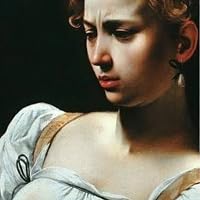
March 20, 2025
4.5 I incorrectly imagined that Scruton's work might be touched by narrowness or pretension. (I had a brief interchange with him once, my categories of analysis were limited, and, well, I suppose he was British) Instead, I am struck by his graciousness, openness, and efforts to strongman the arguments of his opponents. This is an exploration of beauty as humans actually experience it - not a Platonic discussion of its relation to being, or a dissection of its properties.
Scruton's defense in chapter 8 of the modernists like Schoenberg, Hopper, Pound, and Eliot is particularly insightful. Unlike our current obsession with desecration, modernism, he argues, "was not conceived as a transgression, but as a recuperation: an arduous path back to a hard-won inheritance of meaning, in which beauty would be honored as the present symbol of transcendent values." Works like The Wasteland may describe a modern city as a soulless desert, "but it does so with images and allusions that affirm what the city denies. " (I am reminded of why C. S. Lewis's dislike of Eliot falls flat, impoverished as it is by an overly binary divide between the "jovial" and the "saturnine.")
"The judgment of beauty is not just an optional addition to the repertoire of human judgments, but the unavoidable consequence of taking life seriously...for a free being, there is right feeling, right experience, and right enjoyment, just as much as right action. The judgment of beauty orders the emotions and desires of those who make it. It may express their pleasure and their taste, but it is pleasure in what they value and taste for their true ideals."
Scruton's defense in chapter 8 of the modernists like Schoenberg, Hopper, Pound, and Eliot is particularly insightful. Unlike our current obsession with desecration, modernism, he argues, "was not conceived as a transgression, but as a recuperation: an arduous path back to a hard-won inheritance of meaning, in which beauty would be honored as the present symbol of transcendent values." Works like The Wasteland may describe a modern city as a soulless desert, "but it does so with images and allusions that affirm what the city denies. " (I am reminded of why C. S. Lewis's dislike of Eliot falls flat, impoverished as it is by an overly binary divide between the "jovial" and the "saturnine.")
"The judgment of beauty is not just an optional addition to the repertoire of human judgments, but the unavoidable consequence of taking life seriously...for a free being, there is right feeling, right experience, and right enjoyment, just as much as right action. The judgment of beauty orders the emotions and desires of those who make it. It may express their pleasure and their taste, but it is pleasure in what they value and taste for their true ideals."

October 17, 2025
A couple of confessions: First, I have not been studying beauty very long, and I didn't know very much about it except that I should probably care more. Second, I listened to the audiobook version. I strongly recommend reading a physical copy so that your reading can happen as slowly and repetitively as your thinking. Even though this is an introduction, I think I will enjoy it more after I have fixed those two problems.
Initial thoughts: Beauty is not divorced from practical utility; rather, it goes beyond it. A beautiful building fulfills its purpose with elegance. A beautiful song or painting has something above being listened to or looked at that makes you pause. Scruton is intentionally unclear about what that is though. He is clear that one of the problems that has eroded beauty in the world today is a lack of willingness to sacrifice.
I am left feeling both a need to read more and discuss more, which I suppose are good things for an introduction to do?
Initial thoughts: Beauty is not divorced from practical utility; rather, it goes beyond it. A beautiful building fulfills its purpose with elegance. A beautiful song or painting has something above being listened to or looked at that makes you pause. Scruton is intentionally unclear about what that is though. He is clear that one of the problems that has eroded beauty in the world today is a lack of willingness to sacrifice.
I am left feeling both a need to read more and discuss more, which I suppose are good things for an introduction to do?
August 18, 2025
Agh, I need to read more philosophy! 4.5 stars is a gut instinct, but more philosophical scaffolding on my part would make that judgment hold more weight. My absent scaffolding notwithstanding, Scruton’s book offered me a succinct, scintillating, and sometimes convicting discussion that makes me want to explore the topic more.
“In the words of Rilke’s ‘Archaic Torso of Apollo’: ‘you must change your life.’ Beauty is vanishing from our world because we live as though it did not matter; and we live that way because we have lost the habit of sacrifice and are striving always to avoid it.”
“In the words of Rilke’s ‘Archaic Torso of Apollo’: ‘you must change your life.’ Beauty is vanishing from our world because we live as though it did not matter; and we live that way because we have lost the habit of sacrifice and are striving always to avoid it.”

July 20, 2026
Beauty is the second installment of the “Very Short Introduction” series by Oxford that I have read, the first of which was underwhelming.
Scruton has a masterful grip of his topic, approaching from a philosophical point of view rather than from a psychological or scientific stance. It was well-written, moving seamlessly from chronological points to topical. He states in the introduction that his goal is to provoke the student to thought, and with the exception of a few instances where it is obvious that he is guiding to the reader to a particular conclusion, he does this very well.
Scruton has a masterful grip of his topic, approaching from a philosophical point of view rather than from a psychological or scientific stance. It was well-written, moving seamlessly from chronological points to topical. He states in the introduction that his goal is to provoke the student to thought, and with the exception of a few instances where it is obvious that he is guiding to the reader to a particular conclusion, he does this very well.

April 16, 2024
What a wonderful introduction to aesthetics. One of my main takeaways is that men try to destroy beauty because it reminds them they are worthy of judgment:
"Beauty makes a claim on us. It is a call to renounce our narcissism and look with reverence on the world." Ch. 11
"Beauty makes a claim on us. It is a call to renounce our narcissism and look with reverence on the world." Ch. 11
Displaying 1 - 30 of 384 reviews