

What do you think?

شکسپیر معاصر ما
این کتاب درباره آثار شکسپیر نوشته شده است. در این کتاب با روشی بسیار مدرن به جزییات نمایشنامه های شکسپیر می پردازد. از بررسی شخصیت های آن گرفته تا فضاها، پادشاهان و تضادهای خود نویسنده. گفته می شود این کتاب بسیار دیر ترجمه شده و می بایستی در زمانی به فارسی برگردانده می شد که در اوج خود بر کارگردانانی چون پیتر بروک، جوجیو استره لر، پیتر هال و الک گینس تاثیر گذاشت و منجر به خلق آثار بدیعی از جانب آنها شد. اما کتاب همچنان معاصر ما است. زیرا توضیح دهنده همان دلهره ها، حساسیت ها، اضطراب ها و خشونتی در آثار شکسپیر است که امروزه هم شاهد آنیم.
مخاطب این کتاب کسانی هستند که تجربه هولناک جنگ، اشغال، خشونت فیزیکی، جباریت و سازو کار اعمال قدرت را از سر گذرانده باشند. کسانی که بتوانند در پشت چهره ریچارد سوم سایه ای از استالین را ببینند، و با دیدن سرنوشت هستینگز یکی دیگر از شخصیت های نمایشنامه های شکسپیر به یاد بیاروند که چگونه امروزه مستبدان در تسویه حساب های خونین شان خادمان سرسپرده خویش را همچون خائنان محاکمه و اعدام می کنند.
این کتاب کمک می کند که خوانندگان آثار شکسپیر یک بار دیگر به آن نگاهی بیندازند و این بار به جای اینکه در اوهام رمانتیک و یا جزیی نگری های عصر رنسانس غرق شوند، خود را رویا روی وقایعی ببینند که در عین تعلق به دوران الیزابت اما معاصر ما هستند.
از لحاظ یان کات معاصر بودن یعنی ارتباط میان دو زمان . اولی زمانی که شخصیت های نمایش در آن به سر می برند و دومی زمانی که بر تماشاچی می گذرد. هر گاه در اجرای این دو زمان به هم پیوند بخورد شکسپیری که معاصر ما است پدیدار می شود. آثار هنری بزرگ نه تنها از استقلال وجودی برخوردارند بلکه از شخصیت و نیت آفرینندگانشان و نیز از شرایط دوران آفرینش خود مستقل هستند. تراژدی های اشیل و نقاشی های ال گرکو برای مردم قرن بیستم که برای مردم معاصر همین آثار دور از ذهن تلقی می شد. در پرتو نقدهای روانکاوی برخی از آثار معنای جدید یافته اند. در مورد شکسپیر نیز این موضوع صادق است. شکسپیری که ساموئل جانسون می شناخت با شکسپیری که کولریچ می شناخت متفاوت است. در پرتو کتاب یان کات نیز تجربه ما از شناخت و تاثیر شکسپیر متفاوت می شود. تجربه های تکان دهنده ما جنگ های خونین است و کات خود از این فضاها دور نبوده است و طبیعی است که تجربه شخصی خودش را و روح زمانه اش را در آثارش تبلور دهد. تلاش های یان کات برای معاصر کردن شکسپیر را باید در بستر وقایع سیاسی و اجتماعی زمانه بررسی کرد. یان کات به خاطر دیدگاه شخصی و تجریبات ژرفی که از روزگار خود دارد توانسته است تصویری از شکسپیر به ما نشان دهد که به راستی متعلق به روزگار ما است.
مخاطب این کتاب کسانی هستند که تجربه هولناک جنگ، اشغال، خشونت فیزیکی، جباریت و سازو کار اعمال قدرت را از سر گذرانده باشند. کسانی که بتوانند در پشت چهره ریچارد سوم سایه ای از استالین را ببینند، و با دیدن سرنوشت هستینگز یکی دیگر از شخصیت های نمایشنامه های شکسپیر به یاد بیاروند که چگونه امروزه مستبدان در تسویه حساب های خونین شان خادمان سرسپرده خویش را همچون خائنان محاکمه و اعدام می کنند.
این کتاب کمک می کند که خوانندگان آثار شکسپیر یک بار دیگر به آن نگاهی بیندازند و این بار به جای اینکه در اوهام رمانتیک و یا جزیی نگری های عصر رنسانس غرق شوند، خود را رویا روی وقایعی ببینند که در عین تعلق به دوران الیزابت اما معاصر ما هستند.
از لحاظ یان کات معاصر بودن یعنی ارتباط میان دو زمان . اولی زمانی که شخصیت های نمایش در آن به سر می برند و دومی زمانی که بر تماشاچی می گذرد. هر گاه در اجرای این دو زمان به هم پیوند بخورد شکسپیری که معاصر ما است پدیدار می شود. آثار هنری بزرگ نه تنها از استقلال وجودی برخوردارند بلکه از شخصیت و نیت آفرینندگانشان و نیز از شرایط دوران آفرینش خود مستقل هستند. تراژدی های اشیل و نقاشی های ال گرکو برای مردم قرن بیستم که برای مردم معاصر همین آثار دور از ذهن تلقی می شد. در پرتو نقدهای روانکاوی برخی از آثار معنای جدید یافته اند. در مورد شکسپیر نیز این موضوع صادق است. شکسپیری که ساموئل جانسون می شناخت با شکسپیری که کولریچ می شناخت متفاوت است. در پرتو کتاب یان کات نیز تجربه ما از شناخت و تاثیر شکسپیر متفاوت می شود. تجربه های تکان دهنده ما جنگ های خونین است و کات خود از این فضاها دور نبوده است و طبیعی است که تجربه شخصی خودش را و روح زمانه اش را در آثارش تبلور دهد. تلاش های یان کات برای معاصر کردن شکسپیر را باید در بستر وقایع سیاسی و اجتماعی زمانه بررسی کرد. یان کات به خاطر دیدگاه شخصی و تجریبات ژرفی که از روزگار خود دارد توانسته است تصویری از شکسپیر به ما نشان دهد که به راستی متعلق به روزگار ما است.
518 pages, Paperback
First published January 1, 1961
Ratings & Reviews
Friends & Following
Create a free account to discover what your friends think of this book!
Community Reviews
Displaying 1 - 30 of 53 reviews

September 12, 2023
Shakespeare is like the world, or life itself. Every historical period finds in him what it is looking for and what it wants to see. A reader or spectator in the mid-twentieth century interprets Richard III through his own experiences. He cannot do otherwise. And that is why he is not terrified ~~ or rather not amazed ~~ at Shakespeare’s cruelty. He views the struggle for power, and mutual slaughter of the characters, far more calmly than did many generations of spectators and critics in the nineteenth century. More calmly, or, at any rate, more rationally. Cruel death, suffered by most dramatis persona, is not regarded today as an aesthetic necessity, or even as an essential rule in tragedy in order to produce catharsis, or even as a specific characteristic of Shakespeare’s genius. Violent deaths of the principle characters are now regarded rather as and historical necessity, or as something altogether natural. Even in Titus, Andronicus, written or rewritten by Shakespeare, probably in the same year as King Richard III, modern audiences, see much more than the ludicrous and grotesque accumulation of needless horrors which nineteenth-century critics found in it. And when Titus Andronicus received a production like that, by Peter Brook, today’s audiences were ready to applaud, the general slaughter in act five no less enthusiastically than Elizabethan coppersmiths, tailors, butchers, and soldiers had done. In those days the play was one of the greatest theatrical successes. By discovering in Shakespeare's plays problems that are relevant to our own time, modern audiences often, unexpectedly, find themselves near to the Elizabethans; or at least are in a the position to understand them well.
Shakespeare Our Contemporary ~~ Jan Kott

That’s quite a long quote to introduce this book, but that quote sums up Jan Kott’s Shakespeare Our Contemporary far better than I can in this review. What follows is not so much a review, but the affect this book had on me.
Jan Kott's Shakespeare Our Contemporary had a deep and immediate impact on me when I read it in college. It is no less powerful all these years later on this reread. This is the book that kicked William Shakespeare's works off the pillar they had been placed on by academics, and brought them to life for me ~~ no longer did I view Shakespeare with such formalism. The days of thinking the Bard's work had to be played stiffly, with a bad English accent were gone. I now viewed Shakespeare in terms of the immediacy of performance and the permanence of big, historical themes in all his works ~~ histories, comedies and tragedies. Hamlet, Coriolanus and Troilus and Cressida all became real to me. Kott taught me that Shakespeare could actually mean something to this post-cold-war, age-of-anxiety world. This book ~~ or at least, the idea of his book ~~ persists in attempts to explain why Shakespeare ought to matter in the current moment of technologically-driven consumerism, defunct bookstores and shrinking English departments.
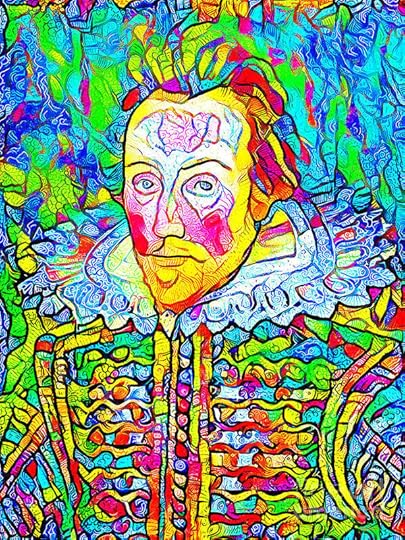
The biggest impact of Kott's writings on me was that it made it safe for me to question stale ideas ~~ a side note, my theatre professors loved my new takes on Shakespeare, my English Lit professors were horrified. Kott offered me a new way of reading Shakespeare’s stories and confirmed that Shakespeare’s works are ever open to new interpretation. If you are a fan of Shakespearean criticism, I highly recommend Shakespeare Our Contemporary.
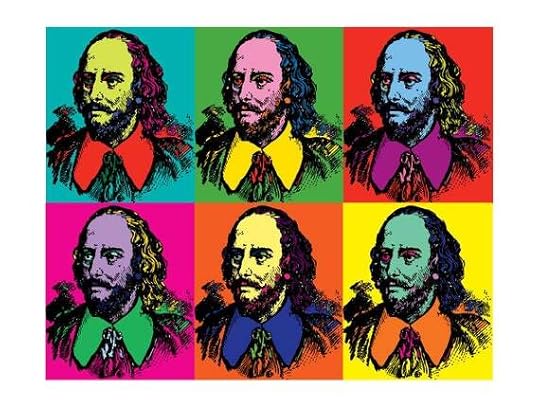
Shakespeare Our Contemporary ~~ Jan Kott
That’s quite a long quote to introduce this book, but that quote sums up Jan Kott’s Shakespeare Our Contemporary far better than I can in this review. What follows is not so much a review, but the affect this book had on me.
Jan Kott's Shakespeare Our Contemporary had a deep and immediate impact on me when I read it in college. It is no less powerful all these years later on this reread. This is the book that kicked William Shakespeare's works off the pillar they had been placed on by academics, and brought them to life for me ~~ no longer did I view Shakespeare with such formalism. The days of thinking the Bard's work had to be played stiffly, with a bad English accent were gone. I now viewed Shakespeare in terms of the immediacy of performance and the permanence of big, historical themes in all his works ~~ histories, comedies and tragedies. Hamlet, Coriolanus and Troilus and Cressida all became real to me. Kott taught me that Shakespeare could actually mean something to this post-cold-war, age-of-anxiety world. This book ~~ or at least, the idea of his book ~~ persists in attempts to explain why Shakespeare ought to matter in the current moment of technologically-driven consumerism, defunct bookstores and shrinking English departments.
The biggest impact of Kott's writings on me was that it made it safe for me to question stale ideas ~~ a side note, my theatre professors loved my new takes on Shakespeare, my English Lit professors were horrified. Kott offered me a new way of reading Shakespeare’s stories and confirmed that Shakespeare’s works are ever open to new interpretation. If you are a fan of Shakespearean criticism, I highly recommend Shakespeare Our Contemporary.

April 26, 2018
.
ای شکسپیر ، ای روح ! تو کوهی آفریده ای که از کوه خداوند بالاتر است . چرا که تو با مردی کور از پرتگاهی عمیق سخن گفته ای .....
.
تمام کاغذهای این کتاب خواندنی ست . انسان معاصر دچار چالش هایی ست که پیشتر شکسپیر و در عصر مدرن بکت به آن اشاره می کند . تراژدی ی که شکسپیر تصویر کرده تراژدی عصر ماست و زخم آن اصالتا در زخم ماست . اما این تراژدی ، گروتسک ( طنز سیاه ) هم هست . انسان معاصر که در جنگ و خون و خون ریزی غلت می زند همزمان در جهان دست دوم کمدی ایفای نقش می کند و خودش نیز به تماشای درد خودش می نشیند . این کتاب ما را دعوت می کند به خواندن مکبث ، ریچارد دوم ، ریچارد سوم و هملت ....تا از آینه ی این کاغذ ها دوزخ خودمان را ببینیم . این کتاب تماما این جمله ی بکت است :
.
تو گریستی به خاطر شب ، آنگاه شب رسید حالا در تاریکی گریه کن .
ای شکسپیر ، ای روح ! تو کوهی آفریده ای که از کوه خداوند بالاتر است . چرا که تو با مردی کور از پرتگاهی عمیق سخن گفته ای .....
.
تمام کاغذهای این کتاب خواندنی ست . انسان معاصر دچار چالش هایی ست که پیشتر شکسپیر و در عصر مدرن بکت به آن اشاره می کند . تراژدی ی که شکسپیر تصویر کرده تراژدی عصر ماست و زخم آن اصالتا در زخم ماست . اما این تراژدی ، گروتسک ( طنز سیاه ) هم هست . انسان معاصر که در جنگ و خون و خون ریزی غلت می زند همزمان در جهان دست دوم کمدی ایفای نقش می کند و خودش نیز به تماشای درد خودش می نشیند . این کتاب ما را دعوت می کند به خواندن مکبث ، ریچارد دوم ، ریچارد سوم و هملت ....تا از آینه ی این کاغذ ها دوزخ خودمان را ببینیم . این کتاب تماما این جمله ی بکت است :
.
تو گریستی به خاطر شب ، آنگاه شب رسید حالا در تاریکی گریه کن .

Read
March 1, 2021یان کات به سبب دیدگاه شخصی و تجربیات ژرفی که از روزگار خود دارد، توانسته است تصویری از شکسپیر به ما نشان دهد که به راستی متعلق به روزگار ماست، و این دقیقاً درست است؛ زیرا آثار هنریِ مستقل و بزرگ، متعلق به تمامی زمان ها هستند و به همین دلیل است که حقایق جدید و معانی نوینی را برای هر دوره آشکار می سازند؛ از همین روست که دیدن مسائل معاصر در سیطره ابدی زمان و نیز برپاداشتن نمایشنامههای جاودان، چونان آینه هایی برای دوران خود، یکی از شریف ترین کارکرد های منتقد و بهترین توجیه برای کار اوست.
از مقدمه کتاب نوشته مارتین اسلین
من از این کتاب،مطابق نمایشنامه هایی که از شکسپیر خوانده ام، تنها سه مقاله هملت نیمه قرن، مکبث یا سرایت مرگ، و دو پارادوکس اتللو را خواندم، به همین خاطر نمیتوانم به کل کتاب امتیاز بدهم اما به نظرم 4 ستاره برای این سه مقاله و مقدمه خوب کتاب کافی باشد. اگر کسی بخواهد از ابتدا تا انتهای این کتاب ارزشمند را بخواند به نظرم باید نمایشنامه هایریچارد دوم، ریچارد سوم، هملت، مکبث، اتللو، تریلوس و کرسیدا، لیرشاه، آنتونی و کلئوپاترا، کوریونالوس، رویای شب نیمه تابستان، طوفان، و تیتوس آندرانیکوس را حداقل خوانده باشد. اما اگر هم مثل من فقط تعدادی از آنها را خوانده باشید باز هم می توانید از فصل های مربوطه استفاده کنید.
ویژگی بارز این نقد ها به نظرم، توجهِ شایان آنها به اجرا و به صحنه بردن نمایش است که برای بازیگران و کارگردانان جالب توجه خواهد بود اما آنقدر هم تخصصی نشده که منِ مخاطب عام دل زده شوم.
امیدوارم به زودی با خواندن سایر نمایشنامه ها برگردم و حظِ کاملی از کتاب ببرم.
پیشنهاد می کنم book description را که از پیشگفتار مترجم است بخوانید. میخواستم این قسمت را در ریویوم بیاورم اما وقتی دیدم آنجا هست، منصرف شدم. بخوانید، خواندنی است...
99/12/11
از مقدمه کتاب نوشته مارتین اسلین
من از این کتاب،مطابق نمایشنامه هایی که از شکسپیر خوانده ام، تنها سه مقاله هملت نیمه قرن، مکبث یا سرایت مرگ، و دو پارادوکس اتللو را خواندم، به همین خاطر نمیتوانم به کل کتاب امتیاز بدهم اما به نظرم 4 ستاره برای این سه مقاله و مقدمه خوب کتاب کافی باشد. اگر کسی بخواهد از ابتدا تا انتهای این کتاب ارزشمند را بخواند به نظرم باید نمایشنامه هایریچارد دوم، ریچارد سوم، هملت، مکبث، اتللو، تریلوس و کرسیدا، لیرشاه، آنتونی و کلئوپاترا، کوریونالوس، رویای شب نیمه تابستان، طوفان، و تیتوس آندرانیکوس را حداقل خوانده باشد. اما اگر هم مثل من فقط تعدادی از آنها را خوانده باشید باز هم می توانید از فصل های مربوطه استفاده کنید.
ویژگی بارز این نقد ها به نظرم، توجهِ شایان آنها به اجرا و به صحنه بردن نمایش است که برای بازیگران و کارگردانان جالب توجه خواهد بود اما آنقدر هم تخصصی نشده که منِ مخاطب عام دل زده شوم.
امیدوارم به زودی با خواندن سایر نمایشنامه ها برگردم و حظِ کاملی از کتاب ببرم.
پیشنهاد می کنم book description را که از پیشگفتار مترجم است بخوانید. میخواستم این قسمت را در ریویوم بیاورم اما وقتی دیدم آنجا هست، منصرف شدم. بخوانید، خواندنی است...
99/12/11

October 7, 2024
۴.۵/۵
واقعا هر چی سعی کردم توی خوانش اول انوتیت کنم نتونستم. خیلیییی بیشتر از یه دور خوندن نیاز دارم برای تا اون اندازه فهمیدنش. به زودی دور بعد رو شروع میکنم.
واقعا هر چی سعی کردم توی خوانش اول انوتیت کنم نتونستم. خیلیییی بیشتر از یه دور خوندن نیاز دارم برای تا اون اندازه فهمیدنش. به زودی دور بعد رو شروع میکنم.

January 18, 2010
I found this book to be a period piece. I'm pretty lefty in my politics, but this comes from that Cold War era when everybody, regardless of their historical era, was being re-cast as a Marxist. "Shakespeare Our Economic Determinist" or something like that, would have been a good title. I found the writing lazy, the argument merely de rigeur for the era, and the literary interpretation disastrous. Of course I only read about 35 pages and then dipped in to about 3 more highly repetitive and drably-written chapters after that; surely it's got qualities I'm missing.
Currently Reading
March 27, 2026chcialam powiedziec ze ten szekspir to byl jednak mega freaky............................

September 12, 2024
I can't recall ever reading a more interesting book about Shakespeare's plays. What made it doubly interesting was that author Jan Kott had produced many of the plays while living in Communist-occupied Poland. His Shakespeare Our Contemporary aims to persuade viewers of the plays to not expect the typical romantic-era treatments of such plays as A Midsummer Night's Dream and The Tempest, among others.
Particularly enjoyable were his treatment of the history plays, particularly Richard II and Richard III.
Kott felt that much of the cruelty of Shakespeare's plays was the result of Renaissance-era fears as the discarded image of the Medieval world gave way to the Copernican view of the sun as the center and the earth as merely a planet, one of many, circling the sun.
Particularly enjoyable were his treatment of the history plays, particularly Richard II and Richard III.
Kott felt that much of the cruelty of Shakespeare's plays was the result of Renaissance-era fears as the discarded image of the Medieval world gave way to the Copernican view of the sun as the center and the earth as merely a planet, one of many, circling the sun.

March 27, 2008
Kott is like a New Historicist avant la lettre. He reads William Shakespeare in the context of the political realities of the Cold War. Thus, the categories he employs in his study of the plays are drawn not from conventional literary criticism (figures of speech, prosody, etc.) but from history, and particularly political and cultural events of postwar Eastern Europe. A great alternative to studies of Shakespeare that focus on the psychology of characters or textual instabilities.
Acquired 1995
S.W. Welch Bookseller, Montreal, Quebec
Acquired 1995
S.W. Welch Bookseller, Montreal, Quebec
December 5, 2022
A good, very good book. In his texts, Kott tries to present Shakespeare as contemporary to his (researcher’s) times (1st [Polish] edition was published in 1962, I used the 1990 [Polish] edition myself). The author himself has called this book (iirc) a collection of sketches, some published in magazines and elsewhere - but it is very cohesive. The chapters mainly discuss individual works by Shakespeare and are named after them, although grouped works are also included (like "Historical Chronicles", i.e. Shakespeare's works about the kings of England). You can even call some of the texts thematic, like the one about gender issues and crossdressing in comedies. (~9) Tragedies predominate , although there are also three comedies and there are also additions in the appendices (Wyspiański's Shakespeare, a text on “Titus Andronicus” that became a text about the ways of bringing Shakespeare’s plays to life in theater and film). As the researcher himself says, "Shakespeare, our contemporary " is a book heavily influenced by the theater and how individual plays were presented in it.
Initially, I was skeptical of the idea of texts focusing only on individual works rather than themes, which made the book feel more like a collection of articles than a full-fledged monograph. However, the volume of these articles usually exceeds 30 pages (the first one has over 60). These are also scientific articles and they discuss important literary and philosophical issues without limiting them. In general, I was pleased with the way these issues, themes were discussed, it had depth. Kott both extracts and discusses motifs important for individual works, as well as returns to issues important for Shakespeare in his work in general. The researcher explores both the psychology of the characters and the philosophy of the works. I would even say that he does it in an existential way, combining character psychology and philosophy, considering important issues in life. The author refers to existentialism, absurdism, or the Theater of the Absurd (Beckett, Ionesco) - which influenced the culture at the time the book was written. The author tries to refer to contemporary historical events, works, culture, philosophy and discuss Bard's plays in their context. To be honest, sometimes references to contemporary historical events seem to be added only after the fact, but it is not the case with works of culture or philosophy, in which Shakespeare's works are firmly embedded in Kott. What caught my attention and made a positive impression on me was the researcher’s attempt to understand the Englishman's characters and events, giving them psychological and philosophical depth, thanks to which these works become universal. Kott really made me understand the universality and depth of Shakespeare, something I had previously had a hard time grasping.
The researcher raises so many issues, I don't know if I will be able to describe them all, comment on them - I will try to at least mention those that have stayed in my memory and made an impression on me. It starts with "Historical Chronicles" - the history of English kings and how they came to power (and how their predecessors lost it). In them, the story of kings is presented as a story of violence - each king kills his predecessor and is killed by his successor. Every one of them has serious sins on their conscience. The actions of Hegel's History that control or influence human life are called Great Mechanisms by Kott. They are an important subject of his analysis in much of the book in general. The issue of royalty is also explored - the feudal system, the Machiavellian nature of the ruler, the ruler as a person and a symbol ... I especially remember that one of the kings could not believe that he was the same person after removing his crown in front of the mirror – after all the royal, God-given majesty was supposed to change him completely. I was also touched when the wife of one of the kings decided to marry him after he murdered her family members - and he said he did it for her. As Kott points out, the woman's moral horizon was completely shattered, filled with Evil - in this situation she could only join it. A similar motif, filled with evil in the inner philosophy, breaking the moral horizon, is present in “Macbeth” - the experience of evil in Macbeth is an experience that he wants to inflict on others.
The fate of Hamlet is considered, seen from many historical and artistic perspectives (Renaissance, Romanticism, Modernism). I was intrigued by the perspective of Hamlet fulfilling the obligation given to him by History, even though he did not identify with it. In another text, however, the researcher draws attention to the importance of the particular in the immediate action to Shakespeare (as opposed to abstract concepts – although they were important to him often too, of course). It is also considered whether Hamlet is an active or passive character, whether he is mature or immature. The theme of madness is also important, it’s one of the main motifs in "King Lear" - which Kott considers Shakespeare's most tragic story. The tragedy, as the researcher argues, lies not so much in the number of corpses, the brutality of mutilations (where the infamous "Titus Andronicus" could be on the podium), but in the psychological awareness of the depth of one's misfortune. (here "Titus" is defined as flat). The exploration of “King Lear” as a kind of Beckettian theater of the absurd is also very interesting. As the author argues, tragedy and the grotesque have common features - tragedy insults human efforts, the grotesque - also the Absolute. The theme of the grotesque in "Lear" is interestingly drawn in general, among others, by the analysis of the figure and the theme of the Fool.
We also have the motif of idealistic philosophy in Othello and misanthropic, Machiavellian philosophy in Iago - according to it, everyone is either a villain or a fool. Othello is corrupted by Iago and therefore ultimately, on philosophical grounds, the latter wins. The class struggle was shown in "Coriolanus" in an interesting way - not necessarily from a purely Marxist perspective, but rather as an eternal conflict between an outstanding individual and the people, as well as a conflict between the war leaders (as a kind of aristocracy) and the people. Some of the Roman tragedies are also covered.
Kott turns comedies on their heads, in large part by presenting them as set in a tragic world. "A Midsummer Night's Dream", "The Tempest" and "As You Like It" are discussed. From "Dream" I remembered the dark sexual lust of the poetic Titania, a motif truly worthy of Sade. One of the main motifs running through Kott's comedic analyzes is androgyny, the reversal of gender and sexual roles between men and women, crossdressing and attraction to handsome, delicate (feminine) youths, widespread in Renaissance artistic circles. Kott presents many of these elements in a metaphysical light, referring to Platonism or the Greek androgynous myth. This is a large article analyzing these themes in various works by Shakespeare, his sonnets or in Leonardo and other Renaissance writers. It was colorful enough to inspire me to check out other Renaissance books. It was also interesting to follow the philosophical underpinning of the Renaissance, humanism.
The last of the comedy section was an article about “The Tempest”. Kott's considerations gravitated to the bitter cost of Prospero's wisdom. Here, the ambivalence typical of the Renaissance is also shown - fascination with the possibilities of Man, but also concern about the destruction he causes. It was very interesting to think that Prospero played out the history of mankind on the island. The researcher also draws attention to Caliban and the fact that he is the only character in the drama who undergoes a change.
What else... Noteworthy is Kott's language, it is lively, colorful, you can see that the author is passionate about Shakespeare. The text also includes (sometimes more, sometimes less often) references to other researchers and philosophers, which sparks joy, although it is a pity that they were mainly the popular ones from the old days, although perhaps due to the date of publication (1962) - back then Beckett or Ionesco were probably still new. In general, I read Kott's book with a passion, it moved me as much as publications on Camus, so I achieved my goal of getting to know the more human, existential side of Shakespeare. Maybe it's a pity that the author leaves the psychological exploration after some time, although he returns to it at the end. In any case, the other areas Kott explored were also interesting. And it is a pity that "Titus Andronicus" was not followed with the same philosophical and psychological fervor as the rest of the text - the motifs appearing in it were rather only mentioned than thoroughly analyzed, while the central problem of the researcher concerned the manner of performing Shakespeare's plays on stage and in film (maybe because, as Kott mentioned, the play didn't yet have the psychological depth of the playwright's other plays).
Initially, I was skeptical of the idea of texts focusing only on individual works rather than themes, which made the book feel more like a collection of articles than a full-fledged monograph. However, the volume of these articles usually exceeds 30 pages (the first one has over 60). These are also scientific articles and they discuss important literary and philosophical issues without limiting them. In general, I was pleased with the way these issues, themes were discussed, it had depth. Kott both extracts and discusses motifs important for individual works, as well as returns to issues important for Shakespeare in his work in general. The researcher explores both the psychology of the characters and the philosophy of the works. I would even say that he does it in an existential way, combining character psychology and philosophy, considering important issues in life. The author refers to existentialism, absurdism, or the Theater of the Absurd (Beckett, Ionesco) - which influenced the culture at the time the book was written. The author tries to refer to contemporary historical events, works, culture, philosophy and discuss Bard's plays in their context. To be honest, sometimes references to contemporary historical events seem to be added only after the fact, but it is not the case with works of culture or philosophy, in which Shakespeare's works are firmly embedded in Kott. What caught my attention and made a positive impression on me was the researcher’s attempt to understand the Englishman's characters and events, giving them psychological and philosophical depth, thanks to which these works become universal. Kott really made me understand the universality and depth of Shakespeare, something I had previously had a hard time grasping.
The researcher raises so many issues, I don't know if I will be able to describe them all, comment on them - I will try to at least mention those that have stayed in my memory and made an impression on me. It starts with "Historical Chronicles" - the history of English kings and how they came to power (and how their predecessors lost it). In them, the story of kings is presented as a story of violence - each king kills his predecessor and is killed by his successor. Every one of them has serious sins on their conscience. The actions of Hegel's History that control or influence human life are called Great Mechanisms by Kott. They are an important subject of his analysis in much of the book in general. The issue of royalty is also explored - the feudal system, the Machiavellian nature of the ruler, the ruler as a person and a symbol ... I especially remember that one of the kings could not believe that he was the same person after removing his crown in front of the mirror – after all the royal, God-given majesty was supposed to change him completely. I was also touched when the wife of one of the kings decided to marry him after he murdered her family members - and he said he did it for her. As Kott points out, the woman's moral horizon was completely shattered, filled with Evil - in this situation she could only join it. A similar motif, filled with evil in the inner philosophy, breaking the moral horizon, is present in “Macbeth” - the experience of evil in Macbeth is an experience that he wants to inflict on others.
The fate of Hamlet is considered, seen from many historical and artistic perspectives (Renaissance, Romanticism, Modernism). I was intrigued by the perspective of Hamlet fulfilling the obligation given to him by History, even though he did not identify with it. In another text, however, the researcher draws attention to the importance of the particular in the immediate action to Shakespeare (as opposed to abstract concepts – although they were important to him often too, of course). It is also considered whether Hamlet is an active or passive character, whether he is mature or immature. The theme of madness is also important, it’s one of the main motifs in "King Lear" - which Kott considers Shakespeare's most tragic story. The tragedy, as the researcher argues, lies not so much in the number of corpses, the brutality of mutilations (where the infamous "Titus Andronicus" could be on the podium), but in the psychological awareness of the depth of one's misfortune. (here "Titus" is defined as flat). The exploration of “King Lear” as a kind of Beckettian theater of the absurd is also very interesting. As the author argues, tragedy and the grotesque have common features - tragedy insults human efforts, the grotesque - also the Absolute. The theme of the grotesque in "Lear" is interestingly drawn in general, among others, by the analysis of the figure and the theme of the Fool.
We also have the motif of idealistic philosophy in Othello and misanthropic, Machiavellian philosophy in Iago - according to it, everyone is either a villain or a fool. Othello is corrupted by Iago and therefore ultimately, on philosophical grounds, the latter wins. The class struggle was shown in "Coriolanus" in an interesting way - not necessarily from a purely Marxist perspective, but rather as an eternal conflict between an outstanding individual and the people, as well as a conflict between the war leaders (as a kind of aristocracy) and the people. Some of the Roman tragedies are also covered.
Kott turns comedies on their heads, in large part by presenting them as set in a tragic world. "A Midsummer Night's Dream", "The Tempest" and "As You Like It" are discussed. From "Dream" I remembered the dark sexual lust of the poetic Titania, a motif truly worthy of Sade. One of the main motifs running through Kott's comedic analyzes is androgyny, the reversal of gender and sexual roles between men and women, crossdressing and attraction to handsome, delicate (feminine) youths, widespread in Renaissance artistic circles. Kott presents many of these elements in a metaphysical light, referring to Platonism or the Greek androgynous myth. This is a large article analyzing these themes in various works by Shakespeare, his sonnets or in Leonardo and other Renaissance writers. It was colorful enough to inspire me to check out other Renaissance books. It was also interesting to follow the philosophical underpinning of the Renaissance, humanism.
The last of the comedy section was an article about “The Tempest”. Kott's considerations gravitated to the bitter cost of Prospero's wisdom. Here, the ambivalence typical of the Renaissance is also shown - fascination with the possibilities of Man, but also concern about the destruction he causes. It was very interesting to think that Prospero played out the history of mankind on the island. The researcher also draws attention to Caliban and the fact that he is the only character in the drama who undergoes a change.
What else... Noteworthy is Kott's language, it is lively, colorful, you can see that the author is passionate about Shakespeare. The text also includes (sometimes more, sometimes less often) references to other researchers and philosophers, which sparks joy, although it is a pity that they were mainly the popular ones from the old days, although perhaps due to the date of publication (1962) - back then Beckett or Ionesco were probably still new. In general, I read Kott's book with a passion, it moved me as much as publications on Camus, so I achieved my goal of getting to know the more human, existential side of Shakespeare. Maybe it's a pity that the author leaves the psychological exploration after some time, although he returns to it at the end. In any case, the other areas Kott explored were also interesting. And it is a pity that "Titus Andronicus" was not followed with the same philosophical and psychological fervor as the rest of the text - the motifs appearing in it were rather only mentioned than thoroughly analyzed, while the central problem of the researcher concerned the manner of performing Shakespeare's plays on stage and in film (maybe because, as Kott mentioned, the play didn't yet have the psychological depth of the playwright's other plays).

April 29, 2019
"Šekspir je kao svet, ili kao život. Svaka epoha nalazi u njemu ono što sama traži i što sama hoće da vidi." Jan Kot, sigurno jedan od najpoznatijih svjetskih šekspirologa, piše o tome zašto Šekspirova djela nikad ne zastarjevaju, iako u jednom dijelu kaže da piše o Šekspiru kao savremeniku naših očeva, ispostaviće se da je Šekspir i naš i svačiji savremenik, da će njegova djela nadživjeti testove svih epoha. Zanimljivo i obavezno štivo za sve proučavaoce bogatog opusa najvećeg pisca svih vremena.

March 21, 2024
Some interesting observations on the Bard's canon, worth your time; for more discussion and interpretative texts on the subject be sure to check out these timeless critics: Shakespeare: The Invention of the Human, Shakespeare After All, Coleridge: Lectures on Shakespeare, Lectures on Shakespeare, Shakespearean Tragedy by A. C. Bradley Unveiling the Tragic Tapestry: A Deeper Dive into Shakespeare's Masterpieces .

July 4, 2018
For the most part, I enjoyed the book, but because it covered literally every piece of literature that has the name "Shakespeare" on it, occasionally it was hard to follow as I have not read all the plays written by Shakespeare. On the other hand, the chapters that were devoted to the plays I read were quite engaging and full of insightful interpretations.
The author also attempted to relate to other milestones in drama and to show how the same topics are still valid and interesting, how we are still fascinated by similar themes, and why Shakespeare is still our contemporary and not some dated playwright. To be honest, some of these "connections" were pure stretch, or so it seems to be.
The book is also a refreshing look on Shakespeare's work as it mostly focuses on the political and extra-literary context instead of typical literary analysis and deconstruction.
Of course, this book is slightly dated and a child of its time as it was written during the Cold War, and it does have a stamp of time of it. It does capture the zeitgeist, but I am not sure if the author intended it to be so, or this is simply what we do when we create, but despite its Cold-War aura, I still find it quite illuminating. I honestly think I would have enjoyed the book more if I had been more familiar not only with the canonical plays, but with some of his fringe plays. On. well, it is on me, then ...
The author also attempted to relate to other milestones in drama and to show how the same topics are still valid and interesting, how we are still fascinated by similar themes, and why Shakespeare is still our contemporary and not some dated playwright. To be honest, some of these "connections" were pure stretch, or so it seems to be.
The book is also a refreshing look on Shakespeare's work as it mostly focuses on the political and extra-literary context instead of typical literary analysis and deconstruction.
Of course, this book is slightly dated and a child of its time as it was written during the Cold War, and it does have a stamp of time of it. It does capture the zeitgeist, but I am not sure if the author intended it to be so, or this is simply what we do when we create, but despite its Cold-War aura, I still find it quite illuminating. I honestly think I would have enjoyed the book more if I had been more familiar not only with the canonical plays, but with some of his fringe plays. On. well, it is on me, then ...
December 28, 2016
I had heard of Jan Kott's "Shakespeare: Our Contemporary" since my theatre school days at CalArts (1977-1979), but never read his work. Several months ago I was able to read Kott's "Eating of the Gods" which was his take on Greek theatre and that was one of the best and most personal interpretations of theatre I have ever been privileged to read. "Shakespeare: Our Contemporary" is a terrific resource. Kott's writing has influenced Peter Brook and Charles Marowitz and therefore all Shakespeare since the 1960s.
It is a great and useful scholar who can give an intimate overview of the 60+ plays written by William Shakespeare. Kott's interpretation is personal and powerful. In one of his best insights, he points out that Hamlet is always performed in a manner to fit the time of the production. Reason? The play is 6+ hours long in its entirety, and therefore must be edited significantly to fit onto the stage. Each production chooses to include the parts considered to be of greatest importance for the production, which choices make the play fit the current circumstances of the audience. Hence: Hamlet is always about current times. Who but Kott would have seen this so clearly?
I highly recommend this volume as essential to anyone who loves the theatre.
It is a great and useful scholar who can give an intimate overview of the 60+ plays written by William Shakespeare. Kott's interpretation is personal and powerful. In one of his best insights, he points out that Hamlet is always performed in a manner to fit the time of the production. Reason? The play is 6+ hours long in its entirety, and therefore must be edited significantly to fit onto the stage. Each production chooses to include the parts considered to be of greatest importance for the production, which choices make the play fit the current circumstances of the audience. Hence: Hamlet is always about current times. Who but Kott would have seen this so clearly?
I highly recommend this volume as essential to anyone who loves the theatre.

November 14, 2018
Il saggio di Jan Kott fa una panoramica completa dell'opera e del teatro shakesperiano, fermandosi comunque per approfondire alcune delle sue opere più famose. Re Lear, Amleto, Coriolano, La Tempesta, Sogno di una notte di mezza estate, vengono presi e scandagliati dettagliatamente, e studiati quasi verso dopo verso, battuta dopo battuta.
C'è un lavoro di critica e di studio del teatro incredibile. Non solo quello elisabettiano, ma vi è un raffronto continuo anche con Racine, Beckett, Laurence Olivier, e poi con Machiavelli, Leonardo...
Insomma, è un saggio davvero ricchissimo, molto interessante per chi è interessato all'argomento.
C'è un lavoro di critica e di studio del teatro incredibile. Non solo quello elisabettiano, ma vi è un raffronto continuo anche con Racine, Beckett, Laurence Olivier, e poi con Machiavelli, Leonardo...
Insomma, è un saggio davvero ricchissimo, molto interessante per chi è interessato all'argomento.
March 24, 2016
Letto e riletto. Certo è che con l'andare del tempo, dopo aver scoperto il saggio di Bloom, alcune delle tesi di Kott sembrano essere piuttosto arbitrarie. Ovviamente parlando pur sempre con grande stima e rispetto per il critico polacco. Immagino sia una questione di età. Maturando si passa da Kott a Bloom per chissà tornare a Kott.
Sicuramente la sua analisi del "Sogno di una notte di mezza estate" non incontra il mio assenso.
Comunque pur sempre un faro.
Sicuramente la sua analisi del "Sogno di una notte di mezza estate" non incontra il mio assenso.
Comunque pur sempre un faro.

January 14, 2012
Just finished Jan Kott’s SHAKESPEARE OUR CONTEMPORARY, the influential study from 1964. Kott’s vision is consistently arresting, but it isn’t Shakespeare’s. For instance, the Erasmian humor of MIDSUMMER, Kott views as “brutal,” akin to Goya’s (or Iago’s). Forcing meanings on the plays, he over-privileges the absurd.

April 4, 2020
Though at this point, the book itself is no longer contemporary, some of the essays contain interesting points. Others however travel so far afield of the original topic that I lost interest and went to the next one.

May 11, 2012
Dzieło ponadczasowe, błyskotliwe interpretacje, styl mięsisty i przykuwający. Genialne. Ta książka wyznaczy trasę wszystkich moich kolejnych spotkań z Szekspirem i szekspirologami.

February 15, 2020
A plodding, uninteresting close reading of Shakespeare where the author never really offers a point.
Made it 10%.
Made it 10%.

August 15, 2022
I really enjoyed this book. Kott's reading of the plays is quite different from others I have encountered. It is deeply realistic (by which I mostly mean that he does not romanticize human motives and behaviors), while also being pretty dark at times. Kott displays a very broad knowledge of the arts, including theater, music, ballet, opera, paintings, and of the artists of these works themselves. This last comment actually is a problem I had with the book, which is that there is often lengthy consideration given to performances or interpretations of the plays by artists who are foreign and unknown to me, which makes the book feel dated and local at times.
His chapter 'The Kings' yields an interesting perspective in part because Kott reads the histories as a set-history of kingship, independent of the particular individuals. Each king takes over from another, often by violent means, but is then subject to (pun intended) a Grand Mechanism of regal power struggles - he plays his given part, only to be grist for the Grand Mechanism when the next royal makes his claim. Kott discusses the play of power in conjunction with many aspects of relationship, including love, conscience, and loyalty.
When Kott shifts to discussions of Hamlet, Othello, Lear, and Macbeth, The Grand Mechanism resurfaces (this is me talking - I don't think Kott makes this point specifically) in a different form, with players in a Grand Drama performing the roles that their circumstances have led or forced them to, with varying degrees of knowledge as to their role as grist for the historical wheel.
One chapter considers Troilus and Cressida, which I was glad of. This is a play that feels to me to be under-appreciated. Kott's treatment of the play renders it somewhat as a parody or comedy of sorts, which is interesting in its own right. In his reading, the heroes are generally fools, and the rest of the players work in a treacherous world which knows little of love, loyalty or honor. War is all, and all the players are grist for its mill. It is a very cynical reading. I have to re-read the play now.
By far the most engaging chapter is that of 'Titania and the Ass's Head'. I have always read A Midsummer Nights Dream as a fable of sorts, with somewhat gentle characters and a lot of generally benevolent confusion. Kott does not see the play this way at all - his vision is much darker. The forest is populated with animals that witches might use: spotted snakes, newts, blindworms, and hedgehogs. The play references poisonous snakes and batty wings as well. Oberon has had liaisons with an Amazonian princess, and potentially a young boy. Puck is a devil that is at least as malevolent as he is impish, as he leads human lovers to blithely disregard any human feeling while they attempt to satisfy their lust and call it love, with interchangeable partners. He leads Titania to abandon herself to an evening of bestial sex which she forces on the ass Bottom. Kott's vision appears to be of a Nature that discards all cultural niceties regarding sexuality when they are hidden in the forest in the dark of the evening. Another play to re-read sometime.
His chapter 'The Kings' yields an interesting perspective in part because Kott reads the histories as a set-history of kingship, independent of the particular individuals. Each king takes over from another, often by violent means, but is then subject to (pun intended) a Grand Mechanism of regal power struggles - he plays his given part, only to be grist for the Grand Mechanism when the next royal makes his claim. Kott discusses the play of power in conjunction with many aspects of relationship, including love, conscience, and loyalty.
When Kott shifts to discussions of Hamlet, Othello, Lear, and Macbeth, The Grand Mechanism resurfaces (this is me talking - I don't think Kott makes this point specifically) in a different form, with players in a Grand Drama performing the roles that their circumstances have led or forced them to, with varying degrees of knowledge as to their role as grist for the historical wheel.
One chapter considers Troilus and Cressida, which I was glad of. This is a play that feels to me to be under-appreciated. Kott's treatment of the play renders it somewhat as a parody or comedy of sorts, which is interesting in its own right. In his reading, the heroes are generally fools, and the rest of the players work in a treacherous world which knows little of love, loyalty or honor. War is all, and all the players are grist for its mill. It is a very cynical reading. I have to re-read the play now.
By far the most engaging chapter is that of 'Titania and the Ass's Head'. I have always read A Midsummer Nights Dream as a fable of sorts, with somewhat gentle characters and a lot of generally benevolent confusion. Kott does not see the play this way at all - his vision is much darker. The forest is populated with animals that witches might use: spotted snakes, newts, blindworms, and hedgehogs. The play references poisonous snakes and batty wings as well. Oberon has had liaisons with an Amazonian princess, and potentially a young boy. Puck is a devil that is at least as malevolent as he is impish, as he leads human lovers to blithely disregard any human feeling while they attempt to satisfy their lust and call it love, with interchangeable partners. He leads Titania to abandon herself to an evening of bestial sex which she forces on the ass Bottom. Kott's vision appears to be of a Nature that discards all cultural niceties regarding sexuality when they are hidden in the forest in the dark of the evening. Another play to re-read sometime.

November 27, 2024
Read in isolation, the English title* of this book packs a lot into its three words. It could be making the case for Shakespeare's universality, timelessness, enduring relevance, whatever; or the "our contemporary" could be much more specific—in which case, "whose" and "when"? In fact, Shakespeare Our Contemporary is less a sustained argument than a series of sketches (the title of Kott's previous book) of readings - actually, actings, performings, stagings - of plays, such as Othello and Troilus and Cressida or groups, such as the histories, or the Sonnets/Twelfth Night/As You Like It. The last of these is very wide-ranging and discursive, and I did not find the placement of King Lear with dreary Brecht and Beckett congenial. But Kott's observations are always insightful and very often fascinating, both as ways to look at and enact the plays themselves and as accounts of how they have been "contemporary" in very different ways to theatres of ages between Shakespeare's and Kott's own. Next time I read one of those plays that I find it hard to get to grips with - Hamlet, Macbeth, Antony and Cleopatra, for example - I can see myself returning to this book for illumination.
*Knowing no Polish, I have no idea whether "Shakespeare Our Contemporary" captures the meaning of Szekspir współczesny accurately. Google Translate gives "Contemporary Shakespeare" and DeepL offers "Modern Shakespeare", with "Shakespeare contemporary", "Contemporary Shakespeare", and "Shakespeare the modern" as alternatives. Bolesław Taborski's version sounds better, obviously.
*Knowing no Polish, I have no idea whether "Shakespeare Our Contemporary" captures the meaning of Szekspir współczesny accurately. Google Translate gives "Contemporary Shakespeare" and DeepL offers "Modern Shakespeare", with "Shakespeare contemporary", "Contemporary Shakespeare", and "Shakespeare the modern" as alternatives. Bolesław Taborski's version sounds better, obviously.

March 7, 2026
not 3-stars because it was bad, but 3-stars because that was as much value i could get out of it. it was simply above my station.
- this is very dense and academic, and presumes you have deep knowledge of philosophers, writers, and histories of all eras (which i do not). so you can often feel excluded. im eager to revisit this and continue scraping information where i can
- HOWEVER it was incredibly insightful and thought-provoking when i did understand. particularly the chapters on richard iii (and lady anne), hamlet, and troilus and cressida were full of highlights.
- gave me a deeper appreciation for shakespeare's histories, which is no easy feat.
- this is very dense and academic, and presumes you have deep knowledge of philosophers, writers, and histories of all eras (which i do not). so you can often feel excluded. im eager to revisit this and continue scraping information where i can
- HOWEVER it was incredibly insightful and thought-provoking when i did understand. particularly the chapters on richard iii (and lady anne), hamlet, and troilus and cressida were full of highlights.
- gave me a deeper appreciation for shakespeare's histories, which is no easy feat.

August 15, 2022
Great book. Not only it shows how contemporary Shakespeare is, but also informs on howShakespeare was influenced by the artists ,philosophy ,the ideas , and the society of his time. I think this should be a course book for English Literature students.
Shakespeare in ne kadar çağdaş olduğunun yanısıra zamanının fikirlerini , toplumunu, sanatçılarını , felsefesini ve bunlardan nasıl etkilendiğini, bunları nasıl eserlerinde yansıttığını da anlatıyor. İngiliz Edebiyatı öğrencileri için ders kitabı niteliğinde ….
Shakespeare in ne kadar çağdaş olduğunun yanısıra zamanının fikirlerini , toplumunu, sanatçılarını , felsefesini ve bunlardan nasıl etkilendiğini, bunları nasıl eserlerinde yansıttığını da anlatıyor. İngiliz Edebiyatı öğrencileri için ders kitabı niteliğinde ….
January 2, 2026
It's interesting to see which plays Shakespeare commentators discuss:
Always is Hamlet, Lear, Henry IV. Almost always is Midsummer, the Tempest, Othello. Mostly is Macbeth, Romeo and Juliet, Measure for Measure, Twelfth Night and As You Like It. Rarely is Troilus and Cressida. But each has their deep cut shakespeare.
For Frye its Winter's Tale; for Kott its Coriolanus; for Bloom, its Antony and Cleopatra; for Knight, its Timon of Athens.
Kott has some interesting interpretations: the dream is deeply erotic; twelfth night and as you like it are bisexual.
Always is Hamlet, Lear, Henry IV. Almost always is Midsummer, the Tempest, Othello. Mostly is Macbeth, Romeo and Juliet, Measure for Measure, Twelfth Night and As You Like It. Rarely is Troilus and Cressida. But each has their deep cut shakespeare.
For Frye its Winter's Tale; for Kott its Coriolanus; for Bloom, its Antony and Cleopatra; for Knight, its Timon of Athens.
Kott has some interesting interpretations: the dream is deeply erotic; twelfth night and as you like it are bisexual.
December 29, 2020
I'm not sure when this was written, but I was completely affronted by the author's misogyny, utilizing words such as "sluts" and "tarts" to describe women, has no place in serious Shakespearean criticism. The reader gets the impression that the author would like to be seen as a cool, man about town who happens to also be an academic - unfortunately he comes off as a sad, wannabe who probably got ignored by women for most of his life.

August 11, 2024
The premise of this acclaimed collection of criticism is that our contemporary sensibilities are actually closer to those of Shakespeare's Elizabethan audience than the intervening Romantic or Victorian eras. Hamlet and Lear are existential, experimental plays and connecting them to Beckett and Brecht yields new insights. Make of that what you will, it's stimulating nonetheless, not least because Kott is very focused on new options for how the plays can be directed. An underrated highlight is his excavation of the darkness and horror lurking underneath the seemingly light high comedy of The Midsummer Night's Dream.
October 21, 2025
absolutnie świetna interpretacja Burzy zknskxjdkxjidd
bardzo dogłębna, niepowtarzalna, w ciekawy sposób spogląda na utwór z perspektywy ówczesnego czasu i człowieka końca renesansu, nie dopisuje na siłę tematów których tam nie ma, obala dotychczasowe sztampowe łopatologiczne interpretacje bez polotu idące po najniższej linii oporu
genialne siedziałam z otwartym dziobem przez całą lekturę i wszystko nagle zyskiwało sens
takie prace naukowe mogę czytać nie to co „Czytanie Szekspira"
bardzo dogłębna, niepowtarzalna, w ciekawy sposób spogląda na utwór z perspektywy ówczesnego czasu i człowieka końca renesansu, nie dopisuje na siłę tematów których tam nie ma, obala dotychczasowe sztampowe łopatologiczne interpretacje bez polotu idące po najniższej linii oporu
genialne siedziałam z otwartym dziobem przez całą lekturę i wszystko nagle zyskiwało sens
takie prace naukowe mogę czytać nie to co „Czytanie Szekspira"

April 29, 2021
Very interesting; very of its time. Kott creates something of a fusion of historical materialism and existentialism which is fascinating and compelling, if a little outdated. This text obviously breathed fresh air into shakespearean scholarship, and it’s clear why. At times arduous reading (Kott’s style tends towards winding and meandering) but otherwise brilliant.

August 24, 2020
Kovaa kamaa. Äijä lukenut Shakespearensa pariinkin otteeseen.

May 22, 2021
A ferocious account any lover of Shakespeare must grapple with.
Displaying 1 - 30 of 53 reviews